
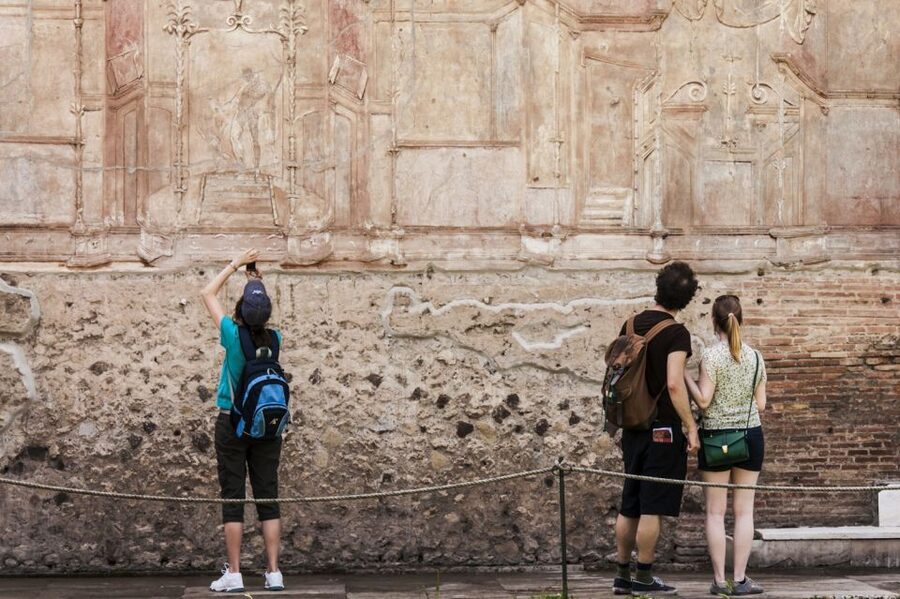
Reviewed · POMPEII & VESUVIUS TOURS
From Rome: Pompeii and Herculaneum by High-Speed Train
One day, two buried cities, big impact. This Pompeii and Herculaneum trip from Rome pairs high-speed rail with a small-group archaeologist-led visit to both sites, so you see more than just the highlights. I especially like the chance to learn the why behind what you’re looking at, from guides who have spent years working with the evidence. One thing to plan for, though, is the walking on uneven ground in both places.
I came away thinking the best part is the contrast. Pompeii gives you the grand city layout and the story of people caught by Vesuvius, and Herculaneum shows a different kind of preservation, right down to casts and the famous preserved remains on the beach. The tours I’ve seen described also make good use of time, with guides like Raphael, Jasmi, Mikel, Michele, Sergio, and Diego guiding the group through the most meaningful stops.
The possible drawback is pacing. A few people noted the Pompeii portion can feel like a sprint, and lunch can be tight if you wait too long at the entrance area. If you’re the type who wants long photo stops and slow wandering, you may feel a bit rushed.
In This Review
- Key things I’d center in your plans
- Rome to Naples on the fast train, then straight to the ruins
- Naples minibus transfers: quick, comfortable, and actually useful
- Pompeii: big-city streets, the plaster casts, and the human scale
- Why Pompeii feels intense in the best way
- How to handle the “too fast” risk
- The walking reality in Pompeii
- The 30-minute free time in Pompeii: shopping and lunch strategy
- Herculaneum: preserved streets and houses, plus the beach of remains
- Why the House of Neptune and Amphitrite matters
- The beach remains: a difficult stop, handled with meaning
- Walking distance in Herculaneum
- Returning to Naples and getting back to Rome without stress
- Who this tour fits best, and who should rethink it
- Price and value: what $222.77 buys you, and what it does not
- Packing and shoes: small details that prevent big annoyances
- Guide quality is the engine of this day
- Should you book this Pompeii and Herculaneum day trip?
- FAQ
- How long is the Pompeii and Herculaneum tour from Rome?
- What train is used from Rome to Naples?
- Where do I meet the guide in Naples?
- Is there a guided archaeologist tour at both sites?
- How much time do I have at Pompeii on my own?
- How much time do you spend at Herculaneum?
- Are meals included in the tour price?
- How much walking is involved?
- What should I bring?
- What footwear is not allowed?
Key things I’d center in your plans
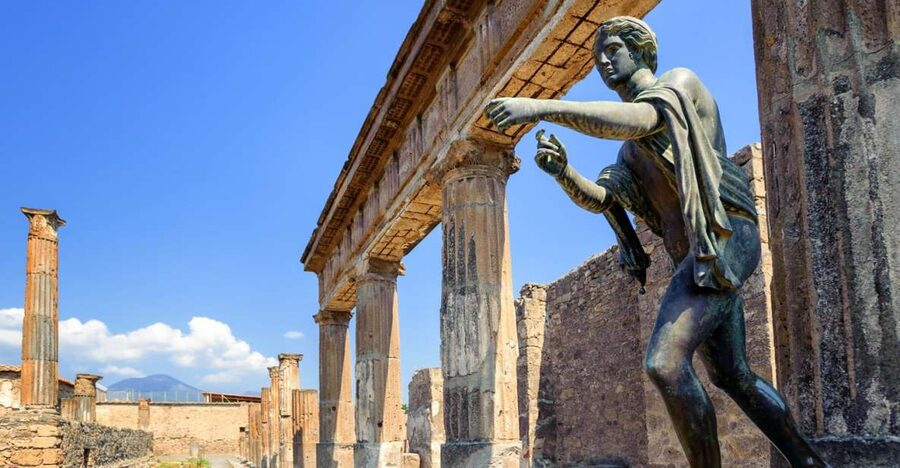
- High-speed Rome to Naples (about 70 minutes) keeps the day trip realistic instead of turning into a long ride.
- Two archaeologist-guided tours means you get explanations in context, not just facts tossed at you.
- Pompeii plaster casts add a visceral layer to what Vesuvius did to real people.
- Herculaneum’s preserved remains and houses (including the House of Neptune and Amphitrite) show the town in a more intimate way.
- Headsets for everyone help you keep up, especially in crowded ruins.
- Time boxes built in can be great for focus, but it helps to know you have limited free time.
Rome to Naples on the fast train, then straight to the ruins
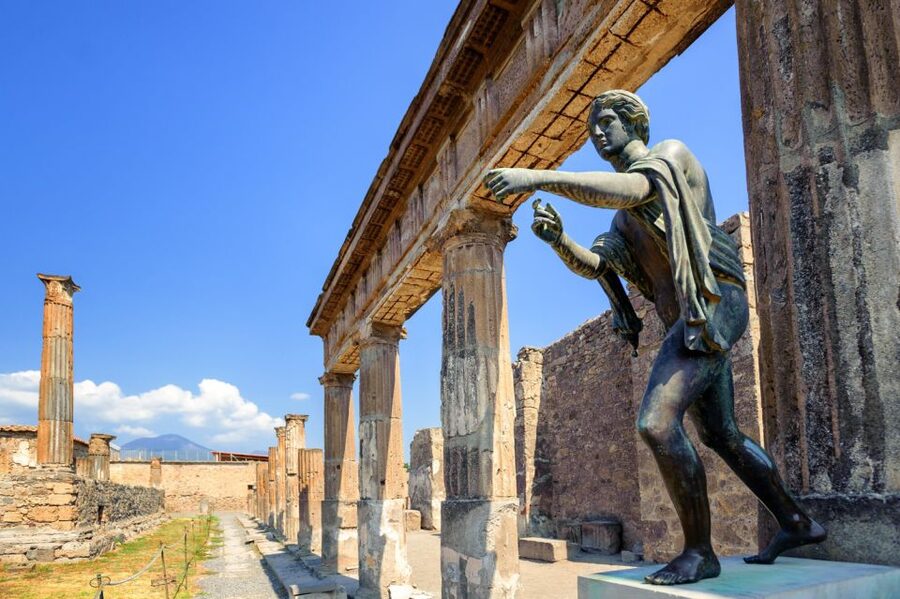
This is set up for people who want to do Pompeii and Herculaneum in one day without losing half of your daylight to transit. You start at Roma Termini, then take a fast train to Naples Central Station in about 70 minutes. You travel independently with tickets provided by the operator, which is helpful because it keeps the flow moving and avoids a long bus crawl from Rome.
In real life, the main risk with train days is missing your timing. Termini is busy and a little confusing if you do not know where you’re going. My practical tip: arrive early, have your platform and exit plan in your head, and keep your ID card or passport handy.
Once in Naples, you meet your group in front of the STARHOTEL TERMINUS entrance across from the station. The guide will be holding an ASKOS TOURS sign, so you’re not left guessing who to follow.
More Pompeii digs and Vesuvius climbs:
- From Rome: Pompeii, Amalfi Coast, and Sorrento Day Trip
★ 4.6 · 7,031 reviews - From Rome: Pompeii, Amalfi Coast and Positano Day Trip
★ 4.6 · 6,620 reviews - Pompeii, Amalfi Coast and Positano Day Trip from Rome
★ 4.5 · 6,250 reviews
Naples minibus transfers: quick, comfortable, and actually useful
After you meet the guide, you get a short drive by van or minibus. This portion matters because it saves energy. The ruins are the point, not sitting through traffic in a large bus.
The tour keeps transfers manageable:
- Naples to Pompeii by van or minibus (about 30 minutes)
- Pompeii to Herculaneum by minibus (about 30 minutes transfer window mentioned, then two hours on site)
- Herculaneum back to Naples for the return train (about 30 minutes)
If you’re sensitive to tight logistics, you’ll likely appreciate that the plan is structured: the driver takes you from A to B, while your guide focuses on the archaeology.
Pompeii: big-city streets, the plaster casts, and the human scale
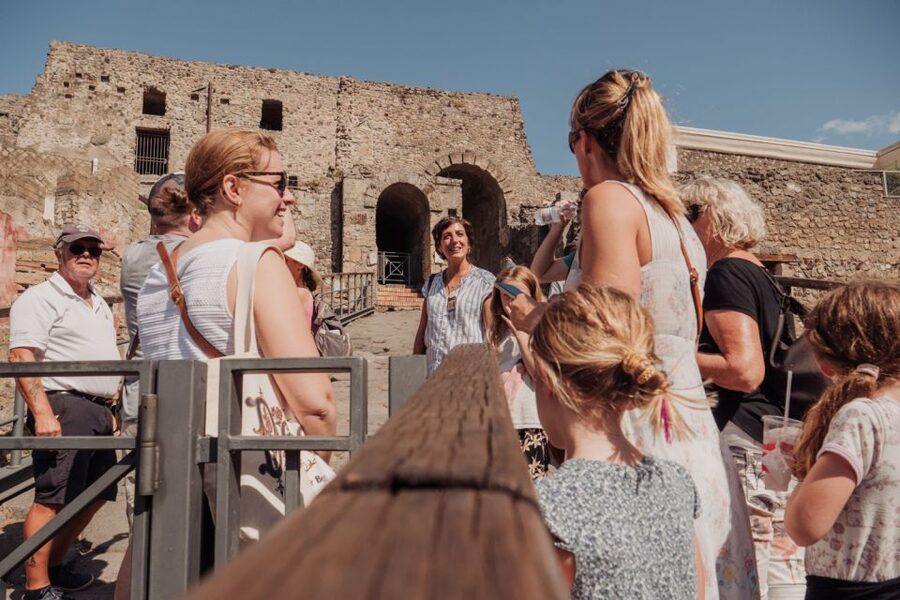
Pompeii is the headline for a reason. You get a 2-hour guided visit that aims to cover the core visual story of the Roman city and the people trapped when Vesuvius erupted.
You’ll walk through the key areas that many visitors come to see, with an archaeologist guiding you through how the city worked. The tour specifically points out several emotionally powerful stops:
- the newly opened houses
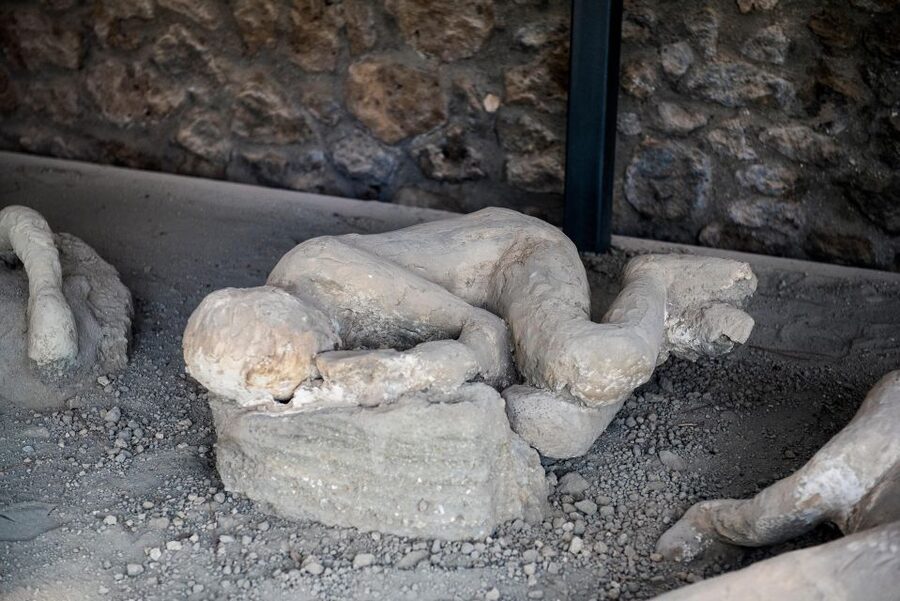
- the plaster casts of victims
- the brothel
- and more highlights that connect the sites into a single narrative
Why Pompeii feels intense in the best way
Pompeii is not just architecture. The tour’s emphasis on the casts helps you understand how the evidence was collected and what it suggests about the final moments. Seeing victims represented in plaster makes the tragedy harder to dismiss as history textbook material.
The brothel stop also gives you a wider look at everyday Roman life, not only the dramatic disaster scenes. And the newly opened houses matter because they remind you that Pompeii is still being studied and uncovered, not a museum frozen in time.
A few more Rome options to weigh
- Herculaneum: Skip-the-Line Guided Tour with Archaeologist
★ 4.8 · 3,439 reviews - Pompeii and Herculaneum Small Group Tour with an Archaeologist
★ 5.0 · 1,350 reviews - Herculaneum Small Group Tour and Ticket With an Archaeologist
★ 5.0 · 994 reviews - Herculaneum: Skip-the-Line Entry Ticket with Audio Guide
★ 4.3 · 870 reviews
How to handle the “too fast” risk
One repeated theme from feedback is that Pompeii can feel rushed, especially if you’re hoping for long photo breaks or slow wandering. The tour includes a guided segment plus a free time block, so the best move is to treat the guided part as your learning time and use free time strategically.
If you want photos, pick your shot locations early. Do not wait until the last minute when the group is moving on. In Pompeii, you can lose time quickly if you stop too often in places that do not match your interests.
The walking reality in Pompeii
Plan on about one mile of walking in Pompeii. It is not just distance. You’ll be moving across uneven, stone-paved ground. Wear shoes you can move in confidently.
The 30-minute free time in Pompeii: shopping and lunch strategy
You get 30 minutes of free time in Pompeii. The tour frames this as time for shopping or lunch. That’s not much, so you’ll want a simple game plan before you reach the free-time window.
Two practical ideas:
- If you want lunch, decide early where you’re going, then head there immediately. People have noted that sitting and finishing food in a short time window can be challenging at the entrance area where there are limited eating options.
- If you want souvenirs, use the free time for small items and essentials. Do not expect a full meal and a thorough shopping stop in 30 minutes.
If you can tolerate skipping a full lunch, you might prefer to use this time for a snack and save a real meal for later back in Naples or on your return to Rome.
Herculaneum: preserved streets and houses, plus the beach of remains
Next comes the switch from Pompeii’s big-city feel to Herculaneum’s more intimate preservation. You transfer by minibus, then get 2 hours of guided time at the site.
Herculaneum is often described as emotionally different from Pompeii because the town’s remains preserve details in a way that helps you picture daily life more closely. The tour highlights key stops such as:
- the House of Neptune and Amphitrite
- the beach area where the remains of many skeletons are preserved
Why the House of Neptune and Amphitrite matters
This is not a random pick. A house like this helps you see how space was used: rooms, layout, and how people moved through their homes. When a guide points out what you’re looking at, it turns ruins into a readable environment.
The beach remains: a difficult stop, handled with meaning
The beach area is one of the most striking parts of Herculaneum. The tour includes it for a reason. It forces you to think about the eruption as a physical event, not just a story. Guides on this itinerary have been praised for balancing the tragedy with clear archaeological explanation.
If you want a respectful approach, pace yourself here. Take a moment before you reach the most emotional viewing areas. This stop can hit harder than the plaster casts in Pompeii, because it connects to the preserved remains more directly.
Walking distance in Herculaneum
You’ll walk about half a mile in Herculaneum. That’s shorter than Pompeii, but it is still on uneven stone. Comfortable, closed-toe shoes are worth it.
Returning to Naples and getting back to Rome without stress
After Herculaneum, you return to Naples Central Station by minibus for the ride back to Rome. The train back takes about 70 minutes. The full day is listed as 8.5 hours, so the itinerary is designed to keep you on the rails.
This is where you can protect your own sanity. If you have any reservations or plans immediately after you land back in Rome, build in buffer time. A few people have mentioned that train info timing can affect how easily you connect onward, so treat your return as firm and your later plans as flexible.
Who this tour fits best, and who should rethink it
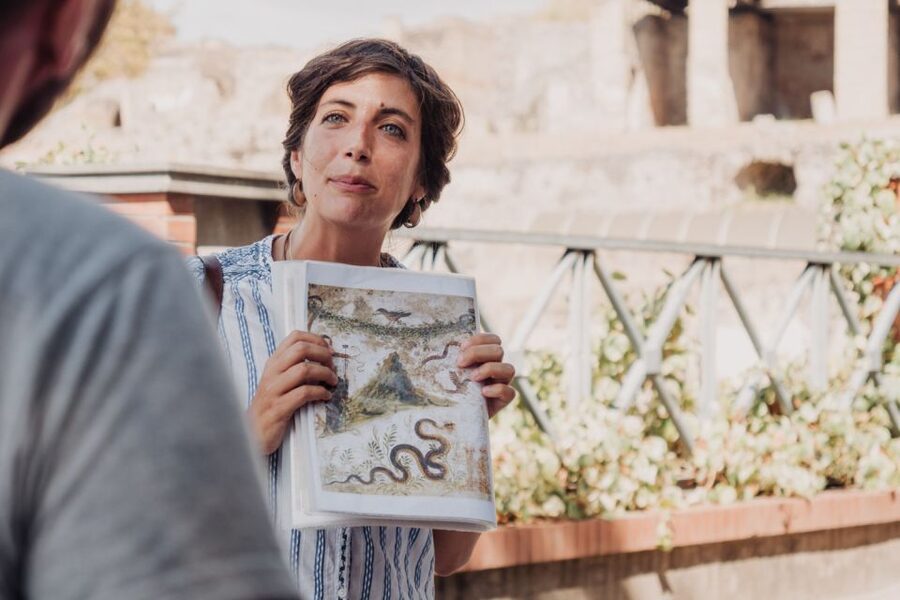
This tour is built for people who want structure and expert context. It’s also built for a particular kind of physical readiness.
You’ll likely enjoy it if:
- you want both Pompeii and Herculaneum in one day
- you prefer a guided flow over wandering alone
- you like learning from an archaeologist, not only reading signs
- you’re happy with short bursts of free time rather than long unplanned hours
You might want to reconsider if:
- you have limited mobility or require wheelchair access, because it is not recommended and is not suitable for wheelchair users
- you need long rests or a lot of slow time, because there’s about one mile of walking in Pompeii and half a mile in Herculaneum, on uneven ground
- you dislike moving with a group pace, since Pompeii free time is only 30 minutes
If you’re traveling with a strong interest in archaeology and you care about understanding what you see, this itinerary is made for you.
Price and value: what $222.77 buys you, and what it does not
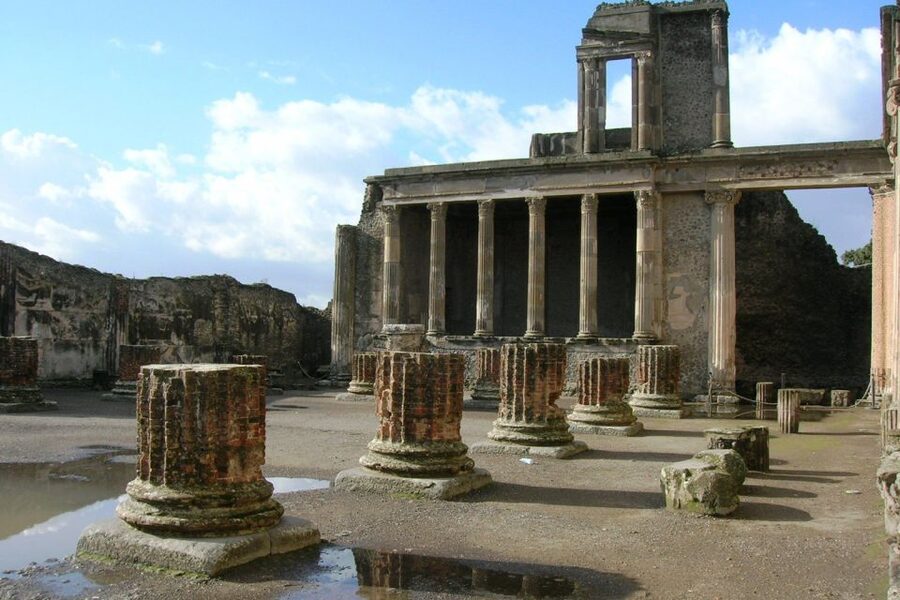
The price listed is $222.77 per person, and you should judge it by what’s included for the day. This is not just a bus to Pompeii.
Included value you actually feel:
- Round-trip high-speed train tickets Rome to Naples (about 70 minutes each way)
- Skip-the-line style entry for Pompeii via Pompeii Express entry tickets
- Herculaneum entry tickets (noted as 16 euros each)
- Guided tours with an archaeologist at both sites
- Transportation by van or minibus to and between the sites
- Headsets for all participants, which helps a lot in ruins
- The itinerary also includes structured free time, not just a drop-off
Not included:
- Meals
- Hotel pickup and drop-off
Here’s the honest takeaway: you’re paying for time saved and for expert interpretation. If you tried to do this independently, you’d spend time buying timed entries, coordinating transport, and searching for someone who can explain the evidence clearly. If you’re the kind of traveler who values smooth organization and fewer headaches, the price starts to make sense quickly.
If you’re on a super tight budget, you may find other options cheaper. But you’ll trade away the “one day, two sites, guided by an archaeologist” efficiency.
Packing and shoes: small details that prevent big annoyances
The tour is clear about what to bring and what to avoid.
Bring:
- your passport or ID card
Avoid:
- sandals or flip flops
- high-heeled shoes
- luggage or large bags
Also plan for weather. The tour runs rain or shine, and it’s smart to bring a raincoat. Pompeii and Herculaneum can be slippery, and your feet do not care about forecasts.
One more practical tip: because the day includes transfers plus walking, keep essentials accessible. You want water, your ID, and a phone charge plan ready without digging through bags.
Guide quality is the engine of this day
The most consistently praised part of this experience is the human one: the archaeologist guides. Names show up again and again, including Mikel, Jasmine, Raphael, Michele, Sergio, Diego, Gennaro, Julia, and Paolo. What’s common across these examples is the way they connect evidence to everyday life and tragedy, and they keep the group moving at a pace that fits the day.
You can also hear it in the logistics feedback. People mention good organization, smooth coordination, and in at least one case, a driver handling a mechanical hiccup while keeping the day on track.
If you care about story, not just sightseeing, this is where the tour earns its near-perfect ratings.
Should you book this Pompeii and Herculaneum day trip?
I think you should book it if you want a well-run day built around two major sites and you’d rather learn from an archaeologist than “see what’s there” on your own.
Skip it or plan a different approach if you:
- need very slow pacing or have mobility limitations
- hate walking on uneven stone
- expect long free time for photos and a leisurely lunch
For most people making a first Rome trip, this is a strong way to use limited time. You get fast access, guided interpretation at both stops, and enough structure to feel like the day actually accomplishes something.
FAQ
How long is the Pompeii and Herculaneum tour from Rome?
The total duration is listed as 8.5 hours.
What train is used from Rome to Naples?
You take a fast train from Roma Termini to Naples Central Station. The train time is about 70 minutes.
Where do I meet the guide in Naples?
Meet in front of the STARHOTEL TERMINUS entrance located opposite the station, and look for the guide holding an ASKOS TOURS sign.
Is there a guided archaeologist tour at both sites?
Yes. You get guided tours with an archaeologist in both Pompeii and Herculaneum.
How much time do I have at Pompeii on my own?
You have 30 minutes of free time in Pompeii.
How much time do you spend at Herculaneum?
The guided visit at Herculaneum is listed as 2 hours.
Are meals included in the tour price?
No. Meals are not included.
How much walking is involved?
The tour notes about one mile of walking in Pompeii and about half a mile of walking in Herculaneum.
What should I bring?
You should bring a passport or ID card.
What footwear is not allowed?
Sandals or flip flops are not allowed, and high-heeled shoes are not allowed.
More Train Experiences in Rome
- Rome to Pompeii Guided Tour with Wine & Lunch by High Speed Train
★ 5.0 · 1,379 reviews - From Rome: Ostia Antica Guided Half-Day Trip by Train
★ 4.8 · 486 reviews - Rome: Pompeii Tour with Wine and Lunch by High Speed Train
★ 4.8 · 485 reviews - From Rome: Day Trip to Venice by High-Speed Train
★ 4.6 · 352 reviews
More Day Trips out of Rome
- Pompeii and Mount Vesuvius Day Trip from Rome with Pizza Lunch
★ 4.5 · 6,151 reviews - From Rome: Pompeii Day Trip with Optional Vesuvius and Lunch
★ 4.6 · 5,067 reviews - Pompeii Tour & Amalfi Coast Day Trip from Rome
★ 4.5 · 1,932 reviews - Private Pompeii, Positano & Amalfi coast Tour from Rome
★ 4.5 · 1,888 reviews
Latest reviews around Rome
- From Rome: Hadrian’s Villa & Villa d’Este Day Trip & Lunch★ 4.5 · 157 reviews
- Rome: Painting Class with Unlimited Wine★ 4.8 · 109 reviews
- Vatican City: Sistine Chapel, Museums, Basilica Private Tour★ 4.8 · 158 reviews
- Pope Leo XIV Audience Tour with Local Guide★ 3.3 · 111 reviews
- Rome: The Three Tenors at St. Paul’s Church Concert Ticket★ 4.7 · 699 reviews
- Vatican Museums & Sistine Chapel Skip-the-Line Guided Tour★ 4.6 · 254 reviews
- Rome: St. Peter’s Basilica and Papal Tombs Guided Tour★ 4.6 · 477 reviews
- St. Peter’s Dome Climb, Basilica and Vatacombs Tour★ 4.7 · 230 reviews
Pompeii & Vesuvius Tours, compared.
Pompeii: Entry Ticket and Guided Tour with an Archaeologist
Read our review →
Pompeii: Entry Ticket with Optional Audio Guide
Read our review →
Pompeii: Small Group Tour with an Archaeologist
Read our review →

Pompeii Small Group Tour with an Archaeologist
Read our review →
Pompeii, Amalfi Coast and Positano Day Trip from Rome
Read our review →Browse the lists this tour appears in