
Reviewed · TRAIN EXPERIENCES
From Rome: Ostia Antica Guided Half-Day Trip by Train
Roman port life, minus the crowds. Ostia Antica is a former harbor town where the daily grind of Roman citizens still reads clearly in the stones. You also get the added bonus of a small group format and a live English guide, so the place doesn’t feel like random walls and broken columns.
Two things I really like about this tour are the way it focuses on everyday Roman life, not just monuments, and the chance to see major stops in a tight 4-hour window. In particular, the guide-led walk hits the main street, the washrooms, the Baths of Neptune mosaic, and the amphitheater, so you leave with a coherent picture. If you get guides like Rob or Cat, their storytelling and timing tend to be the kind that makes the ruins feel less distant.
One drawback to consider is that this is a walking-heavy archaeological site and it is not suitable for wheelchair users. Bring sturdy shoes and plan for uneven ground, because the point here is to move through the ruins at a Roman walking pace.
In This Review
- Key highlights worth your attention
- Rome to Ostia Antica by train: why this half day works
- Where to meet and how the train day is set up
- Walking the main street, Decumanus Maximus, with context
- The communal Forica: the most human stop on the route
- Baths of Neptune: mosaics that do the talking
- The amphitheater: picture the roar of 3,500 spectators
- Other sights along the way, the port-city texture you don’t want to miss
- Heat, shoes, and a toilet break that actually helps
- Staying after the tour: Ostia Antica, modern Ostia, or the beach
- How good is the value at about $58?
- Who should book this Ostia Antica train tour
- Practical tips for your day at Ostia Antica
- Should you book this Ostia Antica tour?
- FAQ
- How long is the trip from Rome to Ostia Antica?
- Where do I meet for the tour?
- What’s included in the price?
- How does the train part work?
- Is there a toilet break?
- Can I stay after the tour in Ostia Antica or the modern town?
- Can I also go to the beach after the tour?
- Are baby strollers allowed?
- Is the tour wheelchair accessible?
- What should I bring?
Key highlights worth your attention
- Train access that’s genuinely simple: you leave from central Rome and ride out to the ruins on provided tickets.
- Focused ruins route in 3 guided hours: you do the major sights without wandering in circles.
- Forica public washrooms: a marble bench with 20 spaced holes in an open communal room.
- Baths of Neptune mosaic: the sea god in a 4-horse chariot is a standout visual.
- Amphitheater built for about 3,500: you sit where crowds once gathered around 12 BC.
- Add-on time after the tour: you can stay in Ostia Antica or head to the beach when the guided portion ends.
Rome to Ostia Antica by train: why this half day works

Ostia Antica sits close enough to Rome that it feels like a day trip. But it also feels far enough away that the experience is calmer. That balance matters, because you’re visiting a huge archaeological park, not a tight city museum.
The timing helps. You spend about 15 minutes by train each way, then have 3 hours guided inside the ruins. That structure is great if you want something substantial, without burning your whole day on transport and waiting.
More day trips out of Rome:
- From Rome: Pompeii, Amalfi Coast, and Sorrento Day Trip
★ 4.6 · 7,031 reviews - From Rome: Pompeii, Amalfi Coast and Positano Day Trip
★ 4.6 · 6,620 reviews - Pompeii, Amalfi Coast and Positano Day Trip from Rome
★ 4.5 · 6,250 reviews
Where to meet and how the train day is set up
You meet at Cafe Piramide at Piazzale Ostiense, 9. If you’re standing at the Piramide metro (Line B, the blue line), face the metro and stop on the right-hand side for the café. The easy visual cue is the white umbrellas outside.
Once you’re with your group, the logistics are handled for you at the start. You get the return train ticket included, and the guide stays responsible for keeping the group together during the guided portion.
At the end, you’re free to do your own thing. The guided tour ends in Rome at Piramide Metro Station at about 1:00 PM. Your return journey is unescorted, meaning you’ll be using the provided train tickets on your own. That’s fine for most people, but it’s worth knowing ahead of time so you don’t assume someone is shepherding you all the way back.
One more practical note: if public transport gets disrupted, the operator says a minibus can be provided at no extra cost. That takes a big stress point off the table.
Walking the main street, Decumanus Maximus, with context
The heart of Ostia Antica is the feeling of moving through a working port city. The tour’s route is built around that, starting with the major thoroughfare. You walk down the Decumanus Maximus, the main east-west street, and the guide uses the architecture to explain the role of commerce and civic life.
This is where a good guide makes the difference. If you land with someone like Alberto Terrasi, the pace tends to be firm but not rushed, and the stops come with clear explanations of what you’re seeing and why it mattered. The street alignment, building sizes, and the placement of decorative elements help you picture how Romans navigated daily errands.
You’ll also notice statues and street ornamentation lining the walkways. Even in ruins, their placement communicates social status and public messaging. The effect is simple and powerful: you stop treating the site like a set of exhibits and start reading it like a neighborhood.
The communal Forica: the most human stop on the route
If you want one place that feels startlingly real, go to the Forica, the communal washrooms. This isn’t a distant topic like politics or warfare. It’s a room designed for ordinary people.
The tour points out the marble bench with 20 well-spaced holes across the open space, with walls wrapping around the room. The bench layout makes it obvious this was a shared, everyday facility. Sitting where Romans sat turns the ruins into something you can almost smell and hear.
This is also one of the reasons the half-day format works. You don’t just see big buildings. You get at the routines, including public sanitation.
A few more Rome options to weigh
- Rome to Pompeii Guided Tour with Wine & Lunch by High Speed Train
★ 5.0 · 1,379 reviews - Rome: Pompeii Tour with Wine and Lunch by High Speed Train
★ 4.8 · 485 reviews - From Rome: Day Trip to Venice by High-Speed Train
★ 4.6 · 352 reviews - From Rome: Pompeii and Naples Day Trip by High-Speed Train
★ 4.7 · 234 reviews
Baths of Neptune: mosaics that do the talking
Next comes the Baths of Neptune, one of the sites where Ostia Antica looks almost too intact. The highlight is the mosaic of the sea god being drawn by a 4-horse chariot.
A mosaic like this does more than look pretty. It signals wealth and civic pride, and it tells you that leisure spaces and religious imagery lived side by side. The guide helps you connect the artwork to the bathhouse setting, so it doesn’t stay frozen in time as a pretty floor.
People often praise how guides use images and stories while you’re standing in front of the remains. Guides such as Catarina and Cat are frequently mentioned for making the bathhouse feel like a real place, not just a highlight photo.
The amphitheater: picture the roar of 3,500 spectators
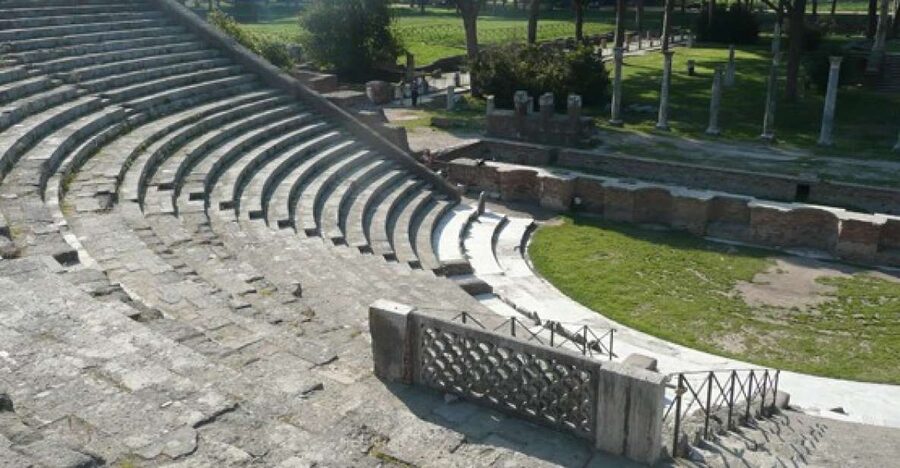
The amphitheater is one of the easiest places to imagine yourself in the crowd. The guide frames it with an important detail: it was built around 12 BC and designed for roughly 3,500 spectators.
Once you’re in the stands, the scale hits. You can understand how entertainment and public life overlapped in Roman culture. Even without the original sound effects, the setting does the work. It’s the kind of stop that makes you rethink how often Roman citizens gathered for events.
If you’re into architecture, watch the curvature and how seating adapts to the space. If you’re more into people, listen for how your guide connects the venue to civic identity.
Other sights along the way, the port-city texture you don’t want to miss
Ostia Antica isn’t small, and the tour wisely picks a route that highlights variety. You’ll see remnants that suggest everyday functions and infrastructure, including tavern-type spaces, thermal bath areas, warehouses, and theater-related remains.
Several guides are noted for pointing out original decorative elements and wall finishes that help buildings feel taller and more finished than you might expect. In some cases, frescoes and other art work are still visible. That matters, because it changes the mood from ruins-as-skeletons to ruins-as-rooms.
It’s also part of why Ostia Antica can feel more manageable than bigger sites like Pompeii. The ruins are spread out and still readable, and the guided route keeps you from missing key sections just because your eyes are tired.
Heat, shoes, and a toilet break that actually helps
Ostia Antica can be hot, and walking through open ruins means sun is real. Bring comfortable shoes. Also consider packing water and a small snack even though there is a planned toilet break with time for a snack and/or drink at a snack bar.
One thing that shows up again and again in the feedback is that certain guides actively manage comfort. People mention a guide finding shade during hot conditions, which tells you the group doesn’t just march on autopilot.
Also remember what’s not allowed: baby strollers. That affects families more than you might think, because you can’t rely on stroller mobility through the site.
Staying after the tour: Ostia Antica, modern Ostia, or the beach
When the guided portion ends, you can stay. You have options, and this is one of the best reasons to choose this format.
You can remain around Ostia Antica for more solo wandering. You can also explore the modern town of Ostia, which is a nice change of pace if you want food, coffee, or simple beach-town energy. And if you feel like turning Roman ruins into an actual beach day, the tour notes that you can head to a nearby beach.
If you also want to add the on-site museum, keep an eye on timing. One detail that comes up for winter visits is that the museum may close earlier, around 1:30 PM, so if you’re going to do it, prioritize it early.
How good is the value at about $58?
At around $58 per person for a 4-hour experience, this tour looks better than it first appears. You’re not just paying for a guide. You’re also getting the return train ticket from Rome, plus entry to Ostia Antica.
That’s the value angle. The included train makes the day practical, and the guide makes the ruins meaningful. If you attempted this on your own without context, you’d either miss key areas or spend more time figuring things out instead of absorbing the story.
The small group limit, capped at 12 participants, also affects value. Smaller groups tend to get better attention at the stops, and it’s easier to ask questions without the whole day turning into a moving line.
Who should book this Ostia Antica train tour
This tour is a strong fit if you want:
- Roman daily life, civic routines, and port-city functions explained in plain language
- A half day that doesn’t force a full day of logistics in Rome
- A less crowded alternative feeling compared to some of the more famous nearby sites
- A guide who can connect details, like public washrooms and bath mosaics, to real human behavior
You might skip it if:
- You use a wheelchair, since it is not suitable for wheelchair users
- You want a mostly hands-off experience where you only look at big showpiece buildings
- You don’t want the unescorted return segment at the end, even though it’s still straightforward with the provided train tickets
For first-time visitors to Rome who want one “different” day beyond the usual big monuments, Ostia Antica is often the kind of stop that adds variety fast.
Practical tips for your day at Ostia Antica
A few small choices can make the difference between a tiring walk and a satisfying one.
1) Wear grippy shoes
Roman ruins can mean uneven stone and open walkways. Comfort matters more than style here.
2) Bring beachwear if you plan to stay
The option to go to the beach after the tour is part of the appeal, so packing a towel and change of clothes can turn your half day into a full ending.
3) Pack a towel and sports shoes
The tour recommends these, which is a clue that you’ll be glad you brought them once you add time in Ostia or the water.
4) Plan for a snack break
You’ll get a toilet break with time for a snack or drink. If you’re picky about food timing, bring your own backup as well.
5) Know what end-of-tour freedom means
Your guide manages the guided time and helps get you back to Rome at Piramide. After that, you navigate the train on your own.
Should you book this Ostia Antica tour?
I’d book it if you want the quickest path from Rome to a port-city slice of Roman life that feels real. The included train tickets, entry, and guide make the day smoother than a DIY plan, and the route hits the places that turn ruins into stories. If you get a guide like Rob, Cat, Alberto, Laura, or Catarina, the guided walk is the point, and many people specifically mention that the guide’s clarity, energy, and storytelling make the site much easier to understand.
If you want a comfortable, seated museum day or you need full accessibility, this probably isn’t your best fit. But for a able-bodied visitor who can handle walking in open archaeological spaces, this is one of the most efficient ways to see Ostia Antica without feeling lost.
FAQ
How long is the trip from Rome to Ostia Antica?
The full experience runs about 4 hours. The train time plus a 3-hour guided visit in Ostia Antica make up the schedule.
Where do I meet for the tour?
Meet at Cafe Piramide. It’s at Piazzale Ostiense, 9. The meeting point is in view of the train tracks, near the Piramide metro stop on Line B.
What’s included in the price?
Included are the return train ticket from Rome to Ostia Antica, entry to Ostia Antica, and a live English guide.
How does the train part work?
You take the train from central Rome to Ostia Antica with your included ticket, and then you ride back at the end of the tour. The return journey is unescorted.
Is there a toilet break?
Yes. There is a planned toilet break with time for a snack and/or a drink at the snack bar.
Can I stay after the tour in Ostia Antica or the modern town?
Yes. After the guided portion, you can remain in Ostia Antica and the modern city of Ostia at your leisure.
Can I also go to the beach after the tour?
Yes. The experience notes that you can head to a nearby beach if you want to continue after the tour.
Are baby strollers allowed?
No. Baby strollers are not allowed.
Is the tour wheelchair accessible?
No. It is not suitable for wheelchair users.
What should I bring?
Bring comfortable shoes. If you plan to add beach time, pack a towel and beachwear. The tour also recommends sports shoes.
Latest reviews around Rome
- From Rome: Hadrian’s Villa & Villa d’Este Day Trip & Lunch★ 4.5 · 157 reviews
- Rome: Painting Class with Unlimited Wine★ 4.8 · 109 reviews
- Vatican City: Sistine Chapel, Museums, Basilica Private Tour★ 4.8 · 158 reviews
- Pope Leo XIV Audience Tour with Local Guide★ 3.3 · 111 reviews
- Rome: The Three Tenors at St. Paul’s Church Concert Ticket★ 4.7 · 699 reviews
- Vatican Museums & Sistine Chapel Skip-the-Line Guided Tour★ 4.6 · 254 reviews
- Rome: St. Peter’s Basilica and Papal Tombs Guided Tour★ 4.6 · 477 reviews
- St. Peter’s Dome Climb, Basilica and Vatacombs Tour★ 4.7 · 230 reviews
Train Experiences, compared.
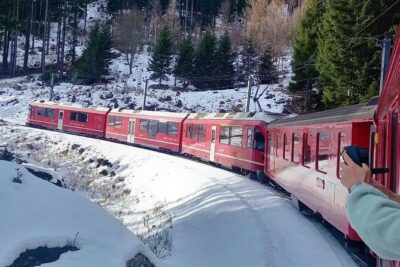
Bernina Red Train, Swiss Alps & St Moritz From Milan
Read our review →
Swiss Alps Bernina Red Train and St.Moritz Tour from Milan
Read our review →
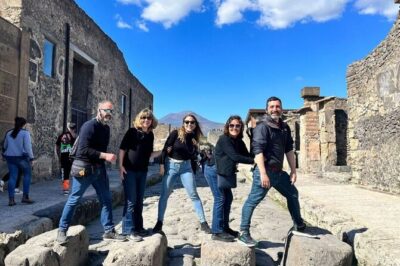
Rome to Pompeii Guided Tour with Wine & Lunch by High Speed Train
Read our review →
From La Spezia: Shore Excursion to Cinque Terre by Train
Read our review →
Guided tour of Pompeii skip-the-line and round-trip train
Read our review →
Pompeii Tour with Wine and Lunch by High Speed Train
Read our review →
Cagliari: Conti Vecchi Salt Flats Train and Tour
Read our review →Browse the lists this tour appears in