
Reviewed · POMPEII & VESUVIUS TOURS
Pompeii and Herculaneum Small Group Tour with an Archaeologist
Pompeii and Herculaneum feel manageable with a real guide. This small-group tour uses an archaeologist to translate streets, houses, baths, and theaters into daily life, while you skip the fuss of lines and wayfinding. I especially like that tickets and headsets are included, so you spend time looking instead of figuring out what you missed.
My one caution is pacing. Pompeii is huge, and even with a smart hit list, the day can feel a bit rushed, especially if you want to slow down for museums or extra details. Lunch is also an own-expense break, and you may end up eating in a more modern setting than you expect.
In This Review
- Key points before you go
- Archaeologist-guided Pompeii: where the ruins start making sense
- Stop by stop in Pompeii, without wasting your limited time
- What I like about this Pompeii approach
- What can annoy you
- How the day moves between cities: Naples, Sorrento, Rome, and Pompeii
- Your meeting point depends on where you start
- Transport to Herculaneum after Pompeii
- How you end the tour
- Herculaneum is the quieter payoff: two hours with ticket access
- The ticket advantage you will feel on arrival
- The Herculaneum stops that tend to land hardest
- What to do if you feel the pace creeping in
- Price and value: what $77.09 really buys you
- Small group comfort: headsets, max 20, and a realistic walking day
- Accessibility note you should take seriously
- Should you book it? A clear yes if you want the highlights with context
- FAQ
- How long is the Pompeii and Herculaneum small group tour?
- Is it a guided tour, or do I walk on my own?
- Do I need to buy admission tickets separately?
- How do you travel between Pompeii and Herculaneum?
- Where do I meet the guide?
- What is included for communication during the tour?
- Is lunch included?
- How big is the group?
- Is this tour offered in English?
- Is the tour suitable for visually impaired guests?
Key points before you go
- Archaeologist-led visits in both sites so the ruins make sense fast
- Skip-the-ticket-line access plus entry tickets included for Herculaneum and Pompeii
- Headsets for the whole group, which matters when you are moving and talking
- Real transit built in: minibus from Naples, Sorrento, and Rome, or Circumvesuviana train if you start in Pompeii
- Small group size (max 20) for questions and a less chaotic pace
- Herculaneum is the payoff when Pompeii has you sprinting through the highlights
Archaeologist-guided Pompeii: where the ruins start making sense
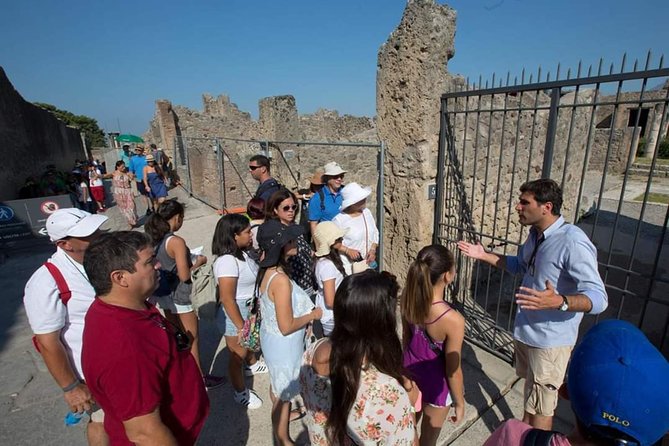
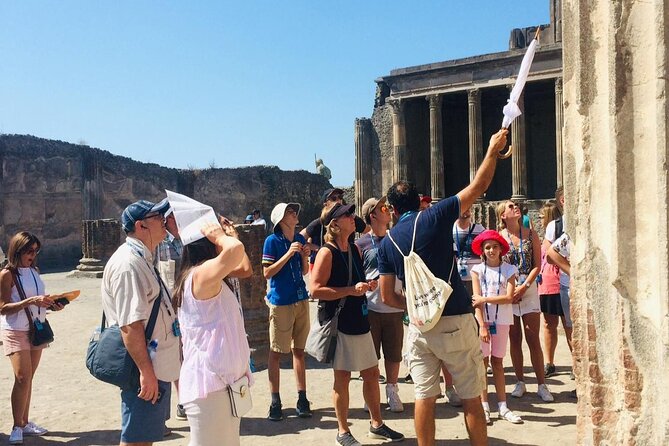
If you have ever stood in Pompeii with a map and still felt lost, this is the fix. The guide does the heavy lifting. You are not just looking at walls, you are learning how spaces were used, from markets and civic centers to leisure and private homes.
A big practical win is how the tour is structured with headsets. You can hear the guide without craning your neck. That matters at busy stops like the Forum and around the amphitheater areas, where crowd noise can drown out a standard tour.
The guides coming through for this style of tour are often singled out for strong storytelling and answering questions. Names like Michele, Diego, Antonio, Paulo, and Michael show up again and again in the feedback. Even if you do not get the exact same guide, you can expect that you are walking with someone who knows what to point out and why.
More Pompeii digs and Vesuvius climbs:
- Pompeii: Entry Ticket and Guided Tour with an Archaeologist
★ 4.8 · 19,459 reviews - Pompeii: Entry Ticket with Optional Audio Guide
★ 4.2 · 12,360 reviews - Pompeii: Small Group Tour with an Archaeologist
★ 4.8 · 12,264 reviews
Stop by stop in Pompeii, without wasting your limited time
You start in Pompeii and get about two hours covering major highlights. That time window is short for a site as large as Pompeii, so the tour focuses on the places that help you build the mental picture quickly.
Here is what each key stop is doing for you, plus what to watch for:
- Basilica (first stop): This open portico was a shelter for merchants and public activity. I like this early stop because it sets the tone for the city as a working place, not just a dramatic ruin.
- Forum (Foro di Pompeya): The main square is where civic life happened. When the guide connects the Forum to other nearby buildings, the site stops feeling random and starts feeling like a route.
- Main street walk: A walk through the principal street is a smart bridge between big landmarks. You get a feel for scale and movement, and it helps you understand how pedestrians actually traveled through the city.
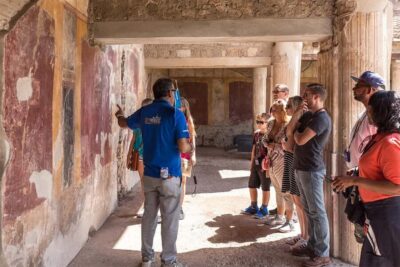
- House of Menander: This is one of the richest houses in Pompeii for architecture and decoration. Spend a moment looking at layout and ornamentation, because this is where domestic life becomes real.
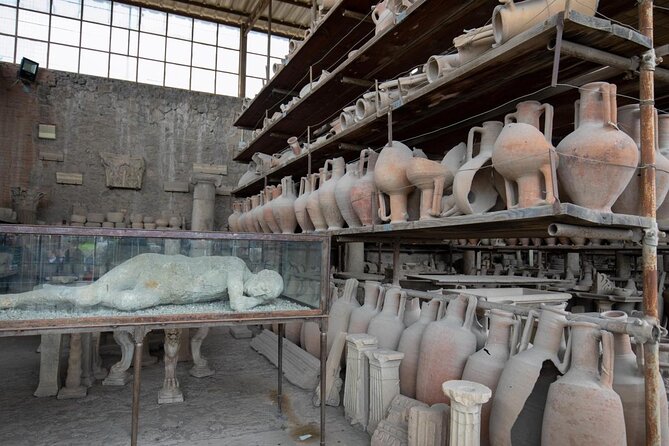
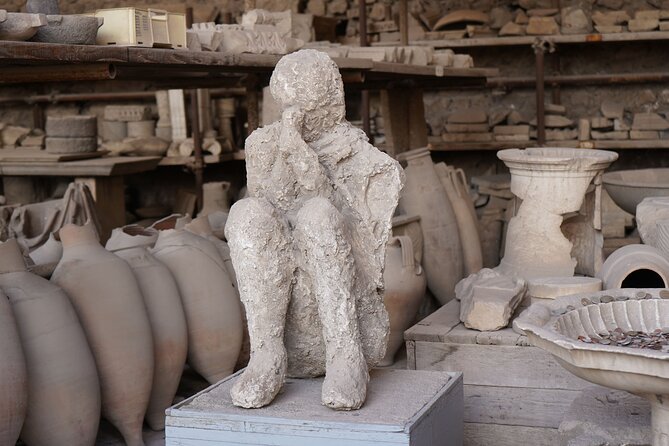
- Granaries of the Forum: This stop includes marble tables, fountain-related elements, and even plaster casts connected to the eruption. It is a mix of everyday infrastructure and the unforgettable visual record of what happened. If you want one stop that hits both engineering and emotion, this is it.
- Stabian Baths (Terme Stabiane): These are described as the oldest thermal complex in the city. Even if you are not a bath-nerd, you can learn a lot just by understanding how large the facility was and how it fits the city blocks.
- Lupanar: The famous brothel. The guide framing helps here. Instead of treating it like shock value, you can see it as part of the city’s social ecosystem.
- House of the Faun: One of Pompeii’s largest private residences. This is a good place to notice the difference between a showy home and a typical dwelling plan, because the guide will point out elements you can easily miss on your own.
- Odeon, also called Teatro Piccolo: A smaller theater stop gives you context for performance culture without only focusing on the biggest showpiece.
- Teatro Grande: The main theater. If you only have a couple hours total, you want the big one. The guide’s explanations help you read the space rather than just photographing it.
What I like about this Pompeii approach
I like that you get structure. Pompeii is a maze, and a guided hit list helps you leave with a map in your head. I also like that the stops are varied, from commerce (Basilica and Forum) to private wealth (houses) to public entertainment (theaters and baths).
What can annoy you
If you want to linger, Pompeii will fight you. Even with a well-run route, two hours is not enough to explore everything at your own rhythm. If you love museums inside the park or want extra time with specific plaster casts or finer details, build in the expectation that you will need a return trip.
A few more Pompeii options to weigh
- Pompeii: Small-Group Tour of Pompeii and Herculaneum
★ 4.8 · 867 reviews - From Naples: Pompeii & Herculaneum with Archaeologist Guide
★ 4.8 · 665 reviews - From Naples: Pompeii, Herculaneum, & Vesuvius Full-Day Tour
★ 3.9 · 602 reviews - From Naples: Pompeii and Herculaneum Tour with Lunch
★ 4.3 · 444 reviews
How the day moves between cities: Naples, Sorrento, Rome, and Pompeii
One reason people book this tour is the logistics. The tour is built around getting you from point to point without trying to master trains, stations, and time gaps on your own.
Your meeting point depends on where you start
The tour meets at different locations depending on your chosen option:
- Pompeii: Porta Marina Superiore
- Naples and Rome: Starhotels Terminus
- Sorrento: Piazza Angelina Lauro
That matters. If you arrive in the wrong area by mistake, you can lose the whole day. Starting from a clear meeting point helps you stay calm.
Transport to Herculaneum after Pompeii
After Pompeii and a short lunch break (own expense), you continue to Herculaneum using the included method tied to your start location:
- If you start in Naples, Sorrento, or Rome: you travel by modern minibus with your guide directly to the Herculaneum archaeological site.
- If you start in Pompeii: you use an included Circumvesuviana one-way train ticket to reach Herculaneum, then walk about 10 minutes to the ruins with your guide (the train ride is about 30 minutes plus the walk).
How you end the tour
Your ending point also depends on your start option:
- Naples or Sorrento travelers: return transport to Naples or Sorrento.
- Rome travelers: drop-off at Naples station.
- Pompeii travelers: you are dropped directly in the Herculaneum ruins area.
This is a small detail, but it affects your evening plans. If you want a relaxed dinner, make sure you know where you will finish before you book anything.
Herculaneum is the quieter payoff: two hours with ticket access
After Pompeii, you go to Herculaneum, and this part is where the day feels different. Herculaneum is smaller, and the ruins are described as remarkably preserved. That combo means you can actually absorb more per minute.
A key practical moment: the guide leads the group directly to the Herculaneum ticket office, so you do not waste energy hunting for entry desks. Then you continue through a guided route of major houses, baths, and public buildings.
The ticket advantage you will feel on arrival
Entry tickets for Herculaneum are included, and the tour also includes what are described as skip-the-ticket-line access. In real terms, that means fewer dead minutes standing around. When you are on a tight schedule, those minutes matter.
Also, the headsets stay in play, so you can move between houses and keep hearing the context. It is easier to connect what you see when the guide is narrating the building as you walk.
The Herculaneum stops that tend to land hardest
Here is what the guided route covers, and why it is worth your attention:
- House of the Deer: named from marble statues of deer. It is a fun way to notice how decoration signaled taste and identity.
- La Terrazza di M. Nonio Balbo: this terrace is tied to the city’s major benefactor, with a long inscription noted in the tour description. If you like public memory and big personalities, do not rush this stop.
- College of the Augustales: connected with a cult of Emperor Augustus and the Collegium Augustalium, or possibly even local civic leadership. This is where the tour shifts from private rooms to institutional spaces.
- Casa del Rilievo di Telefo: described as unusual because it has its own private access to the adjoining Suburban Thermae to the south. Notice how living space and leisure could connect.
- Partem Domus lignea, Casa del Tramezzo di Legno: this is highlighted for the wooden partition that remains. Even if wood sounds fragile, the point is that something surviving gives you a clearer idea of how rooms were used.
- House of the Skeleton: named for human remains discovered in 1831. This is one of the stops where the tour likely feels heavier, because it is personal and concrete.
- Central Thermae: described as built around the beginning of the 1st century AD, with separate men’s and women’s baths and entrances. The guide framing helps you understand flow and separation in daily life.
- House of the Black Salon: known for luxury, a monumental entrance, and carbonised remains of doorposts and lintel. If you want one stop that feels intensely specific, focus here.
- Casa Sannitica: described as typical for the Samnites, with a splendid atrium and a gallery with Ionic columns, plus fresco decoration. This is a good stop to compare design styles and see how communities influenced form.
- Casa del Bel Cortile: an original house layout with a courtyard, stairway, and stone balcony instead of an atrium. It helps you see that not every home followed one template.
- House of the Grand Portal: a central domus with collon- nati, frescoes, and charred remains of wooden parts. This end stretch is where the tour leaves you with strong visuals.
What to do if you feel the pace creeping in
If you notice yourself wanting more time, pick one or two stops in Herculaneum to slow down for. The site is smaller, so you can usually catch up. But you should still keep moving so you do not get left behind on the final route.
Price and value: what $77.09 really buys you
The price is listed at $77.09 per person, and at this level, you should judge value by what is included, not by what is optional.
Here is what you get:
- Guided tour service in both Pompeii and Herculaneum with an archaeologist
- Headsets for all participants
- Herculaneum entry tickets included (and Pompeii entry tickets, described as Pompeii express)
- Included transport between sites, depending on where you start
You also get ticket price anchors if you compare what you might pay separately. The listed entry tickets are:
- Herculaneum: 16 euros for adults (and 2 euros for EU citizens 18-25, per the info provided)
- Pompeii: 20 euros for adults
Even without doing currency math, that tells you something important: you are not just buying access to ruins. You are buying time with a guide plus transport plus the tickets bundled together.
What is not included is meals and drinks. Lunch is available as a short break (own expense), so plan to spend extra. If you are the type who hates spending limited time in the wrong place for food, think ahead and bring a snack so you can focus on the sites.
Small group comfort: headsets, max 20, and a realistic walking day
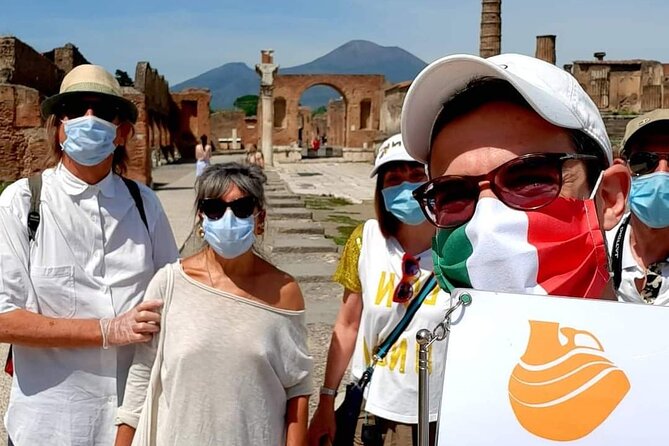
This tour caps at 20 travelers. That size is big enough to feel social, but small enough that a guide can keep track of the group and field questions.
The headsets matter because the day is not static. You walk from one stop to another. When you are standing under porticos, near busy theaters, or around bath areas, you do not always have good acoustics. Headsets keep the narration clear.
One more practical note: the tour is marked as near public transportation. That can be useful if you need help getting to the meeting point or you have flexible plans before and after.
Accessibility note you should take seriously
This tour is not recommended for visually impaired guests unless accompanied by a dedicated personal assistant, based on the provided info. If that applies to you, it is worth discussing options before booking.
Should you book it? A clear yes if you want the highlights with context
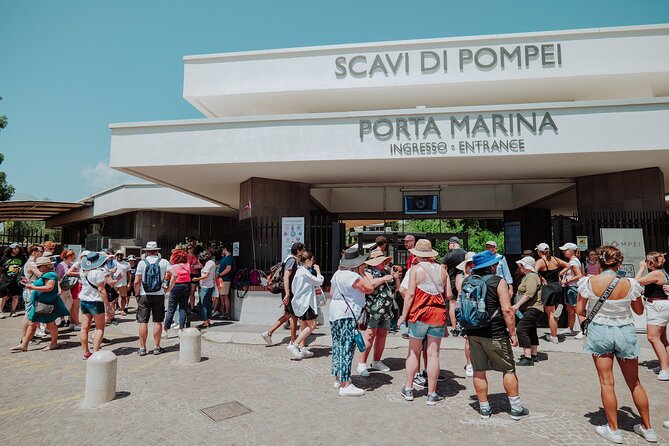
I think this is a strong choice if you want a first-time, high-impact Pompeii and Herculaneum day where the ruins come with straight answers. It is also a good fit if you do not want to manage train schedules and ticket lines yourself.
I would think twice if you already know you want long, independent wandering in Pompeii. The day is built around major highlights, and you may feel the time pressure. In past experiences with this kind of format, people often wish Pompeii had more breathing room, because it is so large.
If you can do two things, you will likely love it:
- Treat Pompeii as a guided orientation and highlight tour, not a full immersion marathon.
- Use Herculaneum as the slower, more absorbable second half.
If that sounds like your style, booking this archaeologist-led tour is one of the simplest ways to turn Pompeii and Herculaneum from distant ruins into understandable Roman spaces.
FAQ
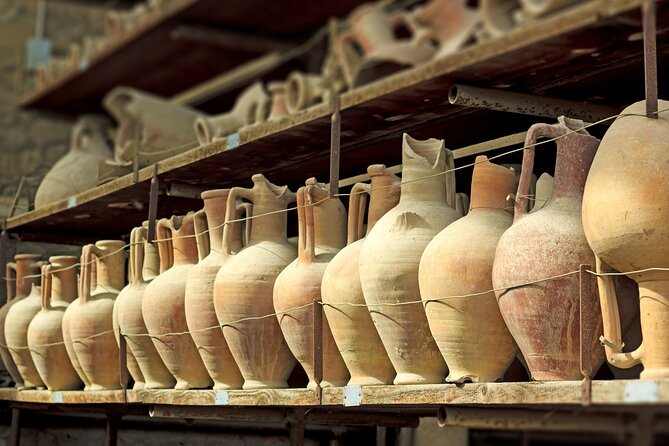
How long is the Pompeii and Herculaneum small group tour?
It runs about 6 to 11 hours, depending on your start option and transit timing.
Is it a guided tour, or do I walk on my own?
It includes a guided tour service in both Pompeii and Herculaneum.
Do I need to buy admission tickets separately?
No. Admission tickets to both Pompeii and Herculaneum are included.
How do you travel between Pompeii and Herculaneum?
If you start in Naples, Sorrento, or Rome, you travel by modern minibus with your guide. If you start in Pompeii, you use an included Circumvesuviana one-way train ticket, then walk about 10 minutes.
Where do I meet the guide?
Meeting points depend on your option: Pompeii (Porta Marina Superiore), Naples and Rome (Starhotels Terminus), or Sorrento (Piazza Angelina Lauro).
What is included for communication during the tour?
Headsets are provided for all participants.
Is lunch included?
Meals and drinks are not included. A quick lunch break is available before the transfer, but it is own expense.
How big is the group?
The tour has a maximum of 20 travelers.
Is this tour offered in English?
Yes, it is offered in English.
Is the tour suitable for visually impaired guests?
It is not recommended for visually impaired guests unless accompanied by a dedicated personal assistant.
Latest reviews around Pompeii
- Vesuvius National Park Skip-the-Line Ticket★ 3.8 · 221 reviews
- From Rome: Day Trip to Pompeii with Tickets★ 4.4 · 1,161 reviews
- From Rome: Sorrento & Pompeii Day Tour with Hotel Pickup★ 4.2 · 257 reviews
- Pompeii Ruins Private Tour with Optional Skip-the-Line Entry★ 4.9 · 732 reviews
- From Rome: Pompeii All-Inclusive Tour with Live Guide★ 4.3 · 261 reviews
- Pompeii and Herculaneum: Guided Tour with an Archaeologist★ 5.0 · 164 reviews
- Pompeii 3hours Villa of Mysteries tour with an Archaeologist★ 4.8 · 486 reviews
- From Sorrento: Pompeii and Vesuvius Tour★ 4.5 · 201 reviews
Pompeii & Vesuvius Tours, compared.
Pompeii: Entry Ticket and Guided Tour with an Archaeologist
Read our review →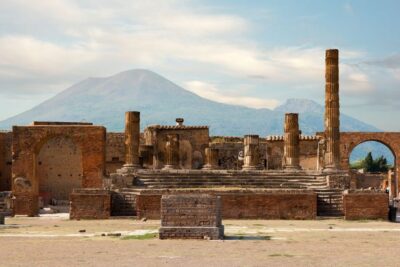
Pompeii: Entry Ticket with Optional Audio Guide
Read our review →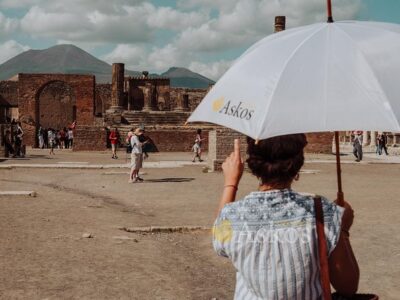
Pompeii: Small Group Tour with an Archaeologist
Read our review →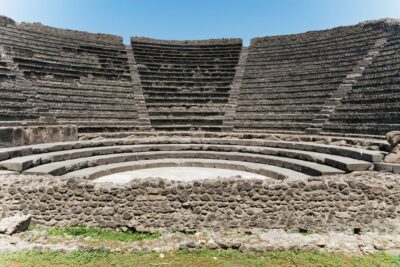
Pompeii Small Group Tour with an Archaeologist
Read our review →
Pompeii, Amalfi Coast and Positano Day Trip from Rome
Read our review →Browse the lists this tour appears in