Reviewed · ROME TOURS
Welcome To Rome Experience
One-hour can change how you see Rome. Welcome To Rome is a compact, family-friendly multimedia show that walks you through how the city grew, using 3D models and projection to make the past feel visible. I like that it gives you a big-picture timeline fast, and that the audio and visuals help even first-timers get their bearings. The main drawback is that it is still a lot of information for very young kids, and you may spend part of it standing between stations.
This is a smart way to start your trip because Rome is basically layers on layers. You’ll watch monuments as they shift from ancient forms to what you see today, so later walks through famous ruins make more sense. Plan it early in your schedule, because you only get the full benefit when you can connect the show to what you visit outside.
In This Review
- Key Takeaways at a Glance
- Welcome To Rome: A Fast Start That Makes Later Ruins Click
- Inside the Show: How the Multimedia Format Works
- The Four Station Flow: Dioramas, Audio, and 3D Clues
- The Main Film Segment: From Ancient to Modern in About Half an Hour
- Why This Helps With the Roman Forum, Palatine Hill, Colosseum, and More
- Price and Value: Is $21.77 for One Hour Worth It?
- Best Timing: Fit It Early, Then Use It on the Walks
- Service, Location, and Day-of Practicalities That Matter
- Who Should Book Welcome To Rome, and Who Might Skip It?
- Should You Book Welcome To Rome Experience?
- FAQ
- How long is Welcome To Rome?
- What language is the show offered in?
- Is there a mobile ticket for this experience?
- Where is Welcome To Rome located?
- How many stops are included?
- What time do I need to arrive by?
- Are service animals allowed?
- Is it near public transportation?
- Is there free cancellation?
- Is Welcome To Rome suitable for families?
Key Takeaways at a Glance
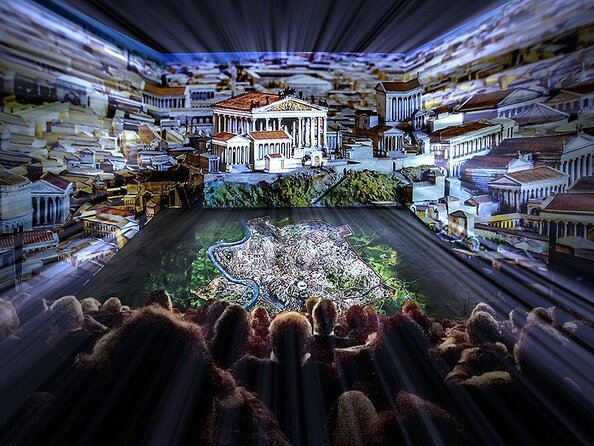
- 3D reconstructions that help you visualize what ruins looked like at their height
- About one hour for a high-level timeline you can actually finish
- Audio, video, and interactive elements built for families and first-time visitors
- Central location on Corso Vittorio Emanuele II with multiple showings daily
- English show with an included admission ticket for the experience
Welcome To Rome: A Fast Start That Makes Later Ruins Click
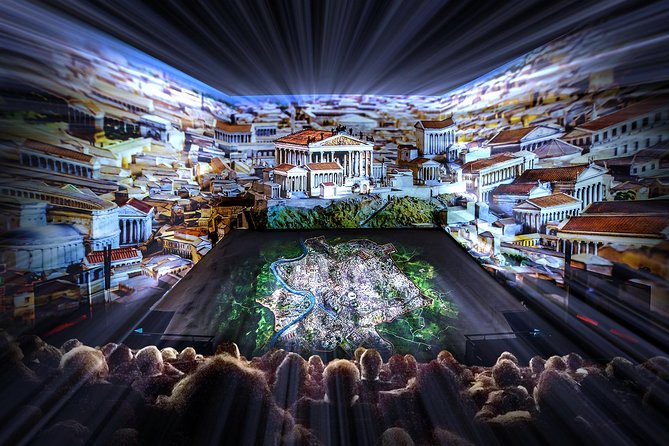
Rome can feel like a photo scavenger hunt at first. One turn, one column, one forum arch, and suddenly you are guessing what era you are looking at. Welcome To Rome is designed to prevent that “Wait, what am I seeing?” moment by giving you a story you can carry into the streets.
What I like most is the visual clarity. The show uses reconstructions and 3D-style projections, so you are not just hearing facts. You’re seeing how the city’s architecture and layout make sense as it evolves. The second big win is pacing: it is short enough that you can still have energy for your afternoon plans.
The only real caution is age and attention span. If you want ancient Rome only, you might wish it spent more time on the nuts and bolts. And if your group includes kids under about 8, some of the history detail may feel like homework in a fun jacket.
A few more Rome options to weigh
- Vatican: Museums & Sistine Chapel Entrance Ticket
★ 4.5 · 144,003 reviews - Vatican Museums & Sistine Chapel Tour with Optional Basilica
★ 4.3 · 67,413 reviews - Colosseum, Roman Forum & Palatine Guided Tour
★ 4.7 · 63,148 reviews
Inside the Show: How the Multimedia Format Works
You enter the experience space and get guided through a timeline using audio, video, and interactive displays. The format is built to feel like you are moving through Rome’s changing look rather than sitting through a lecture.
The experience is described as you being surrounded by the story of Rome. In practice, that means projection-driven scenes plus hands-on style exhibits that help you connect eras. Several people highlight the walkthrough feeling, where you can follow the city’s evolution step by step, instead of collecting random sights.
A key detail for planning your comfort: it runs across multiple parts before the main theater segment. One downside that shows up in feedback is that moving between stations can get tiring, especially if you are doing it on a long travel day. Wear comfortable shoes. Also, if you are sensitive to room temperature, bring a light layer, since a cool setting has been mentioned.
The Four Station Flow: Dioramas, Audio, and 3D Clues
A common thread in the experience is that it does not rely on one single screen. You move through a few smaller areas where the show uses models and graphics to make the story concrete.
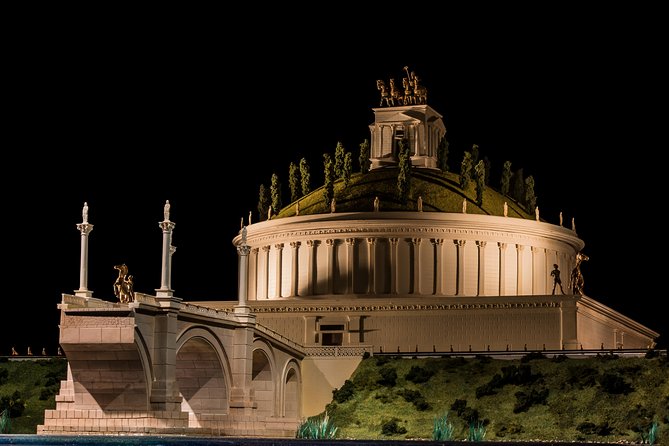
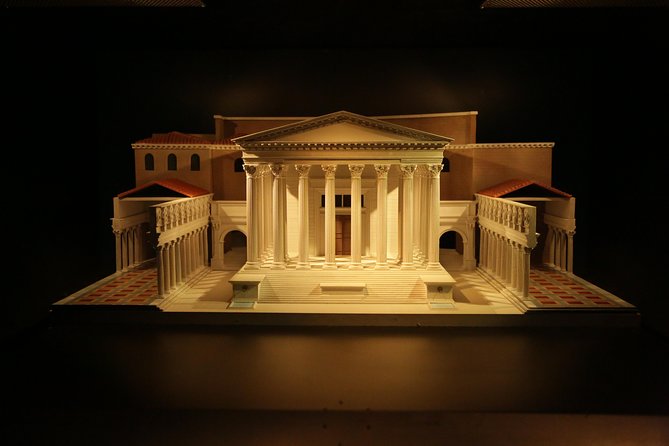
You can expect interactive exhibits that connect to what you will later recognize outdoors. The reconstructions include a 3D-style look that helps explain how structures were originally built, then how they appear as ruins today. This is the part that does the most work for your future self, because Rome looks very different when you know what to mentally “rebuild.”
One standout element is the early Roman setting. People describe a geological start, including talk of volcanoes and Rome’s early landscape. That might sound like a detour, but it helps explain why Rome sits the way it does and why the city’s early development follows a logic tied to its surroundings.
This section can be fun for older kids and history-minded adults. If your group prefers fewer details and more action, you might feel the timeline gets a bit dense before you reach the seating part of the program.
The Main Film Segment: From Ancient to Modern in About Half an Hour
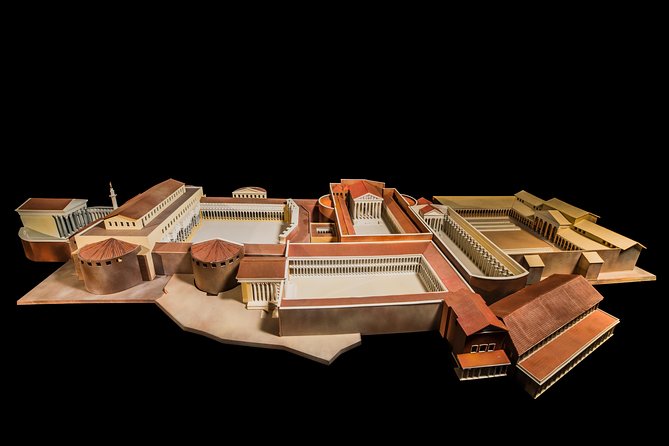
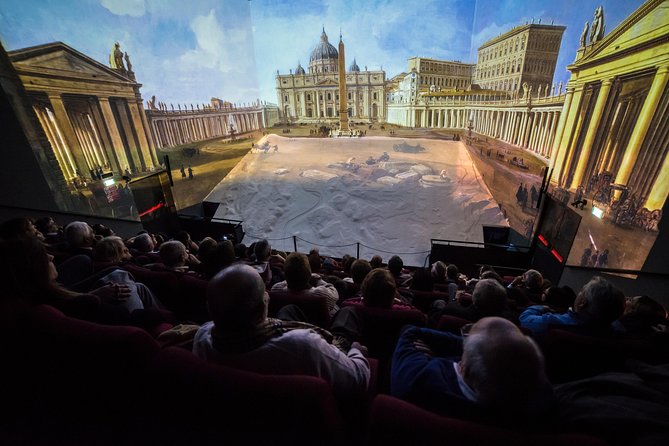
After the station portion, you shift into the main auditorium for a video that ties everything together. Feedback notes this film runs around 30 minutes, and it is the one place you can sit.
This is where the show’s big trick really lands: it helps you see the same places across time. Several accounts describe a before-and-after effect, where scenes morph from present-day Rome into ancient Rome. It is a quick mental upgrade for anyone who plans to visit the Roman Forum, Palatine Hill, the Colosseum, or other major sights.
The film also helps with era labels. People talk about moving through Classical, Medieval, Renaissance, and Baroque time periods. Even if you do not remember every name afterward, you will likely remember the overall “Rome changes fast, then keeps changing” idea, which makes museums and churches feel less random.
Nearby, and just as well reviewed:
- Vatican Museums, Sistine Chapel & St Peter’s Basilica Guided Tour
★ 4.5 · 39,149 reviews - Rome: Colosseum, Palatine Hill and Roman Forum Guided Tour
★ 4.8 · 32,814 reviews - Rome: Guided Tour of Colosseum, Roman Forum & Palatine Hill
★ 4.7 · 27,897 reviews - Rome: Colosseum & Forum with Audio Guide App -Optional Arena
★ 4.2 · 24,770 reviews
Why This Helps With the Roman Forum, Palatine Hill, Colosseum, and More
This is the part that turns a one-hour show into a trip investment. When you later stand in front of famous ruins, your brain needs scaffolding. Welcome To Rome gives you that scaffolding.
You’ll likely find it easier to picture how the Forum complex functions when you already have the layout in mind. The same goes for Palatine Hill, where elevation and distance matter for understanding what you are looking at. If you plan to go to the Colosseum, you’ll also benefit from seeing how buildings looked in their original form before time stripped them down.
A lot of value comes from the reconstructed “what you see today versus what it used to look like” comparison. That comparison is not just fun. It reduces confusion when the scale of ruins makes it hard to tell what belonged together.
And it helps with speed. Rome is big. You want to get to the point where you can walk with purpose. This experience helps you do that.
Price and Value: Is $21.77 for One Hour Worth It?
At about $21.77 per person for roughly one hour, the key question is whether you are buying convenience, context, or both. You are buying context. The show is designed to make later visits make sense, and it does that through 3D reconstructions and a clear timeline.
It is also not just a generic intro video. The experience is set up with audio and interactive elements, plus a main film. That mix is why many people rate it highly and recommend it as a first stop.
When it might feel pricey is when you already know the city’s history well. If you are looking for a deep, expert-level explanation of ancient politics, engineering, or inscriptions, this one-hour format may feel too light. But if your goal is orientation and better enjoyment of what you will see outdoors, the cost-to-time ratio is usually fair.
I’d frame it like this: you are paying for clarity. If you walk into the Forum and Colosseum without that clarity, you spend more time guessing and less time enjoying.
Best Timing: Fit It Early, Then Use It on the Walks
Most of the value is front-loaded. You get more from the show when you can connect it to the sites you plan to visit later the same day or in the next few days.
It also helps if you are juggling jet lag. People like this because it is short and visually driven, so it is easier to do early than a longer museum day when you are still adjusting to Rome time.
One more practical note: the last entry is one hour before closing. So I recommend you do not treat this as a last-minute add-on. Pick a time that lets you arrive with a little buffer.
Service, Location, and Day-of Practicalities That Matter
The address is Corso Vittorio Emanuele II, 203, 00186 Roma. It is in the city center, and it is near public transportation, which makes it easy to slot into a busy itinerary.
Tickets are mobile, so you avoid the paper scramble. Confirmation is sent at booking, which helps reduce uncertainty when you are planning multiple parts of your day.
Service animals are allowed, and the experience is set up so most people can participate. If your group needs extra mobility support, you will still want to plan around the fact that the show includes multiple areas and movement between parts.
Who Should Book Welcome To Rome, and Who Might Skip It?
This works best for:
- First-time Rome visitors who want to understand what they are seeing quickly
- Families with kids who enjoy visuals and interactive screens
- Anyone planning major sites like the Roman Forum, Palatine Hill, or the Colosseum soon
It might be a weaker fit for:
- Adult history buffs who want a deeper, more technical focus on ancient Rome
- Groups where very young children struggle with lots of detail and switching between stations
- People who hate any kind of indoor movement or who expect everything to be fully seated
A small but real tip: if audio tech is part of the experience for you, keep an open mind. Some people report occasional headset or audio issues, and the staff can help when that happens. It is not something to stress about, but it is smart to stay flexible if your day is on a tight schedule.
Should You Book Welcome To Rome Experience?
Yes, if your goal is to start Rome with a fast mental map. Welcome To Rome is one of those rare experiences that can genuinely improve your next outdoor steps, not just entertain you for an hour. The strong ratings and high recommendation rate come from the same thing you can feel in the show: clear visuals, a usable timeline, and reconstructions that make ruins easier to understand.
Skip it only if you already know ancient Rome inside out and you do not need visual context. Otherwise, booking this first day move is a simple way to get more out of every ticket you buy after.
FAQ
How long is Welcome To Rome?
The experience lasts about 1 hour.
What language is the show offered in?
It is offered in English.
Is there a mobile ticket for this experience?
Yes, a mobile ticket is included.
Where is Welcome To Rome located?
It’s at Corso Vittorio Emanuele II, 203, 00186 Roma (RM).
How many stops are included?
The itinerary is for the Welcome To Rome show as one experience.
What time do I need to arrive by?
The last entry is one hour before closing.
Are service animals allowed?
Yes, service animals are allowed.
Is it near public transportation?
Yes, it is near public transportation.
Is there free cancellation?
Yes. You can cancel for a full refund up to 24 hours in advance.
Is Welcome To Rome suitable for families?
Yes. The experience includes audio, video, and interactive elements designed to captivate the whole family.
Latest reviews around Rome
- Rome at Night: Small Group Guided City Walking Tour★ 5.0 · 249 reviews
- Guided Walking Tour of Rome: Top Sights & Baroque Treasures★ 5.0 · 155 reviews
- Private Walking Tour of the Squares and Fountains in Rome★ 5.0 · 130 reviews
- Rome Food Tour by the Vatican★ 5.0 · 308 reviews
- Vintage Fiat 500 Cabriolet: Rome’s Highlight Semi Private Tour★ 5.0 · 283 reviews
- Vespa Rental in Rome 24 hours★ 5.0 · 196 reviews
- Vatican VIP Early Entrance 8:00 AM★ 4.5 · 141 reviews
- Rome on Wheels: Experience the City with a Vespa Tour★ 5.0 · 155 reviews
Rome Tours, compared.
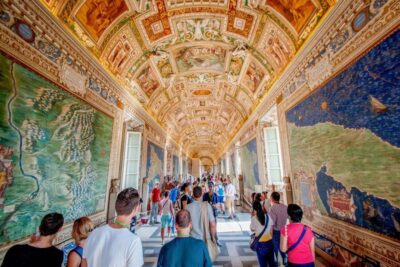
Vatican: Museums & Sistine Chapel Entrance Ticket
Read our review →
Vatican Museums & Sistine Chapel Tour with Optional Basilica
Read our review →
Colosseum, Roman Forum & Palatine Guided Tour
Read our review →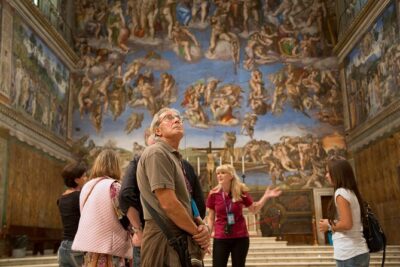
Vatican Museums, Sistine Chapel & St Peter’s Basilica Guided Tour
Read our review →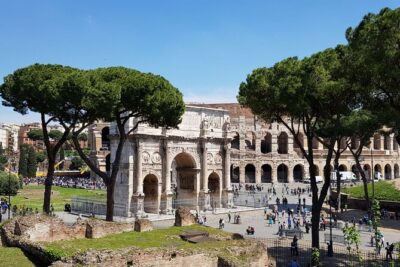
Colosseum, Palatine Hill and Roman Forum Guided Tour
Read our review →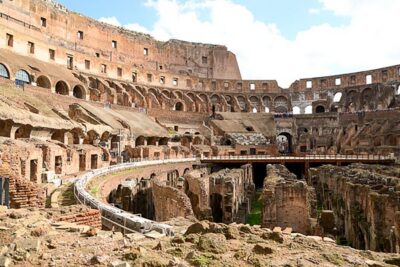
Guided Tour of Colosseum, Roman Forum & Palatine Hill
Read our review →
Colosseum & Forum with Audio Guide App -Optional Arena
Read our review →