
Reviewed · WALKING TOURS
Private Walking Tour of the Squares and Fountains in Rome
Rome’s squares have a way of telling stories. This private walking tour stitches together big-name stops like Piazza del Popolo, the Spanish Steps, and Piazza Navona, with the kind of local connections that help you feel oriented fast. You’ll also get the practical flow of a planned route, so you spend more time looking up and less time wondering where to go next.
I like two things a lot here: the route covers major landmarks in just 3 to 4 hours, and you get undivided guide attention with a group capped at 8. A possible drawback is simple: you’ll be doing a lot of outdoor viewing and walking, including the steep Spanish Steps area, so comfy shoes matter.
In This Review
- Key Highlights You Will Actually Feel
- Why Rome’s Squares and Fountains Feel Like a Time Machine
- Private Means Efficient: Hotel Pickup and a Small Group
- From Piazza del Popolo to Via del Corso: Getting Oriented Fast
- The Spanish Steps and the Art of Stairs That Change the City
- Trevi Fountain, Fontana and the Reality of “Free” Stops
- Piazza Navona and Fontana dei Quattro Fiumi: The Square That Shows Off
- Piazza della Minerva and the Pantheon Finish Line
- Guide Impact: Paulo and Gaia Know How to Keep the Thread
- Price and Value: What $229.78 Buys You
- Practical Stuff That Helps You Enjoy the Walk
- Should You Book This Private Walking Tour?
- FAQ
- How long is the private walking tour?
- Is the tour private?
- What languages is the tour offered in?
- What is the maximum group size?
- Where does the tour start and end?
- Are admissions included for the sights?
- Is food or drinks included?
- Is transportation between sights included?
- Does the tour include hotel pickup?
- Can children join?
- What is the cancellation policy?
Key Highlights You Will Actually Feel
- A focused 3 to 4 hour loop through the core squares and fountain stops
- Private guiding with a pro who keeps the pace thoughtful, not rushed
- Free admission for most stops, with Pantheon admission not included at the end
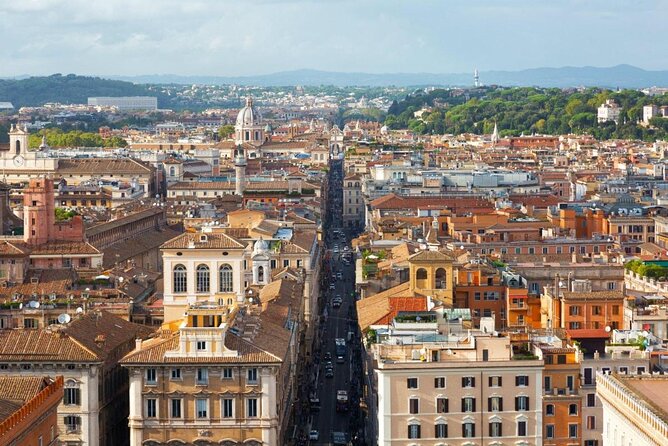
- Route clarity from Via del Corso’s Trident artery, so Rome feels less like a maze
- Guide quality shows up fast, with strong praise for guides like Paulo and Gaia
Why Rome’s Squares and Fountains Feel Like a Time Machine
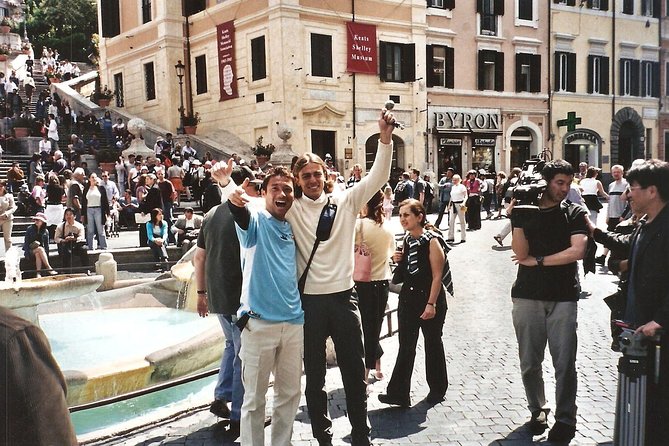
Rome doesn’t put its best postcards in one museum room. It spreads them out in public space, and that is where this tour shines. Squares and fountains are where people meet, linger, argue over directions, buy snacks, and watch the city go by. When you connect a set of these landmarks on foot, the city starts making sense as a system, not a list.
I also like that this tour is not trying to be “everywhere.” It targets key anchors. You’ll see Piazza del Popolo, Piazza di Spagna, Piazza Venezia, and Piazza Navona, then work your way through the fountains that make central Rome famous. It is a first-timer friendly route, and it works well if your time window is tight.
The other big win is the private setup. With only your group involved, your guide can adjust timing and explain what matters most for how you like to travel, whether you want big-picture context or close-up details.
More walks around Rome:
- Rome: Trastevere & Campo de Fiori Street Food Walking Tour
★ 4.9 · 2,768 reviews - Rome: Paranormal Night Walking Tour & Secret Backstreets
★ 4.9 · 1,921 reviews - Rome by Night Walking Tour – Legends & Criminal Stories
★ 4.5 · 1,003 reviews
Private Means Efficient: Hotel Pickup and a Small Group
This tour is offered as a private activity with a professional guide, and your booking is limited to a maximum of 8 people. That matters more than it sounds. In central Rome, the line between seeing a sight and wasting time at it is all about pace and placement, and a guide can keep you moving with purpose.
Also, the tour includes hotel pickup. That takes the “How do we get there?” stress out of your morning or afternoon. Your start point is at Fontane dei Leoni Egizi, on Via del Teatro di Marcello, and your tour ends at the Pantheon area. So you get a logical day flow, rather than backtracking.
One more practical point: this is listed in English, and you’ll get a mobile ticket. If you like having everything on your phone, that’s a nice little modern touch for an old city.
From Piazza del Popolo to Via del Corso: Getting Oriented Fast
The tour begins at Piazza del Popolo, a famously recognizable oval square that acts like a front door to Rome. The name translates to People’s Square, but there’s a catch. The name is tied to the poplars that once surrounded the oval space. That kind of detail is exactly why a guide helps: you’re not just seeing a landmark, you’re learning what made it useful in the first place.
You’ll also get context on the square’s design period, built between 1811 and 1822 as a neo-classical welcome for visitors and pilgrims entering Rome from the north via the Via Flaminia. Standing there, it helps you understand why Rome’s early layout feels ceremonial. It wasn’t only about aesthetics. It was about guiding people into the city.
Next up is Via del Corso, about 1.6 kilometers long, running between Piazza Venezia and Piazza del Popolo. This street is part of Rome’s Trident road system, and thinking of it as Rome’s central artery helps you mentally “map” where you are. Even if you never memorize street names, the idea of the Trident makes your navigation less chaotic.
What you’ll like most here: the way you start with big orientation points, then move along the city’s organizing structure.
What to watch for: this section still involves regular street walking, so you’ll want comfortable shoes from the very beginning.
The Spanish Steps and the Art of Stairs That Change the City
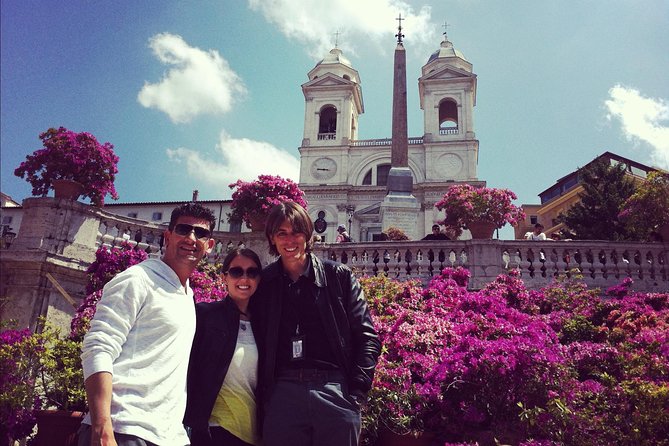
If you’ve ever looked at Rome from a distance and wondered why the views are so dramatic, the Spanish Steps are a big reason. The staircase climbs between Piazza di Spagna at the bottom and Trinità dei Monti church at the top. The famous 135 steps are not just a place to pose. They connect two important areas, and they create a built-in route the city uses every day.
Here are the details your guide can point out. The steps were funded through a bequest from French diplomat Étienne Gueffier, using 20,000 scudi, and built in the 1723 to 1725 window. The design is credited to Francesco de Sanctis and Alessandro Specchi. Knowing that it was tied to French patronage and diplomacy makes the staircase feel less random and more intentional.
Practical tip for your visit: plan to spend a bit of time standing, not just moving. The best views from the steps come from small changes in angle, and it’s easier to enjoy those if you’re not rushing.
Possible consideration: the terrain here is steep. Even if you do not climb all the way, you’ll still be near stairs, and your timing matters if you have mobility limits.
A few more Rome options to weigh
- Rome: Guided City Center Evening Sightseeing Walking Tour
★ 4.4 · 953 reviews - Best of Rome Walking Tour including Trevi Fountain
★ 4.5 · 923 reviews - Rome: Under the Moonlight Evening Walking Tour
★ 4.8 · 852 reviews - Rome: Forbidden History Walking Tour & Pub Crawl with Drinks
★ 4.9 · 688 reviews
Trevi Fountain, Fontana and the Reality of “Free” Stops
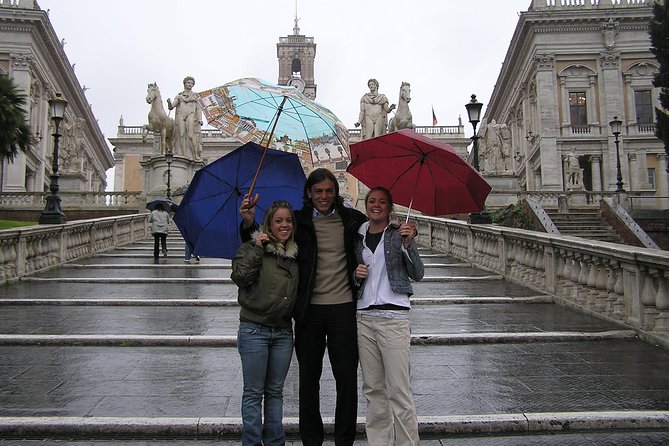
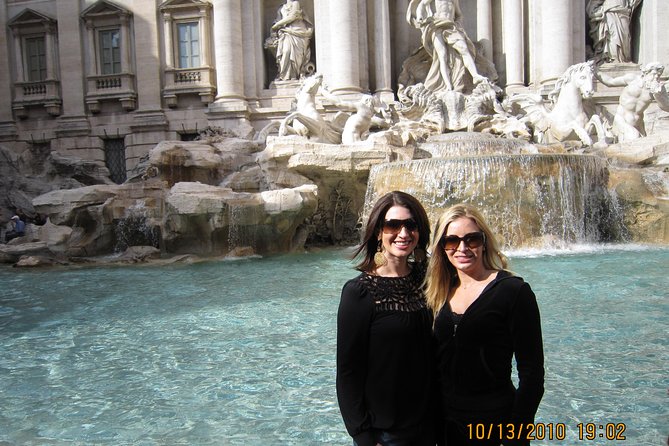
Rome’s fountain moments are not always equal in how you experience them. The tour gives you Trevi Fountain next, the 18th-century Fontana di Trevi designed by architect Nicola Salvi. Trevi is the stop where your camera will probably come out, but the guide’s value is in explaining the fountain’s role in Rome’s urban story, not just letting you stand there for photos.
The itinerary then moves to Fontana del Pantheon. In the description provided, this section is tied closely to the Pantheon area and the broader ancient-Rome context. You’ll have time to take in the setting, not only the famous structures themselves.
One smart thing about this tour’s structure is that several stops include admission ticket free time blocks. In practical terms, it helps you keep momentum. You’re not constantly buying tickets or waiting on entry processes for every stop, which is huge when you have only half a day.
Still, do note the exception clearly: the Pantheon admission ticket at the end is not included. So while many of the earlier segments are ticket free, you may need to plan a little extra time and money for the Pantheon entry if you want to go inside.
Piazza Navona and Fontana dei Quattro Fiumi: The Square That Shows Off
Piazza Navona is one of Rome’s most dramatic squares, shaped in monumental style by the Pamphili family at the request of Pope Innocent X. When you’re there, it’s easy to understand why this square became a stage for performance and daily life. It’s designed for viewing from multiple sides.
The fountain on the square, Fontana dei Quattro Fiumi, is a major highlight. It was commissioned by Pope Innocent X and designed by Francesco Borromini. The pope also wanted to restore an obelisk, later called Agonale, which was found in ruins in the circus of Maxentius on the Appia Antica. Even if you don’t track every historical reference, the story makes the fountain feel like part of a bigger 17th-century project rather than a random decoration.
There is another detail that helps you picture how this worked as infrastructure, not just sculpture. The pope commissioned a pipeline designed to bring water from the Aqua Virgo to Piazza Navona. That’s the kind of “how the city made it possible” explanation that makes a fountain stop feel more real.
What you’ll like most here: the pairing of architecture and water. You get a full square experience, not a quick glance.
What to watch for: expect to spend time standing and looking. It’s a great stop for photos, but it’s not built for long sitting breaks.
Piazza della Minerva and the Pantheon Finish Line
After Piazza Navona, the tour shifts to Piazza della Minerva, a smaller square with serious depth. The name connects to an earlier temple to Minerva, originally built by Gneo Pompeo Magno and dedicated to Minerva Chalkidiki, whose cult statue is now in the Vatican. Even if that sounds like a lot of ancient names, the practical point is this: this square has been a religious and civic meeting space for centuries, which explains why the area feels important the moment you step in.
The center focus is Santa Maria sopra Minerva. It was referenced back in the 8th century by the Anonymous of Einsiedeln as ecclesia S. Mariae in Minervio. Again, the guide helps you link the present building to the older spiritual purpose of the site.
Then comes the final act: the tour guide drops you off at the Pantheon. The Pantheon is an ancient Roman building founded in 27 BC and traditionally associated with Marcus Agrippa. It is one of the most famous structures in Rome, and the fact that the tour ends here is smart. You’re done with the guided portion, then you can decide how much time you want to spend inside or exploring the immediate area.
Important value note: Pantheon admission is not included, so budget for the ticket if you want to go in.
Guide Impact: Paulo and Gaia Know How to Keep the Thread
The best part of any private tour is what happens between the landmarks. That’s where your guide turns “I saw it” into “I understand it.” In this case, the praise is very specific: Paulo is highlighted for passion and knowledge, while Gaia is praised for giving a strong overview and keeping teenagers engaged.
Even if you are traveling as adults, that ability to keep attention is useful. Rome is full of moments that can blur together. A guide who can explain clearly, at the right pace, helps you sort what matters without information overload.
Price and Value: What $229.78 Buys You
At $229.78 per person, this is not a bargain-basement option. But value in Rome is not just about paying less. It’s about paying for time, placement, and guidance in a city where the biggest landmarks are often far more enjoyable when you understand what you’re looking at.
Here’s what you’re getting for the cost:
- Private tour with a professional guide
- Hotel pickup
- A planned route through major squares and famous fountains
- Mostly free admission for the listed stops
- Maximum of 8 people per booking, so it stays manageable
The price also makes more sense if you are not traveling solo. Private tours often become more cost-effective when shared among a small group. The tour also mentions group discounts, which is another hint that the operator expects these bookings to work for small parties.
The main cost that can add up is the Pantheon admission at the end, since it is not included. Also, food and drinks are not included, and transportation between sights is not included either. If you know you’ll need transit at some point, keep a little flexibility in your day and budget.
Practical Stuff That Helps You Enjoy the Walk
A few real-world tips so this half-day feels fun instead of tiring:
- Wear comfortable shoes. You’ll walk between central landmarks and handle steep stair areas at least at the Spanish Steps zone.
- Bring water. Food is not included, and you’ll be outdoors a lot.
- Use the mobile ticket on your phone, so you are not scrambling for paperwork.
- Expect a 3 to 4 hour pace. It’s designed to cover key anchors, not to pause for long meal stops.
Also, booking timing matters. This tour is often reserved well in advance, so if your dates are firm, don’t wait until the last minute.
Should You Book This Private Walking Tour?
Book this if you want a smart, time-friendly route through Rome’s signature squares and fountains, and you like the idea of a guide helping you connect the dots. It’s a strong fit for first-time visitors, and it works well when you want a quick city-center overview without trying to solve logistics on your own.
Skip it, or consider a different format, if you want a slow, sit-down style day with lots of independent wandering. This tour is built for movement and viewing, and it ends at the Pantheon where you’ll likely decide your own next steps.
If you do book, I’d plan your expectations like this: you’re buying a guided path through Rome’s headline landmarks, with just enough context to make them click.
FAQ
How long is the private walking tour?
It runs about 3 to 4 hours.
Is the tour private?
Yes. It is a private tour, and only your group participates.
What languages is the tour offered in?
It is offered in English.
What is the maximum group size?
The maximum is 8 people per booking.
Where does the tour start and end?
It starts at Fontane dei Leoni Egizi, Via del Teatro di Marcello, 00186 Roma RM, Italy, and ends at the Pantheon area in Rome.
Are admissions included for the sights?
Most listed stops are noted as admission ticket free, but the Pantheon admission ticket is not included.
Is food or drinks included?
No. Food and drinks are not included.
Is transportation between sights included?
Transportation between sights is not included, and transfers by taxi or private transportations are not included.
Does the tour include hotel pickup?
Yes. Hotel pickup is included.
Can children join?
Children must be accompanied by an adult.
What is the cancellation policy?
It is non-refundable and cannot be changed for any reason. If you cancel or ask for an amendment, the amount you paid will not be refunded.
Latest reviews around Rome
- Guided Walking Tour of Rome: Top Sights & Baroque Treasures★ 5.0 · 155 reviews
- Rome at Night: Small Group Guided City Walking Tour★ 5.0 · 249 reviews
- Rome Food Tour by the Vatican★ 5.0 · 308 reviews
- Vintage Fiat 500 Cabriolet: Rome’s Highlight Semi Private Tour★ 5.0 · 283 reviews
- Welcome To Rome Experience★ 4.5 · 679 reviews
- Vespa Rental in Rome 24 hours★ 5.0 · 196 reviews
- Vatican VIP Early Entrance 8:00 AM★ 4.5 · 141 reviews
- Rome on Wheels: Experience the City with a Vespa Tour★ 5.0 · 155 reviews
Walking Tours, compared.
Guided Walking Tour & Last Supper Visit with Ticket
Read our review →
Rialto Bridge & Offbeat Unusual Venice Walking Tour
Read our review →
Private 3 hrs Venice Tour: St Mark’s, Walking tour & Boat tour
Read our review →
Skip the line: Uffizi and Accademia Small Group Walking Tour
Read our review →Browse the lists this tour appears in