

Reviewed · POMPEII & VESUVIUS TOURS
Pompeii: Entry Ticket with Optional Audio Guide
Pompeii feels like time travel. I like the reserved entry that helps you get moving fast, and the audio guide that turns the ruins into real Roman life. The one thing to watch is that the audio route can feel a bit confusing at first, and some buildings you hear about may not be accessible in your moment.
You get a phone voucher, then enter Pompeii on your own schedule. I also appreciate the practical touch of free luggage storage, because you will be walking a lot and you do not want backpacks bouncing around your day.
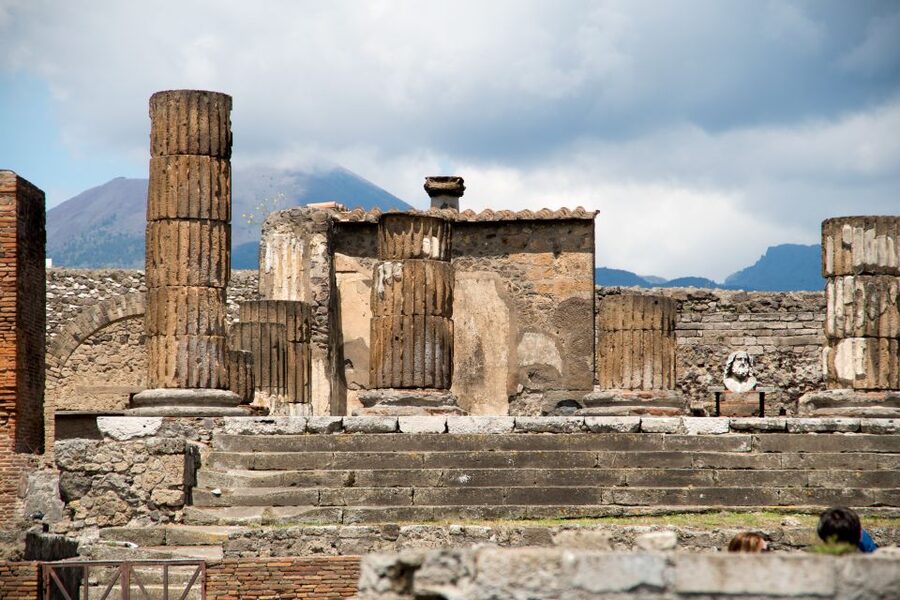
This is a UNESCO World Heritage site where streets, homes, temples, and public buildings were preserved under volcanic ash after the Vesuvius eruption on August 24, AD 79. The highlights are big and vivid, especially the Villa Mysteries, the amphitheater, the baths mosaics, and the temples of Venus, Apollo, and Jupiter.
In This Review
- Key things to know before you go
- Pompei Express vs Pompei+ what you actually get for your money
- Entering Pompeii with a phone voucher and the Porta Marina Superiore audio desk
- Using the audio guide like a map, not a script
- A realistic Pompeii route that hits the biggest moments
- Start with the atmosphere and the main street grid
- The House of the Faun, where Pompeii shifts from ruins to details
- Baths and mosaics, where daily life becomes concrete
- Market and lunch spots, because Pompeii was not a museum
- Amphitheater and audience energy
- Temples of Venus, Apollo, and Jupiter, where religion becomes architecture
- Villa Mysteries and the suburban villas, what changes when you choose Pompei+
- What the best ruins feel like, plus the drawbacks to plan for
- Practical tips for a smoother Pompeii day
- Should you book this Pompeii ticket?
- FAQ
- What is the difference between Pompei Express and Pompei+?
- Is an audio guide included?
- Where do I collect the physical audio guide device?
- What languages are available for the audio guide?
- What are the last entry times for the Pompei+ option?
- Are there any free entry rules for Pompeii?
Key things to know before you go
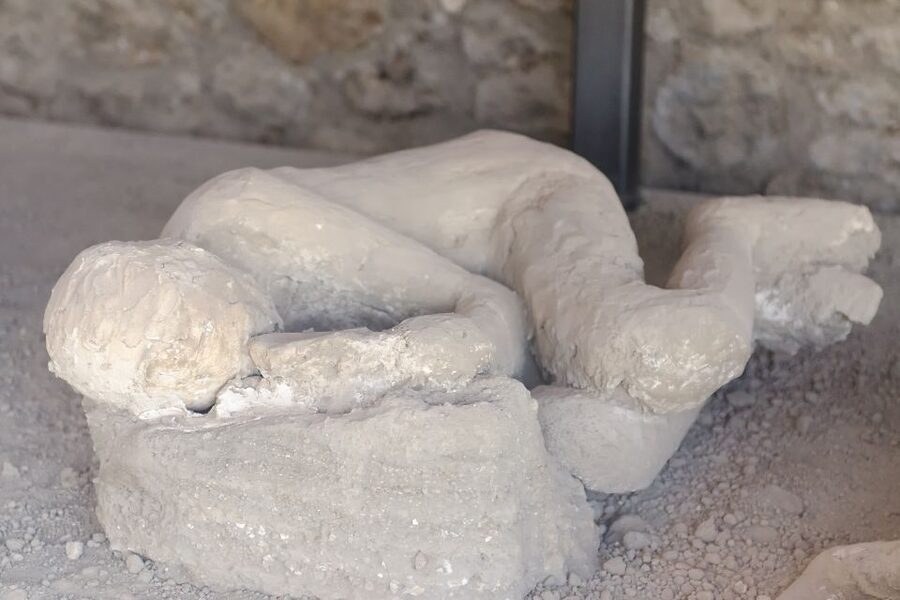
- Choose your ticket level: Pompei Express covers the ancient city only, while Pompei+ adds suburban villas plus the Antiquarium in Boscoreale.
- Audio guide pickup is fixed: you collect and return the physical device at the official audio desk in Porta Marina Superiore.
- The site is huge: comfortable shoes matter, and it can take a full day to do Pompeii justice.
- Bluetooth headphones do not work: bring the right kind for the audio device you rent.
- Your phone voucher is the starting point: use it to get your reserved time slot and then focus on entering and exploring.
- Not every stop is open all the time: if a building is closed, you will still learn nearby context from the guide, but you may miss certain viewpoints.
Pompei Express vs Pompei+ what you actually get for your money
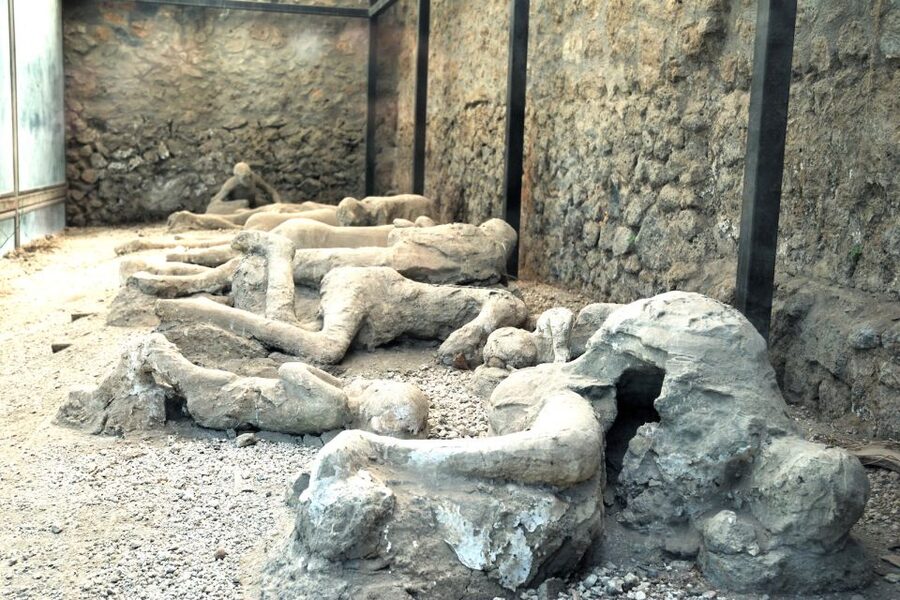
This ticket is flexible because you choose how much Pompeii you want. For many people, the best value is picking the option that matches your time, not your budget.
Pompei Express is simpler: you get reserved entry to the ancient city of Pompeii only. It does not include the suburban villas, which is where some of the most famous houses live.
Pompei+ costs the same ticket concept but adds the suburban villas. That means you include the Villa of the Mysteries, the Villa of Diomedes, and the Villa Regina in Boscoreale, plus the Antiquarium. If you are here for the places with standout frescoes and house details, Pompei+ is the choice that feels most satisfying.
One practical note: Pompei+ has a last entry time. In winter it is 3:30 p.m., and in summer it is 5:30 p.m. If you show up late, you can end up stuck in the ancient city with no time left for the villas.
More Pompeii digs and Vesuvius climbs:
- Pompeii: Entry Ticket and Guided Tour with an Archaeologist
★ 4.8 · 19,459 reviews - Pompeii: Small Group Tour with an Archaeologist
★ 4.8 · 12,264 reviews - From Naples: Pompeii Ruins & Mount Vesuvius Day Tour
★ 4.3 · 11,459 reviews
Entering Pompeii with a phone voucher and the Porta Marina Superiore audio desk
The basic flow is straightforward. You show your ticket at the door, then start exploring.
The twist comes with the audio guide. If you selected the physical audio guide, you pick it up inside Pompeii at the park’s official audio guide desk in Porta Marina Superiore. You also return the device there at the end of your visit. So do not plan to wander in, grab the audio guide somewhere else, and disappear from the site.
This matters because signposting and meeting points can be inconsistent. The meeting point can vary depending on your booked option, so I strongly recommend checking your exact pickup point before you leave for Pompeii. Once you are on site, follow the direction to Porta Marina Superiore for the audio desk.
A helpful tip from on the ground experience: some people find it easier to use the audio guide kiosk area first, then enter through Piazza Esedra using the e-ticket lane. The point is not which door you use, it is saving time. Pompeii is popular, so cutting queue time helps you spend your day walking the streets instead of standing in it.
Using the audio guide like a map, not a script
The audio guide is one of the main reasons this ticket feels better than just walking around with your phone camera. It adds context as you pass rooms, streets, and public spaces that can otherwise feel like ruins without a storyline.
You have two versions available. There is a physical audio guide option, and there is also a digital audio guide option available in English, German, French, Italian, and Spanish. The physical guide language list includes more options, including English, Italian, Chinese, Japanese, Portuguese, Russian, German, and French.
Here is the practical reality. Bluetooth headphones do not work with the audio device, so plan for headphones that match what the rental desk provides. Also, the audio device is rented with a valid ID as a deposit. Bring your passport or ID card, not just a photo in your phone.
How to avoid the most common frustration:
- Start with a few minutes of orientation. Do not expect the audio guide to feel perfect instantly.
- If the narration seems off for where you are standing, pause and visually match what you see. Pompeii has lots of similar-looking entrances and wall openings.
- Plan your route in small loops. Even if the narration is not perfectly synced, you still get a clear explanation of what you are seeing.
My take: the audio guide is worth it if you want to understand what you are looking at, not just take pictures. If you are the type who likes to read signs and keep moving, you might find you only need audio for the biggest highlights.
A realistic Pompeii route that hits the biggest moments

Pompeii is too large to conquer in one pass. The best strategy is to pick a route, then adjust when your energy or lines decide otherwise. I like to think in zones: start where the city story starts, then layer in the houses, then finish with the major public sites.
A few more Pompeii options to weigh
- Mount Vesuvius: Skip-the-Line Ticket and Smart Digital Guide
★ 4.2 · 2,780 reviews - From Naples: Pompeii Skip-the-Line Entry Ticket and Tour
★ 4.4 · 2,753 reviews - Pompeii: Skip-the-Line Entrance Ticket with Audio Guide
★ 4.0 · 2,509 reviews - Pompeii: Archaeological Park Tour with Ticket on request
★ 4.5 · 2,283 reviews
Start with the atmosphere and the main street grid
Once you enter, your job is simple: get your bearings. Pompeii’s preserved street layout is what makes the place click. You can walk along Roman roadways and imagine the crowd noise, the market chatter, and the daily routine of 11,000 residents before the eruption.
If you have limited time, you will appreciate how quickly the city structure shows itself once you stop looking for one perfect photo spot and start walking like you mean it.
The House of the Faun, where Pompeii shifts from ruins to details
One of the most famous stops people mention is the House of the Faun, often described as Hellenistic. It helps you understand the mixing of cultures and wealth in Pompeii, not just the everyday basics.
If you are paying attention, you will notice how the architecture and the space planning tell you what mattered to wealthy Romans: courtyards, reception areas, and room layouts designed for daily movement and social visits.
Baths and mosaics, where daily life becomes concrete
Public baths are a huge part of Roman city life, and Pompeii’s mosaics make that real. Even if you do not catch every technical detail, the visuals help you grasp the scale and the way water, leisure, and conversation fit into the day.
This is also a good area to slow down for a moment. Baths can be a visual festival if you stop treating them like another pass-through building.
Market and lunch spots, because Pompeii was not a museum
Pompeii was a working city. One of the best feelings here is imagining where people picked up lunch, walked between shops, and ran errands on preserved stone.
I like starting from the idea that you are walking through everyday life that simply stopped on August 24, AD 79. That shift in mindset makes the whole site hit harder, without needing any extra guide.
Amphitheater and audience energy
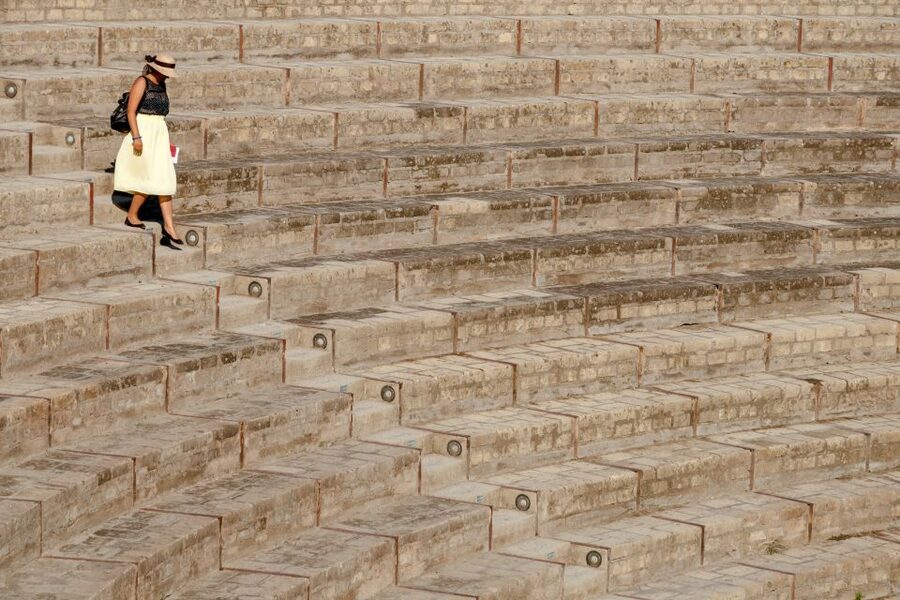
The amphitheater is one of the most powerful Roman backdrops. Sit in your mind, picture the audience, and then look at how the space channels sound and attention.
In practical terms, this is a “stand back and take it in” stop. If you try to rush it, you miss why amphitheaters mattered. They were entertainment and status, all in one.
Temples of Venus, Apollo, and Jupiter, where religion becomes architecture
Pompei has multiple temples, including those dedicated to Venus, Apollo, and Jupiter. Even if you know little Roman mythology, you can still read the space as civic and cultural glue.
This section is where you get a clear sense that Pompeii was not just households and street corners. It had public worship spaces that shaped community rhythm.
Villa Mysteries and the suburban villas, what changes when you choose Pompei+

If you pick Pompei+ you add a different Pompeii experience. The suburban villas in Boscoreale give you a more private, wealthy, and decorative side of Roman life.
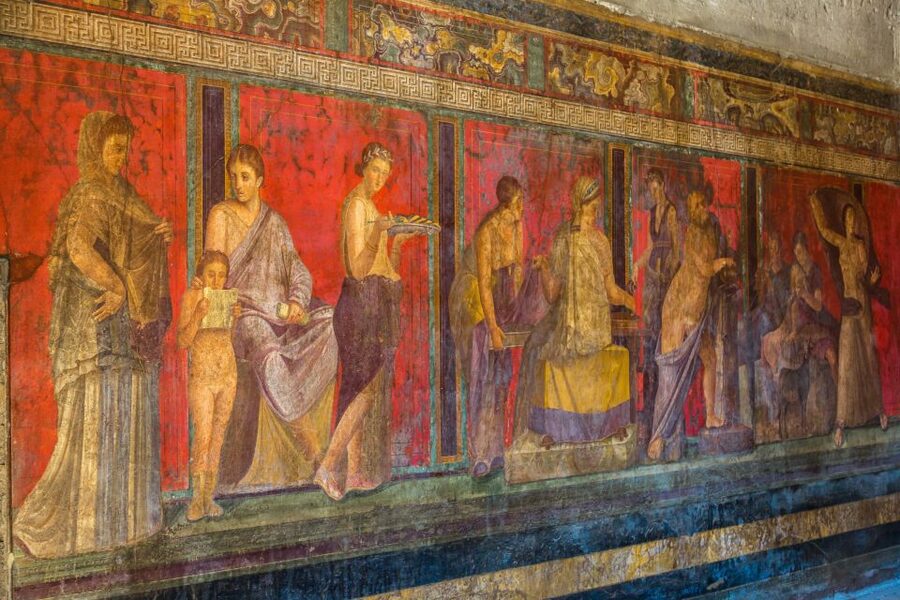
The Villa of the Mysteries is the big name. It is famous for frescoes, and it is one of the places that makes you feel the difference between “seeing ruins” and “seeing a house that still looks lived in.”
Two more additions with Pompei+:
- Villa of Diomedes
- Villa Regina in Boscoreale plus the Antiquarium
The point of these villas is not just extra sightseeing. It is contrast. The ancient city shows the public heartbeat of Pompeii. The villas show the comfort, decoration, and daily priorities of wealthier residents living just outside the city core.
One more timing reality: since last entry limits Pompei+, you want to build your day so you are not forced to skip the villa section. If your visit feels tight, focus on the ancient city first, then commit to Pompei+ only if you can reach the suburban area before closing.
What the best ruins feel like, plus the drawbacks to plan for
Pompeii’s appeal is how well many structures are preserved. You get intact street sections, recognizable public buildings, and houses with details that help you picture how people moved and lived.
The places that tend to feel the most “this is real” are the ones with clear visual anchors, like the amphitheater seating shape, the baths mosaics, and the fresco-heavy Villa Mysteries. When you combine those visuals with audio explanations, you get something close to a living walkthrough.
Now for the drawbacks, because Pompeii is not a perfect theme park:
- The audio guide can be confusing to use at first, especially if it does not feel like it matches your exact location.
- Some buildings tied to the guide may not be open when you arrive, which can mean you hear about places you cannot enter or clearly see.
- The site is large, so even if you start motivated, the last stretch can feel like a hike.
My practical advice: treat this like a walking day with breaks, not a sprint. If you plan short stops for photos and context, you get more out of each segment.
Practical tips for a smoother Pompeii day
A few things will make your visit noticeably easier.
Bring the right gear
- Wear comfortable shoes. Pompeii involves a lot of walking on uneven ground.
- Bring water. People often find they underestimate how much energy it takes.
Audio guide basics
- Bring headphones that will work with the audio guide device. Bluetooth headphones do not work.
- Bring your passport or ID card, since a valid ID is required as a deposit for renting the device.
Luggage and comfort
- Free luggage storage is available, which helps a lot if you are traveling light but still have a bag.
Toilets and wayfinding
- Toilets are available on site, and having a map helps you keep track of where you have been and where you are going next.
If you are older or moving with limited mobility
- The ticket is wheelchair accessible, which is good news. Still, Pompeii is outdoors and uneven, so you might need extra time and patience.
Should you book this Pompeii ticket?

Yes, I’d book it if you want a high-impact Pompeii day with less stress. Reserved entry helps you avoid the long queue feeling, and the optional audio guide is a simple way to turn “I saw ruins” into “I understood what I was looking at.”
Choose Pompei Express if:
- You have a shorter day
- You want the main city highlights and a classic Pompeii walk
Choose Pompei+ if:
- You care about the Villa Mysteries and the frescoed, decorative side of Roman life
- You can arrive early enough and move efficiently to make the Pompei+ last entry time
One final decision rule I use: if you are the kind of person who reads labels, you might get by with less audio. If you want the city explained as you walk, the audio guide option is where the value really shows.
FAQ

What is the difference between Pompei Express and Pompei+?
Pompei Express includes the ancient city of Pompeii only. Pompei+ includes the ancient city plus suburban villas, including the Villa of the Mysteries, the Villa of Diomedes, and the Villa Regina in Boscoreale with the Antiquarium.
Is an audio guide included?
There is an optional audio guide. The included options mention a physical audio guide if you select it, and a digital audio guide is available in supported languages.
Where do I collect the physical audio guide device?
You collect and return the physical audio guide at the park’s official audio guide desk in Porta Marina Superiore (inside Pompeii, near the ticket office).
What languages are available for the audio guide?
The digital audio guide is listed as available in English, German, French, Italian, and Spanish. The optional audio guide list also includes English, Italian, Chinese, Japanese, Portuguese, Russian, German, and French.
What are the last entry times for the Pompei+ option?
For Pompei+ the last entry time is listed as 3:30 p.m. in winter (November 1 to March 31) and 5:30 p.m. in summer (April 1 to October 31).
Are there any free entry rules for Pompeii?
Yes. Entrance fees are free for Pompeii for EU citizens under 18 years old, and also for disabled citizens and their relatives.
Latest reviews around Pompeii
- Vesuvius National Park Skip-the-Line Ticket★ 3.8 · 221 reviews
- From Rome: Day Trip to Pompeii with Tickets★ 4.4 · 1,161 reviews
- From Rome: Sorrento & Pompeii Day Tour with Hotel Pickup★ 4.2 · 257 reviews
- Pompeii Ruins Private Tour with Optional Skip-the-Line Entry★ 4.9 · 732 reviews
- From Rome: Pompeii All-Inclusive Tour with Live Guide★ 4.3 · 261 reviews
- Pompeii and Herculaneum: Guided Tour with an Archaeologist★ 5.0 · 164 reviews
- Pompeii 3hours Villa of Mysteries tour with an Archaeologist★ 4.8 · 486 reviews
- From Sorrento: Pompeii and Vesuvius Tour★ 4.5 · 201 reviews
Pompeii & Vesuvius Tours, compared.

Pompeii: Entry Ticket and Guided Tour with an Archaeologist
Read our review →
Pompeii: Small Group Tour with an Archaeologist
Read our review →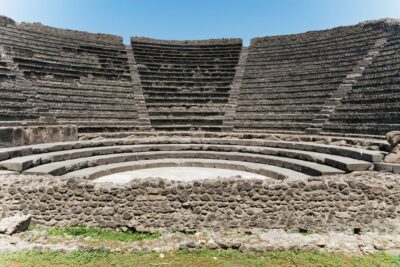

Pompeii Small Group Tour with an Archaeologist
Read our review →
Pompeii, Amalfi Coast and Positano Day Trip from Rome
Read our review →
Pompeii and Mount Vesuvius Day Trip from Rome with Pizza Lunch
Read our review →Browse the lists this tour appears in