
Reviewed · HERCULANEUM TOURS
Herculaneum Small Group Tour and Ticket With an Archaeologist
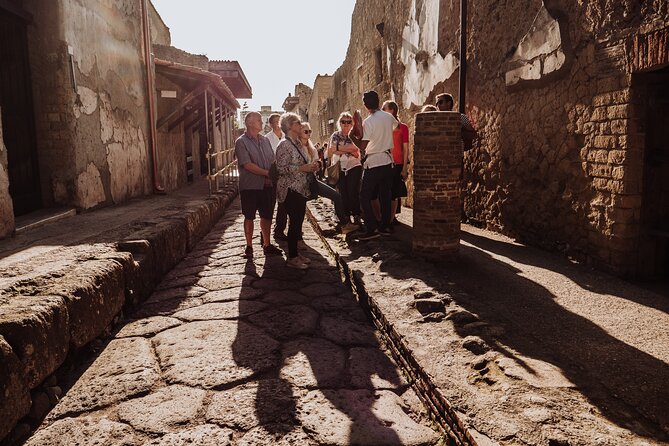
Herculaneum feels eerily close to everyday life. This 2-hour small-group walk gets you into the site with a real archaeologist’s explanations, plus skip-the-line entry and headsets so you do not lose time figuring things out. The one real catch is the pace: it is a walking tour with plenty of standing, so plan around it if you need frequent breaks.
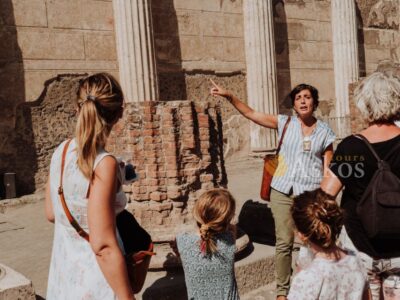
What I like most is the format. With a max group size of 20, you actually get answers, and the earpieces help you hear clearly even when the group is moving and you are not standing right next to the guide.
In This Review
- Key points that make this tour worth your time
- Entering Herculaneum with an archaeologist in charge
- Price and what you get for $53.81 (entry included)
- Meeting point and how to get there without stress
- The tour timing you should expect (and the one thing to watch)
- House of the Deer: how a peristyle becomes a landmark
- La Terrazza di M. Nonio Balbo: reading a city through inscriptions
- College of the Augustales: religion, politics, and status
- Casa del Rilievo di Telefo: a house with a private thermal link
- The wooden partition find: Partem Domus lignea, Casa del Tramezzo di Legno
- House of the Skeleton: when discoveries shape names
- Central Thermae: two entrances for two worlds
- House of the Black Salon: luxury, and charred door remains
- Casa Sannitica: Samnite layout with Ionic-style elegance
- Casa del Bel Cortile: a courtyard with a stone balcony
- House of the Grand Portal: where the big doorway sets the tone
- Guides and headsets: why your experience feels smoother
- Who this tour suits best, and who should think twice
- A few smart tips to make the most of your 2 hours
- Should you book this archaeologist tour?
- FAQ
- How long is the Herculaneum small group tour?
- What is the group size limit?
- Does the price include entry tickets?
- Is the tour in English?
- Where is the meeting point?
- Is it a skip-the-line tour?
- Are dogs allowed?
Key points that make this tour worth your time
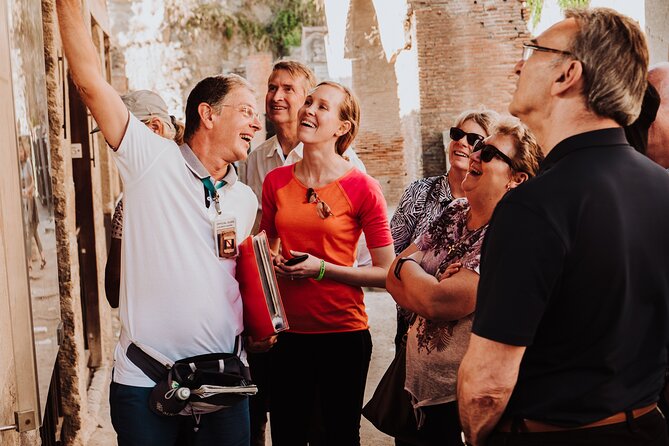
- Archaeologist-led, not just “tour-guide storytelling”, with explanations that connect objects to daily life
- Headsets included, so you can keep up without crowding the guide
- Skip-the-line tickets, which matters when queues are long and your time is limited
- A smart walk through standout houses and public spaces, from baths to elite domus
- Small group size (max 20), which keeps the tour from feeling rushed and chaotic
Entering Herculaneum with an archaeologist in charge
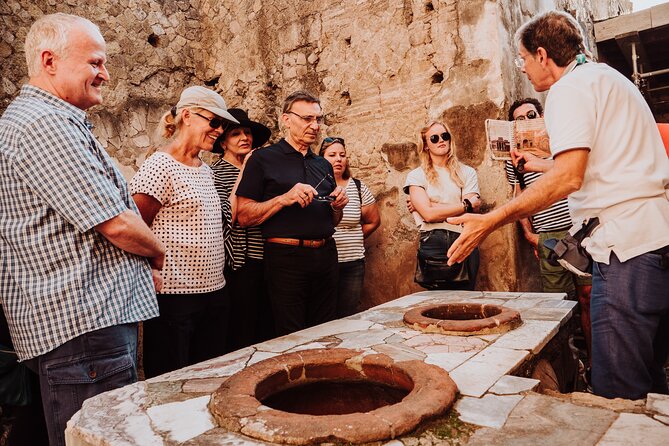
Herculaneum is the kind of place that can feel like a puzzle. You see doorways, floors, mosaics, and charred wooden bits, but your brain needs context to connect them into a full picture of how people lived. That is where an archaeologist guide makes the biggest difference.
This tour is designed as a guided walking route across the archaeological area, with short stops at the sites you are meant to notice. Many guides bring a clear, structured approach: what you are looking at, what was found there, and what archaeologists think it means. If you have ever wondered why one house is named after a stag statue, or why a bathhouse is divided in a very specific way, this is exactly the kind of visit where those answers land fast.
A few more Naples options to weigh
- Herculaneum: Skip-the-Line Guided Tour with Archaeologist
★ 4.8 · 3,439 reviews - Herculaneum: Skip-the-Line Entry Ticket with Audio Guide
★ 4.3 · 870 reviews - From Naples: Pompeii & Herculaneum with Archaeologist Guide
★ 4.8 · 665 reviews
Price and what you get for $53.81 (entry included)
The listed price is $53.81 per person, for about 2 hours, and it includes the Herculaneum entry tickets. That matters, because the general adult entry ticket is listed at 16 euros. You are also getting a licensed guide with an archaeological background, plus headsets.
So the value is not only in the walking tour. It is in avoiding a wasted chunk of your day at the ticket line, and then using that time for interpretation you cannot easily get from looking at stones alone. If you are short on time in Naples or you want to see the highlights without spending hours piecing things together, this is a solid spend.
Meeting point and how to get there without stress
The tour meeting point is at the Herculaneum ruins Ticket Office area, with the start address listed as Corso Resina 187, 80056 Ercolano NA. The end is inside the Herculaneum ruins, so you are walking the site rather than doubling back to find your way.
You have two practical travel options:
- By train: the Circumvesuviana station at Corso Resina 1 is about a 10-minute walk away.
- By car: there is nearby unguarded parking close to the meeting area on via Pignalver.
My practical advice is simple: arrive early enough to orient yourself and settle in before the group departs. This is especially important if you are using public transport and want to avoid last-minute stress.
The tour timing you should expect (and the one thing to watch)
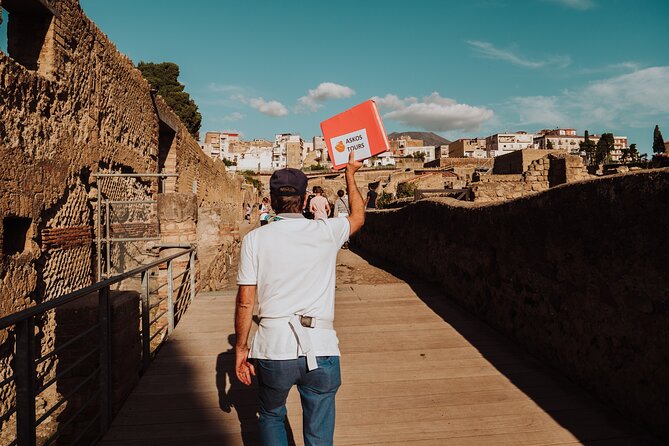
This is roughly a 2-hour experience, and the route is structured into short segments, with each main stop lasting about 10 minutes. That adds up to a lot of ground in a short time, and you will be on your feet.
One consideration that keeps showing up in real-world experiences is how quickly you may move through the site. If you want extra time at the on-site museum spaces, build in buffer time before or after the tour, because the walking schedule is the priority.
If it helps, many guides do a good job keeping the pace workable. Still, you should assume plenty of standing, and you should wear shoes you can walk in comfortably for the whole route.
Nearby, and just as well reviewed:
- From Naples: Pompeii Ruins & Mount Vesuvius Day Tour
★ 4.3 · 11,459 reviews - From Naples: Sorrento, Positano and Amalfi Full-Day Tour
★ 4.6 · 10,988 reviews - From Naples: Sorrento, Positano & Amalfi Coast – Small Group Tour
★ 5.0 · 8,643 reviews - Naples: Catacombs of San Gennaro Entry Ticket & Guided Tour
★ 4.6 · 7,941 reviews
House of the Deer: how a peristyle becomes a landmark
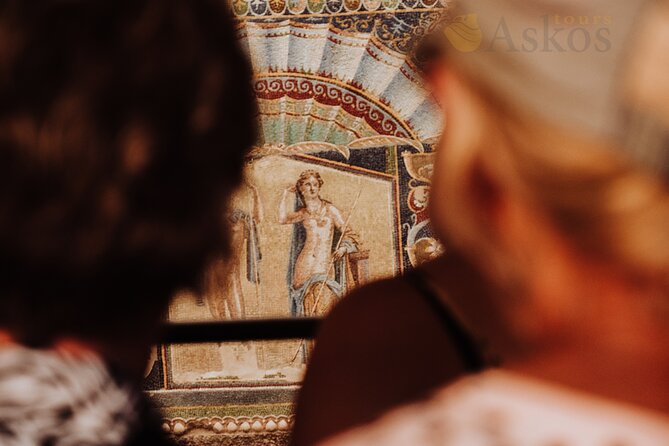
The tour begins with a stop at the House of the Deer. The name comes from marble statues of stags or deer found in the peristyle, the central open area around which rooms and circulation work.
Why this stop matters: it is one of the clearest examples of how archaeology turns art and household layout into real evidence. You are not just seeing a label on a map. You are learning how researchers connect decorative objects to the way a home was organized and used.
La Terrazza di M. Nonio Balbo: reading a city through inscriptions
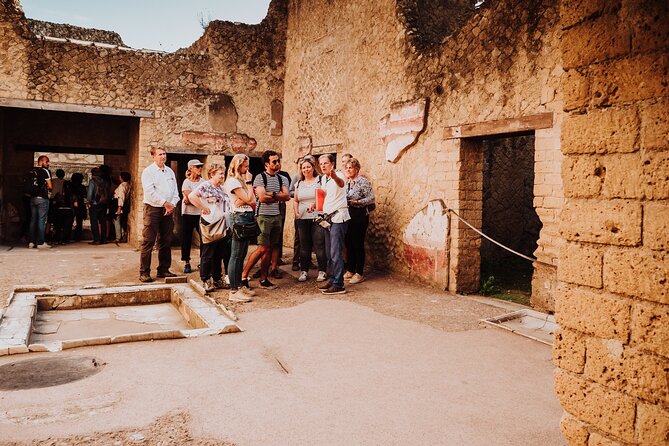
Next is La Terrazza di M. Nonio Balbo, tied to a major civic benefactor, M. Nonius Balbus. He restored and built public buildings, and after his death he was honored and recorded in a long inscription connected to his funeral altar.
This is a great moment to shift from “house tourism” into “how cities operate.” You start seeing Herculaneum not as ruins, but as a community where elite patrons funded repairs and public works, and where honor was publicly documented.
College of the Augustales: religion, politics, and status
The College of the Augustales is thought to have functioned as a center connected to the cult of Emperor Augustus. It may also relate to the headquarters of the Collegium Augustalium, or possibly even the local curia, which gives it a strong connection to governance and civic religion.
If you like understanding Roman society as a system, this stop is gold. Even if you are not a classics person, you will come away with a clearer sense of why worship and public life were intertwined, and how elite groups could gain visibility and power.
Casa del Rilievo di Telefo: a house with a private thermal link
At Casa del Rilievo di Telefo, the setting is unusual because the house may have belonged to a leading benefactor such as Marcus Nonius Balbus, and it has its own private access to the adjoining Suburban Thermae to the south.
This is the kind of architectural detail you might miss on your own, because it requires looking from a few angles and knowing what to spot. With a guide, that connection becomes meaningful: leisure, privacy, and status were designed into the home itself.
The wooden partition find: Partem Domus lignea, Casa del Tramezzo di Legno
One of the most important stops is Partem Domus lignea, Casa del Tramezzo di Legno, focused on the elegant wooden partition that survived. This matters because wood is not usually the star of the archaeological show, yet here it is key evidence.
What to look for is the idea behind the stop: this is not just a pretty remnant. It helps you picture how rooms were divided and how daily movement and space worked inside an elite residence. You start to understand the home as a living machine, not just a set of chambers.
House of the Skeleton: when discoveries shape names
The House of the Skeleton is named after human remains found in a second-floor room in 1831. The very name tells you the site’s history of discovery, not only its ancient story.
This stop often changes the mood of a visit. It is a reminder that archaeology is also about what gets found, when it gets found, and how earlier excavations influence the way the site is labeled today.
Central Thermae: two entrances for two worlds
Next comes the Central Thermae, built around the beginning of the 1st century AD. They were divided, using a common practice of the time, into men’s and women’s baths, each with separate entrances.
This is a practical lesson in how Romans organized public leisure. You get to see the logic in stone form, and it helps you visualize how separate spaces shaped routines and social life.
House of the Black Salon: luxury, and charred door remains
The House of the Black Salon is one of Herculaneum’s more luxurious mansions. It features a monumental entrance with carbonised doorposts and lintel, which is exactly the kind of survival detail that makes Herculaneum so compelling.
If you like architecture, this stop helps you connect material survival to social meaning. Luxury is visible in both the scale and the finishes, and those charred structural elements also show you what fire or catastrophe left behind.
Casa Sannitica: Samnite layout with Ionic-style elegance
At Casa Sannitica, the layout is described as typical of the Samnites, an ancient people associated with the mountainous central Italian region. The atrium is surrounded by a gallery with Ionic columns, and the rooms were decorated with frescoes.
This is a helpful stop if you want variety in what you see. You are not only tracking elite Roman fashion. You are also seeing regional influence and how different cultural styles show up in domestic architecture.
Casa del Bel Cortile: a courtyard with a stone balcony
Casa del Bel Cortile stands out for its courtyard and a stairway, with a stone balcony replacing what you might expect in a more typical atrium design. It is one of the more original house layouts you will see on this route.
This is a good place to slow down mentally. The description makes it clear: the home is designed for a particular rhythm of movement between levels and open space, and a guide helps you read that flow rather than just pass by it.
House of the Grand Portal: where the big doorway sets the tone
The tour finishes with House of the Grand Portal. It is located in the center of the archaeological area and includes multiple environments, collon nati, and frescoes, plus charred remains of wooden parts.
The “grand portal” idea is the point. This is where you can see how entrances and circulation reflect status. When you end the walk here, it feels like the tour has carried you from smaller named features into a bigger statement of wealth and design.
Guides and headsets: why your experience feels smoother
This tour includes headsets, which is not a small detail. Herculaneum is full of sight lines that do not naturally put everyone near the guide, and the earpieces help you hear without craning your neck or getting separated.
You can also benefit from the personality and method of the archaeologist guide. For example, Michaele is described as weaving engineering and cultural history with family-style stories. Luciano Leone is noted for entertainment plus strong archaeological explanation, including visual reconstructions in his own materials. Paulo and Julia are credited for keeping information organized and spoken clearly.
The biggest takeaway for you is that these are not passive lectures. The guides tend to point out specific things you would otherwise overlook, and they help you connect the small finds into a full picture of daily life.
Who this tour suits best, and who should think twice
This is a great match for you if:
- You want a high-value, time-limited experience in Herculaneum
- You like homes, architecture, and everyday routines, not only dramatic ruins
- You want a guided explanation of key features like the baths’ separate entrances and surviving wood partitions
- You are traveling with people who will enjoy stories about civic life and household details, including teens
You might think twice if:
- You need a lot of sitting breaks, because the tour is heavy on standing and walking
- You are hoping to spend long, quiet time inside museum spaces, because the route focuses on a set sequence across the site
A few smart tips to make the most of your 2 hours
- Wear comfortable shoes with good grip. The site walk adds up.
- Bring a light layer. The tour operates in all weather conditions, so dress for rain or sun.
- If you care about museum time, plan buffer time. The tour schedule is the priority.
- Arrive early and use the meeting point address as your anchor, especially if you are coming by train.
Should you book this archaeologist tour?
If you want the best odds of understanding Herculaneum fast, this is an easy yes. The combination of archaeologist-led guidance, skip-the-line tickets, and headsets turns what could be a confusing walk into a clear, story-driven visit across the site’s most memorable spaces.
The only reason I would hesitate is if you strongly need more seating and a slower pace than a 2-hour route can offer. Otherwise, this is one of the smartest ways to see Herculaneum highlights without wasting your limited time.
FAQ
How long is the Herculaneum small group tour?
It runs for about 2 hours (approx.).
What is the group size limit?
The group size is maximum 20 people per guide.
Does the price include entry tickets?
Yes. The entrance fee for Herculaneum entry tickets is included in the tour price.
Is the tour in English?
Yes, it is offered in English.
Where is the meeting point?
The start point is at the Ticket Office of the Herculaneum ruins, with the listed address Corso Resina, 187, 80056 Ercolano NA, Italy. The tour ends inside Herculaneum ruins.
Is it a skip-the-line tour?
Yes, the tickets are skip-the-line, so you should not have to wait in long queues.
Are dogs allowed?
Dogs are allowed at the Herculaneum Archaeological Park, with no breed or size restrictions, but they must be kept on a leash or muzzle and you must have bags for droppings. Access rules are more strict inside Antiquarium premises, the Boat Pavilion, and domus with mosaic floors, where only carried dogs or appropriate carriers are allowed. Service animals are allowed.
Latest reviews around Naples
- Vesuvius National Park Skip-the-Line Ticket★ 3.8 · 221 reviews
- From Naples: Procida Island Day Trip with Lunch★ 3.8 · 137 reviews
- Pompeii and Vesuvius Full-Day Tour from Amalfi Coast★ 4.4 · 319 reviews
- Pompeii: Skip-the-Line Entry Ticket with Audio Guide or Tour★ 4.1 · 1,364 reviews
- From Naples: Pompeii & Herculaneum with Archaeologist Guide★ 4.8 · 665 reviews
- From Naples: Pompeii and Herculaneum Tour with Lunch★ 4.3 · 444 reviews
- From Naples: Pompeii Guided Tour with Skip-the-Line Tickets★ 4.8 · 1,171 reviews
- From Naples: Pompeii and Sorrento Full-Day Tour★ 4.2 · 144 reviews
Herculaneum Tours, compared.
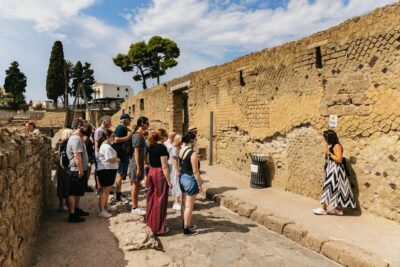
Herculaneum: Skip-the-Line Guided Tour with Archaeologist
Read our review →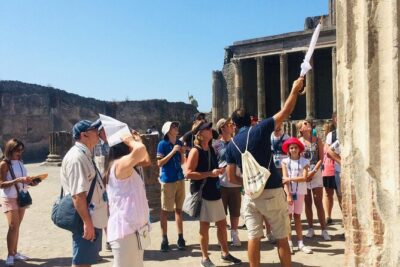
Pompeii and Herculaneum Small Group Tour with an Archaeologist
Read our review →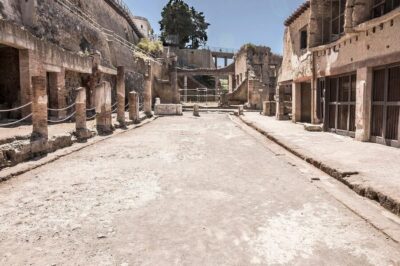
Herculaneum: Skip-the-Line Entry Ticket with Audio Guide
Read our review →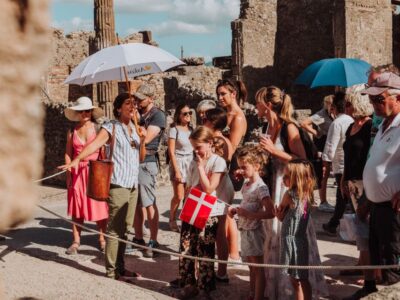
Pompeii & Herculaneum with Archaeologist Guide
Read our review →
Pompeii, Herculaneum, & Vesuvius Full-Day Tour
Read our review →
Ercolano: Herculaneum Entry Ticket with Optional Audio Guide
Read our review →
Browse the lists this tour appears in