
Reviewed · POMPEII & VESUVIUS TOURS
Pompeii: Tour with Archaeologist Guide & Skip-the-Line Entry
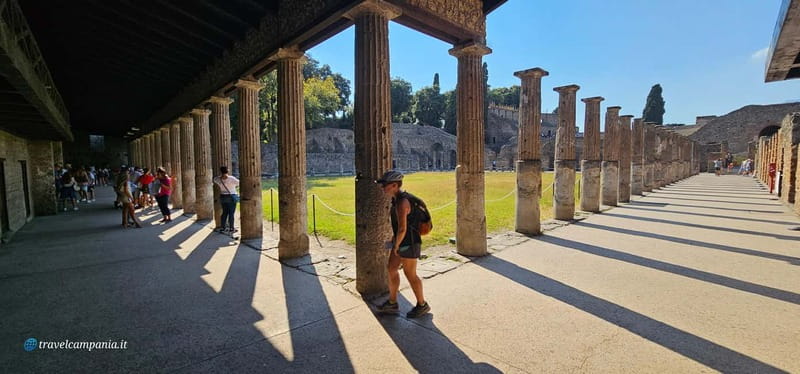
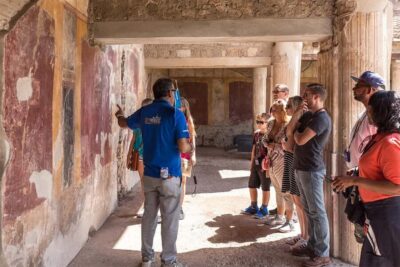
Pompeii feels personal when you go with an expert. This Pompeii Express tour pairs an authorized archaeology guide with skip-the-line entry, so you spend your time walking the ancient streets instead of waiting at the gate. You’ll also see how plaster casts and preserved buildings help turn an eruption from 79 AD into real, human detail.
I really like two parts of the format. First, the tour is tightly planned for a roughly 2-hour visit inside the excavations, so it is not a vague wandering session. Second, you get guided context for everyday places, from theaters to homes and street-level businesses, which makes Pompeii feel legible fast.
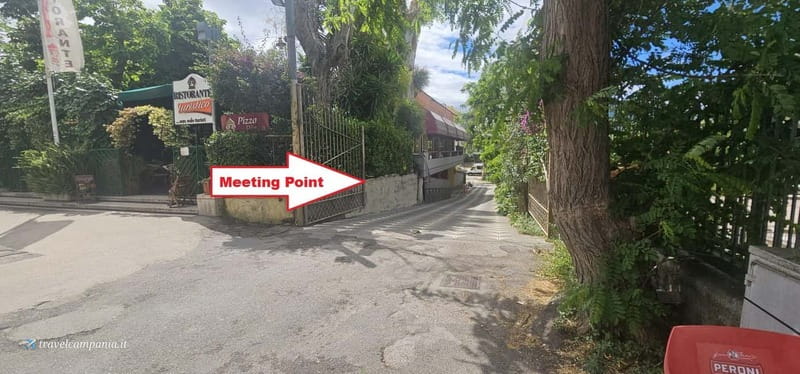
One drawback to consider is logistics at the start: the meeting spot at the Welcome box can take a minute to locate, especially if you arrive close to start time. Give yourself a little buffer and you will be fine.
In This Review
- Key points that make this Pompeii tour worth your time
- Why Pompeii clicks faster with a real archaeologist guide
- Skip-the-line entry: saving time so you can actually see more
- The Welcome box start: where to meet and how to avoid first-day stress
- A 2-hour Pompeii route that balances highlights and meaning
- Stop-by-stop: what each key area feels like on the ground
- Porta Marina, Pompeii (about 10 minutes)
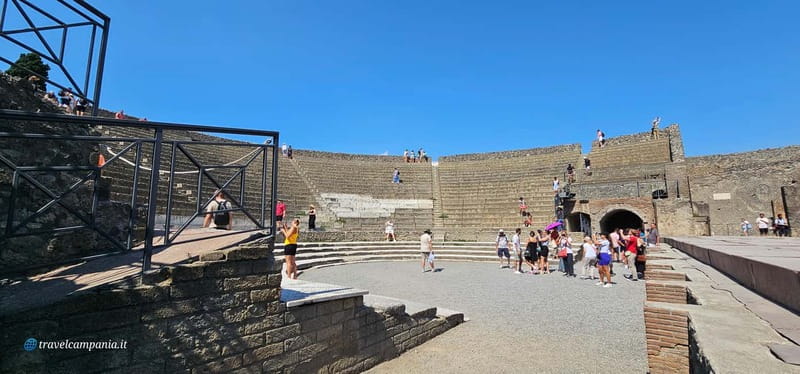
- Teatro Piccolo (about 10 minutes)
- House of Menander (about 15 minutes)
- Thermopolium (about 15 minutes)
- Terme Stabiane (about 15 minutes)
- Lupanare (about 20 minutes)
- Foro Civile di Pompei (about 15 minutes guided, then 10 minutes free)
- Guides make the crowd manageable, not just educational
- What you learn beyond the walls: from founding to eruption
- Language and group size: how the tour runs when groups vary
- Who this Pompeii Express tour suits best
- Price and value at about $57 per person
- Should you book this Pompeii tour?
- FAQ
- How long is the Pompeii tour?
- Where do we meet for the tour?
- Does this tour include skip-the-line entry?
- What’s included and what’s not included?
- What languages are available?
- What should I bring, and what is not allowed?
Key points that make this Pompeii tour worth your time
- Skip-the-line Pompeii Express entrance saves your morning energy for actual ruins time
- Authorized archaeology guide gives you the story behind what you see, not just place names
- Radioguide system may be used when groups pass 8 people, and it helps in crowded sections
- A focused stop sequence hits major viewpoints, daily-life locations, and the Forum area
- Crowd-smart pacing is built into the route, including getting to places before they peak
- Practical site tips from guides, including reminders like where lockers are handy
Why Pompeii clicks faster with a real archaeologist guide
Pompeii is a rare kind of historical site. This is a Roman city that was preserved under ash and debris after the Vesuvius eruption in 79 AD, which means you are not looking at scattered stones. You are walking through the preserved remains of buildings and everyday life, and you can still make out how people lived.
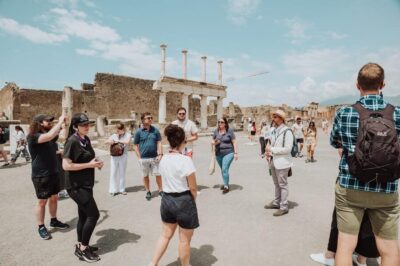
That is exactly why an archaeologist guide matters. When someone who studies the evidence explains what you are seeing, the ruins stop being a photo backdrop and start feeling like a working town. It helps you notice small details that you might otherwise miss on your own, like how different buildings were designed for their specific purpose.
And because the ruins are dense, the biggest value here is time. With only about two hours on the ground, the guide’s job is to connect the dots from the city’s founding era, through Roman street life, up to that catastrophic final day.
More Pompeii digs and Vesuvius climbs:
- Pompeii: Entry Ticket and Guided Tour with an Archaeologist
★ 4.8 · 19,459 reviews - Pompeii: Small Group Tour with an Archaeologist
★ 4.8 · 12,264 reviews - Pompeii: Skip-the-Line Entrance Ticket with Audio Guide
★ 4.0 · 2,509 reviews
Skip-the-line entry: saving time so you can actually see more
The headline benefit is the priority entry. You get a Pompeii Express entrance ticket that lets you skip the long ticket lines, which is not a small deal at a place as popular as Pompeii. If you have ever arrived at a major European attraction and watched your time evaporate in a queue, you already know why this matters.
Skipping the line also changes how the rest of the day feels. You arrive at the ruins with more energy, you can follow the guided stops without feeling rushed, and you are more likely to have a calm, steady pace through the crowded sections.
It also pairs well with the tour’s overall structure. The experience is designed as a short guided circuit inside the excavations, not a half-day free-for-all. When entry is fast, the guide can start on time and keep the storytelling smooth.
The Welcome box start: where to meet and how to avoid first-day stress

This tour ends back at the meeting point, and the start is the Welcome box. That sounds simple, but in practice, start points can feel like a maze when you’re new to a site and you are matching your group to a staff member.
Here is what helps. Arrive early enough to locate the Welcome box calmly, then double-check you are with the right language group. Once you find your guide and settle in, the tour rhythm is very straightforward.
One practical tip that comes up in real-world experience is how people store bags. There are free lockers at the gates to stash your backpack, which is useful because bags are listed as not allowed for the tour. If you are traveling light, great. If not, plan to use the lockers so your hands are free and your walk feels easy.
A 2-hour Pompeii route that balances highlights and meaning

The tour is built around an approximately 2-hour guided walk through the excavations. You will not get every single corner of Pompeii, and that is the point. Instead of trying to “cover everything,” you get a curated circuit where each stop builds on the last.
The best tours at Pompeii do two things. They show you the most impressive preserved buildings, and they explain how those spaces worked for ordinary routines. This one aims for both, including art, customs, crafts, and everyday life details, all tied to the city’s final days.
Also, Pompeii can be loud and crowded in certain sections. This tour can include a radioguide setup when the group size passes 8 participants, and there are earpieces used for listening during key parts of the walk. If you are sensitive to sound, just know the earpieces can feel loud but they make it easier to follow the guide without shouting over the crowd.
A few more Pompei Campania options to weigh
- Pompeii: Skip-the-line-Ticket and Guided Tour
★ 4.6 · 1,152 reviews - Pompeii: Guided Tour with Skip-the-Line Entry
★ 4.9 · 812 reviews - Pompeii: Skip-the-Line Entry Ticket with Digital Guide App
★ 4.1 · 770 reviews - Pompeii: Afternoon to Sunset Guided Tour with Ticket
★ 4.9 · 484 reviews
Stop-by-stop: what each key area feels like on the ground

Porta Marina, Pompeii (about 10 minutes)
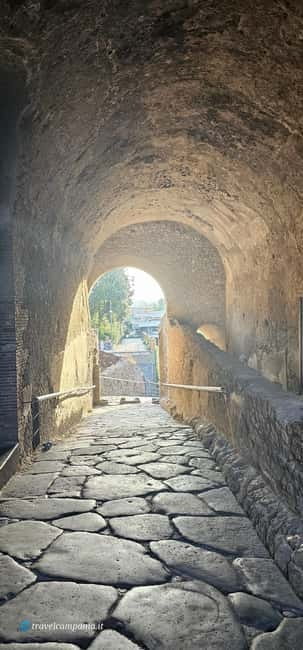
You begin at Porta Marina, and that makes sense because gateways set the mood for the city. You are starting at a boundary point, so you quickly shift into “this was a real place with movement and entrances” mode rather than treating Pompeii as a museum room.
The short time here is not a drawback. It is a setup, and the guide uses it to connect what comes next to how people would have entered, exited, and traveled through the town.
Teatro Piccolo (about 10 minutes)
From there you reach Teatro Piccolo. Even with limited time, a theater stop helps you understand that Pompeii was not just about commerce and houses. It also had public entertainment and social life.
This is where a good archaeologist guide shines. The guide can point out the logic of the space and what it meant in daily public culture, so you can look beyond the wow factor and understand what people did there.
House of Menander (about 15 minutes)
The House of Menander gets a longer block, about 15 minutes, because houses are where Pompeii becomes human. Domestic spaces help you imagine routines, privacy, and how people organized their living areas.
It is also a great stop for learning to read the evidence. Instead of looking at a wall and moving on, you start noticing how different parts of a home served different needs, and why certain rooms mattered in everyday life.
Thermopolium (about 15 minutes)
Next is the Thermopolium. A street-level business like this is the kind of place that makes Pompeii feel real. You get to connect the city’s architecture to practical needs, like food and casual social visits.
This stop is particularly valuable if you like cultural details. A guide can explain not only what the site was, but why it was part of a normal day for residents and visitors in the ancient city.
Terme Stabiane (about 15 minutes)
Then you hit the Terme Stabiane. Bathing spaces are one of the big “everyday life” themes in Pompeii, and they give you a break from just walking through shops and homes. They also add a different perspective on social life, since bathing could be both practical and communal.
What I like about this stop in a short tour is variety. It changes the pace and shows that Roman Pompeii was layered, with public and semi-public spaces right alongside domestic ones.
Lupanare (about 20 minutes)
The Lupanare gets the longest single stop after the Forum area. That extra time helps because this is a place with lots to interpret, even in a short visit. Your guide’s job here is to keep the story grounded in evidence and context, so you understand what the space represented rather than just absorbing the shock value.
If you are the kind of traveler who wants Pompeii to feel like real city life, this stop is a key piece of the puzzle.
Foro Civile di Pompei (about 15 minutes guided, then 10 minutes free)
Finally you arrive at the Foro Civile di Pompei. The Forum is where civic life comes into focus, and it’s the natural place to end the guided portion because it helps you consolidate everything you saw. You connect street life, public spaces, and the structure of the city into one clearer picture.
Then you get about 10 minutes of free time back at the Forum area. This is a small window, but it is useful. Use it to take a few photos without your guide constantly redirecting you, or to revisit a detail you want to stare at a bit longer.
Guides make the crowd manageable, not just educational
Pompeii can be packed. One reason people love this format is that the guide helps manage timing and crowd pressure.
I especially like the idea of moving the group to less busy spots. When someone knows where congestion builds, the tour feels smoother and the stops feel more relaxed. It also makes the radioguide setup more useful, because you are less stuck in a noise swirl.
There is one practical tradeoff. The earpieces are helpful, but they can be loud. If you prefer softer audio, you might want to ask your guide how to adjust comfort, or at least be ready to wear them properly so the volume feels manageable.
What you learn beyond the walls: from founding to eruption
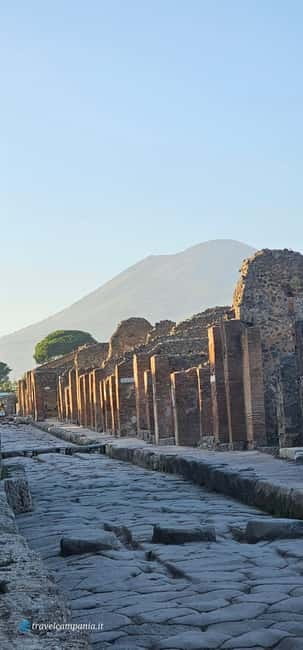
This tour is built around story beats. You go back from the Roman era into earlier context, with the city described as founded around the 7th century BC. Then the guide brings you forward to 79 AD, when Vesuvius destroyed the city in an incredible eruption.
The key is what happens between those facts. Pompeii is treated as a living place, not just a tragedy. You hear about art, customs, crafts, and everyday life, so you start seeing the city as a system of routines and roles.
This is also where plaster casts are mentioned as part of what you will admire. Even if you do not know what to look for at first, the guide’s explanations help you understand why casts are so important. They turn the preserved evidence into something your brain can grasp quickly, instead of leaving you stuck wondering what you are supposed to interpret.
Language and group size: how the tour runs when groups vary
The tour is offered in multiple languages: Italian, Spanish, French, English, and German.
There is also a listening setup detail tied to group size. The guided tour includes the radioguide when passing 8 participants. If the group is not over 4 participants in the same language, the tour may run with an audio guide plus a tour guide in English.
So if you are picky about language, check what option you booked before you head to the Welcome box. It is usually not a problem, but it can matter for how detailed you want the explanations to be.
Who this Pompeii Express tour suits best

This is a strong choice if you want Pompeii to make sense quickly. I think it is especially good for first-timers because the guided route connects major highlights to real daily life.
It also works well if you have limited time. Two hours sounds short until you realize what you get: priority entry, an archaeology-focused guide, and a structured circuit with a small free-time window.
A fit note matters too. This tour is not suitable for people with mobility impairments or wheelchair users, and it is not suitable for people over 95 years. If you fall into any of those categories, you might need to choose a different kind of visit.
Price and value at about $57 per person
At about $57 per person, the value is in what you are buying, not just the ticket itself. You are paying for:
- priority entry that saves you time in line
- an authorized archaeology guide
- a focused, guided circuit that uses your limited time well
For a top-tier site like Pompeii, entry lines can be brutal. Paying a little extra to skip that portion can feel worth it instantly, especially if you are trying to fit Pompeii into a tight itinerary.
The other value is the guide. At Pompeii, the difference between looking and understanding is huge, and this format is designed to deliver that understanding in a short window.
Should you book this Pompeii tour?
If you want Pompeii to feel understandable in a short time, I say book it. The skip-the-line entry plus an archaeology guide is the best combination for travelers who do not want to burn hours at the gate or guess what details mean.
I would only pause if you dislike group walking, you need a more flexible pace, or you are in the categories listed as not suitable. Otherwise, this is a smart way to see the major highlights, learn the story behind them, and still keep enough energy to explore a bit on your own after the tour ends.
FAQ
How long is the Pompeii tour?
The guided tour lasts about 2 hours inside the excavations. Starting times vary, so check availability for the schedule.
Where do we meet for the tour?
The meeting point is the Welcome box, and the activity ends back at the same meeting point.
Does this tour include skip-the-line entry?
Yes. It includes Pompeii Express entrance ticket access to visit the archaeological site and helps you skip the long ticket lines.
What’s included and what’s not included?
Included are the Pompeii Express entrance ticket and an authorized expert archaeology guide. Not included are transport, lunch, and tips.
What languages are available?
The live guide is available in Italian, Spanish, French, English, and German. There is also a radioguide for larger groups, and for small same-language groups the tour can use an audio guide plus an English-speaking tour guide.
What should I bring, and what is not allowed?
Bring a passport or ID card (copies are accepted). Bikes are not allowed, and alcohol and drugs are not allowed. Bags are also listed as not allowed.
Latest reviews around Pompei Campania
- Pompeii and Herculaneum: Guided Tour with an Archaeologist★ 5.0 · 164 reviews
- Pompeii 3hours Villa of Mysteries tour with an Archaeologist★ 4.8 · 486 reviews
- Pompeii: Small-Group Tour of Pompeii and Herculaneum★ 4.8 · 867 reviews
- Pompeii: Skip-the-Line Guided Tour★ 4.6 · 139 reviews
- Pompeii: Skip-the-Line Ticket with Audio Guide and Map★ 4.0 · 117 reviews
- Pompeii: Skip-the-Line Entry & Audioguide★ 3.8 · 225 reviews
- Pompeii: Skip-the-line-Ticket and Guided Tour★ 4.6 · 1,152 reviews
- Pompeii: Guided Tour with Skip-the-Line Entry★ 4.9 · 812 reviews
Pompeii & Vesuvius Tours, compared.
Pompeii: Entry Ticket and Guided Tour with an Archaeologist
Read our review →
Pompeii: Entry Ticket with Optional Audio Guide
Read our review →
Pompeii: Small Group Tour with an Archaeologist
Read our review →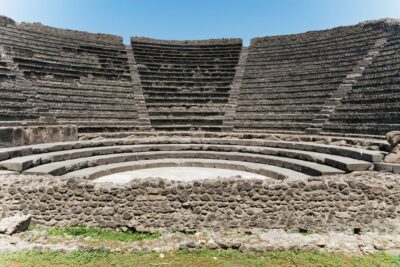

Pompeii Small Group Tour with an Archaeologist
Read our review →
Pompeii, Amalfi Coast and Positano Day Trip from Rome
Read our review →Browse the lists this tour appears in