
Reviewed · POMPEII & VESUVIUS TOURS
Pompeii: Afternoon to Sunset Guided Tour with Ticket
Pompeii in late day light feels unreal. This 2.5-hour guided walk gives you skip-the-line entry and a focused route through the Forum, Basilica, Thermal Baths, and Theater, plus calmer sunset atmosphere at the end.
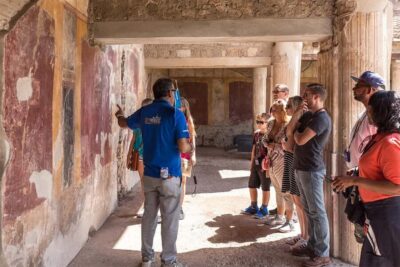
I especially like the way the tour turns big ruins into daily life. You get an archaeologist-led explanation of what you are looking at, from civic buildings to neighborhood streets with bakeries and housing blocks, and guides such as Angelo, Anna, Sasa, Francesco (Frankie), and Luigi are praised for storytelling and keeping questions moving. The main drawback to consider is simple: you are on foot for 2.5 hours on a site with uneven ground, so it is not a fit if you have mobility issues or heart or respiratory concerns.
In This Review
- Key things I’d circle before you go
- Meet at Ristorante Bar Sgambati, then get moving fast
- Afternoon to sunset: why this timing feels smarter at Pompeii
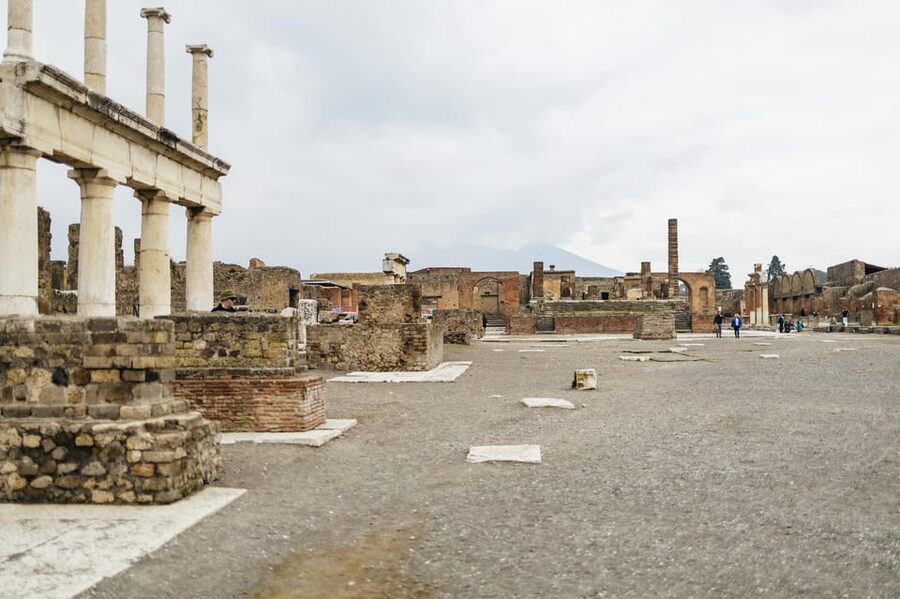
- Forum, Basilica, and civic Pompeii you can almost hear
- Thermal Baths: where daily routine shows up in stone
- Theater stop: public culture and the power of spectacle
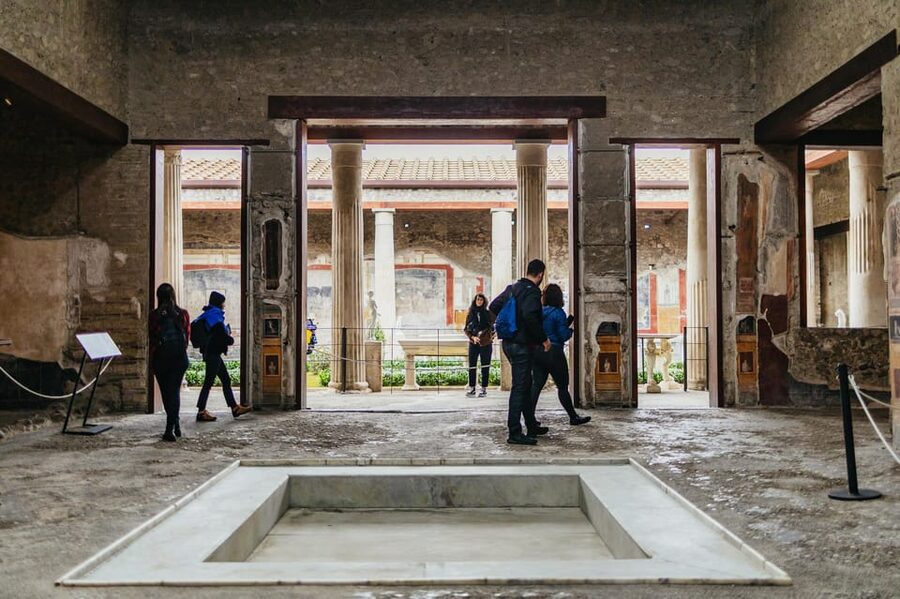
- Neighborhood streets, bakeries, and housing blocks
- The eruption explained: Vesuvius and what it changed
- Pace, group size, and what to pack
- Ticket value: why $58 can make sense here
- The best fit: who will enjoy this most
- Should you book this Pompeii afternoon sunset tour?
- FAQ
- How long is the Pompeii afternoon to sunset guided tour?
- Where do I meet the guide?
- What is included with the tour price?
- Is transportation included?
- Which languages are offered for the guided tour?
- Does the tour let me avoid the main lines?
- What should I bring?
- Is the tour suitable for people with mobility impairments?
- What is the cancellation policy?
Key things I’d circle before you go
- Skip-the-line Pompeii entry through a separate entrance so you spend more time walking than waiting
- Archaeologist guides who bring the city to life, with multiple guides named Angelo, Anna, Sasa, Francesco (Frankie), and Luigi
- Forum, Basilica, Thermal Baths, and Theater covered in one compact afternoon circuit
- Neighborhood leftovers like bakeries and housing blocks, which help you picture everyday routines
- Sunset timing that often means cooler weather and softer light for photos
- Small-group or private options, which makes it easier to ask questions on the move
Meet at Ristorante Bar Sgambati, then get moving fast
Your tour starts at Ristorante Bar Sgambati. Meet your guide by a red sign that says Enjoy Pompeii, then you head into Pompeii via the separate entrance. That skip-the-line piece matters at Pompeii, because even when you plan well, queues can eat up your best sightseeing hours.
This is not a bus-and-lecture format. You’ll be walking through real streets and buildings, so the sooner you start, the more you get out of the time you’ve paid for.
More Pompeii digs and Vesuvius climbs:
- Pompeii: Entry Ticket and Guided Tour with an Archaeologist
★ 4.8 · 19,459 reviews - Pompeii: Small Group Tour with an Archaeologist
★ 4.8 · 12,264 reviews - Pompeii: Skip-the-Line Entrance Ticket with Audio Guide
★ 4.0 · 2,509 reviews
Afternoon to sunset: why this timing feels smarter at Pompeii
Pompeii is huge, and the ground is exposed in many areas. An afternoon-to-sunset schedule helps because the site cools down later in the day and the lighting gets gentler. Several guides also manage the route with pacing in mind, stopping in spots with shade when possible, which makes the walk easier to enjoy.
The sunset finish is not just for photos. Late day light makes details easier to see in carvings, wall textures, and outlines of rooms. You also leave the busiest part of the day feeling like you actually saw the city, not just the highlights list.
Forum, Basilica, and civic Pompeii you can almost hear
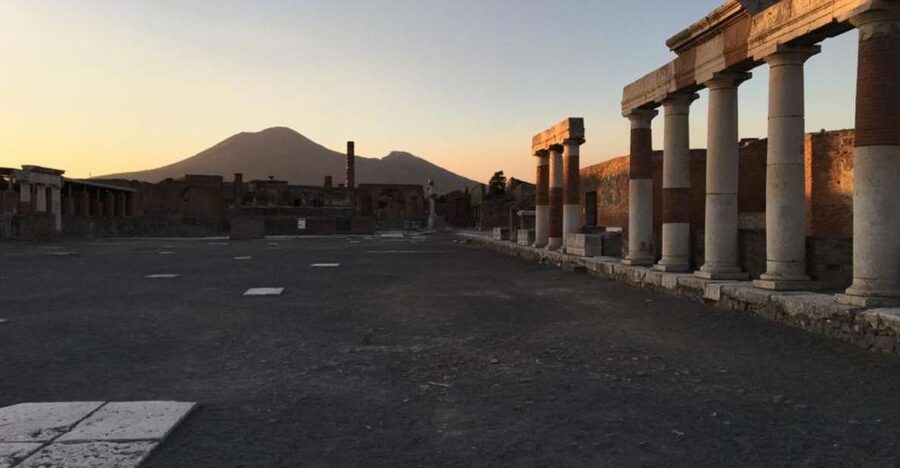
One of the best parts of Pompeii is how clearly you can read the city’s priorities, and the route typically puts civic life at the center. In the Forum area, you see the spaces that shaped public business, social status, and everyday decision-making. The Basilica is a standout because it highlights how Romans handled legal and commercial life inside a grand, functional building.
What I like about this segment is that the guide’s job is to give you a mental map. Once you understand why these buildings were placed where they were, the ruins stop looking like disconnected walls. They start looking like a working city.
A practical tip: stay close to your guide during explanations. The route is paced for a lot of content in a short window, and your best views and photo angles can be brief.
Thermal Baths: where daily routine shows up in stone
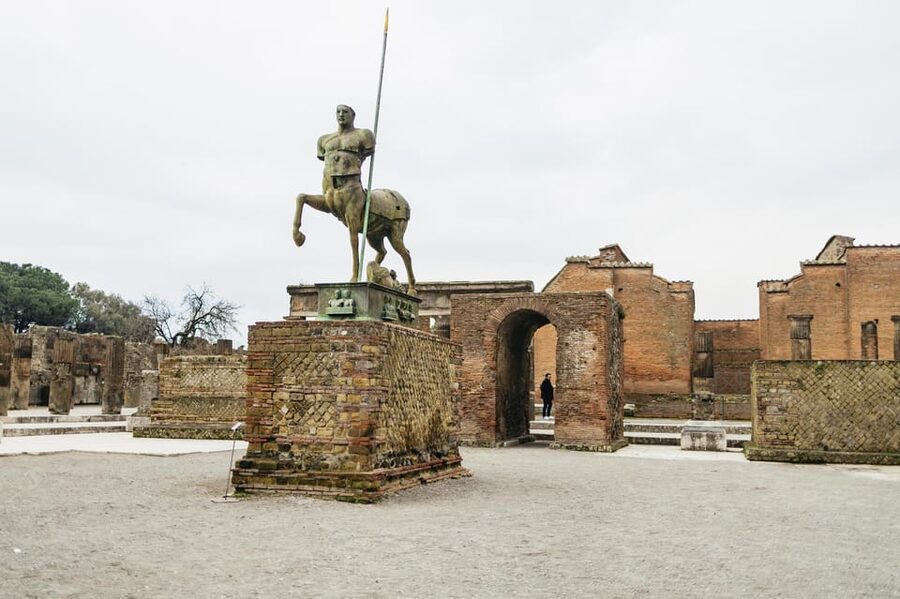
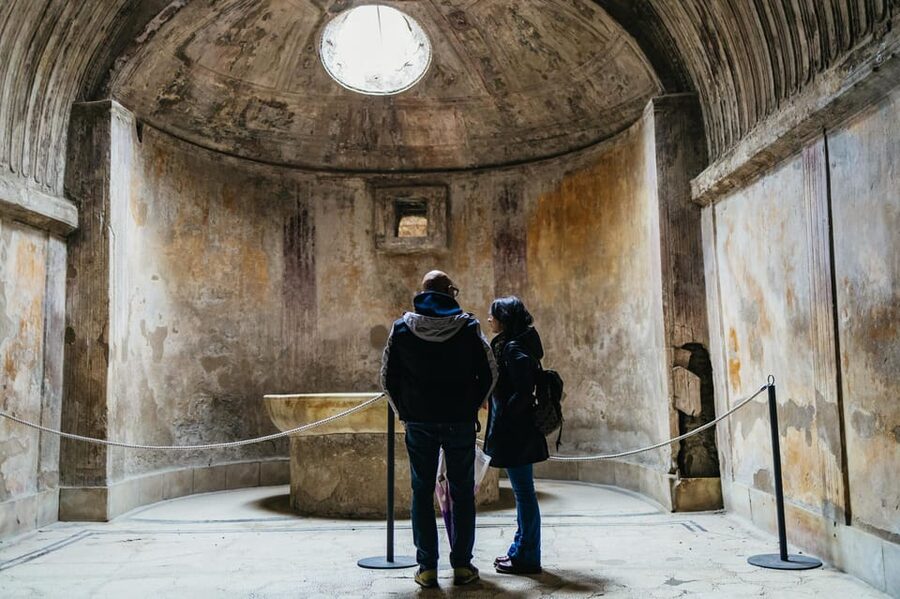
The Thermal Baths stop is often where Pompeii feels most human. These are not temples that only mattered to ceremonies. Baths were part of ordinary life, with social time, hygiene, and a sense of community built into the architecture.
As you move through this area, you’ll usually connect what you see to how people lived before the eruption. The guide’s descriptions help you spot features you might otherwise miss, like room layouts and how the complex functioned as a whole. Even in ruins, the baths teach you that Roman comfort was engineered, not accidental.
One consideration: this area can involve more uneven walking than you might expect. Wear shoes with grip and plan for careful steps, especially if your visit is later in the day when light changes and surfaces can feel slick.
A few more Pompei Campania options to weigh
- Winner 2025 Florence Sunset Food & Wine Tour by Eating Europe
★ 5.0 · 5,015 reviews - Catania: Mount Etna Morning or Sunset Day Trip with Tasting
★ 4.8 · 4,028 reviews - Catania: Sunset Jeep Tour of Mount Etna and Lava Flow Caves
★ 4.8 · 2,113 reviews - Rome: City Highlights Open-Top Bus Night Tour
★ 4.1 · 2,038 reviews
Theater stop: public culture and the power of spectacle
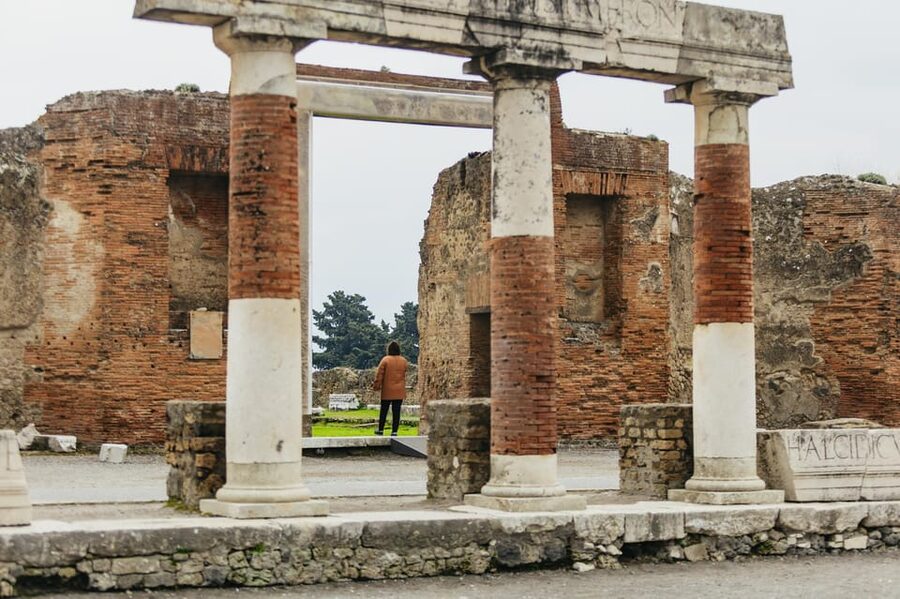
Pompeii’s Theater lets you see how entertainment and public gatherings worked. This is where civic pride and leisure overlap. The guide’s storytelling here matters because theaters are easier to understand when you know what audiences likely did, how the space was used, and why the design mattered.
If you are the type who loves art, architecture, or public life, this segment tends to click fast. You start noticing how sightlines and elevation would have shaped the experience for crowds.
Also, this stop is a good checkpoint for your energy. If you’ve been walking steadily, the theater area gives you a strong sense of scale without feeling like the tour is still sprinting.
Neighborhood streets, bakeries, and housing blocks
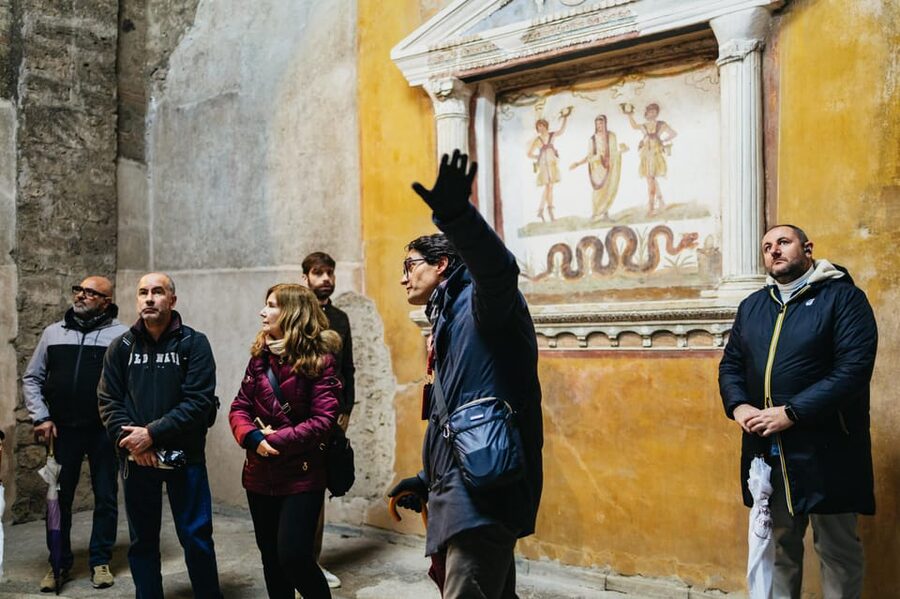
The tour route also pays attention to the “in-between” spaces, not just major monuments. You’ll see commercial and residential neighborhood remnants, including a bakery and typical housing blocks. That matters because it helps you picture routine: where people likely bought food, where they lived, and how the city’s physical layout supported day-to-day rhythms.
This is where Pompeii stops being one big museum and becomes a place. Even if you only remember a few building names, the idea of streets, shops, and housing sticks better than another list of famous structures.
If you want to get even more from this part, take a moment to look at how rooms face the street. Little details like openings, thresholds, and building thickness can tell you more about privacy and daily flow than you’d guess.
The eruption explained: Vesuvius and what it changed
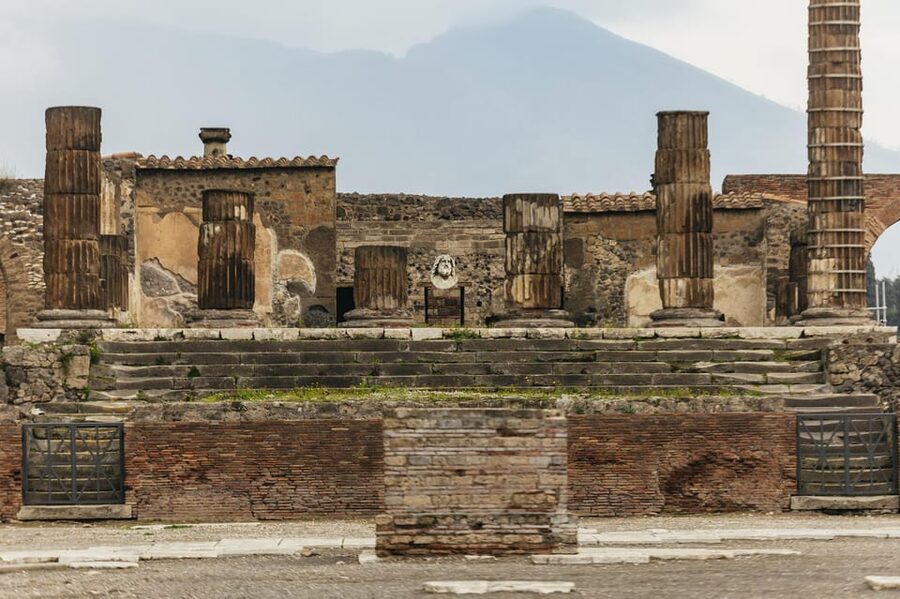
No Pompeii visit feels complete without the eruption story. Here, your guide explains what happened when Vesuvius erupted in 79 AD and how the disaster affected the city. The most valuable angle is not just the drama, it is the ripple effect.
When you connect the eruption to the broader society, Pompeii becomes a reference point for how communities react to catastrophe. You also start understanding why Pompeii’s preservation feels so unusual: it gives you more than ruins. It gives you context for a whole way of life being interrupted.
In this segment, pay attention to how the guide links earlier civic life to what came next. That cause-and-effect thread is what makes the story stick.
Pace, group size, and what to pack
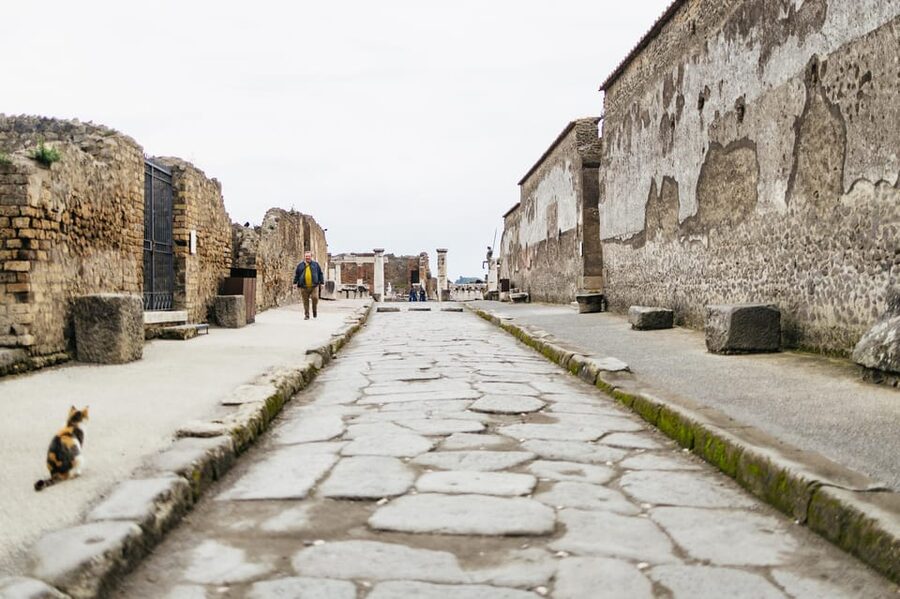
This tour is 2.5 hours of walking, and Pompeii is not built like a flat theme park. You’ll need stamina for an outdoor route across archaeological unevenness. People with mobility impairments are not suited for it, and the tour is also listed as not appropriate for those with heart problems or respiratory issues.
What to bring is simple and practical:
- Sun hat
- ID card (a copy is accepted)
For comfort, I’d also plan for water and solid walking shoes even though they are not listed. If you tend to get hot, choose your outfit like you are walking through summer streets, not like you are strolling a paved mall.
One more thing: small-group or private options help a lot. The best guides can manage a group’s pace on uneven ground, and they can pause for questions without feeling rushed.
Ticket value: why $58 can make sense here
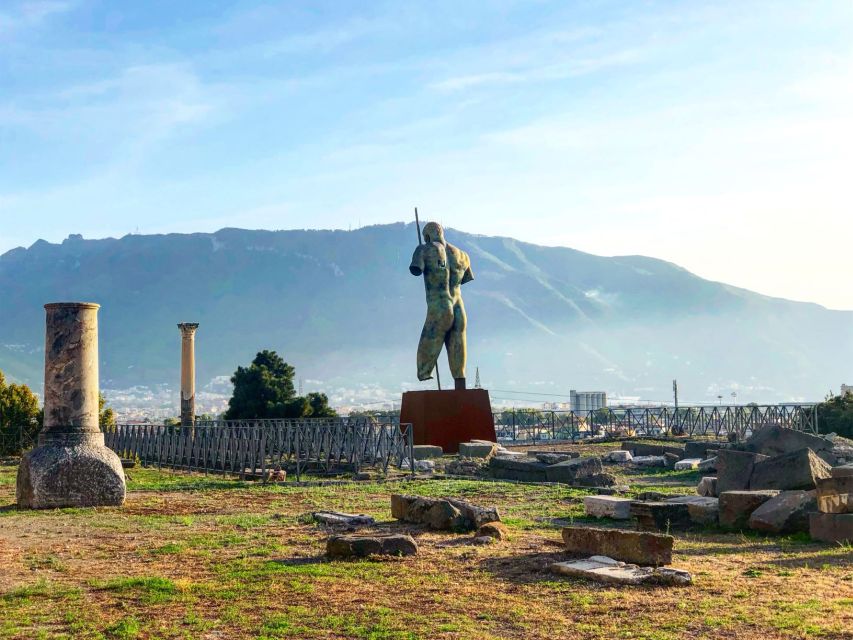
At $58 per person, you are paying for two big things:
1) a skip-the-line entry ticket
2) an archaeologist guide
That combination usually adds up to real savings. With a guided route, you avoid time traps where you see only a fraction of Pompeii because you did not know what mattered most. Your guide also helps you interpret what you are looking at, which is the main difference between a self-guided walk and a guided one.
This tour is also short enough to feel doable if you are visiting Pompeii as a day trip. You still get major highlights like the Forum, Thermal Baths, and Theater, without committing to a full day.
Not included is transportation, so you will need to factor in getting yourself to Pompeii independently.
The best fit: who will enjoy this most
This is a great choice if you:
- want Pompeii highlights without a full-day commitment
- like to learn as you walk, rather than reading a map for hours
- prefer late-day sightseeing for comfort
- want a compact route that focuses on both civic buildings and everyday neighborhoods
It is especially appealing if you are first-time at Pompeii. Many people find the site overwhelming on their own because it is too big to interpret quickly. A guide helps you prioritize and gives structure to what could otherwise feel like random walls.
Should you book this Pompeii afternoon sunset tour?
I think you should book if you want a smart, timed introduction to Pompeii that ends with the site in softer light. The skip-the-line entry plus an archaeologist guide gives you value that is hard to recreate with an audio guide alone, especially when your goal is to see key buildings like the Forum, Basilica, Thermal Baths, and Theater in one efficient walk.
I would not book it if you cannot handle extended outdoor walking on uneven ground, or if you have heart or respiratory limits. And if your top priority is seeing every single major landmark, you may still want extra time beyond this 2.5-hour tour.
FAQ
How long is the Pompeii afternoon to sunset guided tour?
It lasts 2.5 hours.
Where do I meet the guide?
Meet at Ristorante Bar Sgambati, and look for a red sign that says Enjoy Pompeii.
What is included with the tour price?
You get a skip-the-line entry ticket to Pompeii and an archaeologist guide.
Is transportation included?
No, transportation is not included.
Which languages are offered for the guided tour?
The live tour guide is available in Italian, English, and French.
Does the tour let me avoid the main lines?
Yes, you enter through a separate entrance to skip the line.
What should I bring?
Bring a sun hat. Also bring an ID card, and a copy is accepted.
Is the tour suitable for people with mobility impairments?
No, it is not suitable for people with mobility impairments.
What is the cancellation policy?
Free cancellation is available up to 24 hours in advance for a full refund.
Latest reviews around Pompei Campania
- Pompeii and Herculaneum: Guided Tour with an Archaeologist★ 5.0 · 164 reviews
- Pompeii 3hours Villa of Mysteries tour with an Archaeologist★ 4.8 · 486 reviews
- Pompeii: Small-Group Tour of Pompeii and Herculaneum★ 4.8 · 867 reviews
- Pompeii: Skip-the-Line Guided Tour★ 4.6 · 139 reviews
- Pompeii: Skip-the-Line Ticket with Audio Guide and Map★ 4.0 · 117 reviews
- Pompeii: Skip-the-line-Ticket and Guided Tour★ 4.6 · 1,152 reviews
- Pompeii: Skip-the-Line Entry & Audioguide★ 3.8 · 225 reviews
- Pompeii: Guided Tour with Skip-the-Line Entry★ 4.9 · 812 reviews
Pompeii & Vesuvius Tours, compared.
Pompeii: Entry Ticket and Guided Tour with an Archaeologist
Read our review →
Pompeii: Entry Ticket with Optional Audio Guide
Read our review →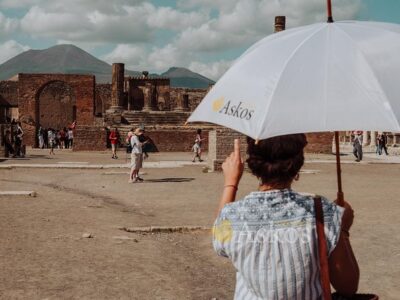
Pompeii: Small Group Tour with an Archaeologist
Read our review →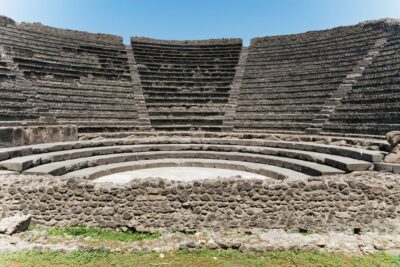
Pompeii Small Group Tour with an Archaeologist
Read our review →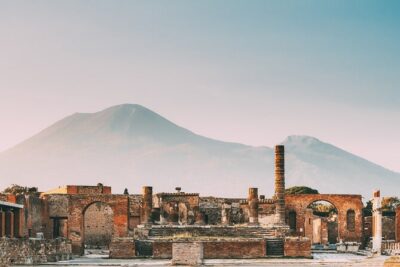
Pompeii, Amalfi Coast and Positano Day Trip from Rome
Read our review →Browse the lists this tour appears in