
Reviewed · POMPEII & VESUVIUS TOURS
Pompeii: Guided Tour with Archaeologist with max. 12 People
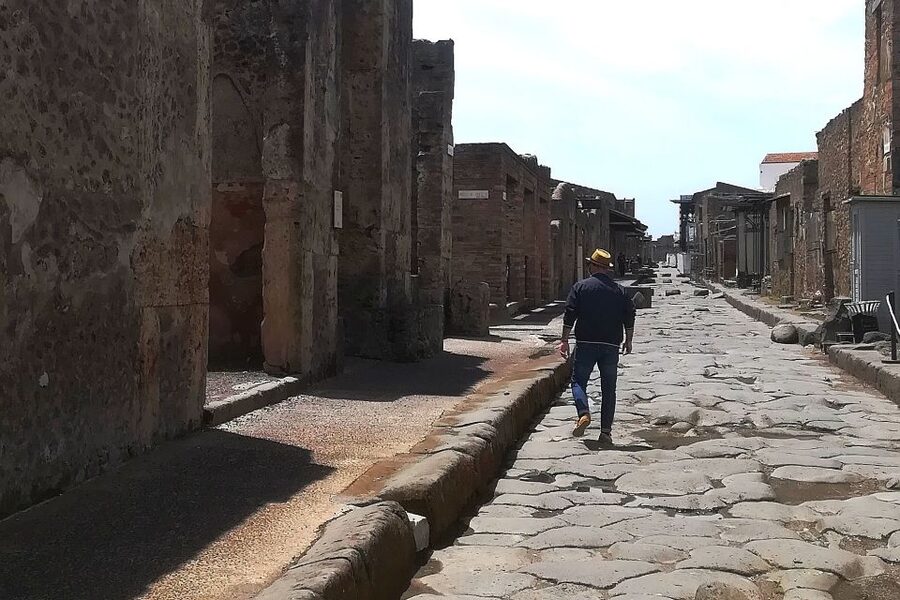
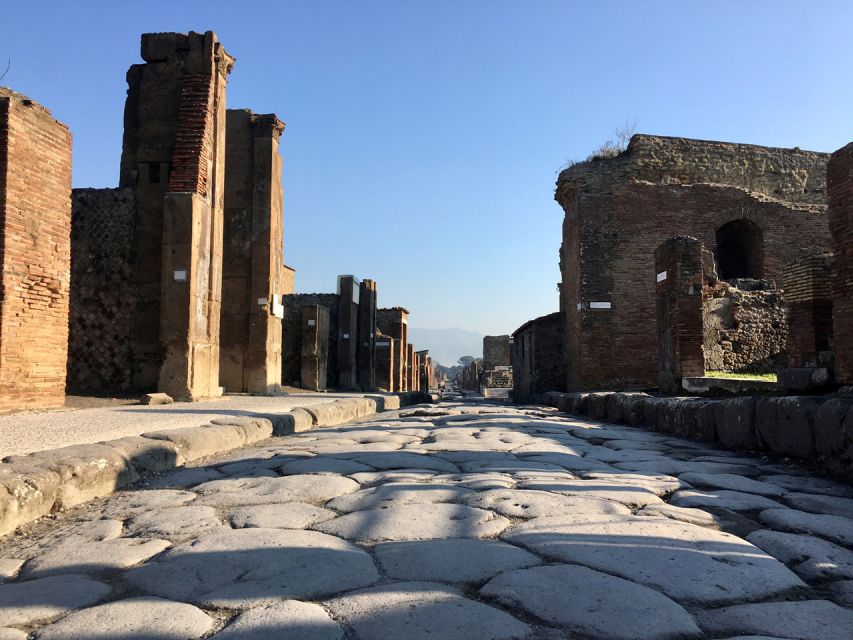
One city, one volcanic day, and lots to see. This Pompeii guided tour with archaeologist Benedetto is built for real understanding, not just snapshots. What I like most is how you get expert explanations while walking an authentic Roman road, and how the route spotlights house details like mosaics and frescoes plus the famous plaster casts. The one drawback to think about is that the site is not suitable for wheelchair users or people with mobility impairments, so you should plan on uneven walking and stairs.
The small-group size, max 12, changes the feel fast. You’re not lost in a herd, so questions actually land and the pace stays manageable, even when it’s hot. If you want to leave Pompeii with a clear mental map, plus a few smart suggestions for what to explore next on your own, this is a very practical way to do it.
In This Review
- Quick reasons to book this Pompeii archaeologist tour
- Meeting at Ristorante Suisse and the fast start
- Why an archaeologist guide like Benedetto is the main event
- The 2-hour route, step by step, and what each stop teaches
- Porta Marina Inferiore to the theaters zone: getting your bearings
- House of Menander: the decorations that make a Roman home feel real
- Terme Stabiane: public baths and the rhythm of the city
- Walking the city edges: shops, bakeries, and snack-bar life
- Foro Civile di Pompei: public buildings and civic identity
- Temple of Jupiter and other big focal points: why they’re worth the climb
- Macellum and Basilica: food markets and the meaning of a meeting place
- Lupanare: the famous brothel and what it signals
- Plaster casts of victims at the Forum: the part you remember
- Frescoes, mosaics, and the Roman artistry you can actually interpret
- Small group pacing, headsets, and keeping your attention on the ground
- Timing tips: what to bring for a comfortable walk
- Price and value: what $65 buys you in real terms
- Who this Pompeii tour fits best (and who should reconsider)
- Should you book this Pompeii archaeologist tour?
- FAQ
- Where does the tour start?
- How long is the Pompeii guided tour?
- Is the tour group small?
- Do I need tickets in advance?
- Are headsets included?
- What languages are available for the guide?
- What should I bring and wear?
Quick reasons to book this Pompeii archaeologist tour
- Archaeologist-led experience with Benedetto, so you’re not just hearing guide-speak
- Small group (max 12), with headsets added only if the group is larger than 8
- A route built around the most meaningful stops, from houses and baths to the Forum and plaster casts
- Crowd-aware pacing, with a plan that helps you spend your time seeing instead of waiting
- Express entry plus a bit of free time to explore after the guided portion
Meeting at Ristorante Suisse and the fast start
This tour meets at Ristorante Suisse. Your guide waits at the meeting point with a sign that has your name on it, which makes the first 2 minutes less stressful than it sounds like it should.
Why this matters: Pompeii is popular, and the “start” can make or break your morning. Here, you also get an express entry ticket, plus the tour is designed to keep the group moving, not stuck. You’ll still want to arrive a little early, but the tour’s structure is there to help you get into Pompeii quickly and start learning right away.
One more practical point that often trips people up: Pompeii tickets are named, so after booking you’ll need to provide the list of first and last names for all participants. Bring your passport or ID card in the original, not a photo, because you’re going to be asked for it at the site.
More Pompeii digs and Vesuvius climbs:
- Pompeii: Entry Ticket and Guided Tour with an Archaeologist
★ 4.8 · 19,459 reviews - Pompeii: Small Group Tour with an Archaeologist
★ 4.8 · 12,264 reviews - Pompeii: Skip-the-Line Entrance Ticket with Audio Guide
★ 4.0 · 2,509 reviews
Why an archaeologist guide like Benedetto is the main event
There’s guided tours, and then there’s an archaeology mindset. With Benedetto Tourist Guide, you’re not just getting a storyline about AD 79. You’re getting the way an archaeologist looks at evidence: what can be inferred from walls and floor patterns, how daily Roman life shows up in shop spaces and house decorations, and why certain details matter.
I like this approach because it helps you read the ruins instead of just staring at them. In a place like Pompeii, many things look similar at first glance. A strong guide gives you the keys: what you’re seeing, how it likely worked, and what survived for a reason.
You’ll also feel the difference in pacing. The tour is short, 2 hours, so it needs tight navigation. Benedetto’s style, as it’s described in many experiences, keeps you engaged with interactive explanations and keeps the group together without turning it into a sprint.
The 2-hour route, step by step, and what each stop teaches
This tour focuses on the places that give you the fastest path to understanding Pompeii as a real city: streets, shops, homes, public spaces, and the eruption tragedy made visible through casts.
Porta Marina Inferiore to the theaters zone: getting your bearings
The day starts at Porta Marina Inferiore, then moves through the area of the theaters. This is a good early choice. You’re dropped into Pompeii’s layout and begin seeing how the city’s public spaces fit together before you jump into houses and specialized sites.
Think of this as the “orientation chapter.” Even if you’ve seen photos before, Pompeii is confusing without context. Early on, you get that context, so later stops click faster.
A few more Pompei Campania options to weigh
- Pompeii: Skip-the-line-Ticket and Guided Tour
★ 4.6 · 1,152 reviews - Pompeii: Guided Tour with Skip-the-Line Entry
★ 4.9 · 812 reviews - Pompeii: Skip-the-Line Entry Ticket with Digital Guide App
★ 4.1 · 770 reviews - Pompeii: Afternoon to Sunset Guided Tour with Ticket
★ 4.9 · 484 reviews
House of Menander: the decorations that make a Roman home feel real
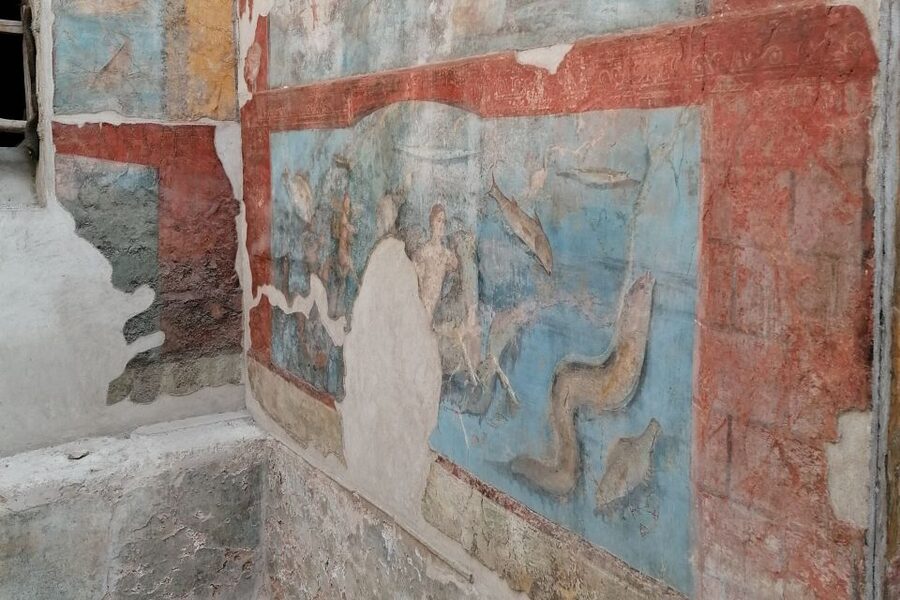
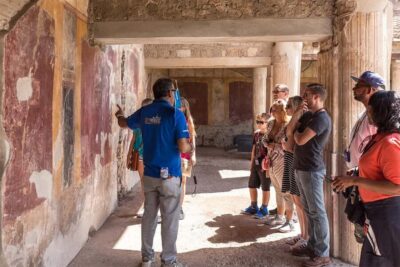
Next is the House of Menander. This stop is where you start noticing that Roman home life wasn’t all plain walls. Expect to see house features highlighted for their mosaics, frescoes, and decorative details.
What’s valuable here is not just beauty. It’s what decoration says about daily life and social expectations. You’re also learning how archaeologists interpret what remains, rather than just admiring surfaces.
A practical note: fresco and mosaic viewing is easiest when you pause and really look. In a timed tour, the guide’s job is to give you just enough time for your eyes to adjust and your brain to connect what you see to the bigger story.
Terme Stabiane: public baths and the rhythm of the city
Then you head to Terme Stabiane (the public thermal baths). Roman baths were major social spaces, and Pompeii’s surviving bath areas help you understand how people spent time, not just where they lived.
I like this stop because it breaks Pompeii into categories that feel intuitive: not only tragedy and spectacle, but also how a city functioned day-to-day. Baths also naturally create a sense of movement and transitions, so the tour feels like it flows.
Walking the city edges: shops, bakeries, and snack-bar life
As you move from site to site, the tour includes walking along areas framed by shops and Roman bakeries, plus older snack-bar style spaces. This is where the tour becomes unusually “everyday.”
In other words, you’re not only looking at big ticket monuments. You’re seeing how ordinary commerce and food culture would have shaped street life. It’s a simple idea, but in Pompeii it turns the ruins from a museum into something closer to a living town.
Foro Civile di Pompei: public buildings and civic identity
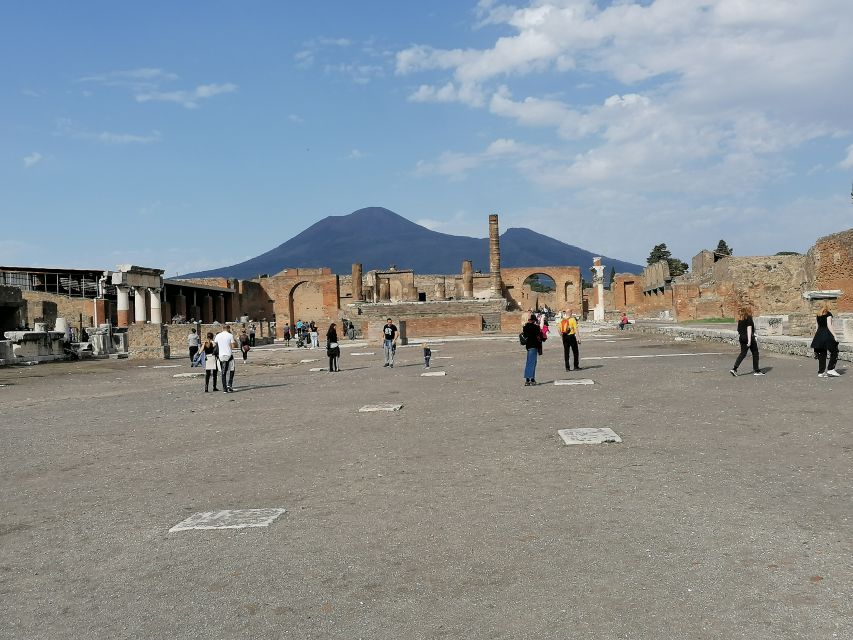
The route continues to the Foro Civile di Pompei, the civic center. You’ll see the Forum and public buildings in this section, and the tour ties it back to Roman public life.
This stop is where Pompeii feels most “political” and organized. Even if you don’t know Roman civic structure cold, your guide can connect the physical space to the idea of community decisions and shared infrastructure.
Temple of Jupiter and other big focal points: why they’re worth the climb
You also visit the Temple of Jupiter. It’s a major structure in any Pompeii route, and here it serves as a way to anchor the tour in the religious side of city life.
I’d treat this as a visual checkpoint. Once you’ve seen streets, homes, and baths, the temple area helps you understand how the city’s values and identity were expressed in architecture.
Macellum and Basilica: food markets and the meaning of a meeting place
Next comes the Macellum of Pompeii and the Basilica. These two stops work together: market space for food and daily trade, and a basilica as a public hub for gatherings and civic activity.
This is where the tour helps you see Roman life in systems. Not every stop is dramatic in the same way, but your understanding grows because each place answers a different “how did people…?” question.
Lupanare: the famous brothel and what it signals
Then you reach the Lupanare, known as the brothel. It’s one of Pompeii’s most talked-about sites, and having it placed later in the tour helps you compare it to everything you’ve seen before.
You’re not just checking off a headline location. The guide can connect it to city design and to how Pompeii’s economy and daily services worked.
If you’re sensitive to adult themes, you’ll want to consider that this is part of the itinerary. The tour includes it, so it is not a “skip if you want” stop.
Plaster casts of victims at the Forum: the part you remember
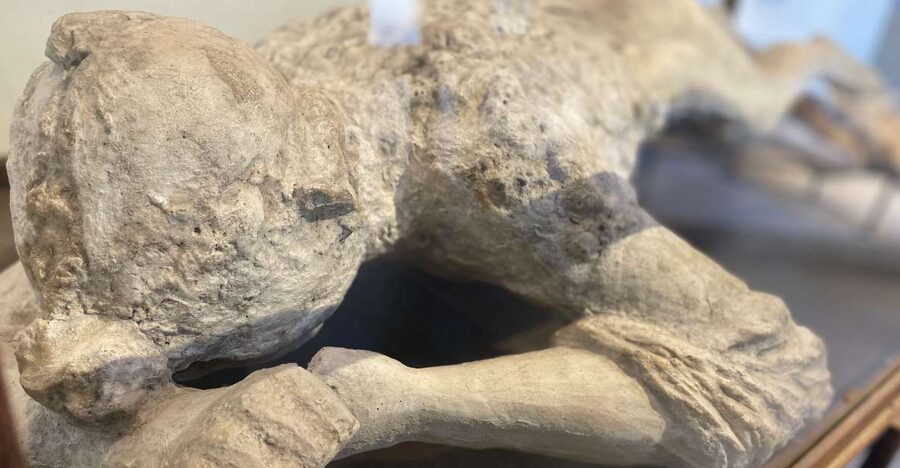
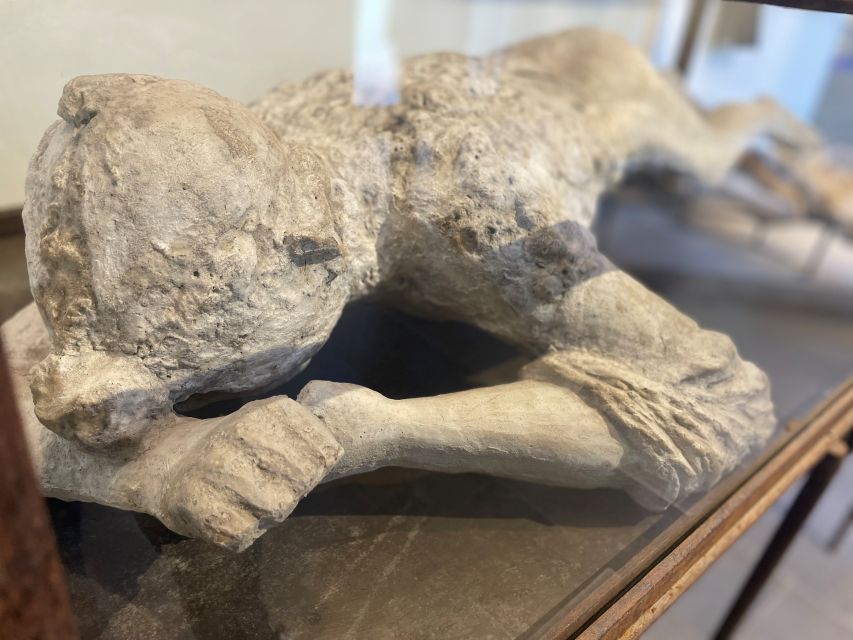
Finally, one of the biggest emotional and visual highlights is the plaster casts of the victims. This is the stop that makes AD 79 unavoidable. Everything you’ve learned about routine suddenly collapses into the eruption’s final moments.
I like that the tour ends by placing the casts in the public core of the city. It makes the tragedy feel connected to the same streets and civic spaces you just walked through.
Frescoes, mosaics, and the Roman artistry you can actually interpret
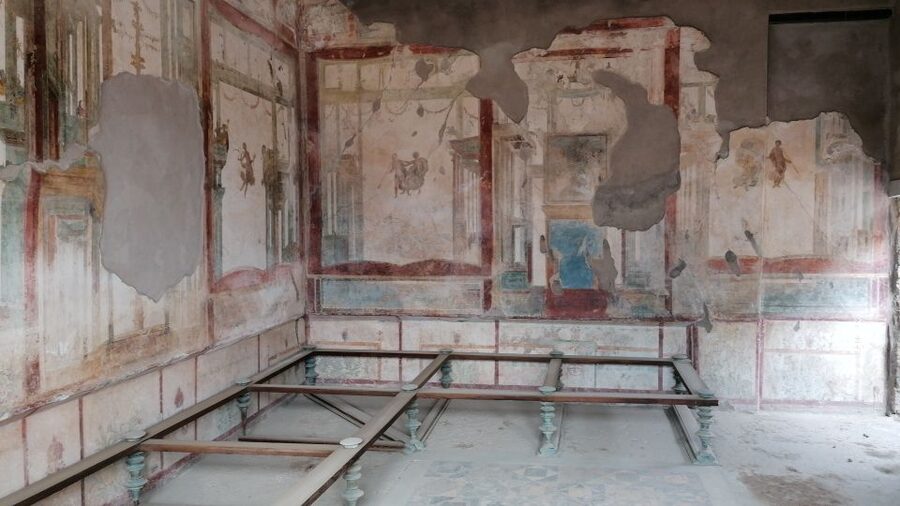
Pompeii’s decorations can feel overwhelming. The best tours do not just point. They explain what you’re looking at: frescoes, mosaics, and marbles mentioned as part of the tour experience.
Here’s what this means for you in practical terms. When the guide names what survives and how it was used, you stop treating the art as wallpaper. You start noticing layout, style cues, and how decoration would have fit into rooms people used.
Also, because this tour is short, it selects key examples rather than trying to show you everything. That selection is a big value point: you leave with a handful of strong mental images, not a blur of “cool stuff.”
Small group pacing, headsets, and keeping your attention on the ground
The group is capped at max 12 people. If the group ends up more than 8, headsets are included, so everyone can hear.
In plain terms, this helps you stay present. You can listen without turning your head all the time. And since the group is small, your guide can adjust pace if someone is lagging, if questions come fast, or if a crowded bottleneck needs a smarter route.
Multiple experiences describe this “keep it together” style, and it’s exactly what you want at Pompeii. The site is big, the lines can be messy, and without a plan you end up spending your tour time figuring things out.
Timing tips: what to bring for a comfortable walk
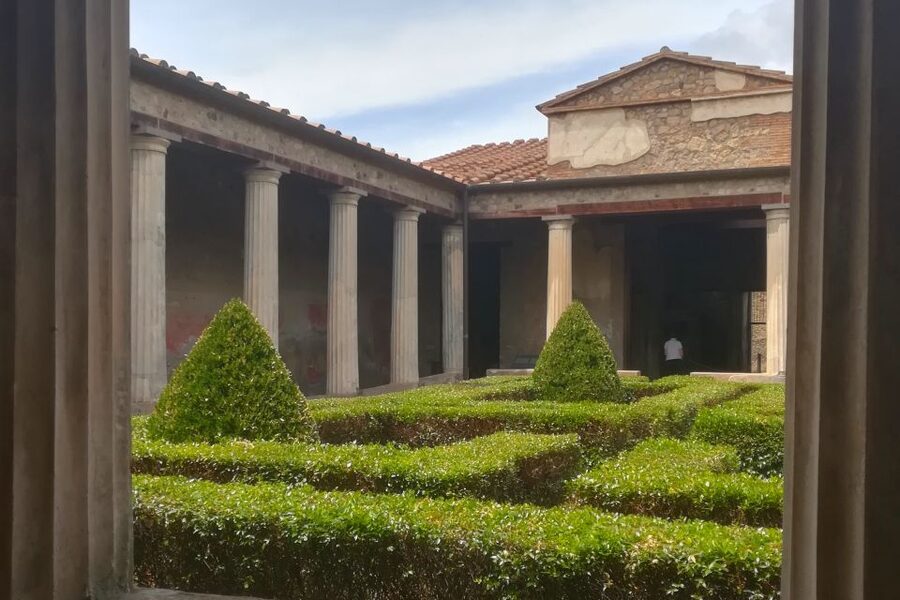
You’ll do real walking in an outdoor archaeological site. Bring:
- Comfortable shoes
- A hat
- Water
- Your passport or ID card (original)
This matters because Pompeii can be hot, and the tour is only 2 hours, so you don’t want to spend that time digging through your bag or feeling sluggish.
Also, the walking surfaces can be uneven. Even if you can handle stairs and long distances, comfort footwear is not optional if you want to enjoy the details.
Price and value: what $65 buys you in real terms
The price is $65 per person for 2 hours. On paper, that can sound like “just a guide.” But the value is stronger than it looks because you get multiple useful inputs:
- An archaeologist guide
- Express entry to skip a chunk of waiting
- Headsets if needed
- Time to explore on your own for part of the visit
For Pompeii, time is the expensive part. You don’t want to lose a big chunk of your trip to lines or confusion. This tour is designed to reduce that friction and trade it for understanding.
If you’re debating between a cheaper, generic group tour and this one, here’s the deciding factor I’d use: do you want Pompeii explained in a way that helps you read what you’re seeing? If yes, the archaeologist piece is the difference.
Who this Pompeii tour fits best (and who should reconsider)
This tour makes a lot of sense for:
- People who want a high-impact route in a short time
- Anyone who likes asking questions and getting direct answers
- First-timers who need a mental map fast
- Families who want an engaging guide style, especially if kids can handle walking and attention for 2 hours
It may not fit well if:
- You have mobility impairments or use a wheelchair. This tour is specifically noted as not suitable for wheelchair users.
Should you book this Pompeii archaeologist tour?
If you want Pompeii to feel understandable, not random, I think this is an easy yes. The combination of small group size, an archaeologist guide (Benedetto), express entry, and a route that moves through streets, homes, public spaces, and the plaster casts gives you a strong payoff in only 2 hours.
I’d especially book it if you care about details like mosaics, frescoes, Roman daily life scenes, and how the eruption connects to the city you just learned to “read.”
If you’re only interested in wandering at your own pace for a half day and you don’t want any adult themes like the Lupanare, then you might prefer a self-guided approach. But if you want structure and real interpretation, this tour is one of the most practical ways to do Pompeii.
FAQ
Where does the tour start?
The meeting point is Suisse Restaurant. Your guide will wait there with a sign and your name.
How long is the Pompeii guided tour?
The tour duration is 2 hours.
Is the tour group small?
Yes. The group is limited to a maximum of 12 people.
Do I need tickets in advance?
You get an express entry ticket included. Also, Pompeii tickets are named, so after booking you must provide the first and last names for all participants.
Are headsets included?
Headsets are included for groups with more than 8 people.
What languages are available for the guide?
The live tour guide is available in Italian, English, and French.
What should I bring and wear?
Bring your passport or ID card (original), comfortable shoes, a hat, and water.
Latest reviews around Pompei Campania
- Pompeii and Herculaneum: Guided Tour with an Archaeologist★ 5.0 · 164 reviews
- Pompeii 3hours Villa of Mysteries tour with an Archaeologist★ 4.8 · 486 reviews
- Pompeii: Small-Group Tour of Pompeii and Herculaneum★ 4.8 · 867 reviews
- Pompeii: Skip-the-Line Guided Tour★ 4.6 · 139 reviews
- Pompeii: Skip-the-Line Ticket with Audio Guide and Map★ 4.0 · 117 reviews
- Pompeii: Skip-the-Line Entry & Audioguide★ 3.8 · 225 reviews
- Pompeii: Skip-the-line-Ticket and Guided Tour★ 4.6 · 1,152 reviews
- Pompeii: Guided Tour with Skip-the-Line Entry★ 4.9 · 812 reviews
Pompeii & Vesuvius Tours, compared.
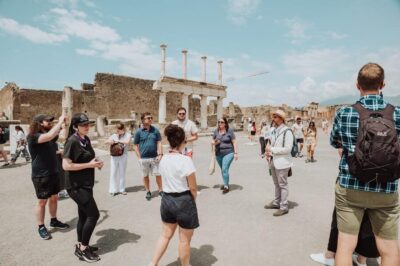
Pompeii: Entry Ticket and Guided Tour with an Archaeologist
Read our review →
Pompeii: Entry Ticket with Optional Audio Guide
Read our review →
Pompeii: Small Group Tour with an Archaeologist
Read our review →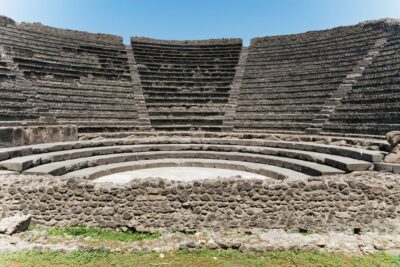
Pompeii Small Group Tour with an Archaeologist
Read our review →
Pompeii, Amalfi Coast and Positano Day Trip from Rome
Read our review →Browse the lists this tour appears in