
Reviewed · POMPEII & VESUVIUS TOURS
Pompeii: 2-Hour Guided Tour with an Archaeologist
Pompeii hits you like a time machine. This 2-hour guided walk turns a pile of ruins into real streets, using archaeologist-level context and specific, high-impact sights like the Forum and the brothel area. I especially like the way the tour connects everyday Roman life to what you’re actually standing in, including the famous plaster casts of people caught in the disaster. One drawback: at this pace, you have to pick priorities, and Pompeii will still feel bigger than any 2-hour visit.
You meet at the old Porta Marina Superiore area and walk the western side, where the public buildings and big-name houses sit close together. Guides come in multiple languages, and the best ones, like Rosalina and Enzo, bring a storyteller rhythm that keeps the ruins from feeling flat. Just be ready for real walking on uneven stone, plus sun, dust, and the kind of heat that makes a water bottle feel like a life choice.
In This Review
- Key things I’d plan around before you go
- A 2-hour Pompeii plan that actually works
- Where you meet, and why Porta Marina can be tricky
- The walking route: western Pompeii, public buildings, then private space
- Porta Marina Superiore: your orientation moment
- Temple of Apollo: worship space with real city energy
- Foro Civile di Pompei: the political and social center
- Basilica: the court house and power stage
- House of Menander: stepping into a home, not a museum
- Forum Baths: the public habit of bathing
- Lupanare: the brothel and how Pompeii reveals taboo
- House of the Faun: elite domestic life in big scale
- Termopolium and the House of the Tragic Poet: quick hits on everyday life
- Plaster casts: the moment history becomes personal
- A bakery stop: utensils and even traces of food
- Large Theatre: entertainment as a civic habit
- House of the Vettii: another elite glimpse with contrast
- Amphitheater: the city’s big crowd energy
- The archaeologist guide factor: what you should expect beyond ruins
- Comfort, heat, and crowd control tips that matter here
- Tickets, earphones, and value for a private 2-hour visit
- Who should book this Pompeii archaeologist tour
- Quick planning notes, like first-Sunday free entry
- Should you book this Pompeii 2-hour archaeologist tour?
- FAQ
- How long is the Pompeii guided tour?
- Where does the tour start and where does it end?
- What major sights will I see in 2 hours?
- Are tickets included?
- What languages are available for the live guide?
- Is the tour wheelchair accessible?
- What should I bring, and is there a free entry day?
Key things I’d plan around before you go
- A tight route through Pompeii’s core, focused on the Forum, major civic buildings, and big houses
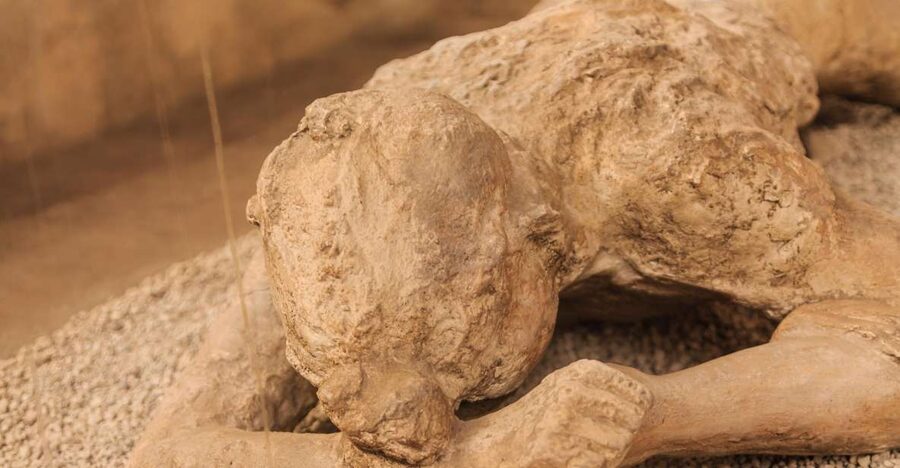
- Plaster casts of the victims, which make the 79 AD eruption feel personal, not abstract
- Public life plus private life, from the Basilica and Forum down to elite homes and a brothel
- An archaeologist-style guide approach, with context about burial, rediscovery in the 1700s, and daily Roman routines
- Earphones for bigger groups, so you can hear your guide without guessing
- A finish near Villa Dei Misteri, so you get a defined end point instead of wandering off
A 2-hour Pompeii plan that actually works
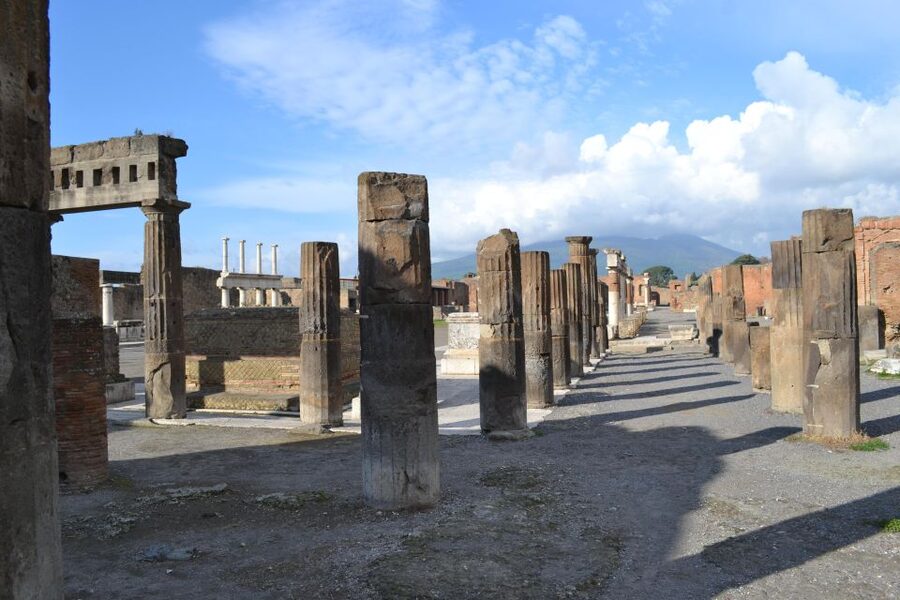
Pompeii is huge. Even if you only want the “top hits,” doing it alone can turn into a blur of stone, signs, and guesswork. This format is designed for people who want meaning, not just photos. Two hours is short enough to finish strong, but long enough for a good guide to connect the dots.
I like that the tour isn’t trying to cover everything. It focuses on the parts that show how the city functioned. You’ll move through political and social space (Forum, Basilica), bathing culture (thermal baths), entertainment venues (theatre and amphitheatre), and homes that show social class differences. It’s a snapshot, not a marathon, and that’s exactly what makes it a good first Pompeii experience.
More Pompeii digs and Vesuvius climbs:
- Pompeii: Entry Ticket and Guided Tour with an Archaeologist
★ 4.8 · 19,459 reviews - Pompeii: Small Group Tour with an Archaeologist
★ 4.8 · 12,264 reviews - Pompeii: Skip-the-Line Entrance Ticket with Audio Guide
★ 4.0 · 2,509 reviews
Where you meet, and why Porta Marina can be tricky
Your tour starts near the old Porta Marina Superiore area. There are two specific start options listed:
- Pompei – Porta Marina, Via Villa dei Misteri, 2
- The meeting point may vary depending on the option booked
That Porta Marina area is the right place to start if you want orientation fast. You get into the site and start seeing major spaces without the “where am I?” spiral. The practical note to keep in mind: some visitors find the meeting location hard to navigate because it may not show up cleanly on GPS. So on your day, give yourself extra buffer time to arrive, not just “on time.”
The tour ends back at the meeting point, and the schedule also shows a finish at Pompei Scavi – Villa Dei Misteri. In plain terms, you should expect a guided, controlled walk with a clear end.
The walking route: western Pompeii, public buildings, then private space
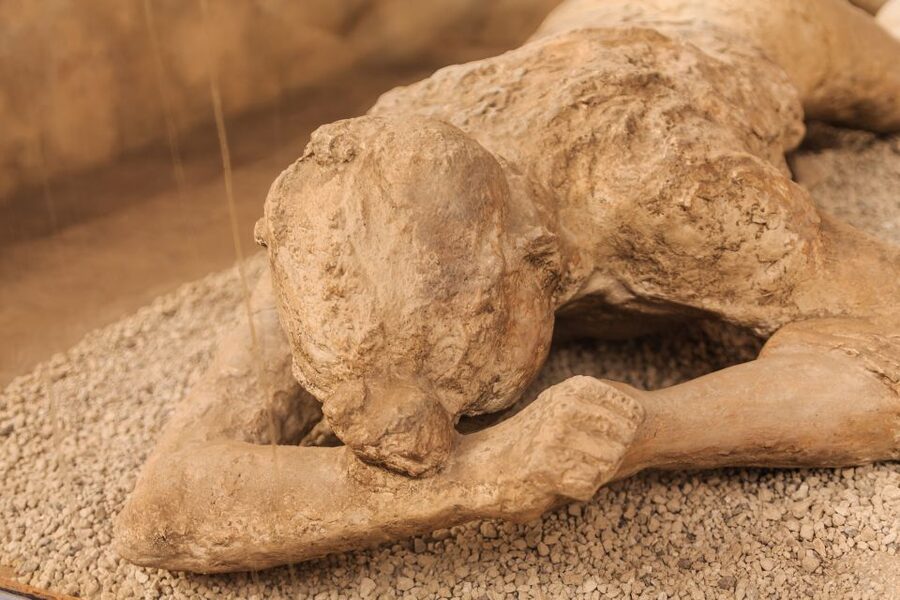
The tour is set up as a western-side route. That matters because these areas bring together a lot of the big-picture sights in a walkable sequence. You start near the Porta Marina area, then work inward through civic spaces and into houses and entertainment.
Here’s how the tour flow feels, stop by stop, and what to watch for at each one.
Porta Marina Superiore: your orientation moment
You begin at Porta Marina, which acts like the city’s gateway. This is where a guide’s storytelling helps most. Without context, a gate is just a gate. With context, you start thinking about movement, entrances, commerce, and who would have passed through there during Pompeii’s everyday rhythm.
Also, the guide starts you on the western part of the site where the most important public buildings, homes, and shops are clustered. That’s how you get value out of the time.
A few more Pompei Campania options to weigh
- Pompeii: Skip-the-line-Ticket and Guided Tour
★ 4.6 · 1,152 reviews - Pompeii: Guided Tour with Skip-the-Line Entry
★ 4.9 · 812 reviews - Pompeii: Skip-the-Line Entry Ticket with Digital Guide App
★ 4.1 · 770 reviews - Pompeii: Afternoon to Sunset Guided Tour with Ticket
★ 4.9 · 484 reviews
Temple of Apollo: worship space with real city energy
Next up is the Temple of Apollo. Even if you don’t know Roman religion, you can still get a sense of why certain buildings mattered. Places like this weren’t only about ceremony. They anchored identity and public life in a way residents would have noticed every day.
A good guide will help you connect sacred space to what you’re about to see in the civic core. Watch for how the guide frames the city as a system, not disconnected monuments.
Foro Civile di Pompei: the political and social center
Then you reach the Forum, listed here as Foro Civile di Pompei. This is one of the biggest reasons to take a guided tour. Pompeii’s Forum is visually impressive, but it’s also where politics, law, and social life intersected.
I like that your guide is aiming to explain what you’re looking at in terms of daily life. Think of it as the city’s public living room, where conversations, decisions, and status were on display.
Basilica: the court house and power stage
Right after the Forum, you visit the Basilica. In a Roman city, this kind of building was closely tied to courts and public administration. You’re not just looking at walls and arches, you’re seeing how justice and civic order were staged in stone.
In a short tour, this stop is gold because it gives you a handle on Roman government in a very tangible way. If you only had time for one “public life” chunk, the Basilica and Forum pairing is a strong choice.
House of Menander: stepping into a home, not a museum
Next is the House of Menander, one of the residential stops. Homes in Pompeii are where you can see how wealth and taste played out in daily routines. You get the feel of domestic space, with rooms and layouts that help you understand how people lived, not just what buildings looked like.
This is also where a guide’s pacing matters. If you rush, it becomes walls. If you slow down with explanations, it starts feeling like a house you could almost enter.
Forum Baths: the public habit of bathing
You then go to the Forum Baths. Bathing was social, not just hygienic. In Pompeii, these spaces help you understand that the Roman city had routines built around public gathering.
If you’re the type who likes to travel with a “how did people actually live” mindset, this stop is worth leaning into. Even a small amount of context makes the baths click fast.
Lupanare: the brothel and how Pompeii reveals taboo
The Lupanare (also written as Lupanar or Lupanare) is an unusual but important stop. It’s one of those places that makes Pompeii feel unfiltered. A guide can handle it with respect while still explaining what it was, who it served, and how it fits into the city’s social system.
For some people, this is the most memorable section of the tour, just because it’s so human and so far from sanitized history. If you’re expecting anything like a judgmental museum tone, a good archaeologist-style guide will keep it grounded in evidence and context.
House of the Faun: elite domestic life in big scale
Next is the House of the Faun. This is a major household stop, and it helps you see how some residents lived like the city was theirs to stage. Even if you focus only on what’s visible, the scale gives you instant perspective on social hierarchy.
This stop also pairs well with everything you’ve already seen. You start noticing how public wealth and private wealth connect. The city isn’t separate from the houses. It’s all one system.
Termopolium and the House of the Tragic Poet: quick hits on everyday life
The tour also includes highlights such as the Termopolium Capuano and the House of the Tragic Poet. These are the kinds of stops that make Pompeii feel less like “famous ruins” and more like an operating city frozen mid-routine.
Termopolia were snack or ready-food spots. Even if you only get a brief look, it helps you imagine a day in Pompeii that wasn’t all politics and luxury.
Plaster casts: the moment history becomes personal
A major highlight is the plaster casts of humans and animals at the moment of their death. This is the kind of stop that changes the whole mood of a tour. It’s not just information. It’s impact.
I find that guides who handle this well balance clarity with respect. You learn what you’re seeing and why the casts exist, but you also understand the tragedy without turning it into a spectacle.
A bakery stop: utensils and even traces of food
Another standout is a bakery area where you can still see the remains of the utensils, and even the food. This is the “wow, Pompeii is real” moment. When you see artifacts tied to daily eating, the disaster stops being only a date and becomes a disruption of routine.
If you’re trying to picture the city living, this stop gives you a sensory anchor. Just go in ready for the emotional shift this kind of preserved evidence can create.
Large Theatre: entertainment as a civic habit
Then you head to the Large Theatre. Roman entertainment wasn’t a separate lifestyle. It was part of public culture. A theatre stop helps you see how citizens gathered for performance and shared experience.
In a 2-hour tour, the key is learning how this entertainment fit into the city’s rhythm. A guide can make you see the structure as a social machine.
House of the Vettii: another elite glimpse with contrast
You’ll also visit the House of the Vettii. This is useful because it gives you contrast with other homes. You start noticing the differences between elite properties and how wealth expressed itself in domestic design and space.
If you enjoy seeing class not as an abstract idea but as a physical reality you can walk through, this stop lands well.
Amphitheater: the city’s big crowd energy
Finally, the walk includes the Amphitheater of Pompeii. This is the climax for many people. It’s where you imagine large crowds and high-stakes spectacle.
Even without a long stay, it gives you a strong sense of how Pompeii functioned socially. Entertainment pulled people together, and the amphitheatre was built to handle that scale.
The archaeologist guide factor: what you should expect beyond ruins
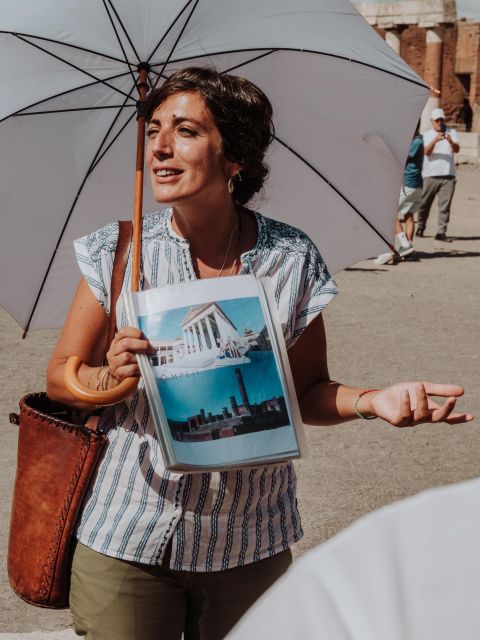
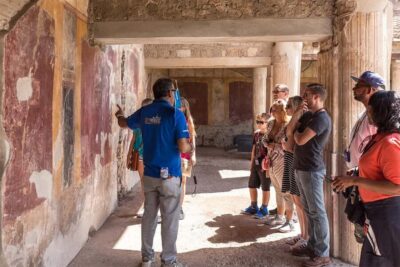
This tour is built around an expert guide, including the “archaeologist” angle. That matters because Pompeii can feel overwhelming when you’re left to your own interpretation. The right guide does three things fast.
First, they explain the “what” and the “why.” You learn how the city was buried under molten ash and lava in 79 AD. You also learn how Pompeii was rediscovered in the 18th century, which helps you understand why these ruins ended up preserved and studied.
Second, they connect places into a city story. You do not wander randomly. You see how the civic core supports daily life, and how homes, baths, food spots, and entertainment fit into the same urban machine.
Third, they anchor Pompeii’s global importance in human terms. UNESCO inscribed Pompeii and Herculaneum on the World Heritage list for their complete and vivid picture of society and daily life at a specific moment in the past. A good guide turns that statement into something you can feel while you walk.
If you’re lucky with your guide, you’ll get pacing plus story talent. Many people specifically praise guides for passion and clear explanations in their own language. I’ve seen names like Paola, Alessandro, and Giancarlo come up in connection with strong storytelling and smooth timing.
Comfort, heat, and crowd control tips that matter here
Pompeii is not a gentle stroll on plush grass. You’re walking on stone paths, uneven ground, and open areas with sun exposure. The tour itself is only 2 hours, but you’ll still want to treat it like an active outing.
Bring:
- Comfortable shoes
- Sunglasses
- Sun hat
- Water
Also, ask your guide on the spot about quieter routes. Some guides have a knack for keeping the group moving through less congested paths, which can make a big difference on hot days.
And do plan for a momentum style of visit. This tour keeps a schedule, so if you want long, unhurried photo time, you might feel a bit rushed. The trade is you get the context that makes photos actually meaningful.
Tickets, earphones, and value for a private 2-hour visit
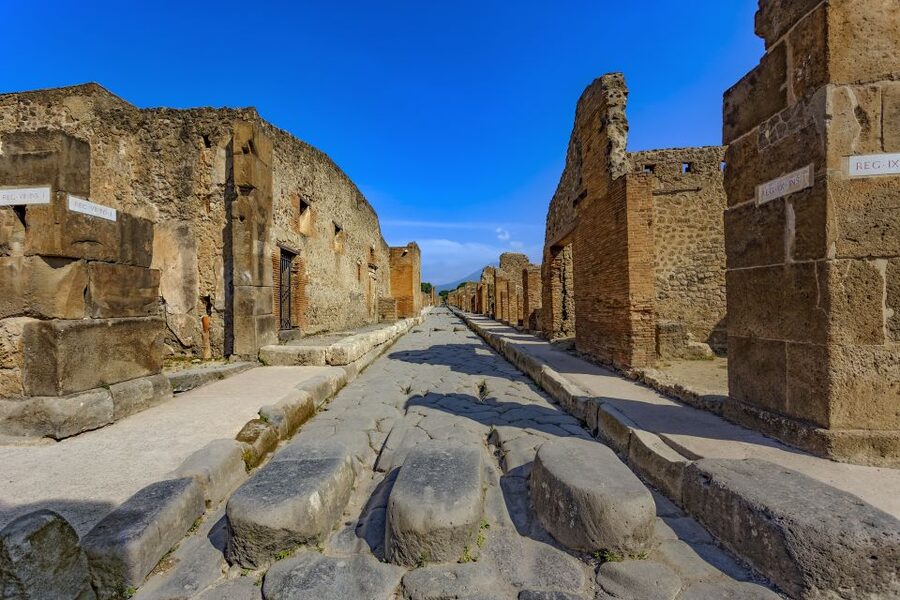
The price is $175.74 per person for a 2-hour private guided experience. That isn’t budget travel. But value here comes from what’s included and how the time is used.
What you get included:
- Guide
- Pompeii entry tickets
- Disposable earphones for bigger groups
Why that matters: Pompeii tickets alone are a real cost, and an entry-included private guide saves you the hassle of planning what to see and where to stand. If your main goal is to understand Pompeii, not just look at it, a guide can turn the price into something closer to a performance you can’t easily recreate alone.
If you’re traveling as a family or with friends and you want a more organized experience than a large group tour, this private format is often the sweet spot.
Who should book this Pompeii archaeologist tour
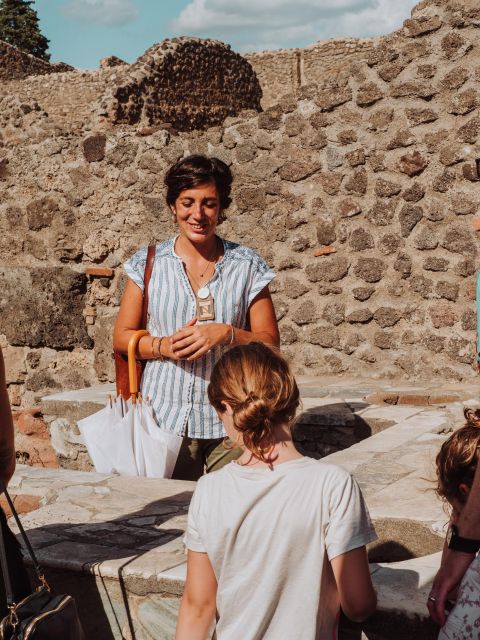
This one fits best if you:
- Have limited time and want a high-impact Pompeii visit
- Want daily-life context, not just big monuments
- Like structured walking with a guide who can answer questions
- Prefer a private group approach instead of joining a large crowd
It may not fit if you need a fully wheelchair-first plan. The activity information contains conflicting statements, listing wheelchair accessible in one place and also stating not suitable for wheelchair users. If you or someone in your group uses a wheelchair, confirm with the provider before booking so you can match expectations to reality.
Quick planning notes, like first-Sunday free entry
One special detail to know: on the first Sunday of each month, entrance is free of charge. However, tickets cannot be reserved ahead of time, so entry is not guaranteed. If you’re aiming for that day, arrive with a backup plan and some patience.
Also, check availability for starting times. The tour duration is fixed at 2 hours, but the start time depends on what’s available for your date.
Should you book this Pompeii 2-hour archaeologist tour?
I’d book it if you want Pompeii to make sense quickly. Two hours is long enough to see the Forum area, major civic structures like the Basilica, and the domestic and social side of the city through homes, baths, entertainment, and the brothel. Add in the plaster casts and the bakery stop, and you get the kind of emotional and practical context that’s hard to DIY in a short visit.
I would not book it if you’re trying to slow travel. Pompeii will keep pulling you onward, and this tour is intentionally focused. But if you want an organized, story-driven introduction with entry included, this is a solid use of your time in Campania.
FAQ
How long is the Pompeii guided tour?
The tour lasts 2 hours.
Where does the tour start and where does it end?
You meet near Porta Marina Superiore, with a listed option at Pompei – Porta Marina, Via Villa dei Misteri, 2. The tour ends back at the meeting point, and it also shows a finish at Pompei Scavi – Villa Dei Misteri.
What major sights will I see in 2 hours?
You’ll visit highlights including the Forum, Basilica, thermal baths (Forum Baths), and the Lupanare (brothel). The route also includes stops such as the Temple of Apollo, House of Menander, House of the Faun, House of the Vettii, the Large Theatre, and the Amphitheater, plus plaster casts and a bakery with preserved remains.
Are tickets included?
Yes. The tour includes Pompeii entry tickets.
What languages are available for the live guide?
The live guide is available in French, German, Spanish, Italian, and English.
Is the tour wheelchair accessible?
The information includes both that the activity is wheelchair accessible and that it is not suitable for wheelchair users. If wheelchair access is important for you, confirm directly with the provider before booking.
What should I bring, and is there a free entry day?
Bring comfortable shoes, sunglasses, sun hat, and water. Entrance is free on the first Sunday of each month, but tickets cannot be reserved ahead of time, so entry is not guaranteed.
Latest reviews around Pompei Campania
- Pompeii and Herculaneum: Guided Tour with an Archaeologist★ 5.0 · 164 reviews
- Pompeii 3hours Villa of Mysteries tour with an Archaeologist★ 4.8 · 486 reviews
- Pompeii: Small-Group Tour of Pompeii and Herculaneum★ 4.8 · 867 reviews
- Pompeii: Skip-the-Line Guided Tour★ 4.6 · 139 reviews
- Pompeii: Skip-the-Line Ticket with Audio Guide and Map★ 4.0 · 117 reviews
- Pompeii: Skip-the-line-Ticket and Guided Tour★ 4.6 · 1,152 reviews
- Pompeii: Skip-the-Line Entry & Audioguide★ 3.8 · 225 reviews
- Pompeii: Guided Tour with Skip-the-Line Entry★ 4.9 · 812 reviews
Pompeii & Vesuvius Tours, compared.
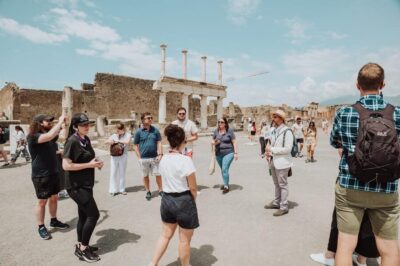
Pompeii: Entry Ticket and Guided Tour with an Archaeologist
Read our review →
Pompeii: Entry Ticket with Optional Audio Guide
Read our review →
Pompeii: Small Group Tour with an Archaeologist
Read our review →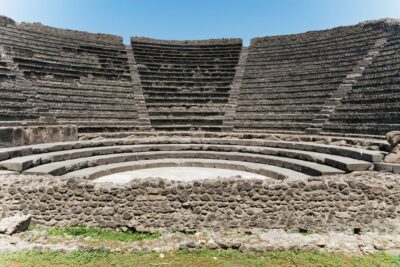
Pompeii Small Group Tour with an Archaeologist
Read our review →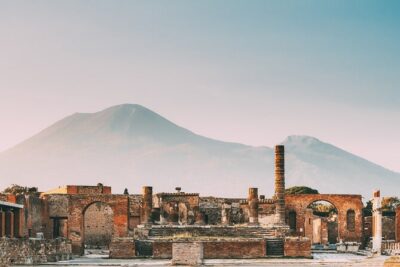
Pompeii, Amalfi Coast and Positano Day Trip from Rome
Read our review →Browse the lists this tour appears in