
Reviewed · POMPEII & VESUVIUS TOURS
Pompeii Private Tour with an Archaeologist and Skip The Line
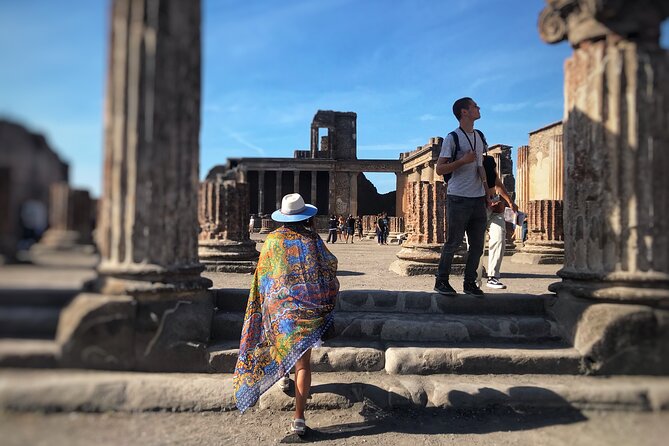
Two hours, and Pompeii makes sense. You get a private route with an archaeologist and skip-the-line entry support that helps you spend less time figuring things out. My only real caution: the Pompeii entrance ticket costs extra, and that matters for your schedule and budget.
What I like most is the way the tour turns ruins into daily life, from theaters and baths to the Forum and the red-light district. I also love how the stops are chosen to cover big moments and specific details, like the casts of people from the 79 AD eruption. If you want a slower, museum-style walk where you read every wall, 2 hours may feel tight.
If you book this, plan to meet right on time, have your ticket situation handled, and treat the guide as your translator for the site. When you do that, it becomes one of the best short Pompeii experiences you can buy.
In This Review
- Key things to know before you go
- Before You Go: Tickets, timing, and meeting at Piazza Esedra
- What $375 per group gets you, and what it does not
- Your Pompeii route in 2 hours: how the plan is built
- Stop-by-stop: the theaters and the street that shaped daily life
- The small Odeion for Roman acoustics
- Teatro Grande, the big stage
- Via dell’Abbondanza, Pompeii’s main street
- Forum life and the Granaries: justice, markets, and the 79 AD casts
- Granaries of the Forum and casts
- The Forum of Pompeii and the Temple of Jupiter
- Basilica: where justice was administered
- Stabian Baths and the mindset of Roman comfort
- Stabian Baths (Terme Stabiane)
- Gladiators and the red-light district: training spaces and Vicolo del Lupanare
- Quadriporticus of the theatres, gladiator barracks
- Vicolo del Lupanare, the ancient red district
- Temple of Venus
- Luxury time at Casa del Fauno
- The guides: why names matter and how quality shows up
- When to go for fewer crowds and better comfort
- The real value call: should you book this Pompeii private tour?
- FAQ
- Do I need to buy Pompeii entrance tickets separately?
- Is the skip-the-line benefit automatic?
- How long is the private tour?
- Where do we meet the guide?
- What language is the tour offered in?
- How big is the private group?
- What happens if the weather is bad?
Key things to know before you go
- Skip-the-line depends on your admission ticket, which is not included in the tour price
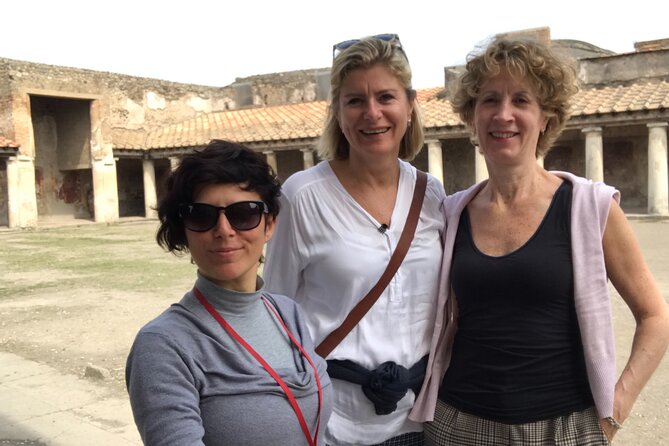
- Private group size up to 10 keeps the pace human, not cattle-car
- Stops are built around real life, including theaters, baths, markets, homes, and the casts
- You get Roman context fast, including how the Odeion was used for acoustics
- You may get flexibility for your interests, including family-friendly pacing if you need it
- Entrance ticket rules are strict for kids, so bring ID or a passport for under 18
Before You Go: Tickets, timing, and meeting at Piazza Esedra
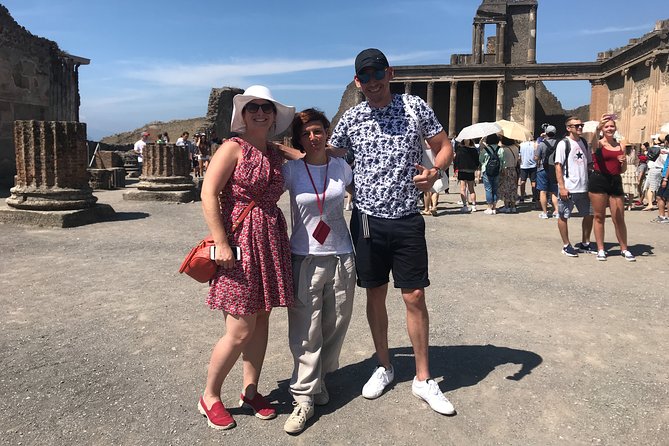
Let’s start with the part that can trip people up. The tour price covers the guide, the private experience, and the skip-the-line service, but the Pompeii entrance ticket is not included. The listed entrance ticket cost is 19 euros per person, and under 18 tickets are free with ID or a passport (they can check date of birth).
Your best move is to get that entrance ticket handled before you show up. The provider sends you a link one day before the tour so you can buy online in advance and also skip the ticket office line. In high season, this matters even more, because long lines can eat the whole morning or afternoon you had planned for Pompeii.
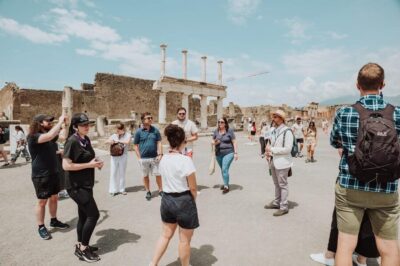
The tour meets at Piazza Esedra, 10, 80045 Pompei NA, Italy and returns to the same spot. If you arrive late, you lose the flow of a route that is carefully stitched together for about 2 hours.
Language is English. Multiple languages can be arranged only on request, so if you need another language, ask ahead.
One more practical point: you’re walking through an outdoor archaeological park. Comfortable shoes and sun protection are smart even if the day feels mild.
More Pompeii digs and Vesuvius climbs:
- Pompeii: Entry Ticket and Guided Tour with an Archaeologist
★ 4.8 · 19,459 reviews - Pompeii: Entry Ticket with Optional Audio Guide
★ 4.2 · 12,360 reviews - Pompeii: Small Group Tour with an Archaeologist
★ 4.8 · 12,264 reviews
What $375 per group gets you, and what it does not
The headline price is $375.05 per group for up to 10 people, for an approximate 2-hour visit. That is not the cheapest way to see Pompeii, but it is a clear value if you want guidance and focus rather than wandering.
Here is the real value equation:
- You pay for a private archaeologist-led route (not just a standard audio tour).
- You get skip-the-line help, which saves time right when Pompeii can feel chaotic.
- You do not have to plan the route yourself across a site that is big and fragmented.
What you still need to pay is the site entrance ticket at 19 euros per person. So your total cost is the group price plus the ticket cost for the number of people in your group.
This can work especially well for families. Since under 18 entrance is free (with proper ID), the per-person ticket add-on can be much lower for groups with kids.
Also note what is not included: no food and no drinks. In practice, you’ll want to grab snacks or water before the tour or plan to do it right after.
Your Pompeii route in 2 hours: how the plan is built
Pompeii is huge. The trick is getting the highlights without the common problem of spending your time asking, Where are we? and What am I looking at?
This tour solves that with a tight sequence:
- You start at the Pompeii Archaeological Park and quickly move through major zones.
- You hit entertainment first, then civic life, then daily life and status, and end with some of the most memorable storytelling areas.
The best part of a structured short tour is what it does to your attention span. Instead of scanning ruins at random, you get a set of mental hooks. When you reach the next stop, you already know what questions to ask.
There’s also a crowd strategy baked into the route. Many people end up loving the experience most when the guide helps you avoid the busiest pockets and keeps the walking efficient. If you care about photos, the guide can also help with timing and pacing so you can actually stop and look.
Stop-by-stop: the theaters and the street that shaped daily life
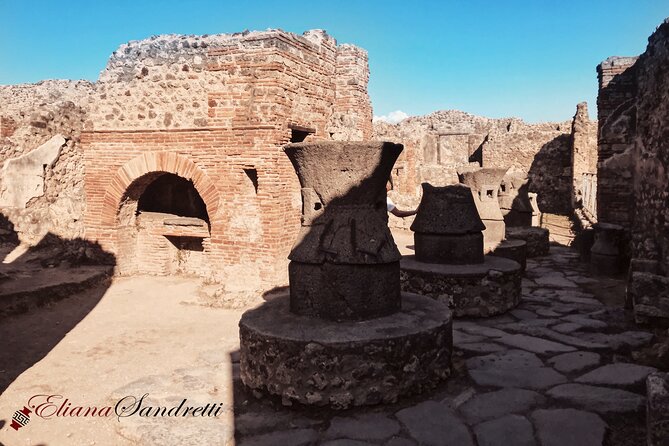
The tour begins with Pompeii’s main hits, but it starts with a smart angle: entertainment and public space.
A few more Pompeii options to weigh
- Private Pompeii, Positano & Amalfi coast Tour from Rome
★ 4.5 · 1,888 reviews - Pompeii Ruins Private Tour with Optional Skip-the-Line Entry
★ 4.9 · 732 reviews - Pompeii private tour with an Official Guide
★ 5.0 · 631 reviews - Pompeii Private Tour with an Archaeologist and Skip The Line – 3 hours
★ 5.0 · 564 reviews
The small Odeion for Roman acoustics
One stop is the Small Theater (Odeion), where you learn how the Romans recreated strong, even acoustics. This is the kind of detail that feels silly until you stand in the space and realize why theaters mattered so much. Pompeii wasn’t just houses and dust. People gathered to listen, watch, and be seen.
If you like architecture that has a purpose beyond looks, this is a high-value stop because you get a reason for the shape.
Teatro Grande, the big stage
Next you visit the Teatro Grande, the main theater in the archaeological park. This is where the scale hits you. You see why theater wasn’t just art. It was politics, culture, and social life in one place.
Via dell’Abbondanza, Pompeii’s main street
After the theaters, you cross via dell’Abbondanza, the city’s main street. This is a “shift in viewpoint” moment. You go from performance spaces to the daily flow of people moving between shops and public buildings.
Practical tip: if you want photos, this street segment is a good place to slow down for a few shots because it gives you a clear sense of the city’s grid and rhythm.
Forum life and the Granaries: justice, markets, and the 79 AD casts
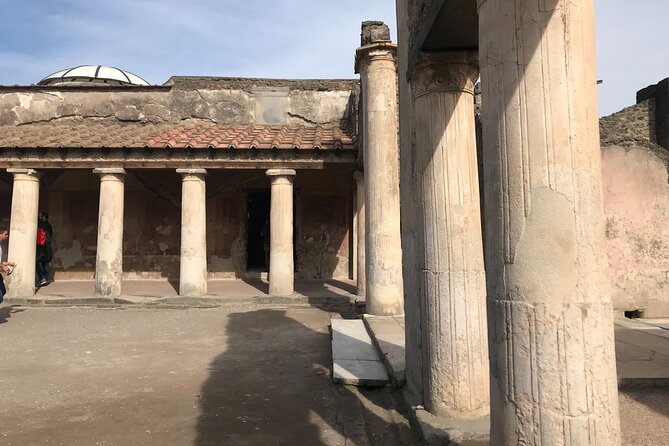
If you only ever walked Pompeii on your own, you might miss how much of the city’s identity centered on civic space. This tour leans hard into that with the Forum area and its related buildings.
Granaries of the Forum and casts
You visit the Granaries of the Forum to see the casts of people who died during the eruption of 79 AD. This area also includes an archaeological deposit with amphorae and work tools. That combination matters. It’s not only human tragedy. It’s also evidence of how the site functioned day to day, before disaster froze everything in place.
This can feel heavy, but in a short tour, it’s also one of the most powerful “you are standing in history” moments Pompeii offers.
The Forum of Pompeii and the Temple of Jupiter
Then you visit the Foro di Pompei, the main square with markets and temples. You see how the city organized religion and public business in the same space.
You also visit the Temple of Jupiter in the main square area. Jupiter makes the Forum feel like the center of authority, not just a scenic ruin zone.
Basilica: where justice was administered
Next is Pompei La Basilica, described as the ancient court where justice was administered. Even if you don’t study ancient law, it helps to see civic architecture with that function in mind. It makes the building feel less random and more like a tool the Romans used to run the city.
Stabian Baths and the mindset of Roman comfort
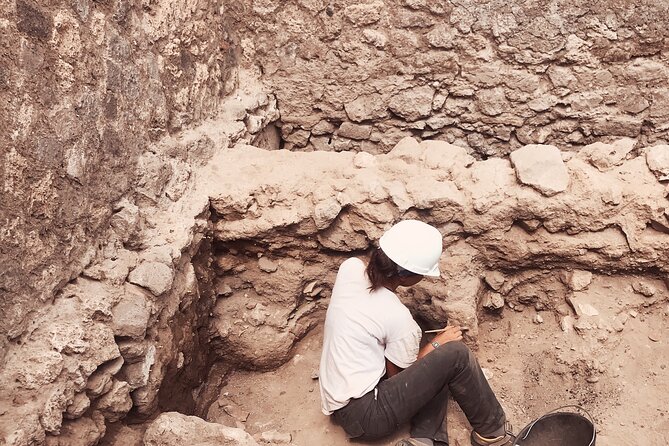
You get to step into something that feels unlike the standard dark, solemn Pompeii image: bathing culture.
Stabian Baths (Terme Stabiane)
The tour includes the Stabian Baths, highlighted as the best spa experience of the Roman Empire in Pompeii. Even if you only spend 15 minutes here, the point is to connect Pompeii to Roman routines, not just Roman disaster.
Bathing places also help you understand class. The baths weren’t only hygiene. They were social systems where people met, talked, and built status through routine.
In hot weather, this is also one of those “don’t overthink it, just go” stops because the buildings themselves provide a different kind of shade and spacing than the open streets.
Gladiators and the red-light district: training spaces and Vicolo del Lupanare
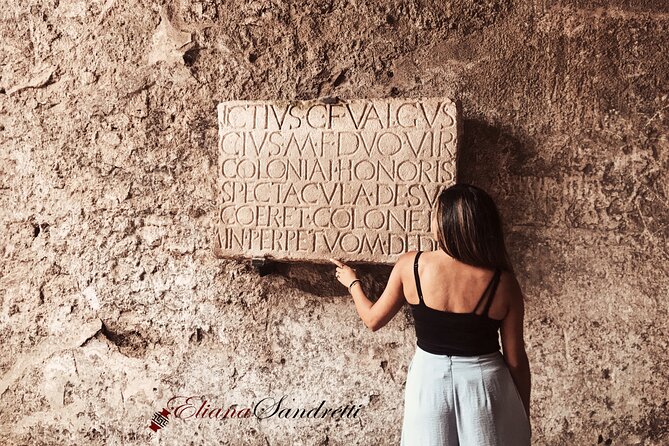
Two stops in particular give Pompeii its edge: the gladiator world and the brothel district.
Quadriporticus of the theatres, gladiator barracks
You visit the Quadriporticus of the theatres, including the gladiator barracks area. The emphasis is on apartments for the gladiators and where they trained. This helps the site feel like a working city with schedules, not a set of isolated landmarks.
If you have teens, or anyone who likes action and sport, this part usually lands well because it’s specific and human. People trained. People lived. The walls had routines.
Vicolo del Lupanare, the ancient red district
You then visit Vicolo del Lupanare, the ancient red district light area, often described as Pompeii’s brothel zone. It’s listed as Admission Ticket Free in this tour sequence, which is a useful detail if you’re tracking what is included as you move around the park.
This is another stop where context matters. Without a guide’s framing, the area can feel like shock value. With a guide, you understand it as part of the city’s economy and entertainment ecosystem.
Temple of Venus
You also visit the Temple of Venus, which gives you a quick religious counterpoint to the gladiator and brothel sections. That shift helps the tour feel complete, not just edgy.
Luxury time at Casa del Fauno
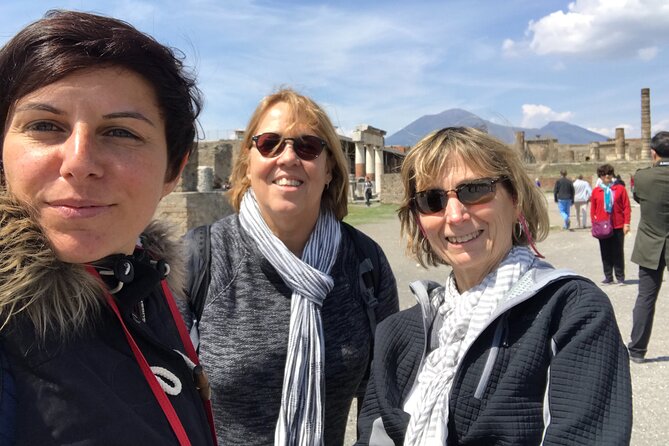
You finish with Casa del Fauno, described as one of the richest and most luxurious residences in Pompeii. In a 2-hour tour, ending with a top-tier home is smart because you leave with a clear contrast.
It also helps you connect the dots. Earlier, you saw entertainment and civic buildings. Now you see how wealth expressed itself in private spaces: layout, scale, and how elite households lived day to day.
If you are the type who likes “best of the city” moments, this home stop is a strong finale.
The guides: why names matter and how quality shows up
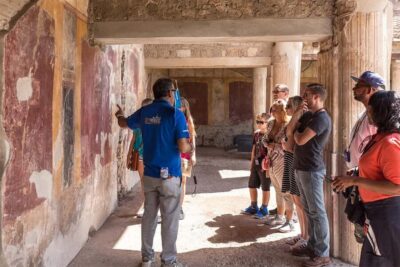
This tour is offered with an authorized archaeologist and you get an assisted, private experience. The quality tends to show up fast: a guide who explains why buildings existed, who keeps you moving, and who can adjust pacing for your group.
People have especially praised guides such as Luisa, Eliana Sandretti, Luciana, Antonio, Viktoria, Maria Garzia, Raffaele, Mattia, Danilo, Francesco, Max, Roberto, and Marina. The common thread is practical storytelling and a sense of care for the group.
You may also notice small touches that make Pompeii easier:
- Efficient routes that help you avoid the most congested areas
- Time spent on the stops that produce the biggest understanding payoff
- Adjustments for kids or older relatives, like finding calmer or shadier areas
- Photo assistance, so you can actually get group shots
If you’re considering who to ask for, these names are the ones that come up most strongly in feedback. Even if your assigned guide is different, the lesson is clear: pick the tour because the human explanation is the product.
When to go for fewer crowds and better comfort
The tour itself needs good weather, since it’s an outdoor archaeological visit. If poor weather happens, you can be offered another date or a full refund.
For comfort, I like the idea of going later in the day when it gets easier to breathe and walk. Some guides have handled this well on late-day tours, where lines and heat were reported as more manageable.
If you can choose your slot, pick the time you can enjoy walking without stress. Pompeii is famous for being intense. A smarter start time changes your whole experience.
The real value call: should you book this Pompeii private tour?
Book it if:
- You want a short, high-impact Pompeii visit with expert explanation.
- You like the idea of a private group of up to 10 and a route paced for you.
- You care about specific things, like Roman entertainment, civic life, baths, gladiator culture, and the 79 AD casts.
Skip it or reconsider if:
- You were hoping the tour price includes entry tickets, because it does not. Budget the 19 euros per person entrance fee.
- You want a long, slow walk where you read everything at your own pace. Two hours is made for highlights, not full immersion.
- You need a language other than English and did not request it in advance.
My bottom line: If you plan your tickets, show up on time, and let the archaeologist do the translating, this is a strong buy for getting Pompeii right without spending your whole day lost in the ruins.
FAQ
Do I need to buy Pompeii entrance tickets separately?
Yes. The Pompeii entrance ticket is not included. The listed entrance cost is 19 euros per person, and under 18 is free with ID or a passport.
Is the skip-the-line benefit automatic?
Skip-the-line support is provided, but you still need your admission ticket. The provider sends a link one day before the tour to help you buy online in advance and also skip the tickets office line.
How long is the private tour?
The duration is approximately 2 hours.
Where do we meet the guide?
The tour starts and ends at Piazza Esedra, 10, 80045 Pompei NA, Italy.
What language is the tour offered in?
The tour is offered in English. Other languages may be possible only on request.
How big is the private group?
It is listed as a private tour for your group, and the group price is per group up to 10.
What happens if the weather is bad?
The experience requires good weather. If it is canceled due to poor weather, you are offered a different date or a full refund. For storms, you can choose another date or get a full refund.
Latest reviews around Pompeii
- Guided Day Tour of Pompeii and Herculaneum with Light Lunch★ 4.5 · 311 reviews
- Skip-the-Line Pompeii Guided Tour from Sorrento★ 4.5 · 722 reviews
- Pompeii Express Guided Tour by Train from Sorrento★ 4.5 · 770 reviews
- Pompeii & Mount Vesuvius Tour with Guided Visit, Tickets & Lunch★ 4.5 · 155 reviews
- Pompeii and Amalfi Coast Private Day Trip with Pick Up★ 5.0 · 312 reviews
- Mt Vesuvius and Pompeii Tour by Bus from Sorrento★ 4.5 · 170 reviews
- Pompeii Ruins Half-Day Tour from Sorrento with Guide★ 4.0 · 714 reviews
- Pompeii Guided Tour From Sorrento Coast★ 5.0 · 143 reviews
Pompeii & Vesuvius Tours, compared.
Pompeii: Entry Ticket and Guided Tour with an Archaeologist
Read our review →
Pompeii: Entry Ticket with Optional Audio Guide
Read our review →
Pompeii: Small Group Tour with an Archaeologist
Read our review →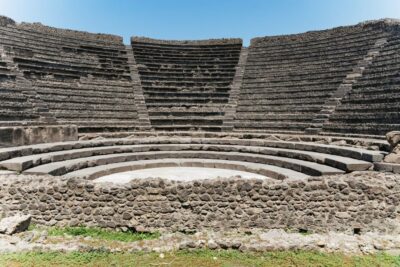
Pompeii Small Group Tour with an Archaeologist
Read our review →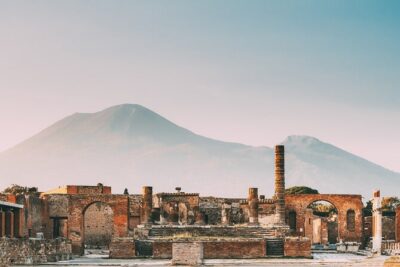
Pompeii, Amalfi Coast and Positano Day Trip from Rome
Read our review →Browse the lists this tour appears in