
Reviewed · POMPEII & VESUVIUS TOURS
Pompeii Private Tour with an Archaeologist and Skip The Line – 3 hours
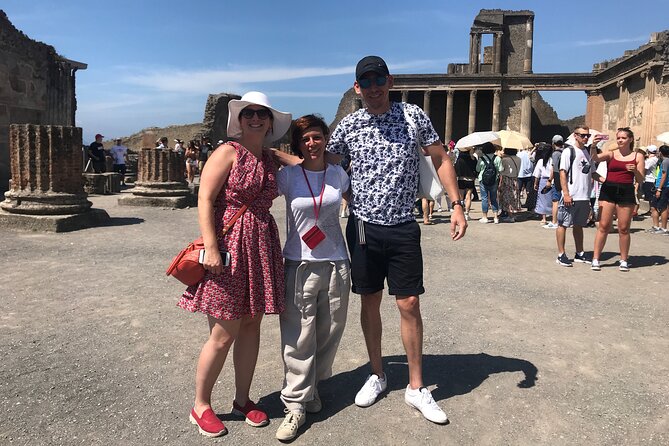
Pompeii clicks fast with a specialist. I like that this private archaeologist-led walk gives you a clear route through the highlights, from Porta Marina Superiore to Porta Marina Inferiore. I also love the skip-the-line ticket request setup, so you can spend more of your limited time inside the archaeological park.
One thing to watch: the site entrance ticket is not included, and this is a lot of walking on stone paths, with steps and some slippery surfaces.
In This Review
- Key Things You’ll Notice on This Pompeii Tour
- Why a Private Archaeologist Tour Works Better Than Free-Roaming
- Where You Start, Where You End, and How the Route Feels
- Porta Marina to the Theaters: A Fast Introduction to Public Life
- The Main Street and Granai del Foro: Civic Space and Trade
- Stabian Baths, the Forum, and the Court of Justice: Pompeii as a Social Machine
- Temples, the Theater Quadriporticus, and the Lived-In Side of Religion
- From Venus to Mosaics: Seeing House Life Without Getting Lost
- Macellum, Eumachia, and Menander: Food, Wool, and Fine Surfaces
- Termopolio and Fullonica: The Places You’d Smell First
- Tickets, Skip-the-Line Help, and What You Actually Pay
- Pace, Weather, and Comfort Tips That Actually Matter
- Who This Tour Is Best For
- Should You Book This Pompeii Archaeologist Tour?
- FAQ
- How long is the Pompeii private tour with an archaeologist?
- Is this tour really private?
- What is included in the tour price?
- Do I need to buy Pompeii tickets separately?
- What language is the tour offered in?
- Where do we meet for the tour?
- What happens if weather is bad?
Key Things You’ll Notice on This Pompeii Tour
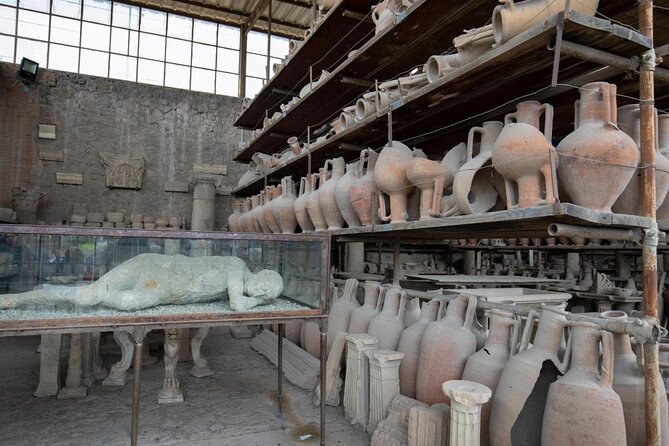
- Archaeologist guide focus: You get expert explanations of what you see, not just dates on a sign.
- A smart 3-hour loop: The route is built to hit the big “wow” spots without wandering in circles.
- Theater-to-Forum storyline: You’ll move from public entertainment to civic life, then into everyday neighborhoods.
- Baths and street-level Pompeii: You’ll see how people relaxed and moved around, not only temples and walls.
- Daily-life stops: Markets, food counters, laundry, and even the brothel area show what life was like in 79 AD.
- Private means pace control: You’re only with your group, so your guide can slow down or adjust when needed.
Why a Private Archaeologist Tour Works Better Than Free-Roaming
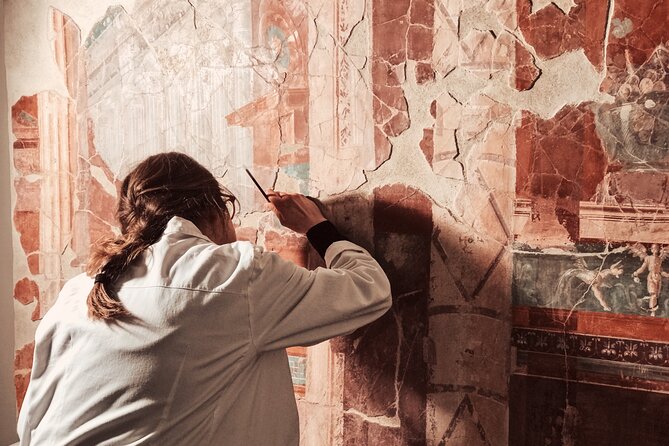
Pompeii is enormous, and it can feel like you’re staring at piles of stone unless someone helps you “read” the place. With an archaeologist guide, you learn what each building was for, how it was used, and what everyday habits looked like when the city was active.
This tour runs about 3 hours, which is the sweet spot for first-timers. You won’t try to conquer the entire park. Instead, you’ll follow a route that covers major landmarks and then connects them through the daily rhythm of the city.
The guides behind this experience can be especially memorable. You’ll see names like Eliana Sandretti, Luisa, and Amadeo pop up because the storytelling tends to feel personal and practical, not lecture-style. And because it’s private, you can ask questions without fighting for attention.
More Pompeii digs and Vesuvius climbs:
- Pompeii: Entry Ticket and Guided Tour with an Archaeologist
★ 4.8 · 19,459 reviews - Pompeii: Entry Ticket with Optional Audio Guide
★ 4.2 · 12,360 reviews - Pompeii: Small Group Tour with an Archaeologist
★ 4.8 · 12,264 reviews
Where You Start, Where You End, and How the Route Feels
You meet at Hortus Pompei, Restaurant & Garden Bar, near Porta Marina Superiore (Via Villa dei Misteri, Piazza Porta Marina Superiore). The tour ends back at the meeting point, so you’re not stuck figuring out a separate end location.
The walk is structured to move from the entrance area into the core sights and then onward toward the residential and commercial zone. Expect lots of steps, uneven ground, and frequent changes in elevation. That’s normal for Pompeii, but it matters for planning your day.
Because the itinerary includes both “major monument” stops and smaller detail stops, the route has a nice rhythm. You’ll get big highlights like theaters and the Forum, then you’ll drop into places that show how people ate, shopped, cleaned clothes, and passed time.
Porta Marina to the Theaters: A Fast Introduction to Public Life
The tour kicks off at Pompeii Archaeological Park starting at Porta Marina Superiore. Porta Marina Inferiore is where you finish the park section, which gives your route a clear sense of direction.
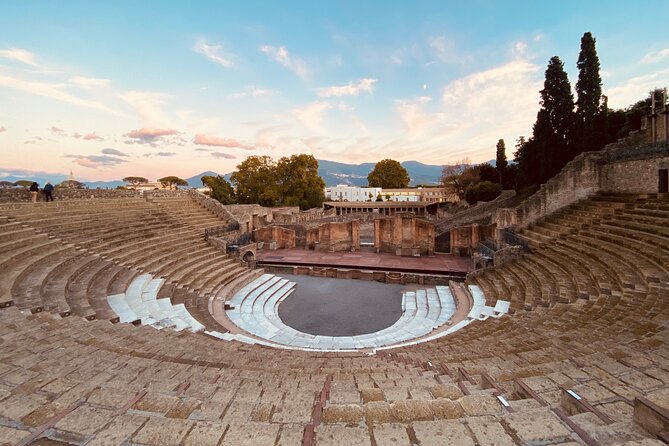
From there, you head to the entertainment area with the Odeon, then the larger Teatro Grande. These stops are more than photo ops. Your guide helps you understand how Romans used theaters for social life, not just performances.
At the Odeon (Teatro Piccolo), pay attention to how the space is organized for smaller-scale viewing. It’s a good place to grasp the idea of crowd control and acoustics in an outdoor ancient setting.
Then comes the Teatro Grande, which is the bigger stage. This is where you’ll likely start noticing architectural details more clearly because you know what you’re looking for. It’s also a good moment to let the guide’s explanations settle in, since theaters connect to the broader theme of Pompeii as a highly public city.
The Main Street and Granai del Foro: Civic Space and Trade
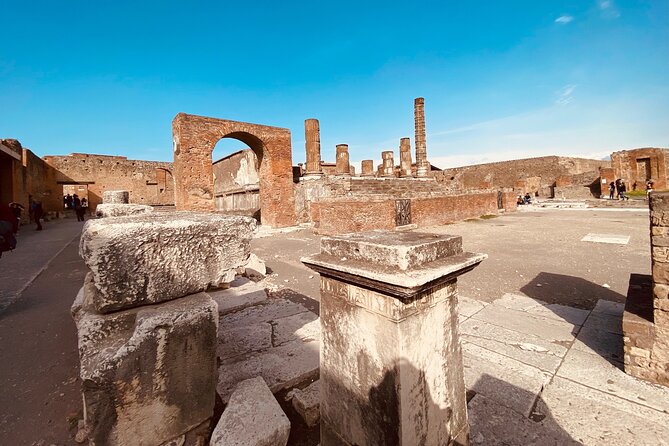
After the theaters, you move through the Main Street of Pompeii. This section matters because it shows you how the city flowed. Instead of treating buildings as isolated ruins, you start seeing the street as the “connector” that made public life work.
Next up is Granai del Foro, the archaeological deposit tied to the grain storage and food economy around the Forum area. Even if you only catch a piece of it, this is a useful stop for understanding that Pompeii ran on systems. People didn’t just build pretty structures. They fed themselves, stored supplies, and kept the city functioning.
This is also a good place to ask your guide what was going on in the moment before the eruption, because the mix of civic and storage spaces helps make the timeline feel real instead of abstract.
A few more Pompeii options to weigh
- Private Pompeii, Positano & Amalfi coast Tour from Rome
★ 4.5 · 1,888 reviews - Pompeii Ruins Private Tour with Optional Skip-the-Line Entry
★ 4.9 · 732 reviews - Pompeii private tour with an Official Guide
★ 5.0 · 631 reviews - Visit in Pompeii – Pompeii Private Tour with Ada
★ 5.0 · 436 reviews
Stabian Baths, the Forum, and the Court of Justice: Pompeii as a Social Machine
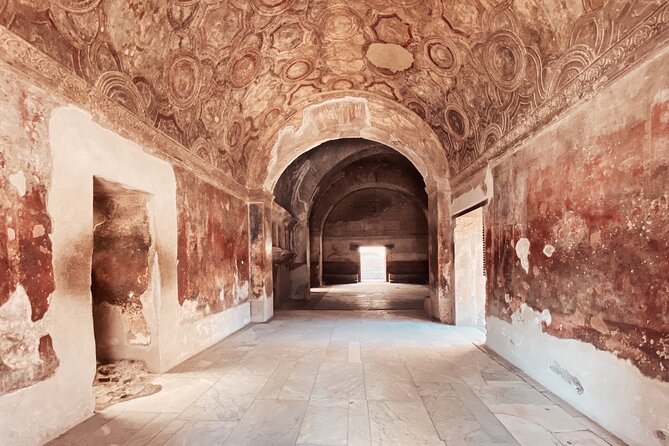
One of the strongest sections of the route is the run through the Stabian Baths (Terme Stabiane) and the civic core that follows. Baths were central to Roman social life. They were workout spaces, gossip zones, and places where people arranged relationships.
The tour gives you about 15 minutes here. That’s not enough to do “everything,” but it’s enough to get the logic of the bathing complex if your guide explains how circulation and room functions worked.
Then you’re onto the Forum (Foro di Pompei), followed by the Basilica area described as the court of justice. These stops are where Pompeii stops being a backdrop and becomes a working city. The Forum is politics and business. The court area is law and civic decisions.
When you see the structures with guidance, you’ll understand why people would have treated these locations as essential. Without help, it’s easy to see only columns and walls. With help, you start seeing roles, routines, and how disputes and transactions happened.
Temples, the Theater Quadriporticus, and the Lived-In Side of Religion
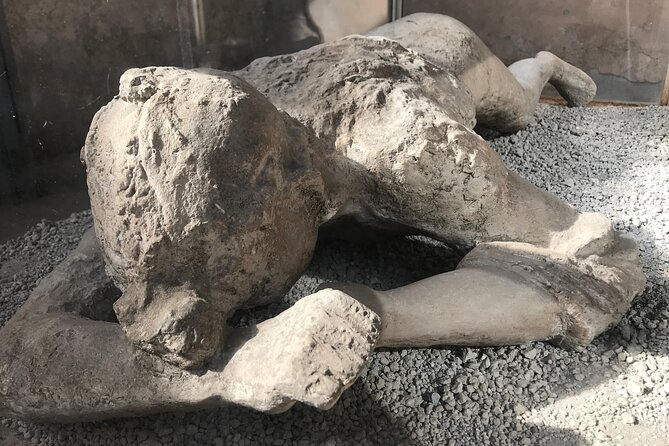
The tour includes a Temple: Jupiter and the Quadriporticus of the theatres, which is referenced here as the gladiators’ barracks area. These stops connect two themes: public spectacle and religious framing.
Pay attention to how the spaces relate to movement. Temples were part of everyday identity. Spectacle spaces were part of everyday leisure. Your guide’s explanations tend to tie them together so you understand Pompeii as a place where belief and entertainment were both built into daily life.
Then you’ll head into the more intense and controversial zone: the Lupanar, the brothel area. This stop often changes how people think about Pompeii because it’s so direct. You’re not just seeing a ruined room. You’re seeing how the city handled commerce and social behavior, even in taboo categories.
This is also a place where it helps to have an archaeologist guide, because context matters. The point of the stop is not shock value. It’s understanding how ancient life actually worked.
From Venus to Mosaics: Seeing House Life Without Getting Lost
After the Lupanar, the tour includes the Temple of Venus. That pause helps balance the walk. It’s a reminder that Pompeii wasn’t only daily commerce and social services. It also had symbolic and religious architecture threaded through the environment.
Then you move to Casa del Poeta Tragico, highlighted for the Cave Canem mosaic. This is a short stop, but it’s one of the most memorable moments for many first-timers. It’s a simple but powerful example of how Roman homes communicated values and humor in visual form.
From there, you’ll shift toward the more practical “house to street” transition points, because Pompeii houses weren’t sealed off from the city. Even in domestic spaces, you get a sense of how residents interacted with visitors, customers, and passing neighbors.
Macellum, Eumachia, and Menander: Food, Wool, and Fine Surfaces
Next comes Macellum, the meat and fish market. This stop is great because it turns “ruins” into “routine.” If you want a feeling for what people ate and how food was distributed, this is the right place to focus.
The tour also includes Edificio di Eumachia, described as the wool market. That matters because it adds another key industry: textiles. Pompeii’s economy wasn’t only agriculture and food. It included production and trade.
Finally, you reach Casa del Menandro, known here for frescoes and mosaics. This is where you’ll start noticing the difference between a basic viewing of artifacts and a guided reading of design and symbolism. The house style gives you a sense of taste, wealth, and how decoration functioned as status.
Termopolio and Fullonica: The Places You’d Smell First
The tour includes Termopolio di Vetuzio Placido, described as a take-away shop and fast food spot. This is one of the most “human” stops because it connects Pompeii directly to craving and convenience. You can almost imagine the daily pattern of grabbing something quick on the way through town.
Then you’ll see Fullonica di Stephanus, the laundry. Again, this is daily life, not just monuments. A laundry workshop is the kind of place that reminds you people had real jobs, real mess, and real routines tied to fabric and cleanliness.
These stops are short, about 10 to 15 minutes each, but they do something valuable. They help you remember Pompeii as a living city, not a museum of stone.
Tickets, Skip-the-Line Help, and What You Actually Pay
Let’s talk money without drama. The tour price is listed at $302.32 per group (listed up to 1), for about 3 hours in English with a mobile ticket option.
What you should know is that Pompeii admission tickets are not included. The information provided puts it at 19 euros per adult, and free entry is mentioned for under 18. So your total cost will be tour price plus entrance tickets.
The good news is that there is a skip-the-line ticket office benefit, but it’s described as being handled on request in advance. There’s also a note that there’s a link to buy entrance tickets in advance. So the smartest approach is simple: buy your park ticket ahead of time, and then make sure your skip-the-line request is properly set up with the operator before your visit.
If you don’t do that, you can end up spending time at the ticket area, which is exactly what this tour tries to prevent.
Pace, Weather, and Comfort Tips That Actually Matter
This is a walking tour with lots of steps and stone surfaces, and it runs through different parts of the park. In real life, that means you should wear shoes with grip and consider bringing water and a light layer, especially if you’ll be there in warmer weather.
The experience notes that it requires good weather. If weather is poor, you’ll be offered a different date or a full refund.
Also, the tour allows service animals, and it says most travelers can participate. That said, you should go in knowing Pompeii is physically demanding even on a short route, and it helps when your guide is flexible. On this kind of tour, guides have been able to slow the pace and work around mobility needs when asked.
Who This Tour Is Best For
I’d point you toward this tour if:
- You want a guided route that hits the key sites without decision fatigue.
- You care about how people lived, not only what’s famous.
- You prefer a private setup where you can ask questions and take breaks.
- You’re traveling in a small group and want maximum value from limited time.
If you’re the kind of traveler who loves getting lost with a map and reading every sign yourself, you might feel boxed in by a set route. But Pompeii usually rewards guidance, because the context makes the ruins make sense.
Should You Book This Pompeii Archaeologist Tour?
If you want Pompeii to feel understandable in a few hours, I’d say yes. The combination of a private archaeologist guide, a tight 3-hour structure, and the chance to reduce ticket-line friction is a strong value play.
Book it if you’re new to Pompeii, short on time, or you want the city explained as daily life in 79 AD. Pass or consider a different option if you’re hoping for a purely casual stroll with no ticket planning, or if you’re not comfortable with steps and uneven surfaces.
FAQ
How long is the Pompeii private tour with an archaeologist?
The tour lasts approximately 3 hours.
Is this tour really private?
Yes. It’s listed as a private tour, and only your group participates.
What is included in the tour price?
The tour includes assistance before and during the tour, a private format, main attractions of Pompeii, and a specialized archaeological tour guide. It also includes skip-the-line at the ticket office on request in advance, and a mobile ticket is mentioned. A Pompeii site entrance ticket is not included.
Do I need to buy Pompeii tickets separately?
Yes. The tour info says entrance fees are not included. It notes free entrance for under 18 and 19 euros per adult, so you should plan to purchase your Pompeii admission ticket in advance.
What language is the tour offered in?
The tour is offered in English.
Where do we meet for the tour?
The meeting point is Hortus Pompei, Restaurant & Garden Bar, at Via Villa dei Misteri, Piazza Porta Marina Superiore 1 (also listed with Piazza Esedra, 1), 80045 Pompei, Italy. The tour ends back at the meeting point.
What happens if weather is bad?
The experience requires good weather. If it’s canceled due to poor weather, you’ll be offered a different date or a full refund.
Latest reviews around Pompeii
- Guided Day Tour of Pompeii and Herculaneum with Light Lunch★ 4.5 · 311 reviews
- Skip-the-Line Pompeii Guided Tour from Sorrento★ 4.5 · 722 reviews
- Pompeii Express Guided Tour by Train from Sorrento★ 4.5 · 770 reviews
- Pompeii & Mount Vesuvius Tour with Guided Visit, Tickets & Lunch★ 4.5 · 155 reviews
- Pompeii and Amalfi Coast Private Day Trip with Pick Up★ 5.0 · 312 reviews
- Mt Vesuvius and Pompeii Tour by Bus from Sorrento★ 4.5 · 170 reviews
- Pompeii Ruins Half-Day Tour from Sorrento with Guide★ 4.0 · 714 reviews
- Pompeii Guided Tour From Sorrento Coast★ 5.0 · 143 reviews
Pompeii & Vesuvius Tours, compared.
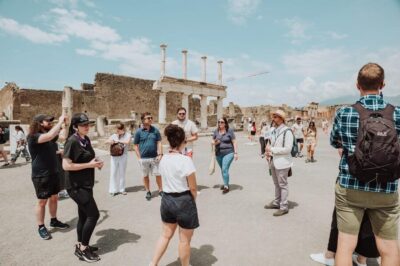
Pompeii: Entry Ticket and Guided Tour with an Archaeologist
Read our review →
Pompeii: Entry Ticket with Optional Audio Guide
Read our review →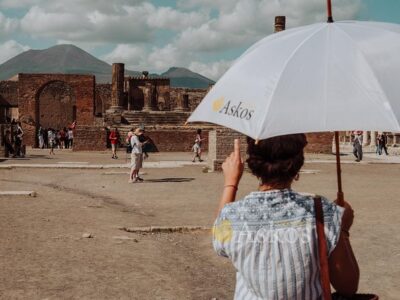
Pompeii: Small Group Tour with an Archaeologist
Read our review →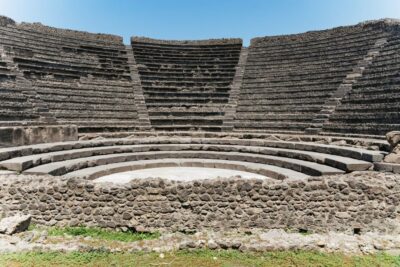
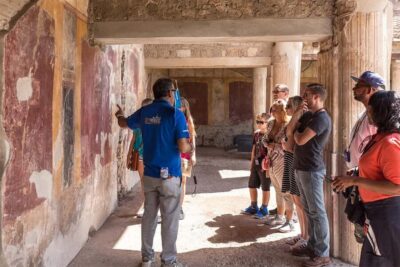
Pompeii Small Group Tour with an Archaeologist
Read our review →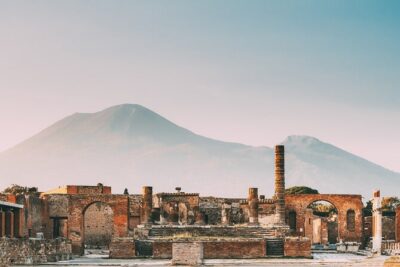
Pompeii, Amalfi Coast and Positano Day Trip from Rome
Read our review →Browse the lists this tour appears in