
Reviewed · POMPEII & VESUVIUS TOURS
Pompeii 2-Hour Private Tour
Pompeii hits you fast, in the best way. This private 2-hour visit is interesting because you walk through the Forum and everyday streets with a licensed guide, then you see the plaster casts that freeze the tragedy of 79 AD. I especially love how guides like Stefano and Antonietta answer real questions and steer you through the site without wasting time, and I like that it feels personal, not rushed. One possible drawback to think about: Pompeii is still a lot of walking on uneven ruins, and the info you’ll get is mixed on mobility access, so it’s worth planning carefully if you have limitations.
If you want a Roman city that feels lived in, this format makes sense. It focuses on the big ideas, then lands on the details, from religious and civic life to the homes of different social levels.
In This Review
- Key highlights to look for before you go
- Meeting at Villa dei Misteri: where the tour actually begins
- A 2-hour Pompeii plan: the best hits, not the whole museum
- The Forum and Temple of Jupiter: Rome’s public heartbeat
- Walking streets, shops, and everyday Roman life
- Rich homes and fresco rooms: where status lived
- The plaster casts: the moment Pompeii becomes personal
- How a private licensed guide changes everything
- Skip-the-line entry and the “time you gain” mindset
- What to bring (and what to leave behind)
- Mobility access: the one note you should not gloss over
- Price and value: is $181.26 per person worth it?
- Should you book it? My decision guide
- FAQ
- Where does the Pompeii 2-hour private tour start?
- How long is the tour?
- Is this a private tour?
- Are entry tickets included?
- What should I bring to Pompeii?
- Is the tour wheelchair accessible?
Key highlights to look for before you go

- Villa dei Misteri meeting point for quick starts: the tour begins at Via Villa dei Misteri, 2, right at Pompei Scavi Villa dei Misteri.
- Forum and Temple of Jupiter focus: you get the civic and religious center, not just scattered ruins.
- A tailored private route: the itinerary is built around your group, so your guide can emphasize what you care about most.
- Plaster casts that bring 79 AD into focus: you’ll see the bodies in their famous, haunting form.
- Skip-the-ticket-line entry: less queue time means more walking time with your guide.
- Small-group style experience: the “private group” feel shows up in how much you can ask.
Meeting at Villa dei Misteri: where the tour actually begins
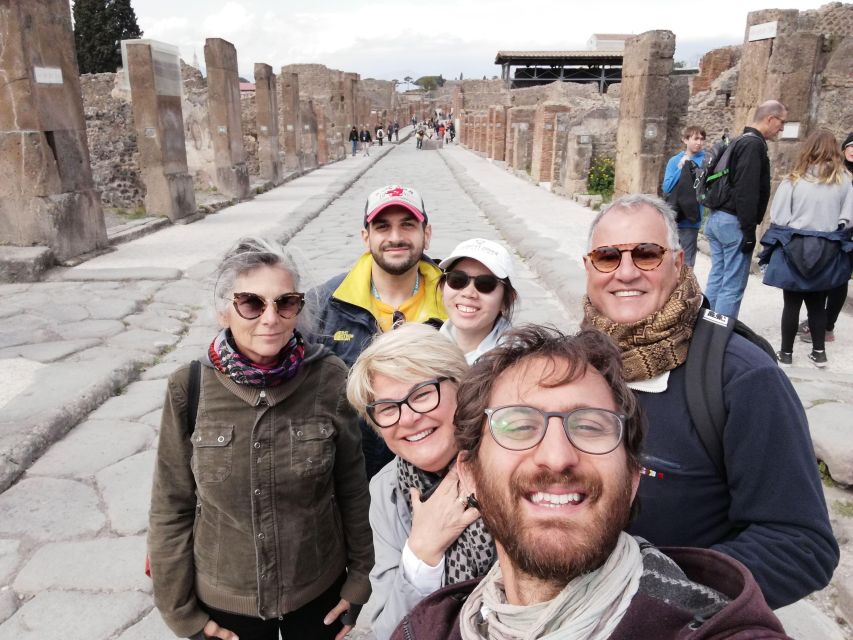
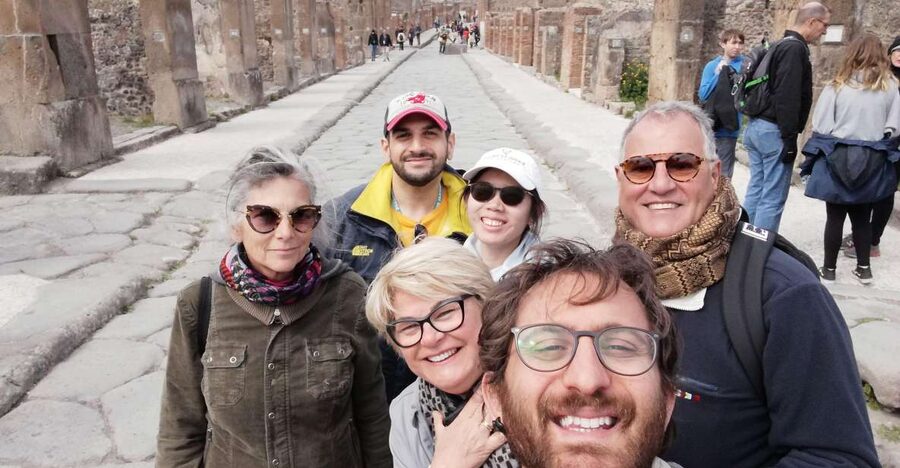
The whole experience starts in a practical spot: meet in front of the Pompei Villa dei Misteri train station area, at Via Villa dei Misteri, 1 (the starting address is Via Villa dei Misteri, 2). The guide holds a sign with your name, and you start right there.
This matters more than it sounds. Pompeii can be confusing the first time you arrive, and the earlier you get oriented, the less time you spend hunting for landmarks instead of learning them. The best reviews mention guides like Stefano standing there on time with the sign, even when someone arrived a few minutes late.
Plan to be there about 10 minutes early. Bring your passport or ID card with you (it’s required for admission, and it also matters for free admittance for those under 18). Wear shoes that can handle stone, and consider how hot it gets, since you’re outside for part of the route.
More Pompeii digs and Vesuvius climbs:
- Pompeii: Entry Ticket and Guided Tour with an Archaeologist
★ 4.8 · 19,459 reviews - Pompeii: Entry Ticket with Optional Audio Guide
★ 4.2 · 12,360 reviews - Pompeii: Small Group Tour with an Archaeologist
★ 4.8 · 12,264 reviews
A 2-hour Pompeii plan: the best hits, not the whole museum
Pompeii is huge. Even with a guide, it can feel endless if you try to do everything. That’s why this 2-hour private format can be a smart move, especially on a day when you also want time to wander on your own.
In your guided window, you’re not meant to “finish Pompeii.” You’re meant to leave with a clear mental map:
- where public life happened
- how daily life worked
- what different homes looked like
- why the eruption is so unforgettable
You’ll see several iconic areas, including the Forum and the Temple of Jupiter, plus richer residential spaces. Then you’ll get the shock value moment, the plaster casts of people buried under volcanic ash. That combo is the real reason a short guided tour works, because it ties emotion to context.
A quick reality check: there is no mention of restroom stops built into the plan. If you need breaks, go early, hydrate, and manage expectations for a steady walking pace.
The Forum and Temple of Jupiter: Rome’s public heartbeat
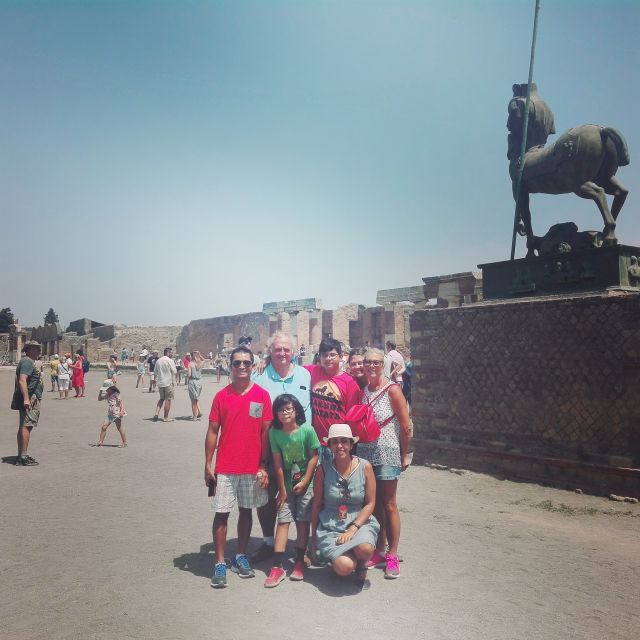
The Forum is usually what turns Pompeii from ruins into a functioning idea of a city. This tour highlights it as the center of religious, cultural, and political life. So instead of just seeing column fragments and wall lines, you’ll connect them to how people organized themselves.
When you stand in the Forum zone, you’re looking at where civic life happened. You learn why certain areas matter, and you start to understand the logic of the city. The guide also points out how religion and politics were wrapped together, so it feels less like “ancient sightseeing” and more like “ancient daily routine.”
The Temple of Jupiter brings that civic-religious focus into sharper view. Jupiter was a big deal in Roman culture, and seeing this space on-site helps you grasp the scale of worship and public ceremony. You also get the Roman habit of building power into the city layout. It’s not subtle. It’s not random.
Walking streets, shops, and everyday Roman life
Pompeii is famous because it did not get sanitized into a postcard. It kept the mess and the routine. This tour is designed to help you read that routine.
You’ll walk through areas connected to shops and streets, and your guide will explain what everyday life looked like. The tour emphasizes how you’ll learn about the mix of people living close together, including slaves, ordinary people, and very rich families.
That detail is key. Pompeii works best when you stop picturing a single class of people. One of the most useful takeaways from the guides on this kind of private tour is how they explain proximity. You can literally see how different lifestyles were packed into the same urban fabric.
So yes, you’ll see buildings. But the goal is that you leave understanding the “how it worked” part. Where people shopped. How homes were arranged. How status showed up in decoration and space.
A few more Pompeii options to weigh
- Private Pompeii, Positano & Amalfi coast Tour from Rome
★ 4.5 · 1,888 reviews - Pompeii Ruins Private Tour with Optional Skip-the-Line Entry
★ 4.9 · 732 reviews - Pompeii: Private Tour with an Archaeologist
★ 4.9 · 168 reviews - Pompei: Pompeii Private Tour
★ 4.8 · 146 reviews
Rich homes and fresco rooms: where status lived
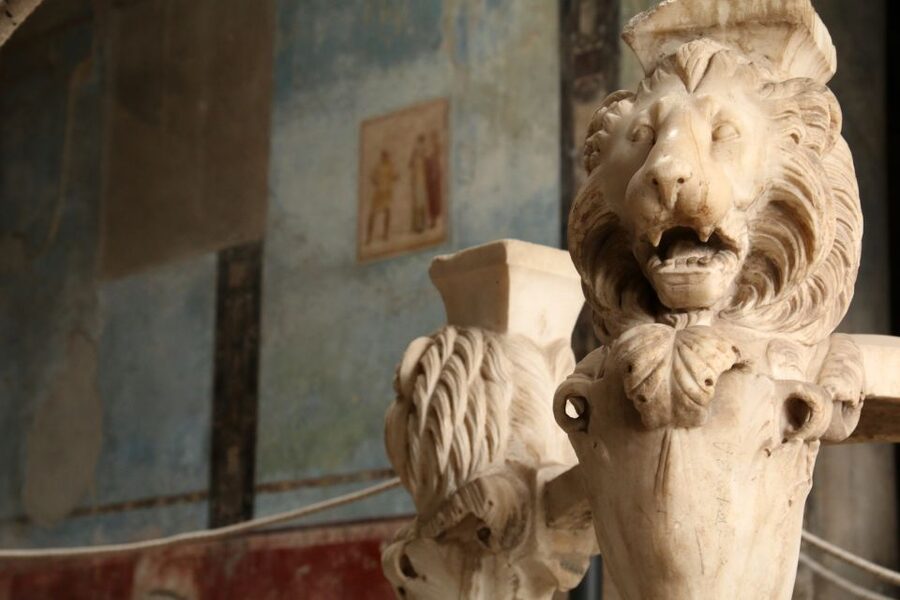
One of the highlights promised is visiting some of the richest houses in the city. That’s the part of Pompeii that makes you look closer. These spaces are where wealth shows itself through design choices you can still recognize.
What you’ll get out of this section is more than pretty walls. Your guide connects visual details to what they meant:
- how space was used
- how rooms functioned day to day
- what you can infer about comfort and social standing
The reviews also suggest that some guides may tailor the route beyond the headline stops. For example, one guide experience included extra emphasis in certain areas, and the group covered additional points that went beyond a strict checklist. The important takeaway for you is that the tour is described as having a tailored itinerary, so if you’re curious about residential life or the differences between household setups, it’s worth asking during the walk.
The plaster casts: the moment Pompeii becomes personal
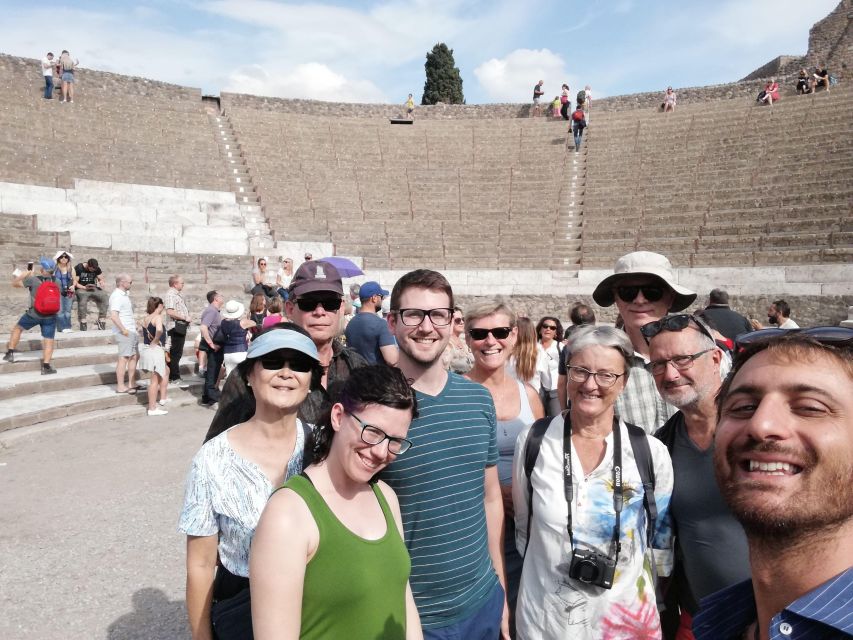
If you’ve seen photos of Pompeii’s plaster casts, you already know the scene is intense. Seeing it in person is different. It turns history into something that feels brutally immediate.
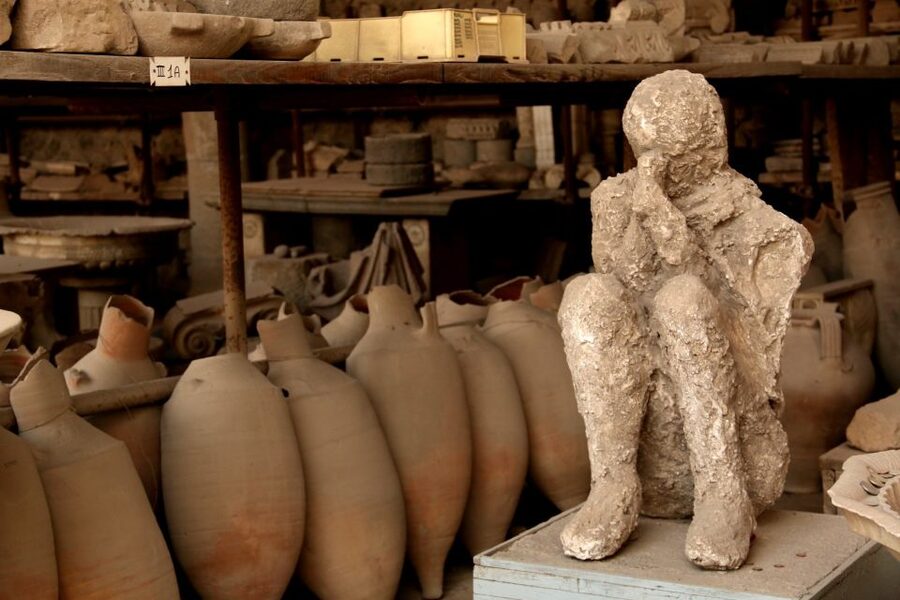
This tour includes time to see the bodies of people of Pompeii frozen in time via plaster casts. Your guide provides context for why these casts exist and what the eruption did to the city in 79 AD. With the explanations in place, the scene stops being just a shock moment and becomes a lesson about catastrophe and survival.
This is also where a guide earns their fee. The plaster casts are famous, but they can also feel confusing if you don’t know what you’re looking at. In this tour format, you get the “what it is” and the “why it matters” tied together.
Expect it to be emotionally heavy, but also expect it to make the rest of Pompeii click. After you see that, the Forum and the homes don’t feel like separate attractions. They feel like parts of one real city.
How a private licensed guide changes everything
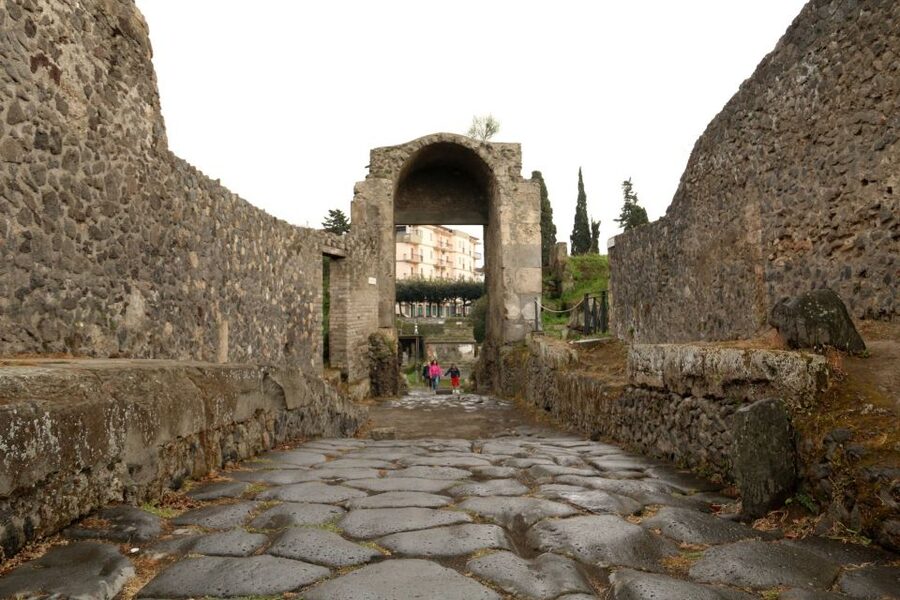
A private tour is not just about walking with fewer people. It’s about getting questions answered while the context is still fresh.
The reviews strongly point to two things you should plan to enjoy:
- Guides like Stefano and Antonietta were praised for being friendly, with strong English, and for giving clear explanations that did not overload the group.
- The private or small-group feel made it easier to ask questions, and guides navigated the site in a way that helped groups move efficiently.
That navigation piece matters in Pompeii. Crowds show up. Lines form. Certain areas get bottlenecked. A good guide helps you avoid dead time, and it keeps you oriented when the ruins start to look repetitive.
If you’re traveling with kids or a mixed-age group, this kind of guide attention can be a big deal. One review described how a guide involved kids and adults, and another mentioned a guide being patient with an older person in the group and making time for questions, photos, and restroom needs.
Also, communication can reduce stress. Some experiences noted WhatsApp-style contact and clear meeting instructions. Not every guide may do exactly the same, but it’s a good sign when the provider is proactive about helping you find the meeting spot.
Skip-the-line entry and the “time you gain” mindset
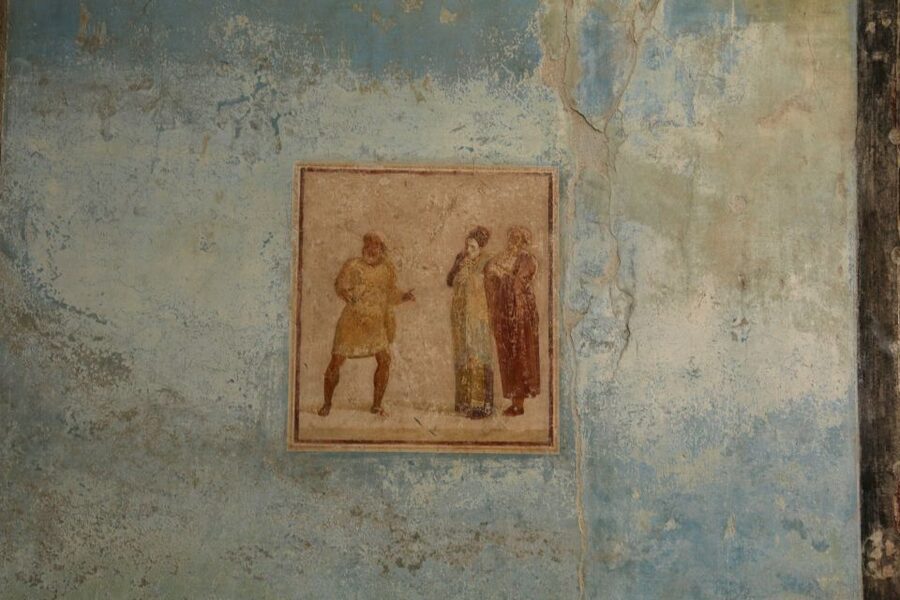
This tour includes entry tickets and includes skip-the-ticket-line access. In a place like Pompeii, that saves more than time. It saves energy.
Instead of wasting your morning or afternoon in a queue, you spend that time walking with your guide and hearing the story while you’re surrounded by the evidence. It’s one reason a 2-hour tour feels like a full experience rather than a quick taste.
Just do your part:
- arrive about 10 minutes early
- keep bags minimal, since luggage restrictions apply inside the site
- bring water and a hat because you will be outside
What to bring (and what to leave behind)
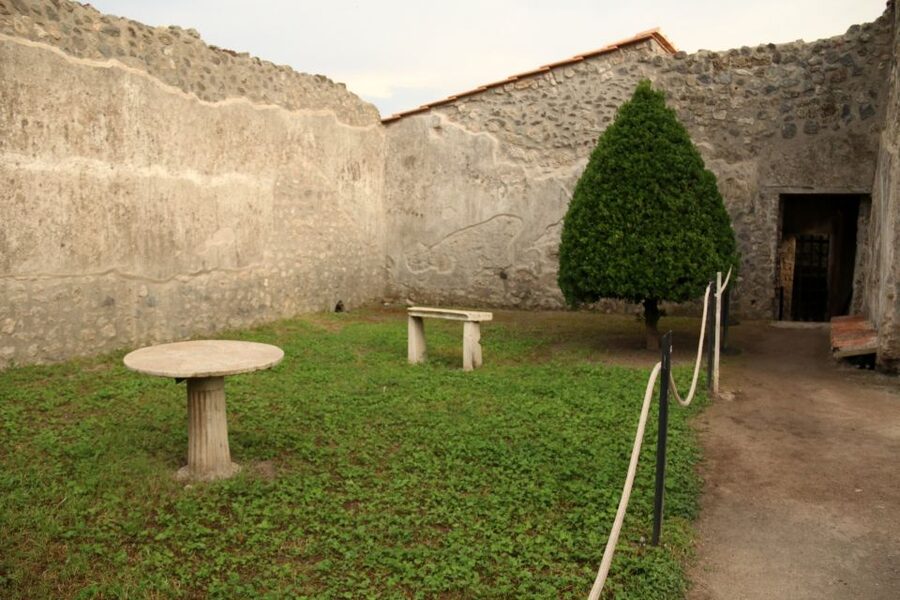
Here’s your practical checklist, based on the tour guidance.
Bring:
- Passport or ID card (and for those under 18, bring the ID for free admittance rules)
- Comfortable shoes
- Hat
- Sunscreen
- Water (the guidance says bottle of water for each person)
- Umbrella (recommended)
Leave or limit:
- No luggage or large bags inside the sites
- Bags bigger than 30x30x15cm are not permitted within Pompeii areas
The good news is that there are free cloakrooms at access points, so you’re not stuck carrying everything while you walk.
Also think about the heat. Pompeii can be sunny, and you’re moving between ruins. A hat and sunscreen are not “nice to have” here.
Mobility access: the one note you should not gloss over
The information you’re given includes a statement that the tour is wheelchair accessible, but it also says it is not suitable for wheelchair users and not suitable for people with mobility impairments.
That contradiction is worth taking seriously. Pompeii ruins are uneven and often difficult to navigate. If mobility is a concern, contact the provider before you book and ask what the route and surface conditions will be for your exact tour time.
If you’re unsure, you can use this rule of thumb: if you struggle with stairs, steep grades, or long walks on rough stone, this might be harder than a normal city tour.
Price and value: is $181.26 per person worth it?
At $181.26 per person, this is not a bargain-basement deal. But in Pompeii, you are paying for two things that are hard to replicate on your own:
- a licensed guide who can explain what you’re seeing in context
- a time-efficient route that focuses on the right highlights
The tour includes entry tickets, and it includes skip-the-line access. So part of the cost is doing what self-guided visits often fail at, getting you past delays and turning ruins into understanding fast.
This price can feel high if you’re a solo traveler who enjoys roaming freely. It feels more reasonable if:
- you value interpretation over wandering
- you want to ask questions
- you’re traveling with family and want structure that works for kids
- you’d rather pay for organization than spend hours researching the best route
From the tone of the reviews, the strongest value shows up when guides like Stefano or Antonietta keep the pace sensible, cover Pompeii’s big ideas in 2 hours, and answer questions without making it feel like a lecture.
Should you book it? My decision guide
I’d book this Pompeii 2-hour private tour if you want:
- a fast, guided introduction to Pompeii’s major themes
- the Forum and Temple of Jupiter as the backbone of your visit
- richer houses plus the plaster casts moment
- a guide who can adjust, answer questions, and keep you moving efficiently
I would pause before booking if:
- you have significant mobility limitations due to the walking nature of Pompeii
- you want a long, totally unstructured day where you can wander without returning to the starting point
If your plan is a focused Pompeii visit, this tour is a strong choice because it turns a short time into real understanding. You leave with a Roman city that makes sense, not just a pile of stone.
FAQ
Where does the Pompeii 2-hour private tour start?
You meet in front of the Pompei Villa dei Misteri train station area, Via Villa dei Misteri, 1. The starting address is Via Villa dei Misteri, 2.
How long is the tour?
The tour duration is 2 hours. Starting times vary, so you’ll want to check availability.
Is this a private tour?
Yes. It is listed as a private group experience.
Are entry tickets included?
Yes. Entry tickets are included, and the tour offers skip-the-ticket-line access.
What should I bring to Pompeii?
Bring your passport or ID card, comfortable shoes, a hat, sunscreen, and water (a bottle for each person). An umbrella is also recommended.
Is the tour wheelchair accessible?
The information includes both that it is wheelchair accessible and that it is not suitable for wheelchair users and people with mobility impairments. If mobility is a concern, you should confirm route details with the provider before booking.
Latest reviews around Pompeii
- Vesuvius National Park Skip-the-Line Ticket★ 3.8 · 221 reviews
- From Rome: Day Trip to Pompeii with Tickets★ 4.4 · 1,161 reviews
- From Rome: Sorrento & Pompeii Day Tour with Hotel Pickup★ 4.2 · 257 reviews
- Pompeii Ruins Private Tour with Optional Skip-the-Line Entry★ 4.9 · 732 reviews
- From Rome: Pompeii All-Inclusive Tour with Live Guide★ 4.3 · 261 reviews
- Pompeii and Herculaneum: Guided Tour with an Archaeologist★ 5.0 · 164 reviews
- Pompeii 3hours Villa of Mysteries tour with an Archaeologist★ 4.8 · 486 reviews
- From Sorrento: Pompeii and Vesuvius Tour★ 4.5 · 201 reviews
Pompeii & Vesuvius Tours, compared.
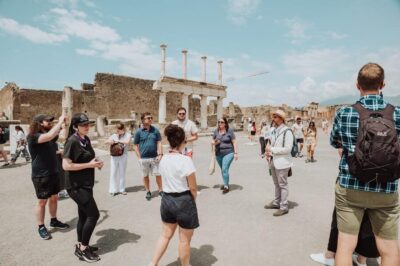
Pompeii: Entry Ticket and Guided Tour with an Archaeologist
Read our review →
Pompeii: Entry Ticket with Optional Audio Guide
Read our review →
Pompeii: Small Group Tour with an Archaeologist
Read our review →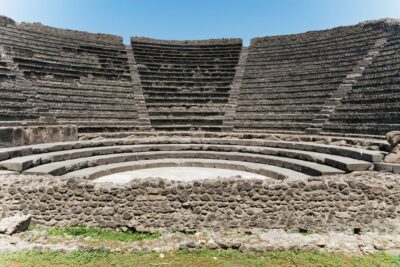
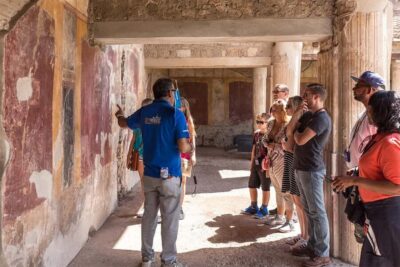

Pompeii Small Group Tour with an Archaeologist
Read our review →
Pompeii, Amalfi Coast and Positano Day Trip from Rome
Read our review →Browse the lists this tour appears in