
Reviewed · HERCULANEUM TOURS
Herculaneum: Tickets & Tour with a Local Archaeologist
One ancient city, and it feels current.
Herculaneum was buried by Mount Vesuvius in 79 AD, but the volcanic conditions preserved far more than stone ruins, including wood, daily objects, and even human remains, right where the disaster ended it. This 2 hour tour gives you the guided way in, so you can read the site like a story instead of just walking through walls.
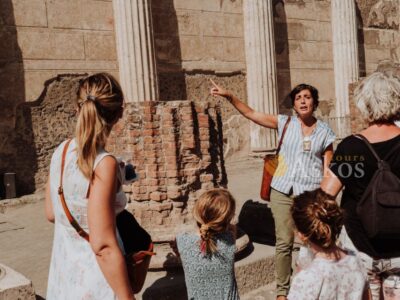
I especially like that you tour with a licensed archaeologist, not a script on repeat. In groups led by guides such as Enrica, Carlo, Raffaele, Giovanni, Livio, Riccardo, and Ornella, the focus stays on how people lived, what investigators learned, and what you can actually spot on the ground in front of you.
My second favorite part is the sheer preservation, especially at homes and rooms where frescoes and mosaics still look alive, and at the House of Skeletons where the details are hard to forget. One clear consideration: the tour is not suitable for wheelchair users, and electric wheelchairs are not allowed.
In This Review
- Key things to love about this Herculaneum archaeologist tour
- Why Herculaneum feels different from Pompeii
- Getting started at Biglietteria Ercolano (and why timing matters)
- Casa dei Cervi: the House of the Deer and why villa details matter
- Casa di Nettuno ed Anfitrite: gods in everyday spaces
- Sacellum of the Augustales: where civic religion meets street life
- House of Skeletons: the moment that makes history hit hardest
- Casa dell’Albergo, Herculaneum: hospitality and the city feel
- Archaeological Site photo stop and the Roman streets you can almost hear
- Price and value: is $58 for 2 hours worth it?
- How to get the most out of each stop (without feeling rushed)
- Who should book this Herculaneum tour (and who might hesitate)
- Should you book this archaeologist-led Herculaneum tour?
- FAQ
- FAQ
- How long is the Herculaneum tickets and tour with a local archaeologist?
- How much does this tour cost?
- Where does the tour start?
- Is skip-the-line access included?
- Are headsets provided during the tour?
- What languages are available for the live guide?
- What should I bring?
- Are food and drinks included?
- Is the tour wheelchair accessible?
- Is there a private group option?
Key things to love about this Herculaneum archaeologist tour
- Skip-the-line access at Biglietteria Ercolano, so you spend time inside the ruins
- Licensed archaeologist guide who points out the details you would miss alone
- Casa dei Cervi (House of the Deer) for standout villa rooms and decoration
- House of Skeletons where 79 AD history gets intensely human, fast
- Public baths and water system engineering that shows how Roman comfort worked
- Headsets if the group is larger than 11 to help you hear explanations
Why Herculaneum feels different from Pompeii
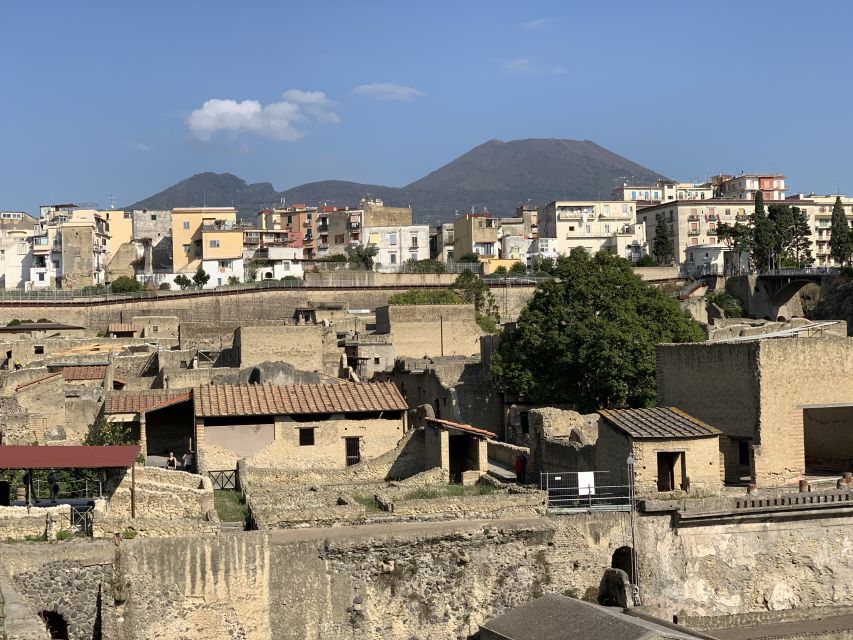
If you have already visited Pompeii, Herculaneum often hits you in a different way. The town is smaller and more intimate, but the preservation is what changes everything. Because the eruption sealed it under volcanic material, many spaces kept their character in a way that is rare at other Roman sites.
Here, you are not just looking at what survived in stone. You can get a real sense of rooms, decoration, street level movement, and the rhythms of everyday life. The tour’s strength is that the guide connects those visual cues to context, like how villas were laid out, what people valued aesthetically, and why some objects survived when others did not.
And yes, the story includes tragedy. Herculaneum’s most unforgettable moments are not paintings on a museum wall. They are places where the remains of victims were found, still tied to the layout of the city and the way people moved through it.
A few more Herculaneum options to weigh
- Herculaneum: Skip-the-Line Guided Tour with Archaeologist
★ 4.8 · 3,439 reviews - Pompeii and Herculaneum Small Group Tour with an Archaeologist
★ 5.0 · 1,350 reviews - Herculaneum Small Group Tour and Ticket With an Archaeologist
★ 5.0 · 994 reviews
Getting started at Biglietteria Ercolano (and why timing matters)
Your meeting point is Biglietteria Ercolano. You should arrive about 10 minutes before the tour starts. That buffer matters here because you are getting organized for entry, then you move quickly once you are inside.
This tour includes skip-the-line tickets, which is a big deal at popular archaeological sites. Even a short delay can eat into a 2 hour visit. You are here to walk the streets and hit the major highlights without losing the day to waiting.
Bring a passport or ID card and water. The basic packing list is short, which is good. You will appreciate it more in warmer months, since you are outdoors for parts of the walk and you will likely want to keep your hands free for photos.
Casa dei Cervi: the House of the Deer and why villa details matter
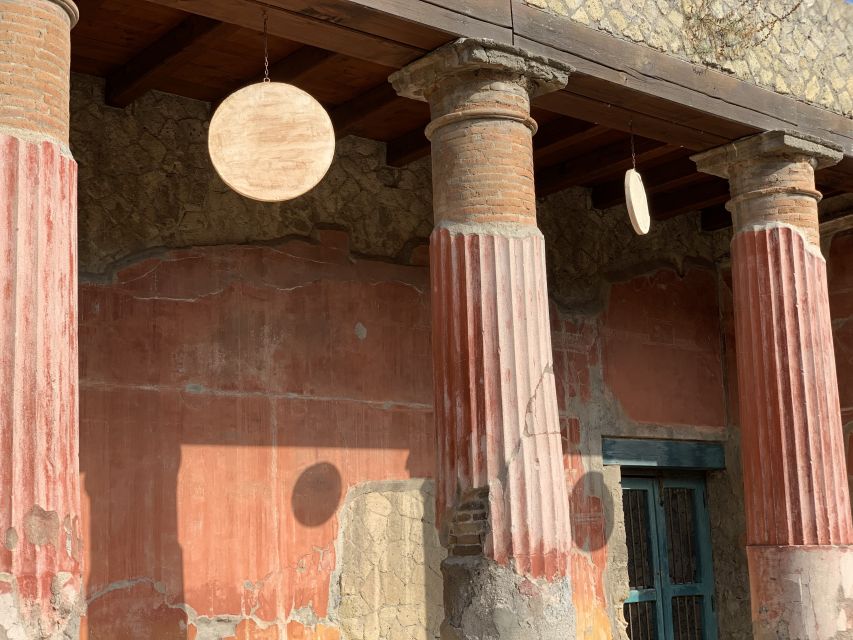
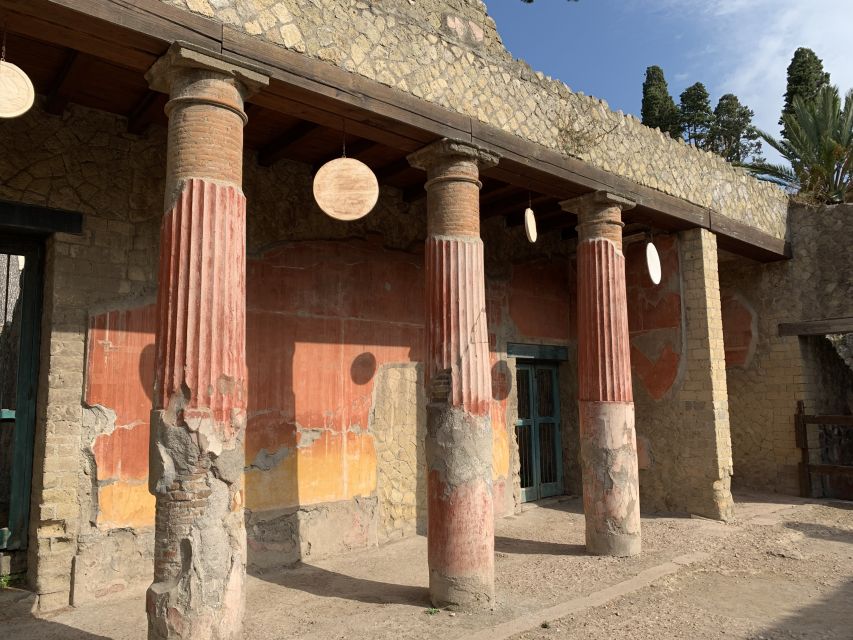
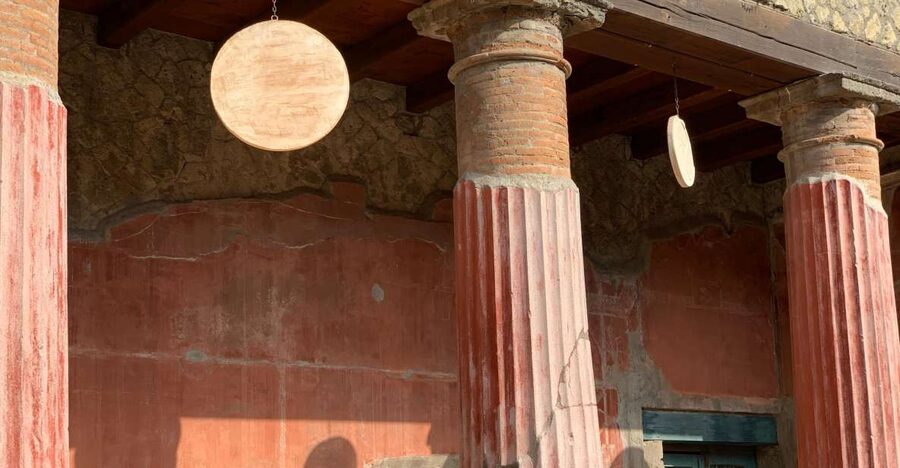
You begin the guided walk at Casa dei Cervi. This is the kind of stop that makes Herculaneum feel personal. Villa houses were not just shelters. They were statements, with rooms designed for status, leisure, and decoration that could impress visitors.
What to pay attention to is how the villa spaces read as a sequence. As your archaeologist guide explains what you are looking at, you can connect the layout to daily habits. You will also get help interpreting wall decoration and room function, which is where a good guide changes the whole experience.
One practical point: villa stops can make you want to stare longer than the schedule allows. Keep your eyes open for what your guide emphasizes, because those are usually the details that turn a room from pretty to meaningful.
Casa di Nettuno ed Anfitrite: gods in everyday spaces
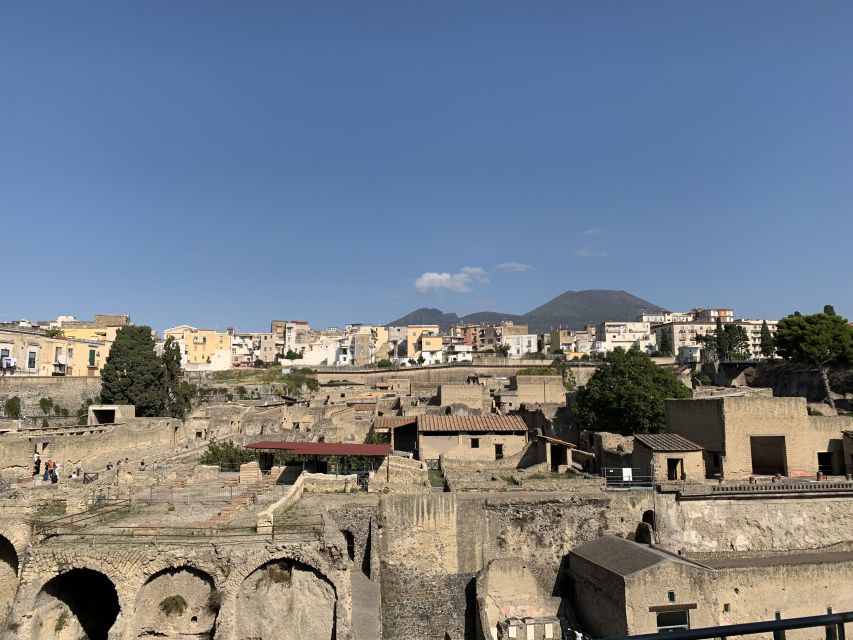
Next up is Casa di Nettuno ed Anfitrite. Names like this are not just labels for tourists. They point you toward themes in the decoration and the cultural mix behind Roman tastes.
This stop is a strong example of why Herculaneum beats a grab-and-go ruins selfie. The room experience matters. Frescoes and mosaic patterns are not only art, they are clues. With a guide, you can interpret how the artwork fit into how people entertained, showed education, and communicated identity.
You will likely get a clearer sense of why certain imagery and style were popular. And if you are the type who likes to connect the past to everyday life, this is the kind of stop that helps you do it, without turning the ruins into a lecture.
Nearby, and just as well reviewed:
- Herculaneum: Skip-the-Line Entry Ticket with Audio Guide
★ 4.3 · 870 reviews - Pompeii: Small-Group Tour of Pompeii and Herculaneum
★ 4.8 · 867 reviews - From Naples: Pompeii & Herculaneum with Archaeologist Guide
★ 4.8 · 665 reviews - From Naples: Pompeii, Herculaneum, & Vesuvius Full-Day Tour
★ 3.9 · 602 reviews
Sacellum of the Augustales: where civic religion meets street life
At the Sacellum of The Augustales, the focus shifts from private villa life to a setting tied to ritual and public identity. A sacellum is a small shrine space, and in Herculaneum it helps you understand how communal beliefs and local status showed up in architecture.
This stop is valuable because it rounds out what you have been seeing. You have explored household spaces, and now you get a different lens: how people organized devotion and community around formal roles and ceremonies.
Even if you are not an archaeology buff, this is where the guide’s explanation becomes practical. You start to see how the city functioned as a whole, not just as a collection of famous rooms.
House of Skeletons: the moment that makes history hit hardest
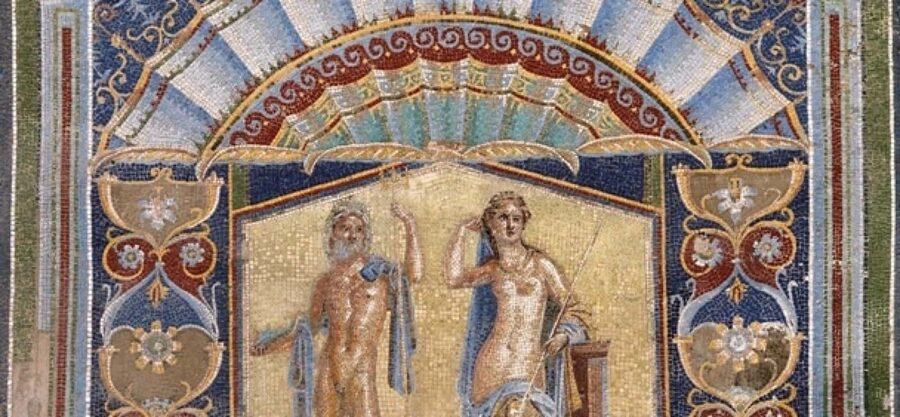
Then comes the stop people remember most: the House of Skeletons. This is where Herculaneum’s preservation becomes emotionally intense.
You will see human remains that were uncovered during the investigations, and the guide’s job is to translate what you are seeing into a story of what happened during the eruption. That matters because without help, you might focus only on shock value. With help, you can understand the spatial clues that shape the narrative, including how victims ended up where they did.
It is also a place where your pacing slows down. Take a breath, then let the guide explain. You will get more out of the visit if you give it a moment of quiet attention instead of racing to the next photo angle.
If you are sensitive to this kind of subject, plan for it mentally before you arrive. This is not a stop you can treat as scenery.
Casa dell’Albergo, Herculaneum: hospitality and the city feel
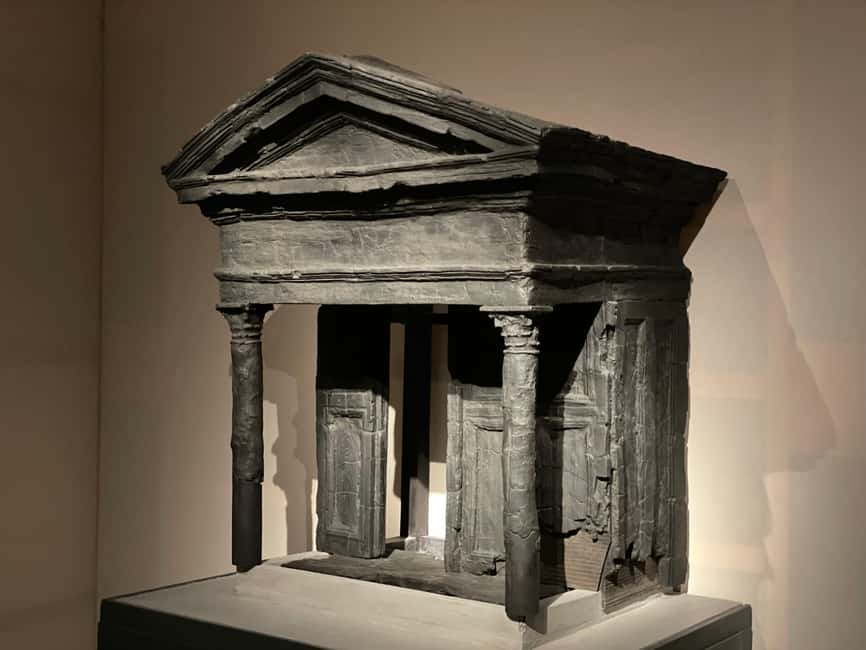
After the tragedy-focused House of Skeletons, you move into Casa dell’Albergo, Herculaneum. This is an important tonal shift. It helps you understand the town as a place where people came and went, not only a place where disaster struck.
The word albergo connects to hospitality, so this stop can help you imagine social activity and visitors, not just household routine. Your guide should point out how the building layout supports that feeling, and how rooms relate to movement through the site.
This stop also reinforces a theme throughout the tour. Herculaneum is preserved enough that you can make plausible guesses about how people navigated doorways, courtyards, and shared spaces. The guide makes those guesses safer by pointing you to visible reasons for each interpretation.
Archaeological Site photo stop and the Roman streets you can almost hear
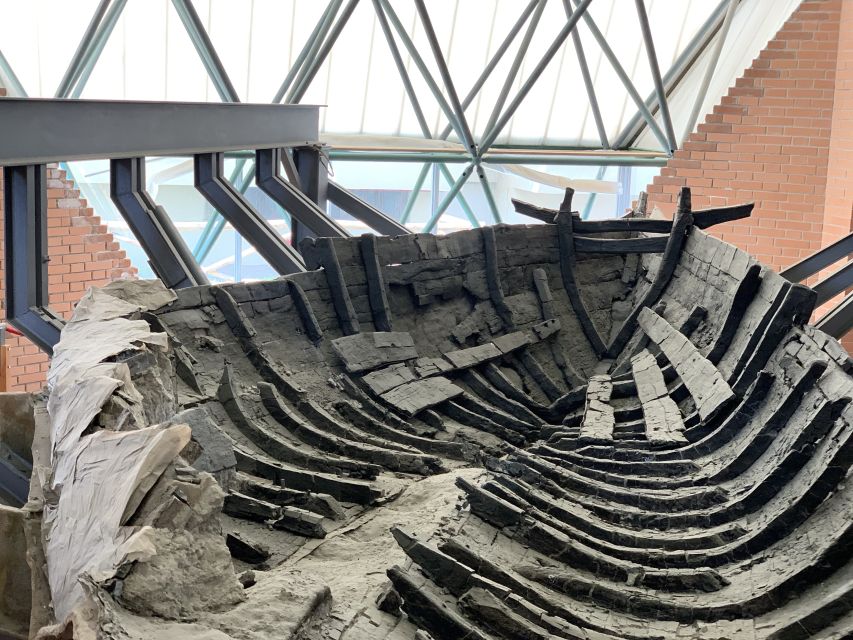
The tour culminates back at the Archaeological Site of Herculaneum, with a photo stop, visit, and guided tour. This is where the city wide perspective clicks in.
You are walking through original Roman streets, and the experience becomes bigger than the individual houses. The guide connects what you see to city infrastructure, including the public baths and how water systems worked. Those engineering details are the kind of thing most visitors skip, unless a guide hands you the right way to look.
Here is where the tour can feel especially satisfying if you love practical history. Baths were not a minor add-on. They were a social and health feature, part of how people spent time together. Seeing the public facilities and water logic in context makes the city feel functional, not frozen.
Also, don’t rush the photo stop. Use it like a reset moment. Take wide shots that show the layout direction, then return your attention to the guide’s next explanation, because small visual cues matter once you understand the flow of the city.
Price and value: is $58 for 2 hours worth it?
At $58 per person for a 2 hour tour, the value comes from what you get bundled together.
First, you get skip-the-line tickets. That sounds simple, but on a timed visit it can protect the heart of your day.
Second, you are paying for a licensed guide with expertise in archaeology, and that changes how you process what you see. The highlights of Herculaneum are visually stunning, but the truly memorable part is the interpretation: why those rooms look the way they do, what artwork signals, and what the preserved remains mean in the broader disaster story.
Third, the tour provides headsets if the group exceeds 11 people. Audio support is not glamour, but it can be the difference between catching every key point or missing details.
If you are deciding between self-guided and guided, I would treat this like a high-payoff primer. Herculaneum can overwhelm you if you do not know what to focus on. A guide gives you that focus fast.
How to get the most out of each stop (without feeling rushed)
This is a 2 hour format, which means you should use it like a sprint with smart aim.
- Prioritize what the guide emphasizes, because those tend to be the details that unlock the room or street logic.
- Bring water and take quick sips during transitions between buildings, not while standing in the thick of explanations.
- If you want extra time, treat this tour as the foundation, then plan a little unstructured wandering after.
Also consider the group vibe. Some guided experiences can feel harder to hear if audio gets noisy or if accents are strong for your language comfort. Since headsets are included when the group is larger, that helps. If your day looks like it might be a small group, position yourself where you have the best view of the guide and faces, so you can track explanations.
Who should book this Herculaneum tour (and who might hesitate)
This tour fits best if you want:
- A fast, high-impact way to see major houses and public spaces
- Context for the art and architecture, including frescoes and mosaics
- A guided explanation of 79 AD events that ties directly to what you stand in front of
- A more intimate experience than what you may have with a larger site
I would think twice if you:
- Need wheelchair access. The tour is not suitable for wheelchair users, and electric wheelchairs are not allowed.
- Have a style that requires long linger time on each artwork. With only 2 hours, you will likely move at a steady pace.
Should you book this archaeologist-led Herculaneum tour?
Yes, you should book it if your goal is to see Herculaneum and walk away understanding what you just saw. The skip-the-line tickets, licensed archaeologist guide, and the emotional and visual power of places like Casa dei Cervi and the House of Skeletons make this a tour that pays off quickly.
Skip it only if you already feel confident reading Roman houses on your own, or if your priority is slow, leisurely time at every room with zero schedule pressure. In most cases, though, this is the kind of guided route that turns preserved ruins into an actual city you can picture.
FAQ
FAQ
How long is the Herculaneum tickets and tour with a local archaeologist?
The tour lasts 2 hours.
How much does this tour cost?
The price is $58 per person.
Where does the tour start?
The meeting point is the Biglietteria Ercolano (ticket office area). Arrive about 10 minutes before the tour starts.
Is skip-the-line access included?
Yes. You get skip-the-line entrance tickets.
Are headsets provided during the tour?
Yes, headsets are included if the group exceeds 11 people.
What languages are available for the live guide?
The live guide is available in Spanish, English, Italian, and French.
What should I bring?
Bring passport or ID card and water.
Are food and drinks included?
No. Food and drinks are not included.
Is the tour wheelchair accessible?
No. The tour is not suitable for wheelchair users, and electric wheelchairs are not allowed.
Is there a private group option?
Yes. Private group available is offered.
Latest reviews around Herculaneum
- Pompeii and Herculaneum: Guided Tour with an Archaeologist★ 5.0 · 164 reviews
- Pompeii: Small-Group Tour of Pompeii and Herculaneum★ 4.8 · 867 reviews
- From Naples: Pompeii & Herculaneum with Archaeologist Guide★ 4.8 · 665 reviews
- Sorrento: Pompeii & Herculaneum Tour with Skip-the-Line★ 4.6 · 125 reviews
- From Naples: Pompeii and Herculaneum Tour with Lunch★ 4.3 · 444 reviews
- From Rome: Pompeii and Herculaneum by High-Speed Train★ 4.9 · 132 reviews
- Naples: Pompeii, Herculaneum, and Vesuvius Tour by Minivan★ 4.2 · 108 reviews
- Naples: Pompeii and Herculaneum Tour with Tickets and Lunch★ 4.4 · 136 reviews
Herculaneum Tours, compared.
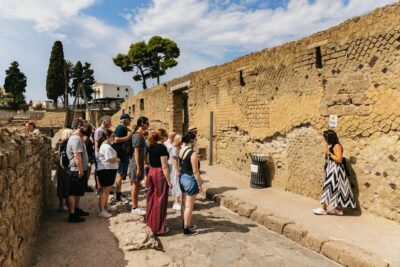
Herculaneum: Skip-the-Line Guided Tour with Archaeologist
Read our review →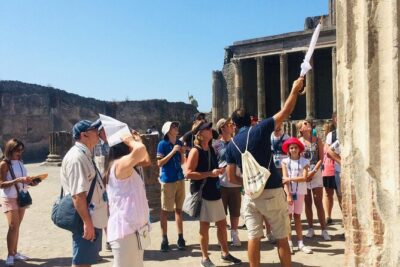
Pompeii and Herculaneum Small Group Tour with an Archaeologist
Read our review →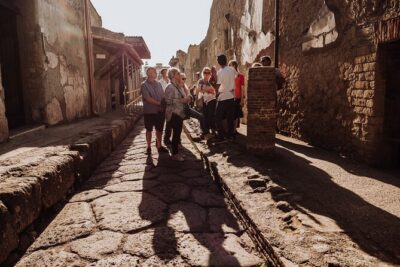
Herculaneum Small Group Tour and Ticket With an Archaeologist
Read our review →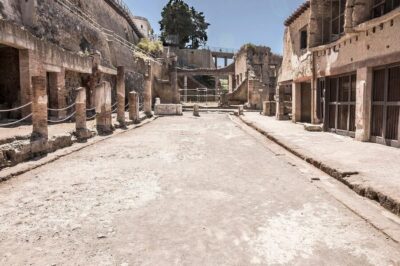
Herculaneum: Skip-the-Line Entry Ticket with Audio Guide
Read our review →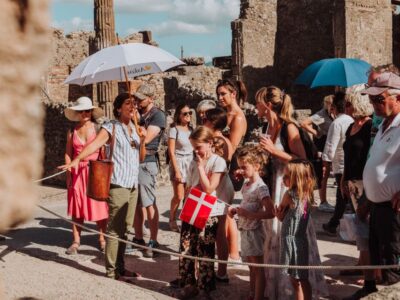
Pompeii & Herculaneum with Archaeologist Guide
Read our review →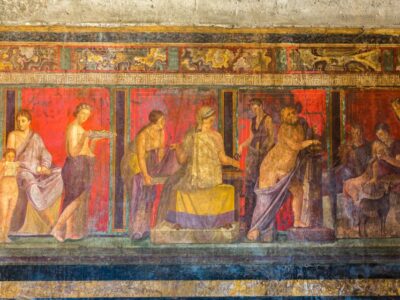
Pompeii, Herculaneum, & Vesuvius Full-Day Tour
Read our review →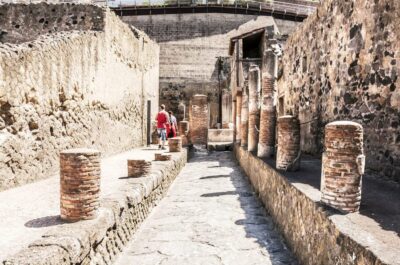
Ercolano: Herculaneum Entry Ticket with Optional Audio Guide
Read our review →Browse the lists this tour appears in