
Reviewed · POMPEII & VESUVIUS TOURS
Pompeii Small Group with an Archaeologist and Skip The Line
Pompeii is huge, so smart timing matters. This small-group tour uses skip-the-line entry and pairs it with an archaeologist-led guide who connects the big ruins to how people actually lived in 79 AD. You also get a tight, high-impact route that hits key areas without feeling like you are sprinting.
I especially like the way the guide keeps you oriented, then switches from street-level details to big-picture history. The small group size, up to 10, makes it easier to ask questions and stay together. One possible drawback: it is a fast 2-hour overview, so if you want long, slow wandering in every house or fresco room, you will likely want extra self-guided time after.
In This Review
- Key highlights to know before you go
- Skip-the-line and an archaeologist guide, not just a walk with facts
- Meeting point and timing: how the 2 hours really works
- A stop-by-stop loop through Pompeii’s key places
- Teatro sections first: sound, performance, and civic life
- Granai del Foro: the forum area and the human impact
- Stabian Baths: frescoes you will actually remember
- Foro di Pompei and the Basilica: laws, courts, and civic power
- Temple of Jupiter with Vesuvius in the backdrop
- Quadriporticus of the theatres: gladiator training and the spaces behind spectacle
- Lupanar: the old red light district
- Temple of Venus and a quick look at devotion in daily life
- Casa del Fauno: why this house can change your whole visit
- How much is it worth? My value take on the $217.69 price
- Who this Pompeii tour is best for (and who should skip it)
- Practical tips to make the most of your visit
- Should you book Pompeii Small Group with an Archaeologist and Skip The Line?
- FAQ
- How long is the Pompeii small-group tour with an archaeologist?
- Does the price include admission tickets?
- What group size should I expect?
- Where is the meeting point?
- Is the ticket mobile?
- What happens if weather is bad?
Key highlights to know before you go
- Skip-the-line admission so you start exploring sooner
- Archaeologist guide style, with hands-on context for what you are seeing
- Teatro Grande and Pompeii’s forums in one efficient loop
- Stabian Baths fresco stops that break up the walk with real visual payoff
- Backstreet Pompeii moments, including the Lupanar and gladiator training areas
Skip-the-line and an archaeologist guide, not just a walk with facts
In Pompeii, the ruins are the star, but the experience can still feel chaotic without a plan. This tour tackles the most common problem fast: you are not stuck in the main entry line, because your tickets are handled in advance and you move straight into the park flow. That means more time for the parts that take the longest to enjoy well: the major public buildings, the houses with famous details, and the bath frescoes.
The second big advantage is the guide. You are not just getting a general narration of emperors and dates. You get an archaeologist approach, the kind that points out construction details, how spaces worked, and why certain finds matter. Eliana Sandretti is specifically tied to this experience, and the tone from her work is repeatedly described as clear, personable, and not canned. When a schedule shift happens, you may be guided by others like Dario or Francesco, but the theme stays the same: interpret the site like a living place, not a museum label.
More Pompeii digs and Vesuvius climbs:
- Pompeii: Entry Ticket and Guided Tour with an Archaeologist
★ 4.8 · 19,459 reviews - Pompeii: Entry Ticket with Optional Audio Guide
★ 4.2 · 12,360 reviews - Pompeii: Small Group Tour with an Archaeologist
★ 4.8 · 12,264 reviews
Meeting point and timing: how the 2 hours really works
You meet at Ristorante Suisse, Piazza Esedra, 10/13, 80045 Pompei NA. The tour loops you through the central highlights and keeps a pace that is realistic for a small-group format. The total time is about 2 hours, and the stops are short on purpose because Pompeii is too large to cover everything without dropping the best parts.
Here is the practical mindset I recommend: treat this as a guided “highway exit” tour. You’ll see the big monuments, the rooms people recognize from guidebooks, and the street-level oddities that make Pompeii feel human. Then, if one building grabs you, you can come back on your own and linger. More than a few people regret not spending longer, and that regret is easy to fix if you plan for a second pass.
Also, bring realistic hot-weather gear. Pompeii can be brutally sunny. Water, sunscreen, and a hat or umbrella make a difference, and it also helps you stay cheerful when you are walking between shaded stops.
A stop-by-stop loop through Pompeii’s key places
Teatro sections first: sound, performance, and civic life
The tour starts at the Pompeii Archaeological Park entrance, with skip-the-line admission already in place. From there, you head toward the area of the theatres. You’ll visit the small theatre, described as the designated space for musical and singing performances. It’s a good opening stop because it helps you picture Pompeii as a culture, not just an eruption story.
Then you move to Teatro Grande, where Greek-Roman comedies and tragedies were performed. The time at each theatre stop is brief, but the guide’s job is to help you “read” the space: where an audience would sit, how performances would feel, and why public entertainment mattered in city life. If you are even a little curious about Roman social culture, these theatre stops are often the ones that make the city snap into focus quickly.
One consideration here: hearing can be tricky in open-air ruins. If you have trouble catching speech in noise, pick a spot closer to the guide when you can, and ask questions during pauses.
Nearby, and just as well reviewed:
- From Naples: Pompeii Ruins & Mount Vesuvius Day Tour
★ 4.3 · 11,459 reviews - From Rome: Pompeii, Amalfi Coast, and Sorrento Day Trip
★ 4.6 · 7,031 reviews - From Rome: Pompeii, Amalfi Coast and Positano Day Trip
★ 4.6 · 6,620 reviews - Pompeii Small Group Tour with an Archaeologist
★ 5.0 · 6,593 reviews
Granai del Foro: the forum area and the human impact
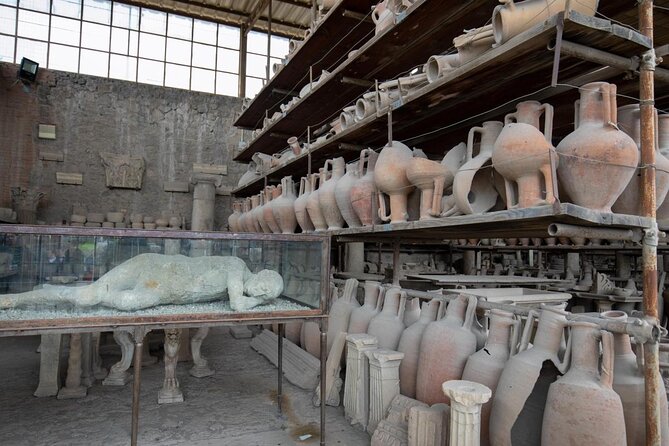
Next up is Granai del Foro, where you can see casts related to victims who died during the eruption of 79 AD. This is not an easy stop, but it is an important one. It turns the timeline from history class into something physical, and it frames the rest of the walk with a sober understanding of what happened and how quickly life ended.
Right after, you’ll cross the main street of Pompeii to admire the colors and street presence of the city. It sounds simple, but it is a smart rhythm change. After a heavy moment, seeing the streetscapes helps you remember this was a place of daily routines, storefronts, and movement, not just monuments.
Stabian Baths: frescoes you will actually remember
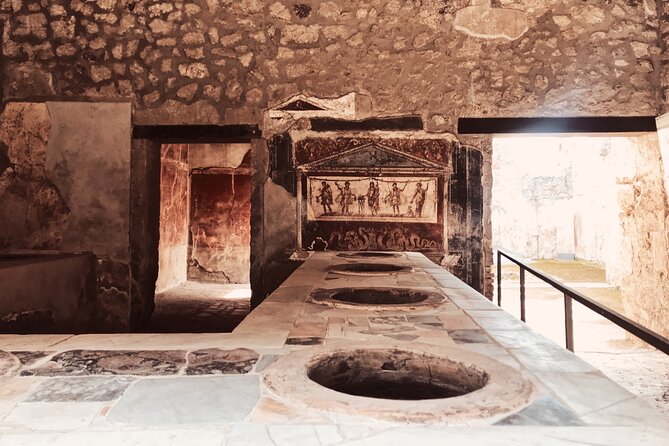
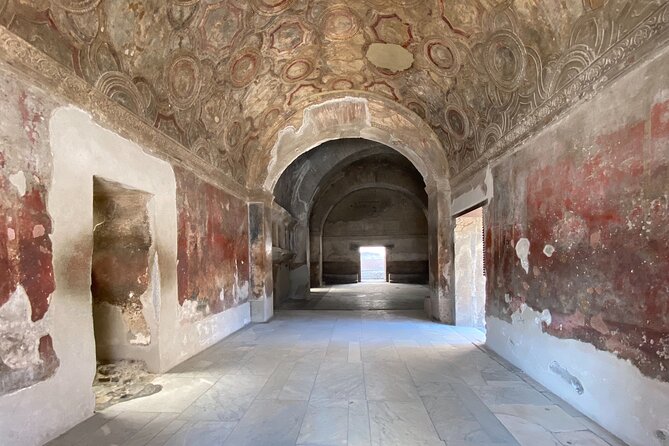
Now you get the visual payoff people talk about: the Stabian Baths (Terme Stabiane). The highlight here is the colorful frescoes, the kind of detail that makes Pompeii feel shockingly close to the present day. The baths can be a relief from the strict monument rhythm because the rooms naturally break up the walk. You are also seeing a key slice of Roman life: bathing, socializing, and the practical side of comfort.
Time is short at the baths stop, so don’t try to memorize everything at once. Instead, look for the textures, the figures, and how the decoration fits the room. A good guide will point you to what to notice, not just what to see.
Foro di Pompei and the Basilica: laws, courts, and civic power
Then comes the heart of public life: Foro di Pompei, the ancient forum, basically the city’s main square. Even in a short visit, it helps you understand where citizens gathered and how civic identity was centered around this shared space.
From there you head to Pompei La Basilica, the ancient seat of the court where justice was administered. The Basilica stop can be surprisingly dramatic, especially if you think about what justice meant in everyday life. You are standing in the place where disputes mattered and where decisions shaped the community.
Time is limited, but this is one of those tours where the guide’s interpretation is the whole point. You’ll likely come away with a clearer sense of how the city’s power was arranged, not just where the biggest stones are located.
Temple of Jupiter with Vesuvius in the backdrop
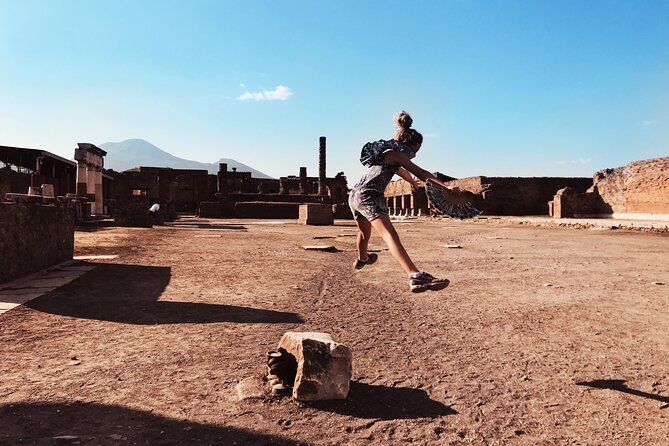
You also visit the Temple of Jupiter, with Vesuvius as its backdrop. That backdrop matters. Pompeii sits in a landscape shaped by the threat that ended it, and the view helps you connect geography to mythology and civic identity.
The best way to enjoy this stop is to alternate between up close observation and quick scanning outward. Look at what is in front of you, then glance toward the volcano line. That mental shift makes the history feel less abstract.
Quadriporticus of the theatres: gladiator training and the spaces behind spectacle
Next, you reach the Quadriporticus of the theatres area, and within it you see the Gladiator Barracks. This is where you get a behind-the-scenes view of training spaces and apartments where gladiators lived and worked. It changes your understanding of performance. You see the show on the stage, then you see the routines and discipline off it.
The tour frames this as more than entertainment. Gladiators were part of the city’s social world, with training, housing, and a role that families and spectators understood. Even with limited time, this stop adds variety and gives you a story arc.
Lupanar: the old red light district
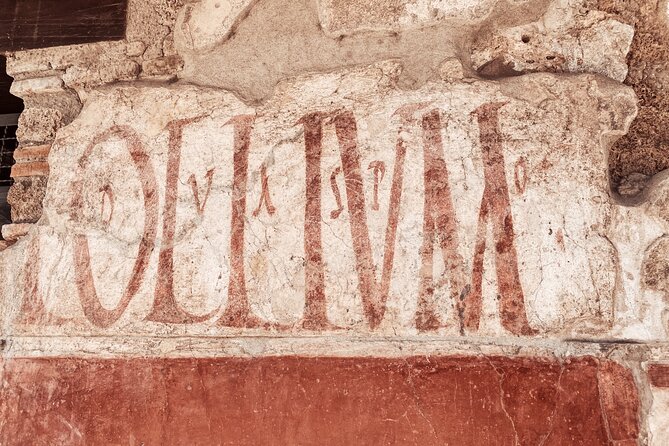
One of the more memorable and discussed stops is the Lupanar, the old Red Light District. This is not a skip-worthy detail. It is where Pompeii can feel blunt and real. The guide’s job is to keep it historical and contextual, not sensational.
Expect questions if you have them. People tend to wonder what patrons paid, what the spaces were used for, and how sexuality functioned socially in that city. The small-group format makes it easier to get answers without feeling rushed.
Temple of Venus and a quick look at devotion in daily life
You’ll also visit the Temple of Venus, where the divinity of the city was venerated. Venus comes up in lots of places in Roman culture, and seeing this temple within Pompeii’s urban layout helps you connect religion to city identity. It is usually a short stop, but it adds balance after the more gritty sections.
Casa del Fauno: why this house can change your whole visit
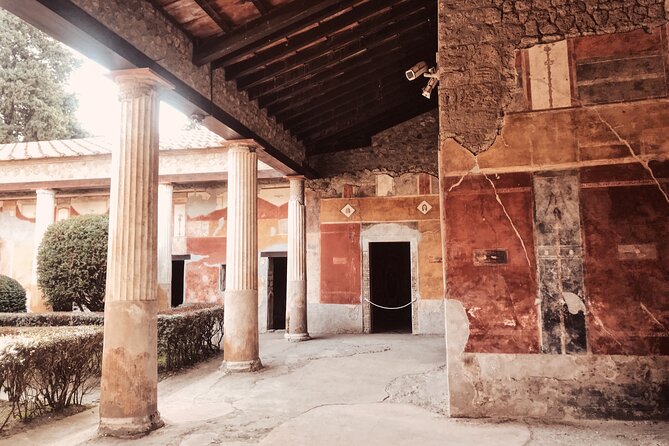
The tour ends with Casa del Fauno, one of Pompeii’s richest and most luxurious residences. This is the kind of stop that can either feel like a quick highlight or a life-changer, depending on how you look at it.
People often remember these homes because you can see how wealth expressed itself through space and decoration. When you are shown the purpose of rooms and the logic of the layout, it stops being a list of objects. It becomes a way to picture daily routines, household hierarchy, and the differences between social classes.
If you are short on time, Casa del Fauno is a strong closer because it gives you a final “wow” moment before you head back.
How much is it worth? My value take on the $217.69 price
At around $217.69 per person for a roughly two-hour guided loop, this tour is not the cheapest way into Pompeii. The value depends on what you want to buy with your money.
I think you are paying for three concrete things:
- Time saved at entry with skip-the-line admission, which helps you maximize your short visit
- Expert guidance from an archaeologist, which can make the same stones feel meaningful and connected
- A disciplined route that hits major areas without forcing you to guess where to spend your limited energy
If you love Pompeii enough to want the best parts plus context, the price often feels fair. If you are the type who likes to wander without structure and you have a full day, you might prefer self-guided entry plus optional audio. Still, even for independent travelers, having a guide to set the city’s layout in your head can pay off fast.
Who this Pompeii tour is best for (and who should skip it)
This tour fits you well if:
- You have limited time in Pompeii and want the key stops without wasting half your energy negotiating where to go next
- You want a guide who can answer questions and explain how spaces were used
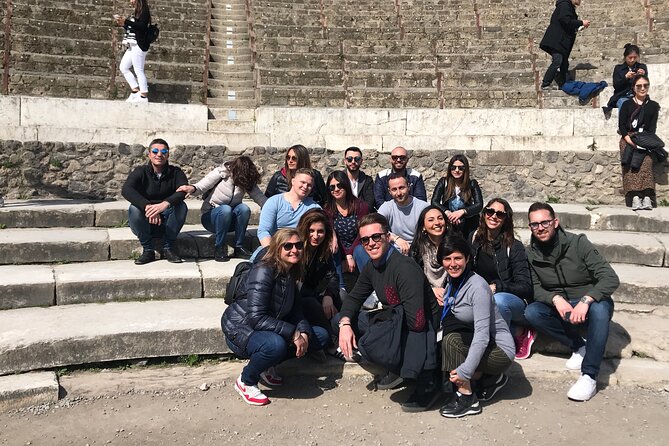
- You want small-group pacing, so you can move together and keep the conversation going
It might not fit you as well if:
- You want long stays inside each site, with lots of unstructured browsing
- You plan to spend the entire day, in which case a self-guided plan with extra time for the places you love might be better
Practical tips to make the most of your visit
A few small choices can turn this into a great day, not just a checklist:
- Wear shoes that handle uneven ground.
- Go prepared for heat and sun, because the route covers multiple outdoor spaces.
- If your schedule allows it, consider starting later in the day. One guide-led experience described a quieter feel for a later start, which can make the stops more enjoyable.
- If a stop grabs you, plan your next step right after the tour. This kind of guided loop is ideal for turning curiosity into deeper follow-up.
Should you book Pompeii Small Group with an Archaeologist and Skip The Line?
I would book this tour if you want a smart, efficient Pompeii introduction with an archaeologist guiding you through the most important areas. The combination of skip-the-line entry, a small-group limit of up to 10, and a guide who brings the city to life with real explanations makes the experience feel worth it even if you only have a short window.
I would not book it as your only Pompeii plan if you need lots of quiet time inside buildings. In that case, you might pair self-guided browsing with a shorter guided moment, or save your day for a longer independent visit.
If you want the easiest path to understanding what you are seeing, this one is a strong choice.
FAQ
How long is the Pompeii small-group tour with an archaeologist?
The tour lasts about 2 hours.
Does the price include admission tickets?
Yes. Admission tickets are included for the stops listed.
What group size should I expect?
This is a small-group tour with a maximum of 10 travelers.
Where is the meeting point?
The tour starts at Ristorante Suisse, Piazza Esedra, 10/13, 80045 Pompei NA, Italy, and ends back at the meeting point.
Is the ticket mobile?
Yes. You receive a mobile ticket.
What happens if weather is bad?
The experience requires good weather. If it is canceled due to poor weather, you will be offered a different date or a full refund.
Latest reviews around Pompeii
- Guided Day Tour of Pompeii and Herculaneum with Light Lunch★ 4.5 · 311 reviews
- Skip-the-Line Pompeii Guided Tour from Sorrento★ 4.5 · 722 reviews
- Pompeii Express Guided Tour by Train from Sorrento★ 4.5 · 770 reviews
- Pompeii & Mount Vesuvius Tour with Guided Visit, Tickets & Lunch★ 4.5 · 155 reviews
- Pompeii and Amalfi Coast Private Day Trip with Pick Up★ 5.0 · 312 reviews
- Mt Vesuvius and Pompeii Tour by Bus from Sorrento★ 4.5 · 170 reviews
- Pompeii Ruins Half-Day Tour from Sorrento with Guide★ 4.0 · 714 reviews
- Pompeii Guided Tour From Sorrento Coast★ 5.0 · 143 reviews
Pompeii & Vesuvius Tours, compared.
Pompeii: Entry Ticket and Guided Tour with an Archaeologist
Read our review →
Pompeii: Entry Ticket with Optional Audio Guide
Read our review →
Pompeii: Small Group Tour with an Archaeologist
Read our review →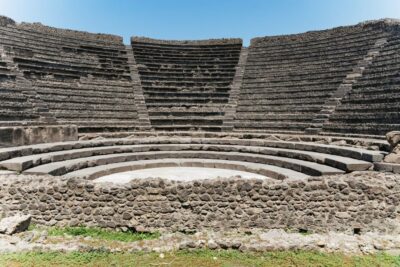
Pompeii Small Group Tour with an Archaeologist
Read our review →
Pompeii, Amalfi Coast and Positano Day Trip from Rome
Read our review →Browse the lists this tour appears in