
Reviewed · POMPEII & VESUVIUS TOURS
Pompeii Skip-the-line Tour with Archaeologist Guide
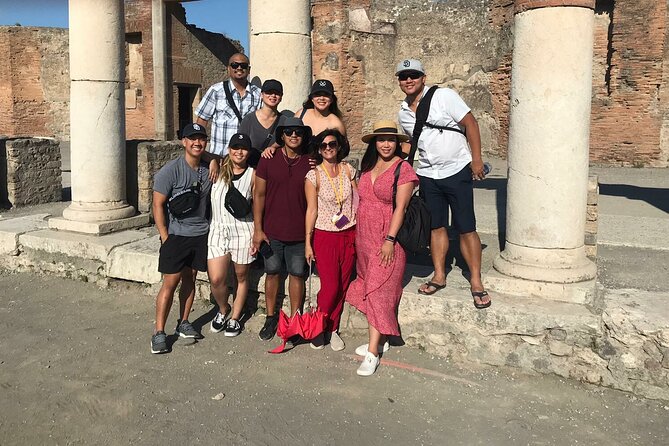
A buried city walks right beside you in Pompeii. This 2-hour skip-the-line guided visit turns scattered ruins into a clear story of daily Roman life, right up to the AD 79 eruption. I love how the tour is built around real highlights like the forum and the brothel, so you do not waste your time wandering. The main thing to consider is that you must meet your guide on time, since late arrivals can mean no refund.
I also love the guide style, often with an archaeologist-level approach and a sense of humor that keeps the ruins human. Expect a tight group (max 16), an active walk across original paths, and plenty of chances to ask questions. The one drawback? You are on your feet the whole time, and Pompeii’s surfaces can be rough, hot, and slippery if weather turns.
In This Review
- Key Points You Should Know Before You Go
- Why This Two-Hour Pompeii Walk Works
- Meeting at Hotel Vittoria, Then Getting Oriented Fast
- Skip-the-Line Entry: Tickets Included, but Not a Standalone Ruins Pass
- Walking on Lava Rock: Streets, Wagon Ruts, and Real Scale
- Forum Highlights: Priests, Politicians, and the Center of Power
- Theater Time: Tragedy and Comedy in the Pompeii Seats
- Baths, Exercise, and Gossip: Pompeii’s Thermal Bathhouse
- Gladiator Barracks and the Lupanare (Brothel) You Should Not Skip
- AD 79 Vesuvius: How the Eruption Story Becomes Meaningful
- Where the Tour Fits Your Day (Naples, Sorrento, and On-Site Timing)
- What You Get for the Price: $71.35 and the Real Value
- Should You Book This Pompeii Skip-the-Line Tour?
- FAQ
- How long is the Pompeii guided tour?
- Is the tour in English?
- What is included in the price?
- What is not included?
- Where do I meet the guide?
- Can I use this as an entry ticket if I go alone?
- How many people are in the group?
- What should I wear or bring?
Key Points You Should Know Before You Go
- Archaeologist-led, small group (up to 16) for a more personal pace
- Skip-the-line entry, with admission tickets included through your guided confirmation
- You walk on original streets and lava rock, not smooth sidewalks
- The tour hits the big signature spots like the forum, theater, baths, and the Lupanare (brothel)
- The AD 79 Vesuvius story is woven into what you see, so the city makes more sense
- English guide, with clear guidance through the most important areas in about two hours
Why This Two-Hour Pompeii Walk Works
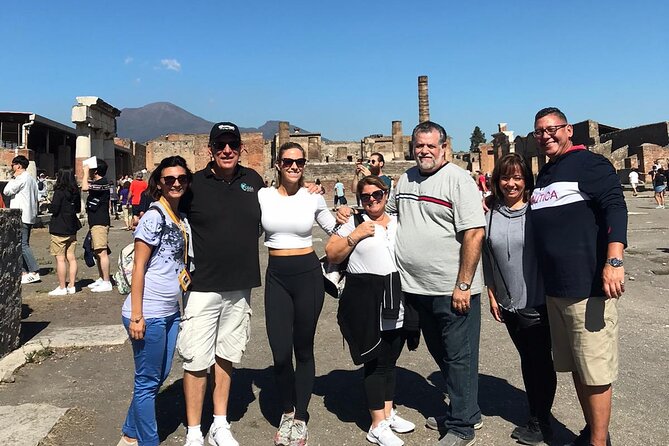
Pompeii can feel like a huge open-air museum. You can also feel lost fast, because many ruins look similar at first glance. This tour helps you read the site, instead of just looking at it.
You get a focused highlights route in about two hours, which is perfect if Pompeii is one stop on a longer trip. And because it is capped at 16 travelers, you usually get a calmer experience than the giant bus crowds that crush your pace.
The other smart part: the guide does not only point at walls. You get stories about everyday life, where people socialized, prayed, argued politics, watched performances, bathed, and trained for games. Then the tour connects it all back to the eruption that preserved the city.
More Pompeii digs and Vesuvius climbs:
- Pompeii: Entry Ticket and Guided Tour with an Archaeologist
★ 4.8 · 19,459 reviews - Pompeii: Entry Ticket with Optional Audio Guide
★ 4.2 · 12,360 reviews - Pompeii: Small Group Tour with an Archaeologist
★ 4.8 · 12,264 reviews
Meeting at Hotel Vittoria, Then Getting Oriented Fast
Your meeting point is Hotel Vittoria, Piazza Esedra, 80045 Pompei NA, Italy. From there, you meet your guide not far from the entrance and walk into the ancient city together.
This matters more than people think. Pompeii’s entrances and paths can be confusing, and the site is so large that a late start can turn your “two-hour visit” into “two hours of stress.” The tour also says that if you are late or miss the tour, there are no refunds, so arrive with buffer time.
Once you start, the tone is practical and guided. You are not left to figure out where the most important rooms and streets are, which is exactly what you want when you have limited time.
Skip-the-Line Entry: Tickets Included, but Not a Standalone Ruins Pass
Despite the name “skip-the-line,” this is not just a generic entry ticket you can use on your own. Your confirmation is for the guided tour, and you use it with the guide. Admission tickets are included, but your access is tied to the tour.
That setup helps in two ways. First, it keeps you from standing around during peak lines. Second, it ensures you enter in a way that supports the guide’s planned route, so you actually cover the forum, theater, baths, and brothel instead of getting stuck behind bottlenecks.
Also, Pompeii runs on weather and timing. If conditions are poor, the tour can be canceled and you get offered a different date or a full refund. Since the day is mostly outdoors, plan around sun and heat when you can.
Walking on Lava Rock: Streets, Wagon Ruts, and Real Scale
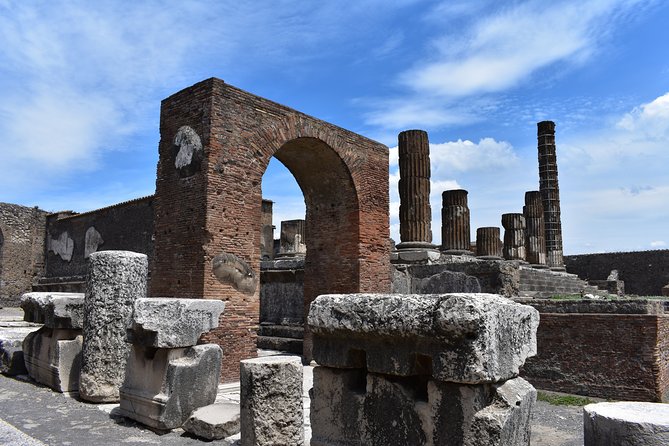
One of Pompeii’s best teaching tools is your feet. You will be walking on original streets, including areas that are described as lava rock underfoot. That means uneven surfaces, and it also means you feel the city’s scale.
You also get a specific “look for this” moment: wagon-wheel ruts left in the paving. That is a great kind of detail for your brain. Once you see those grooves, you stop thinking of Pompeii as a pile of stones and start thinking of it as a functioning city where carts and traffic shaped the street.
Wear comfortable shoes. Pompeii is not a place for slick sandals or thin-soled sneakers. Bring a hat for sun, especially in summer. The guide keeps the pace moving, but you should still expect to work your legs for the full two hours.
A few more Pompeii options to weigh
- Mount Vesuvius: Skip-the-Line Ticket and Smart Digital Guide
★ 4.2 · 2,780 reviews - Pompeii: Skip-the-Line Entrance Ticket with Audio Guide
★ 4.0 · 2,509 reviews - Pompeii: Guided Walking Tour with Entrance Ticket
★ 4.3 · 1,423 reviews - Rome to Pompeii Guided Tour with Wine & Lunch by High Speed Train
★ 5.0 · 1,379 reviews
Forum Highlights: Priests, Politicians, and the Center of Power
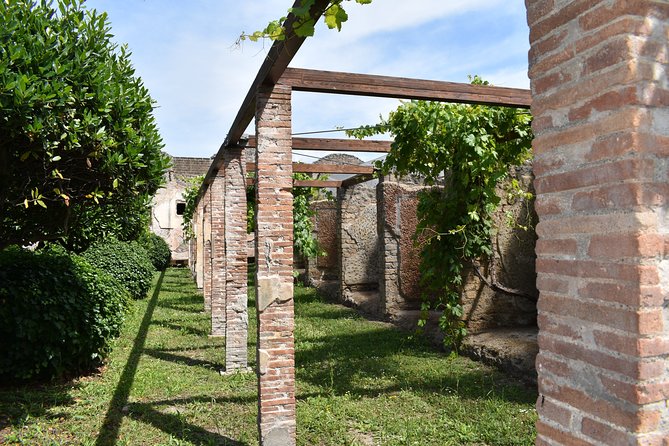
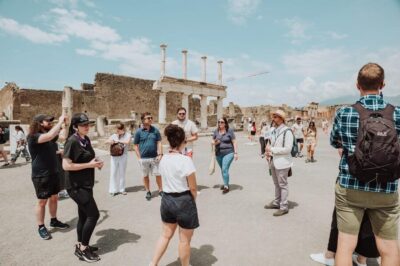
The forum is the heart of the Roman city, and this tour makes sure you understand why. You walk through the area where religion and government overlapped, and you see ruins tied to both civic life and spiritual authority.
Your guide points out how the forum worked as a social and political space. Priests and politicians met, spoke, and influenced daily life from the same public stage. Even if you do not remember Roman titles later, you will remember the idea: in Pompeii, public life was not separated neatly into religion over here and politics over there.
This stop is where a guide’s storytelling makes the biggest difference. Without guidance, many forum ruins look like scattered chunks. With a guide, you learn what you are looking at and why the location mattered.
Theater Time: Tragedy and Comedy in the Pompeii Seats
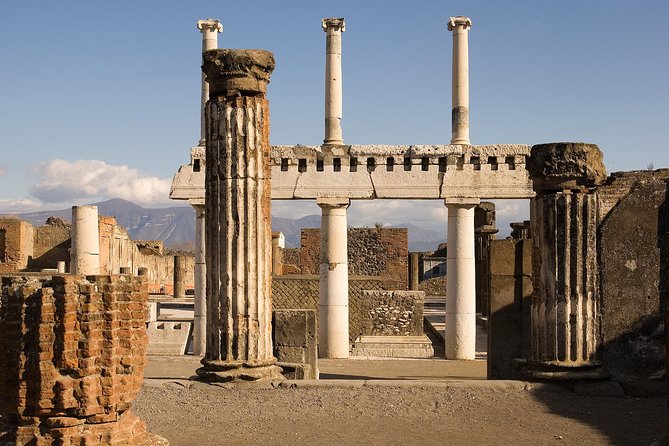
Next comes the theater, a place for performances of tragedy and comedy. Seeing a theater in ruins can feel weird at first, because you expect polished stage props, not broken architecture. But the guide helps you picture the sound, crowd flow, and the kind of evenings people would have had there.
This is not just entertainment history. It is also a window into what people did when they were off the job, socializing, gossiping, and relaxing.
A theater stop is also practical. It breaks up the walk with a natural “pause point,” so you can reset your attention and listen closely to the explanation.
Baths, Exercise, and Gossip: Pompeii’s Thermal Bathhouse
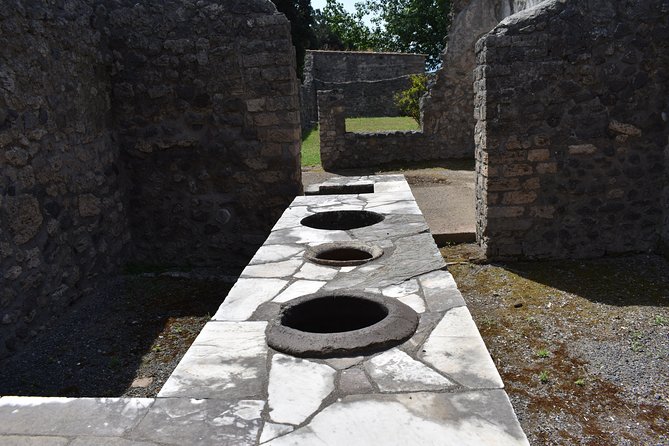
Pompeii was a city where people regularly bathed, exercised, and talked. The tour includes the thermal bathhouse, and this is one of the most human parts of the ruins.
A bathhouse is a daily-life anchor. It is the kind of place where you can easily imagine someone stepping in after work, meeting friends, and getting caught up on local news. The guide connects the layout to that routine, so the remains feel like a real setting, not abstract ruins.
If you like tours that explain how ordinary people lived, the bathhouse segment is usually where the tour clicks for many first-timers. It also helps you compare Pompeii’s social world to your own, even though the details are Roman-specific.
Gladiator Barracks and the Lupanare (Brothel) You Should Not Skip
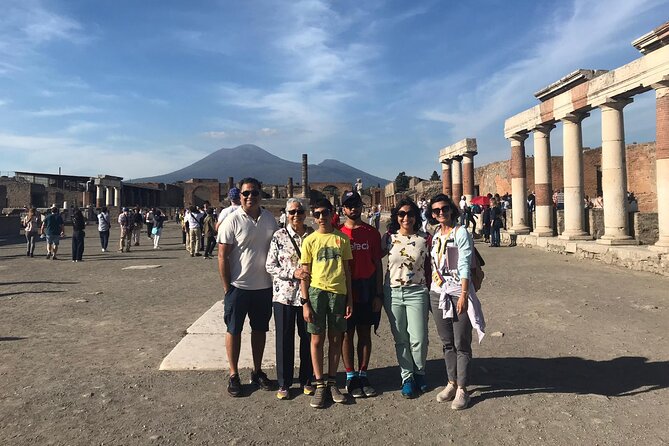
Two major “don’t miss” attractions are included: the gladiator barracks area and the rebuilt brothel, known as the Lupanare.
The gladiator barracks gives you a look at training and living conditions, not just games. That context turns gladiators from distant arena entertainment into people with schedules, routines, and shelter.
Then you reach the Lupanare. This rebuilt brothel is one of Pompeii’s most popular sites, and this tour gives it a proper introduction instead of a quick photo stop. You learn what the attraction is, why it mattered in the city, and how it fits into the broader pattern of daily life in Pompeii.
If you have kids, you may want to prep them for sensitive subject matter. The tour can still be worthwhile, but you will likely want to decide in advance how you handle topics that modern visitors associate with the brothel.
AD 79 Vesuvius: How the Eruption Story Becomes Meaningful
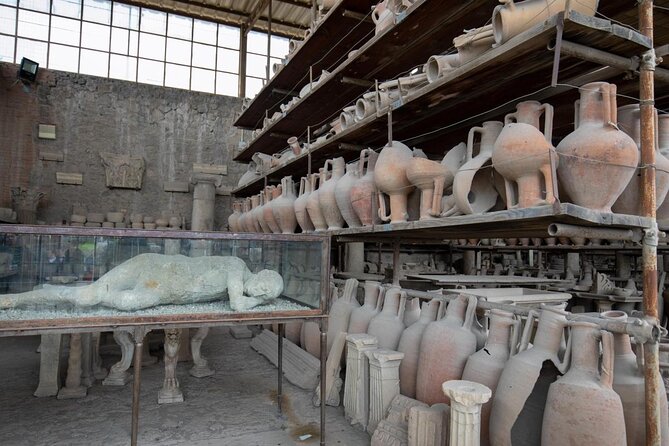
Pompeii is famous because the city was buried and preserved by the eruption of Mt. Vesuvius in AD 79. This tour does not treat the eruption as a scary trivia fact you hear once and forget. Instead, the AD 79 story is used as the explanation backbone for what you are seeing.
That approach matters. When you understand what happened, the ruins stop feeling random. Streets, buildings, businesses, and public spaces become “frozen” moments in time, and you get a clearer picture of the last day habits of the city.
The guide also directs your attention to the ways the eruption impacted the surrounding area. That is key, because Pompeii is not the only part of the story, and the tour helps connect the dots.
Where the Tour Fits Your Day (Naples, Sorrento, and On-Site Timing)
You make your own way to Pompeii, which is usually easy if you are staying in Naples or Sorrento. Take the Circumvesuviana train to Pompei Scavi station, then head to your meeting point area.
This matters for value. Since the tour does not include hotel pickup, you should plan your transport so you arrive calm and early. A smooth arrival makes the two-hour guided experience feel generous instead of rushed.
The duration is listed as about two hours, and the experience notes specifically mention the 5 pm tour runs two hours. So if you are juggling dinner plans or another stop, keep that fixed block in your schedule.
What You Get for the Price: $71.35 and the Real Value
The price is $71.35 per person for a roughly two-hour archaeologist-guided walk. Here is why that can feel like good value.
First, admission tickets are included. Many Pompeii experiences charge you extra just to enter. Second, the tour is guided, which is the part that makes Pompeii understandable quickly. You are paying to avoid the “I’m looking at ruins but I do not know what they mean” feeling.
Third, the group size is capped at 16. That can improve pacing and reduce crowd pressure, so you keep hearing the guide and staying oriented.
Is it expensive for what it is? Compared to a self-guided entry ticket, yes. But if you only have a short window in Pompeii, a strong guide can make the time feel like a full day of learning.
Should You Book This Pompeii Skip-the-Line Tour?
Book it if:
- You want the best Pompeii highlights in about two hours
- You care about understanding how Romans lived, not just seeing ruins
- You like small-group energy and asking questions without fighting a crowd
- You prefer skip-the-line entry that also ties to a planned route
Skip it, or at least consider another option, if:
- You want to roam freely at your own pace for hours
- Your group struggles with walking on uneven ground and outdoor conditions
- You are not confident you can arrive on time, since late or missed tours are not refunded
If you book, my best practical tip is simple: arrive with time to spare, wear solid shoes, and go in ready to listen. Pompeii is already powerful. A good guide makes it click fast, and you leave with more than photos, you leave with a map in your head.
FAQ
How long is the Pompeii guided tour?
It’s about 2 hours.
Is the tour in English?
Yes, the tour is offered in English.
What is included in the price?
The tour includes a local guide and admission tickets.
What is not included?
Food is not included, and there is no hotel/port pickup or drop-off.
Where do I meet the guide?
The tour meets at Hotel Vittoria, Piazza Esedra, 80045 Pompei NA, Italy, and it ends back at the meeting point.
Can I use this as an entry ticket if I go alone?
No. This is a guided tour confirmation, not a standalone ticket to the ruins. You can use it only with the guide.
How many people are in the group?
The maximum group size is 16 travelers.
What should I wear or bring?
Wear comfortable shoes because you will walk on the original ancient streets, and it is also recommended to pack a hat for summer sun.
Latest reviews around Pompeii
- Guided Day Tour of Pompeii and Herculaneum with Light Lunch★ 4.5 · 311 reviews
- Skip-the-Line Pompeii Guided Tour from Sorrento★ 4.5 · 722 reviews
- Pompeii Express Guided Tour by Train from Sorrento★ 4.5 · 770 reviews
- Pompeii & Mount Vesuvius Tour with Guided Visit, Tickets & Lunch★ 4.5 · 155 reviews
- Pompeii and Amalfi Coast Private Day Trip with Pick Up★ 5.0 · 312 reviews
- Mt Vesuvius and Pompeii Tour by Bus from Sorrento★ 4.5 · 170 reviews
- Pompeii Ruins Half-Day Tour from Sorrento with Guide★ 4.0 · 714 reviews
- Pompeii Guided Tour From Sorrento Coast★ 5.0 · 143 reviews
Pompeii & Vesuvius Tours, compared.
Pompeii: Entry Ticket and Guided Tour with an Archaeologist
Read our review →
Pompeii: Entry Ticket with Optional Audio Guide
Read our review →
Pompeii: Small Group Tour with an Archaeologist
Read our review →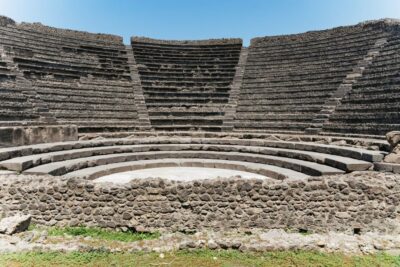
Pompeii Small Group Tour with an Archaeologist
Read our review →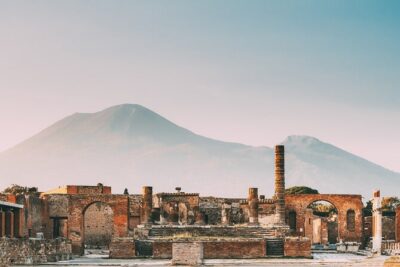
Pompeii, Amalfi Coast and Positano Day Trip from Rome
Read our review →Browse the lists this tour appears in