

Reviewed · POMPEII & VESUVIUS TOURS
PompeiI Exclusive Tour with your Archaeologist in a Small Group
Pompeii clicks fast with the right guide. This archaeologist-led small-group walk helps you interpret the ruins instead of just staring at stones, and I love the added priority line for quicker entry. You get a clear sense of how the city worked, where the power sat, and what everyday Romans actually did.
The main catch is simple: the Pompeii entry ticket is not included, and the tour time is tight. Expect a focused highlight route, not a full-site roam, and the two-hour window means you may miss a couple of headline areas.
On top of that, you are not stuck with dry facts. Names you might see in the mix include Antonio, Ricardo, Rafael, Raffaele, Ornella, Ornela, and PierLuigi, and the guides have a real knack for turning ruins into stories you can repeat later.
In This Review
- Key things that make this Pompeii tour worth your time
- Entering Pompeii the fast way: Porta Marina Superiore and the priority line
- Two hours, twelve stops: how the route actually makes sense
- Temple of Venus, Sanctuary of Apollo, and the Temple of Jupiter
- The Basilica and the Forum: where business and justice happened
- Macellum market and the casts of the bodies
- Terme del Foro: the best-preserved public baths you will actually enjoy walking through
- Thermopolium of Vetuzio Placido: a quick look at street food culture
- Casa del Fauno and House of the Vettii: wealth, Latin, and what changes by season
- Via dell’Abbondanza: the main street that made the city run
- Teatro Grande: Greco-Roman entertainment in the public square world
- Price and value check: $30.25 plus the Pompeii site ticket
- What I’d watch out for before you book
- Timing, weather, and the pace you should expect
- Who this tour is best for (and who might want something else)
- Should you book this Pompeii archaeologist tour?
- FAQ
- Is the Pompeii Archaeological Park ticket included in the tour price?
- How much is the Pompeii admission ticket?
- How long is the tour?
- Is this tour in English?
- Do I need to buy tickets in advance?
- Where do I meet the guide?
- Is there priority entry for the site?
- How big is the group?
- What if the weather is bad?
- What is the cancellation policy?
Key things that make this Pompeii tour worth your time
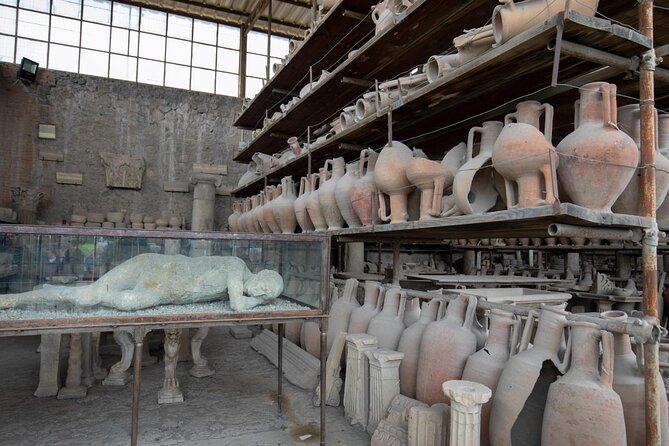
- Priority entry via a separate line at Porta Marina Superiore, so you waste less time at the gate.
- Archaeologist-led context, with explanations that go beyond what you are looking at.
- A tight, well-chosen route, from Venus and Apollo through the Forum and down to the theater.
- Small-group pace (maximum 15, though some reports suggest it can run a bit larger on certain days).
- Photo and access notes in areas under active study, where restrictions can apply.
- English-only tour with a guide who handles questions in real time.
Entering Pompeii the fast way: Porta Marina Superiore and the priority line
Pompeii can feel like a maze when you arrive, because there is so much to see and not a lot of time. The tour starts at Via Villa dei Misteri, 1, in Pompeii, and you meet outside the Archaeological Park area at Porta Marina Superiore with a sign that says Pompeii Vip.
The big practical win here is the separate priority line for entry. Instead of melting in a general queue, you move in and start seeing the city while your energy is still high. That matters because Pompeii is largely outdoors, and walking plus heat or rain can turn a short day into a long one.
More Pompeii digs and Vesuvius climbs:
- Pompeii: Entry Ticket and Guided Tour with an Archaeologist
★ 4.8 · 19,459 reviews - Pompeii: Entry Ticket with Optional Audio Guide
★ 4.2 · 12,360 reviews - Pompeii: Small Group Tour with an Archaeologist
★ 4.8 · 12,264 reviews
Two hours, twelve stops: how the route actually makes sense
This is an approx. 2-hour small-group tour designed to hit the most important sights without turning into a marathon. Each stop is brief, around 10 minutes, which means you get a guided overview and then you decide what to return to on your own after the tour.
Here is the logic behind the sequence: the route threads through religion and civic life (temples and the Forum), then moves into daily commerce and public routines (food market and baths), then finishes with residential glimpses and public entertainment (houses and theater). It is not random, and the guide usually helps you connect the dots as you walk.
The strongest value for me is that you leave with a mental map. You can walk the grounds later without feeling like you are wandering in the dark.
Temple of Venus, Sanctuary of Apollo, and the Temple of Jupiter
Pompeii was a religion-heavy city, and the tour reflects that right away.
At the Tempio di Venere (Temple of Venus), you are looking at a shrine dedicated to Venus, patron goddess of Pompeii. Even if you never studied Roman religion, the guide makes the space feel purposeful, not decorative.
Next comes the Sanctuary of Apollo. This temple sits along the street that leads from Porta Marina toward the city center. That location detail is useful, because it helps you understand how worship was built into the paths people used every day.
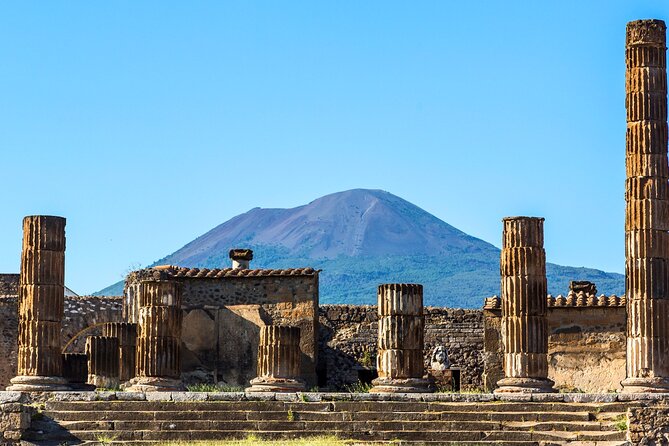
Then you reach the Tempio di Giove Capitolino, the Temple of Jupiter. It dominates the northern side of the Forum, with Vesuvius rising behind it in a scenic way. That view matters more than it sounds. When you see the geography tied into civic power, Pompeii stops being just ruins and starts looking like a real place with real authority.
The Basilica and the Forum: where business and justice happened
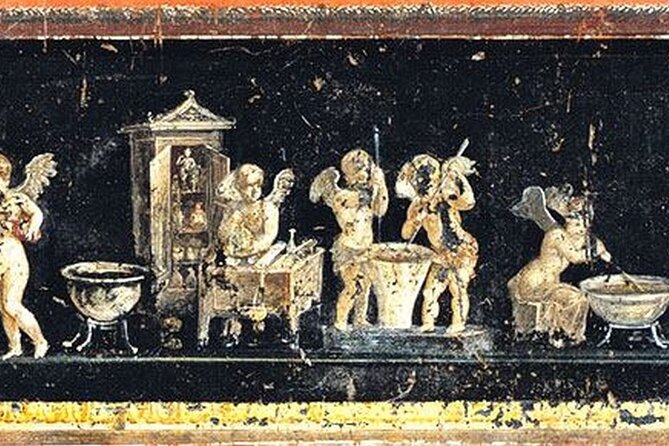
Pompeii’s center of gravity is the Forum, and the tour spends time where people would have felt the city’s heartbeat.
The Basilica is one of those buildings you might otherwise overlook, because from the outside it is just another monumental structure. But in function, it served as a main space for business management and administration of justice. With a guide explaining the role, you understand why so many other activities fed into this area.
From there, you step into the Forum, the main square of daily life. This is where the city’s routines concentrated, from commerce to social movement. In a two-hour tour, this kind of stop is what turns Pompeii from a photo stop into a place you understand.
Nearby, and just as well reviewed:
- From Naples: Pompeii Ruins & Mount Vesuvius Day Tour
★ 4.3 · 11,459 reviews - From Rome: Pompeii, Amalfi Coast, and Sorrento Day Trip
★ 4.6 · 7,031 reviews - From Rome: Pompeii, Amalfi Coast and Positano Day Trip
★ 4.6 · 6,620 reviews - Pompeii Small Group Tour with an Archaeologist
★ 5.0 · 6,593 reviews
Macellum market and the casts of the bodies
The Macellum is Pompeii’s monumental marketplace building, used for the sale of food and everyday consumer products. It is a reminder that people did not live only for temples and politics.
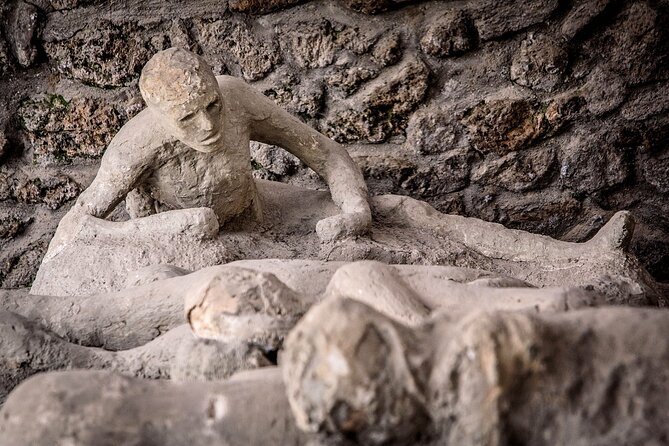
One of the more moving parts of this stop is the mention of plaster casts of the bodies. Pompeii is famous for the preserved forms from the eruption, and these casts are part of how archaeologists reconstructed what it looked like at the moment of disaster. The guide’s job here is crucial, because the casts can feel like a spectacle unless someone frames them as evidence and as a human story tied to the science of excavation.
If you are sensitive to heavy scenes, plan to take your time and let the guide set the tone.
Terme del Foro: the best-preserved public baths you will actually enjoy walking through
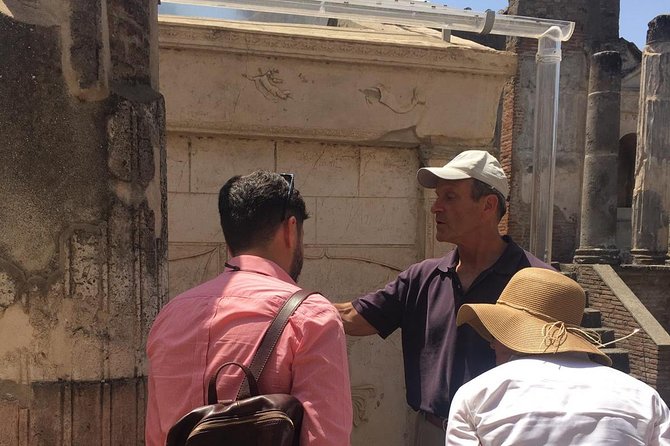
The Forum Baths (Terme del Foro) are one of the best-preserved elements you will see. That preservation changes the experience. You can still understand how the spaces worked, and the guide helps you notice the layout, not just the walls.
A useful detail: female and male parts had separate entrances. That kind of everyday separation can surprise people, because modern visitors often assume ancient life was arranged in one generic way. It is a small fact, but it adds texture to how Romans used public space.
Thermopolium of Vetuzio Placido: a quick look at street food culture
Next is the Thermopolium, essentially an old-school diner and refreshment spot. You might think of Pompeii as grand buildings and streets paved for spectacle, but a thermopolium brings you back to the simplest question: where did people grab something to drink or eat?
This stop is short, but it is a smart one. It reinforces that daily life in Pompeii involved routine visits to places like this, not just occasional outings to temples and theaters.
Casa del Fauno and House of the Vettii: wealth, Latin, and what changes by season
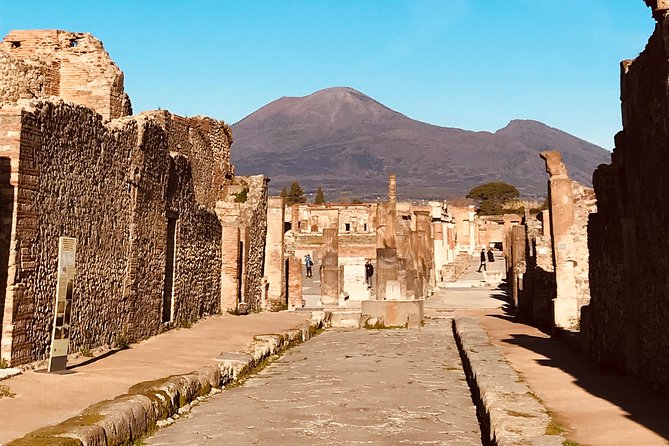
The tour includes residential highlights, including the House of the Faun. It is one of the larger homes in Pompeii, and the sidewalk inscription with the Latin welcome phrase (HAVE) is part of why people remember this stop.
The route can also include the House of the Vettii, one of the richest and most famous homes. The Vettii are tied to Priapus, god of prosperity. The guide usually explains why that matters for how you read a wealthy household’s choices in art, space, and symbolism.
One important consideration: these are subject to seasonal openings and closings. So on some dates, you might get access for a more direct look, and on others you might view the area differently. If you care a lot about entering interiors, build in time for a self-guided return after the tour.
Via dell’Abbondanza: the main street that made the city run
After the houses, you walk a portion of Via dell’Abbondanza, Pompeii’s ancient main street (decumanus maximus). This stretch is useful because it gives you the “spine” of the city. When you understand the main street, you start to orient yourself for independent exploring later.
It also helps you see how different building types sit along a shared street system. That is how Roman urban planning makes sense in your head.
Teatro Grande: Greco-Roman entertainment in the public square world
The tour ends with the Teatro Grande. This is where comedies and tragedies performed in the Greco-Roman tradition came to life.
It is a good ending point for two reasons. First, it gives your mind a break from temples and administrative buildings and shifts you toward entertainment and public gathering. Second, it helps you understand that Pompeii’s public life was not only work and worship. People also came out for performances.
Price and value check: $30.25 plus the Pompeii site ticket
The price is listed at $30.25 per person for about two hours, with an archaeologist-authorized guide in English. Tickets for the archaeological park are not included, and the park admission is €19 per adult (free under 18).
So what is the real value? You are paying for interpretation, not just access. Pompeii is huge, and without guidance it is easy to miss why particular ruins matter. This tour gives you a structured path, a priority entry advantage, and a guide who can answer the practical questions you do not know to ask until you are standing in front of something.
Also remember: the Viator ticket is for joining the tour, not the site entry itself. You will be sent a link to buy skip-the-line tickets, and the guide can help you use it, but you still need to have that admission sorted.
What I’d watch out for before you book
This tour is strong, but it is not perfect for everyone.
First, the route is a highlight set, not a full Pompeii sweep. Some major attractions like the amphitheater or brothels may not be on your stop list during the two hours, depending on how the guide manages time.
Second, the plan depends on opening conditions. House interiors can be affected by seasonal opening and closing.
Third, the group size is capped at 15, but reports suggest it can run a bit larger on some dates. That can change the feel slightly, especially if you want lots of individual conversation.
Finally, you will walk. Pompeii is not flat in any comfy way, so plan for real walking and wear shoes that you trust.
Timing, weather, and the pace you should expect
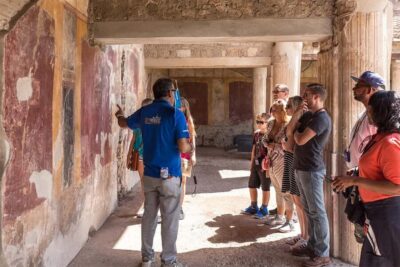
The tour runs about two hours. Each stop is short, so the pace is meant to keep you moving without rushing your understanding. Guides have a habit of holding the group together in clusters, so you can hear explanations and still take photos at key moments.
Weather matters. The experience requires good weather, and if conditions are poor, you may be offered another date or a full refund.
One more practical note: ask yourself if you want a quick hit or a slow day. If your goal is to see the most important parts fast and then roam afterward, this format fits well. If you want every big site in one go, you may need more time on the ground.
Who this tour is best for (and who might want something else)
This works especially well if:
- You want an overview you can build on during self-guided time afterward.
- You are not sure what you are looking at in the ruins and want a guide to translate the city.
- You like small groups and a calmer pace compared with big-bus tours.
- You want to cover religion, civic spaces, daily life spots, and public entertainment in one loop.
You might consider a different option if:
- You have very specific must-see sites you want to prioritize fully, like a full amphitheater or brothels focus.
- You prefer long stays in interiors and deeper digging into one neighborhood. This tour is designed for breadth, not marathon depth.
Should you book this Pompeii archaeologist tour?
If you are coming to Pompeii for the first time, I think this is a smart way to start. The priority entry, the small-group feel, and the archaeologist-style explanations all push you from wandering to understanding.
Book it if you want a tight, well-chosen route that gives you a map in your head. Skip it or pair it with extra time if you want to center your day on only one or two major attractions and spend extra time inside.
If you are also planning Vesuvius, keep in mind that guides like Raffaele have reminded people to check how tickets work ahead of time, since rules can differ for where you buy them.
In short: this is a solid, cost-effective way to make Pompeii readable in just two hours.
FAQ
Is the Pompeii Archaeological Park ticket included in the tour price?
No. The Pompeii park admission ticket is not included. The tour price covers the guided experience, and you will need to purchase the site entry separately.
How much is the Pompeii admission ticket?
The Pompeii Archaeological Park admission is €19 per adult, and it is free under 18.
How long is the tour?
The tour is about 2 hours.
Is this tour in English?
Yes, it is offered in English.
Do I need to buy tickets in advance?
The company sends a link the afternoon before the tour to buy entrance tickets online. Even if you use that help, you still need to purchase the Pompeii site entry ticket separately.
Where do I meet the guide?
You meet at Via Villa dei Misteri, 1, 80045 Pompei NA, Italy. The tour ends back at the meeting point.
Is there priority entry for the site?
Yes. The tour includes entry via a separate priority line to avoid a long wait at the gate.
How big is the group?
The tour has a maximum of 15 travelers.
What if the weather is bad?
The experience requires good weather. If it is canceled due to poor weather, you will be offered a different date or a full refund.
What is the cancellation policy?
You can cancel for free up to 24 hours in advance for a full refund. Canceling less than 24 hours before the start time is not refunded.
Latest reviews around Pompeii
- Guided Day Tour of Pompeii and Herculaneum with Light Lunch★ 4.5 · 311 reviews
- Skip-the-Line Pompeii Guided Tour from Sorrento★ 4.5 · 722 reviews
- Pompeii & Mount Vesuvius Tour with Guided Visit, Tickets & Lunch★ 4.5 · 155 reviews
- Pompeii and Amalfi Coast Private Day Trip with Pick Up★ 5.0 · 312 reviews
- Pompeii Express Guided Tour by Train from Sorrento★ 4.5 · 770 reviews
- Mt Vesuvius and Pompeii Tour by Bus from Sorrento★ 4.5 · 170 reviews
- Pompeii Ruins Half-Day Tour from Sorrento with Guide★ 4.0 · 714 reviews
- Pompeii Guided Tour From Sorrento Coast★ 5.0 · 143 reviews
Pompeii & Vesuvius Tours, compared.
Pompeii: Entry Ticket and Guided Tour with an Archaeologist
Read our review →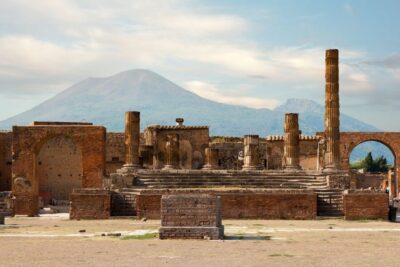
Pompeii: Entry Ticket with Optional Audio Guide
Read our review →
Pompeii: Small Group Tour with an Archaeologist
Read our review →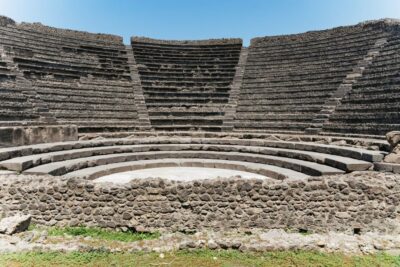
Pompeii Small Group Tour with an Archaeologist
Read our review →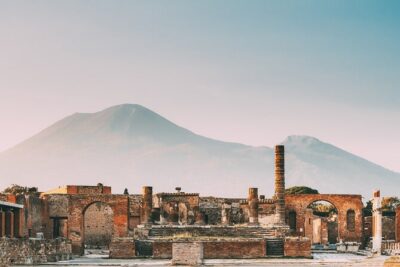
Pompeii, Amalfi Coast and Positano Day Trip from Rome
Read our review →Browse the lists this tour appears in