
Reviewed · HISTORICAL TOURS
Piazza del Popolo and Historical Sights Walking Tour in Rome
Rome can feel big and messy at first, this walk helps you focus. You start at Piazza del Popolo and end at Castel Sant’Angelo with a smart line through major sights, plus stories you normally miss when you wander solo. I especially like the small group limit of 15, which keeps the pace human and questions welcome.
Two hours and 30 minutes is a good sprint, but it is still mostly walking. If you want lots of sit-down time at each stop, you might feel a little rushed, especially around the Pantheon and Piazza Navona.
In This Review
- Key points to know before you go
- Starting at Porta del Popolo, then finding the whole story
- Piazza del Popolo: twin churches, an obelisk, and “wait, that’s Bernini?”
- The walk-by that makes Augustus feel real
- Palazzo Borghese and the power behind the buildings
- Gelateria della Palma break, then you pivot straight to the Pantheon
- Pantheon: more than a big dome, it’s a burial place with layers
- Piazza Navona, the old stadium shape, and why the square feels odd
- Via dei Coronari: a Renaissance lane that still feels pedestrian-first
- Bridge of Angels: St. Angelo Bridge and the martyrdom story
- Castel Sant’Angelo: Hadrian’s ashes and the medieval shift
- Via della Conciliazione and the St. Peter’s view primer
- Why the small group format changes the tour
- What the pacing really feels like over 2.5 hours
- Price, tip-based style, and what you’re really paying for
- Practical tips so you enjoy every stop
- Who should book this Rome walk
- Should you book this Piazza del Popolo to Castel Sant’Angelo tour?
- FAQ
- What is the duration of the Piazza del Popolo and Historical Sights Walking Tour?
- How much does the tour cost, and is it tip based?
- Where does the tour start and end?
- How large is the group?
- Is the tour offered in English?
- What is the cancellation policy?
Key points to know before you go
- Small group (max 15) keeps the tone relaxed and question-friendly.
- English guide helps you connect the dots between monuments fast.
- Iconic sequence from Porta del Popolo all the way to Castel Sant’Angelo.
- Gelato stop at Gelateria della Palma for a break and a quick reset.
- You’ll cover Roman to Renaissance to Vatican approach in one smooth route.
- Free admission at the stops listed, so you mostly pay for the guide experience.
Starting at Porta del Popolo, then finding the whole story
Your tour begins at Piazza del Popolo, at the edge of one of Rome’s main entrances: Porta del Popolo, also known as Porta Flaminia. This matters because it sets the mood. You are not starting with a random statue, you are starting at a gateway that historically helped shape how people entered the city.
The guide’s job here is practical, not just theatrical. You’ll get quick context for where you are standing and why this area matters when you zoom out to the bigger Roman plan.
More walks around Rome:
- Rome: Trastevere & Campo de Fiori Street Food Walking Tour
★ 4.9 · 2,768 reviews - Rome: Paranormal Night Walking Tour & Secret Backstreets
★ 4.9 · 1,921 reviews - Rome by Night Walking Tour – Legends & Criminal Stories
★ 4.5 · 1,003 reviews
Piazza del Popolo: twin churches, an obelisk, and “wait, that’s Bernini?”
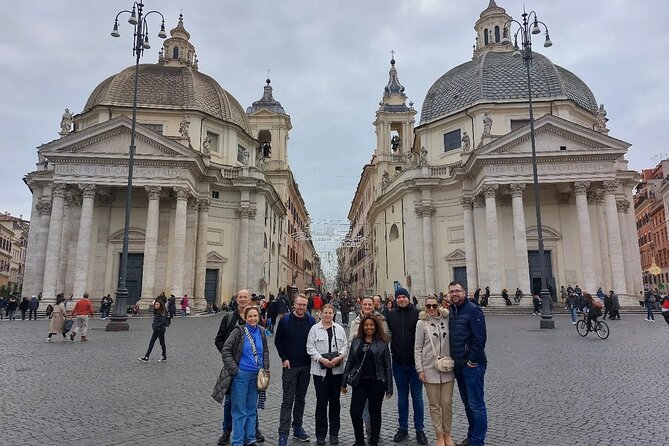
Next comes the heart of the square, Piazza del Popolo. The guide walks you through the space in a way that makes the big visuals easier to read: the famous twin churches designed by Bernini, and the obelisk of Ramses II rising above the scene.
This stop is short on paper, but it’s the kind of place that repays attention. If you’ve ever looked at Piazza del Popolo and thought, I know I should get it, the guide helps you see the logic in the design. You stop long enough to notice details, not just pose for a photo.
The walk-by that makes Augustus feel real
From the square, the route heads toward the Mausoleum of Augustus. You may not go inside, but you do get a guided pass near the tomb associated with Octavian Augustus, the first Roman emperor and a founder figure for the Julio-Claudian dynasty.
Even a quick look can land differently once you know what you’re seeing. This is where a good guide saves you from collecting isolated facts. You start building a timeline in your head, and suddenly the rest of Rome feels less like separate monuments.
Palazzo Borghese and the power behind the buildings
Next you’ll pass Palazzo Borghese, a 16th-century palace tied to one of the powerful families that shaped Renaissance-era Rome. It’s one of those stops where you might otherwise just glance, move on, and forget.
With a guide, the palace becomes more than a facade. You learn how elite families used architecture and location to broadcast influence, and you get a feel for why certain streets and squares developed the way they did.
A few more Rome options to weigh
- Rome: Guided City Center Evening Sightseeing Walking Tour
★ 4.4 · 953 reviews - Best of Rome Walking Tour including Trevi Fountain
★ 4.5 · 923 reviews - Rome: Under the Moonlight Evening Walking Tour
★ 4.8 · 852 reviews - Rome: Forbidden History Walking Tour & Pub Crawl with Drinks
★ 4.9 · 688 reviews
Gelateria della Palma break, then you pivot straight to the Pantheon
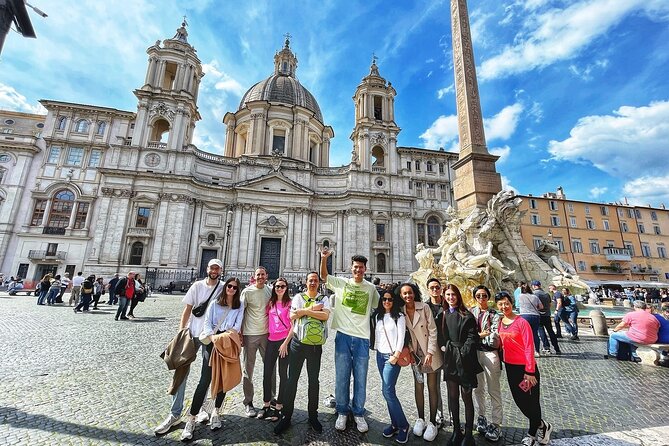
A smart move in the middle of the route is the Gelateria della Palma stop. It’s there for two reasons: you reset your legs, and you get an easy bathroom break without derailing the tour. The shop is known for offering over 150 flavors, so even if you don’t love decision-making, you’ll still find something.
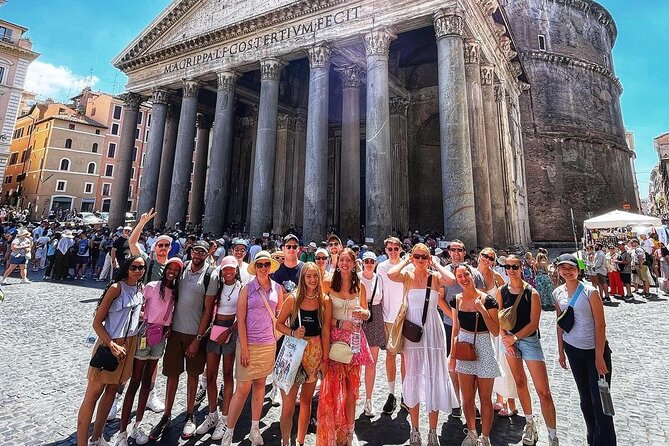
After that, you move into one of Rome’s most famous sites: the Pantheon. The tour treats this as a major moment, not a quick sightseeing checkbox.
Pantheon: more than a big dome, it’s a burial place with layers
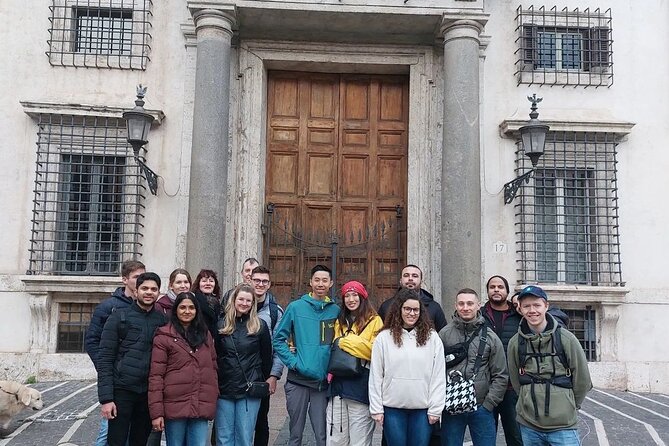
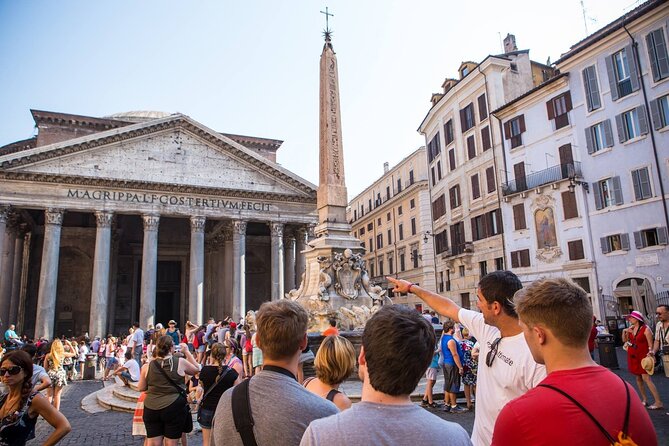
At the Pantheon, you get the essential framing: it’s the Temple of all the gods. The tour also points out that bodies of Raphael and the first Italian royalties are buried there.
This is one of those places where most people remember the architecture, but miss the human story. The guide’s role is to help you notice that the Pantheon is both a masterpiece of building and a site with later political and cultural meaning. If you like when Rome’s past keeps talking to the present, this is a strong stop.
Piazza Navona, the old stadium shape, and why the square feels odd
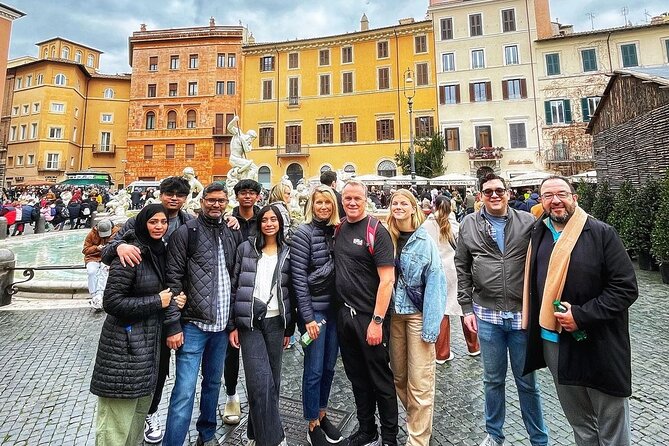
Then you head to Piazza Navona, a square that still echoes an earlier purpose. The guide explains how it was originally shaped like the Stadium of Domitian, which is why the layout feels a little stretched and athletic compared to many other Roman squares.
This is a great example of why guided walking beats solo wandering. You’ll look at the square and suddenly understand the geometry, not just the crowds.
Via dei Coronari: a Renaissance lane that still feels pedestrian-first
From Piazza Navona, the route continues down Via dei Coronari. The guide frames it as a street that feels remarkably untouched from Renaissance days, including walking past the steps linked to the original pilgrims.
Even if you just treat it as a pretty stroll, the historical context changes the way you see it. You start noticing how pedestrian routes and religious travel shaped the city’s street life.
Bridge of Angels: St. Angelo Bridge and the martyrdom story
Next comes St. Angelo Bridge, often called the Bridge of Angels. Here, the tour gives you the story connection tied to the martyrdom of Christ.
This is a “short stop, big meaning” moment. It’s not about waiting in line or reading a plaque for ten minutes. It’s about linking the bridge’s identity to the art and religious narrative Rome is famous for.
Castel Sant’Angelo: Hadrian’s ashes and the medieval shift
You cross into the area of Castel Sant’Angelo after heading over the Ponte Sant’Angelo. The stop is quick, but it lands: the fortress was originally built to hold the ashes of Emperor Hadrian, then it took on later roles as Rome’s power center shifted through time.
This is a good place to remember what your guide has been doing all along. They’re showing you the same city from different angles across centuries. It’s one of the reasons this route works well for first-timers who want a clear overview without feeling like they missed everything.
Via della Conciliazione and the St. Peter’s view primer
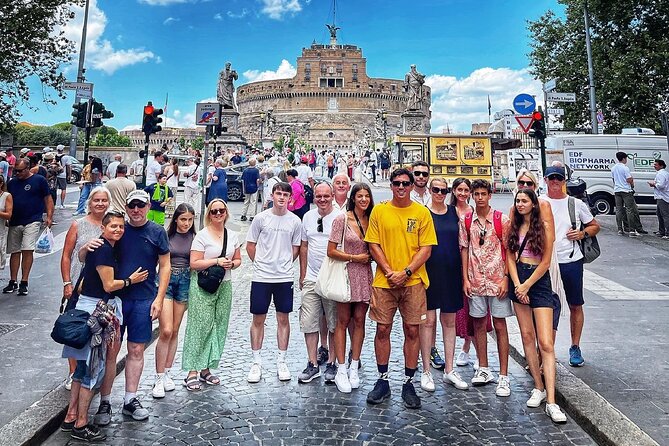
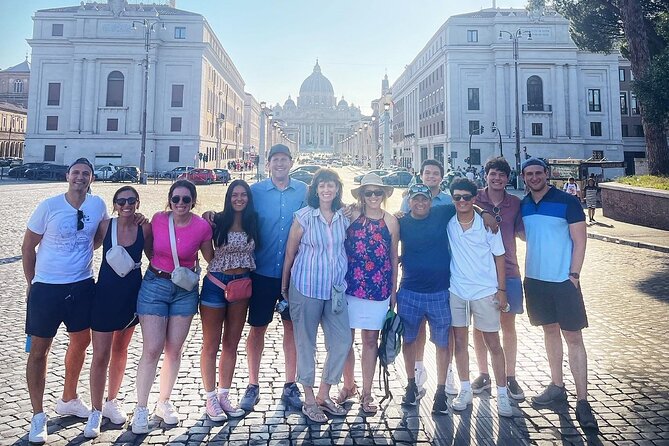
To close, you walk along Via della Conciliazione for a view toward St. Peter’s Basilica. The tour ends outside Castel Sant’Angelo with that perspective, plus a brief intro to Vatican.
This end section is useful even if you already planned a separate Vatican day. It gives you orientation for what you’ll see later, so the Vatican area doesn’t feel like a blank spot on your map.
Why the small group format changes the tour
This experience is built around a max of 15 people, and you feel it. Smaller groups mean the guide can actually answer questions instead of running ahead at full speed.
In the feedback I saw, guides like Justin and Nick were praised for how smoothly they handled questions and how they explained architecture and details. Another guide, Luccio, was specifically mentioned for keeping the vibe more like friends walking than a loud organized stampede, which is exactly what you want in Rome when you’re trying to stay present.
There’s also a practical angle. One review highlighted that Nick offered helpful food guidance for people with coeliac needs, suggesting you can ask about dining options with dietary restrictions, not just sights. If that’s your situation, speak up early in the tour.
What the pacing really feels like over 2.5 hours
The route takes about 2 hours 30 minutes and follows a steady walking rhythm with short stops. That’s a big part of the value. You’ll see a strong sequence of “major to iconic” sights without spending half your day in transit or standing around waiting for entrances.
The tradeoff is obvious: this is not a museum-style tour with long indoor time. You get orientation, key context, and just enough time to absorb what matters. If you like to linger, plan to return to your favorites after the tour ends.
Price, tip-based style, and what you’re really paying for
The price listed is $4.23 per person, and the tour is tip based at the end. For Rome, that can be a very good value if you think about what you gain: a clear route, expert explanations, and time saved figuring out what’s worth your attention.
Here’s the practical way to look at it. If you were to DIY this walk, you would still see the monuments, but you’d likely miss the connections between them. The “connections” part is what you’re paying for, and that’s where guides can earn your tip.
Also, small group plus a tight route is a combo that protects your time. Rome rewards people who plan a line, and this tour gives you one without locking you into a huge bus schedule.
Practical tips so you enjoy every stop
- Wear comfortable shoes. This is a walking-focused route with several short stops. Your feet will notice if you skip comfort.
- Use the gelato break well. The stop at Gelateria della Palma is built in for a reason, take advantage of the bathroom time and reset.
- Ask questions at the stops, not only at the end. A good portion of the value comes from the guide clarifying what you’re looking at right now.
- Have a phone camera ready for Piazza del Popolo and the Pantheon. These are the places where you’ll want a photo and then remember what the guide said.
- If you have dietary needs, mention it. One guide was noted for helping with food choices for coeliacs, so you might get more than just sightseeing advice.
Who should book this Rome walk
This tour is a great fit if you:
- want to get bearings quickly in central Rome
- prefer a small group over large crowds
- like learning the stories behind famous places, not just staring at them
- want a first-timer overview that sets up later exploring
It’s less ideal if you:
- need lots of seated time
- hate walking on a schedule
- expect long indoor visits at every stop
Should you book this Piazza del Popolo to Castel Sant’Angelo tour?
Yes, I’d book it if you want a smart, efficient Rome highlight route with a real human guide. The best part is how the tour links places that people often treat separately, like Porta del Popolo, Augustus’s era, the Pantheon, Renaissance streets, and then the approach toward St. Peter’s.
If your goal is to cover major sights while keeping the vibe calm and question-friendly, this fits the bill. Just go in ready to walk, bring comfortable shoes, and plan to return later to any stop that really hooks you.
FAQ
What is the duration of the Piazza del Popolo and Historical Sights Walking Tour?
The tour runs for about 2 hours 30 minutes.
How much does the tour cost, and is it tip based?
The price is listed as $4.23 per person, and it is tip based at the end of the tour.
Where does the tour start and end?
It starts at Piazza del Popolo, 00187 Roma RM, Italy and ends outside Castel Sant’Angelo with a view over St. Peter’s Basilica, finishing at Piazza PiaP.za Pia, 00193 Roma RM, Italy.
How large is the group?
The tour has a maximum of 15 travelers.
Is the tour offered in English?
Yes, the tour is offered in English.
What is the cancellation policy?
You can cancel for a full refund if you cancel at least 24 hours in advance of the experience start time.
More Historical Tours in Rome
- Rome in a Day Tour with Vatican, Colosseum and Historic Center
★ 4.5 · 1,042 reviews - Rome Food Tour in the Historic Centre with 8+ Food Tastings
★ 5.0 · 1,000 reviews - Rome: Ancient History and Colosseum Underground Tour
★ 4.5 · 996 reviews - Twilight Treasures: An Evening Tour Through Rome’s Rich History
★ 4.5 · 263 reviews
Latest reviews around Rome
- Guided Walking Tour of Rome: Top Sights & Baroque Treasures★ 5.0 · 155 reviews
- Rome at Night: Small Group Guided City Walking Tour★ 5.0 · 249 reviews
- Private Walking Tour of the Squares and Fountains in Rome★ 5.0 · 130 reviews
- Rome Food Tour by the Vatican★ 5.0 · 308 reviews
- Vintage Fiat 500 Cabriolet: Rome’s Highlight Semi Private Tour★ 5.0 · 283 reviews
- Welcome To Rome Experience★ 4.5 · 679 reviews
- Vatican VIP Early Entrance 8:00 AM★ 4.5 · 141 reviews
- Vespa Rental in Rome 24 hours★ 5.0 · 196 reviews
Historical Tours, compared.
St. Mark Basilica Ticket, Audioguide+History Gallery
Read our review →
Venice’s Best: Basilica, Doge’s Palace, Gondola & History Gallery
Read our review →
Historic Milan Tour with Skip-the-Line Last Supper Ticket
Read our review →
Rome in a Day Tour with Vatican, Colosseum and Historic Center
Read our review →
Rome Food Tour in the Historic Centre with 8+ Food Tastings
Read our review →Browse the lists this tour appears in