
Reviewed · WALKING TOURS
Rome: Under the Moonlight Evening Walking Tour
Moonlight makes Rome feel like a movie set. This evening walking tour strings together the big names and the smaller, story-packed streets, so the city clicks into place fast. I like that you get top landmarks lit up at night plus guide-led stops in key piazzas, not just a random photo march.
Two things I really enjoy about this kind of tour: you see the Pantheon in its quietest mood and you end up at the Colosseum when the crowd energy drops. One thing to plan around is that it is still a solid walk, and there is no food or drink included, so bring water and keep your shoes ready for uneven Roman stone.
In This Review
- Key Points Worth Knowing Before You Go
- Why Rome After Dark Feels Easier on Your Brain
- Meeting Point Options, Start Time Reality, and What the Group Does First
- Piazza Navona: Where the Night Atmosphere Gets Real
- Pantheon: The Most Preserved Ancient Monument in Your Evening
- Sant’Ignazio di Loyola and Galleria Sciarra: The Side Streets That Add Texture
- Trevi Fountain at Night: Coin Toss Time with Built-In Focus
- Piazza Venezia, Trajan’s Column, and the Roman Forum: Turning Landmarks Into a Story
- Colosseum Walk-By and the Glow Moment You Came For
- How the Guide Makes This Tour Worth the Ticket
- Price and Value: What $28 Buys You at Night
- Who This Tour Is Best For (and Who Might Want Something Else)
- Final Decision: Should You Book the Rome Under the Moonlight Tour?
- FAQ
- How long is the Rome Under the Moonlight Evening Walking Tour?
- How much does the tour cost?
- What landmarks are included on the tour?
- What languages are the guides available in?
- Is food and drink included?
- What should I bring?
Key Points Worth Knowing Before You Go
- Night lighting changes everything, especially the Colosseum and the stonework around the forum area
- Two start options let you match your schedule, with the evening meeting tied to Piazza d’Aracoeli or Piazza di Pasquino
- Piazza Navona is the opening anchor, with guided time at Fontana dei Quattro Fiumi
- The route mixes major sights with side streets, including stops like the Church of Sant’Ignazio di Loyola and Galleria Sciarra
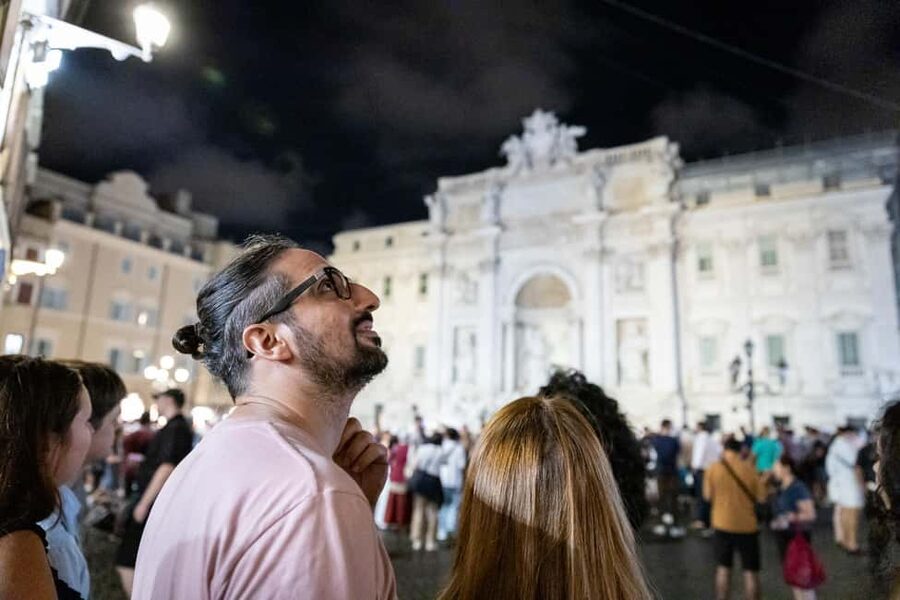
- Trevi Fountain is guided, with time built in for your coin toss and photos
- Multiple ending drop-off points are listed, including options around Piazza Navona and near the Colosseum
Why Rome After Dark Feels Easier on Your Brain
Rome in daylight is impressive, but it can also be a lot: glare, crowds, and that constant feeling you are trying to keep up. At night, the city slows down just enough for you to actually look. Street lamps soften the edges of ancient stone, and the landmarks feel more like places you can wander past, not check off.
What makes this particular tour appealing is its mix of scale. You move through giant, famous spaces like Piazza Navona and Trevi Fountain, then you step into spots that are smaller and more specific, like the Church of Sant’Ignazio di Loyola and the Art Deco-ish vibe of Galleria Sciarra. That balance helps you connect the route, not just memorize it.
And yes, you get the classic big moments. Watching the Colosseum glow after sunset is the kind of thing you will remember, even if you have seen photos before. The trick is that you are also guided through the “in-between” parts, so your evening has flow.
More walks around Rome:
- Rome: Trastevere & Campo de Fiori Street Food Walking Tour
★ 4.9 · 2,768 reviews - Rome: Paranormal Night Walking Tour & Secret Backstreets
★ 4.9 · 1,921 reviews - Rome by Night Walking Tour – Legends & Criminal Stories
★ 4.5 · 1,003 reviews
Meeting Point Options, Start Time Reality, and What the Group Does First
Your evening begins at one of two meeting points, depending on the option you book: Piazza d’Aracoeli or Piazza di Pasquino. From there, you set the tone with an organized walk toward Piazza Navona, where you meet your guide and group for the evening.
The tour length is about 2 to 2.5 hours, and starting times vary. That matters because you want to time your walking window when the light is already dropping, not when the sun is still high and the streets feel like a daytime march.
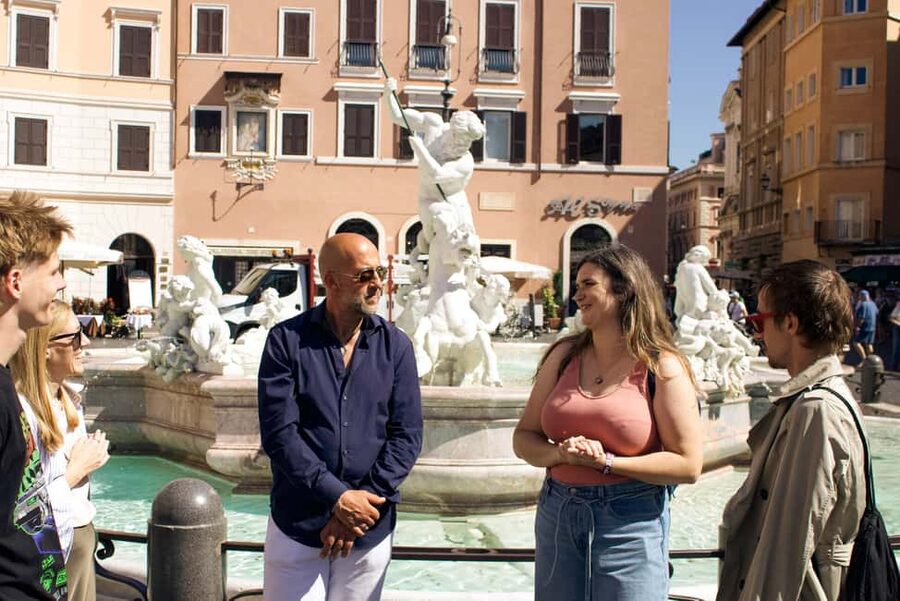
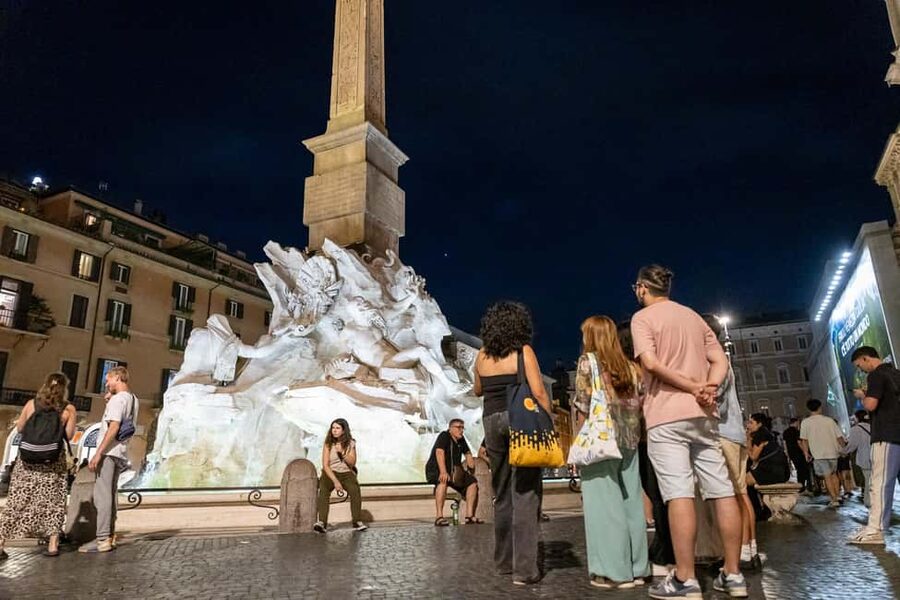
Once you’re gathered, the first real “Rome by night” moment is Piazza Navona. You stand where you can hear the Fontana dei Quattro Fiumi working its calm rhythm in the center of the square, before your route starts moving. This is a smart opening. It gets your senses online early, so every next stop lands harder.
Piazza Navona: Where the Night Atmosphere Gets Real
Piazza Navona can be busy at any hour, but at night it tends to feel more human. You get guided time there, around 20 minutes, which is just enough to notice details without feeling rushed.
The Fontana dei Quattro Fiumi is the obvious focal point, and being able to hear the water while you stand under the lights changes how you experience the square. Instead of only seeing a tourist magnet, you start treating it like a room in the city. That shift helps the rest of the evening feel coherent.
If you like great people-watching and photography, this stop is a win. If you hate crowds, try to position yourself slightly off center so you can still enjoy the fountain and the buildings without constantly fighting for a new angle.
Pantheon: The Most Preserved Ancient Monument in Your Evening
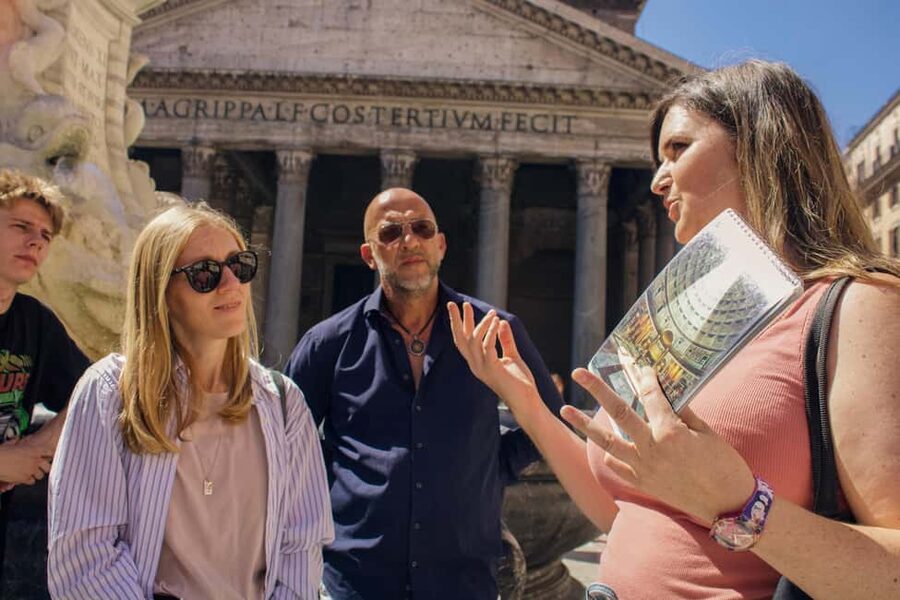
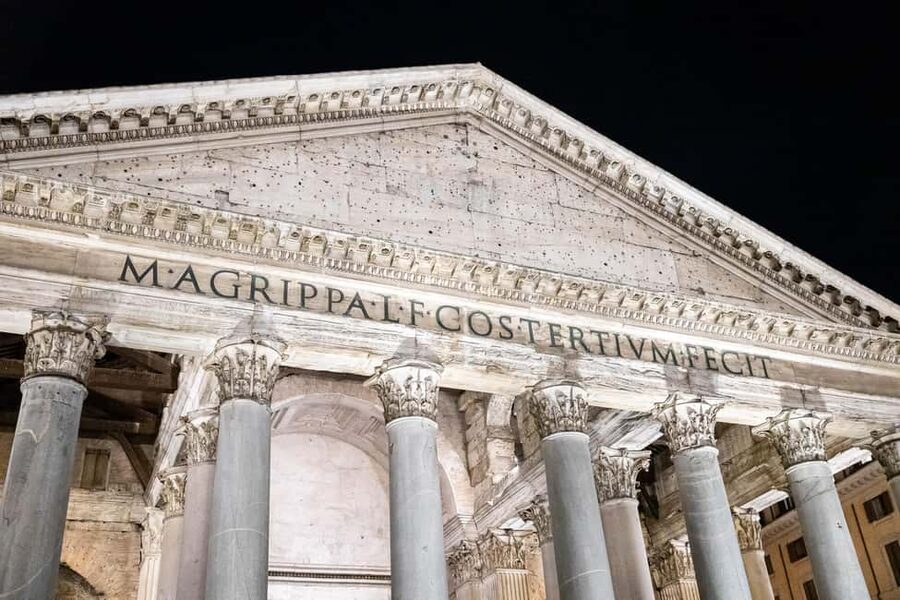
The Pantheon is one of those places where “passing by” sounds too small, but it can actually work well on a night tour. In this route, you spend about 20 minutes moving past and focusing on the monument’s presence.
What I like here is that the Pantheon is described as the most preserved monument from ancient Rome. That makes it more than a pretty stop. It becomes a reference point for the whole evening. When you later see other Roman structures, your brain starts grouping them properly: what is sacred, what is civic, what is practical, and what is just pure Roman confidence in stone.
You also get a tour guide to frame what you are seeing, including the connection to Hadrian, who built it as a monument to the gods. Even if you are not a monuments person, having that anchor helps you appreciate the building as a living cultural signal, not just architecture.
A few more Rome options to weigh
- Rome: Guided City Center Evening Sightseeing Walking Tour
★ 4.4 · 953 reviews - Rome: Forbidden History Walking Tour & Pub Crawl with Drinks
★ 4.9 · 688 reviews - Rome: City Highlights Moonlight Walking Tour
★ 4.9 · 580 reviews - Rome: Ghostly Nighttime Walking Tour
★ 4.8 · 485 reviews
Sant’Ignazio di Loyola and Galleria Sciarra: The Side Streets That Add Texture
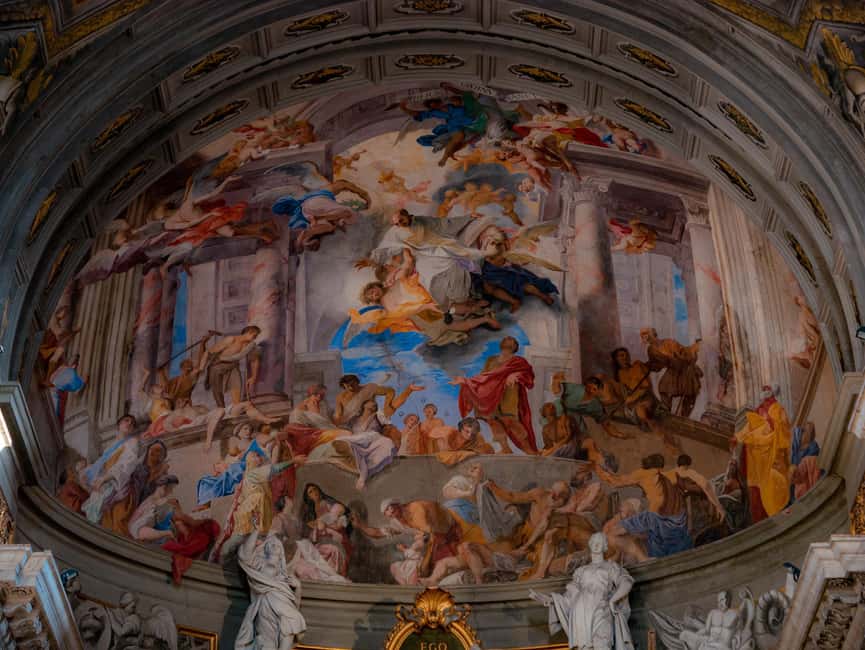
This is where the tour earns its value for people who have already seen Rome landmarks in guidebooks. After the Pantheon pass-by, you head to the Church of Sant’Ignazio di Loyola for around 30 minutes.
Why does that matter on a night walk? Because churches at night feel like quiet rooms inside a loud city. The guide’s storytelling time here turns the stop into a pause. It also gives you a break from the big-square crush, even if the group stays mobile.
Then you move to Galleria Sciarra for about 20 minutes. This is one of those spots that can be easy to miss if you are wandering alone, even though it can be eye-catching. You will get time to look closely and hear what makes it interesting, including its Art Deco feel, which helps you see Rome as more than ancient and medieval. It is a city with layers, all living at once.
If you want an evening that feels like Rome has both scale and detail, this section is doing the heavy lifting.
Trevi Fountain at Night: Coin Toss Time with Built-In Focus
Trevi Fountain is the obvious headline, and you do not just see it from a distance here. You get guided time of about 30 minutes at the fountain itself.
The experience includes the classic coin toss and a wish moment. Even if you have done the ritual in another city, Trevi works because the fountain is surrounded by light, stone, and movement. At night, your photos tend to look more dramatic, and the scene feels less like a daytime stage show and more like a nighttime attraction.
Practical advice: treat this stop as your photography checkpoint. If you want one or two solid images, use the guide time to learn where to stand for composition, then take your shots without constantly relocating. A fixed spot for a few minutes saves your energy for later.
Also, remember there is no food included on this tour. You are not stopping for dinner, so plan to grab a bite after. Trevi can take more time if you pause for photos, so you will appreciate having an organized guide schedule.
Piazza Venezia, Trajan’s Column, and the Roman Forum: Turning Landmarks Into a Story
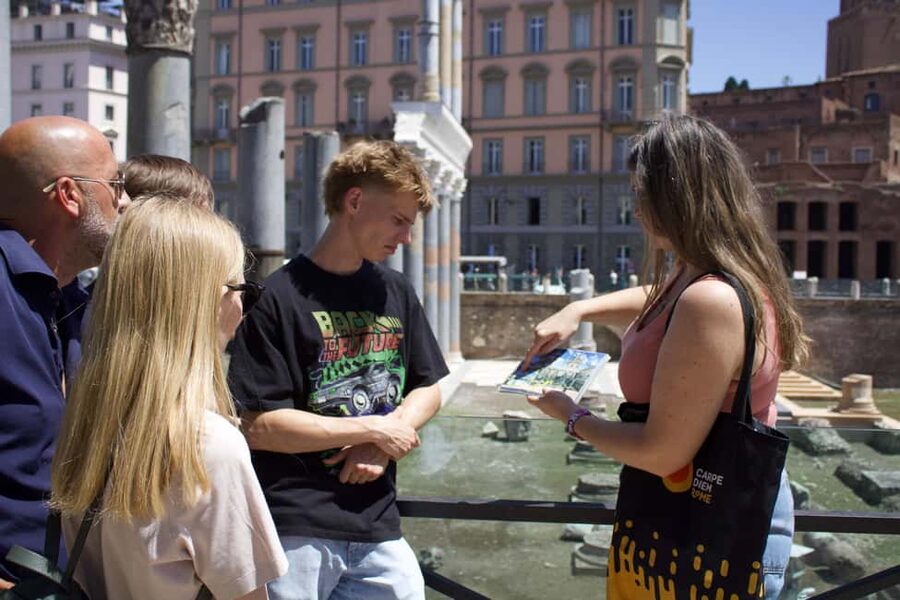
After Trevi, the route builds upward in stakes and scale. You reach Piazza Venezia for about 20 minutes, then continue toward Trajan’s Column for around 20 minutes, followed by guided time at the Roman Forum for about 20 minutes.
These stops are valuable because they connect. The evening is not only a set of iconic sights. It is a guided walk where you keep returning to the same theme: how Rome showed power through space, monuments, and public life.
Trajan’s Column is especially good at night because you can look up more easily when lighting highlights forms rather than flattening them. Roman Forum time can feel abstract if you only look at ruins as shapes. With a guide, you get the practical context to understand what you are looking at and why it mattered.
This is also where you may hear fun, specific fact-style details, like ways guides help you tell genuine historical objects from later imitations. You might get explanations tied to specific visual cues, including notes about obelisks and certain decorative details you would miss without a trained eye.
And yes, you might also hear modern civic notes that tie Rome together day to day, like why access to drinking water shows up in local stories. Those small connections make the ancient sites feel less like museum pieces.
Colosseum Walk-By and the Glow Moment You Came For
The Colosseum is the big finale. The tour routes you to the legendary arena area and gives time to walk around the site as it glows under evening light. Even if you are not a die-hard sports arena fan, the Colosseum is a mood magnet at night.
This stop works because it is timed after sunset, when the stone looks warmer and the crowd crush tends to ease. You still need patience for photos, but the atmosphere is different. The guide keeps you moving in a way that helps you actually see the structure instead of only watching it from the edge.
One more useful point: the route also passes near or along the Imperial fora area. That means you are not going from Trevi straight to the Colosseum as if you teleported. You are traveling the city’s story in order, so the Colosseum lands as the climax, not a random stop.
For your comfort and photos, wear shoes that can handle stone and street edges. Night adds low light, and it is easy to misjudge steps when you are excited.
How the Guide Makes This Tour Worth the Ticket
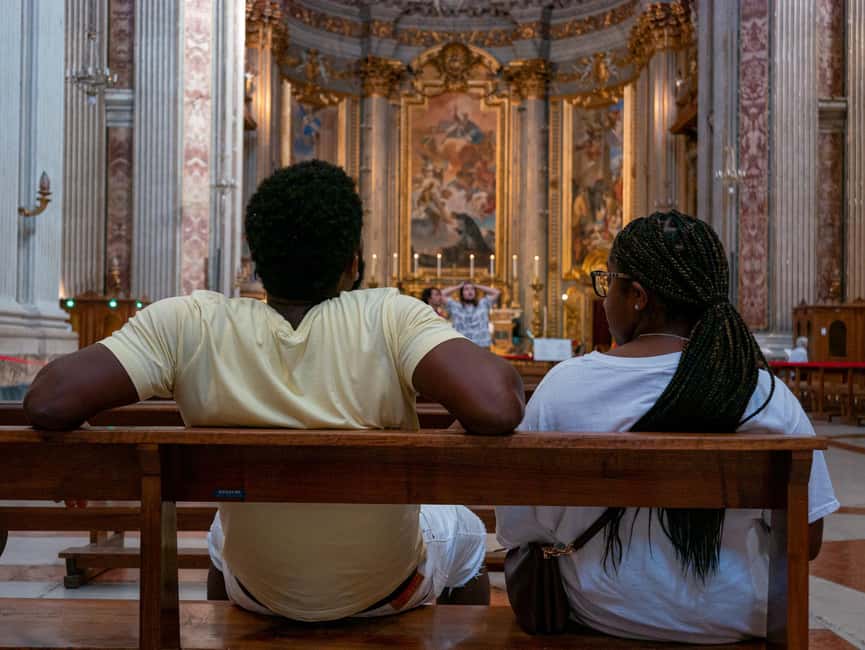
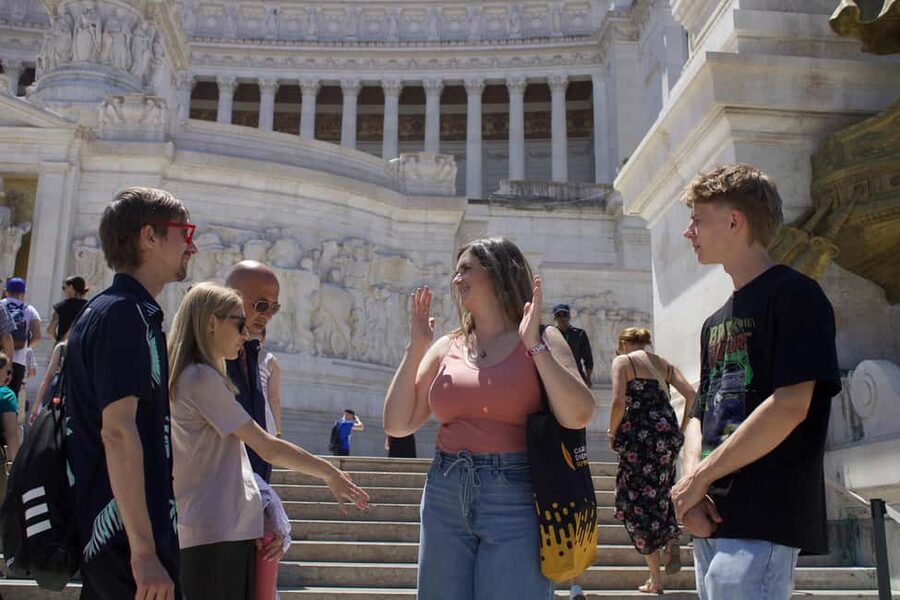
With walking tours, the guide is the product. On this route, the strongest praise tends to fall on three guide traits: energy, interaction, and storytelling that makes you feel like Rome has personality.
You might get a guide like Vladimir, Csenge, Domenica, Dan, Sharon, Sila, or Vlad. Different personalities, same goal. You are likely to get more than names and dates. The pacing is set so you can ask questions, and the guide often keeps the walk light with humor, including jokes that keep the group upbeat.
That matters more than you might think. Two hours walking through Rome can feel either exhausting or fun. When the guide keeps momentum and connects each stop to the next, the time passes faster and you come away with a mental map you can use on your own.
Price and Value: What $28 Buys You at Night
At $28 per person for a 2 to 2.5 hour guided evening, this is a pretty straightforward value proposition. You are paying for three things:
- A local guide to set context at major monuments like the Pantheon and Trevi Fountain
- A structured route that connects big landmarks with smaller stops like Galleria Sciarra
- Time planning that helps you see the Colosseum and central Rome in better lighting than midday
You also get tips and recommendations included. That might sound like fluff, but it can be practical. If you are doing Rome for a short visit, the best “recommendation” is often what to do next, where to walk afterward, and what to revisit when the crowd energy changes.
The one tradeoff is also clear: food and drink are not included. So if you are expecting this tour to cover dinner, it will not. Think of it as your sightseeing foundation, then eat nearby where you feel like it.
Who This Tour Is Best For (and Who Might Want Something Else)
This tour fits you if you want a first-day or early trip orientation. One of the best ways to enjoy Rome is to understand where everything sits relative to everything else. A moonlit route through Piazza Navona, the Pantheon area, Trevi, and the Colosseum zone helps you build that mental geography.
It also fits you if you like stories more than long museum time. Churches, columns, and fountains become more interesting when someone explains why they are there and what to look for beyond the obvious.
You might want a different plan if you are traveling with mobility limitations or if you really hate walking. The tour is short in hours, but it still expects you to stand, move between stops, and keep going through the evening.
Final Decision: Should You Book the Rome Under the Moonlight Tour?
I think you should book this tour if your goal is to see Roman icons without spending your whole day fighting crowds and heat. The timing after dark, the guide-led structure, and the way the route mixes major monuments with quieter, less obvious stops like Galleria Sciarra give you more than a simple highlight loop.
Skip it if you want a food-focused evening or if you prefer to wander completely independently with no fixed plan. Also, consider booking based on start time and wear comfortable shoes, because the night will tempt you to linger for photos, and that can add extra walking.
If you want one organized evening that helps you enjoy the rest of your trip, this is a solid choice.
FAQ
How long is the Rome Under the Moonlight Evening Walking Tour?
It runs about 2 to 2.5 hours. Starting times vary, so check availability for the exact schedule.
How much does the tour cost?
The price is $28 per person.
What landmarks are included on the tour?
You will see major stops including Piazza Navona, the Pantheon, Trevi Fountain, Piazza Venezia, Trajan’s Column, and the Roman Forum, with the Colosseum area included at night.
What languages are the guides available in?
The live tour guide is available in English and Spanish.
Is food and drink included?
No. Food and drink are not included.
What should I bring?
Bring comfortable shoes and comfortable clothes for evening walking.
More Evening Experiences in Rome
- Rome: City Highlights Open-Top Bus Night Tour
★ 4.1 · 2,038 reviews - Vespa Sidecar Tour By Night with Pickup
★ 5.0 · 1,803 reviews - Colosseum Sunset Tour with Entry
★ 4.5 · 1,230 reviews - Rome: E-Bike Night Tour with Food and Wine Tasting
★ 4.9 · 1,131 reviews
Latest reviews around Rome
- From Rome: Hadrian’s Villa & Villa d’Este Day Trip & Lunch★ 4.5 · 157 reviews
- Rome: Painting Class with Unlimited Wine★ 4.8 · 109 reviews
- Vatican City: Sistine Chapel, Museums, Basilica Private Tour★ 4.8 · 158 reviews
- Pope Leo XIV Audience Tour with Local Guide★ 3.3 · 111 reviews
- Rome: The Three Tenors at St. Paul’s Church Concert Ticket★ 4.7 · 699 reviews
- Vatican Museums & Sistine Chapel Skip-the-Line Guided Tour★ 4.6 · 254 reviews
- Rome: St. Peter’s Basilica and Papal Tombs Guided Tour★ 4.6 · 477 reviews
- St. Peter’s Dome Climb, Basilica and Vatacombs Tour★ 4.7 · 230 reviews
Walking Tours, compared.
Guided Walking Tour & Last Supper Visit with Ticket
Read our review →
Rialto Bridge & Offbeat Unusual Venice Walking Tour
Read our review →
Private 3 hrs Venice Tour: St Mark’s, Walking tour & Boat tour
Read our review →
Skip the line: Uffizi and Accademia Small Group Walking Tour
Read our review →Browse the lists this tour appears in