
Reviewed · HISTORICAL TOURS
Verona: History and Hidden Gems Guided Walking Tour
Verona feels bigger when you know the story behind it. This guided walk trades wandering for direction, with Fabio Massimo Rapanà bringing the city from Roman beginnings to the Middle Ages in just two hours. You start at Piazza Bra, then hop between landmarks and lesser-noticed streets with headsets so you can actually hear the details.
What I like most is the way the route connects spots you already recognize, like the Arena and Piazza delle Erbe, to the smaller visuals you would otherwise miss. The second big plus is the pacing for a walking tour, small group size up to 10, and a guide who keeps the storytelling moving without rushing your photos.
One consideration: it runs rain or shine, so you need comfortable shoes and a bit of stamina for a steady couple of hours outdoors.
In This Review
- Key highlights worth your time
- Starting at Piazza Bra, where Verona’s layers meet
- Verona Arena first: gladiators, stone, and what to notice
- Roman-era passages to Porta Borsari, plus the medieval thread
- The Adige River viewpoints: Riva San Lorenzo to Ponte Scaligero
- Piazza delle Erbe: market life, facades, and an oldest fountain moment
- Piazza dei Signori and the city’s power on display
- Santa Anastasia and the switch from civic to sacred
- Romeo and Juliet, plus the Scaligero tombs that steal the show
- Jewish Verona and the convent stop for quieter context
- How much walking, and what to bring for an easy day
- Price and value: what $41 buys in Verona time
- Who should book this walk with Fabio Massimo Rapanà
- Should you book this tour or go solo?
- FAQ
- Where do I meet the guide for the Verona walking tour?
- How long is the walking tour?
- Is this a small group tour?
- What language options are available?
- Will the tour run if it rains?
- Are tickets or entry fees included?
- What should I bring with me?
Key highlights worth your time
- Piazza Bra start: easy meeting point by Palazzo Barbieri, right in the Arena’s backyard
- Arena and Roman-era streets: gladiator context plus architecture you can spot once someone points it out
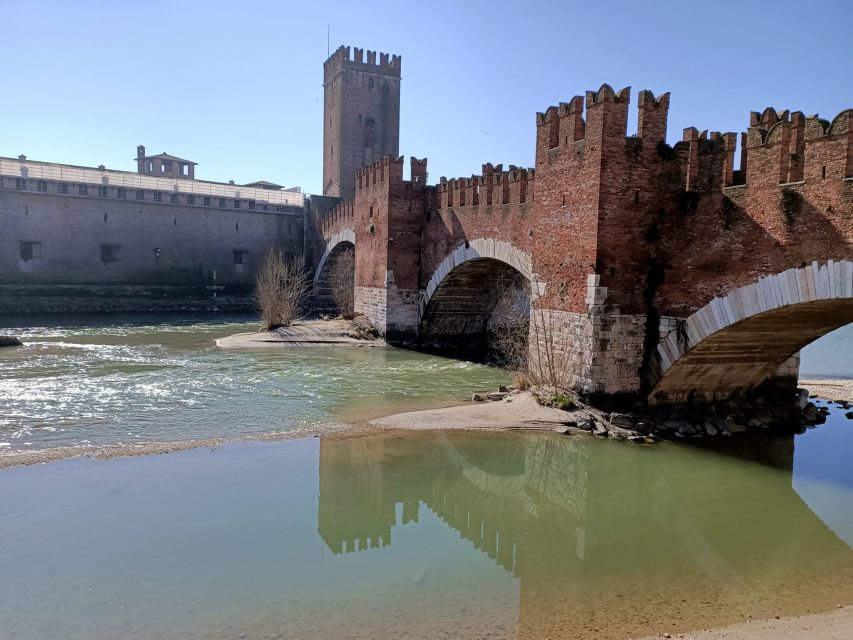
- Adige River viewpoints: scenic stops for Castelvecchio and Ponte Scaligero
- Piazza delle Erbe focus: the oldest fountain and a market story tied to real facades
- Scala palazzi and a tall tower: political power made visible in stone
- Headsets for clear listening: helpful in noisy squares and for anyone with hearing needs
Starting at Piazza Bra, where Verona’s layers meet
This tour starts in Piazza Bra, at Palazzo Barbieri, Comune di Verona. It is a smart place to begin because everything else on the walk feels like it grew out of this heart of the city, from Roman scale to medieval drama.
The experience is built for small groups, up to 10 people, and you get headsets. That matters more than you might expect, especially in lively plazas and at busy street corners. You can follow the guide’s explanations without craning your neck or guessing what was said.
Fabio is a Verona native and licensed guide, and you feel that local confidence in how he frames what you see. The route is designed for story flow, so each stop answers the question, Why does this spot look like this?
More Walking Tours in Verona
- Verona: Small Group Guided Walking Tour with Arena Tickets
★ 4.9 · 848 reviews - Verona Highlights Walking Tour in Small-group
★ 5.0 · 493 reviews - Verona walking tour:food, wine, legends, lunch/dinner & cable car
★ 5.0 · 386 reviews
Verona Arena first: gladiators, stone, and what to notice
You begin with a photo stop at the Verona Arena. It is one of those places where photos look good, but understanding makes it better. Fabio explains the gladiator-battle history tied to the Arena, and then you start noticing the architecture and massing instead of just the big headline name.
Even if you do not go inside, the Arena still works for learning. From the outside, you can spot how the structure dominates the square and why Verona’s leaders wanted a monument like this. You also get those quick “pause and look” moments that help your eyes catch details later when you are walking on your own.
Tip for your photos: stand where the guide suggests, then take a second shot a few steps to the side. The angle changes the feel of the whole amphitheater, and you will understand why once you hear the context.
Roman-era passages to Porta Borsari, plus the medieval thread
After the Arena, you move along the older city layout, following foundations connected to early medieval walls to reach Corso, one of the city’s oldest streets. This is the kind of segment that is easy to treat like “just walking,” but with a guide it becomes part of the lesson: Verona did not grow in a straight line, it layered.
You then hit Porta Borsari for a photo stop and short look. It is Roman-era in character, and the guide’s job is to show how those arches fit into a city that later reshaped itself. You also get mention of Roman monuments like Porta Jovia, so you are not only looking at one relic, you are getting a bigger picture of how Rome left bones in Verona.
Along the way, there are short, quick stops in tucked-away spots. The point is not to linger, it is to show you what to recognize. After a couple of these micro-pauses, you start spotting the patterns yourself, like where older stone sits beside later renovations.
The Adige River viewpoints: Riva San Lorenzo to Ponte Scaligero
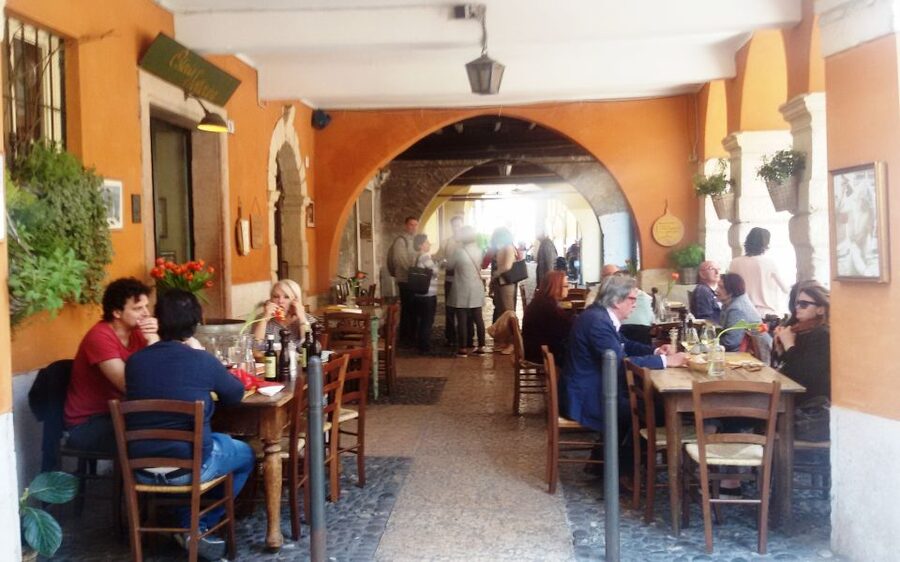
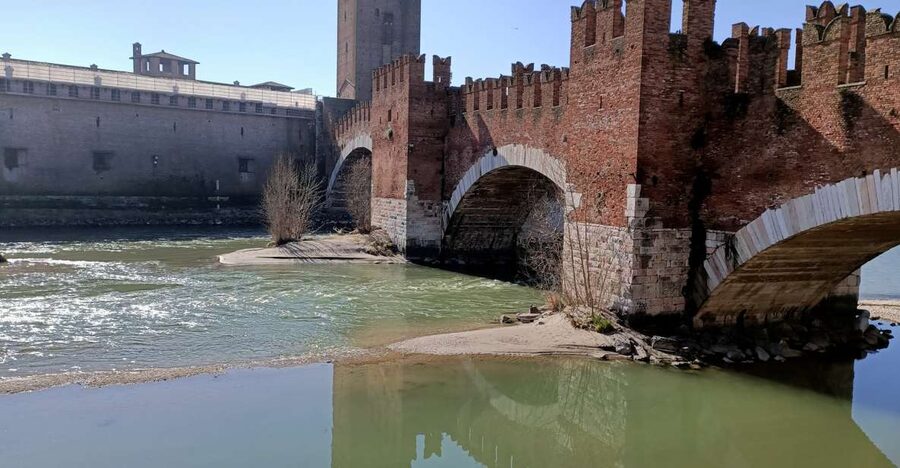
One of the most rewarding parts of the tour is the scenic Adige River segment. You stop at Riva San Lorenzo for photos and viewpoints, and the guide points you toward the perspective that makes the river feel like Verona’s stage.
Then you get a look across to Castelvecchio and Ponte Scaligero. The buildings and bridges matter here because they explain Verona’s defensive and trading reality. You are not just seeing a pretty river line, you are seeing why the city positioned itself the way it did.
Practical note: bring water and keep an eye on your footing. This area is often exposed and the tour is outdoors, even though it is only part of a two-hour walk. When the guide suggests a quick pause for shade, take it.
A few more Verona options to weigh
- Milan: Guided Walking Tour & Last Supper Visit with Ticket
★ 4.7 · 5,409 reviews - Naples: Street Food Walking Tour with Local Guide
★ 4.8 · 4,256 reviews - Venice Walking Tour and Gondola Ride
★ 3.5 · 3,630 reviews - Venice: Rialto Bridge & Offbeat Unusual Venice Walking Tour
★ 4.2 · 3,538 reviews
Piazza delle Erbe: market life, facades, and an oldest fountain moment
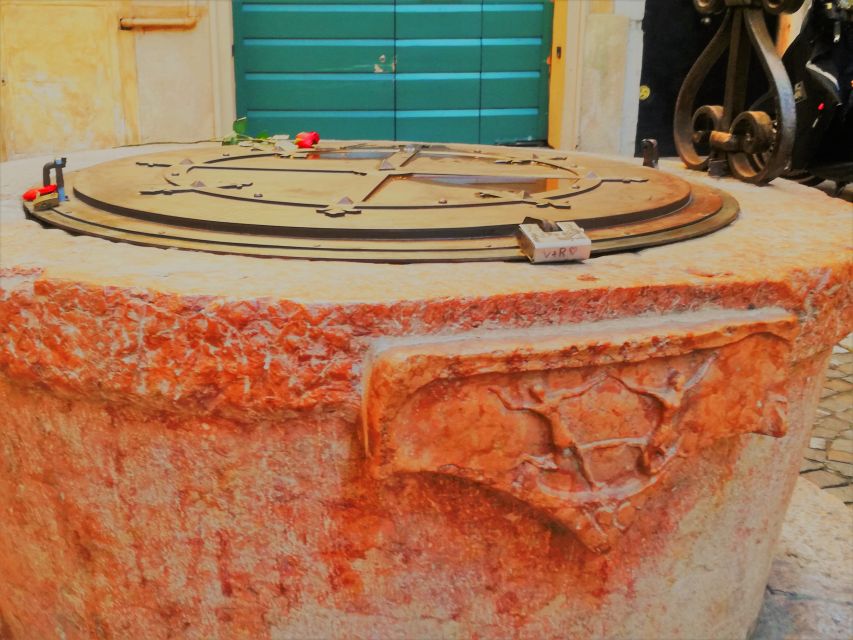
Next comes Piazza delle Erbe, one of Verona’s key public spaces. You get a photo stop and time to explore the square, plus scenic moments while moving through it.
Here is where the tour pays off for first-timers. The guide talks about the oldest fountain in the city and ties it to the local market tradition. Once you hear the market story, the facades stop being decorative wallpaper and start feeling like part of everyday life.
You also get commentary on historic townhouses and why the square reads the way it does. Markets were not just about food, they were social machinery. Verona’s identity shows up in how people used the square over time, from practical trade to civic symbolism.
You will also see your way toward the courtyard of the old market, another photo stop that reinforces the theme. Even if you do not have time for extra museums, this segment gives you a “walkable context” you can carry all day.
Piazza dei Signori and the city’s power on display
From Piazza delle Erbe, you head to Piazza dei Signori for more photo time and guided explanation. This is the square where civic buildings start to feel like a political map, and the guide points out key structures you might otherwise pass by.
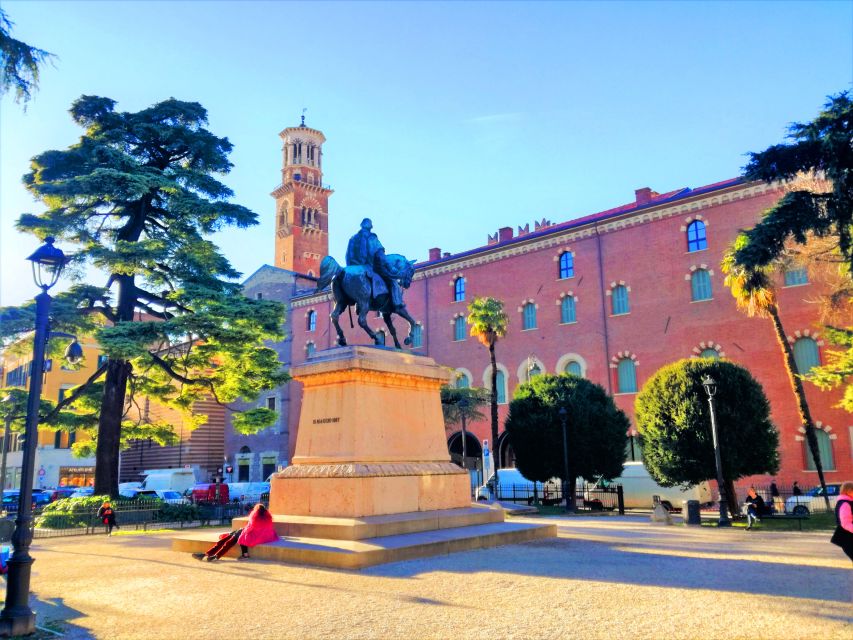
You will learn about Palazzo della Ragione, Palazzo Della Scala, and Palazzo del Capitano. These names matter because they connect stone to leadership, authority, and the city’s medieval identity. You also see what the guide calls the highest tower in the city, which helps you understand the visual competition between towers and power.
There are a couple of quick “secret stop” type moments here. They are short, but they tend to be placed right where you need a story to make sense of what you are seeing. It is a classic walking-tour tactic, and it works.
If you like architecture: this is the segment to savor. Look up as much as you look forward. The buildings are telling you a timeline, and the tour trains your eye to read it.
Santa Anastasia and the switch from civic to sacred
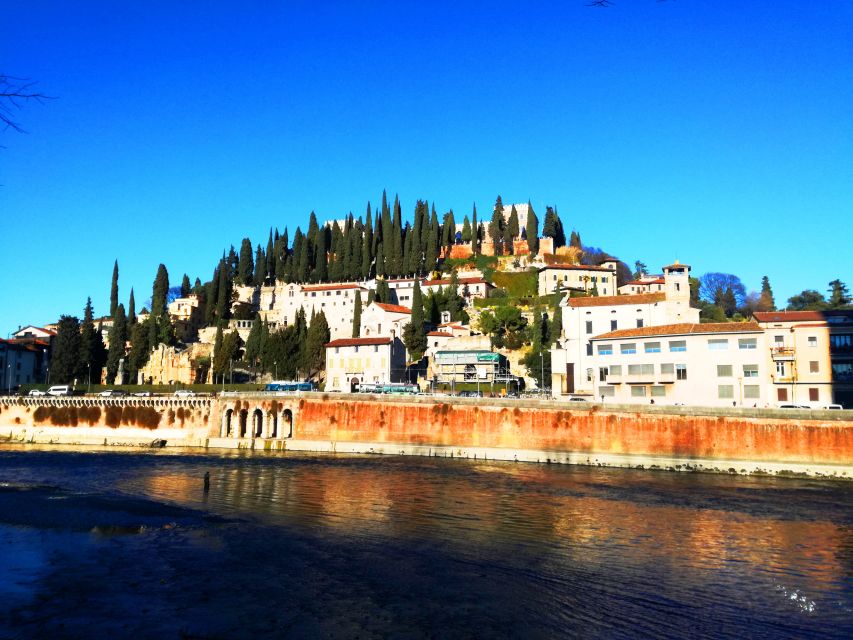
After the signoria squares, you come to Basilica di Santa Anastasia for another photo stop. The vibe shifts a little here, from public power to religious presence. Even with limited time, you can feel why this kind of church anchors centuries of city life.
What I appreciate is how the guide keeps the timeline connected. The tour has already moved you through Roman references and medieval politics, and now you see another layer: how faith and art shaped Verona’s skyline.
This stop is not about taking one perfect photo and moving on. It is about giving you a mental bookmark. Later, when you look at Verona churches in general, you start recognizing how they fit into the bigger story your guide just explained.
Romeo and Juliet, plus the Scaligero tombs that steal the show
Yes, you will pass by the Casa di Romeo and end up near Juliet’s House, Verona for a photo stop. But the key value is how the guide frames the cultural inspiration.
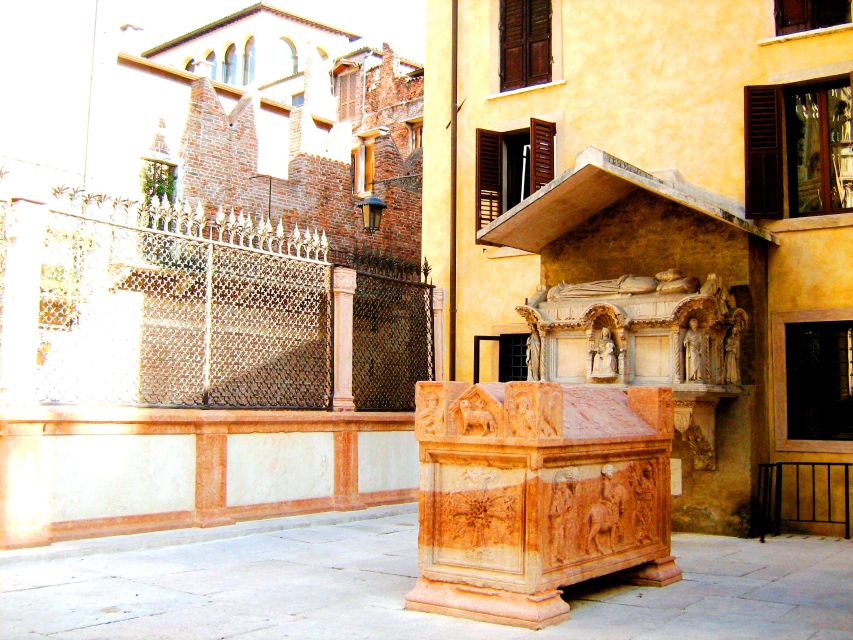
Along the way you also see the Arche Scaligere mausoleums. This is where the “Verona isn’t just romance” idea becomes real. The sculptures and monumentality give you a sense of medieval wealth and legitimacy, and the guide connects the Scaligero legacy to the city’s identity.
The tour’s approach is helpful for people who worry they might get stuck in only Shakespeare tourist land. You still see the famous sites, but the walk keeps bringing you back to the monuments and civic history that make those stories plausible in the first place.
Small strategy: once you see the mausoleums, return to the Romeo and Juliet areas later that day with fresh eyes. You will notice that the setting is more than a movie backdrop. It is part of a centuries-long city story.
Jewish Verona and the convent stop for quieter context
Toward the back half, you pass Sinagoga di Verona for a photo stop. This matters because it broadens Verona beyond the dominant church-and-monument focus. Even a brief look can change how you think about who lived in the city and how cultures coexisted in different eras.
You also stop at Convent of Saint Mary ‘della Scala’ of the Servants of Mary for a photo stop. Again, you do not get a long museum-style visit here, but you do get a reminder that Verona’s medieval and later eras built institutions, not just landmarks.
This is also where you appreciate the tour timing. You are not just cramming famous buildings. The guide uses these stops to show the city’s social structure in stone, fresco-shaped forms, and architectural purpose.
How much walking, and what to bring for an easy day
The tour is 2 hours and is entirely a walking format. You should assume steady movement through streets and plazas, plus short photo stops and brief pauses.
Bring comfortable shoes and water. The guide also keeps the group in mind for practical comfort. On hot days, you might find extra attention to shade and quick chances to refill water, and that can make the difference between “nice tour” and “I want to stroll again afterward.”
It also runs rain or shine, so pack for weather. If you know you will be uncomfortable in drizzle, plan accordingly. This tour is built to keep going.
Price and value: what $41 buys in Verona time
At about $41 per person for a 2-hour, licensed-guided walk, the value is strongest if you care about context. The ticket price is not buying museum entry tickets. Instead, it pays for a local guide who can connect what you see to why it matters.
You also get headsets, small group size, and a route optimized for storytelling. Those three pieces reduce the “tour fatigue” that can happen when you follow a guide without clear audio or when the group feels too big to hear explanations.
If you are the kind of visitor who wants to understand Verona fast, then use that understanding to explore on your own later, this is a good use of time. If you only want a slow walk and do not care much about history, the price might feel harder to justify because much of the tour’s payoff is the guide’s explanations.
Who should book this walk with Fabio Massimo Rapanà
This tour is ideal if you:
- want a structured first pass at Verona in just two hours
- like seeing major sights, then immediately learning the “how and why” behind them
- prefer a small group up to 10 over a crowded line of people
- benefit from headsets and clear narration in busy squares
- want both famous stops like the Arena and Juliet areas, plus a lot of quieter streets
It is also a great “reset button” after you land. You get a sense of orientation, then you can return later for longer looks where you care most.
Should you book this tour or go solo?
Book it if you want Verona to feel legible, not just pretty. The Arena to Piazza delle Erbe to the palazzi squares to the Scaligero tombs is a strong outline, and the guide’s explanations help you connect those dots while you are still on the streets.
Go solo instead if you already know the city’s timeline and you just want to spend your time in slow, independent wandering. In that case, you might prefer to allocate your time to longer stays at the places that interest you most.
If you are unsure, take the tour early in your stay. You will likely leave with a sharper sense of what to revisit, what to skip, and where you want to linger when you have more time.
FAQ
Where do I meet the guide for the Verona walking tour?
You meet the guide standing below the Italian flag at the Town Hall in Piazza Bra (Palazzo Barbieri – Comune di Verona).
How long is the walking tour?
The tour lasts 2 hours.
Is this a small group tour?
Yes. It runs in a small group up to 10 participants.
What language options are available?
The live guide offers tours in English, German, Italian, and Spanish.
Will the tour run if it rains?
Yes. The tour takes place rain or shine.
Are tickets or entry fees included?
No. Entries are not included, and there are no transport or food and drinks included either.
What should I bring with me?
Wear comfortable shoes and bring water.
More Historical Tours in Verona
- Lazise: Historical Center Wine Tasting Tour
★ 4.9 · 110 reviews - Venice: St. Mark Basilica Ticket, Audioguide+History Gallery
★ 3.9 · 4,780 reviews - Venice’s Best: Basilica, Doge’s Palace, Gondola & History Gallery
★ 4.5 · 2,478 reviews - Historic Milan Tour with Skip-the-Line Last Supper Ticket
★ 4.5 · 1,976 reviews
Latest reviews around Verona
- Opera Concert in Verona Palace with Prosecco★ 4.7 · 149 reviews
- Lazise: Historical Center Wine Tasting Tour★ 4.9 · 110 reviews
- Guided Food Tour with Wine Tasting in Verona★ 4.3 · 229 reviews
- From Verona: Sirmione and Lake Garda Day Tour with Cruise★ 4.6 · 520 reviews
- From Verona: Day tour to Lake Garda, Sirmione and Borghetto★ 4.9 · 117 reviews
- From Verona: Amarone Half-Day Wine Tasting Tour★ 4.8 · 124 reviews
- From Verona: Amarone Wine E-Bike Tour with Tasting★ 4.8 · 130 reviews
- Verona: Hands-on Fresh Pasta and Tiramisù Cooking Class★ 4.9 · 295 reviews
Historical Tours, compared.
St. Mark Basilica Ticket, Audioguide+History Gallery
Read our review →
Venice’s Best: Basilica, Doge’s Palace, Gondola & History Gallery
Read our review →
Historic Milan Tour with Skip-the-Line Last Supper Ticket
Read our review →
Ancient History and Colosseum Underground Tour
Read our review →
Forbidden History Walking Tour & Pub Crawl with Drinks
Read our review →
2-Hour Guided Walking Tour of the Historical Center
Read our review →Browse the lists this tour appears in