
Reviewed · POMPEII & VESUVIUS TOURS
Ancient Pompei in the afternoon
Pompeii feels friendlier in the afternoon. This tour runs at 3:30 pm, after the morning crowd has moved on, so the pacing is easier and the light is often more comfortable for walking and photos. I also love that you get a small-group setting, max 10, with Glauco Messina guiding you through the Pompeii Archaeological Park highlights without rushing you.
One drawback to plan for: tickets are not included, so you’ll need to arrange admission separately. Also, the tour time is listed as about 2 hours overall, with a longer block inside the park, so it helps to come with an easy schedule and comfortable shoes.
In This Review
- Key things that make this Pompeii tour work well
- Afternoon timing at Pompeii: what changes after 3:30 pm
- Getting value from Glauco Messina and a small group
- Your route through Pompeii’s everyday life
- Gymnasium and Amphitheater: why the big structures feel clearer in a group
- Abundance Road, Tavern, and Thermopolium: the daily-life stops people remember
- Public Spa and the Forum: ending with a sense of place
- Price and logistics: what you’re really paying for
- Who this afternoon Pompeii tour is best for
- Should you book Ancient Pompei in the afternoon?
- FAQ
- What time does the Ancient Pompei in the afternoon tour start?
- How long is the tour?
- Where do I meet the guide?
- Where does the tour end?
- Is the tour guided?
- Are Pompeii Archaeological Park tickets included in the price?
- How many people are in the group?
- What language is the tour offered in?
- What is the cancellation policy?
Key things that make this Pompeii tour work well
- Afternoon start at 3:30 pm for fewer people and more pleasant walking conditions
- Max 10 travelers (and a group price model) for a more personal feel
- Glauco Messina’s guidance that keeps kids and teens engaged
- A focused route through major stops like the Gymnasium, Amphitheater, Thermopolium, Public Spa, and Forum
- Different start and end points (Piazza Immacolata to Piazza Porta Marina), so you can keep exploring after
Afternoon timing at Pompeii: what changes after 3:30 pm
The best thing about an afternoon Pompeii visit is simple: you’re not fighting the heaviest flow of day-trippers. Starting at 3:30 pm usually means more elbow room at the ruins and less “everyone at once” pressure while you try to read inscriptions and take in the layout.
I like the way this timing changes your experience from a checklist into a walk with breathing space. You can slow down, look at the details your guide points out, and reset mentally between areas without feeling like you’re constantly behind schedule. If you’ve ever tried touring Pompeii in peak hours, you know how fast that mental fatigue can hit.
There’s also a comfort angle. The afternoon schedule tends to feel better than late morning when the sun can be relentless. In the feedback I saw, people specifically called out a more pleasant temperature and a less crowded feel later in the day, which is exactly what I’d want if I were planning a family-friendly visit.
More Pompeii digs and Vesuvius climbs:
- Pompeii: Entry Ticket and Guided Tour with an Archaeologist
★ 4.8 · 19,459 reviews - Pompeii: Entry Ticket with Optional Audio Guide
★ 4.2 · 12,360 reviews - Pompeii: Small Group Tour with an Archaeologist
★ 4.8 · 12,264 reviews
Getting value from Glauco Messina and a small group
This isn’t a huge bus-style tour where you’re stuck watching the back of someone else’s head. The group size cap is 10, and the format is designed for guided conversation as you move through the park. That matters because Pompeii can be hard to understand at first glance. It’s not just random stone ruins. It’s a city with neighborhoods, streets, public buildings, and daily-life spaces, and someone needs to translate what you’re looking at.
Glauco Messina is the guide on this experience, and one theme stood out in the way people described his approach: he can keep younger visitors engaged. If you’re touring with teens, that’s not a small advantage. When a guide can tailor explanations to what different ages care about, the whole experience feels less like homework and more like discovery.
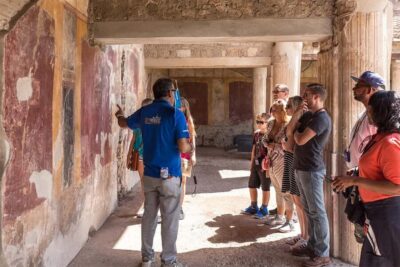
I’d also pay attention to the practical side of small groups. With fewer people, it’s easier to pause for a question, easier to regroup when the path funnels everyone through the same narrow points, and easier to follow along without losing your place. You’ll still need to move at a walking pace, but the pace feels human.
The tour is offered in English, so if that’s your comfort level, you’ll get the full guide narration without relying on audio apps or guessing from signage.
Your route through Pompeii’s everyday life
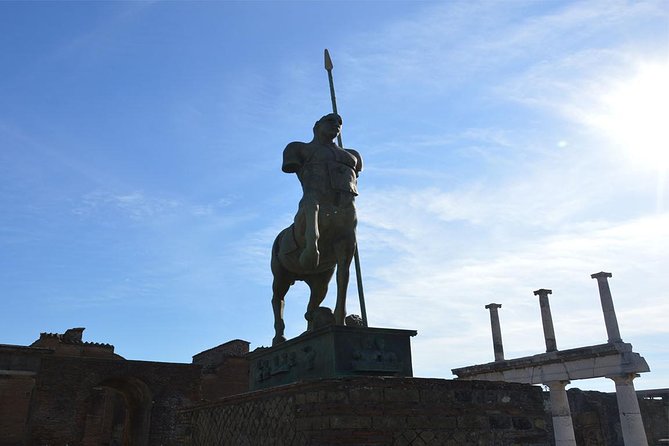
Pompeii Archaeological Park is big enough that a guided plan helps more than people expect. On this afternoon tour, you’ll cover several named areas: the Gymnasium, Amphitheater, Abundance Road, a Tavern, a Thermopolium, the Public Spa, and the Forum. Each one is a different type of space, and that variety is what makes a shorter guided route feel satisfying.
Instead of trying to self-navigate the whole city grid, you follow a sequence your guide can explain. That’s the difference between seeing ruins and understanding why the ruins matter. Your guide will walk you through what happened to Pompeii, so you’re not just moving between pretty stone walls.
Here’s how to think about the stops, in a practical “what you’ll experience on the ground” way:
- Gymnasium area: You’ll be in an open complex zone where the architecture reads like a planned civic space. This is a good place for your guide to set the scene and explain the layout so the rest of the visit clicks.
- Amphitheater: This is one of those locations where scale hits fast. Even if you don’t know Roman details, you can sense the purpose from the form and the seating arrangement style your guide points out.
- Abundance Road: Streets and main routes are where Pompeii becomes a city again. This stop helps you connect the buildings you see later with how people would have moved through town.
- Tavern and Thermopolium: These are food and drink focused place names. Expect to spend time looking at the small-scale details that make the ruins feel like real everyday settings, not just monuments.
- Public Spa: This is where people often slow down because it feels different from the street and entertainment zones. You’ll get a sense of communal routine through the way the site is laid out.
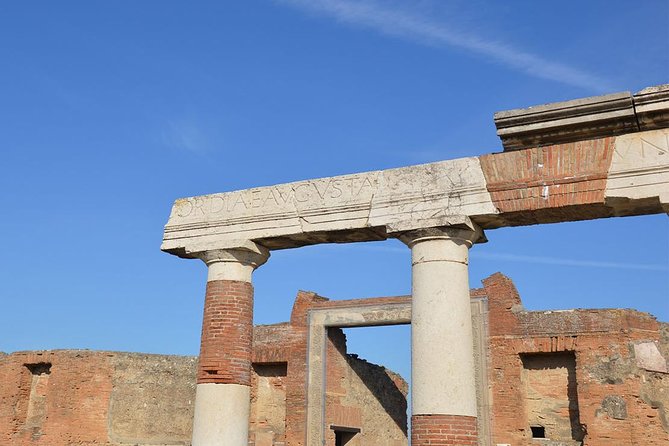
- Forum: The Forum is the anchor for many visitors because it feels central to public life. It’s also the spot where your guide can pull together the “what happened and why it mattered” story so the tour lands with meaning.
Even with strong planning, Pompeii still limits what one short afternoon can cover. That’s why you should come with the mindset of “highlights and understanding,” not “complete Pompeii master tour.”
Gymnasium and Amphitheater: why the big structures feel clearer in a group
When you reach the Gymnasium and Amphitheater, the ruins shift from scattered to structured. These are large, recognizable spaces, and seeing them with guidance helps you avoid the most common self-tour frustration: standing in front of an area and thinking, I’m looking at a lot, but I’m not sure what I’m supposed to notice.
In a small group, you can benefit from quick signposts your guide gives you. You’ll likely get directions for where to look first, how to connect the space to daily activities, and what details are worth spending an extra minute on. That tiny guidance is what turns “I’ve seen ruins” into “I understand why this place worked the way it did.”
Also, the afternoon timing helps here. Large areas can still feel busy, but later in the day you’re less likely to get shoulder-to-shoulder crowding at the points where people stop for photos. That makes it easier to see the shape of the space without constant interruptions.
One consideration: Pompeii involves walking on uneven ground. Even if you’re in good shape, plan for uneven surfaces, lots of up-and-down looking, and the reality that you will spend time standing still in sun pockets. Comfortable shoes are not optional. If you’re traveling with kids, choose footwear that won’t make them miserable by the end.
Nearby, and just as well reviewed:
- From Naples: Pompeii Ruins & Mount Vesuvius Day Tour
★ 4.3 · 11,459 reviews - From Rome: Pompeii, Amalfi Coast, and Sorrento Day Trip
★ 4.6 · 7,031 reviews - From Rome: Pompeii, Amalfi Coast and Positano Day Trip
★ 4.6 · 6,620 reviews - Pompeii Small Group Tour with an Archaeologist
★ 5.0 · 6,593 reviews
Abundance Road, Tavern, and Thermopolium: the daily-life stops people remember
Pompeii’s charm is that it’s not only about major public monuments. The day-to-day spaces are where the city starts to feel familiar, even through ruins. That’s why the stops along Abundance Road, plus a Tavern and Thermopolium, are such strong choices for an afternoon tour.
These areas help your brain shift categories. Instead of thinking, This is where events happened, you start thinking, This is where routine happened. In the afternoon, that matters because you’re more likely to feel mentally fresh enough to connect those routines to the larger story.
From a visitor-experience point of view, I also like how these stops break up the walk. Public spaces like the Forum can be visually intense. Smaller everyday-life zones give your eyes a different kind of detail to focus on, and that variety keeps attention from slipping.
If you’re touring with a teenager, this is often where engagement can improve. The feedback I saw emphasized how the guide kept younger people interested. Names like Thermopolium are naturally memorable, and the way the guide explains them can turn “cool ruins” into “I get why this matters.”
No tickets are included with this tour price, so remember you’ll need to add Pompeii admission separately. Once you’re inside, though, the guided pacing helps you spend your limited time meaningfully.
Public Spa and the Forum: ending with a sense of place
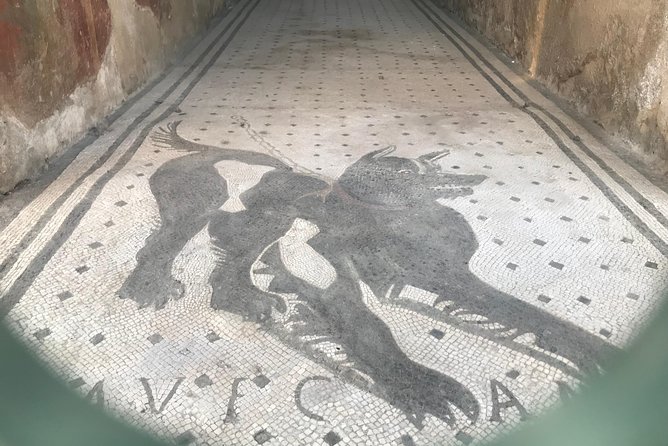
The Public Spa stop is a smart midpoint toward the end. It changes the vibe from entertainment and street-level movement to something that feels more communal and structured. It’s also the kind of area where ruins can be confusing if you’re wandering solo, because you need someone to point out how the spaces relate to one another.
Then you move to the Forum, which is where the tour’s story tends to land. The Forum is the “center of gravity” stop in many Pompeii routes, and it’s the place where you can understand the city’s priorities through the layout of public life.
I like finishing here on an afternoon schedule because you can let the guide’s explanation build toward something coherent. By the time you reach the Forum, you’re not just seeing buildings. You’re following a narrative about how the city functioned and what became of it.
There’s one more practical reason the ending matters. This tour ends at Piazza Porta Marina, not back at the start. That’s convenient if you want to keep walking after your guide session. It also prevents that annoying “where do we go now” feeling, which can happen when tours end back where they started.
Price and logistics: what you’re really paying for
The price is $254.07 per group, for up to 8 people. At first glance, that sounds like a lot. But you’re paying for a guided experience through Pompeii Archaeological Park, delivered by a named guide, in a small-group format with a max of 10. If you can split the cost among friends or family, the per-person math becomes much more reasonable.
If you book with the full group of 8, you’re looking at about $32 per person, before any admission ticket you need to buy separately. If you book as fewer people, your per-person share rises, so I’d treat this as a good option for small groups who can travel together rather than solo travelers.
Also, admissions are not included, so build that into your budget. You don’t want to be surprised at the gate when you realize the tour price covers guidance only. The good news is that guided time typically helps you make admission count. You aren’t just paying to wander, you’re paying to understand and see key areas in a set route.
Another logistics point that affects value is the timing. A later start often helps you enjoy the park more comfortably, which can be worth real money to your future self. If you’re traveling with kids, or if you simply know your own limits in intense sun, a 3:30 pm start can be a smarter use of your day than squeezing Pompeii into peak heat.
Finally, the duration is listed as about 2 hours overall, while the park portion is scheduled as a longer block. Translation: plan for a focused visit, not a slow, all-day exploration. You’ll get a satisfying guided highlight experience, but Pompeii is too big to see everything in one short tour.
Who this afternoon Pompeii tour is best for
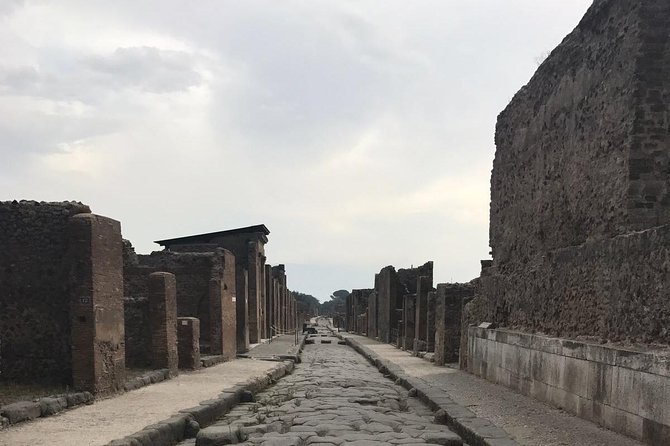
I’d recommend this tour if you want Pompeii without the chaos. The afternoon schedule, small-group cap, and guide-led pacing are a good match for families, teens, and anyone who prefers structure.
It’s especially appealing when you care about engagement. The feedback you shared highlighted Glauco keeping teenagers interested and tailoring explanations to their interests. That’s the kind of result you only get when the guide is comfortable guiding different ages, not just delivering a script.
If you like learning in plain language while you walk, you’ll probably enjoy this format. Pompeii is easier to process when someone points out what matters and helps you connect places to a story about what happened.
On the other hand, if you want maximum time to wander, this is probably not your best fit. The visit is short and focused, so you won’t have hours to wander side streets at your own rhythm. Consider this as a guided highlights and understanding tour.
Should you book Ancient Pompei in the afternoon?
I’d book it if your priorities are comfort, guidance, and a small group. The 3:30 pm start is a strong decision for avoiding the worst crowd levels and improving walking comfort. The guide factor also looks like the real differentiator here, with Glauco Messina described as keeping kids and teens engaged and adjusting explanations to what they care about.
I’d hesitate only if admission logistics would be a headache for you. Since tickets are not included, you need to handle admission separately. And if you’re dreaming of an all-day Pompeii exploration, this short guided visit is a highlight route, not a full park marathon.
If you want Pompeii to feel understandable, not just impressive, this afternoon option is a solid value play for a small group.
FAQ
What time does the Ancient Pompei in the afternoon tour start?
It starts at 3:30 pm.
How long is the tour?
It lasts about 2 hours.
Where do I meet the guide?
You meet at Piazza Immacolata, 80045 Pompei NA, Italy.
Where does the tour end?
The tour ends at Piazza Porta Marina, 80045 Pompei NA, Italy.
Is the tour guided?
Yes, it includes a guided tour.
Are Pompeii Archaeological Park tickets included in the price?
No, admission tickets are not included.
How many people are in the group?
The experience has a maximum of 10 travelers.
What language is the tour offered in?
The tour is offered in English.
What is the cancellation policy?
Free cancellation is available. You can cancel up to 24 hours in advance for a full refund.
Latest reviews around Pompeii
- Guided Day Tour of Pompeii and Herculaneum with Light Lunch★ 4.5 · 311 reviews
- Skip-the-Line Pompeii Guided Tour from Sorrento★ 4.5 · 722 reviews
- Pompeii Express Guided Tour by Train from Sorrento★ 4.5 · 770 reviews
- Pompeii & Mount Vesuvius Tour with Guided Visit, Tickets & Lunch★ 4.5 · 155 reviews
- Pompeii and Amalfi Coast Private Day Trip with Pick Up★ 5.0 · 312 reviews
- Mt Vesuvius and Pompeii Tour by Bus from Sorrento★ 4.5 · 170 reviews
- Pompeii Ruins Half-Day Tour from Sorrento with Guide★ 4.0 · 714 reviews
- Pompeii Guided Tour From Sorrento Coast★ 5.0 · 143 reviews
Pompeii & Vesuvius Tours, compared.
Pompeii: Entry Ticket and Guided Tour with an Archaeologist
Read our review →
Pompeii: Entry Ticket with Optional Audio Guide
Read our review →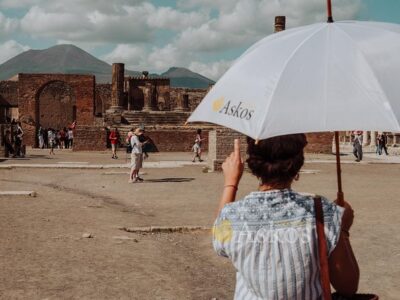
Pompeii: Small Group Tour with an Archaeologist
Read our review →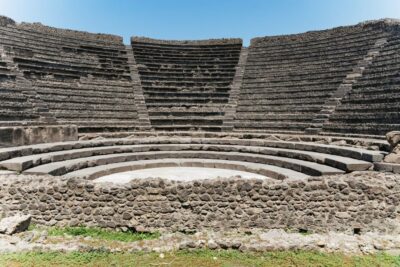
Pompeii Small Group Tour with an Archaeologist
Read our review →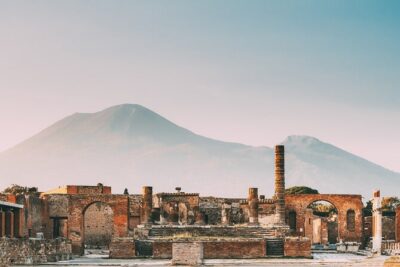
Pompeii, Amalfi Coast and Positano Day Trip from Rome
Read our review →Browse the lists this tour appears in