
Reviewed · POMPEII & VESUVIUS TOURS
From Naples: Pompeii Skip-the-Line Guided Tour
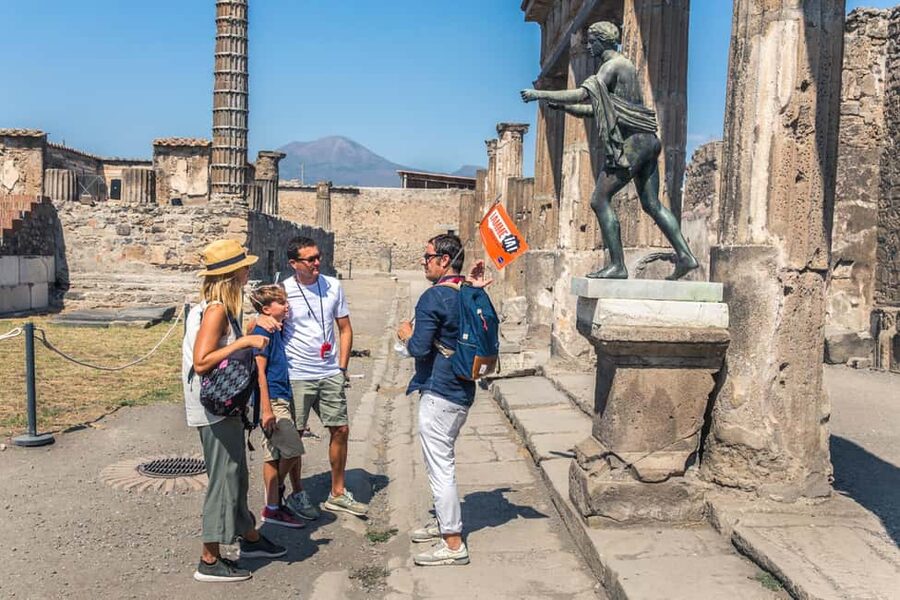
Pompeii feels bigger when you go first. This skip-the-line trip from Naples is built for that early arrival, so you get to see the big public areas and quieter corners before crowds fully swarm. I also like how the tour threads Pompeii’s story through real street-level places, from Porta Marina to the Theater District, without getting lost in guesswork. You get priority access and early departure, which makes a huge difference in a site that can feel overwhelming fast.
Two things I especially like are the licensed local guide and the fact that the walking route hits the major, most meaningful stops. When you’re standing in the Civil Forum, looking down the main shopping street, and then moving into baths and homes, the explanations help your brain connect the dots instead of just collecting ruins.
One consideration: this is not a gentle stroll. The route is heavy on walking, it can be hot and sunny, and the tour can be split into smaller parties due to site rules, so you will want to stay close to your group when transitions get busy.
In This Review
- Key highlights to look for
- Meeting in Naples, then getting to Pompeii without stress
- Early departure: how it changes what you see
- Porta Marina and the Civil Forum: Pompeii’s power center
- Via dell’Abbondanza and the Theater District: street life and performance
- Baths, street food, and the Lupanare: daily routines at human scale
- House of the Faun and the Alexander Mosaic: wealth you can see
- Theater, market, and the plaster casts: the city’s everyday heartbeat
- Pacing and group realities: what to expect if things get busy
- Is $71 good value for this Pompeii visit?
- Should you book, and who is this tour best for?
- FAQ
- How long is the Pompeii skip-the-line guided tour?
- Where do I meet in Naples?
- What’s included in the price?
- What should I bring?
- Is the tour available in languages other than English?
- Is this tour suitable for people with mobility issues?
Key highlights to look for
- Priority entry that cuts down your waiting at Pompeii’s entrances
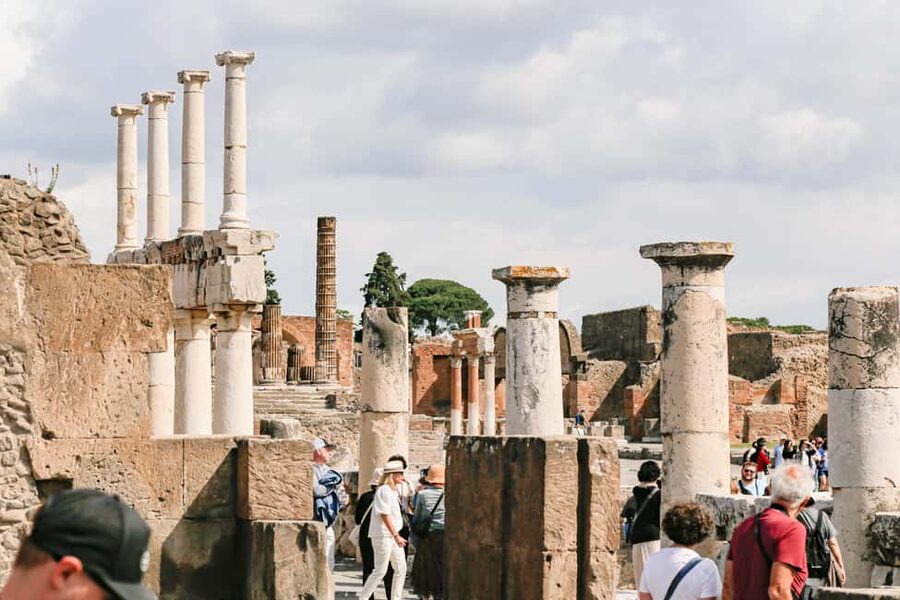
- Early timing that makes the ruins feel calmer and more readable
- Licensed, local guiding that connects sites like Porta Marina, the Forum, and the Theater District
- A practical route from public life (Forum, basilica, macellum) to everyday routines (baths, food shops)
- Photo stops plus guided time so you can actually see, not just walk through
- Audio headsets for 8+ to keep the commentary clear while moving through crowds
Meeting in Naples, then getting to Pompeii without stress
Your day starts outside the main entrance of the Starhotel Terminus, at Piazza Giuseppe Garibaldi 91 in Naples. If you’re the type who likes to be early, do it. One recurring theme in real-world feedback is that smooth pick-ups make everything feel easier, while last-minute confusion can cost time before you even reach the site.
Once everyone is together, you’ll ride out by air-conditioned bus for about 30 minutes. That matters in summer, because the heat inside Pompeii is not a minor detail. Even a short, guided morning can turn into a sweaty shuffle if you start late. With this tour, the whole plan is about beating that.
You also get round-trip transport, so you’re not stuck figuring out transit after a tiring walking day. Pompeii is big, and the stress of getting back to Naples is the kind of thing that ruins a vacation buzz.
More Pompeii digs and Vesuvius climbs:
- Sorrento: Skip-the-Line Pompeii Express Tour by Train
★ 4.8 · 2,038 reviews - Priority Access Pompeii & Mt. Vesuvius Full day from Sorrento
★ 4.5 · 1,376 reviews - From Sorrento: Pompeii and Vesuvius Guided Tour with Lunch
★ 4.8 · 683 reviews
Early departure: how it changes what you see
This tour’s biggest advantage is timing. Starting early is what turns Pompeii from a loud, crowded checklist into an actual walking experience. You still have plenty of people around, but you’ll find the main streets and major clusters much more manageable earlier in the day.
Early timing also helps your photos. Those Via dell’Abbondanza grooves and the Theater District lines of sight photograph way better when the crowd flow is lower. And from a comfort standpoint, you can spend the hottest part of your day closer to shaded areas or planned indoor-type stops like baths and houses, instead of spending all your energy fighting sun and lines.
There’s a second benefit too, the one you feel in your head: early entry gives your guide time to explain without rushing every sentence. More time for the story means you walk through places that feel like actual neighborhoods, not just fenced-off fragments.
Porta Marina and the Civil Forum: Pompeii’s power center
The guided portion begins at Porta Marina, one of Pompeii’s original gates. This is a smart first choice. It gives you a sense of how people entered the city, rather than dropping you in the middle of the ruins with zero orientation.
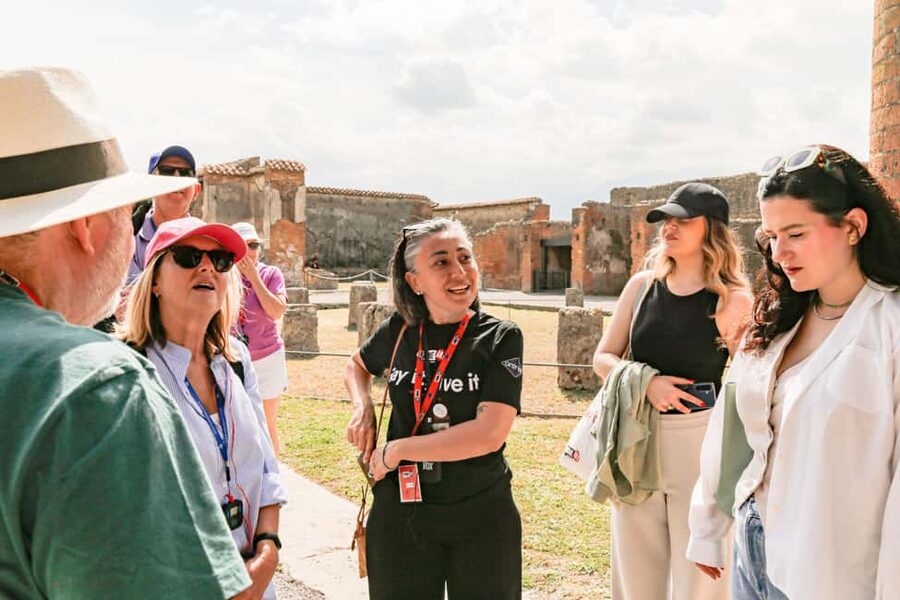
From there, you move toward the Civil Forum, Pompeii’s political, religious, and commercial heart. This is where you see how public space worked in Roman life, and your guide’s explanations help you spot what was ceremonial, what was administrative, and what was about business.
Expect stops that include:
- Civil Forum area, with photo time and guided time
- Basilica, used for legal and business affairs
Then, as you look outward across the setting, Mount Vesuvius looms as the quiet reason Pompeii ended the way it did. Even if you’ve read the story before, seeing how the city sits with Vesuvius in the background makes it more real, in a blunt kind of way.
Practical note: the Forum cluster is also where people tend to bunch up. If your group gets divided into smaller parties because of site regulations, don’t panic. Just follow your licensed guide, and keep an eye out for re-grouping cues.
Via dell’Abbondanza and the Theater District: street life and performance
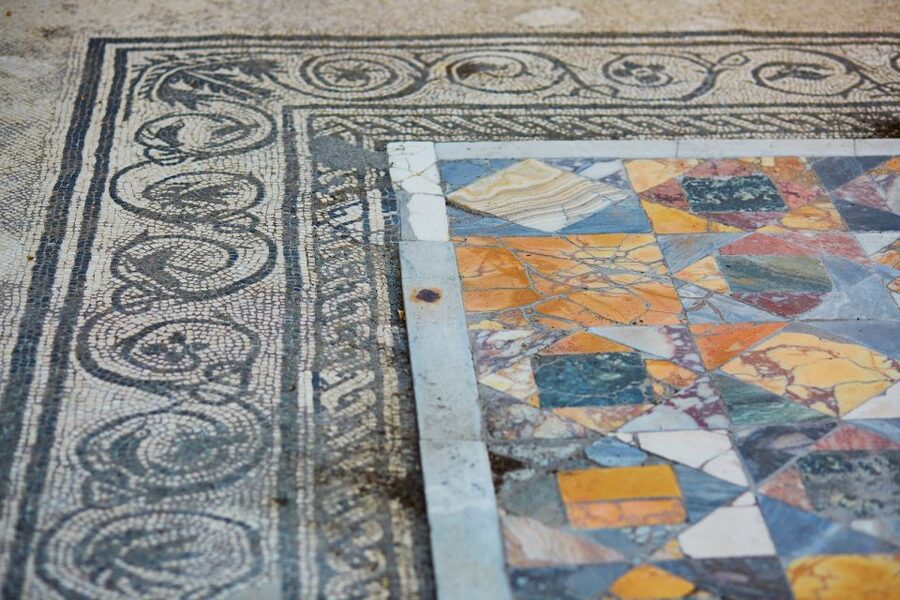
After the civic core, you head to the Theater District and the main street, Via dell’Abbondanza. This is the part of Pompeii that feels most like a city you could walk through today, because the street layout and wear marks are still there. The stone grooves from chariot traffic are one of those details that makes the past feel less abstract.
Then you reach the Theater District, a cultural hub where entertainment and social life happened. This is also where you’ll visit the Large Theater, an open-air venue used for comedies, dramas, and musical performances.
Why this stop works so well on a guided tour: your guide can point out how the theater fit into daily movement. You’re not just seeing a big stone shell, you’re learning what kinds of events drew crowds and how public entertainment functioned.
One real-world tip: if you’re tempted to wander slightly off route for extra photos, don’t. The tour’s structure is designed for flow, and slipping away can make it harder for your group to stay together at crowded transitions.
More Amalfi Coast days out:
- Sorrento: Exclusive Capri Boat Tour and Optional Blue Grotto
★ 4.8 · 3,170 reviews - Sorrento Farm and Food Experience including Olive Oil, Limoncello, Wine tasting
★ 5.0 · 2,524 reviews - Capri Blue Grotto Small-Group Boat Day Tour From Sorrento
★ 4.5 · 2,511 reviews - From Sorrento/Nerano: Amalfi and Positano Boat Tour
★ 4.6 · 2,440 reviews
Baths, street food, and the Lupanare: daily routines at human scale
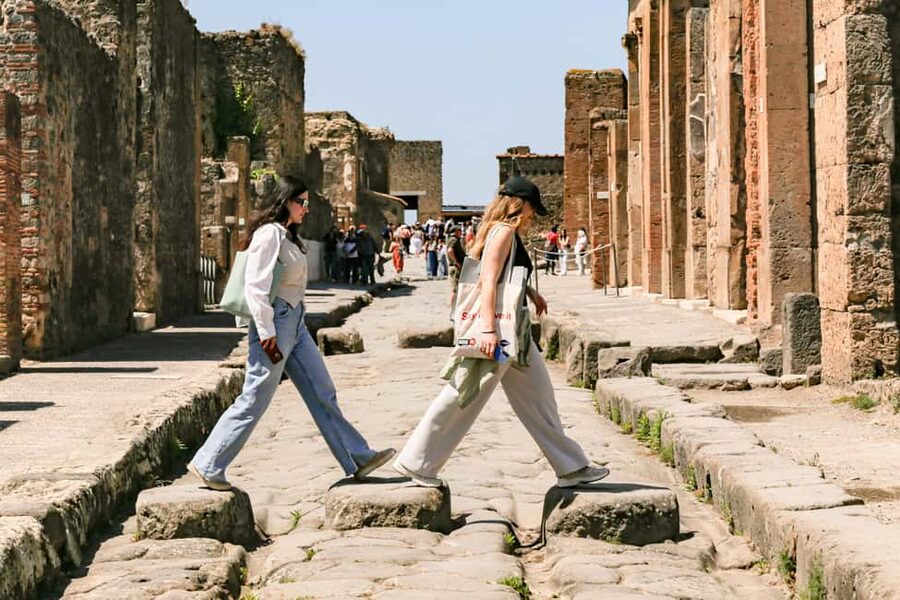
The route doesn’t stop at monuments. It pushes into daily life stops too, which is where Pompeii can feel most personal.
You’ll visit:
- Terme Stabiane, a preserved bath complex
- Lupanare, Pompeii’s ancient brothel with vivid frescoes
- Stops tied to everyday eating, including Thermopolium street food shops and a Pistrinum bakery (millstones, ovens, and serving areas)
These are some of the most memorable stops because they show small rhythms: washing, relaxing, grabbing hot food, buying meals on the go. The baths are especially good for understanding how social time worked, and the bath complex gives you a stronger sense of Roman wellness culture than the usual “temples and walls” approach.
The Lupanare is also a powerful contrast. Yes, it’s a sensitive topic, but it’s still part of the city’s real economic and social ecosystem. Your guide can frame it as part of how the city functioned, not just as a shocking photo stop.
One watch-out: because these areas can be visually tight and crowded, your tour might feel faster here than in the wide-open Forum spaces. If you have mobility constraints that aren’t severe enough for the tour’s non-suitable category, you’ll want to pace yourself and rely on your guide for timing.
House of the Faun and the Alexander Mosaic: wealth you can see
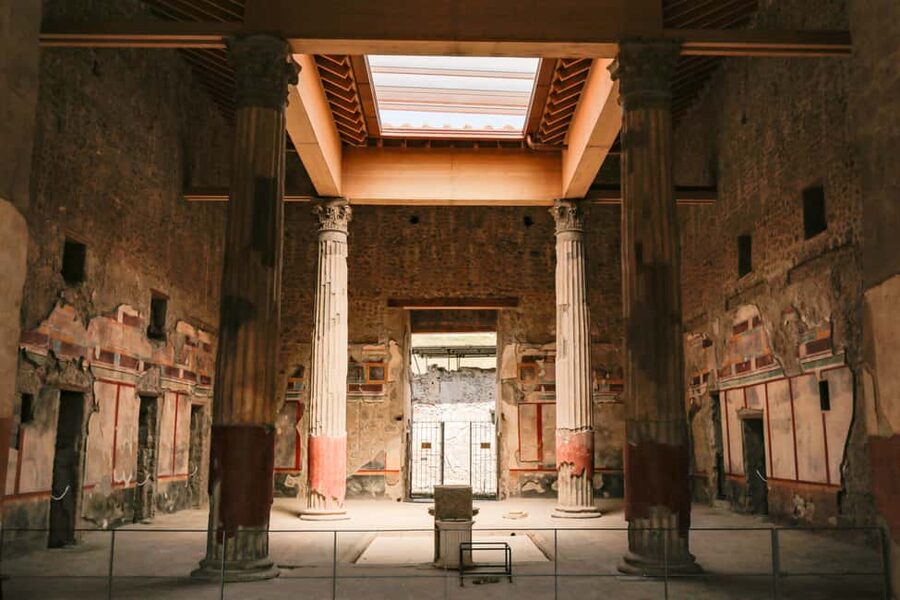
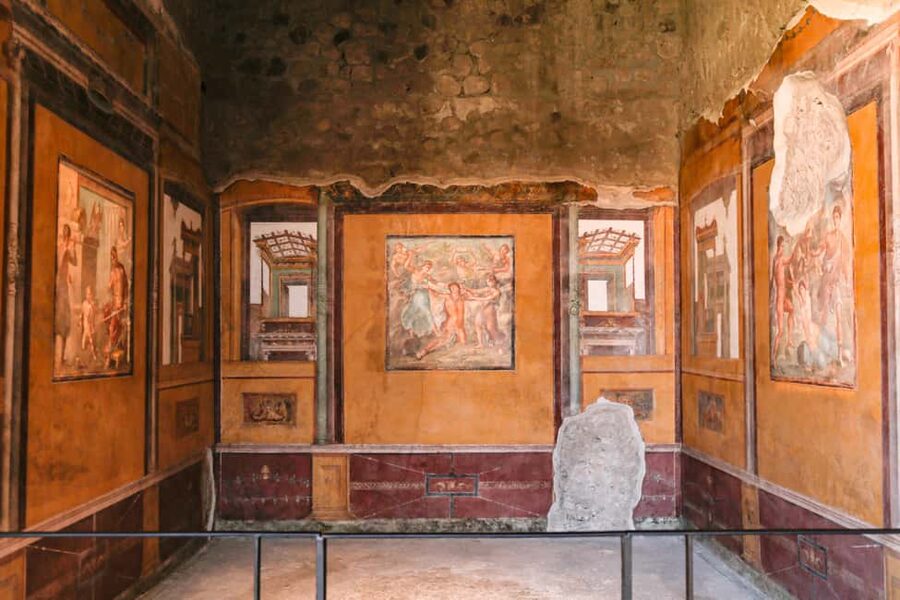
This is your “wow” stop for art and luxury. You step inside the House of the Faun, a grand Roman villa famous for its mosaics, including the striking Alexander Mosaic.
The House of the Faun is where Pompeii stops feeling like a broken city and starts feeling like lived-in wealth. The mosaic details give you a sense of patronage and taste, and your guide’s commentary matters here because it helps you read what you’re looking at beyond just color and pattern.
In many Pompeii visits, people either skip the residential side or see it for a few minutes and move on. Here, the guided time helps the house make sense as a lifestyle, not just a pretty room.
Tip from experience with guided Pompeii routes: take a minute to slow down in the mosaic areas. If you keep moving with the group, you might miss the small story in the artwork. You don’t need long, but you do need that one pause.
Theater, market, and the plaster casts: the city’s everyday heartbeat
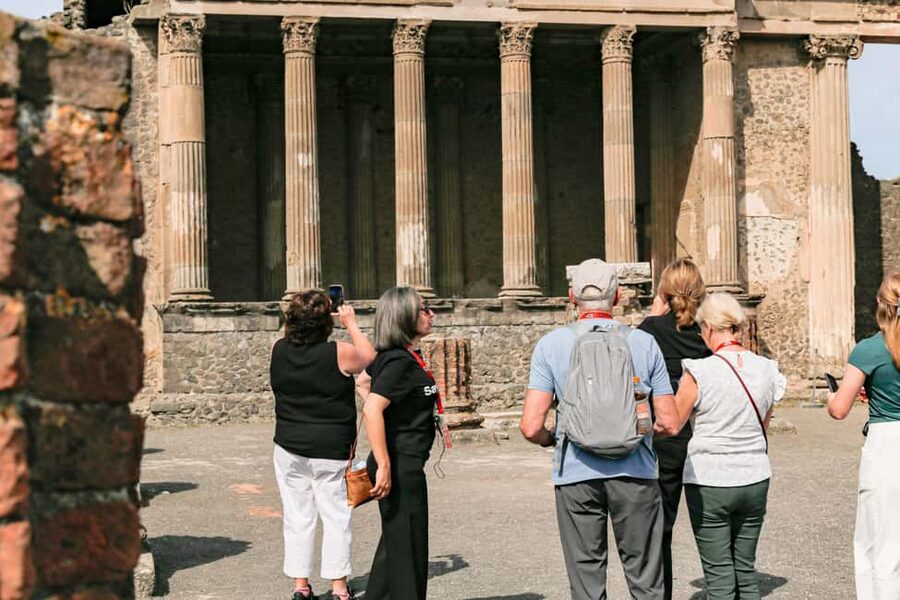
After the house, you’ll move toward the Macellum, Pompeii’s lively food market. Markets are where people intersect, and the guided approach helps you understand who traded, what was sold, and how goods moved through the day.
Then comes one of the most emotionally heavy moments: the plaster casts of Pompeii’s victims. These casts show men, women, and children frozen in their final moments. This stop can hit hard, because it turns archaeology into people you can recognize as real.
I appreciate that the tour includes this moment. It keeps the day from turning into just sightseeing. Pompeii isn’t only about architecture. It’s about a sudden end to ordinary lives, and the guided framing helps you process what you’re seeing.
Pacing and group realities: what to expect if things get busy
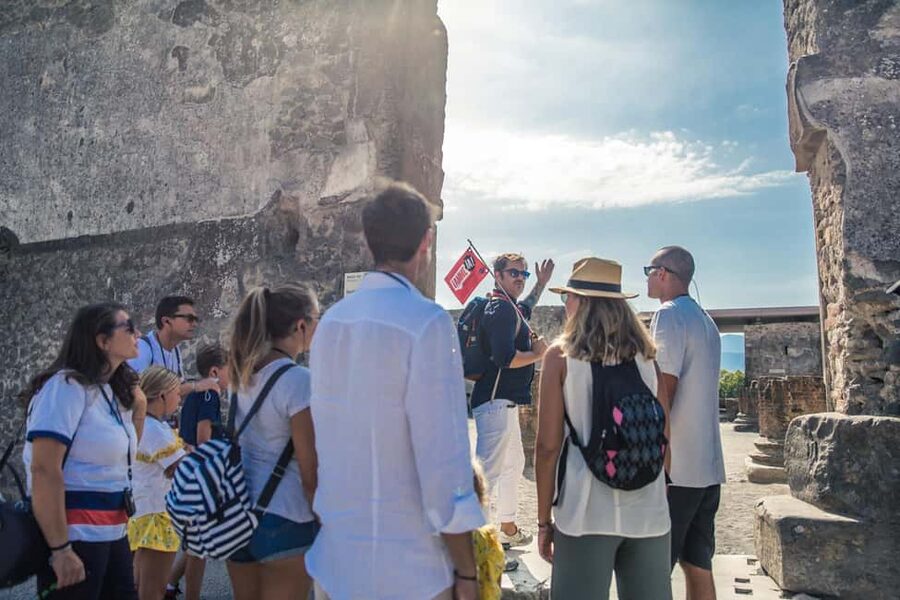
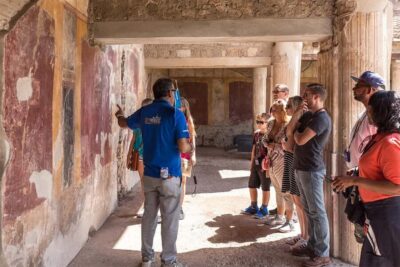
Even with a plan, Pompeii can control the pace. Crowds, narrow paths, and site rules can force small changes. The tour itself notes that groups may be split into smaller parties with their own licensed guides, due to site regulations.
That’s not necessarily a problem, but it can affect your rhythm. If you notice your group separating, follow your guide immediately. And if you rely on audio headsets, stay within a reasonable distance from the speaker so you don’t lose the narration in dense crowd pockets. In real-world conditions, signals can fade when you’re pressed by other visitors.
Another thing to consider is heat. The tour is short for how much it covers, so you are walking through sun. Wear comfortable shoes, bring sunglasses, and a sun hat. If you want to go extra smart, carry a water bottle. There are fountains inside Pompeii where you can refill, and one practical tip is to have a small amount of cash, some public restroom use has been reported to cost about 0.50 euros.
Is $71 good value for this Pompeii visit?
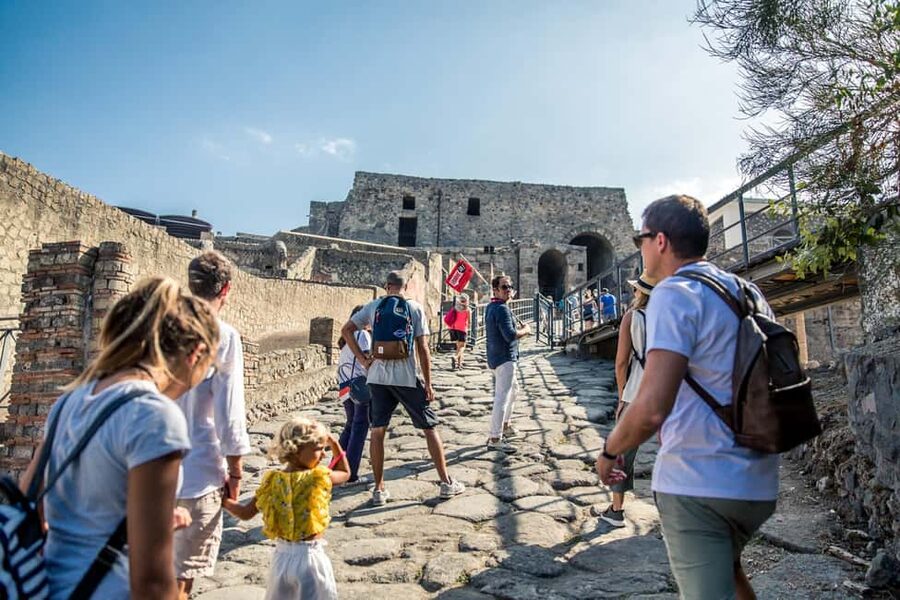
At $71 per person for a 4-hour experience, the value depends on what you hate most: lines, uncertainty, or both.
You’re paying for three things that are hard to replicate on your own in a half-day:
- Priority access that saves time at the entrance
- A licensed guide who can explain the “why” behind what you’re looking at
- Round-trip transportation that keeps the day from turning into transit math
If you attempt Pompeii independently, you can absolutely do it. But you’ll spend more time figuring out routes, and you’ll miss the connections that make the Forum, street grooves, theaters, and homes feel like a coherent city.
Also, this tour’s route is tightly planned. One reason people rate these kinds of tours highly is that you get the highlights without trying to cover the entire site, which is huge and exhausting.
If you’re someone who wants maximum free time to wander at your own pace, you might feel the schedule is tight. But if you want an organized visit that protects your energy and gives context, this pricing makes sense.
Should you book, and who is this tour best for?
Book this tour if you want:
- A first-time Pompeii route that hits the key places in a sensible order
- Early timing so you see more before the heaviest crowds
- Live commentary that helps you interpret mosaics, public spaces, and residential life
Consider a different style of visit if you:
- Want a very relaxed pace with lots of unstructured time
- Have major mobility limitations, since the tour is not suitable for mobility impairments
- Have heart problems, since the walking and heat can be an issue
If you’re also thinking about Mount Vesuvius, verify how it’s handled with your specific booking. Some departures have included or offered a Vesuvius climb, and those additions come with a strenuous hike in the heat. If Vesuvius is part of your dream day, plan your energy accordingly.
FAQ
How long is the Pompeii skip-the-line guided tour?
The total tour time is about 4 hours, with roughly 2.5 hours of guided time inside Pompeii.
Where do I meet in Naples?
You meet your guide outside the main entrance of the Starhotel Terminus, at Piazza Giuseppe Garibaldi 91 in Naples.
What’s included in the price?
Included are an expert local guide with live commentary, priority access to skip the line into Pompeii, audio headsets for groups of 8+, and round-trip transportation in an air-conditioned bus.
What should I bring?
Bring comfortable shoes, sunglasses, and a sun hat. It also helps to carry a water bottle for refills inside Pompeii.
Is the tour available in languages other than English?
Yes. The tour can run in English, French, Spanish, or German. If the minimum number of French or Spanish-speaking participants is not met, the tour will take place in English, with French or Spanish commentary only during the guided visit of the Pompeii archaeological site.
Is this tour suitable for people with mobility issues?
No. It is not suitable for people with mobility impairments or people with heart problems.
More Day Trips out of Naples
- From Naples: Pompeii Ruins & Mount Vesuvius Day Tour
★ 4.3 · 11,459 reviews - From Naples: Sorrento, Positano and Amalfi Full-Day Tour
★ 4.6 · 10,988 reviews - From Naples: Sorrento, Positano & Amalfi Coast – Small Group Tour
★ 5.0 · 8,643 reviews - From Naples: Amalfi Coast Full-Day Trip
★ 4.5 · 4,354 reviews
Latest reviews around Sorrento
- The Three Tenors in Sorrento: Opera Arias, Naples and Songs★ 4.8 · 327 reviews
- Sorrento: Lemon Garden Tour with Marmalade Tasting★ 4.6 · 405 reviews
- From Sorrento: Amalfi Coast Full-Day Trip by Boat★ 4.8 · 367 reviews
- From Sorrento: Capri Island Day Trip with Boat Cruise★ 4.7 · 469 reviews
- Sorrento: SUP Paddleboard Tour to Bagni Regina Giovanna★ 4.9 · 149 reviews
- Sorrento: Pasta and Tiramisu Class at a Local’s Home★ 4.9 · 158 reviews
- Sorrento: Sightseeing Cruise with Limoncello Tasting★ 4.0 · 224 reviews
- Sorrento: Night time Walking Tour & Limoncello Tasting★ 5.0 · 155 reviews
Pompeii & Vesuvius Tours, compared.
Pompeii: Entry Ticket and Guided Tour with an Archaeologist
Read our review →
Pompeii: Entry Ticket with Optional Audio Guide
Read our review →
Pompeii: Small Group Tour with an Archaeologist
Read our review →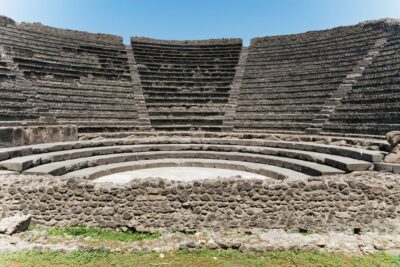
Pompeii Small Group Tour with an Archaeologist
Read our review →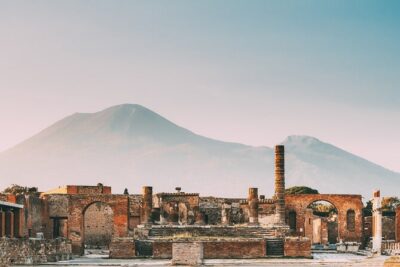
Pompeii, Amalfi Coast and Positano Day Trip from Rome
Read our review →Browse the lists this tour appears in