
Reviewed · AUDIO TOURS
Rome: Ostia Antica Archaeological Park Ticket & Audio App
Ostia Antica beats expectations fast. This self-paced ticket gets you into a stunningly preserved ancient city where mosaics and street-level ruins make the past feel close. I especially like that the site is big enough for wandering, but organized enough that the audio guide keeps you from staring at walls with zero clues.
My second favorite part is the bonus creative touch, you can turn your own photo into a digital postcard to send home. The only real drawback is practical: the park is extensive, the paths are uneven, and it can be easy to lose your bearings if you do not plan your route.
In This Review
- Key Points at a Glance
- Ostia Antica on Your Time, With an Audio App
- Ticket Includes Five Roman-Area Sites (And Why That Matters)
- Ostia Antica Archaeological Park: Streets, Apartments, and Mosaics
- Procoio Villas, Bath Complex, and Amphitheater Masks
- Beyond Ostia: Julius II, Ships in Fiumicino, Imperial Ports, and Isola Sacra Necropolis
- Getting Oriented, Walking Comfortably, and Finding the Cafe
- Value and Time Planning: Is $27 Worth It?
- Should You Book This Ostia Antica Ticket and Audio App?
- FAQ
- What is included with the Ostia Antica Archaeological Park Ticket and Audio App?
- Which sites does the integrated admission cover besides Ostia Antica?
- How long is the ticket valid after I activate it?
- Where do I exchange my voucher?
- Do I need to bring ID?
- What should I bring to use this experience comfortably?
- Is transportation included?
- Is the site easy to navigate?
Key Points at a Glance
- Self-paced visiting gives you control over pacing, stops, and photo breaks
- Well-preserved mosaics and frescoes make the archaeology visually rewarding
- Roman apartment blocks and villas help you picture everyday life, not just monuments
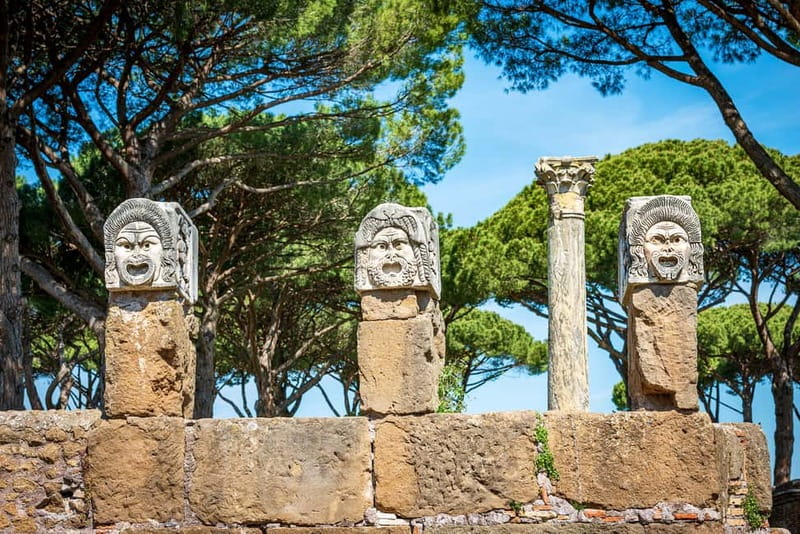
- Procoio area highlights include a bath complex and an amphitheater with stone theatrical masks
- Integrated entry covers multiple sites beyond Ostia Antica, not just one ruin field
- Photo-to-postcard feature turns your visit into something you can actually send
Ostia Antica on Your Time, With an Audio App
Ostia Antica is the kind of place where a checklist feels too limiting. This experience is set up so you can move at your own speed through streets, building remains, and rooms that still show clear decoration. The digital audioguide is included, and it matters because many parts of the site look similar until someone gives you the story.
What you’ll love most is how the preserved setting helps you imagine real daily routines: walking from one block to the next, stepping into spaces that once served as homes and workplaces. You are not just looking at ruins. You are reading a city layout made visible by preservation.
The other reason the audio format works so well here is that the park is large. You will likely spend more time than you expected. If you are the type who rushes through museums, switch to slower mode. This is where your brain needs time to “translate” the stones.
A few more Rome options to weigh
- Vatican: Museums & Sistine Chapel Entrance Ticket
★ 4.5 · 144,003 reviews - Vatican Museums & Sistine Chapel Tour with Optional Basilica
★ 4.3 · 67,413 reviews - Colosseum, Roman Forum & Palatine Guided Tour
★ 4.7 · 63,148 reviews
Ticket Includes Five Roman-Area Sites (And Why That Matters)
This is not a single-site ticket. Your admission bundle covers multiple stops across the Ostia and Fiumicino area, including the Ostia Antica Archaeological Park plus the Castle of Julius II, the Museum of Ships in Fiumicino, the Imperial Ports of Claudius and Trajan, and the Necropolis of Porto on Isola Sacra.
That matters for value because you are effectively buying access to a small cluster of related sites. Instead of paying separately for each stop or forcing a tight one-day sprint, you can spread things out. The ticket is valid for 8 days from first activation, though one line of the details also mentions 7 days, so double-check your voucher for the exact end date before you rely on it.
Also, you only get one admission to the listed sites and museums in the park, so do not wait until the last minute to use it. Pick a primary day for Ostia Antica, then build in the others like chapters.
Ostia Antica Archaeological Park: Streets, Apartments, and Mosaics
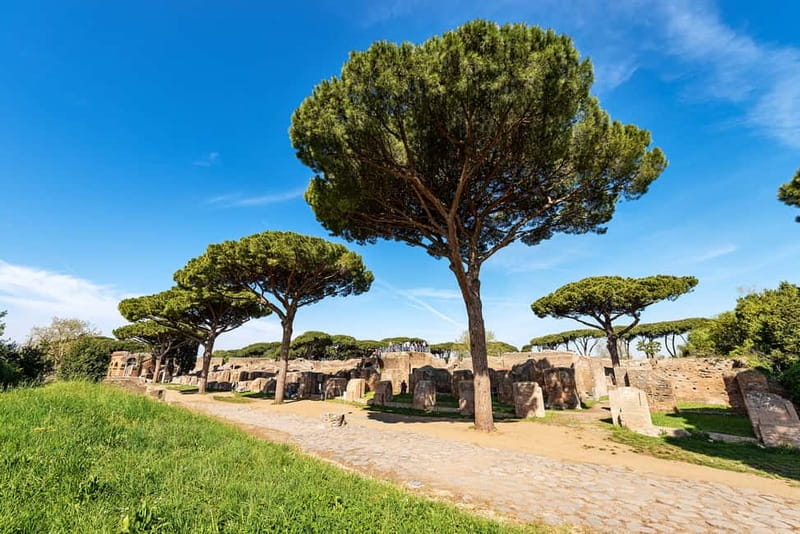
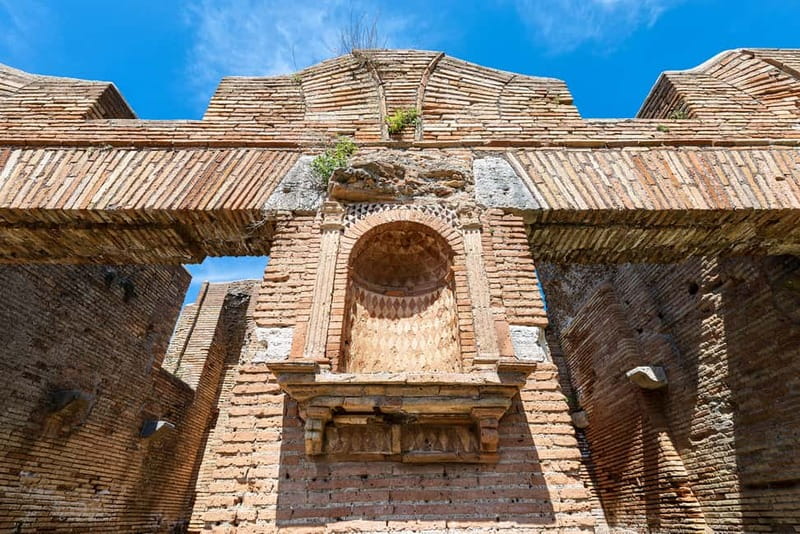
When you enter Ostia Antica, the first thing you notice is how much of the town plan is still legible. The layout feels like an outdoor grid of Roman life: buildings, lanes, and room interiors exposed to the air. I love how the site lets you walk through it like a neighborhood, not like a set of isolated exhibits.
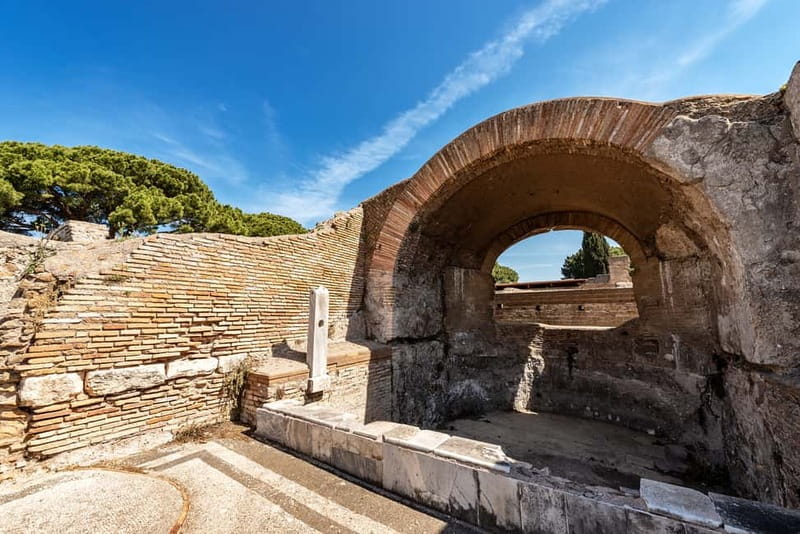
The core highlights are the well-preserved mosaics and frescoes spread across multiple areas of the city. Even when you cannot recall every Roman term, the visuals do the work. Floor patterns, painted walls, and decorative surfaces make you understand why the Romans invested in beauty at home and in public-facing spaces.
One reason preservation here is unusually strong is the story of the silt. According to legend, the city was founded by Ancus Marcius in 620 BC as a Roman colony at the mouth of the Tiber. Later, the river covered the town in silt, and that protective layer helped keep buildings, frescoes, and mosaics in excellent condition.
You also get to explore residential architecture, including two-story Roman apartment blocks. That is a big deal because it helps you picture not only elite villas, but also where everyday residents lived. If you care about what ordinary people did, this portion pulls its weight.
The practical catch: the park is extensive. The route is not always obvious, and it is easy to get off-track. Even with an audio guide, you may need to slow down and use your phone screen to re-find where you are.
Procoio Villas, Bath Complex, and Amphitheater Masks
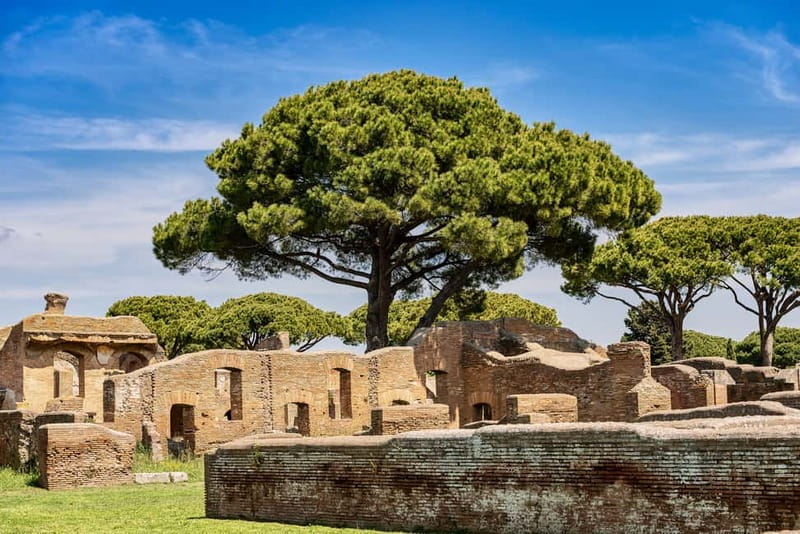
The Procoio area is where Ostia Antica starts to feel like a mini theme park of Roman design, in the best possible way. These seaside villas include features that go beyond decorative rooms. You are not only looking at surfaces. You are seeing how a household functioned.
A major highlight is the large bath complex. Baths were social spaces, and at Ostia Antica you can often trace how movement through the rooms would have worked. It is one of those sections where you do not need perfect background knowledge to follow the logic.
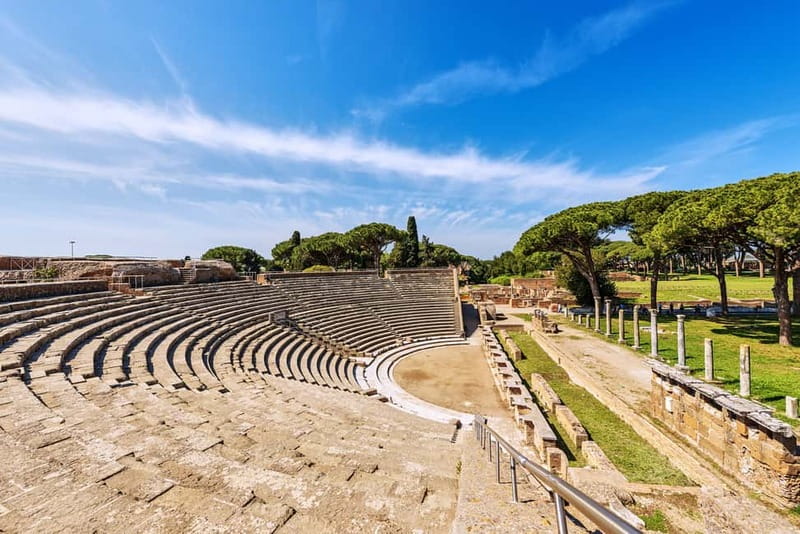
Another standout is an amphitheater lined with striking theatrical masks made from stone. This detail sticks in your mind because it is so specific. It turns a historic structure into something more characterful, like the building has a voice. If you like architecture details, this is worth building your day around.
If you want to make this part more rewarding, give yourself time to circle and compare views. The audio guide can help, but the visuals do not always read instantly. Slow steps pay off here.
Nearby, and just as well reviewed:
- Vatican Museums, Sistine Chapel & St Peter’s Basilica Guided Tour
★ 4.5 · 39,149 reviews - Rome: Colosseum, Palatine Hill and Roman Forum Guided Tour
★ 4.8 · 32,814 reviews - Rome: Guided Tour of Colosseum, Roman Forum & Palatine Hill
★ 4.7 · 27,897 reviews - Rome: Colosseum & Forum with Audio Guide App -Optional Arena
★ 4.2 · 24,770 reviews
Beyond Ostia: Julius II, Ships in Fiumicino, Imperial Ports, and Isola Sacra Necropolis
One smart move is to treat Ostia Antica as your main event, then use the rest of the ticket for lighter, more targeted visits. The integrated admission gives you a way to add context about the wider region without turning everything into one exhausting day.
The other covered sites each tell a different angle of the coastal Roman world:
Castle of Julius II: Expect a different vibe than the street ruins. This stop gives you a historical layer and helps break up the walking-heavy day at Ostia Antica.
Museum of Ships in Fiumicino: If you are curious about trade, shipping, and how the city connected to the wider empire, the ships theme is a natural complement. It helps you connect why Ostia mattered in the first place.
Imperial Ports of Claudius and Trajan: These are all about infrastructure, movement, and scale. Roman engineering here helps explain how goods and people moved through this region, not just who lived behind the mosaic floors.
Necropolis of Porto on Isola Sacra: This is the emotional counterpart to residential ruins. A cemetery site changes your lens. You start thinking about the people behind the city, not only the buildings.
You do not have to visit all of these. If you only have one full day, prioritize Ostia Antica first, then pick one additional site that matches your interests.
Getting Oriented, Walking Comfortably, and Finding the Cafe
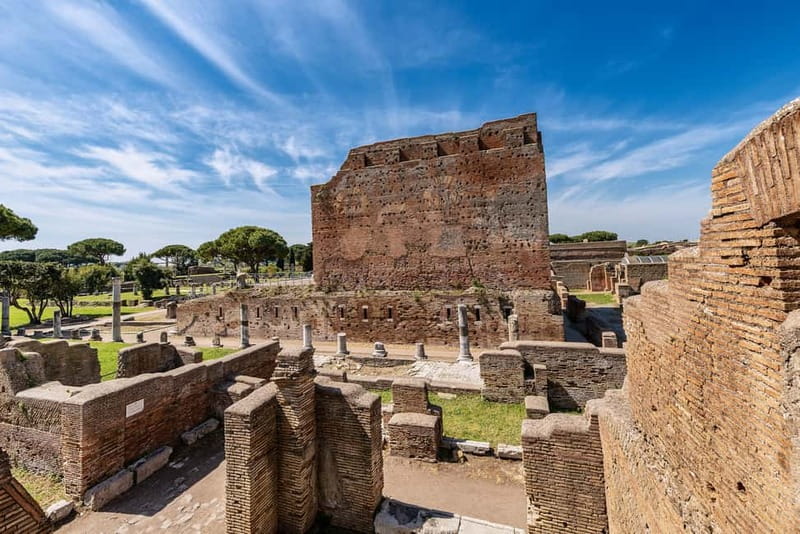
This park is walkable, but it is not flat. The paths are uneven, so comfortable shoes are not optional. I also recommend you keep your smartphone charged, because you need it for the digital experience and you will probably use it to keep your bearings.
A real tip from experience: the route around is not always clear. It is easy to get lost if you are only following vague landmarks. If you notice yourself circling or backtracking, stop and reset rather than pushing deeper into confusion. The audio guide can help, but location tracking can feel tricky at times for specific points.
Food is another practical issue. There is a cafe on site, but it can feel hidden. If you plan to stay until the late afternoon, treat water like part of your ticket plan. Bring more than you think you need, especially in warmer weather.
And yes, plan for an all-day walk. The site is extensive, and you will want breaks. Build in photo pauses and slowdowns at the mosaic-heavy areas so you do not rush past the best rooms.
Value and Time Planning: Is $27 Worth It?
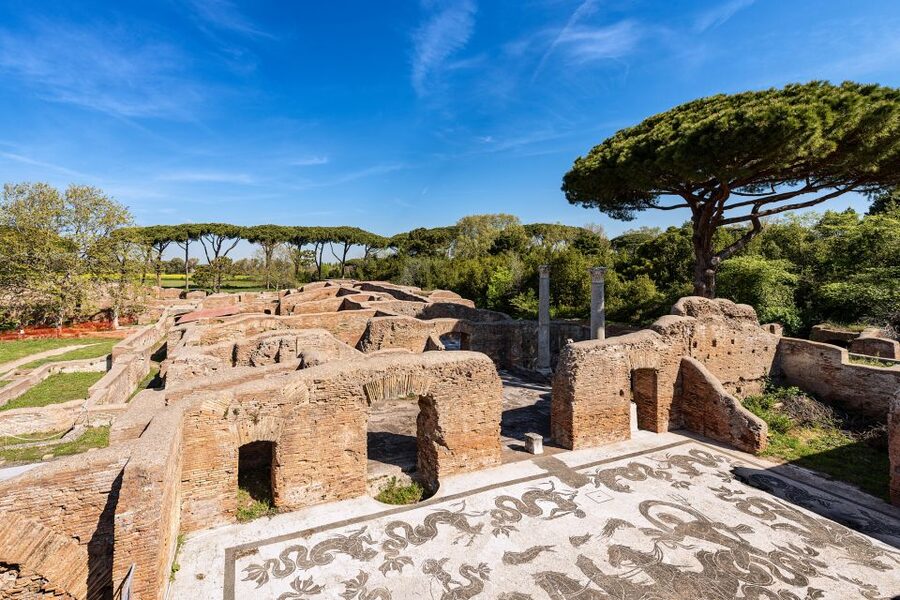
At $27 per person, the value works best if you actually use the full breadth of what’s included. Since your ticket covers multiple sites and museums in the park area, you are not paying for a single ruin visit only. You are buying access to a connected cluster, which is where the math starts to make sense.
Here is how I’d time it in a smart, low-stress way:
Day 1, Ostia Antica: Go early and expect this to be the anchor. Give yourself time for the mosaics and frescoes, then move toward the apartment blocks and villas. Leave room for the bath complex and amphitheater masks without feeling rushed.
Day 2 or lighter half-day, pick one bonus site: Choose one of the remaining locations based on your curiosity, ships, ports, or the necropolis. This spacing keeps you from stacking too many days of walking and standing in the sun.
If you are the type who hates planning, still pick a sequence. For example, start with the core city streets, then work toward the villa/bath highlights. It makes the day feel intentional, and it reduces the urge to wander aimlessly.
Should You Book This Ostia Antica Ticket and Audio App?
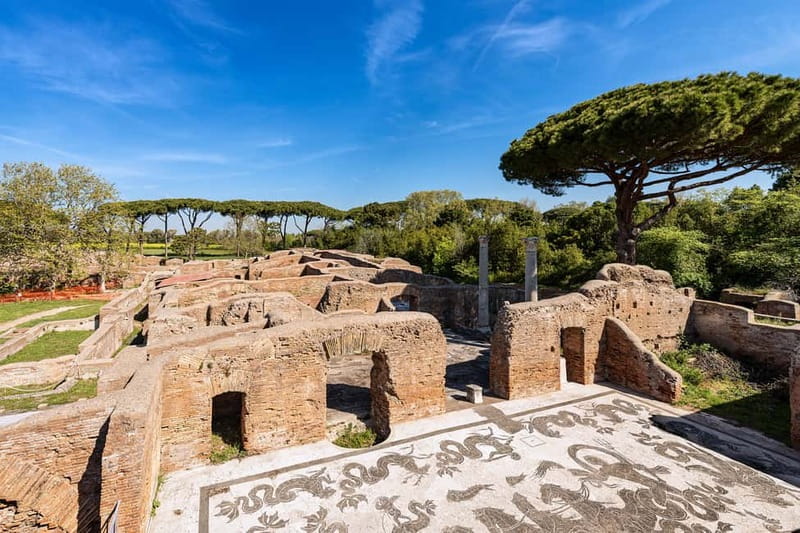
Book it if you want top Roman ruins with self-paced flexibility. This is a great fit for independent travelers who like to wander, pause, and use an audio guide to build meaning as they go. The mosaics, frescoes, and the residential architecture feel like the rare kind of archaeological site that rewards looking closely.
Skip it or at least rethink your approach if you dislike long walking days or you need very simple wayfinding. Uneven paths and a route that can be hard to follow mean you should come with comfortable shoes, patience, and a willingness to slow down.
If you are deciding between a quick visit and a meaningful one, this ticket pushes you toward the meaningful option. You get enough time, through the audio guide and included sites, to turn Ostia Antica into more than a photo stop.
FAQ
What is included with the Ostia Antica Archaeological Park Ticket and Audio App?
Your ticket includes entry to Ostia Antica Archaeological Park and additional sites in the park area, plus a digital audioguide.
Which sites does the integrated admission cover besides Ostia Antica?
The integrated admission covers Ostia Antica Archaeological Park, Castle of Julius II, Museum of Ships in Fiumicino, Imperial Ports of Claudius and Trajan, and the Necropolis of Porto on Isola Sacra.
How long is the ticket valid after I activate it?
The ticket is listed as valid for 8 days from first activation, and the fine print also notes 7 days, so check your voucher for the exact validity window.
Where do I exchange my voucher?
You exchange your voucher at the Ostia Antica ticket office.
Do I need to bring ID?
Yes, you will need to present a valid ID.
What should I bring to use this experience comfortably?
Bring a passport or ID card, comfortable shoes, and a charged smartphone.
Is transportation included?
No, transportation is not included.
Is the site easy to navigate?
The paths are uneven, and the route around is not always clear, so you can lose your bearings. The audio guide can help, but location tracking may be a bit challenging at times.
Latest reviews around Rome
- From Rome: Hadrian’s Villa & Villa d’Este Day Trip & Lunch★ 4.5 · 157 reviews
- Rome: Painting Class with Unlimited Wine★ 4.8 · 109 reviews
- Vatican City: Sistine Chapel, Museums, Basilica Private Tour★ 4.8 · 158 reviews
- Pope Leo XIV Audience Tour with Local Guide★ 3.3 · 111 reviews
- Rome: The Three Tenors at St. Paul’s Church Concert Ticket★ 4.7 · 699 reviews
- Vatican Museums & Sistine Chapel Skip-the-Line Guided Tour★ 4.6 · 254 reviews
- Rome: St. Peter’s Basilica and Papal Tombs Guided Tour★ 4.6 · 477 reviews
- St. Peter’s Dome Climb, Basilica and Vatacombs Tour★ 4.7 · 230 reviews
Audio Tours, compared.
Colosseum & Forum with Audio Guide App -Optional Arena
Read our review →
Pantheon Fast-Track Ticket and Official Audio Guide
Read our review →
Pompeii: Entry Ticket with Optional Audio Guide
Read our review →
La Fenice Opera House Entry Ticket with Audio Guide
Read our review →
St. Peter’s Basilica & Dome Entry Ticket & Audio Tour
Read our review →
Cathedral & Brunelleschi’s Dome Ticket & Audio App
Read our review →
Michelangelo’s David Priority Ticket & Audio App
Read our review →
Uffizi Priority Ticket & Masterpieces Audio App
Read our review →Browse the lists this tour appears in