

Reviewed · WALKING TOURS
Rome: Jewish Ghetto Walking Tour
Rome history feels personal here. This Jewish Ghetto walking tour threads ancient streets with stories that explain how the neighborhood survived, changed, and stayed visible for centuries. I love how the route starts at Trajan’s Column area and quickly hits major landmarks like the Theater of Marcellus, older than the Colosseum, instead of easing you in with random side streets.
I also like the balance of big-picture Rome with close-up details, like the Fontana delle Tartarughe love story and the calmer, slower pace you get on Tiber Island. One drawback: the tour focuses on seeing key sites like the Great Synagogue area rather than guaranteeing interior access, so if you want to go inside a specific building, plan to ask in advance.
In This Review
- Key things to know before you go
- Meet at Foro Traiano 84, then walk off the usual Rome route
- Theater of Marcellus: why it matters that it is older than the Colosseum
- Piazza Mattei and the Turtle Fountain: unrequited love in a Roman square
- Inside the Jewish Ghetto streets: synagogues, a surviving wall, and resilience
- Portico d’Ottavia: ancient arches that still belong to daily Rome
- Tiber Island finale: oldest bridge crossing, WWII hospital stories, and Asclepius
- Price, pace, and what to bring for a comfortable 2.5 hours
- Should you book this Rome Jewish Ghetto walking tour?
- FAQ
- How long is the Rome Jewish Ghetto walking tour?
- Where do I meet the guide?
- What does the $65 price include?
- Is food included, or do I need extra spending?
- Which major sites will I see during the walk?
- Do we go inside churches?
- What should I bring for comfort on the walk?
- What happens if the weather is bad or I arrive late?
Key things to know before you go
- Meet near Foro Traiano (Trajan’s Column area), then walk straight into 2,000-plus years of city change
- Theater of Marcellus stop lands early, so you get context fast
- Piazza Mattei and Turtle Fountain brings a human story to a famous corner
- Kosher gelato or coffee is included, not an optional add-on
- Tiber Island finale mixes ancient medicine myths with WWII rescue stories
- Guides like James, Angela, Tom, Daniel, and Gabi tend to run tours with strong storytelling and lots of Q and A
Meet at Foro Traiano 84, then walk off the usual Rome route
The tour starts at Foro Traiano, 84. Look for an orange Roman Vacations sign at the meeting point, then get ready for a guided walk that aims beyond the typical postcard hits. This is one of Rome’s oldest neighborhoods, so the rhythm is different: less rush, more explanation, and more time at points where the street layout and architecture matter.
Practically, your first 15 minutes set the tone. You’re not just touring buildings, you’re learning what makes the area special, including why key landmarks sit where they do and how people moved through the city over time. I like that you get a clear start point in central Rome, so you’re not wasting energy on complicated directions before you even begin.
One real consideration: the group is walking for a 2.5-hour stretch, and late arrivals can’t slow the tour down. Rome sidewalks also vary, so comfortable shoes matter more than you’d think.
More walks around Rome:
- Rome: Trastevere & Campo de Fiori Street Food Walking Tour
★ 4.9 · 2,768 reviews - Rome: Paranormal Night Walking Tour & Secret Backstreets
★ 4.9 · 1,921 reviews - Rome by Night Walking Tour – Legends & Criminal Stories
★ 4.5 · 1,003 reviews
Theater of Marcellus: why it matters that it is older than the Colosseum
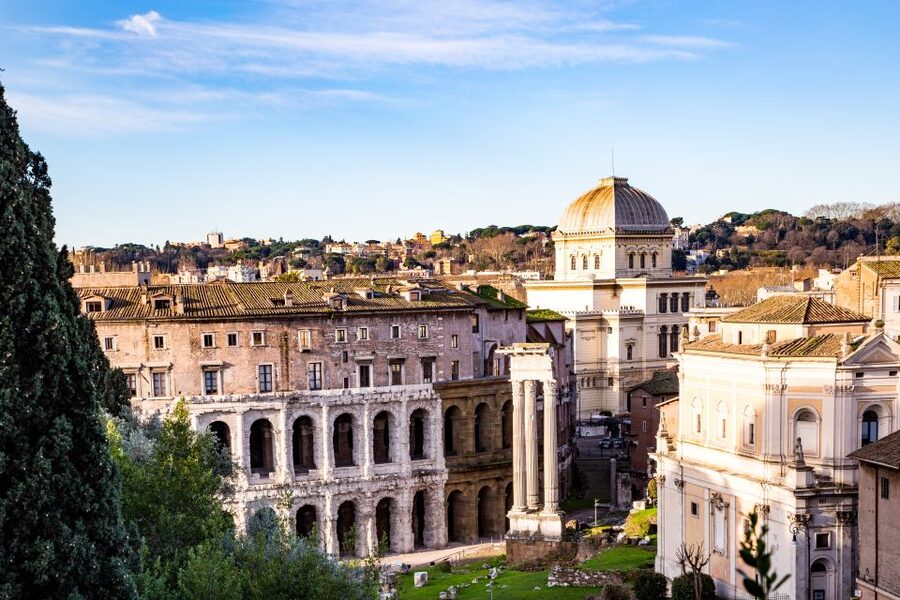
The Theater of Marcellus is the opener, and that choice is smart. It gets you into ancient Rome thinking right away, because this theater is even older than the Colosseum. Your guide uses that fact as a launch pad: you see what Roman entertainment meant, and how public spaces shaped neighborhoods.
This stop is also a good way to reset your brain before the tour turns to the Jewish Ghetto story. The guide frames the “then” of Rome, so later you can connect the architecture you’re seeing now with the long sweep of history behind it.
Timing-wise, expect a focused guided stop here, around 20 minutes. It’s long enough to learn what you’re looking at, but short enough that you stay moving. If you like tours that respect your energy, this pacing is a win.
Piazza Mattei and the Turtle Fountain: unrequited love in a Roman square

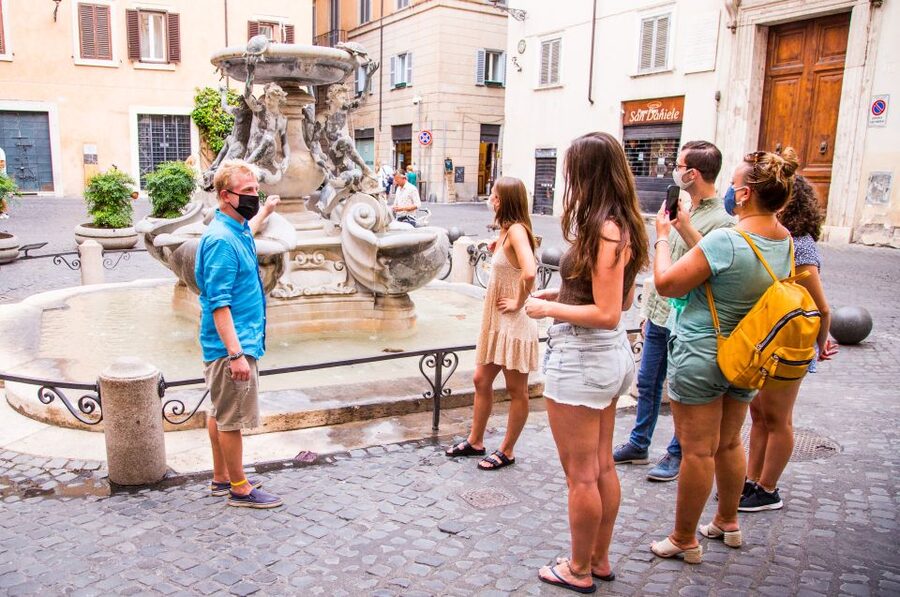
Next comes the Fontana delle Tartarughe at Piazza Mattei. This is the kind of Rome detail that would be easy to walk past, but on this tour you get a story attached to the place. The highlight is the legend of unrequited love connected to the Turtle Fountain.
Why that matters: it’s not only romantic mythology. It teaches you how Romans (and later visitors) used symbolism in public art. A fountain becomes a memory machine. You look at the same corner twice, once with your eyes and once with your new context.
You also get a practical break that feels like part of the history, not a random detour. From here, you go to a gelateria for homemade kosher gelato (or you might get coffee, since that’s also included). It’s a nice way to refuel while the day’s information is still fresh.
As a bonus, the Turtle Fountain area gives you a chance to slow down. Square time helps the rest of the walking feel less like a checklist and more like a narrative.
Inside the Jewish Ghetto streets: synagogues, a surviving wall, and resilience
This is the core of the experience. You spend time exploring the Jewish Ghetto and learn how the neighborhood’s identity formed over more than 2,000 years. The tour doesn’t treat the ghetto as a museum piece. Instead, it links physical places to the people who lived through changing rules, changing borders, and changing risks.
You’ll pass by the Great Synagogue of Rome, and you’ll learn about the area’s tumultuous past and resilience. You also see the last remaining piece of wall that once helped keep the Jewish community in this area for centuries. Standing near that kind of remnant hits differently than reading about it later. It gives you a tangible reason to slow down and pay attention to why the streets feel the way they do.
One of the best parts of this tour style is the way guides turn history into something you can hold in your head. In particular, I’ve seen how guides like Angela and James use emotion and storytelling to make the timeline make sense, without turning it into chaos. Others, like Elena and Maria, are known for bringing both the ghetto story and broader Italian context into the same conversation. If you enjoy learning through narrative, this is a strong match.
As for content tone, be ready for serious moments. The WWII and persecution stories on the itinerary are not treated lightly, and guides can come across as genuinely moved. That matters because the material deserves more than a quick stop-and-snap approach.
A few more Rome options to weigh
- Rome: Guided City Center Evening Sightseeing Walking Tour
★ 4.4 · 953 reviews - Rome: Under the Moonlight Evening Walking Tour
★ 4.8 · 852 reviews - Rome: Forbidden History Walking Tour & Pub Crawl with Drinks
★ 4.9 · 688 reviews - Rome: City Highlights Moonlight Walking Tour
★ 4.9 · 580 reviews
Portico d’Ottavia: ancient arches that still belong to daily Rome
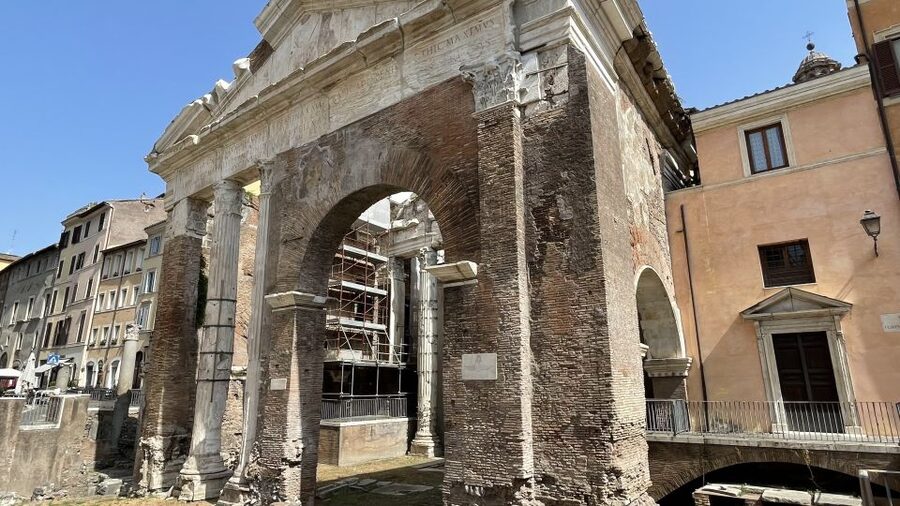
Between the ghetto core and the river crossing, you stop at the Portico d’Ottavia. Your guide explains what you’re looking at and why it’s still meaningful. These ancient structures are still in use, which is one of the best ways to understand Rome as a living city rather than a pile of ruins.
This part of the walk also helps you transition from the ghetto story into the wider Roman map. The portico acts like a bridge in both senses: visually, between spaces; and historically, between eras of Roman public life and later neighborhood identity.
Expect a shorter guided stop here, around 15 minutes. That’s the right length if your feet have started to feel it. You get the context, you take your photos, and you move on.
Tiber Island finale: oldest bridge crossing, WWII hospital stories, and Asclepius
The tour then heads to Tiber Island. You cross the oldest functioning bridge in Rome, and your guide uses that detail to set up the island’s importance. It’s a shift from neighborhood streets to a place that has gathered meaning over time.
On the island, the stories get especially human. You hear about a hospital role during WWII, including how it saved lives. Even if you already know WWII history generally, it lands differently when connected to specific places in the city.
Then comes the ancient-to-modern twist: the temple of Asclepius, which is now a church. This is a great stop for anyone who likes layered Rome, where one site can keep getting repurposed and reinterpreted across centuries.
The final experience is about closure. You’ve walked through architecture, legends, and community history, and now you end somewhere that ties ancient belief, religion, and rescue stories into one tight route.
Price, pace, and what to bring for a comfortable 2.5 hours
The tour costs $65 per person and lasts 2.5 hours. For Rome, that’s in the category of a serious guided walk, not a quick hop-on lesson. You’re paying for a guide who can connect multiple landmarks into one story and keep the group moving at a reasonable speed.
Two included perks also add real value: you get the tour guide plus kosher gelato or coffee. That’s not just a treat. It gives you an on-the-go break at a natural moment, so the walk stays enjoyable even if you’re traveling with kids or teens.
Pace matters here. In the past, guides have been described as adjusting to slower walkers and keeping teens engaged with story-like explanations. So if your group includes mixed walking speeds, this can work well compared to tours that race through stops.
What you should bring:
- Comfortable shoes
- Sun hat and sunscreen
- Umbrella (tours proceed in all weather)
- A reusable water bottle
- A light cover for bare shoulders if you enter any churches during the walk
And one simple heads-up: the tour cannot be delayed for late arrivals, and missed tours don’t come with refunds. Plan to arrive a few minutes early at Foro Traiano.
Should you book this Rome Jewish Ghetto walking tour?
Book it if you want a guide-led walk that treats the Jewish Ghetto as part of Rome’s real timeline, not a boxed-off topic. It’s especially worth it if you like:
- storytelling history you can remember
- a route that links ancient sites like the Theater of Marcellus to later survival and community resilience
- a short food stop with kosher gelato
Skip it or ask questions first if you’re hoping for a guaranteed interior visit to specific buildings, because the tour’s description centers on seeing major sites, not explicitly on entering them.
If your schedule is tight, also think about timing. One reviewer suggested avoiding Friday afternoon right before the Sabbath begins, since timing near that window can matter.
Overall, this is a high-value way to understand Rome through one of its most historically charged neighborhoods, with a finishing stretch on Tiber Island that brings the ancient, the spiritual, and the WWII-era rescue story into a single, memorable arc.
FAQ
How long is the Rome Jewish Ghetto walking tour?
The tour lasts about 2.5 hours.
Where do I meet the guide?
Meet at Foro Traiano, 84 and look for an orange Roman Vacations sign at the meeting point.
What does the $65 price include?
The price includes a live English-speaking guide plus kosher gelato or coffee.
Is food included, or do I need extra spending?
You get one included treat, either kosher gelato or coffee. Extra food and drinks are not included.
Which major sites will I see during the walk?
You will see and learn about stops including the Theater of Marcellus, Fontana delle Tartarughe, the Jewish Ghetto area, Portico d’Ottavia, the Great Synagogue of Rome, and Tiber Island.
Do we go inside churches?
If the tour includes church visits, plan to bring a cover for bare shoulders.
What should I bring for comfort on the walk?
Bring comfortable shoes, a sun hat, umbrella, sunscreen, and a reusable water bottle.
What happens if the weather is bad or I arrive late?
The tour runs in all weather conditions. Tours cannot be delayed for late arrivals, and you will not receive refunds for missed tours. There is free cancellation up to 24 hours in advance for a full refund.
Latest reviews around Rome
- Rome: Painting Class with Unlimited Wine★ 4.8 · 109 reviews
- From Rome: Hadrian’s Villa & Villa d’Este Day Trip & Lunch★ 4.5 · 157 reviews
- Vatican City: Sistine Chapel, Museums, Basilica Private Tour★ 4.8 · 158 reviews
- Pope Leo XIV Audience Tour with Local Guide★ 3.3 · 111 reviews
- Rome: The Three Tenors at St. Paul’s Church Concert Ticket★ 4.7 · 699 reviews
- Vatican Museums & Sistine Chapel Skip-the-Line Guided Tour★ 4.6 · 254 reviews
- Rome: St. Peter’s Basilica and Papal Tombs Guided Tour★ 4.6 · 477 reviews
- St. Peter’s Dome Climb, Basilica and Vatacombs Tour★ 4.7 · 230 reviews
Walking Tours, compared.
Guided Walking Tour & Last Supper Visit with Ticket
Read our review →
Rialto Bridge & Offbeat Unusual Venice Walking Tour
Read our review →
Private 3 hrs Venice Tour: St Mark’s, Walking tour & Boat tour
Read our review →
Skip the line: Uffizi and Accademia Small Group Walking Tour
Read our review →Browse the lists this tour appears in