
Reviewed · WALKING TOURS
Rome: Between Holy Doors Small Group Walking Tour
Holy Doors in Rome sound simple, then get fascinating fast. This small group walking tour threads together major churches and lesser-known chapels, so you come away with more than photos and pavement. Holy Doors and big-name sites like Santa Maria Maggiore are paired with quieter stops such as Santa Prassede, and the guide makes the symbolism click. I especially like how it helps you get off the usual tourist track while staying efficient, but the one real drawback is the walking pace: expect cobblestones, some stairs, and limited sitting.
My favorite part, though, is the way the whole route is built for understanding. You’re not just passing churches, you’re getting context for what you’re seeing, with time to ask questions in a group capped at five. If you want Catholic art, relics, and church history explained in plain language, this is a very satisfying way to spend a few hours in Rome.
In This Review
- Key things that make this Rome Holy Doors tour worth it
- Why Rome Holy Doors are best done with a focused route
- Meeting at San Giovanni and walking a tight sacred circuit
- Dress code and pace: the two things you should plan for
- The value of paying $83.48: you are buying meaning, not entrances
- Stop-by-stop: what you’ll see, and why each place hits differently
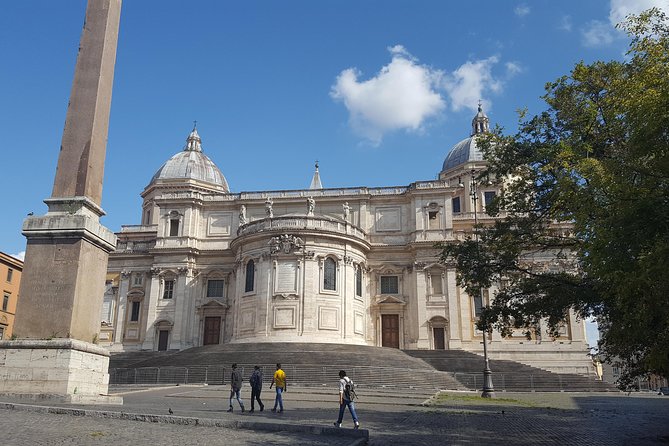
- Basilica di Santa Maria Maggiore (Holy Door + Rome’s Marian powerhouse)
- Basilica di Santa Prassede (ancient apse mosaics and a relic tied to the Passion)
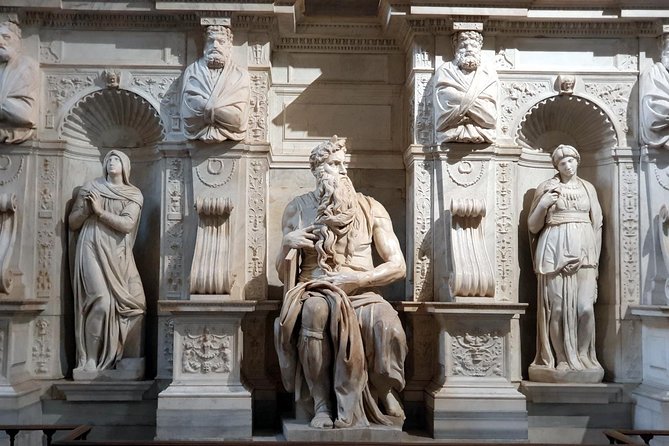
- San Pietro in Vincoli (Michelangelo’s Moses and Saint Peter’s chains)
- Basilica of San Clemente (old layers of Rome in one look at the apse)
- Ss. Quattro Coronati (the fresco that keeps a saint’s legends alive)
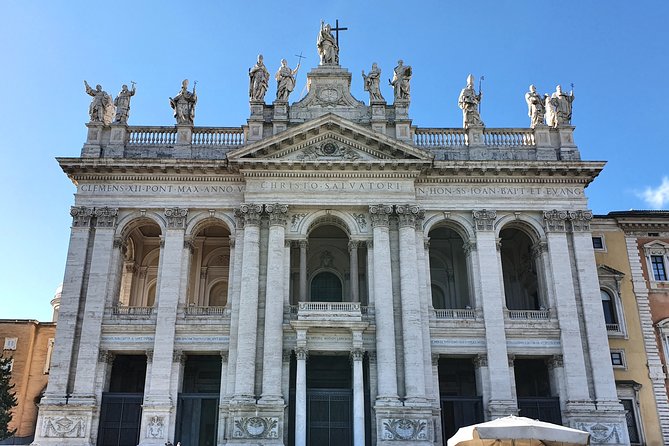
- Arcibasilica di San Giovanni in Laterano (Catholic center, plus relics of Peter and Paul)
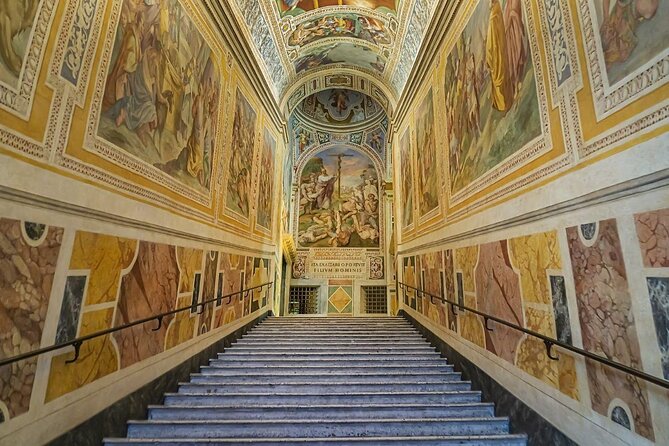
- Pontifical Sanctuary of the Holy Stairs (Scala Sancta, frescoes, and Pilate’s stairs)
- How Jubilee season can change the experience
- Why the guide matters more than you think
- Practical tips you’ll thank yourself for
- Should you book the Rome Holy Doors small group walking tour?
- FAQ
- How long is the Rome Holy Doors small group walking tour?
- How many people are on the tour?
- Where do we meet and where does the tour end?
- Is there a dress code for entering the churches?
- What happens to the Holy Doors during Jubilee periods?
- What is the cancellation policy?
Key things that make this Rome Holy Doors tour worth it
- Small group of up to 5 so you can actually ask questions inside crowded basilicas
- Up to seven church stops in 3 to 4 hours, including major Holy Door sites and iconic relics
- A guide-led route that focuses on symbols, stories, frescoes, statues, and what matters in each place
- Easy public transit start point near the Line A metro, with the tour ending at San Giovanni in Laterano
- Free church admissions listed for each stop, so you’re paying mainly for interpretation and logistics
- Jubilee flexibility may change the Holy Door experience if lines or special events slow things down
Why Rome Holy Doors are best done with a focused route
Rome’s churches can feel like a blur if you visit them on your own. You’ll see amazing art, sure, but you might miss why certain chapels matter, which relics are tied to specific devotion, and how artists used symbols to teach believers.
This tour is designed to fix that problem by doing two smart things at once. First, it concentrates on a cluster of sites in and around central Rome, so you can walk between them without losing half your day to transit. Second, it keeps the focus on what you’re looking at right now, from mosaics to statues to the stories behind relics.
And because the group is small, the guide can slow down when something is worth lingering on. That is a big deal in places where silence rules, crowds swell, and everyone else moves at museum speed.
More walks around Rome:
- Rome: Trastevere & Campo de Fiori Street Food Walking Tour
★ 4.9 · 2,768 reviews - Rome: Paranormal Night Walking Tour & Secret Backstreets
★ 4.9 · 1,921 reviews - Rome by Night Walking Tour – Legends & Criminal Stories
★ 4.5 · 1,003 reviews
Meeting at San Giovanni and walking a tight sacred circuit
The tour meets at Statua di San Giovanni Paolo II, Esquilino (near metro Line A San Giovanni) and ends at Basilica of San Giovanni in Laterano in Piazza San Giovanni in Laterano.
That geography matters. You’re starting in a practical area for getting there by metro, and you’re finishing at one of Rome’s most important Catholic sites. If you like to keep your plans simple, this setup makes it easy to roll into a meal or further sightseeing immediately after.
Also, the route is meant to be walkable. Expect a few hills, lots of steps inside and outside churches, and some uneven cobblestones. It’s not a long walk in a straight line, but you will be on your feet for the whole experience.
Dress code and pace: the two things you should plan for
Most of the churches on the route require you to cover your shoulders, back, and knees to enter. That is not the kind of rule you want to figure out at the door. Bring a light layer you can throw on quickly if you’re traveling in warm weather.
Pace is the other practical issue. This is built to hit up to seven sites in about 3 to 4 hours, so there aren’t many opportunities to sit and rest. Comfortable shoes matter more than stylish shoes here, especially with irregular stone streets.
If you have mobility limitations, note that the tour is not specifically adapted for guests with mobility challenges. The best approach is to ask in advance if a customized arrangement is possible.
The value of paying $83.48: you are buying meaning, not entrances
At $83.48 per person for a 3 to 4 hour guided walk, the price may sound steep until you look at what’s included. Each stop lists free admission, so you’re not paying entry fees per church. What you’re paying for is the guide, the timing, and the ability to understand what you’re seeing.
And in Rome, interpretation is often the biggest “wow” factor you can buy. Roberto, the guide featured in many experiences, is repeatedly praised for being patient, responsive, and reverent, with an ability to explain details people usually miss. Multiple accounts highlight how much depth he adds about frescoes, statues, and relics.
If you want to leave with stories you’ll remember, this is where the money goes.
A few more Rome options to weigh
- Rome: Guided City Center Evening Sightseeing Walking Tour
★ 4.4 · 953 reviews - Best of Rome Walking Tour including Trevi Fountain
★ 4.5 · 923 reviews - Rome: Under the Moonlight Evening Walking Tour
★ 4.8 · 852 reviews - Rome: Forbidden History Walking Tour & Pub Crawl with Drinks
★ 4.9 · 688 reviews
Stop-by-stop: what you’ll see, and why each place hits differently
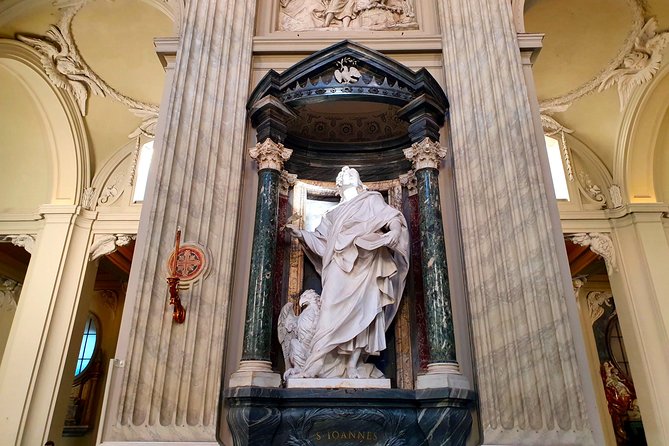
Basilica di Santa Maria Maggiore (Holy Door + Rome’s Marian powerhouse)
This is the big opener. Santa Maria Maggiore is described as the largest church dedicated to Saint Mary and it has the city’s highest bell tower. You’ll also get the Holy Door experience here, plus impressive chapels that go beyond the main nave.
What makes this stop work early in the tour is that it sets the tone. You see a major Marian center first, then the guide can point out how later churches on the route connect to devotion, art choices, and relic traditions.
Practical note: it is a standout church, so expect crowds. The small group format helps because you’re not stuck waiting around your guide while 30 other people surge past.
Basilica di Santa Prassede (ancient apse mosaics and a relic tied to the Passion)
Santa Prassede is short on time but heavy on significance. You’ll focus on one of the oldest apse mosaics in the world and a relic connected to the Passion of Christ.
Mosaics are the kind of art that can go flat if you don’t know what to look for. The guide’s job here is to help your eyes read the scene and understand why certain images matter spiritually and historically.
If you like art history but get impatient with long lectures, this is a sweet spot. It’s quick, focused, and designed for attention.
San Pietro in Vincoli (Michelangelo’s Moses and Saint Peter’s chains)
Next comes a church with two unforgettable pulls. You’ll see Michelangelo’s Moses sculpture, and you’ll also encounter the wonder-working chains of Saint Peter.
This is the kind of stop that changes how you think about religious art. The Moses statue is famously expressive, and without context you might treat it as just another masterpiece. With the guide’s framing, it becomes part of a larger story about faith, authority, and interpretation.
This stop is also a good example of why the route works. You move from Marian devotion to Passion relics to the role of Peter, all without backtracking across Rome.
Basilica of San Clemente (old layers of Rome in one look at the apse)
San Clemente is listed as one of the oldest churches in Rome, with an impressive apse.
Older sites can feel vague unless someone explains what makes them distinct. Here, the highlight is the age and the way early church architecture communicates purpose. Even if you are not an architecture person, you’ll likely find this stop a useful “breathing pause” between the more emotionally dramatic stories at earlier sites.
Ss. Quattro Coronati (the fresco that keeps a saint’s legends alive)
This church is known for a fresco depicting the legends of Saint Silvester.
Frescoes work best when you understand what the images are trying to tell. The guide’s explanations help you see the fresco as a narrative, not just decoration. It’s also one of those stops that feels like Rome giving you a quiet lesson after a few heavier highlights.
Time here is about 20 minutes, so don’t expect to wander. Do your looking with intention.
Arcibasilica di San Giovanni in Laterano (Catholic center, plus relics of Peter and Paul)
If you only visited one Catholic mega-site in Rome, you’d probably pick San Giovanni in Laterano. This stop is described as the most important church for Catholics and it is linked to relics of Saint Peter and Saint Paulus.
This is the “anchor” stop near the end. After several smaller or art-centered churches, you get a sense of scale and central meaning. The guide helps connect the dots between what you saw earlier and why this site matters so much within Catholic devotion.
You’ll also end your tour here, at the basilica in Piazza San Giovanni in Laterano.
Pontifical Sanctuary of the Holy Stairs (Scala Sancta, frescoes, and Pilate’s stairs)
The final highlight is the Pontifical Sanctuary of the Holy Stairs. You’ll spend about 20 minutes and focus on impressive frescoes and the Holy Stairs believed to be from the palace of Pontius Pilatus.
A key detail: entering and moving through devotional spaces has rules, and the tour experience can vary from person to person. Talking and photography are not permitted inside the holy stairs area, so expect a different feel than the other stops.
Also, in Jubilee periods, waiting lines can affect timing. Even if your plan includes Holy Door passage, the tour may have to adapt due to special events and increased waiting times, and passage through Holy Doors cannot be guaranteed.
How Jubilee season can change the experience
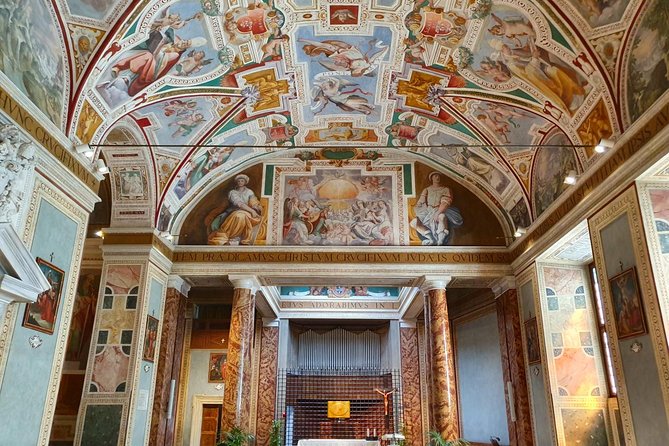
If you’re traveling during Jubilee or similar high-attendance periods, be flexible. The tour can adjust its route because waiting times may increase at certain sights. That means you might not experience every Holy Door in the exact way you expected.
The good news is that the core idea remains the same: you’re still getting a guided sequence through major and meaningful churches. You’re just trading guaranteed flow for a real-life response to crowds and event logistics.
Why the guide matters more than you think
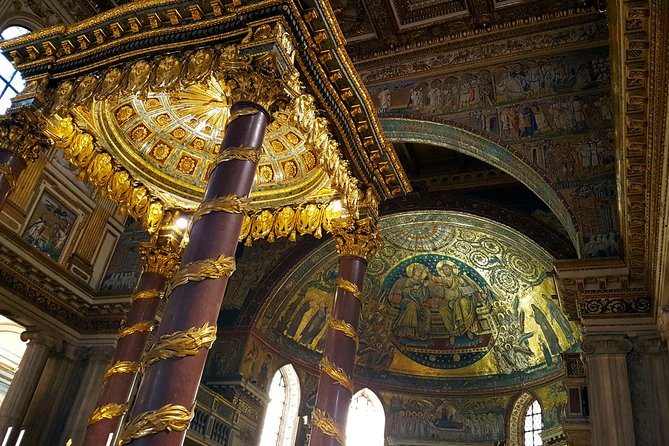
One thing that shows up again and again in accounts of this tour is the guide, Roberto. People describe him as patient, responsive to questions, and passionate about explaining symbolism in churches. You’ll also hear that he navigates expertly between sites so you spend more time looking, less time guessing.
This is the difference between a “church pass” and a tour that gives you real takeaways. With the explanations, you start spotting details you would otherwise walk right past, like the significance of particular relics or what a fresco is trying to convey.
If you tend to zone out during lectures, here is the upside. The group can ask questions, and the pace is adapted to comfort within the limits of a walking route.
Practical tips you’ll thank yourself for
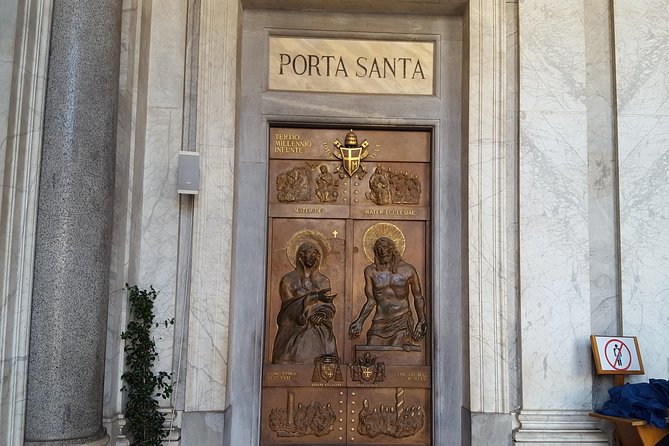
- Bring something modest to cover up for your shoulders and knees, even in summer.
- Wear shoes for cobblestones and stairs, not sandals or stiff soles that hurt after an hour.
- Expect limited sitting time. Use your short church breaks wisely.
- Have a flexible mindset for Jubilee crowds. Holy Door timing can change.
- Use the small group to ask questions, especially when the guide points out symbols you might not notice.
If you like to end your day with momentum, this route sets you up well. You finish at San Giovanni in Laterano, which makes it easier to keep exploring without crisscrossing the city.
Should you book the Rome Holy Doors small group walking tour?
Book it if you want a focused, art-plus-faith route through Roman churches, and you prefer learning from a guide rather than hunting for meaning on your own. It’s also a great fit for returning visitors, because the explanations can make familiar sites feel fresh.
Skip it, or at least think twice, if you cannot handle a walking route with irregular cobblestones and stairs, or if you are looking for a low-effort sightseeing day with frequent rest.
FAQ
How long is the Rome Holy Doors small group walking tour?
It runs about 3 to 4 hours.
How many people are on the tour?
It has a maximum of 5 travelers.
Where do we meet and where does the tour end?
It starts at Statua di San Giovanni Paolo II, Esquilino and ends at Basilica di San Giovanni in Laterano in Piazza San Giovanni in Laterano, close to the metro station Line A San Giovanni.
Is there a dress code for entering the churches?
Yes. Your shoulders, back, and knees must be covered to enter the churches.
What happens to the Holy Doors during Jubilee periods?
The itinerary might be adapted due to special events and increased waiting times, and passage through the Holy Doors cannot be guaranteed.
What is the cancellation policy?
You can cancel for free up to 24 hours in advance for a full refund. If you cancel less than 24 hours before the start time, the amount paid is not refunded.
Latest reviews around Rome
- Rome at Night: Small Group Guided City Walking Tour★ 5.0 · 249 reviews
- Guided Walking Tour of Rome: Top Sights & Baroque Treasures★ 5.0 · 155 reviews
- Private Walking Tour of the Squares and Fountains in Rome★ 5.0 · 130 reviews
- Rome Food Tour by the Vatican★ 5.0 · 308 reviews
- Vintage Fiat 500 Cabriolet: Rome’s Highlight Semi Private Tour★ 5.0 · 283 reviews
- Welcome To Rome Experience★ 4.5 · 679 reviews
- Vespa Rental in Rome 24 hours★ 5.0 · 196 reviews
- Vatican VIP Early Entrance 8:00 AM★ 4.5 · 141 reviews
Walking Tours, compared.
Guided Walking Tour & Last Supper Visit with Ticket
Read our review →
Rialto Bridge & Offbeat Unusual Venice Walking Tour
Read our review →
Private 3 hrs Venice Tour: St Mark’s, Walking tour & Boat tour
Read our review →
Skip the line: Uffizi and Accademia Small Group Walking Tour
Read our review →Browse the lists this tour appears in