
Reviewed · WALKING TOURS
Haunted Rome Ghost Night Walking Tour
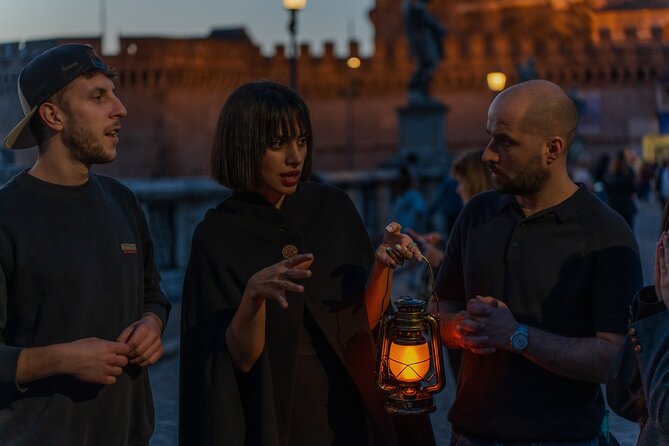
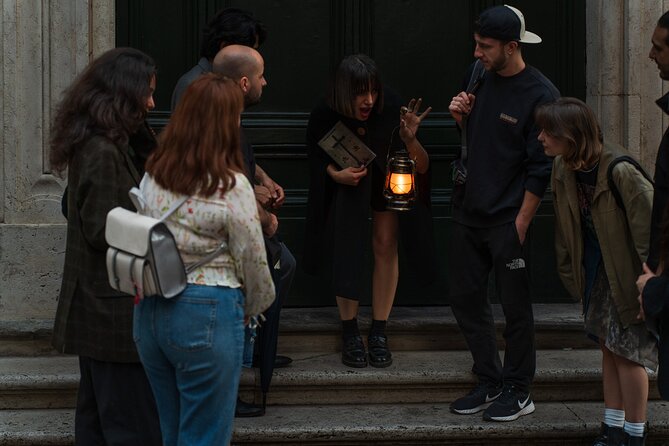
Rome turns sinister after dark. I love how this heat and crowds-dodging walk keeps things comfortable, and I also love the not campy style, mixing spooky legends with history you can actually use. One drawback to plan for is group spacing: on noisy streets, you may struggle to hear the guide if you’re farther back.
You start at Piazza Campo de’ Fiori and end at Castel Sant’Angelo, which makes this a smooth first-night plan. Guides like Youssef and Antonio are often praised for making the stories entertaining, not cheesy, and for pointing out details you would otherwise miss.
In This Review
- Key highlights worth your attention
- Why a 2-hour night walk works so well in Rome
- Starting at Piazza Campo de’ Fiori: lively now, grim once
- Piazza Farnese and the legend of two popes
- Via del Mascherone and Vicolo dei Venti: spot the madonelles
- Ponte Sisto and Fontana del Mascherone: tragic stories and a warning
- Santa Maria dell’Orazione e morte: a church with the reminder built in
- Via di Monserrato: where a haunted apartment block meets prison history
- Chiesa di Santa Maria in Monserrato degli Spagnoli: a story with attitude
- Via Giulia: beauty shop origins and cosmetics that could kill
- Via dell’Arco dei Banchi and Mastro Titta
- Castel Sant’Angelo: the warning bridge turned angel statues
- Guides and storytelling style: spooky, funny, and (usually) easy to follow
- Price, value, and when it makes the most sense
- Quick planning tips for a smooth night
- Should you book this Haunted Rome night walk?
- FAQ
- How long is the Haunted Rome Ghost Night Walking Tour?
- How much does it cost and is it offered in English?
- Where does the tour start and where does it end?
- What group size should I expect?
- Are there admission fees at the stops?
- Can I cancel for a full refund?
Key highlights worth your attention
- Night walking that makes sense in Rome, especially in warmer months
- Spooky stories without the cheap theatrics, more history-driven than full ghost-scare
- A tight route through iconic spots, Campo de’ Fiori to Ponte Sisto and beyond
- Small group size (max 20), good for questions and staying together
- Mobile ticket in English, simple to manage once you arrive
- Finishes at Castel Sant’Angelo, so you can keep your evening going
Why a 2-hour night walk works so well in Rome

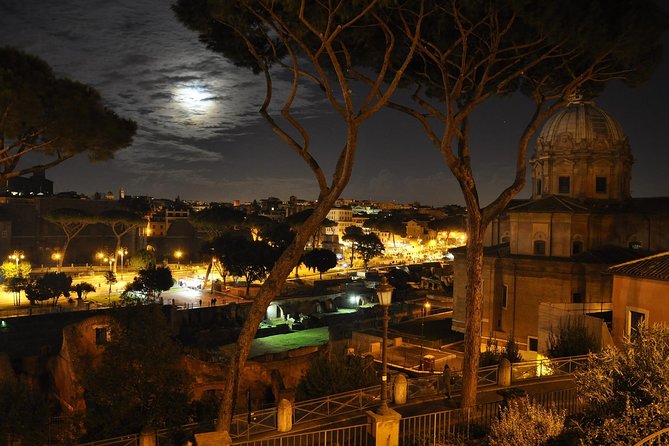
This is a compact, about-2-hour evening route, designed for the part of the day when Rome feels at its best for foot traffic. You get to see famous sights while avoiding the worst of the daytime crowds and heat.
The pacing also matters. Each stop is short, so you are not stuck in one place for long. That helps you cover more ground on a first trip, and it keeps the mood moving right along.
One more practical plus: the tour is offered in English, runs in a group capped at 20 people, and you get a mobile ticket. That combination tends to make the experience feel organized without turning it into a rigid classroom.
More walks around Rome:
- Rome: Trastevere & Campo de Fiori Street Food Walking Tour
★ 4.9 · 2,768 reviews - Rome: Paranormal Night Walking Tour & Secret Backstreets
★ 4.9 · 1,921 reviews - Rome by Night Walking Tour – Legends & Criminal Stories
★ 4.5 · 1,003 reviews
Starting at Piazza Campo de’ Fiori: lively now, grim once
You begin at Piazza Campo de’ Fiori, one of central Rome’s most recognizable squares. Today, it is known for bars and restaurants, which is exactly why it’s a strong starting point. You can get your bearings fast, grab a drink before you start (if it fits your schedule), and then watch the square change in your mind as the darker story gets told.
The tour frames Campo de’ Fiori as an execution site in the past, and that contrast is the point. Instead of treating the history like a list of dates, you experience how the same space can hold very different meanings depending on who is looking at it.
This is a good place for the guide to set tone. If you’re hoping for a spooky night that still feels grounded, starting here makes sense.
Piazza Farnese and the legend of two popes
Next up is Piazza Farnese, a beautiful square that also carries a scandalous legend. The specific story is about a secret passageway and two popes, which gives you the kind of detail that makes a city feel personal.
What I like about this stop is how it gives you a mental map. You start connecting the dots between the grand spaces and the rumors and secrets that supposedly lived behind them.
If you like history that feels like folklore, this is one of the moments where the tour leans into that style. It stays story-first, not museum-label-first.
Via del Mascherone and Vicolo dei Venti: spot the madonelles
As you walk, you move into streets where small objects can matter a lot. One highlight is Via del Mascherone and Vicolo dei Venti, where you’ll learn about madonelles, which are little roadside religious shrines.
The tour explains that these shrines were used as protection, aimed at stopping crime. It’s a reminder that a city’s “street art” and “street religion” are often part of everyday safety, not just decoration.
I like that this stop gives you a very concrete thing to look for. You don’t need to be an art expert to notice the madonelles. After this, you’ll start seeing them on your own around Rome, not just on this route.
A few more Rome options to weigh
- Rome: Guided City Center Evening Sightseeing Walking Tour
★ 4.4 · 953 reviews - Best of Rome Walking Tour including Trevi Fountain
★ 4.5 · 923 reviews - Rome: Under the Moonlight Evening Walking Tour
★ 4.8 · 852 reviews - Rome: Forbidden History Walking Tour & Pub Crawl with Drinks
★ 4.9 · 688 reviews
Ponte Sisto and Fontana del Mascherone: tragic stories and a warning
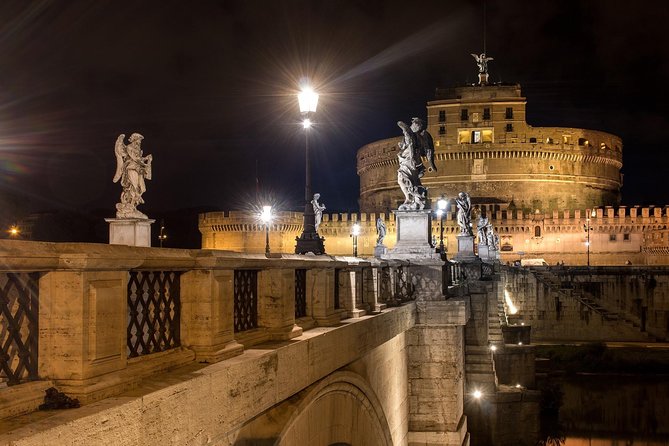
Ponte Sisto is next, described as the oldest bridge in Rome. The tour’s take is dark and story-heavy, focusing on a past involving tragic accidents, power struggles, theft, and suspicious deaths.
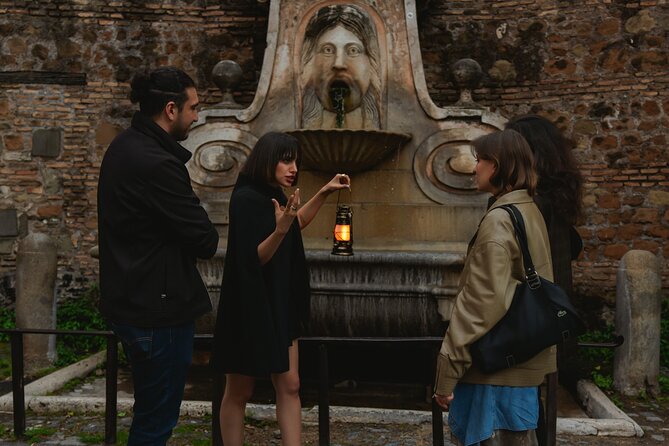
Then you shift to Fontana del Mascherone, a fountain with a warning to anyone who dares to drink. It’s the kind of detail that makes you slow down. You end up looking at the surroundings more carefully, not just passing through.
Practical note: bridges and river areas can feel breezy at night. If you’re doing this in cooler months, it’s worth wearing layers.
Santa Maria dell’Orazione e morte: a church with the reminder built in
At Chiesa di Santa Maria dell’Orazione e morte, the tour points to a 17th-century church decorated with human remains from long ago. The message you take away is blunt and universal: death is never far away.
This stop is worth treating with respect. You’re not here for shock value. The value is in understanding how people once visualized mortality in a very physical way, and how that shaped religious spaces.
If you get squeamish, you might want to mentally prepare before you arrive. That said, the tour keeps the tone serious enough that it doesn’t feel like it’s trying to be edgy for the sake of it.
Via di Monserrato: where a haunted apartment block meets prison history
Next is Via di Monserrato, described as a haunted apartment block and tied to one of the worst prisons in Rome’s history. Even without adding extra theatrics, the idea works well: you’re walking near modern buildings while the guide places a darker past behind them.
This is one of the stops that helps you see Rome as layered. The buildings look “normal” until the story flips your interpretation.
It also gives your brain something to do. While other tours might just name structures, this one turns the streets into a timeline.
Chiesa di Santa Maria in Monserrato degli Spagnoli: a story with attitude
You then visit Chiesa di Santa Maria in Monserrato degli Spagnoli, a Spanish church in the heart of Rome. The tour teases a saucy story worthy of a telenovela, which signals that this stop likely feels more dramatic and human than strictly grim.
What I like about balancing the darker prison material with a more scandal-flavored legend is that you don’t spend the whole walk feeling weighed down. You keep interest high, and the night stays fun.
If you enjoy stories that blend religion, politics, and personal drama, this is the kind of moment you’ll remember later when you’re thinking about Rome as more than just ruins.
Via Giulia: beauty shop origins and cosmetics that could kill
Via Giulia is next, and here the tour mixes romance with danger. The guide connects the street to a former beauty shop and explains a story about cosmetics that could kill.
I find this stop valuable because it turns a modern word like cosmetics into a historical question: what did people use, what did it do, and why could it go wrong? Even if you already know Rome is full of intrigue, this gives you a specific angle.
It also helps to make the walk feel connected. You’re not just hopping between monuments. You’re moving through a network of streets that once served very real everyday needs, including beauty and identity.
Via dell’Arco dei Banchi and Mastro Titta
Via dell’Arco dei Banchi is described as a seemingly quaint house that once belonged to Rome’s most famous executioner, “Mastro Titta.” It’s a sharp shift, from cosmetics to punishment, and it works because the tour builds momentum.
This stop is a great example of what I’d call street-level history. You are seeing ordinary facades, then hearing what kind of job once made that person infamous.
If you like eerie personal details, this is one to pay attention to. The guide’s story style seems to matter a lot here, and the feedback from different guides suggests they tend to bring energy and humor without losing clarity.
Castel Sant’Angelo: the warning bridge turned angel statues
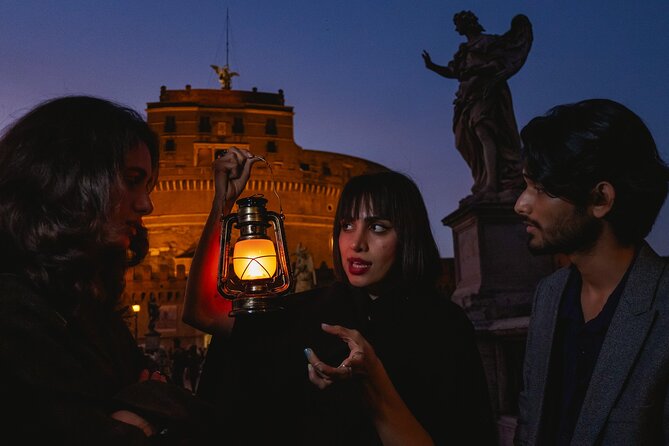
The walk ends at Castel Sant’Angelo, and the tour uses it to tie together the theme. The bridge near the castle was used to expose bodies of executed people as a warning to sinners. Today, the area is surrounded by angel statues, and the guide tells the story of the Cenci family and how they met their fatal end.
This is a strong ending because it gives you closure and a big visual payoff. You finish with a place that is physically dramatic, even if you are not going inside anything.
Since the tour ends here at Lungotevere Castello, you can easily continue your evening on your own. It’s one of those locations where the night vibe is already built in.
Guides and storytelling style: spooky, funny, and (usually) easy to follow
The guides are a big part of the experience. Multiple guides are mentioned positively, including Youssef, Antonio, Ana, Dominica, and Anna, with people praising the way the stories are told.
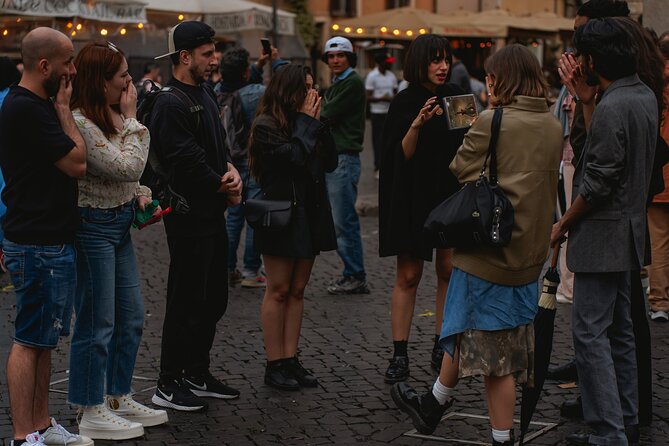
A theme that shows up in the feedback is that the tour can feel historical spooky rather than full ghost scare. People describe it as entertaining without being campy, with guides using humor and clear storytelling to keep it fun for different ages and comfort levels.
There’s also a note on pacing style. One review described it as a mellow walk and talk, more about misdeeds and injustices than heavy theatrics. So if you want jump-scares and props, this probably is not that. If you want darker legends delivered in a human way, it fits well.
One practical caution: road noise and crowding can be an issue. To help, stay close to the front of the group when you can, and don’t rely on hearing perfectly from the back.
Price, value, and when it makes the most sense
At $35.07 per person for about 2 hours in English, the price can feel like a bargain if you like guided storytelling. You also get value in how concentrated the route is. Instead of spending a half day getting to far-apart sights, you cover a central loop with recognizable stops.
It also helps that the tour lists admission ticket free for the stops along the way. That matters because it reduces surprise costs and keeps the evening moving.
You might also see better value if you’re traveling as a group, since group discounts are mentioned as a feature. And if you want more personal attention, there’s an upgrade option to a private tour.
This tour is a great fit for:
- First-time visitors who want a different angle on central Rome
- People who like history with drama, but not loud gimmicks
- Families with teens who can handle darker stories without needing scary costumes
- Anyone planning a short Rome trip and wants a “good first night” activity
Quick planning tips for a smooth night
Here are the things that make the biggest difference.
- Wear good walking shoes. You’ll be on foot the entire time, mostly outdoors.
- Bring layers. Even if Rome feels warm when you start, night air can change quickly.
- Make sure your mobile ticket is ready to show.
- If you get easily distracted by sound, try to position yourself where you can hear the guide.
On the planning side, free cancellation is available if you cancel up to 24 hours before the experience start time. That flexibility is useful if your evening plans are still shifting.
Should you book this Haunted Rome night walk?
I think you should book this tour if you want Rome to feel like a living story after dark. It’s not just about monuments. It’s about how places like Campo de’ Fiori and Castel Sant’Angelo can carry executions, secrets, scandals, and warnings in the same breath.
Skip it if you only want classic ghost hunting vibes, with full scary theatrics. This walk is more “sinister history plus legends,” and the humor and storytelling approach are part of the draw.
If you’re unsure, start with your comfort level. If the idea of churches decorated with human remains and prison-related stories makes you uneasy, pick a different kind of night activity. But if you like your Rome a little darker, and you want a fun, well-paced evening that ends in one of the city’s most photogenic spots, this is a strong choice.
FAQ
How long is the Haunted Rome Ghost Night Walking Tour?
It runs for about 2 hours.
How much does it cost and is it offered in English?
The price is $35.07 per person, and the tour is offered in English.
Where does the tour start and where does it end?
It starts at Piazza Campo de’ Fiori (P.za Campo de’ Fiori, 00186 Roma) and ends at Castel Sant’Angelo (Lungotevere Castello, 50, 00193 Roma).
What group size should I expect?
The tour has a maximum of 20 travelers.
Are there admission fees at the stops?
The itinerary lists admission ticket free for each stop, so you are not expected to pay separate admission fees at those locations.
Can I cancel for a full refund?
Yes. You can cancel up to 24 hours in advance for a full refund. If you cancel less than 24 hours before the start time, the amount paid is not refunded.
More Evening Experiences in Rome
- Rome: City Highlights Open-Top Bus Night Tour
★ 4.1 · 2,038 reviews - Vespa Sidecar Tour By Night with Pickup
★ 5.0 · 1,803 reviews - Rome by Night – Ebike Small Group Tour – Food and Wine (Option)
★ 5.0 · 1,275 reviews - Colosseum Sunset Tour with Entry
★ 4.5 · 1,230 reviews
Latest reviews around Rome
- Guided Walking Tour of Rome: Top Sights & Baroque Treasures★ 5.0 · 155 reviews
- Rome at Night: Small Group Guided City Walking Tour★ 5.0 · 249 reviews
- Private Walking Tour of the Squares and Fountains in Rome★ 5.0 · 130 reviews
- Rome Food Tour by the Vatican★ 5.0 · 308 reviews
- Vintage Fiat 500 Cabriolet: Rome’s Highlight Semi Private Tour★ 5.0 · 283 reviews
- Welcome To Rome Experience★ 4.5 · 679 reviews
- Vespa Rental in Rome 24 hours★ 5.0 · 196 reviews
- Vatican VIP Early Entrance 8:00 AM★ 4.5 · 141 reviews
Walking Tours, compared.
Guided Walking Tour & Last Supper Visit with Ticket
Read our review →
Rialto Bridge & Offbeat Unusual Venice Walking Tour
Read our review →
Private 3 hrs Venice Tour: St Mark’s, Walking tour & Boat tour
Read our review →
Skip the line: Uffizi and Accademia Small Group Walking Tour
Read our review →Browse the lists this tour appears in