
Reviewed · WALKING TOURS
Ghosts Legends and Mysteries of Rome Walking Tour
Rome turns spooky at 8:00 pm. This short ghost-legends walk strings together some of Rome’s most famous dark sites along the Tiber, with an English-speaking, licensed guide telling the stories behind the stone.
I love how the route stays tight, so you can cover major landmarks in about 90 minutes without feeling rushed. I also love the symbol-focused storytelling, where you’re asked to look closely at angels, arches, prisons, and deathly religious art instead of just hearing vague creepy lines.
The tradeoff is simple: this isn’t a jump-scare, Hollywood-style haunted house. If you want maximum fear, or you’re sensitive to audio and pace, you might find it more like real history plus legends than pure chills.
In This Review
- Key Highlights at a Glance
- A 90-minute Ghost-Legends Walk That Fits Real Rome
- Price, Tips, and What You’re Really Buying
- Meeting at Lungotevere Castello, Ending in Campo de’ Fiori
- What Kind of Spooky Is This, Legends or Paranormal?
- Stop-by-Stop: Rome’s Dark Landmarks Along the Tiber
- Castel Sant’Angelo, Built as a Mausoleum and Reused as Power
- Ponte Sant’Angelo, Angels That Look Like They’re Holding Secrets
- Via Paola, The Tale of the Kindest Executioner
- Arco Dei Banchi, A Haunted Arch and Prayer for a Controversial Exorcist
- Largo Ottavio Tassoni, 319, Benvenuto Cellini’s Dark Reputation
- Vicolo della Moretta, Giulia Tofana and the Inquisition Stories
- Via di Monserrato and Corte Savella, Where Executions Happened Inside Walls
- Via Giulia, Renaissance Elegance That Still Feels Quietly Unsettling
- Santa Maria dell’Orazione e Morte, Baroque Death Imagery and a Macabre Confraternity
- Fontana del Mascherone, A Grim Mask and a Real Crime
- Campo de’ Fiori, From Market Square to Execution Memory
- How to Hear the Guide Clearly and Get Your Money Worth
- Who Should Book This Tour (and Who Should Skip)
- Should You Book the Ghosts, Legends and Mysteries of Rome Walking Tour?
- FAQ
- Where does the tour start and where does it end?
- What time does the tour start, and how long is it?
- What language is the tour offered in, and how large is the group?
- How much does it cost, and how do tips work?
- Are entry tickets included for the stops?
- Is this tour suitable for children?
- Can I cancel for a full refund?
- Are service animals allowed?
Key Highlights at a Glance
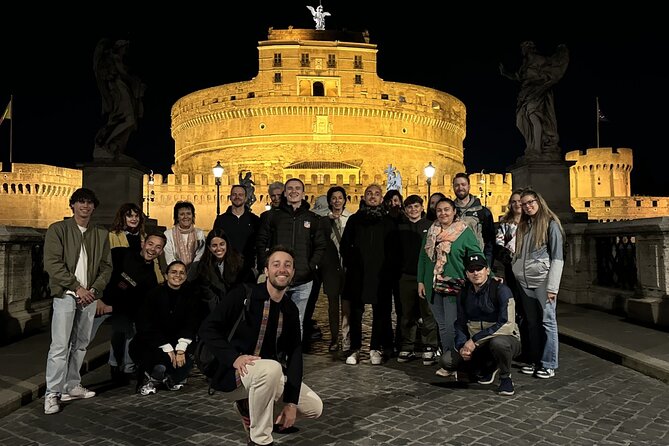
- Small-group night pacing (up to 24 people) keeps it manageable on crowded streets.
- Licensed English guide who sticks to storytelling rather than staged paranormal drama.
- Quick, outdoor-friendly stops that fit into Rome sightseeing without long lines.
- A “dark Rome” walk built around prisons, executions, and religious confraternities.
- Tip-based format means guide quality matters, and you should come ready to listen.
- Graphic subject matter is included, so it’s not recommended for kids under 12.
A 90-minute Ghost-Legends Walk That Fits Real Rome
This tour is made for evenings when you want something different without losing half a day. It starts at 8:00 pm, and it runs about 1 hour 30 minutes, which is a nice sweet spot for Rome at night. You’re on foot the whole time, moving from landmark to landmark in an order that feels like a “dark route” through central sights.
The biggest win for your schedule is that it doesn’t demand museum time or complicated logistics. You get a guided night walk that’s easy to plug into a normal itinerary, especially if you already plan to see big sights during the day.
And because it’s a group, it’s also a practical way to feel more comfortable after dark. Rome at night is generally lively in places, but having a guide and a small crowd keeps the evening feeling organized.
More walks around Rome:
- Rome: Trastevere & Campo de Fiori Street Food Walking Tour
★ 4.9 · 2,768 reviews - Rome: Paranormal Night Walking Tour & Secret Backstreets
★ 4.9 · 1,921 reviews - Rome by Night Walking Tour – Legends & Criminal Stories
★ 4.5 · 1,003 reviews
Price, Tips, and What You’re Really Buying
The advertised price is $3.63 per person, which is extremely low for a guided walking tour. The catch is that it’s tip-based, and the guide works for tips alone. So the real “cost” is part ticket price, part your decision on what you want to give at the end.
Here’s the value logic I think you’ll appreciate:
- You’re paying for time with a licensed guide.
- You’re getting a focused route with multiple major stops.
- The sights on the route are listed as admission ticket free, so you’re not budgeting extra for entrances at each location.
Just don’t treat it like a free storytelling show. If you want the guide to keep the energy up, you need to be part of the exchange: listen, ask questions if the guide allows it, and show appreciation with a tip at the end.
If you’re the type who hates paying tips, this might feel awkward. But if you like hands-on local history told by a guide who needs you to value their effort, this format can feel fair.
Meeting at Lungotevere Castello, Ending in Campo de’ Fiori
The tour meeting point is Lungotevere Castello, 50 (00193 Rome), and the tour ends at Campo de’ Fiori (00186 Rome).
That end point matters more than it sounds. Campo de’ Fiori is one of those Rome squares that goes from daytime energy to nightlife buzz. When you’re done with the tour, you’re already positioned in a very walkable, transit-friendly area, with bus stops and taxi stands nearby.
Practical tip: because the meeting point is a real address and Rome streets can be confusing at night, plan to arrive a little early and make sure you’re looking at the correct starting spot. One of the recurring issues in the tour chatter is finding the exact meeting location, so giving yourself extra time helps.
What Kind of Spooky Is This, Legends or Paranormal?
This is best described as a storytelling tour. You’ll hear legends, mysteries, and eerie tales, but it’s not set up like a paranormal investigation, and it’s not presented like a staged haunted performance.
So if you’re hoping for jump scares, hidden special effects, or entering buildings to chase ghosts, don’t expect that. The experience leans into Rome’s real dark corners: prisons, execution history, and religious symbols tied to death and punishment.
You should also know this tour includes graphic subject matter and is not recommended for children under 12. That’s not about making it scary for show. It’s simply the theme is dark, and the guide may go into disturbing details connected to the sites you visit.
A few more Rome options to weigh
- Rome: Guided City Center Evening Sightseeing Walking Tour
★ 4.4 · 953 reviews - Best of Rome Walking Tour including Trevi Fountain
★ 4.5 · 923 reviews - Rome: Under the Moonlight Evening Walking Tour
★ 4.8 · 852 reviews - Rome: Forbidden History Walking Tour & Pub Crawl with Drinks
★ 4.9 · 688 reviews
Stop-by-Stop: Rome’s Dark Landmarks Along the Tiber
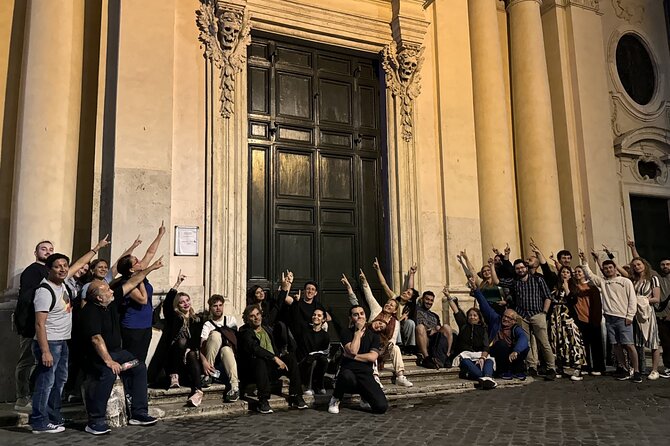
The route moves like a story. Each stop adds a new “chapter,” from major stone monuments to smaller lanes and churches where death is part of the design.
Below is what you’ll be focusing on, and what you should watch for as the guide talks.
Castel Sant’Angelo, Built as a Mausoleum and Reused as Power
You start at Castel Sant’Angelo, a standout landmark on the Tiber. The building began as Emperor Hadrian’s mausoleum and later became a fortress, papal residence, and prison. Even outside it, you can see why it’s unforgettable: that cylindrical form is visually dramatic against the river skyline.
The rooftop statue of the Archangel Michael is a key image here. At night, it feels even more mythic, because it sits above you like a guardian. It’s also the kind of landmark that makes you understand the whole tour theme: Rome reuses buildings, and stories cling to stone.
Timing note: this stop is about 15 minutes, so you’ll get enough time to look around before moving on.
Ponte Sant’Angelo, Angels That Look Like They’re Holding Secrets
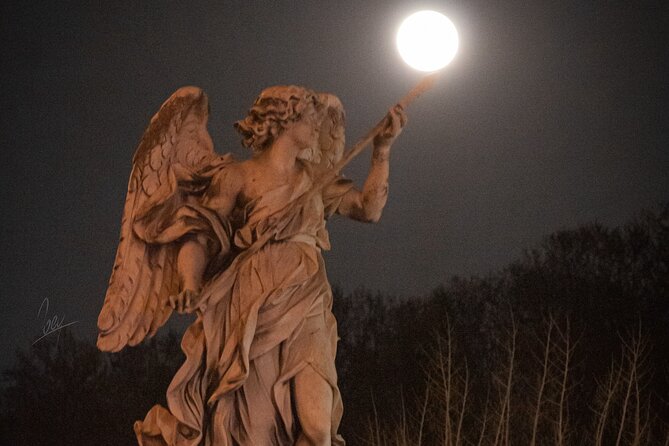
From Castel Sant’Angelo you move to Ponte Sant’Angelo, the bridge that connects worlds in the imagination of Roman folklore. The angels lining the bridge are carved by Bernini and his students, and the symbols on them relate to Christ’s suffering.
At night, the lighting does half the work for you. Shadows can make the angels’ faces seem less clear and more solemn, which suits the tour’s “mystery” approach. It’s a great place to slow down and watch how the guide connects art, belief, and fear.
Via Paola, The Tale of the Kindest Executioner
Next is Via Paola, introduced through a story about the house of the kindest executioner in Rome. This is one of those stops where you’re meant to consider how people soften even the harshest roles through legend.
Because the theme is human and moral, it’s not just about architecture. It’s about how storytelling turns brutal facts into something you can remember.
Timing note: it’s a short 10 minutes, so you’re more in listen-and-look mode than photo-and-explore mode.
Arco Dei Banchi, A Haunted Arch and Prayer for a Controversial Exorcist
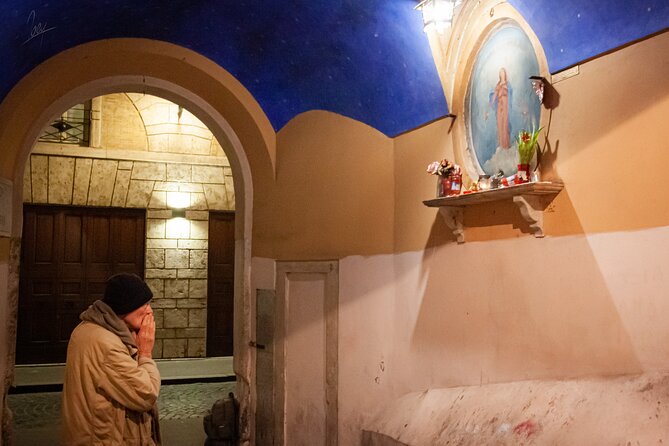
Then you’ll reach Arco Dei Banchi, known as the Haunted Arch. The stop also points to a connection with prayer for a controversial exorcist in Rome, which blends faith, fear, and public reputation.
This is the kind of stop where the guide’s delivery can make or break it. The arch is a small feature in a busy area, so it helps to stand close and follow the story closely.
Timing note: expect around 5 minutes here.
Largo Ottavio Tassoni, 319, Benvenuto Cellini’s Dark Reputation
At Largo Ottavio Tassoni, 319, the story turns to Benvenuto Cellini, famous for artistic talent and notorious for crimes. It’s one of those places where Rome’s “genius and horror” overlap in the same person.
This stop can feel heavy, but it also adds balance. Rome isn’t just “pretty monuments.” It’s people, choices, and consequences, written into buildings and street names.
Timing note: another short 5-minute stop.
Vicolo della Moretta, Giulia Tofana and the Inquisition Stories
In Vicolo della Moretta, you’ll hear about the haunted house of the witch Giulia Tofana and the surrounding stories tied to the holy inquisition.
This is where the tour leans harder into legend. The alley itself helps sell the mood, but your best experience comes from listening to how the guide ties fear to social power, rumors, and religious authority.
Timing note: plan for about 10 minutes.
Via di Monserrato and Corte Savella, Where Executions Happened Inside Walls
Next is Via di Monserrato, featuring Corte Savella, described as the only prison in Rome authorized to execute convicts inside its walls. The guide also connects this to Beatrice Cenci, reportedly tortured before her execution.
This is one of the darker parts of the route. Even if you don’t love gruesome stories, it’s historically important as an example of how punishment and control were organized.
Timing note: around 5 minutes. Quick stop, heavy material.
Via Giulia, Renaissance Elegance That Still Feels Quietly Unsettling
Then the tour shifts to Via Giulia, a picturesque historic street designed by Bramante in the early 16th century for Pope Julius II. It’s lined with Renaissance palaces, ivy-covered facades, and hidden courtyards.
This stop is a breather, but it’s not random. It gives you the “daylight contrast” so the earlier violence and fear don’t blur together. When you see elegance right after prisons and torture, the contrast feels real.
Timing note: about 5 minutes.
Santa Maria dell’Orazione e Morte, Baroque Death Imagery and a Macabre Confraternity
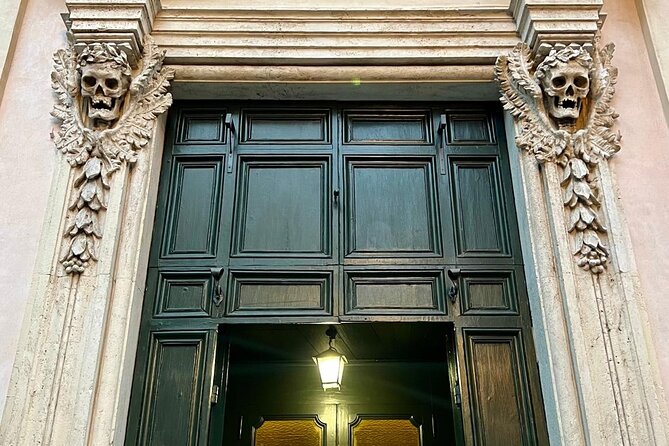
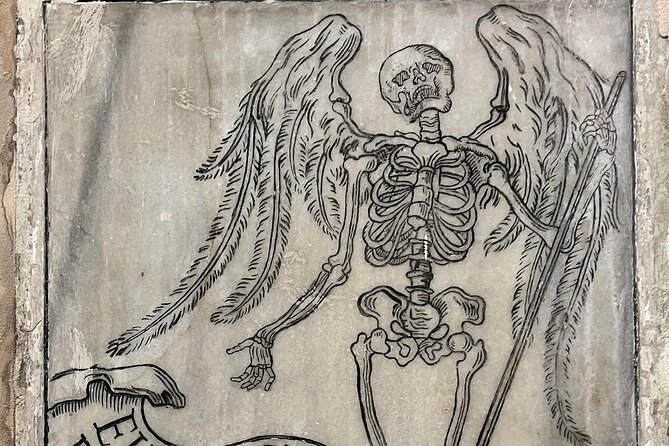
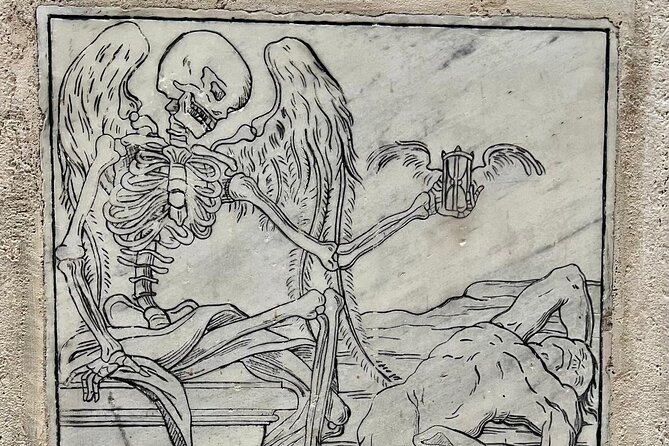
Now you reach Chiesa di Santa Maria dell’Orazione e Morte, a Baroque church built by a secretive confraternity dedicated to retrieving and burying abandoned corpses. The inside, as the tour frames it, includes skulls, bones, and symbols of death.
This is the stop most likely to make you pause. It’s not designed for thrills. It’s designed as a religious response to mortality, and that’s what makes it unsettling. You’ll feel the tour’s big idea here: Rome’s ghosts are often part of how people organized life and death.
Timing note: about 10 minutes.
Fontana del Mascherone, A Grim Mask and a Real Crime
After that, it’s Fontana del Mascherone on Via Giulia. The centerpiece is a massive stone mask that mysteriously spits water from its mouth. The stories attached to this fountain include a crime scene connection: John Paul Getty III was kidnapped.
This stop is a nice change of tone. It turns ghostly legend into a modern reminder that Rome still has shock stories. It also gives you a different kind of “mystery” at night, not supernatural, just human and unsettling.
Timing note: about 5 minutes.
Campo de’ Fiori, From Market Square to Execution Memory
Finally you end at Campo de’ Fiori. This square is famous for its daytime market, but at night it turns into a lively hub with bars and restaurants. The tour also reminds you of the darker past connected to Giordano Bruno’s statue and the Inquisition era executions.
This ending works well because you leave with two feelings at once: satisfaction that the walk is done, and a lingering awareness that history is under every corner. It’s the perfect Rome-style fade from night storytelling into normal street life.
Timing note: about 10 minutes.
How to Hear the Guide Clearly and Get Your Money Worth
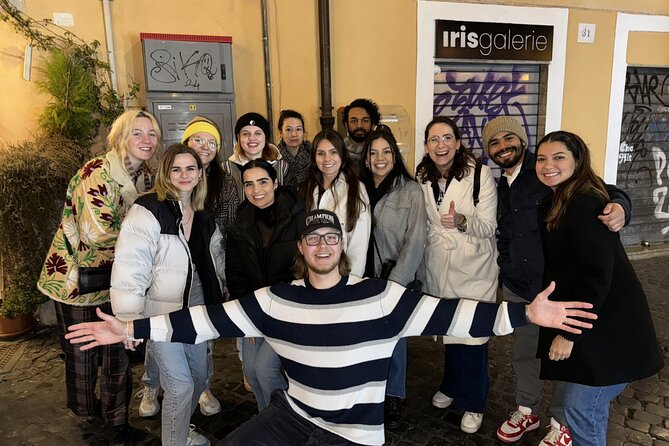
Because this tour is story-based, you’ll get more out of it if you’re in a listening position. Stand where the guide can see you. Avoid trailing behind too far, since the route includes multiple tight turns and quick stops.
A couple other practical points help:
- Dress for walking at night. Rome evenings can feel cooler than you expect, and you’ll be on the move.
- Bring your patience for slow moments that are actually important. For legends, the guide often wants you to look at specific details.
- If you like photos or visual context, you might find that some guides use pictures to reference what things looked like long ago, which can make the stories land better.
And because it’s tip-based, treat the end like part of the experience. If you listen well, you’re more likely to tip fairly.
Who Should Book This Tour (and Who Should Skip)
This tour is a great fit if you want:
- A short, nighttime plan that doesn’t steal your entire evening.
- A walk that covers major dark landmarks along a logical route.
- Legends and mysteries explained in plain language, connected to real places.
It’s also a good option for solo travelers who like the comfort of a group walking plan after dark. The small group size up to 24 helps keep it from feeling chaotic.
You might want to skip it if:
- You need something truly scary. The format is legends and history, not theatrical horror.
- You’re traveling with kids under 12, since the tour includes graphic information.
- You strongly prefer quiet sightseeing with minimal story intensity.
If you’re not sure, ask yourself one question: do you want to learn how Rome built its stories into buildings, or do you want the creepiest “ghost hunt” experience possible? This tour is the first one.
Should You Book the Ghosts, Legends and Mysteries of Rome Walking Tour?
If you like dark tales tied to real Roman sites, I think you’ll be happy you booked it. The overall rating is 4.9, with 149 reviews and about 97% recommending it, which lines up with the most praised parts of the experience: enthusiastic guidance, clear storytelling, and a fun night walk pace.
I’d book it if you’re short on time and want a guided route that runs smoothly from Castel Sant’Angelo to Campo de’ Fiori. The route also ends in a place where you can keep your evening going right away.
I’d hesitate if you want jump scares, guaranteed “ghost sightings,” or maximum horror. This is not that. It’s a smart, low-cost, story-first walk through Rome’s dark history, and it works best when you’re ready to listen.
FAQ
Where does the tour start and where does it end?
The tour starts at Lungotevere Castello, 50, 00193 Rome and ends at Campo de’ Fiori (P.za Campo de’ Fiori, 00186 Rome).
What time does the tour start, and how long is it?
It starts at 8:00 pm and lasts about 1 hour 30 minutes.
What language is the tour offered in, and how large is the group?
The tour is offered in English, and it has a maximum group size of 24 travelers.
How much does it cost, and how do tips work?
The tour price is listed at $3.63 per person. Tips are not included, and it is a tip-based tour where the guides work for tips alone.
Are entry tickets included for the stops?
The tour lists the stops with admission ticket free notes, so you’re not typically paying for separate entrance tickets for the listed stops.
Is this tour suitable for children?
It includes CSA topics and graphic information, and it is not recommended for children under 12 years old.
Can I cancel for a full refund?
Yes. You can cancel up to 24 hours in advance for a full refund, and cancellations made less than 24 hours before the start time are not refunded.
Are service animals allowed?
Yes, service animals are allowed.
Latest reviews around Rome
- Rome at Night: Small Group Guided City Walking Tour★ 5.0 · 249 reviews
- Guided Walking Tour of Rome: Top Sights & Baroque Treasures★ 5.0 · 155 reviews
- Private Walking Tour of the Squares and Fountains in Rome★ 5.0 · 130 reviews
- Rome Food Tour by the Vatican★ 5.0 · 308 reviews
- Vintage Fiat 500 Cabriolet: Rome’s Highlight Semi Private Tour★ 5.0 · 283 reviews
- Welcome To Rome Experience★ 4.5 · 679 reviews
- Vespa Rental in Rome 24 hours★ 5.0 · 196 reviews
- Vatican VIP Early Entrance 8:00 AM★ 4.5 · 141 reviews
Walking Tours, compared.
Guided Walking Tour & Last Supper Visit with Ticket
Read our review →
Rialto Bridge & Offbeat Unusual Venice Walking Tour
Read our review →
Private 3 hrs Venice Tour: St Mark’s, Walking tour & Boat tour
Read our review →
Skip the line: Uffizi and Accademia Small Group Walking Tour
Read our review →Browse the lists this tour appears in