

Reviewed · WALKING TOURS
Discover the Jewish Ghetto of Rome on a Small Group Walking Tour
A walk through the Jewish Ghetto changes how Rome feels. It’s a compact route through major ancient sites and then into the lived-in streets where centuries of Jewish life shaped the neighborhood you see today. You get expert local context in a small group, so the story stays clear while you move.
What I like most is the mix of big Rome landmarks and specific ghetto landmarks. I also appreciate the practical payoff, kosher gelato or coffee as an easy, tasty break that fits right into the walk. One thing to consider: the stop at the Tempio Maggiore di Roma is not included, so you may want to plan for that separately if you’re keen to go inside.
In This Review
- Key Highlights You Should Know
- Price and Logistics: What You’re Really Paying For
- Where the Walk Starts: Foro Traiano to Capitoline Views
- Theater of Marcellus: The Ancient “Little Colosseum” Moment
- Turtle Fountain and a Real Break: Kosher Gelato Stop
- Entering Jewish Rome: Tempio Maggiore di Roma
- Portico di Ottavia: The Gateway Into the Ghetto
- Tiber Island Finish: Ancient Hospital to Trastevere Easy Access
- Guides and the Human Side of the Story
- What the Route Teaches You About Rome
- Who This Tour Fits Best (and Who Might Want to Skip It)
- Should You Book This Jewish Ghetto of Rome Walking Tour?
- FAQ
- How long is the Jewish Ghetto of Rome walking tour?
- Where does the tour start and where does it end?
- Is the tour offered in English?
- What is included in the price?
- Do I need to buy tickets for each stop?
- Is there a kosher food stop during the walk?
- How big is the group?
- What ticket type do I receive?
- Is the meeting area near public transportation, and are service animals allowed?
Key Highlights You Should Know
- Small group size (max 15): easier questions, clearer commentary, less waiting around.
- English tour with a mobile ticket: simple to manage once you’re meeting outside.
- Kosher tasting stop: a real food moment, not just a photo stop.
- Oldest Jewish ghetto focus: includes the area’s deeper story, not just a quick loop.
- Ends near Trastevere: perfect location for your next meal after the walk.
- Route includes both ancient ruins and ghetto streets: you see how Rome layers time.
Price and Logistics: What You’re Really Paying For
At about $48.37 per person for roughly 2 hours, you’re not just buying sightseeing. You’re paying for the guide’s ability to stitch together ancient Rome, Renaissance art, and Jewish community history into one walk you can actually follow.
The route also has a built-in value feature: most stops are free to enter, and the tour includes a kosher gelato or coffee. That kind of included refreshment matters when you’re walking in Rome heat, and it gives you a natural pause before you head into the ghetto.
Logistically, the tour ends on Tiber Island, which is a smart finish point. It sits between the ghetto area and Trastevere, so you’re not forced into a “go back to the meeting point” loop.
More walks around Rome:
- Rome: Trastevere & Campo de Fiori Street Food Walking Tour
★ 4.9 · 2,768 reviews - Rome: Paranormal Night Walking Tour & Secret Backstreets
★ 4.9 · 1,921 reviews - Rome by Night Walking Tour – Legends & Criminal Stories
★ 4.5 · 1,003 reviews
Where the Walk Starts: Foro Traiano to Capitoline Views
You begin at Foro Traiano, at 84, 00187 Roma RM. This is a great start because it immediately signals the tour will connect old Rome to what came later. From there, you work your way through Piazza Venezia, then up the gentle steps toward Piazza del Campidoglio.
At Campidoglio, you get to see the design of the square associated with Michelangelo, and you’re also near the Capitoline Museums area. This part of the walk is not just scenic. It sets your frame of reference for how the city’s power centers and institutions shaped daily life and where communities lived around the broader Roman world.
Theater of Marcellus: The Ancient “Little Colosseum” Moment
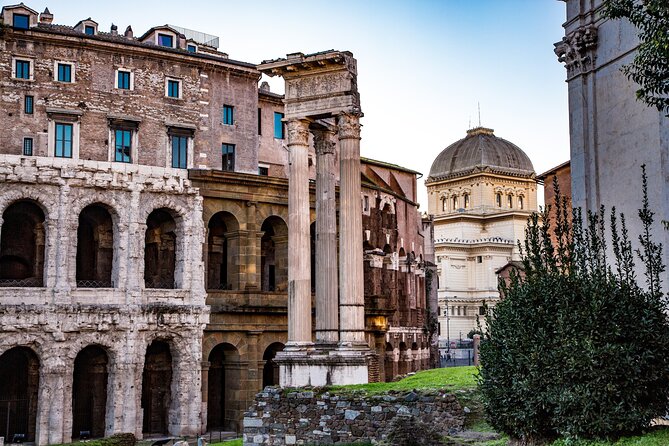
Next comes Teatro di Marcello, which people often nickname the little Colosseum. It’s slightly older, dating back to 12BC, and that age difference matters because you’re seeing a Roman structure that long predates the more famous sites.
A fun, helpful detail during a guided walk: you’ll also see that it didn’t host blood sports, and now the theater’s upper apartments are home to residents. That contrast, between huge monument and actual everyday living, is one of the quiet themes of the whole experience.
If you like your history with real-world texture, this stop delivers. It’s Rome doing Rome, then getting out of the way so you can keep moving.
Turtle Fountain and a Real Break: Kosher Gelato Stop
Then the tour shifts into lighter, edible territory with Fontana Delle Tartarughe. Along the way, you pass plenty of neighborhood restaurants, which helps you understand the area is not frozen in time.
The built-in kosher gelato stop is here. It’s a practical break that also connects directly to the tour’s theme of Jewish life in Rome. You’re not asked to “imagine” what food meant, you get a taste before you go deeper.
After the gelato, you reach Fontana delle Tartarughe, a Renaissance masterpiece. You’ll learn that it was famously constructed in just one day, which is the kind of fact that sticks because it’s so specific and surprising.
A few more Rome options to weigh
- Rome: Guided City Center Evening Sightseeing Walking Tour
★ 4.4 · 953 reviews - Best of Rome Walking Tour including Trevi Fountain
★ 4.5 · 923 reviews - Rome: Under the Moonlight Evening Walking Tour
★ 4.8 · 852 reviews - Rome: Forbidden History Walking Tour & Pub Crawl with Drinks
★ 4.9 · 688 reviews
Entering Jewish Rome: Tempio Maggiore di Roma
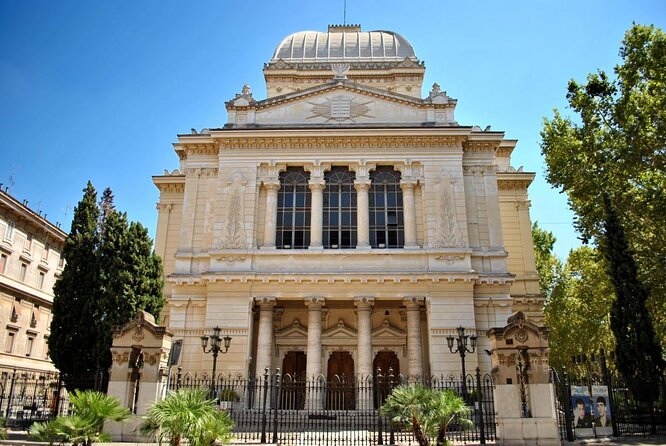
The tour’s core historical anchor arrives at Tempio Maggiore di Roma. This synagogue, constructed in 1555, is presented as the oldest Jewish Ghetto. That wording in the tour focus matters because it tells you the goal is historical continuity, not just “site collection.”
You’ll also hear about how Jewish rights were revoked and restrictions were placed on trade and real estate ownership. Even with those constraints, the Jewish community is described as thriving, developing business life, cuisine, and even a local dialect of Italian.
The tour also notes the Great Synagogue still functions today as a place of prayer and a cultural reference point. It’s described as the third largest in Europe, and that scale helps you understand why this spot is still central.
Important practical note: admission to Tempio Maggiore di Roma is not included. So if you want a full “inside the synagogue” experience, plan for tickets on your own rather than expecting this tour to cover entry.
Portico di Ottavia: The Gateway Into the Ghetto

From there you walk to Il Portico Di Ottavia, the Porticus Octaviae. This massive structure was built by Emperor Augustus in honor of Octavia, and it later became the home to Rome’s fish market from the 15th century into the early 20th century.
This stop does a clever job of turning a dramatic historical setting into something you can picture. Fish market life is messy, loud, and everyday, and knowing that it once lived in this structure makes the later ghetto story feel more grounded.
Then comes the “you’re entering the ghetto now” moment. You’re told this is where you enter the ghetto itself, so the walk shifts from surrounding landmarks into the streets that shaped Jewish daily life.
If you love walking tours that give you direction, this is satisfying. You’re not wandering. You’re moving with the story.
Tiber Island Finish: Ancient Hospital to Trastevere Easy Access

You conclude at Isola Tiberina, Tiber Island. This is one of those Rome places where past and present share the same view line.
The tour explains that ancient Romans used the island as a hospital, with the river acting as a natural barrier against disease spread. It also notes that a major hospital still exists there today.
From a traveler’s point of view, this ending is smart. Tiber Island is positioned between the ghetto area and Trastevere, and it’s described as conveniently connected to return to other parts of the city. Even better, it’s a natural launching point for dinner in either neighborhood.
If you want a smooth transition from history into your next meal, finishing here makes it easy.
Guides and the Human Side of the Story

A lot of this kind of tour lives or dies by the guide. The feedback names a strong lineup of people who teach with both facts and feeling.
I’ve seen guides called out by name including Jamie, James, Paul, Angela, Daniel, and Brian. Several descriptions focus on a historian-level approach, with guides able to explain not just what happened, but why it mattered, while staying clear enough for people asking questions.
One practical thing I’d recommend: before you go, double-check the guide identity and exact meeting instructions. There’s been at least one reported meeting confusion where a guide’s sign showed a different brand name than the tour label, and the correct meeting details arrived close to start time. A quick screenshot of the meeting point and tour name can save stress.
What the Route Teaches You About Rome
This experience isn’t only about a neighborhood. It’s about how Rome layers time.
You start with power and design in the Trajan and Capitoline area. You pass the Theater of Marcellus where ancient architecture still has residents. You hit Renaissance art at the Turtle Fountain. Then you arrive at the synagogue context and the ghetto boundary, and finally you close at Tiber Island where the city’s relationship to health, institutions, and public space still shows up.
That structure is the value for you. You don’t just learn dates. You learn how different eras occupy the same streets, and how that affects what you see while walking.
It also helps you read modern Rome with better eyes, because the walk ends in the kind of area where you’ll want to keep going. In other words, the tour doesn’t end at the last stop, it gives you momentum for dinner and wandering.
Who This Tour Fits Best (and Who Might Want to Skip It)
This tour is ideal if you want a small-group walk with clear commentary and a route that mixes monuments with neighborhood life. It’s also a strong choice if you’re interested in Jewish history in Rome and you want a guide to connect ancient structures to the community’s experience.
If you’re the type who hates any heavy walking before lunch, note that you’ll cover several stops over about 2 hours. It’s not a sit-down museum tour, it’s a moving story.
And if you want guaranteed entry inside Tempio Maggiore, you’ll need to plan separately since the tour does not include admission there.
Should You Book This Jewish Ghetto of Rome Walking Tour?
Yes, if you want a short, guided route that makes the Jewish Ghetto story understandable while still giving you real, visible Rome landmarks. The included kosher gelato or coffee is more than a snack, it’s part of the experience rhythm.
Book it early if you can. It’s commonly booked about 42 days in advance, and that’s usually a sign it runs when the schedule is full, especially in peak season. When you book, double-check meeting-point instructions carefully so you feel confident showing up on time.
Skip or rethink it only if you strongly prefer self-guided tours with zero structure, or if you need full synagogue entry included in the base price. Otherwise, this is the kind of tour that leaves you knowing where you are, what you’re looking at, and what the neighborhood meant.
FAQ
How long is the Jewish Ghetto of Rome walking tour?
It runs about 2 hours, approximately.
Where does the tour start and where does it end?
It starts at Foro Traiano, 84, 00187 Roma RM, Italy and ends on Tiber Island, 00186 Rome, Metropolitan City of Rome Capital, Italy.
Is the tour offered in English?
Yes, it is offered in English.
What is included in the price?
The tour includes an expert local guide and an authentic kosher gelato or coffee.
Do I need to buy tickets for each stop?
Most stops listed are marked as free admission. Tempio Maggiore di Roma is specifically noted as admission not included.
Is there a kosher food stop during the walk?
Yes. There is a stop for traditional kosher gelato, included as part of the experience.
How big is the group?
The maximum group size is 15 travelers.
What ticket type do I receive?
You receive a mobile ticket.
Is the meeting area near public transportation, and are service animals allowed?
The start location is near public transportation, and service animals are allowed.
Latest reviews around Rome
- Guided Walking Tour of Rome: Top Sights & Baroque Treasures★ 5.0 · 155 reviews
- Rome at Night: Small Group Guided City Walking Tour★ 5.0 · 249 reviews
- Private Walking Tour of the Squares and Fountains in Rome★ 5.0 · 130 reviews
- Rome Food Tour by the Vatican★ 5.0 · 308 reviews
- Vintage Fiat 500 Cabriolet: Rome’s Highlight Semi Private Tour★ 5.0 · 283 reviews
- Welcome To Rome Experience★ 4.5 · 679 reviews
- Vespa Rental in Rome 24 hours★ 5.0 · 196 reviews
- Vatican VIP Early Entrance 8:00 AM★ 4.5 · 141 reviews
Walking Tours, compared.
Guided Walking Tour & Last Supper Visit with Ticket
Read our review →

Rialto Bridge & Offbeat Unusual Venice Walking Tour
Read our review →
Private 3 hrs Venice Tour: St Mark’s, Walking tour & Boat tour
Read our review →
Skip the line: Uffizi and Accademia Small Group Walking Tour
Read our review →Browse the lists this tour appears in