
Reviewed · CITY TOURS
Alternative Walking Tour of Rome’s City Center & Hidden Gems
Rome has a talent for hiding its best stories in plain sight. This 2.5-hour walk is built around power, families, scandals, and the kind of connections you miss when you only chase postcards. I liked how the route mixes major hits like the Trevi Fountain and Pantheon with smaller, sometimes off-limits spaces that feel like Rome letting you in on a secret.
Two things I really appreciate are the story-first guiding and the focus on who shaped Rome, not just what you see. Guides like Iris (with fun humor), Jacopo (fast, passionate explanations), and Simone (high-energy storytelling) help you understand why churches, fountains, and even obelisks ended up where they did. The main drawback is that the tone includes dark humor and politically incorrect jokes, so if you prefer a strictly family-friendly vibe, you might want to mentally brace for it.
In This Review
- Key Highlights You Should Know Before You Go
- A Rome Walk Built Around Power, Not Just Places
- The Real Cost: $3.77 Up Front, Tips in the Spotlight
- Starting at Trajan’s Forum, Where Rome Shows Off Its First Big Flex
- Trajan’s Column Stop: Short, Photogenic, and Actually Meaningful
- Piazza Venezia: A Quick Pivot Into Rome’s Later Political Drama
- Secret Stop and the Monastery Visit: Where the Tour Earns Its Name
- Papal Private Gardens Admission
- Trevi Fountain With a Real Break, Not Just a Photo Stamp
- Church of Sant’Ignazio di Loyola: Baroque Art as a Political Tool
- Pantheon: The Icon, Explained Like You’re Seeing It for the First Time
- Piazza Navona Finish: The Final Stage-Set
- Guide Style, Pace, and What to Watch For
- Who This Tour Is Best For
- Should You Book This Alternative Rome Walk?
- FAQ
- How long is the walking tour?
- Where does the tour start and end?
- What languages are available for the live guide?
- Is the tour a fixed-price tour?
- What tip amount is usually expected?
- What is included besides the walking tour?
- Is free cancellation available?
Key Highlights You Should Know Before You Go
- Off-limits locations and hidden stops that add variety beyond the usual Rome checklist
- Trajan-to-Baroque timeline in walking form, connecting ancient ruins to later power plays
- Family dynasties and behind-the-scenes scandals, including corruption, crime, murder, war, and betrayal
- A good balance of icons and detours, with photo stops and short breaks that keep the pace sane
- Papal Private Gardens admission included, adding a calmer contrast to the street-level crowd
A Rome Walk Built Around Power, Not Just Places
Most Rome tours tell you what stands in front of you. This one explains what stood there before it, who benefited, and who paid the price. The core theme is Rome’s power network over time, from emperors to popes, artists, invaders, and visionaries. As you walk, the guide turns monuments into evidence, and you start noticing patterns: churches popping up where influence needed a home, fountains acting like public messaging, and symbols re-used because people never stop trying to control the story.
I also like that it works for different experience levels. If it’s your first time in Rome, you’ll get a helpful map of the city’s layers. If you’ve already done the big-name sights, this tour is more about meaning and context than repeat photos.
More walks around Rome:
- Rome: Trastevere & Campo de Fiori Street Food Walking Tour
★ 4.9 · 2,768 reviews - Rome: Paranormal Night Walking Tour & Secret Backstreets
★ 4.9 · 1,921 reviews - Rome by Night Walking Tour – Legends & Criminal Stories
★ 4.5 · 1,003 reviews
The Real Cost: $3.77 Up Front, Tips in the Spotlight
The advertised price is $3.77 per person, and the tour is tip-based under a pay-what-you-want model. That means the guide’s pay depends heavily on what you choose to give at the end. The guidance you’ll see for budgeting is usually 10€ to 50$ in tips.
Value-wise, this model can be excellent because it lines cost with satisfaction. If you get a guide who tells the truth, keeps the pace comfortable, and answers your questions, you’re likely to feel good about tipping more. If you prefer a fixed-price tour where you know exactly what you’re buying, mentally plan for the tip as part of the true total.
Also, since this is a walking tour, most of your “product” is live guiding time. In Rome, that can be a better use of money than another entry ticket if you care about context.
Starting at Trajan’s Forum, Where Rome Shows Off Its First Big Flex
You meet on the steps of Chiesa del Santissimo Nome di Maria al Foro Traiano, right by Trajan’s Column and Trajan Forum. This is a smart way to start because it immediately drops you into the Roman habit of building propaganda in stone. Even if you’ve only seen this area from a distance, being right here helps you understand the scale of ambition.
If you like your Rome with a bit of bite, you’ll probably enjoy the way the tour frames early imperial Rome as a system, not just a collection of ruins. The guide’s job is to connect ancient architecture to later political theater, and starting at Trajan gives them a strong foundation.
Trajan’s Column Stop: Short, Photogenic, and Actually Meaningful
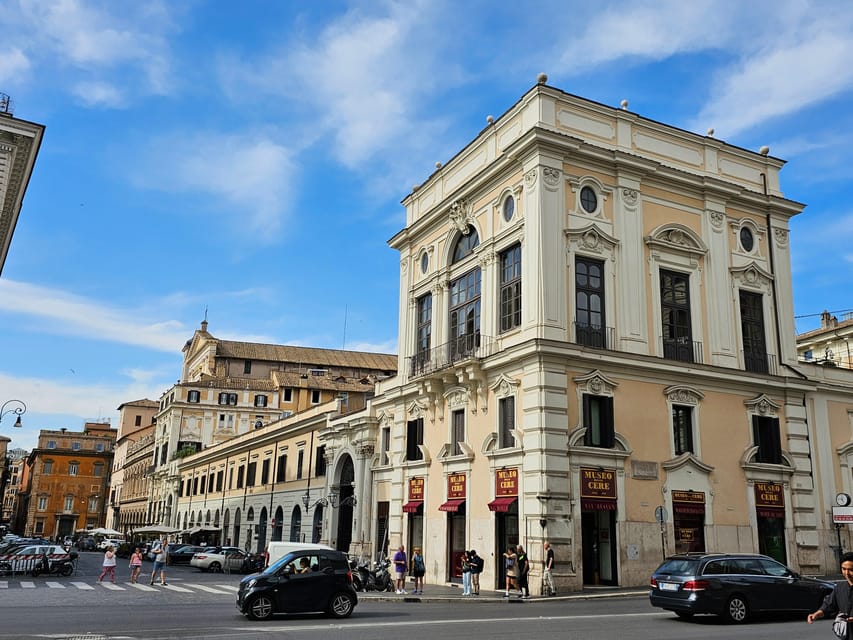
The tour includes time for a photo stop and guided visit at Trajan’s Column. It’s not a long detour, but it’s timed well. A quick look at the column sets you up for the theme of power and narrative. You’re not just seeing an object, you’re learning how Romans used art and storytelling to justify rule.
Then you move on, rather than getting stuck. That matters because the tour is designed around momentum: you’ll keep your attention sharp as you go from one era to another.
A few more Rome options to weigh
- Rome: Guided City Center Evening Sightseeing Walking Tour
★ 4.4 · 953 reviews - Rome: Under the Moonlight Evening Walking Tour
★ 4.8 · 852 reviews - Rome: Forbidden History Walking Tour & Pub Crawl with Drinks
★ 4.9 · 688 reviews - Rome: City Highlights Moonlight Walking Tour
★ 4.9 · 580 reviews
Piazza Venezia: A Quick Pivot Into Rome’s Later Political Drama
Next comes a short photo stop at Piazza Venezia. This part works like a hinge in the walk. You’re moving between the ancient imperial zone and the later centers of influence, where Rome’s history keeps getting rewritten in new styles.
The guide typically uses this kind of stop to explain how Rome’s power locations shift over time. Even if you only get a few minutes here, you’ll feel the city changing tone under your feet.
Secret Stop and the Monastery Visit: Where the Tour Earns Its Name
After Piazza Venezia, you’ll have a secret stop, plus later a monastery segment with a longer guided visit. This is where the tour often feels most different from the standard Rome route, because the content is less about checking boxes and more about showing you corners of the city that don’t get the same spotlight.
One of the best signals from the experience is that guides consistently bring the past into focus through smaller spaces. A monastery stop is especially useful for understanding how religion, politics, and architecture intersect. Even if you’re not a church-detail person, these stops can change how you read Rome’s skyline and street layout.
Papal Private Gardens Admission
One major inclusion that sets this tour apart is Papal Private Gardens admission. You’re getting access that most casual sightseeing doesn’t include. The practical win is a break from the street-level crush. The bigger win is perspective: gardens and curated spaces help you see Rome as something built for controlled experiences, not just public monuments.
Trevi Fountain With a Real Break, Not Just a Photo Stamp
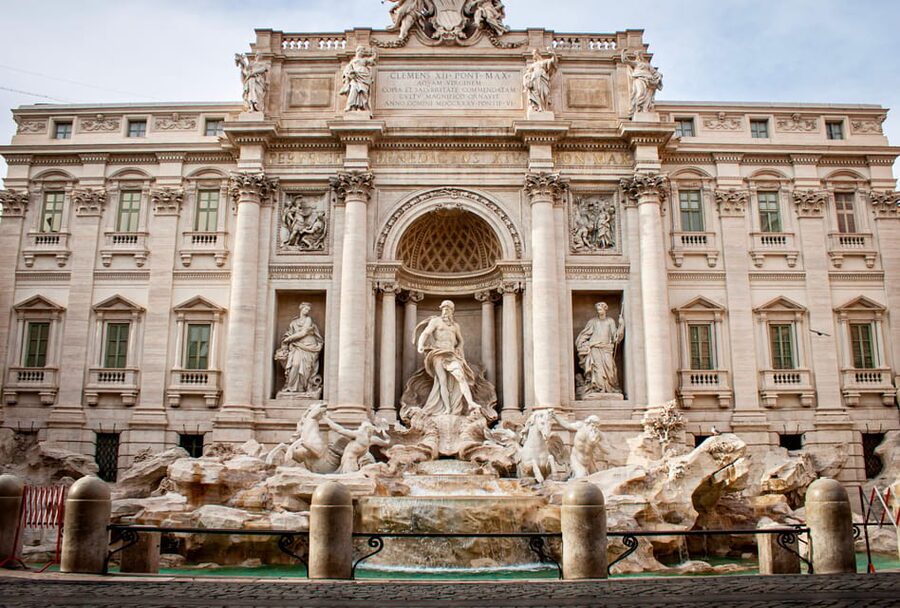
Yes, you hit the Trevi Fountain. But the point here is how the guide handles it. You don’t just crowd around, you get guided context and a break time with free time. That combination matters because Trevi is one of those places where the crowd can swallow the experience.
With the story angle, you’re more likely to notice what’s being communicated through design. The tour also connects fountains to power and propaganda, which turns what you may think is only decorative into something closer to political messaging in stone and water.
Use your free time wisely. If you want photos, do them quickly, then step back and let the guide’s explanations land. The best Trevi moments are the ones where you’re not rushing.
Church of Sant’Ignazio di Loyola: Baroque Art as a Political Tool
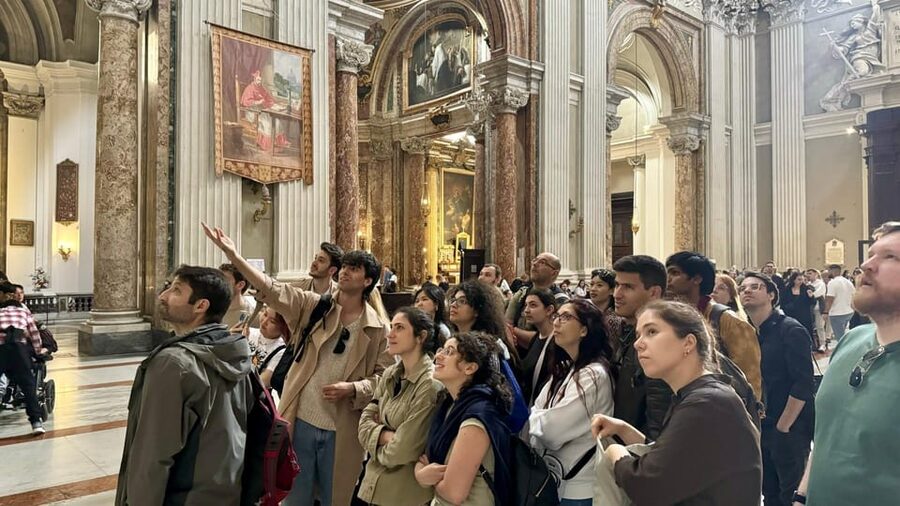
Next up is Church of Sant’Ignazio di Loyola for a photo stop, guided visit, and sightseeing time. This church is a strong match for the tour’s theme because Baroque art is rarely neutral. It’s about impact. It’s about directing your attention.
This is also the kind of stop where guides tend to go beyond basic facts. In the group’s feedback, several guides stood out for storytelling energy and for connecting art to history and politics. One detail that’s especially fun if you’re the type to notice inscriptions: some guides can translate older references on marble, even reading ancient Greek and Latin, which makes the church feel less like a museum room and more like a message from the past.
Pantheon: The Icon, Explained Like You’re Seeing It for the First Time
The tour then moves to the Pantheon, with photo stop, guided tour, and sightseeing time. Even if you’ve visited before, this is likely the part where the guide’s explanations make the architecture click.
The Pantheon works well on foot for two reasons. First, you’re surrounded by other layers of Rome, so it’s easy to compare eras. Second, the stop is short enough to keep you from tiring out, but long enough to let the guide point out the details that tourists often walk past.
Piazza Navona Finish: The Final Stage-Set
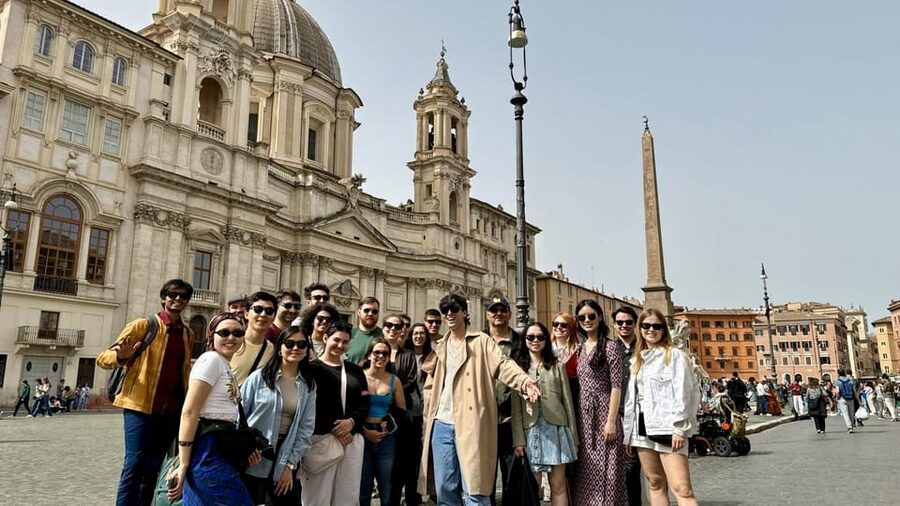
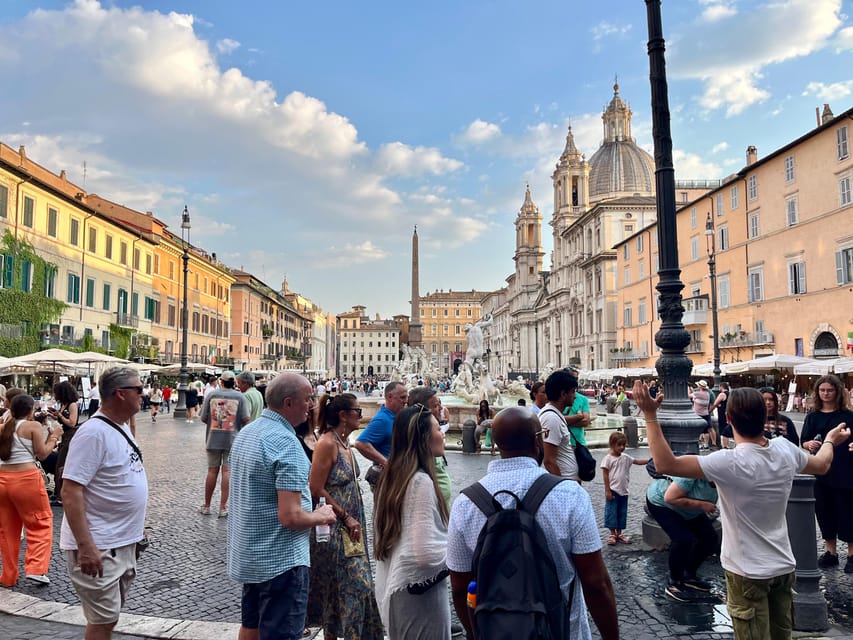
You wrap at Piazza Navona, with a photo stop, visit, guided tour, and sightseeing time that mirrors how the tour has been framed all along: this city is theatrical. Squares like Navona are where Rome’s history shows itself through layout, art, and the everyday flow of people.
If you leave with one lasting feeling, I hope it’s this: Rome isn’t only old. It’s always been re-made by the powerful. When you finish here, you’ll likely understand why churches, fountains, and public art keep appearing in the places that mattered most to whoever ran Rome at the time.
Guide Style, Pace, and What to Watch For
The experience is led by live guides in Spanish and English. In the feedback you’ll see a consistent pattern: guides mix facts with humor and keep moving at a pace that feels comfortable. People also highlight that the tour is structured with stops that include walking, photo moments, and guided sections, so you’re not stuck listening for the entire 2.5 hours.
One more thing to consider: the tour highlights mention dark humor and politically incorrect jokes. That can be funny and memorable for the right group, but it’s still a tone choice. If you prefer very straightforward commentary, you may want to check that expectation before booking.
Finally, since this is a walk, wear shoes you trust. Rome’s center can be uneven, and you’ll spend your energy on transitions between stops, not just the time in each sight.
Who This Tour Is Best For
I think this tour is a strong match if you:
- want Rome explained through people and power, not only dates
- like story-driven guiding, and don’t mind a guide who jokes with energy
- have already seen the obvious sights and want different context and access
- enjoy variety, with icons plus quieter segments like a monastery stop and included Papal gardens admission
If you’re the type who needs strictly gentle, fully sanitized history, or if humor with edge will distract you, you might find the tone less fun.
Should You Book This Alternative Rome Walk?
If you want a Rome tour that gives you something to think about after you leave the square, this is an easy yes. The combination of major landmarks plus off-limits or less typical stops, powered by guides who use humor and storytelling, makes the price feel justified even before you factor in tips.
I’d book it if you’re excited by connections: how Rome’s big monuments are linked to family dynasties, propaganda, betrayal, and survival. You’re not just walking through Rome. You’re learning how Rome has always managed its image.
FAQ
How long is the walking tour?
The tour duration is 2.5 hours.
Where does the tour start and end?
You meet at Chiesa del Santissimo Nome di Maria al Foro Traiano and the tour finishes at Piazza Navona.
What languages are available for the live guide?
The live tour guide is available in Spanish and English.
Is the tour a fixed-price tour?
It is tip-based using a pay-what-you-want model. Guides work on tips, and you give what you think the tour was worth.
What tip amount is usually expected?
The usual tip range is between 10€ and 50$.
What is included besides the walking tour?
In addition to a local guide and city highlights, the tour includes hidden gems and Papal Private Gardens admission.
Is free cancellation available?
Yes, there is free cancellation up to 24 hours in advance for a full refund.
Latest reviews around Rome
- From Rome: Hadrian’s Villa & Villa d’Este Day Trip & Lunch★ 4.5 · 157 reviews
- Rome: Painting Class with Unlimited Wine★ 4.8 · 109 reviews
- Vatican City: Sistine Chapel, Museums, Basilica Private Tour★ 4.8 · 158 reviews
- Pope Leo XIV Audience Tour with Local Guide★ 3.3 · 111 reviews
- Vatican Museums & Sistine Chapel Skip-the-Line Guided Tour★ 4.6 · 254 reviews
- Rome: The Three Tenors at St. Paul’s Church Concert Ticket★ 4.7 · 699 reviews
- Rome: St. Peter’s Basilica and Papal Tombs Guided Tour★ 4.6 · 477 reviews
- St. Peter’s Dome Climb, Basilica and Vatacombs Tour★ 4.7 · 230 reviews
City Tours, compared.
City Sightseeing Hop-on Hop-off Bus with Audioguide
Read our review →
City Sightseeing Hop-On Hop-Off Bus with Audio Guide
Read our review →
City Sightseeing Rome Hop-On Hop-Off Bus Tour
Read our review →

Fettuccine Pasta Cooking Class in Rome’s City Center
Read our review →
Vatican City: Vatican Museums & Sistine Chapel Entry Ticket
Read our review →

City Sightseeing Florence Hop-On Hop-Off Bus Tour
Read our review →Browse the lists this tour appears in