
Reviewed · VATICAN MUSEUMS & SISTINE CHAPEL TICKETS
Tour Squares of Rome and Vatican
Rome in one walk, from marble kings to popes. This tour is interesting because it jumps across Imperial Rome to Renaissance and Baroque art, with major stops you can recognize fast. I like two things most: the mobile ticket setup and the way it ends at St Peter’s Square, so your day has a clean finish line. One possible drawback: I saw reports of ticket confusion tied to third-party bookings, so I’d double-check what you actually paid for and what the guide expects at the meeting point.
You’re looking at a flexible format, with short sightseeing segments that run anywhere from about 2 to 45 minutes, plus a max group size of 30. That pacing can be great if you want highlights without a long slog, and it matters in Rome, where you spend more time walking and waiting than you think.
If you travel on a Sunday, there’s a special bonus: the tour ends with the papal blessing during the Angelus. Just remember that this kind of event can make timing feel different from a normal day, even if the route is still the same idea.
In This Review
- Key Highlights I’d Pencil in First
- Starting at Fontana del Tritone: a smart launch point
- Imperial Rome, Pantheon entry, and ruins that still feel real
- Castel Sant’Angelo area: more than a postcard view
- Renaissance and Baroque Rome: Michelangelo and Bernini in the street
- The fountain circuit you will actually remember
- From the Vatican Museums area to St Peter’s Square
- How the 2 to 45 minute pacing affects your day
- Mobile ticket and practical logistics that save stress
- Value check: is $17.44 really a good deal?
- Who this tour suits best
- Should you book the Squares of Rome and Vatican tour?
- FAQ
- Where is the tour starting point?
- Where does the tour end?
- How much does the tour cost?
- How long is the tour?
- Is there a mobile ticket?
- How large is the group?
- Are Pantheon and Vatican areas included?
- Does the tour include a special Sunday event?
- What cancellation terms are available?
Key Highlights I’d Pencil in First
- Pantheon entry included, so you’re not just viewing from the outside.
- Fontana del Tritone is the starting point, which helps you orient yourself quickly in central Rome.
- Trevi Fountain and other named fountains are a real focus, not an afterthought.
- Michelangelo Buonarroti and Gian Lorenzo Bernini are tied directly to what you’ll see in the city.
- Vatican finale at St Peter’s Square, after the Vatican Museums area.
- Small enough for interaction: maximum 30 travelers.
Starting at Fontana del Tritone: a smart launch point
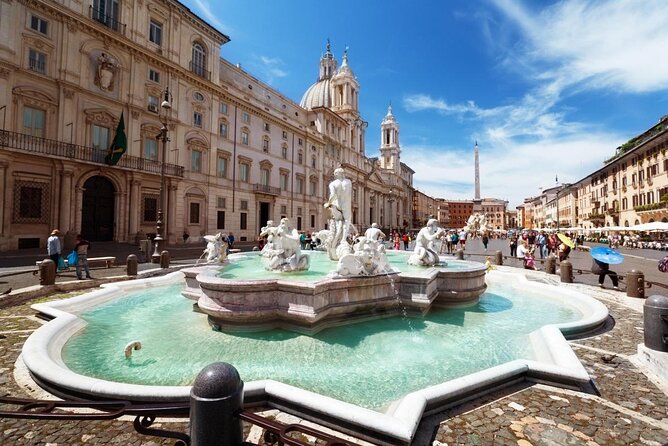
You begin at Fontana del Tritone in Piazza Barberini. I like this start because it’s right in the middle of where you want to be for Rome sightseeing, and it gives you a clear landmark before you start walking through denser, more chaotic streets.
From there, you move from big Roman icons toward Renaissance and Baroque Rome, and then you work your way to the Vatican side of things. The flow is built for people who want to see a lot without getting stuck thinking, OK, what do I do next?
Two details make the start feel practical. First, it’s near public transportation, so you can plan arrivals and departures without building your entire day around a single bus route. Second, this is a mobile ticket experience, which usually means less paper chaos when you’re trying to meet a group in a crowded city.
One more thing: the tour format is designed for short segments. That matters because Rome’s streets can turn a “quick walk” into a slow one if you get caught behind a wave of tourists. A flexible format helps you keep moving.
More Vatican Museums and Sistine Chapel tickets:
- Vatican: Museums & Sistine Chapel Entrance Ticket
★ 4.5 · 144,003 reviews - Vatican Museums & Sistine Chapel Tour with Optional Basilica
★ 4.3 · 67,413 reviews - Vatican Museums, Sistine Chapel & St Peter’s Basilica Guided Tour
★ 4.5 · 39,149 reviews
Imperial Rome, Pantheon entry, and ruins that still feel real
The early stretch focuses on Imperial Rome, and the big anchor is the Pantheon, where you’ll enter. Even if you think you know the Pantheon already, going inside changes everything. From the street, it’s iconic. Inside, you get the scale of the space and the way the light hits the architecture.
Right around the Imperial theme, you also visit the ruins of the Domitian Flavio Stadium area. I like ruins on a guided walk because you’re not just staring at stones, you’re connecting them to what Rome was building and using in its heyday. You start to notice patterns, material choices, and layout hints, even when the full structure is gone.
Then you move toward Castel Sant’Angelo, positioned as part of this same historical arc. The area makes sense because it’s not “one building in isolation.” It connects to the story of Rome as a city of layers, where later eras adopted, reused, and repurposed earlier structures.
Possible drawback: in this part of Rome, the sights are so famous that crowds are usually a factor. If you hate crowds, build in a calm mindset, and use the guide’s timing to your advantage. Quick stops with a clear reason for each place can help you dodge the worst of waiting.
Castel Sant’Angelo area: more than a postcard view
Castel Sant’Angelo gets treated like a photo stop by a lot of itineraries. Here, it plays a bigger role because it’s folded into the same stretch of Roman history you start with. That makes the castle feel less like a random landmark and more like a readable part of the city’s evolution.
From a practical point of view, it’s also a relief to reach an area where you can pause and regroup. Rome’s center can feel like constant motion. A stop tied to Castel Sant’Angelo gives you a natural break before you pivot toward the Vatican side and the world of Renaissance and Baroque art.
If you enjoy architecture and you like understanding why buildings are where they are, you’ll likely enjoy the way the tour connects the visuals to the era you’re in. If you’re more of a “show me the must-sees fast” traveler, you still get value because Castel Sant’Angelo is a moment you can recognize, and it works as a transition point.
Renaissance and Baroque Rome: Michelangelo and Bernini in the street
Then the tour shifts into what the guide frames as Roma Renacentista-Barroca, with the work of Miguel Angel Buonarroti (Michelangelo) and Gian Lorenzo Bernini. I like this choice because these names are not just museum-label names. They matter in Rome’s public spaces, fountains, and church-focused architecture.
In practical terms, Renaissance and Baroque Rome can feel complicated because styles blend into each other across neighborhoods. A guided walk helps you keep the thread: who influenced what, and why the city looks the way it does. You’re not trying to memorize art terms while walking uphill and dodging traffic.
You’ll also see this era’s drama in the fountains and major squares. That’s where Baroque shines: motion, theatrical composition, and sculpture that feels like it’s about to move. The tour’s focus on these artworks makes the city feel like a living gallery rather than a list of isolated attractions.
One thing to keep expectations grounded: this part is art-heavy, but it is still a walking tour. If you’re expecting long, sit-down explanations at each stop, you’ll likely find the timing short. The tradeoff is that you cover more ground and connect the eras faster.
A few more Rome options to weigh
- Colosseum, Roman Forum & Palatine Guided Tour
★ 4.7 · 63,148 reviews - Rome: Colosseum, Palatine Hill and Roman Forum Guided Tour
★ 4.8 · 32,814 reviews - Rome: Guided Tour of Colosseum, Roman Forum & Palatine Hill
★ 4.7 · 27,897 reviews - Rome: Colosseum & Forum with Audio Guide App -Optional Arena
★ 4.2 · 24,770 reviews
The fountain circuit you will actually remember
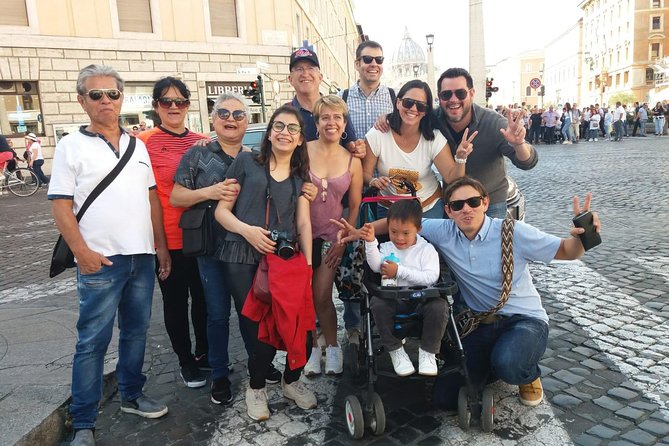
Fountains are the star of the next stretch, and you hit a stack of named highlights: Trevi Fountain, Fontana del Tritone, the Four Rivers Fountain, Neptune Fountain, and Moro Fountain near Piazza Navona.
I’m a fan of tours that treat fountains as more than decorations, because Rome’s fountains are storytelling machines. Trevi Fountain alone is a masterclass in composition and spectacle. Then you move to other fountains with distinct themes and sculptural styles, and the city starts to feel coherent. You stop thinking, Why is everyone taking photos here, and you start thinking, Oh, this is what they were trying to do.
This fountain circuit also helps with navigation. Once you recognize Trevi and Piazza Navona’s vibe, you can later wander on your own with confidence. You’ll know where the big spaces are and how they connect.
Possible drawback: fountains mean lots of camera time, and camera time attracts crowd behavior. If you like quiet viewing, plan to use your moments efficiently. Arrive with patience, and take one good look first before you hunt for the perfect photo angle.
If you want an easy win, remember this: look up at the architecture and sculpture, then look back at the water action. In Rome, the details are layered. The best views often come from how your eye moves, not from one single spot.
From the Vatican Museums area to St Peter’s Square
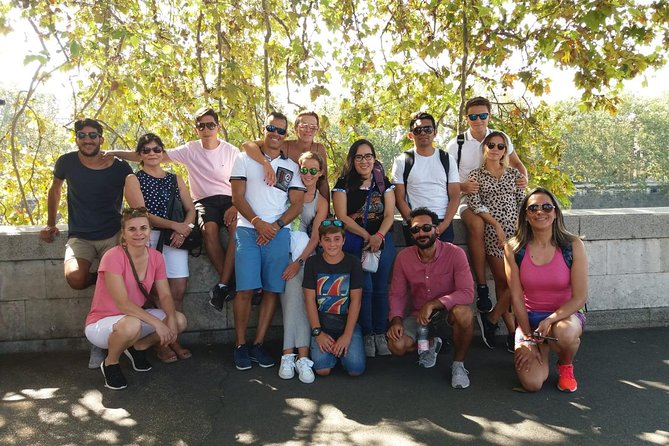
The final act lands at St Peter’s Square, after leaving the Vatican Museums area. Even without getting stuck in museum logistics, this ending is powerful because the square gives you a big, open-sky moment.
I like finishing here for one main reason: it works as closure. Rome can feel like you’re constantly switching neighborhoods and time periods. St Peter’s Square is a clean endpoint that pulls your whole day into a single feeling, even if you’ve spent hours moving through very different styles.
If you’re traveling on a Sunday, the tour ends with the papal blessing in the Angelus. That can turn a sightseeing walk into something more personal, and it’s exactly the kind of moment people remember later. The key is to stay flexible with timing and be ready for crowds and waiting as the moment gets closer.
One more practical note: the Vatican side is popular and busy. Wear shoes that handle stone and uneven surfaces, and keep your expectations focused on the big picture. You’re going to get the most out of the ending if you treat it like a grand finale, not a quick photo run.
How the 2 to 45 minute pacing affects your day
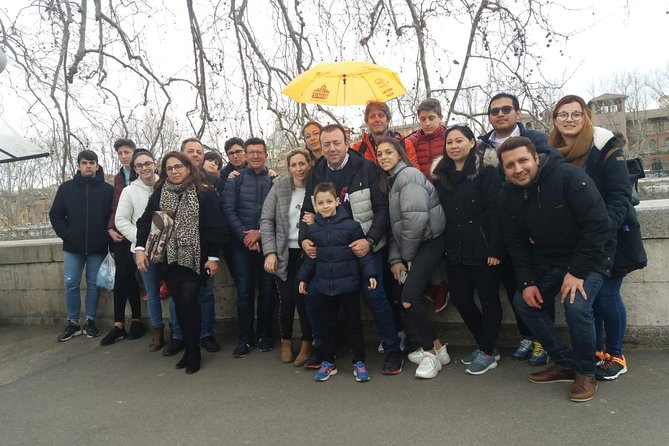
This tour runs in short blocks, roughly 2 to 45 minutes per part. I like this structure because it respects how Rome works. You’re never far from the next landmark, and you’re not forced to sit through long stretches.
Short stops also help if you get tired. Rome’s sightseeing fatigue is real. When you can break your day into smaller pieces, you’re more likely to keep enjoying the city instead of just surviving it.
On the other hand, shorter stops mean you might feel like you want more depth at one or two places. That’s the normal tradeoff of a highlights-focused route. If you know Pantheon or fountains are your top priorities, plan to come back later on your own with time to linger.
Group size matters here too. With a maximum of 30 travelers, you usually get a manageable group flow. It’s big enough for a lively atmosphere, small enough that you should be able to hear guidance without constantly craning your neck.
Mobile ticket and practical logistics that save stress
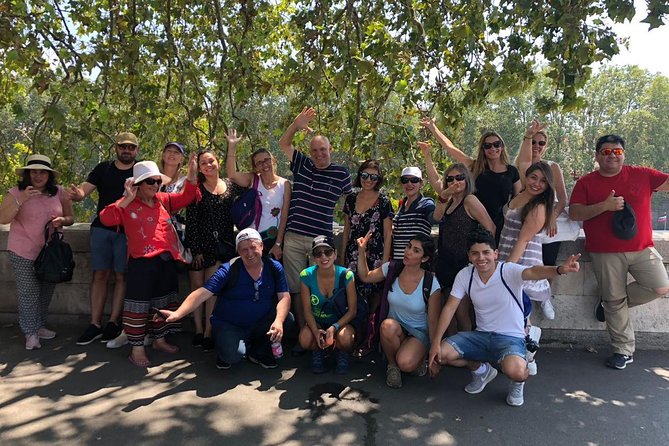
The experience uses a mobile ticket, which is one of those small things that can make a huge difference in Rome. You do not want to be fiddling with printed confirmations while your group is about to move.
The tour also includes confirmation at booking, and it’s designed to fit travelers who want a mainstream sightseeing day. It’s listed as suitable for most people, and service animals are allowed.
Finally, the route uses central meeting and ending points that are easy to find. You start at Piazza Barberini and end at St Peter’s Square, both recognizable anchors. That matters if you’re planning dinner afterward or you want to keep the rest of your day flexible.
Value check: is $17.44 really a good deal?
At $17.44 per person, this is priced like an “efficient highlights” experience, not a premium, long-form guided immersion. That’s not a knock. In Rome, the most expensive part of sightseeing is time and logistics, and this tour is built to reduce both.
The value question comes down to two things:
- You get access to major landmarks, including Pantheon entry.
- You get a coherent route that connects Roman, Renaissance, Baroque, and Vatican themes without requiring you to plan every turn.
If you already know you want Trevi and the Vatican square, you’ll likely feel the value quickly. If you’re the type who wants deep study and long museum time, you may find this too fast. But if your goal is to see the big pieces and get your bearings fast, the price is hard to argue with.
Who this tour suits best
This tour fits best if you:
- Want a single-day overview that moves across Imperial Rome, Renaissance and Baroque, and Vatican.
- Like guided context, especially when art and architecture names like Michelangelo and Bernini show up in real public spaces.
- Prefer shorter stop lengths rather than long sittings.
- Want a straightforward finale at St Peter’s Square, with an added Sunday option for the Angelus.
It may be less ideal if you:
- Want quiet, slow pacing at every stop.
- Prefer museum time over outdoor squares and fountains.
- Hate any chance of crowd buildup around Trevi or the Vatican.
Should you book the Squares of Rome and Vatican tour?
I’d book it if your travel style is highlights, clear sequencing, and getting oriented without turning your day into a detailed planning project. The combination of Pantheon entry, the fountain lineup, and the St Peter’s Square finish is a strong recipe for a first-time Rome trip or a tight schedule.
I’d think twice if you’re extremely sensitive to crowds or you want long, in-depth museum-style explanations. Also, because I’ve seen one report of ticket confusion tied to third-party booking, do yourself a favor and confirm what your mobile ticket is meant to cover before you meet the group.
If you like structure and big recognizable stops with enough context to make them mean something, this one is a sensible way to spend your hours in Rome.
FAQ
Where is the tour starting point?
It starts at Fontana del Tritone, Piazza Barberini, 00187 Rome, Italy.
Where does the tour end?
It ends at Saint Peter’s Square, Piazza San Pietro, 00120 in Vatican City.
How much does the tour cost?
The price is $17.44 per person.
How long is the tour?
The duration is listed as approximately 2 to 45 minutes.
Is there a mobile ticket?
Yes, this experience uses a mobile ticket.
How large is the group?
The tour has a maximum of 30 travelers.
Are Pantheon and Vatican areas included?
The Pantheon stop includes entry, and the tour reaches St Peter’s Square after leaving the Vatican Museums area.
Does the tour include a special Sunday event?
Yes. On Sundays, it ends with the papal blessing in the Angelus.
What cancellation terms are available?
Free cancellation is available, and you can cancel up to 24 hours in advance for a full refund.
Latest reviews around Rome
- Rome at Night: Small Group Guided City Walking Tour★ 5.0 · 249 reviews
- Guided Walking Tour of Rome: Top Sights & Baroque Treasures★ 5.0 · 155 reviews
- Private Walking Tour of the Squares and Fountains in Rome★ 5.0 · 130 reviews
- Rome Food Tour by the Vatican★ 5.0 · 308 reviews
- Vintage Fiat 500 Cabriolet: Rome’s Highlight Semi Private Tour★ 5.0 · 283 reviews
- Welcome To Rome Experience★ 4.5 · 679 reviews
- Vespa Rental in Rome 24 hours★ 5.0 · 196 reviews
- Vatican VIP Early Entrance 8:00 AM★ 4.5 · 141 reviews
Vatican Museums & Sistine Chapel Tickets, compared.
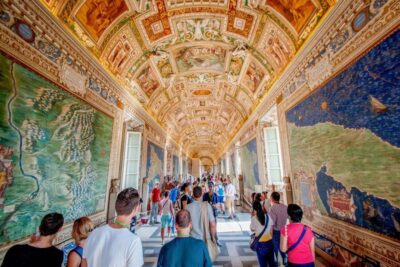
Vatican: Museums & Sistine Chapel Entrance Ticket
Read our review →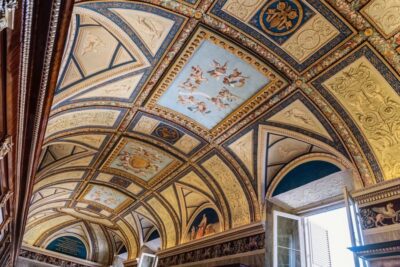
Vatican Museums & Sistine Chapel Tour with Optional Basilica
Read our review →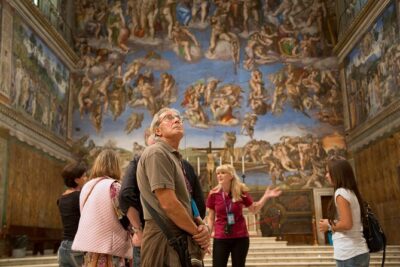
Vatican Museums, Sistine Chapel & St Peter’s Basilica Guided Tour
Read our review →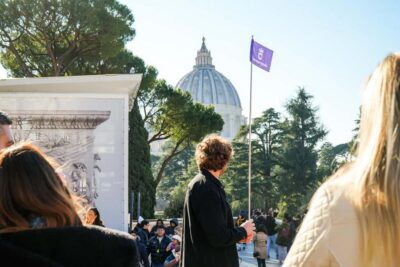
Vatican Museums, Sistine Chapel & Basilica Tour
Read our review →
Vatican Museums & Sistine Chapel Skip-the-Line Entry Ticket
Read our review →Vatican Museums, Sistine Chapel & Basilica Tour
Read our review →
Skip-the-Line Group Tour of the Vatican, Sistine Chapel & St. Peter’s Basilica
Read our review →
Vatican Museums & Sistine Chapel Guided Tour
Read our review →Browse the lists this tour appears in