
Reviewed · WALKING TOURS
Syracuse: Ortigia Classic Walking Tour
Ortigia tells its story on foot. This 2-hour shared walking tour of Syracuse Old Town feels like a guided “greatest hits” playlist, with free headsets when groups get larger and a route that mixes the Temple of Apollo, Piazza Duomo, and the Aretusa Spring. I love how it keeps things tight and walkable, yet still covers the big layers of the city, Greek and Christian. One thing to keep in mind is that the old streets can get tight with other tours and groups, and the meeting point around Largo XXV Luglio can feel a bit hard to spot if you arrive at the last second.
The guide work is a big part of why this tour works. You’ll get clear explanations in English or Italian, with plenty of time to ask questions along the way, and the pace is meant for photos and short pauses. In the past, guides like Eva have stood out for answering questions in detail and keeping the group moving without turning it into a sprint.
As for logistics, cathedral entry is optional (an extra €2 when available), and the tour runs rain or shine. Bring comfortable shoes, because Ortigia’s charm comes with uneven steps and narrow lanes underfoot.
In This Review
- Key Things You Notice Right Away on This Ortigia Walk
- Why Ortigia Works So Well on a Guided Walk
- Temple of Apollo to Piazza Archimede, Ancient Syracuse Begins
- A practical note for your first minutes
- Piazza Duomo and Cathedral Square, Christian Syracuse on Ancient Ground
- Cathedral interior, optional and flexible
- Diana Fountain, Palazzo Stops, and How the Guide Controls the Pace
- From Aretusa Spring to the Seafront, Myth Meets Real Views
- Via della Giudecca and Church Stops, Where Daily Life Shows Through
- Small-Group Reality, Headsets, and What Makes This Feel Easy
- Price and Value for $22 for Two Hours
- Who This Tour Suits Best, and Who Should Skip
- Tips to Make the Most of Your Walking Time
- Should You Book the Syracuse Ortigia Classic Walking Tour?
- FAQ
- How long is the Syracuse: Ortigia Classic Walking Tour?
- How much does the tour cost?
- Where does the tour start and where does it end?
- Is the cathedral entry included?
- What languages are the tours offered in?
- Are headsets provided?
- Is the tour wheelchair accessible?
- Does the tour run in bad weather?
- What group size should I expect?
- What is the cancellation policy?
- Can I pay later?
Key Things You Notice Right Away on This Ortigia Walk
- It starts at the Temple of Apollo, so you begin with ancient Syracuse in your face
- Headsets are provided for clearer listening when the group is bigger
- Piazza Duomo is built over older ruins, and the guide explains how that happened
- Aretusa Spring is the star stop, with myth, papyrus plants, and great views
- Via della Giudecca connects you to a former Jewish district, not just the main sights
- The group stays small, max 25 and often around 10, which helps you actually hear the guide
Why Ortigia Works So Well on a Guided Walk
Ortigia is small enough that you can cover a lot without needing buses or taxis. That matters, because your time in Syracuse is probably limited, and the streets are best enjoyed at walking speed. This tour is built for that reality: two hours, shared group, and a route that strings together the places you will want to revisit later on your own.
What makes it feel “worth it” is the structure. You are not just walking past monuments. You’re getting a thread from Greek origins to later religious life, with specific stops tied to particular stories you can remember. It also helps that the meeting area is right in the heart of Ortigia, so you start in the middle of the action rather than commuting from elsewhere.
More Walking Tours in Sicily
- Syracuse: Street Food Walking Tour in Ortigia with Tastings
★ 4.9 · 293 reviews - Syracuse: Ortigia and Neapolis Guided Walking Tour
★ 4.7 · 205 reviews - Syracuse: Ortigia Private Walking Tour
★ 4.8 · 181 reviews
Temple of Apollo to Piazza Archimede, Ancient Syracuse Begins
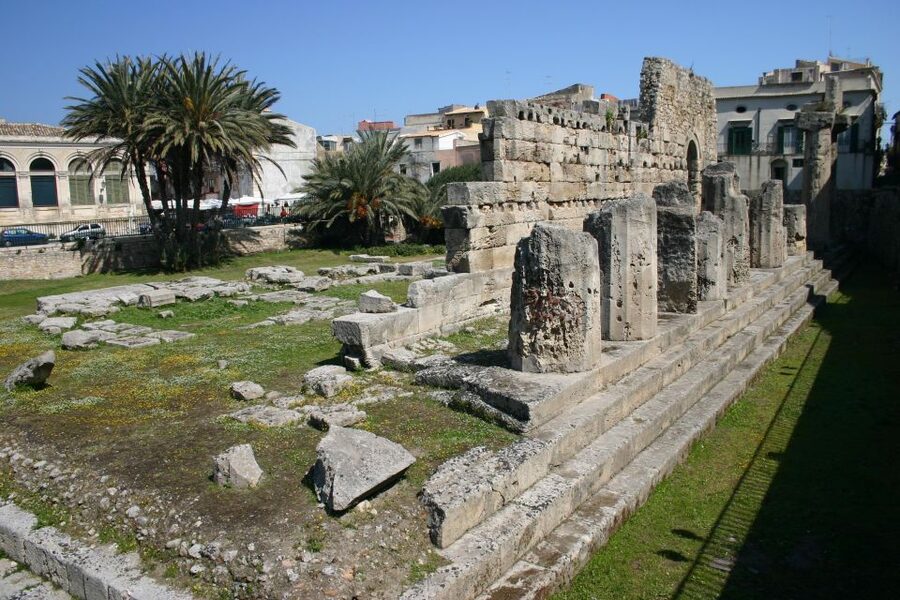
The tour starts at the Temple of Apollo at the entrance of Ortigia. This is a strong opening because it sets the timeline early. The temple is described as a Doric-style building and the first large stone temple Greeks built in the western colonies. Even if you are not a hardcore archaeology person, that fact gives you context for everything that comes after.
From there you move through the core squares and streets, including Archimedes Square. The guide’s job here is to turn these open areas into more than postcard backdrops. You’ll hear how Syracuse became such an important Greek colony, and how the city’s layers show up in the layout and the architecture.
Then comes Piazza Archimede, another key stop on the route. It’s where the tour shifts from “place names and origins” toward “here is how the city feels today.” Expect guided interpretation plus time to look around and take photos before you move on.
A practical note for your first minutes
Ortiga’s streets are narrow and tour-heavy. If you want the smoothest start, arrive a few minutes early and ask the staff on site where the group is gathering. The meeting point can vary depending on the booking option, and the general area includes multiple tour groups.
Piazza Duomo and Cathedral Square, Christian Syracuse on Ancient Ground
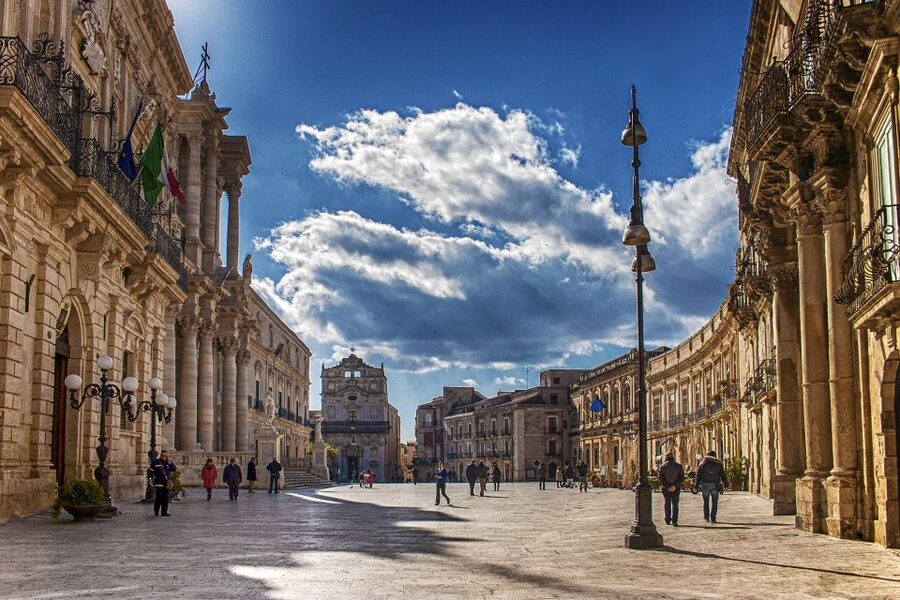
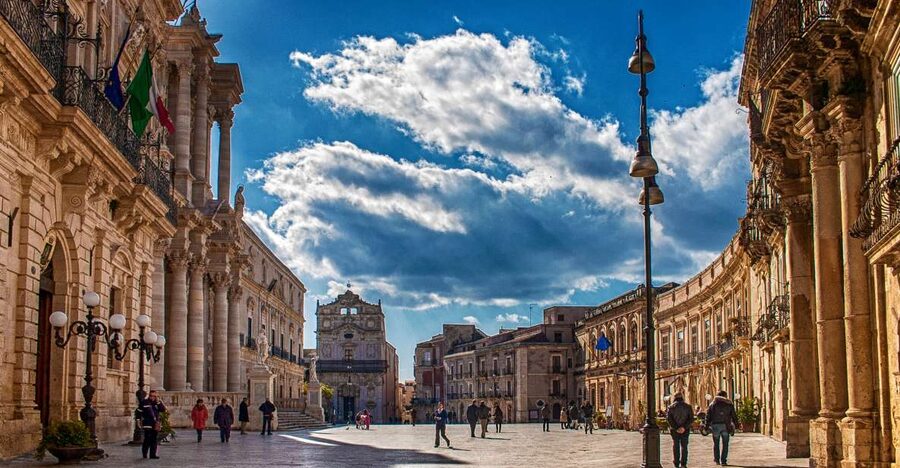
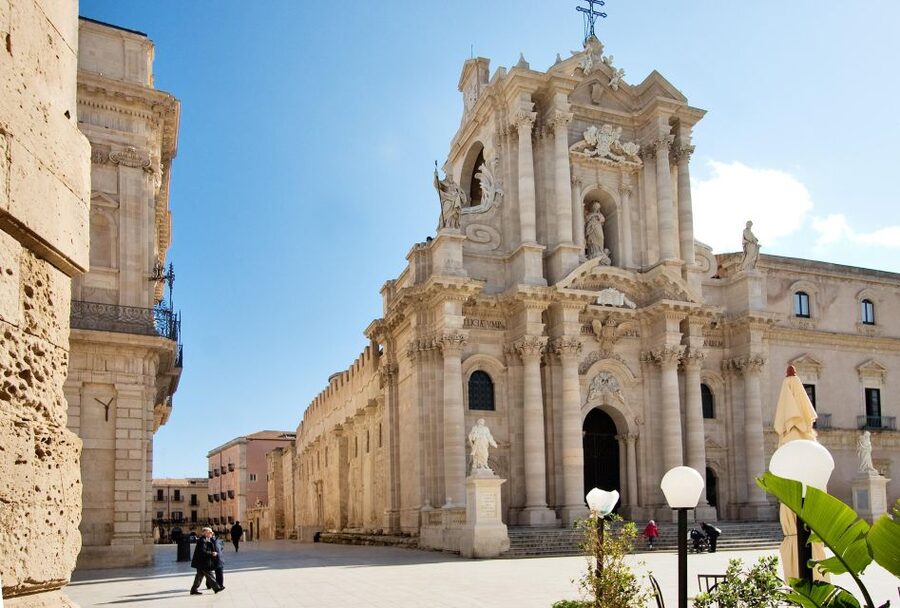
One of the best parts of this walk is Piazza Duomo, the cathedral square. This is where the city’s “before and after” is most obvious: a Christian cathedral built on an ancient Greek temple. The guide explains what you are seeing and why it matters, so the stones stop being random and start being a timeline.
You’ll also learn about several prominent buildings and landmarks around the square, including:
- Palazzo Vermexio (the town hall)
- Palazzo Beneventano del Bosco
- St. Lucy’s church
- the cathedrale
The guide also points out that the cathedral is often chosen as a wedding venue. That detail may sound minor, but it changes how you perceive the space. This is not just a historic site. It’s a living public place that still hosts major life events.
A few more Syracuse options to weigh
- Syracuse: Highlights of Ortigia Guided Walking Tour
★ 4.2 · 136 reviews - Milan: Guided Walking Tour & Last Supper Visit with Ticket
★ 4.7 · 5,409 reviews - Naples: Street Food Walking Tour with Local Guide
★ 4.8 · 4,256 reviews - Venice Walking Tour and Gondola Ride
★ 3.5 · 3,630 reviews
Cathedral interior, optional and flexible
If the cathedral is accessible to visitors, you may be offered time to explore the church interior with your guide. The entry ticket is €2 and not included. If entry is not available, you can get a short coffee break instead. Either way, it keeps the tour from stalling, and it means you can decide how much you want to spend on extras.
Diana Fountain, Palazzo Stops, and How the Guide Controls the Pace
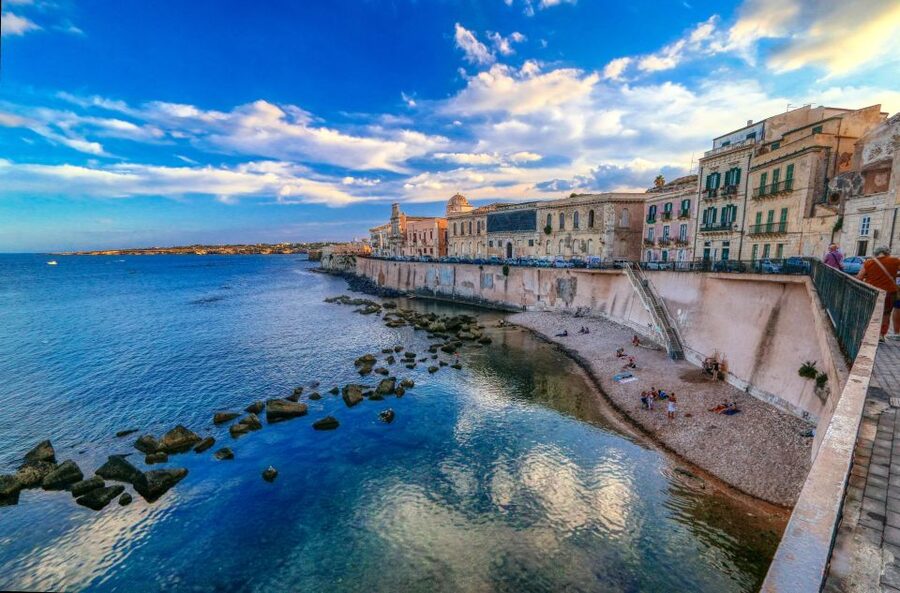
In the middle of the route, you’ll pass through Diana Fountain, described as a beautiful centerpiece. It’s a small stop compared to the big-ticket monuments, but it’s the kind of pause that helps the tour feel human. You get a moment to rest your legs, reset your photos, and absorb the setting before the next cluster of buildings.
The guide also ties together what you see with what you hear. In a compact area like Ortigia, it’s easy for tourists to memorize names without understanding the connection. Here, the guide’s narration is designed to keep the thread moving: what Greek Syracuse laid down, what later generations changed, and how religious tradition shapes everyday life.
Pace matters on this tour. The group is typically around 10 people, max 25, and that smaller size helps the leader keep the story clear without the constant stop-and-go chaos you sometimes get on big city bus-style walks. You should still wear comfortable shoes, because even with a good pace, your feet will feel it after a couple of hours of tight turning and uneven pavement.
From Aretusa Spring to the Seafront, Myth Meets Real Views
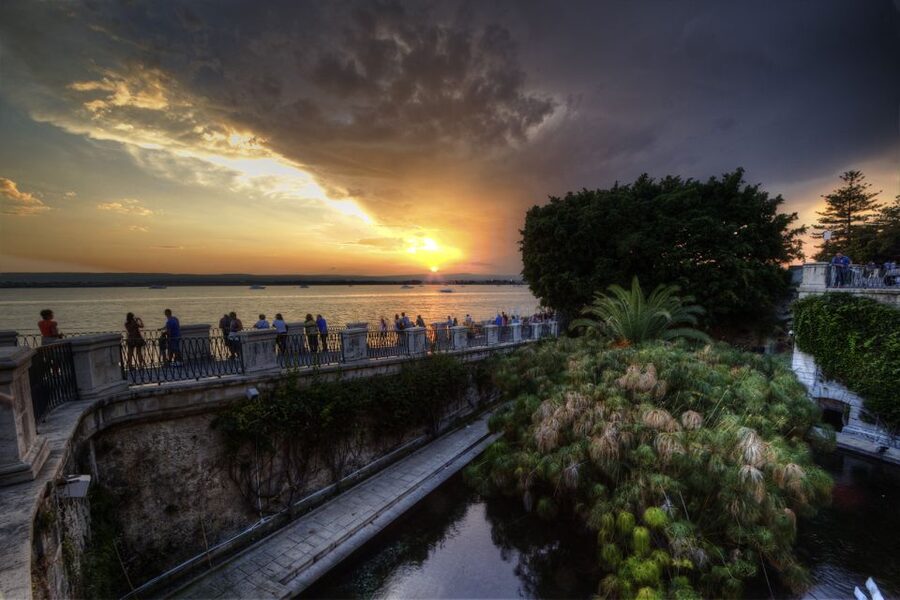
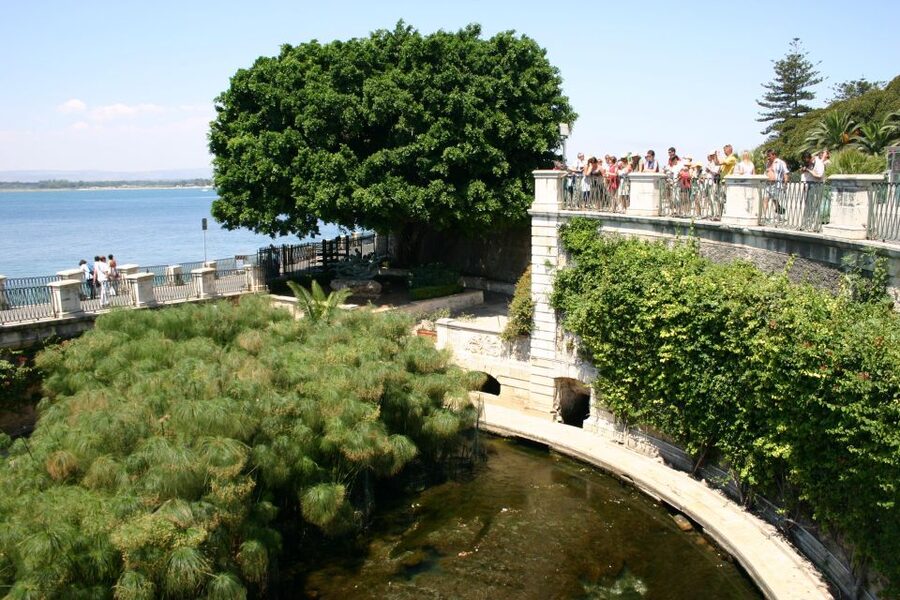
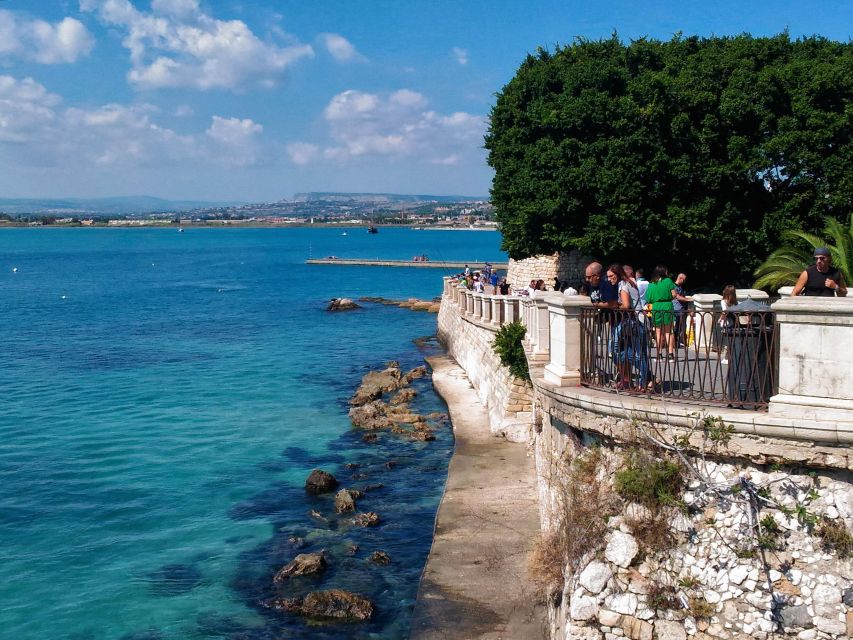
Then comes Aretusa Spring, the stop many people will remember after the tour ends. It’s described as legendary, tied to mythical lore, and famous for papyrus plants. Even if you already know a myth or two, this kind of place hits differently when you arrive with context and a guide talking you through what makes it special.
You’ll also get breathtaking views at the spring, followed by a stroll along the seafront promenade. This part is the “breathing room” segment of the walk. You’re moving away from pure architecture and back into the way Ortigia feels near the water, with visual breaks that make the history stops less tiring.
On the way, you’ll have scenic views toward Castello Maniace. The tour uses it like a preview, a way to point your eyes toward the next slice of Ortigia’s coast without forcing you into a long detour.
Via della Giudecca and Church Stops, Where Daily Life Shows Through
The route continues with a walk through Via della Giudecca, described as the historic Jewish district. This is one of the most valuable parts of a “classic highlights” tour, because it reminds you that Syracuse was never only about Greek temples and Christian cathedrals. Different communities shaped the city, and the street-level route helps you feel that change.
After that, you’ll reach Church of Saint John Baptist, where the tour includes a guided look. The tour doesn’t treat churches like museum pieces only. It connects them to the rhythm of local life, including religious celebrations such as the revered St. Lucy’s feast and its grand procession. If you’re visiting around festival time, this kind of explanation helps you spot why the city reacts the way it does.
One more smart feature is that your guide is encouraged to suggest other monuments, nearby towns, and restaurant or activity ideas. That’s practical advice, because once you’ve seen the main points, your next step is deciding what to do with the rest of your day.
Small-Group Reality, Headsets, and What Makes This Feel Easy
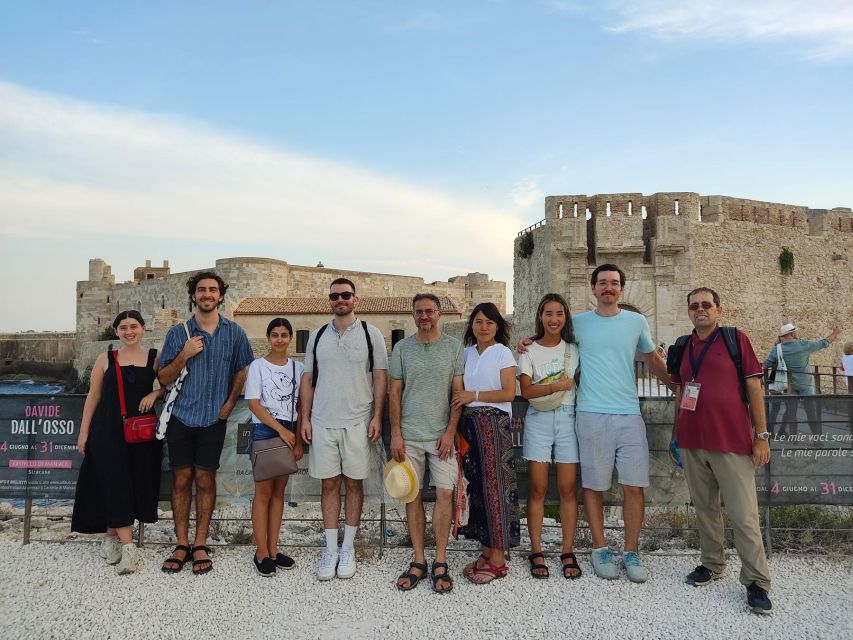
Here’s what I like about how this tour is designed for real people, not just checklists.
First, it’s built as a shared group experience with a cap of 25 participants, and it often runs with around 10. That makes a difference in narrow streets. You get more space to move, and the guide can actually manage attention.
Second, communication is handled well. You’ll get headsets to hear the guide clearly provided for free in case of larger groups. This matters in Ortigia, where street walls can bounce sound weirdly and where you might otherwise have to crane your neck.
Third, it runs rain or shine. That’s a double-edged sword in any walking tour, but here it’s honest. If the forecast looks nasty, you’ll still get your two hours, and you won’t waste time hoping for clear skies.
Price and Value for $22 for Two Hours
At $22 per person for about two hours, this tour is priced like a solid, mid-range walking experience, not a bargain gimmick. The value comes from three things you can feel during the walk:
- A live guide who organizes a lot of information into a simple path you can remember
- A route that covers multiple headline sights without turning into a half-day grind
- Practical tools like optional headsets in larger groups, plus a structure that includes breaks if cathedral access is limited
The only add-on to plan for is the cathedral interior ticket, listed as €2 optional. If you skip it, you still get the architectural context from the guide around Piazza Duomo. If you do it, it’s a small extra cost for a better sense of the space’s Christian layer.
So I see this as good value if you want an efficient introduction to Ortigia and a few story anchors that make independent wandering afterward much easier.
Who This Tour Suits Best, and Who Should Skip
This tour suits you if:
- It’s your first time in Syracuse and you want the key sights connected by a clear storyline
- You prefer learning while walking, rather than standing still in one place for hours
- You want a short outing that includes ancient Greek and later Christian layers
- You appreciate small groups and smoother guiding in tight streets
You might want a different plan if:
- You hate crowds and already know Ortigia streets can feel busy with multiple groups
- You want a longer, deeper excavation-style experience at each site
- You are not interested in religious landmarks or local feast traditions
Also, if you are sensitive to noise, keep in mind that the area can be shared with other groups. The tour itself is designed to keep you hearing the guide clearly, especially with headsets, but the setting is still a popular hub.
Tips to Make the Most of Your Walking Time
A few small moves can turn this into a great day rather than a rushed checklist.
- Wear comfortable shoes you can stand and pivot in. Ortigia’s charm includes uneven spots and stairs.
- Arrive early enough to find the meeting point without panic. The start options include Largo XXV Luglio, and the exact meeting spot can vary by booking.
- Bring questions. The format is built for Q&A, and guides can often steer you toward nearby churches, viewpoints, and food stops after the main route.
- If you care about the cathedral interior, be ready for the €2 optional ticket. Accessibility can affect whether you go in.
- Use the seafront segment to take photos slowly. The spring and promenade give you the best “I am really here” payoff.
Should You Book the Syracuse Ortigia Classic Walking Tour?
I’d book this tour if you want a compact, guided hit of Syracuse that makes the city easier to explore afterward. The route is logical: start with the Temple of Apollo, connect it to Piazza Duomo, then shift to the water and the myth at Aretusa Spring, finishing with the atmosphere of Via della Giudecca and a church stop.
It’s also a good choice when you want value without overcommitting time. Two hours is long enough for real learning and a few meaningful stops, but short enough to keep your afternoon open for wandering, lunch, and choosing what to see next.
If you’re the type who gets irritated by crowds in old-town streets, just plan your expectations and arrive early, so the start feels calm.
FAQ
How long is the Syracuse: Ortigia Classic Walking Tour?
The tour lasts about 2 hours.
How much does the tour cost?
The price is $22 per person.
Where does the tour start and where does it end?
It starts at the Temple of Apollo area at the entrance of Ortigia, and it ends at Piazza Archimede. The activity is listed as ending back at the meeting point, with drop-off options also tied to the Fountain of Diana and Piazza Archimede.
Is the cathedral entry included?
No. Entry to the cathedral is optional and costs €2, not included in the tour price.
What languages are the tours offered in?
The tour is available in English and Italian.
Are headsets provided?
Headsets are provided for free to help you hear the guide clearly when the group is larger.
Is the tour wheelchair accessible?
Yes, the tour is listed as wheelchair accessible.
Does the tour run in bad weather?
The tour runs rain or shine.
What group size should I expect?
The tour has a maximum group size of 25 participants, and it typically runs with around 10 people.
What is the cancellation policy?
You can cancel up to 24 hours in advance for a full refund.
Can I pay later?
Yes. You can reserve now and pay later, keeping travel plans flexible.
Latest reviews around Syracuse
- Syracuse: Pillirina, Ortigia, Sea Caves and snorkeling★ 4.6 · 133 reviews
- Syracuse: Ortigia Private Walking Tour★ 4.8 · 181 reviews
- Syracuse: Ortigia and Sea Caves Excursion by Boat★ 4.7 · 112 reviews
- Syracuse: Ortigia Sunset Cruise with Aperitif★ 4.8 · 291 reviews
- Syracuse: Ortigia Island and Sea Caves Boat Tour with Drinks★ 4.6 · 337 reviews
- Syracuse: Neapolis Archaeological Park Small Group Tour★ 4.7 · 350 reviews
- Syracuse: Coast and Sea Caves Full Transparent Boat Tour★ 4.8 · 330 reviews
- Syracuse: Highlights of Ortigia Guided Walking Tour★ 4.2 · 136 reviews
Walking Tours, compared.
Guided Walking Tour & Last Supper Visit with Ticket
Read our review →
Rialto Bridge & Offbeat Unusual Venice Walking Tour
Read our review →
Private 3 hrs Venice Tour: St Mark’s, Walking tour & Boat tour
Read our review →
Skip the line: Uffizi and Accademia Small Group Walking Tour
Read our review →Browse the lists this tour appears in