Reviewed · PRIVATE
Rome Private Tour: Highlights and Hidden Gems
Rome feels like three cities at once. This private route is interesting because you get a local guide and a plan that favors atmosphere over checklists. I love the mix of big names (Pantheon, Colosseum) plus street-level Rome in neighborhoods like Trastevere, and I especially like the built-in break for a local drink or snack. One drawback to consider: the key sights are mostly viewed from the outside, since entrance tickets are not included.
The tour is timed well for first-time orientation without turning you into a statue at every corner. It also gives you control, because you are not stuck in a loud group schedule. If you hate walking in the heat, pick the Vespa option when it’s available, or plan your pace with your guide early.
Meeting point depends on your option. For the walking tour, you meet at Piazza di Sant’Apollinare; for the Vespa tour, it’s at Via in Selci near Cavour Metro. Guides highlighted in the booking feedback, like Simone, Daniele, Nico, and Stefan, are repeatedly praised for making the route feel personal and for sharing practical food tips on the way.
In This Review
- Key highlights and why they matter
- Choosing the walking tour or Vespa tour in Rome
- Where the tour starts, and how to avoid a bad first five minutes
- The first stop in Trastevere: bohemian Rome, not museum Rome
- Piazza Navona and Campo de’ Fiori, the center of the action
- Piazza Navona
- Campo de’ Fiori
- Seeing the Pantheon up close, but not paying for entry
- Spanish Steps: views, foot traffic, and an easy photo win
- Colosseum area without ticketing: great for bearings
- The drink or snack stop, and how to time it right
- What you’re really paying for: value in time, privacy, and routing
- Guide quality is the whole game in a private tour
- Who should book this Rome private tour?
- Should you book this Highlights and Local Finds private tour?
- FAQ
- Is this tour private or shared?
- How long is the Rome private tour?
- What are the meeting points for the walking and Vespa options?
- Are entrance tickets included for landmarks like the Pantheon or Colosseum?
- What is included in the price besides the guide?
- Does the tour operate in English?
- What kind of sights will I see during the tour?
- Do I get a break for food or drinks during the tour?
- What is the cancellation policy?
Key highlights and why they matter
- Private guide, your pace, your questions: Only you and your guide, so you can slow down for photos or speed up when the route clicks.
- Two modes, two vibes (walking vs Vespa): Vespa covers more ground; walking builds in time for a local snack or drink stop.
- Orientation plus less-famous corners: You start with Rome’s recognizable landmarks, then weave in smaller squares and viewpoints that help the city make sense.
- Outside views of major sights: Great for saving time and money, but plan that you will not do paid interior visits during this 3-hour window.
- Local neighborhood focus early: Trastevere is often the first vibe check, with bohemian energy and real places to eat and shop.
- High guide satisfaction: The experience is rated 4.9 out of 5 from 374 past bookings, with strong recommendation rates.
Choosing the walking tour or Vespa tour in Rome
You basically choose between two ways to experience the same idea: see Rome’s highlights, then connect them to the neighborhoods that give the city its personality.
With the private walking tour, you start on foot and you will cover a series of central sights with stops that often feel less rushed. Walking is also where the snack or drink break fits naturally into the rhythm, like pausing the city for a minute before you move on.
With the Vespa tour, you get the advantage of speed and a bigger “map coverage” feeling. That matters in Rome, where distance between famous sites is part of the experience, but your legs can revolt fast. You will also get the added fun factor of wearing a helmet and hopping on a scooter, so the day feels like an event rather than just a stroll.
Practical tip: if you want a calmer pace, walking tends to be the better fit. If you want to pack in more views while conserving energy, Vespa is the obvious choice.
A few more Rome options to weigh
- Vatican: Museums & Sistine Chapel Entrance Ticket
★ 4.5 · 144,003 reviews - Vatican Museums & Sistine Chapel Tour with Optional Basilica
★ 4.3 · 67,413 reviews - Colosseum, Roman Forum & Palatine Guided Tour
★ 4.7 · 63,148 reviews
Where the tour starts, and how to avoid a bad first five minutes
Your start point depends on your option.
- Walking: Piazza di Sant’Apollinare, 46, 00186 Roma RM
- Vespa: Via in Selci near the Cavour Metro Station
The tour ends in the city center. That’s useful because you finish closer to where you likely want to go next, whether that is dinner, a gelato mission, or another attraction.
Two small cautions that can make a big difference:
First, Rome street numbering and side streets can be confusing when you’re arriving without a clear visual reference. So give yourself a few extra minutes, and use the provided map view if you can.
Second, communication matters if anything changes on your guide’s side. One past experience included a guide delay and shifting arrival expectations, so it’s smart to have the mobile app ready and to be responsive if you get a message on the day.
The first stop in Trastevere: bohemian Rome, not museum Rome
A common early route pattern is to start in Trastevere, then thread north toward the center. Trastevere has a bohemian edge, with working-class roots and lots of trattorias, craft breweries, and shops that feel more lived-in than staged.
Why it works as a first stop: it immediately teaches you what Rome looks like when you’re not standing in front of a monument. You get street-level context, you can orient visually, and it sets the tone for the rest of the tour.
Also, Trastevere helps you reset expectations. Rome’s big sights are incredible, but the magic often lives in the smaller streets nearby, the little squares, and the way locals move through the neighborhood.
If you’re hungry, you might want to grab your main meal later. Many guides include a drink or snack break on the route, so you will likely be doing at least one food stop before the end.
Piazza Navona and Campo de’ Fiori, the center of the action
From Trastevere, the route often pushes into some of Rome’s most recognizable public spaces.
Nearby, and just as well reviewed:
- Vatican Museums, Sistine Chapel & St Peter’s Basilica Guided Tour
★ 4.5 · 39,149 reviews - Rome: Colosseum, Palatine Hill and Roman Forum Guided Tour
★ 4.8 · 32,814 reviews - Rome: Guided Tour of Colosseum, Roman Forum & Palatine Hill
★ 4.7 · 27,897 reviews - Rome: Colosseum & Forum with Audio Guide App -Optional Arena
★ 4.2 · 24,770 reviews
Piazza Navona
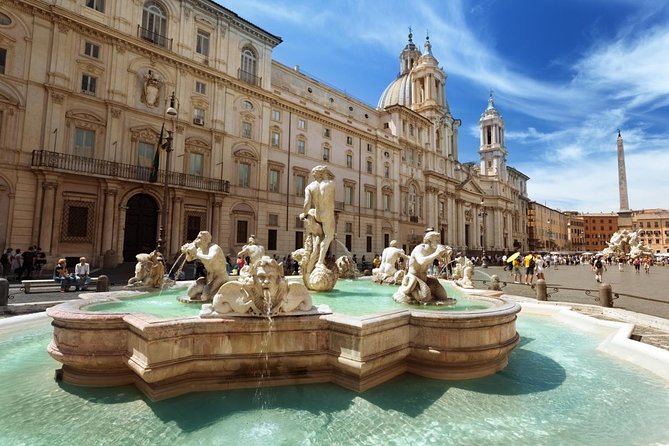
Piazza Navona is one of the city’s great “stay awhile” squares. Expect lively energy, classic Rome sightlines, and the famous Bernini fountains in the mix. It’s also a practical stop because it places you in the flow of central Rome, so landmarks feel closer and the city’s layout becomes clearer.
Campo de’ Fiori
Then there is Campo de’ Fiori, a rectangular square south of Piazza Navona. It sits at the border between two rioni, which matters because it’s a reminder that Rome is organized as neighborhoods, not just as tourist zones. The name also connects to older imagery, so your guide can point out how the area’s identity evolved over time.
Small reality check: these squares can feel crowded at peak hours. With a private guide, you can ask for timing tweaks, like taking photos from a less busy corner or stepping to the side to hear the explanation comfortably.
Seeing the Pantheon up close, but not paying for entry
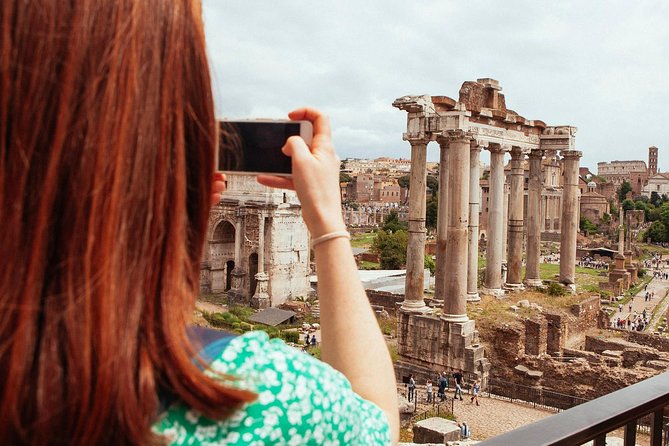
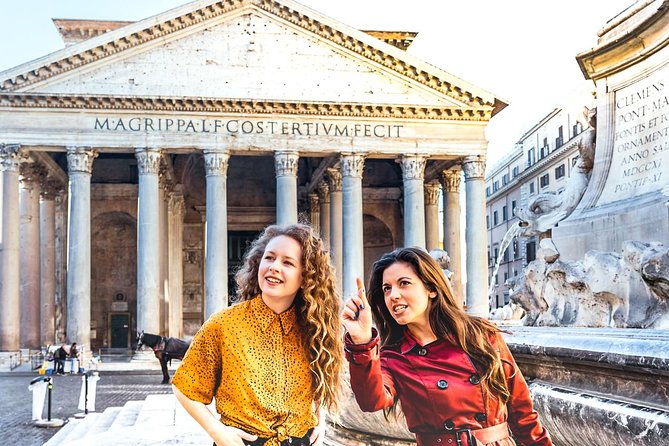
The tour typically includes the Pantheon as a major anchor point. Even when you are not going inside, it’s still worth it. The building is one of the best-preserved examples of Roman architecture, and it still makes people pause, because it looks engineered in a way that feels almost modern.
Since entrance tickets are not included, you should think of this stop as a “wow from the street” moment. You’ll get the feeling of the scale, the geometry, and the presence of the building in the Roman streetscape.
If you love architecture, this stop still delivers. If you were hoping for an interior visit, plan to add that later with a separate ticketed time slot.
Spanish Steps: views, foot traffic, and an easy photo win
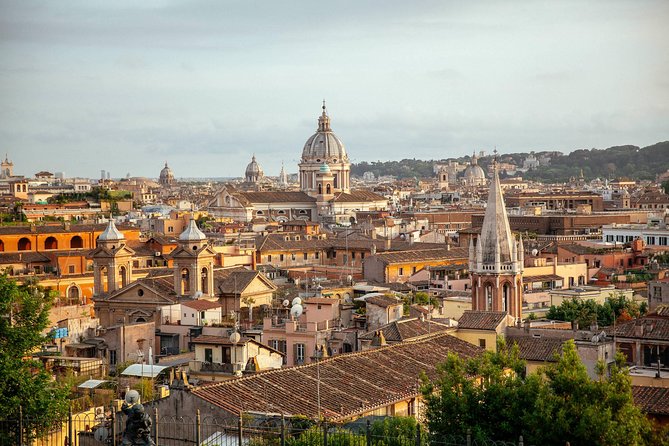
The Spanish Steps are often included, with the route aiming you toward the slope connecting Piazza di Spagna and Piazza Trinità dei Monti. Even if you do not spend long there, it is a key Rome visual. The steps frame a classic view, and they are the kind of place where your guide can explain why the location became so important.
What makes this stop useful in a 3-hour tour: it’s a strong landmark for mapping the city. After Spanish Steps, you can mentally connect other sights and routes more easily.
What to watch: it can get busy. In heat, you may want to ask your guide to find a comfortable spot to pause and talk before you do photos.
Colosseum area without ticketing: great for bearings
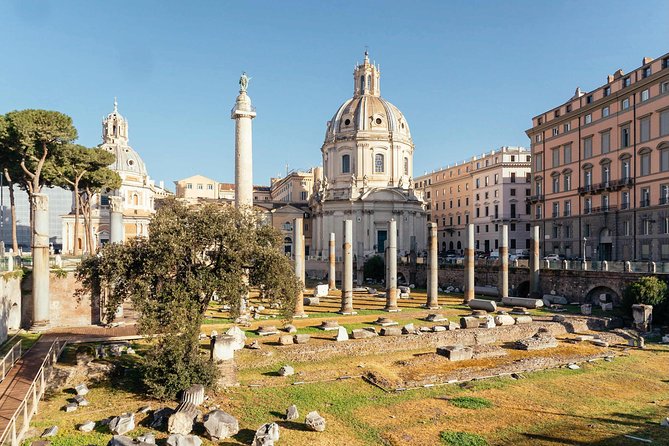
The tour often ends at or around the Colosseum. It’s an elliptical amphitheater and still the largest standing amphitheatre in the world, which is exactly why it works as an orientation point.
For this experience, entrance tickets are not included, so you will view it from outside. That is not a dealbreaker. If your goal is to learn the layout of central Rome and understand how the Colosseum connects to the Roman Forum area, outside time is plenty to get your bearings.
If you want the interior experience, you will likely want to book a separate timed entry tour. But for a shorter private session, this approach saves money and keeps you on schedule.
The drink or snack stop, and how to time it right
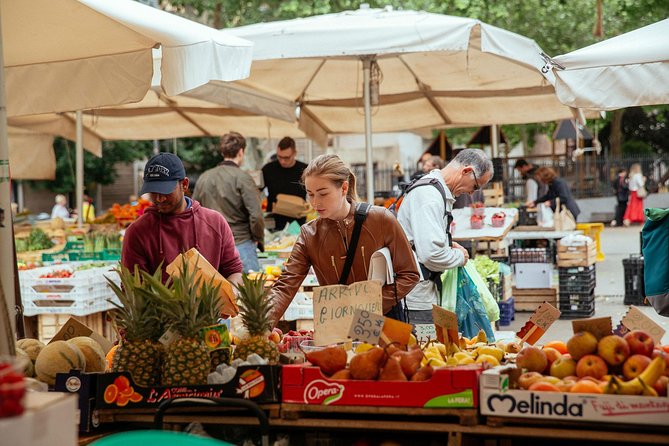
One of the most practical features here is that you get one local drink or snack included. On walking routes, the snack break often acts as a reset button, giving your guide a natural pause point to tell stories and answer questions without you feeling like you’re constantly moving.
On Vespa routes, you still get the included break, just with a different rhythm. That means you can taste something local while catching your breath, even if the day is focused on covering more sights.
How to make it work for you: if you have a must-try drink or dessert style you care about, tell your guide early. In the booking feedback, guides are repeatedly described as generous with restaurant suggestions and quick food leads, including places for gelato. So give your preferences up front and let them help you choose wisely.
What you’re really paying for: value in time, privacy, and routing
At $318.19 per person for about 3 hours, this is not a budget tour. So here is the value math I use in Rome.
You are paying for:
- A private guide (time with a real person, not a headset tour)
- A route that mixes recognizable landmarks with neighborhood context
- A built-in food moment
- A format that keeps you moving efficiently without adding ticket lines for major interiors
You are also saving something less obvious: planning fatigue. Rome is famous for being beautiful, and it is also famous for being confusing. A guide who can connect Trastevere to Piazza Navona to the Pantheon area makes your self-guided walking later feel easier.
One more value point that matters: the experience is described as a sustainable, carbon neutral offering (with a B-Corp connection). That is not something you can see in the streets, but it signals the operator thinks about impact, not just convenience.
My advice: if you want a “first day in Rome” vibe, where you leave with a mental map and a short list of where to eat next, this format can be worth it. If you already know you will do multiple ticketed interior attractions and you don’t want neighborhood storytelling, then you might save money with a different plan.
Guide quality is the whole game in a private tour
With private tours, the guide is not a detail. They are the product.
In the booking feedback, names like Simone, Simona, Daniele, Nico, Eleonora, Paula, John, Frank, and Stefan appear as standout guides. The common theme is not just facts. It is engagement and customization. Guides are described as adjusting the route based on your interests, keeping people comfortable in heat, and sharing practical advice on later days.
What you can do to get a better experience, no matter who your guide is:
- Tell them what you already saw, so they do not duplicate your day.
- Share what you want more of, architecture, food, neighborhoods, photo stops, or viewpoints.
- Ask for one or two restaurant suggestions for dinner or lunch, then follow them later.
If you are traveling with kids or teens, the experience has shown it can be attentive to family needs, including keeping younger travelers comfortable and engaged.
Who should book this Rome private tour?
This is a good fit if you want:
- A private session that makes central Rome feel logical fast
- A blend of icons and neighborhood life
- Less time waiting in lines and more time walking with meaning
- A practical food moment built into the tour
It may be a less perfect fit if:
- You strongly want interior visits to the Pantheon or Colosseum during this exact time window
- You want a very slow, deep neighborhood immersion with lots of time per stop
- You prefer large-group attractions where you can join other crowds
For first-time Rome visitors, it often works well as an early anchor. For repeat visitors, it can still help because it focuses on how the city “fits together,” not just what you can photograph.
Should you book this Highlights and Local Finds private tour?
I would book it if you want a smart, time-efficient way to connect Rome’s top sights with the streets around them. The included drink or snack and the private pace make it feel like more than a standard walking tour, and the focus on bearings is exactly what many travelers struggle with in Rome.
Don’t book it if your main goal is paid interior access to big-ticket monuments within this 3-hour window. Since entrance tickets are not included, you will need a separate plan for those.
If you choose it, do this: pick the mode that matches your energy (walking for a calmer vibe, Vespa for covering more), arrive a few minutes early at the meeting point, and tell your guide what you already saw. Then let them build the rest around your interests. That’s where this tour earns its price.
FAQ
Is this tour private or shared?
It is a private tour, meaning only you and your local guide participate.
How long is the Rome private tour?
It runs about 3 hours.
What are the meeting points for the walking and Vespa options?
For the private walking tour, you meet at Piazza di Sant’Apollinare, 46, 00186 Roma RM, Italy. For the Vespa tour, the meeting point is Via in Selci near the Cavour Metro Station.
Are entrance tickets included for landmarks like the Pantheon or Colosseum?
No. Entrance tickets are not included, and the tour focuses on visiting the sights from the outside.
What is included in the price besides the guide?
The price includes a private local multilingual guide and 1 local drink or snack. It is also described as a sustainable carbon neutral experience.
Does the tour operate in English?
Yes, the tour is offered in English.
What kind of sights will I see during the tour?
You can expect a mix of major landmarks and central neighborhoods, with typical stops that include Trastevere, Piazza Navona, the Pantheon, Campo de’ Fiori, the Spanish Steps, and the Colosseum area.
Do I get a break for food or drinks during the tour?
Yes. The tour includes 1 local drink or snack, and walking routes often use this as a natural break during the sightseeing.
What is the cancellation policy?
You can cancel for a full refund up to 24 hours in advance. If you cancel less than 24 hours before the experience starts, the amount you paid is not refunded.
Latest reviews around Rome
- Guided Walking Tour of Rome: Top Sights & Baroque Treasures★ 5.0 · 155 reviews
- Rome at Night: Small Group Guided City Walking Tour★ 5.0 · 249 reviews
- Private Walking Tour of the Squares and Fountains in Rome★ 5.0 · 130 reviews
- Rome Food Tour by the Vatican★ 5.0 · 308 reviews
- Vintage Fiat 500 Cabriolet: Rome’s Highlight Semi Private Tour★ 5.0 · 283 reviews
- Welcome To Rome Experience★ 4.5 · 679 reviews
- Vespa Rental in Rome 24 hours★ 5.0 · 196 reviews
- Vatican VIP Early Entrance 8:00 AM★ 4.5 · 141 reviews
Private, compared.

Como & Bellagio with Private Lake Como Cruise
Read our review →
Murano & Burano Islands Guided Small-Group Tour by Private Boat
Read our review →
Rome by Golf Cart Private Tour: Beyond the Landmarks
Read our review →
Early Morning Vatican, Sistine, St. Peter’s Semi or Private Tour
Read our review →
Private 3 hrs Venice Tour: St Mark’s, Walking tour & Boat tour
Read our review →
Private Gondola Cruise for up to 5 Passengers
Read our review →