Reviewed · MUSEUMS
Rome: Leonardo da Vinci Exhibition Entrance Ticket
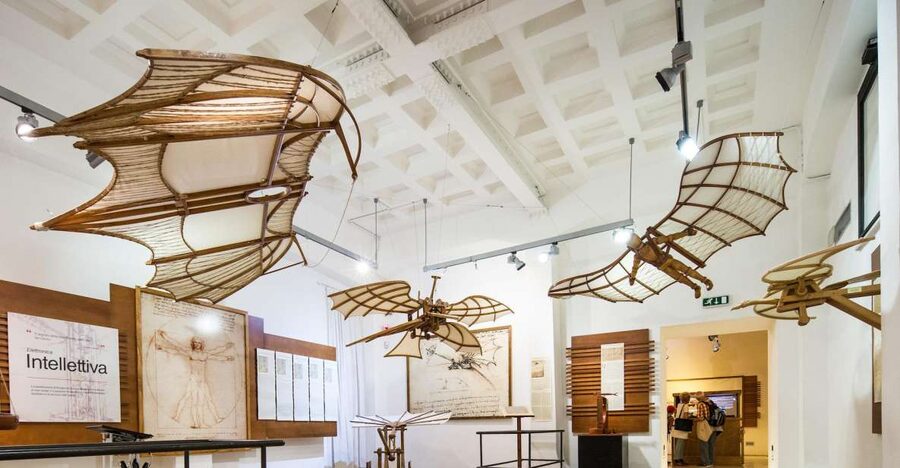
Leonardo’s ideas turn into working objects in Rome. At the Palazzo della Cancelleria, you get 65 full-scale machines plus 3D holograms that show his inventions in a way plain text never can.
What I like most is how practical it feels. You’re encouraged to touch and play with almost all the models, and the exhibition is set up in a clear route through multiple themed areas. The one catch: the site is small and a bit uneven underfoot in places, so it can feel less ideal for very little kids who need lots of hand-holding.
In This Review
- Key highlights you should know
- Leonardo da Vinci meets the Palazzo della Cancelleria
- Tickets, value, and how much time to plan
- Four sections that turn Leonardo’s thinking into a route you can follow
- Full-scale machines you can touch, plus the 3D hologram wow-factor
- Water, Air, Fire, and Earth: the engineering behind the art
- The tomb in an underground pond adds a cool, unexpected mood
- Who this is best for, and who might want a different plan
- Value check: why $10 feels fair here
- Should you book this Leonardo da Vinci exhibition ticket?
- FAQ
- Where is the Leonardo da Vinci exhibition in Rome?
- What’s the price?
- How long is the experience?
- Is a guide included?
- Can I enter if I arrive late?
- Does the ticket let me skip the ticket line?
- Is it wheelchair accessible?
- Is free cancellation available?
- Will I get anything when I arrive?
Key highlights you should know
- 65 full-scale machines built from Leonardo’s designs so you see his sketches as real mechanisms
- 9 3D holograms that make paintings and inventions look like they’re floating in time
- Touch-friendly exhibits where you can test many of the models yourself
- Four themed sections built around Leonardo’s engineering thinking and real-world problems
- Water, Air, Fire, and Earth studies connected to interactive installations using his drawings
- A 43 BC tomb in an underground pond setting that adds a surprising, cool atmosphere
Leonardo da Vinci meets the Palazzo della Cancelleria
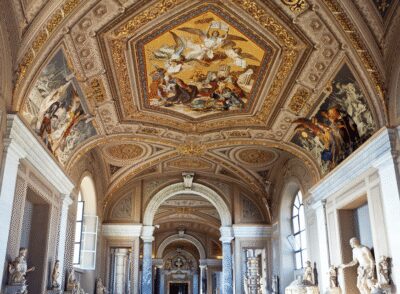
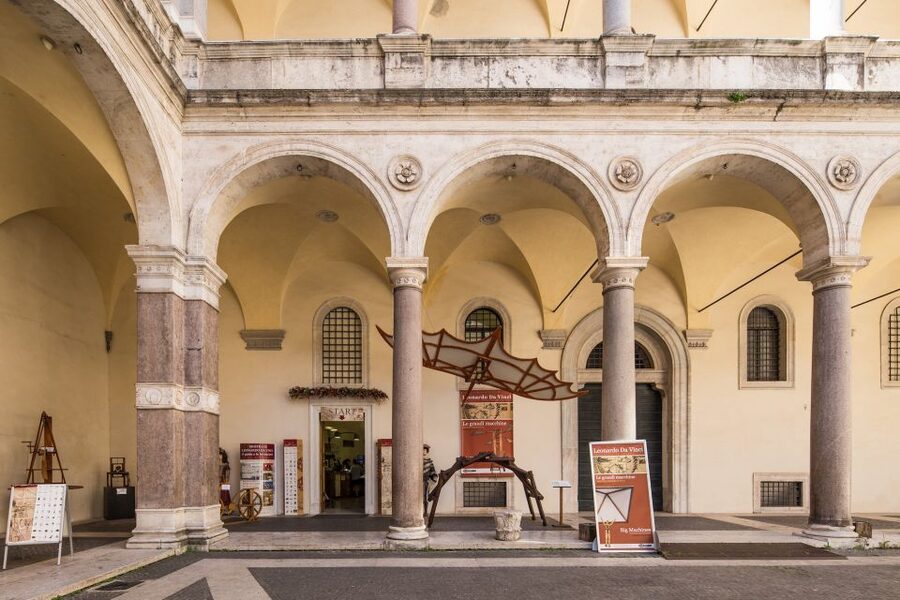
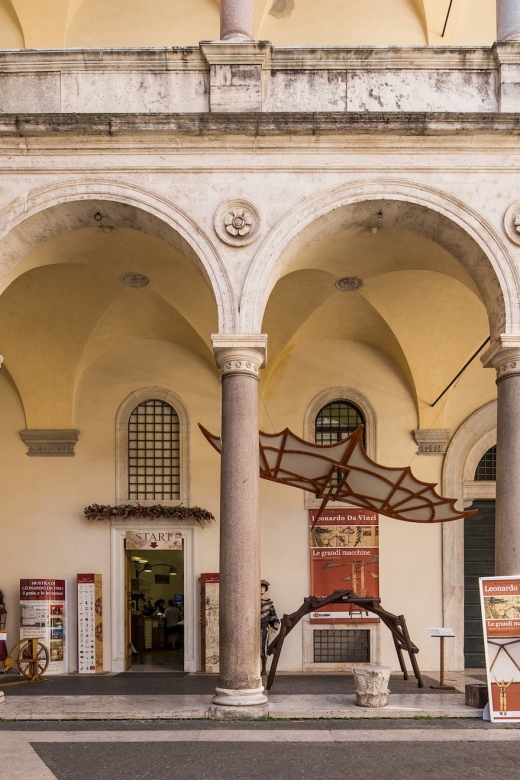
If you want a break from Rome’s biggest-ticket lines, this one is a smart choice. The Leonardo da Vinci exhibition happens in the Palazzo della Cancelleria, a historic building tied to the Vatican, with its own architectural wow-factor even before you buy a ticket. You also have a genuine “why is this here?” kind of moment upstairs, because the Sacra Rota occupies an upper floor.
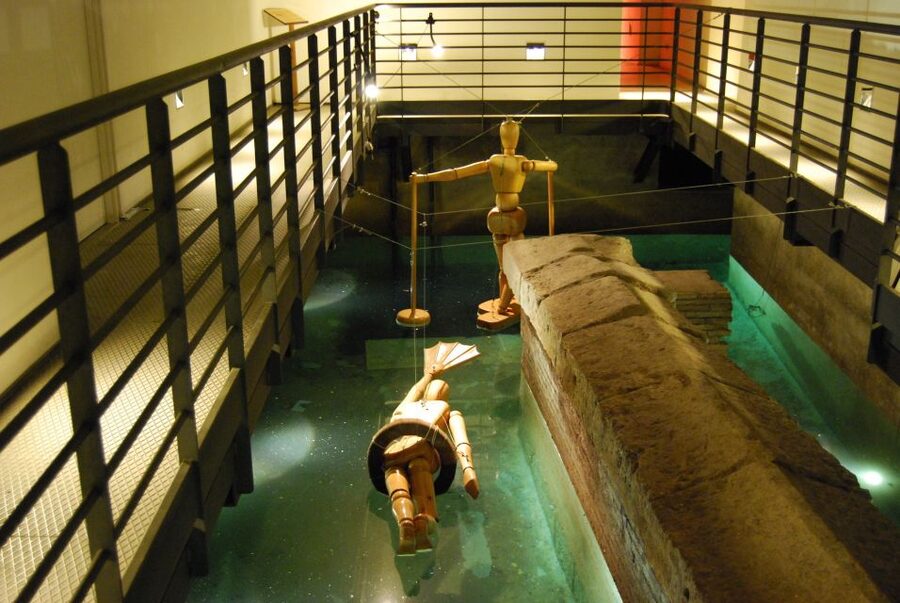
Then there is the more startling surprise in the building itself: a tomb dating to 43 BC, belonging to the architect Auro Irzio, set into a natural underground pond. It changes the vibe. You get that cool, stone-and-water feeling, which is a nice reset in warmer months.
This is not a museum that asks you to admire things from far away. It wants you to understand Leonardo as an engineer who tested ideas, adjusted them, and kept pushing. And that matters, because when you see a machine you can operate, the math and logic behind the sketch suddenly feels obvious.
A few more Rome options to weigh
- Vatican: Museums & Sistine Chapel Entrance Ticket
★ 4.5 · 144,003 reviews - Vatican Museums & Sistine Chapel Tour with Optional Basilica
★ 4.3 · 67,413 reviews - Vatican Museums, Sistine Chapel & St Peter’s Basilica Guided Tour
★ 4.5 · 39,149 reviews
Tickets, value, and how much time to plan
The price is $10 per person, and for what you get, that’s very reasonable. You’re paying for an exhibition that combines full-scale models, interactive stations, and visual effects, all in a compact space.
It’s also built for flexible visits. You can enter until 1 hour before closing, so you do not need to arrive at the first possible time. If you’re juggling a busy sightseeing day, this timing helps.
In terms of duration, plan for about 45 to 90 minutes. Some people move quickly once they get the hang of the interactive stations, while others linger with the reading and the touch-and-play machines. If you like hands-on learning and you stop at most stations, you’ll likely sit closer to that longer end.
Practical tip: arrive when you can breathe. The museum is small, and you’ll enjoy it more if you’re not trying to test mechanisms shoulder-to-shoulder. If you can, mid-morning or late afternoon tends to feel easier than peak hours.
Four sections that turn Leonardo’s thinking into a route you can follow
The exhibition is organized into four sections. That structure is useful, because Leonardo could have been all over the map, with inventions scattered across science, mechanics, aviation, and even military ideas. The layout helps you see the pattern behind the variety.
As you move through the rooms, you’re not just looking at objects. You’re seeing principles at work. The experience is built around full-scale reproductions based on Leonardo’s own study and drawings, so you spend less time guessing and more time understanding.
Here’s what each section conceptually does:
- Machine and mechanism focus
You start by meeting Leonardo as a designer of physical systems. Expect lots of gear-like logic and practical engineering concepts, presented with built models.
- Hologram and visualization focus
Then comes the wow-factor zone. This is where the exhibition leans hardest into 3D holograms, giving you a new way to understand how his inventions were meant to function.
- Interactive installations tied to his sketches
This is where you connect drawings to outcomes. There are interactive elements that use Leonardo’s artwork and show how his ideas translate into real mechanics.
- Studies of elements and applied engineering
The final portion ties into “Water,” “Air,” “Fire,” and “Earth.” This is where the show pushes beyond gadgets and into Leonardo’s broader thinking about the natural world and how engineering could respond.
The overall effect is that the show feels like an educational journey through Leonardo’s workshop mindset. You come away understanding that he was not only an artist who drew pretty pictures. He was an engineer who treated observation as a tool.
Full-scale machines you can touch, plus the 3D hologram wow-factor
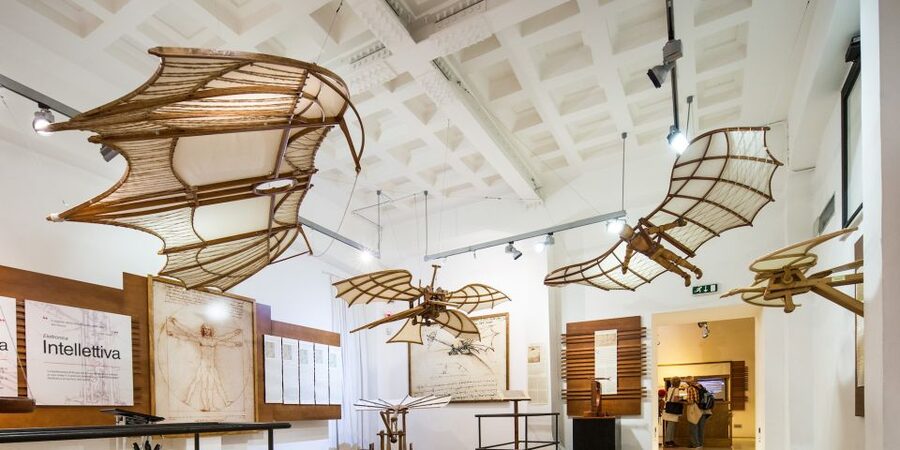
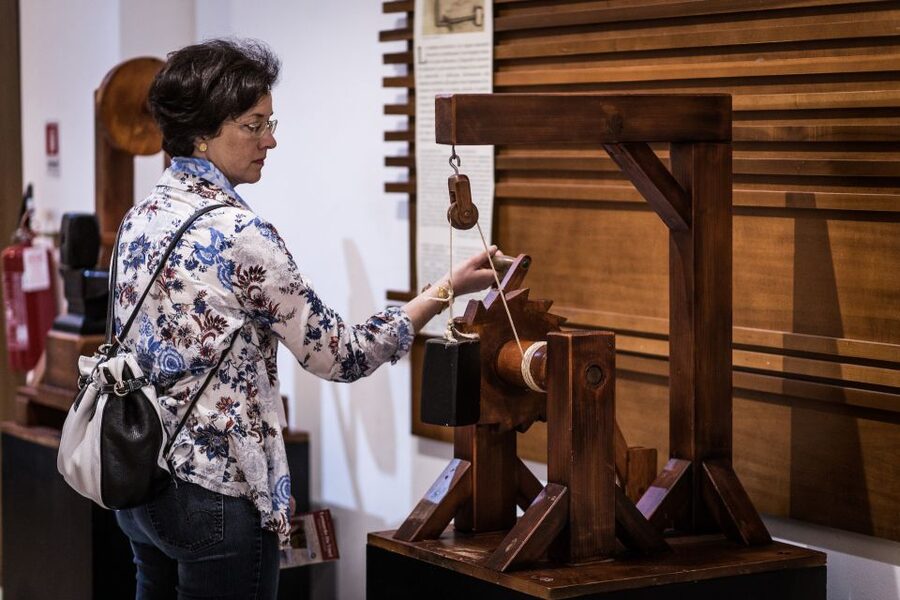
This is the part many people remember first. You see over 65 full-scale machines made according to Leonardo’s designs. These are not tiny desk replicas. They’re built big enough that you can really see how the parts relate.
Even better, the exhibition is designed for interaction. You’ll have the chance to touch and play with almost all the machines on display. That hands-on rule changes the whole museum experience. Instead of reading and moving on, you test your own instincts. You learn what makes a mechanism work by trying it.
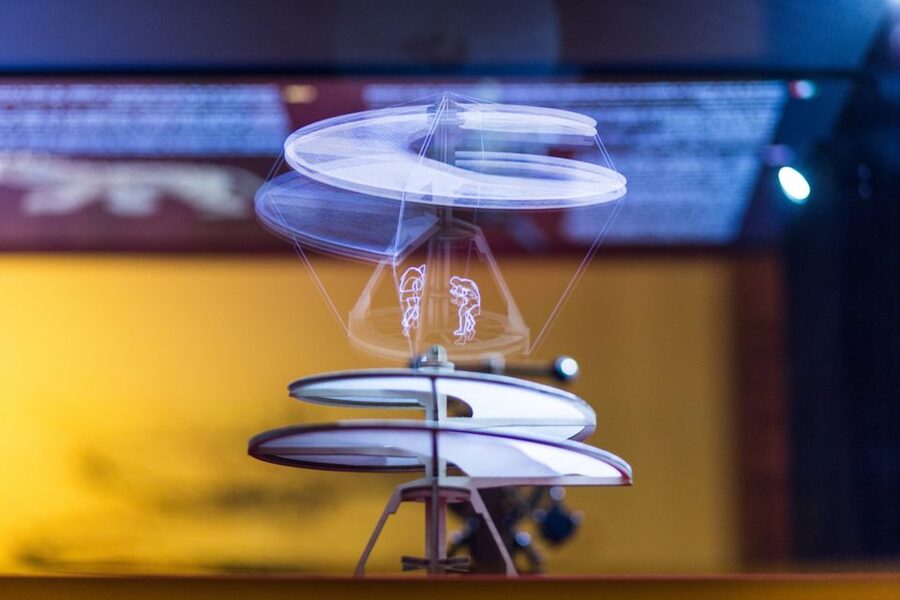
Then you hit the holograms. There are 9 holograms that show Da Vinci’s paintings and inventions in 3D. The goal is not just spectacle. It helps explain form and function, especially when his inventions involve ideas that are hard to picture from a single static drawing.
Audio support can also help you connect the dots. You’ll receive a gadget at the entrance, and if there is an audio or headphone option available during your visit, it’s a strong add-on. The information tends to be clearer when you can follow the story in the right place instead of trying to match every label to every room.
Nearby, and just as well reviewed:
- Colosseum, Roman Forum & Palatine Guided Tour
★ 4.7 · 63,148 reviews - Rome: Colosseum, Palatine Hill and Roman Forum Guided Tour
★ 4.8 · 32,814 reviews - Rome: Guided Tour of Colosseum, Roman Forum & Palatine Hill
★ 4.7 · 27,897 reviews - Rome: Colosseum & Forum with Audio Guide App -Optional Arena
★ 4.2 · 24,770 reviews
Water, Air, Fire, and Earth: the engineering behind the art
Leonardo’s genius feels broader here than it does in many “Da Vinci only” exhibits. The exhibition spends real time on his studies of Water, Air, Fire, and Earth. This is where the show makes a useful point: engineering is not separate from nature. Leonardo treated the world as a set of problems to observe and solve.
You’ll also encounter 7 interactive installations connected to his drawings. This matters because Leonardo’s sketches often act like blueprints, notes, and experiments all at once. When the display connects those drawings to hands-on components, you start to see the logic of his thinking, not just the final-looking invention.
And yes, the exhibition touches on fields like science, aviation, and even military themes. That may sound a little heavy for a museum day, but it’s part of his curiosity. He kept asking how things move, how forces act, and how systems can be made to work under real conditions.
If you’re the type who likes to understand how ideas become outcomes, this is one of the best sections to slow down. The interactive parts give you time to think, test, and reframe what you thought Leonardo was doing.
The tomb in an underground pond adds a cool, unexpected mood
One of the most unusual facts tied to this location is that the building contains the 43 BC tomb of architect Auro Irzio, immersed in an underground natural pond. That’s not the kind of detail you expect to pair with a Leonardo exhibition, but in practice it makes the whole experience feel more grounded in Rome’s layered timeline.
It also helps physically. The underground setting can be cooler, which is a real bonus in summer. Even if you only spend a few minutes in that area, it gives you a break from hot pavement outside.
The setting also changes how you interpret the show. Leonardo’s inventions can feel futuristic on paper. Seeing them in a space that holds ancient history makes the exhibit feel like a conversation between eras: ideas that were tested in one period reappear, reinterpreted, and re-understood later.
Who this is best for, and who might want a different plan
This exhibition works well for a lot of people, because the format hits both curiosity and participation. If you like engineering, you’ll appreciate the full-scale nature of the models. If you’re more into art and imagination, the holograms and connections to his drawings make the science easier to follow.
It’s also a good family stop, especially if your kids like to touch and try things. The interactive stations are a strong draw.
Still, it’s not a perfect fit for very small kids. The space can have trip hazards and touch or do-not-touch areas, and the route is not designed like a stroller push-along. If you’re traveling with toddlers, you might need a bit more patience and closer supervision than you would at a standard kids museum.
One more gentle consideration: because the exhibit includes lots of hands-on mechanisms, a few models may not always look brand new. You should still expect a thoughtful, educational experience, but do not assume every machine will be flawless down to the last detail.
Value check: why $10 feels fair here
At $10 per person, this exhibition is priced like a practical add-on, not a luxury museum experience. The value comes from the combination of three things:
- Scale (full-size machines, not only diagrams)
- Interaction (you can test almost everything)
- Explanation (the exhibition structure and optional audio support make the learning stick)
In Rome, you can easily spend far more on experiences that are mostly viewing. Here, you spend your time operating, comparing, and understanding. That shifts the cost from “ticket price” to “time well used.”
You also get a cultural bonus by being in the Palazzo della Cancelleria itself. Even if you only casually appreciate the setting, it helps justify the stop.
Should you book this Leonardo da Vinci exhibition ticket?
You should book if you want a hands-on, engineering-focused Leonardo experience in a location that’s worth visiting on its own. The full-scale machines, 3D holograms, and the chance to interact with the models are the main reasons to go. If you like science turning into reality, this is a satisfying, fast-paced visit that fits neatly into a day in central Rome.
Skip it or look for something else if you want a grand, sprawling museum with lots of quiet galleries. This is smaller and more interactive than that. It also can be less friendly for very young children who have a hard time with uneven floors and clear boundaries around touch points.
FAQ
Where is the Leonardo da Vinci exhibition in Rome?
It’s at Piazza della Cancelleria 1, near Campo dei Fiori and Piazza Navona.
What’s the price?
The ticket price is $10 per person.
How long is the experience?
It’s listed as 1 day, and the visit itself is typically short enough to fit into a sightseeing schedule.
Is a guide included?
No. A guide is not included with the ticket.
Can I enter if I arrive late?
Entrance is available until 1 hour before closing time.
Does the ticket let me skip the ticket line?
Yes, it includes skip-the-ticket-line access.
Is it wheelchair accessible?
Yes, the venue is wheelchair accessible.
Is free cancellation available?
Yes, you can cancel up to 24 hours in advance for a full refund.
Will I get anything when I arrive?
Yes, you’ll receive a gadget.
Latest reviews around Rome
- From Rome: Hadrian’s Villa & Villa d’Este Day Trip & Lunch★ 4.5 · 157 reviews
- Rome: Painting Class with Unlimited Wine★ 4.8 · 109 reviews
- Vatican City: Sistine Chapel, Museums, Basilica Private Tour★ 4.8 · 158 reviews
- Pope Leo XIV Audience Tour with Local Guide★ 3.3 · 111 reviews
- Rome: The Three Tenors at St. Paul’s Church Concert Ticket★ 4.7 · 699 reviews
- Vatican Museums & Sistine Chapel Skip-the-Line Guided Tour★ 4.6 · 254 reviews
- Rome: St. Peter’s Basilica and Papal Tombs Guided Tour★ 4.6 · 477 reviews
- St. Peter’s Dome Climb, Basilica and Vatacombs Tour★ 4.7 · 230 reviews
Museums, compared.
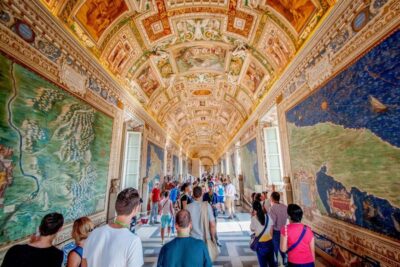
Vatican: Museums & Sistine Chapel Entrance Ticket
Read our review →
Vatican Museums & Sistine Chapel Tour with Optional Basilica
Read our review →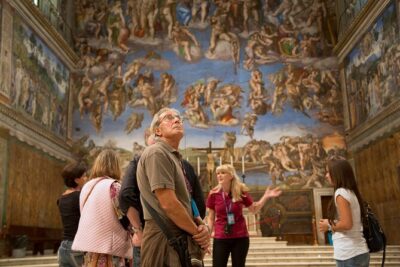
Vatican Museums, Sistine Chapel & St Peter’s Basilica Guided Tour
Read our review →
Skip-The-Line Uffizi Gallery Timed Entry Ticket
Read our review →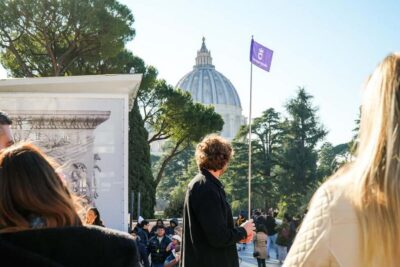
Vatican Museums, Sistine Chapel & Basilica Tour
Read our review →
Vatican Museums & Sistine Chapel Skip-the-Line Entry Ticket
Read our review →Vatican Museums, Sistine Chapel & Basilica Tour
Read our review →