
Reviewed · OPERA EXPERIENCES
Rome: La Traviata at St. Paul’s Within the Walls
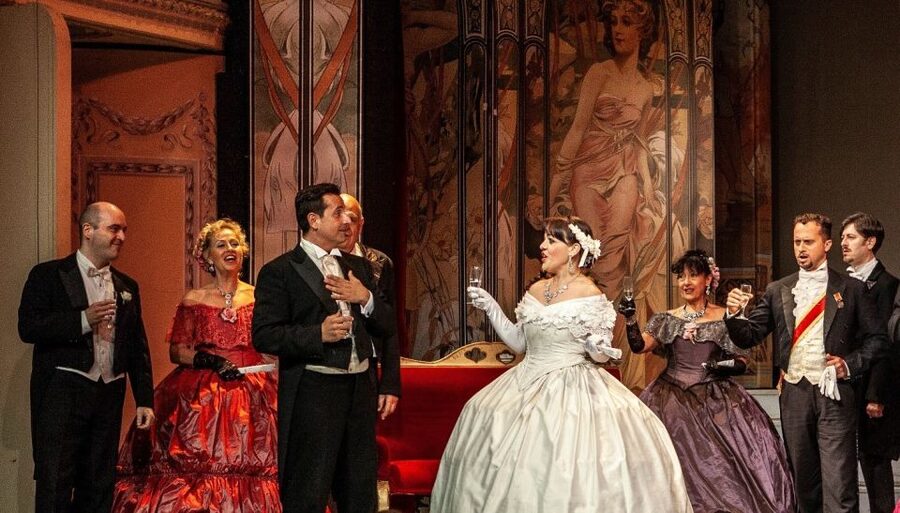
Verdi sounds different when the walls are ancient. I love the professional cast and orchestra bringing La Traviata to life, and I love the Church of St Paul setting, which makes the sound feel close and real. The one catch I’d flag is that seating is not theater-style, so some spots can mean a less perfect view.
This is a 130-minute, full La Traviata experience, performed in Italian, inside one of central Rome’s most impressive churches. Before the show, you’ll exchange your voucher at the St. Paul’s Within the Walls ticket counter, then find your seat and settle in.
If it’s your first opera, this can be an especially good entry point. Do keep in mind that food and drinks are not included, and the church is simply not built for long, super-comfy bench sitting.
In This Review
- Key things to know before you go
- La Traviata in Rome’s St Paul Within the Walls, a surprising match
- Inside the Church: architecture, lighting, and the way sound travels
- Picking your seats: VIP value versus real-world visibility
- What the 130 minutes feel like, act by act
- The musicians and singers: what to listen for
- Rules, etiquette, and how to avoid common headaches
- Price and value: is $47 really a good deal?
- Who should book this, and who should reconsider?
- Should you book La Traviata at St. Paul Within the Walls?
- FAQ
- How long is the La Traviata performance?
- Where do I exchange my voucher before the event?
- What’s included with the ticket price?
- Are food and drinks included?
- What language is the opera performed in?
- Is the venue wheelchair accessible?
- Is free cancellation available?
Key things to know before you go
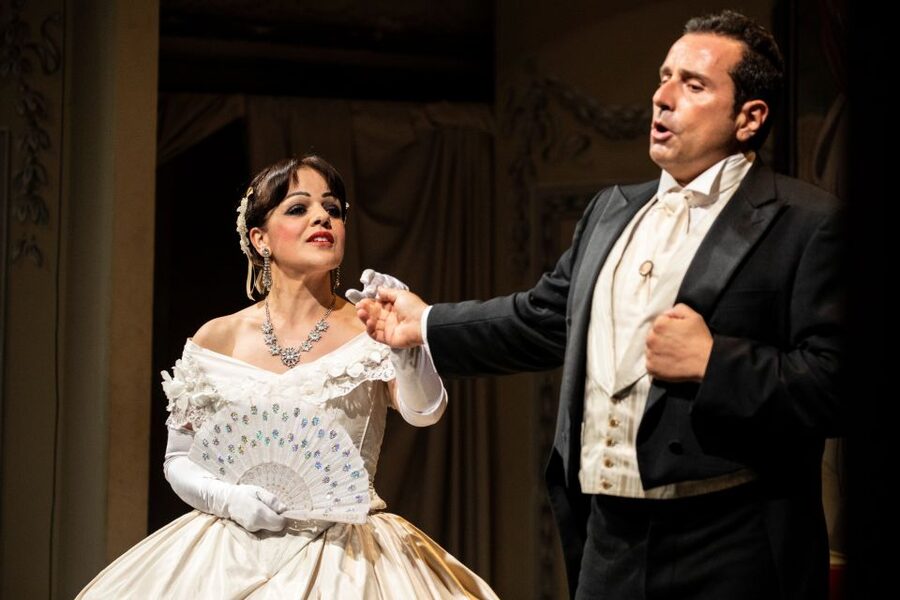
- A full, staged La Traviata: Verdi’s three-act opera is presented in a complete version with costumes and scenes (during the season).
- Professional Italian musicians: The orchestra, Orchestra I Virtuosi dell’opera di Roma, is made up of professors from major Italian conservatories.
- A church venue that changes the sound: Acoustics can be magical, but reverberation also means balance varies by seat and by moment.
- Choose seats with your eyes in mind: There are different seating categories, and visibility can be tricky from the back or far to the side.
- Bring the right expectations: It’s opera, not a modern theater, so benches can feel hard and the room can run warm.
- Follow the no-photo rules: Video and flash are not allowed, and the staff actively enforce it when needed.
La Traviata in Rome’s St Paul Within the Walls, a surprising match
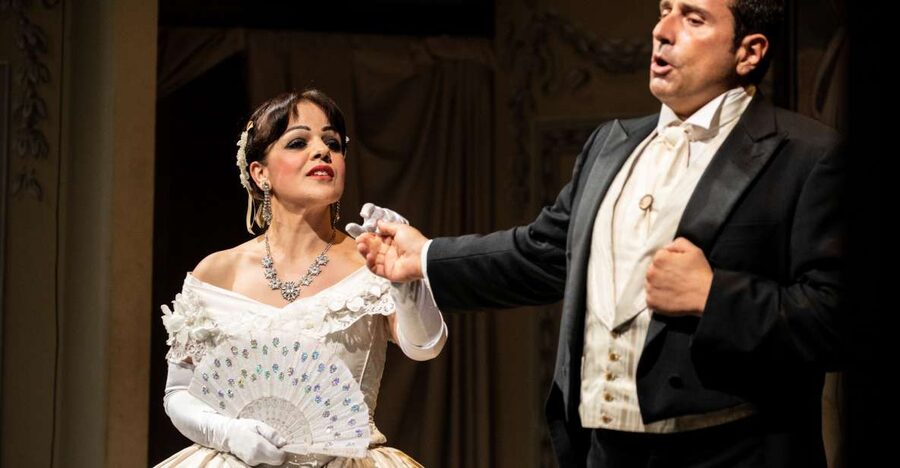
La Traviata is probably the most famous opera ever written. In most places, it’s staged in a grand opera house with a big stage picture and big lighting cues. Here, you trade that for something more intimate, more human, and honestly more Roman.
The basic story is classic Verdi tragic romance. It’s set in Paris in the mid-1800s, and it centers on Violetta, a well-known courtesan, and Alfredo, a young nobleman. Their love seems impossible to resist at first, but the arc is always toward tragedy.
What I like about experiencing it this way is that the music does not feel far away. In a church, the building becomes part of the performance. You’re watching people sing, but you’re also listening to the space ring with every note, including the softer moments that would get lost in a louder venue.
More opera nights in Rome:
- Rome: “The Most Beautiful Opera Arias” Concert
★ 4.3 · 2,495 reviews - Rome: Opera Concert at Palazzo Poli – Fontana di Trevi
★ 4.7 · 1,026 reviews - Rome: The Four Seasons by Vivaldi
★ 4.7 · 595 reviews
Inside the Church: architecture, lighting, and the way sound travels
St. Paul Within the Walls is a prestige setting, and you can feel that right when you walk in. The sheer architectural presence matters, because it shapes what you hear. The venue is known for effective acoustic and lighting, and that helps both the singers and the orchestra.
That said, church acoustics can be a double-edged sword. When the hall rings, you get gorgeous resonance, but it can also blur quick musical detail. Some people have found the orchestra can overpower the singers in certain passages, and others have pointed to reverberation affecting clarity, especially for tenor lines.
So here’s my practical advice: don’t judge the performance on the first few minutes. The sound settles, your ears adjust, and the production gives you time to follow the drama.
Also, think about sightlines. This is a flat-seating setup, not a classic raked theater. Even if you start with good intentions, people shifting their heads can matter, and from the back you may lose faces and stage action more than you expect.
Picking your seats: VIP value versus real-world visibility
One of the best parts of this experience is that you can choose seating categories. If you’re paying extra, you want it to translate into something concrete, not just a “better label.”
Front-row style seats tend to be worth it here because the church does not give you the usual theater solution, a raised stage and raked rows. Reviews also point out that being closer helps you see musicians clearly and even catch performers’ faces. If you can, choosing a category that places you closer to the performance area is the smartest move.
Still, there are no guarantees in a venue like this. One report describes a seat location where a piano blocked the view of the stage during parts of the show. Another note says even front seats did not always guarantee a clear view of what was happening, because performers can move and the layout stays one level.
So I’d do this:
- If you want the fullest “I can see everything” experience, pay for the best view category available.
- If you’re flexible and mostly here for singing and story, you can consider standard seating, but arrive early to choose the best spots you can within your section.
- If you’re sensitive to hard sitting, plan for discomfort. This is a church setup, and wooden benches come up as a common complaint.
What the 130 minutes feel like, act by act
The performance runs about 130 minutes. That’s long enough to feel like a real night out, but short enough that you’re not missing half your trip to Rome.
You’ll follow three acts of Verdi’s opera. The story moves quickly even when you don’t speak the language well, because music does a lot of the storytelling for you. Several first-timers have said they understood the plot through singing and delivery, even when the performance is in Italian.
Expect costumes and scenes as part of the full experience during the season, so it’s not just concert-style singing. The production is built for the opera drama, meaning there are visual story beats even though the setting is a church and not a full stage set.
There may be breaks. Some reports mention the pacing can feel longer than expected, citing breaks and warmth as factors. If you’re the type who gets restless during silent waiting, bring patience. If you’re the type who enjoys a slow evening, you’ll probably love the rhythm of the night in an historic interior.
A few more Rome options to weigh
- Vatican: Museums & Sistine Chapel Entrance Ticket
★ 4.5 · 144,003 reviews - Vatican Museums & Sistine Chapel Tour with Optional Basilica
★ 4.3 · 67,413 reviews - Colosseum, Roman Forum & Palatine Guided Tour
★ 4.7 · 63,148 reviews - Vatican Museums, Sistine Chapel & St Peter’s Basilica Guided Tour
★ 4.5 · 39,149 reviews
The musicians and singers: what to listen for
This is not a casual music event. The orchestra, Orchestra I Virtuosi dell’opera di Roma, is formed by professors from prestigious Italian conservatories. That matters because conservatory-trained players tend to nail control, phrasing, and ensemble precision.
In practice, you’ll notice:
- The orchestra supports the singers without swallowing them, at least for much of the evening.
- The singers are described as having strong technique, with powerful projection.
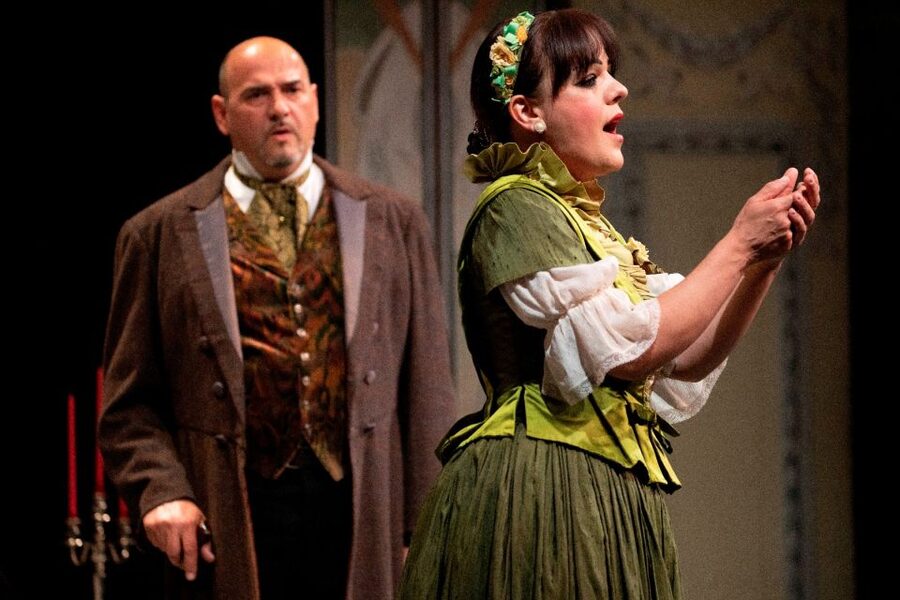
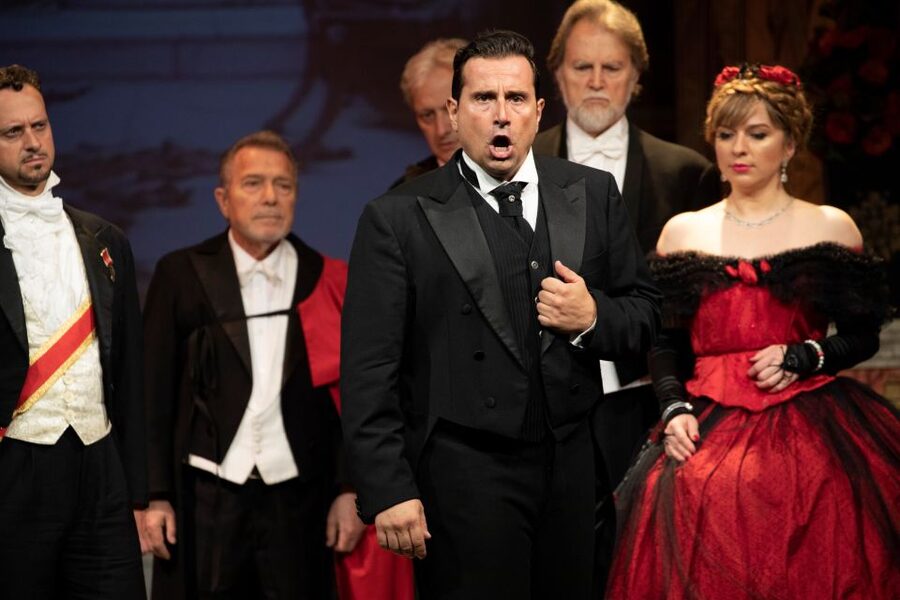
- Acting and character work show up alongside vocal performance, so the story feels staged even when the setting is “just” a church.
One of the most consistently praised elements is the vocal quality. People call out outstanding voices, strong notes, and full opera-level acting. Even when someone had issues with sound balance, they still found the performance talented and professional.
If you’re hoping for a big emotional payoff, you’re in the right place. The emotional turns in La Traviata come through even more when the performers are surrounded by stone acoustics and candlelit atmosphere. It’s not just pretty singing. It’s drama.
Rules, etiquette, and how to avoid common headaches
This venue has clear rules: pets are not allowed, and videoing and flash photography are not allowed. Staff may ask disruptive audience members to stop, sometimes more than once.
That sounds obvious, but it matters for your comfort. If someone blocks your view or turns their phone into a tiny projector, you lose the show. I’d treat this as a “hands down, phone away” kind of night. Put the camera away, and you’ll get more out of the sound and the atmosphere.
Heat and seating comfort are the other two real-world issues to plan for. A few people have described the room as warm and the benches as uncomfortable for a long performance. Fans might be available, but there are comments suggesting they weren’t always used as much as expected. If you tend to run hot, dress lightly.
Also, arrive with a strategy. When the room is not theater-style, early arrival can make a bigger difference. You can’t fix the building, but you can choose where you sit within your seating category.
Price and value: is $47 really a good deal?
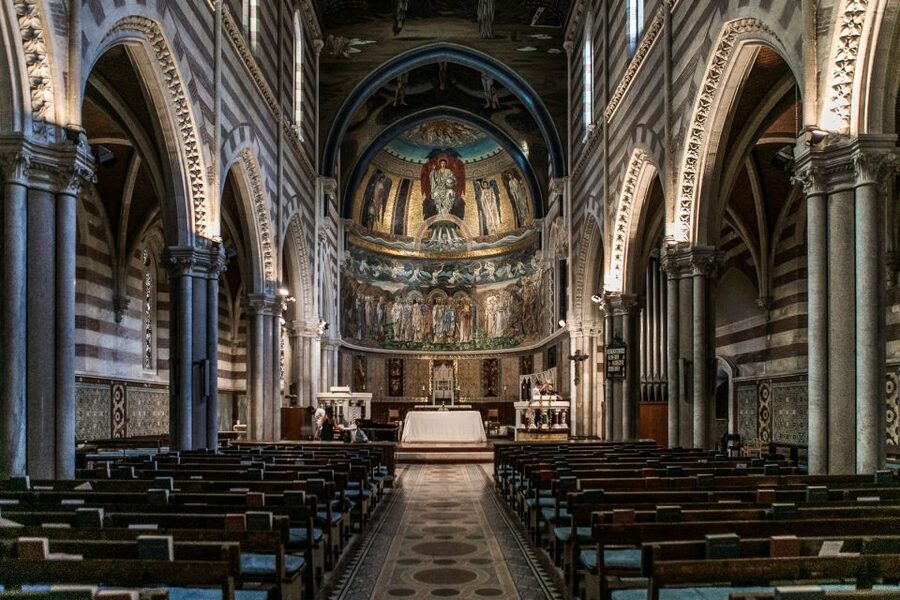
At around $47 per person, this can be excellent value for a full La Traviata night in a major Roman church setting. You’re paying for three things that usually cost more when separated: a complete opera presentation, a professional orchestra, and a prestigious location.
Of course, value depends on what you want most:
- If you want the closest possible view and musician focus, paying for a higher seating category is where the value gets sharper.
- If your priority is pure singing and you can accept some tradeoffs in sightlines, standard seats may still feel like a bargain.
I like the idea of spending less than you might for a big-city opera ticket while still getting a real opera evening. You’re not getting a stadium-level spectacle. You’re getting Verdi in a setting that makes the music feel physically present.
Who should book this, and who should reconsider?
This works well for:
- First-time opera lovers who want a “real deal” La Traviata without committing to a full theater production at a higher price point.
- Travelers who enjoy classical music, especially Italian lyrical tradition.
- People who like intimate performances where you can see and hear details more clearly than in large halls.
You might want a Plan B if:
- You’re very picky about stage visibility. Because seating is not theater-raked, some seats make it harder to follow action and facial expressions.
- You need super-comfortable seating for 2+ hours. Wooden benches and cushions can be an issue for some people.
- You’re sensitive to sound balance in reverberant rooms. Church acoustics can be gorgeous, but not everyone loves every moment of orchestra-to-singer balance.
If you’re in the middle, I’d still recommend it. Just choose your seat category like you mean it, and plan for a Roman church evening rather than a modern auditorium.
Should you book La Traviata at St. Paul Within the Walls?
Yes, if your goal is to hear La Traviata performed with real professional muscle, in a stunning Roman church, at a price that feels reasonable. The combination of high-quality singers, a conservatory-level orchestra, and an atmosphere that supports drama is hard to beat.
I’d book with one mindset: optimize for comfort and sightlines. Choose the best seats you can, arrive early, and treat the phone-free etiquette seriously. Do that, and you’ll walk out feeling like you saw Rome do Verdi the right way.
FAQ
How long is the La Traviata performance?
The performance lasts about 130 minutes.
Where do I exchange my voucher before the event?
You must exchange your voucher at the St. Paul’s Within the Walls ticket counter before the performance begins.
What’s included with the ticket price?
Your ticket includes entrance to the performance.
Are food and drinks included?
No. Food and drinks are not included.
What language is the opera performed in?
The opera is performed in Italian.
Is the venue wheelchair accessible?
Yes, the venue is wheelchair accessible.
Is free cancellation available?
Yes. You can cancel up to 24 hours in advance for a full refund.
Latest reviews around Rome
- From Rome: Hadrian’s Villa & Villa d’Este Day Trip & Lunch★ 4.5 · 157 reviews
- Rome: Painting Class with Unlimited Wine★ 4.8 · 109 reviews
- Vatican City: Sistine Chapel, Museums, Basilica Private Tour★ 4.8 · 158 reviews
- Pope Leo XIV Audience Tour with Local Guide★ 3.3 · 111 reviews
- Rome: The Three Tenors at St. Paul’s Church Concert Ticket★ 4.7 · 699 reviews
- Vatican Museums & Sistine Chapel Skip-the-Line Guided Tour★ 4.6 · 254 reviews
- Rome: St. Peter’s Basilica and Papal Tombs Guided Tour★ 4.6 · 477 reviews
- St. Peter’s Dome Climb, Basilica and Vatacombs Tour★ 4.7 · 230 reviews
Opera Experiences, compared.
La Fenice Opera House Entry Ticket with Audio Guide
Read our review →
Santa Monaca Church Italian Opera Concert Ticket
Read our review →
Vivaldi’s Four Seasons Live Classical Music Concert
Read our review →
Vivaldi’s Four Seasons Concert & Music Museum Visit
Read our review →
Vivaldi Four Seasons Concert at Vivaldi Church
Read our review →
Lucca: Puccini Festival Opera Recitals and Concerts
Read our review →Browse the lists this tour appears in