
Reviewed · VESPA & FIAT 500 TOURS
Rome: Highlights Vespa Sidecar Tour with Coffee and Gelato
Vespa sidecars make Rome feel fast. On this 3-hour guided Vespa tour, you get quick, photo-friendly looks at headline monuments like the Colosseum, plus calmer stops for lesser-seen corners of the city, all while learning how the pieces fit together. I also like that the pace is built for visitors who want maximum sights with minimal foot pain, and the included coffee or tea and gelato make the route feel like a real Roman break, not just another check-the-box tour.
My favorite part is the mix of famous ruins and viewpoints. You’ll ride up hills like Aventine Hill and Janiculum Hill for Rome views, then cut through lively neighborhoods like Trastevere, with a planned pause for coffee and gelato. The main drawback to consider is that you are not stopping long at big sites, so if you want deep time inside museums or long guided walks, plan to add those separately after this ride.
In This Review
- Key highlights to look for
- First Ride in a Classic Vespa Sidecar at Piazza di San Marco
- Piazza Venezia for a Fast, Useful Orientation
- The Colosseum Photo Stop, Done the Smart Way
- Baths of Caracalla Area and the Pyramid of Cestius Contrast
- Aventine Hill and Giardino degli Aranci Break That Feels Like a Secret
- Circus Maximus Pass-By to Trastevere Coffee and Gelato
- Janiculum Hill Finale Near Fontanone for the Big Panoramas
- How the Vespa Sidecar Setup Works (And How to Ride Comfortable)
- Coffee, Gelato, and Rain Plans That Keep the Day Moving
- Price and Value for a 3-Hour Rome Ride
- Who Should Book This Vespa Sidecar Highlights Tour
- Should You Book This Rome Vespa Sidecar Tour?
- FAQ
- How long is the Vespa sidecar tour?
- Where do I meet the tour and where does it end?
- What is included in the price?
- What languages are the live guides?
- Does the tour run in the rain?
- What items are not allowed during the tour?
Key highlights to look for
- Piazza di S. Marco as the easy base, right in the center, with the tour returning you there afterward
- Iconic ruins with tight timing, including the Colosseum and Circus Maximus as part of a smooth drive-and-photo route
- Photo stops that actually matter, like the Pyramid of Cestius and the Baths of Caracalla area
- Orange Tree Garden time at Aventine, plus city views worth slowing down for
- Trastevere coffee break and gelato, timed for a proper mid-tour reset
- Janiculum Hill panorama near Fontanone, where the views land as the finale
First Ride in a Classic Vespa Sidecar at Piazza di San Marco
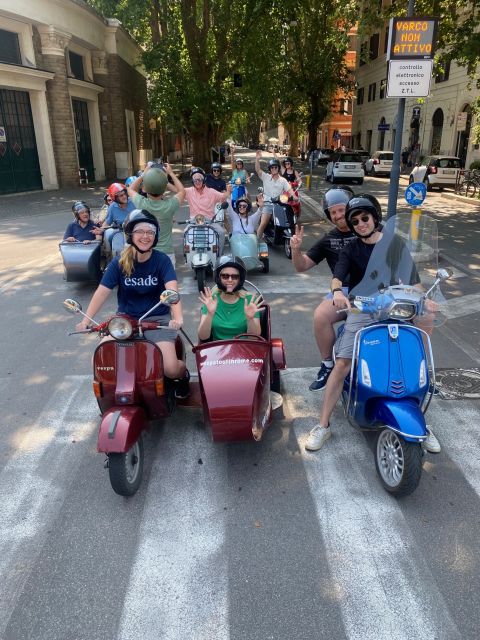
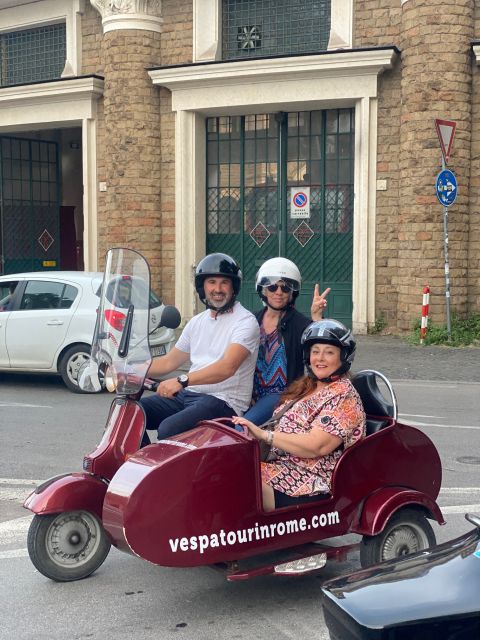
You start at Piazza di S. Marco, 48. The check-in is simple: meet your guide, find the vespa sidecars, and get suited up with a helmet. From the first turn, you feel the difference between Rome by foot and Rome by motion. Instead of weaving through traffic with your own guesswork, you’re in the hands of the driver, and the route is set up to move you between the city’s big visual landmarks and the streets between them.
One practical plus: the tour is designed around short stops, not long walks. That means you get the feel of Rome’s layout without exhausting your legs. It’s also why this works well if you’ve already walked a lot earlier in your trip. You’re not signing up for a marathon, you’re signing up for momentum.
If you’re sensitive to uneven pavement or steep streets, it’s worth knowing the itinerary includes hills, and you’ll be riding through tight urban roads. You’ll still be in a controlled group setting, but this is a ride experience first, walking experience second.
More Vespa and Fiat 500 drives in Rome:
- Vespa Sidecar Tour By Night with Pickup
★ 5.0 · 1,803 reviews - Rome Morning Vespa Sidecar Tour in Rome with Cappuccino
★ 5.0 · 1,771 reviews - Rome Vespa Scooter Tour with Professional Photographer
★ 5.0 · 857 reviews
Piazza Venezia for a Fast, Useful Orientation
Your second stop is Piazza Venezia. You’re there for about 30 minutes, mixing guided storytelling with sightseeing and scenic driving. This part of the day is like the tour’s “map in motion.” Piazza Venezia helps you anchor what you’re looking at before the route starts pulling you outward toward the Colosseum area, then over toward the Aventine and Trastevere sides.
What I like about this segment is that it’s not just scenic driving. The guide uses it to connect neighborhoods and monuments, so when you later see places that you might otherwise treat as separate sights, they feel like one connected story. You also get time for photos without the stress of racing a timeline.
The Colosseum Photo Stop, Done the Smart Way
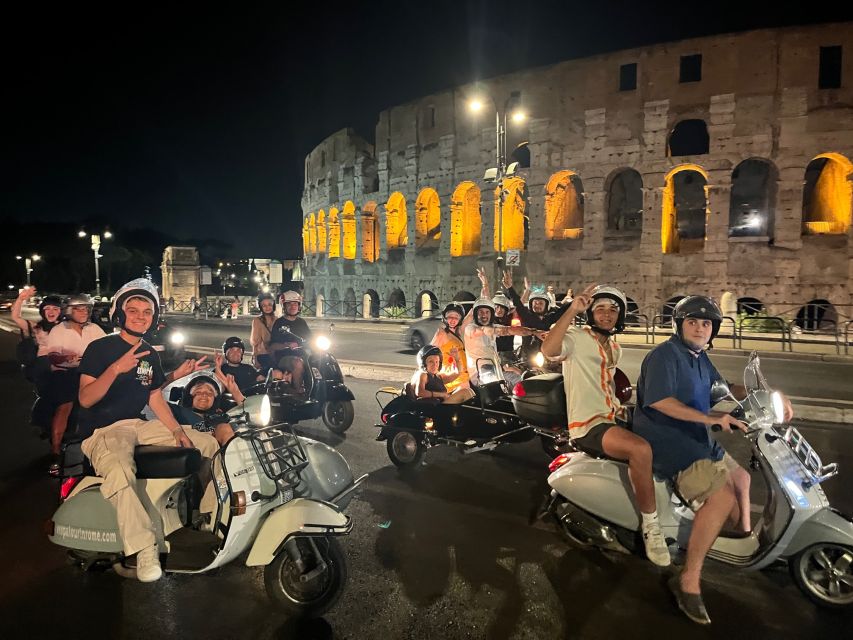
The Colosseum stop is short, about 15 minutes, focused on photo opportunities, guided context, and sightseeing from the route and nearby viewpoints. The good news is that you don’t need to spend your whole day wrestling ticket lines or long interior routes to appreciate the scale. Even from the outside, the Colosseum reads as the center of gravity for Roman history.
Still, you should calibrate expectations. This is not a full Colosseum visit. The value is seeing it in the context of a route that also includes other Roman-era anchors. If you later want to do a deeper Colosseum tour, you’ll already have the geography in your head from this first look.
Baths of Caracalla Area and the Pyramid of Cestius Contrast
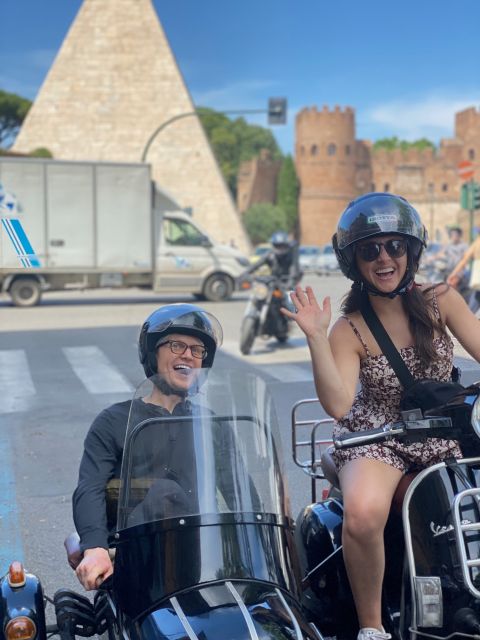
Next up are two stops that balance each other nicely: the Baths of Caracalla and the Pyramid of Cestius.
At the Baths of Caracalla stop, you get a brief photo stop and guided sightseeing for about 10 minutes. It’s a reminder that Rome’s “big sites” aren’t only the ones you see in every postcard. These ruins have a different feeling than the Colosseum, more spread out, more atmospheric, and they help you understand Roman engineering at a larger scale.
Then comes the Pyramid of Cestius, also around 10 minutes. This is the kind of stop that surprises people because it doesn’t look like a ruin in the way they expect. It’s a Roman-era structure that stands out for its shape, and it’s exactly the sort of scene that’s hard to stumble into on your own without a plan.
Together, these two stops show you Rome from two angles at once: monumental history plus visual oddballs that make the city feel human and layered, not just famous and finished.
Nearby, and just as well reviewed:
- Vatican: Museums & Sistine Chapel Entrance Ticket
★ 4.5 · 144,003 reviews - Vatican Museums & Sistine Chapel Tour with Optional Basilica
★ 4.3 · 67,413 reviews - Colosseum, Roman Forum & Palatine Guided Tour
★ 4.7 · 63,148 reviews - Vatican Museums, Sistine Chapel & St Peter’s Basilica Guided Tour
★ 4.5 · 39,149 reviews
Aventine Hill and Giardino degli Aranci Break That Feels Like a Secret
Aventine Hill is built into the schedule next, with a scenic drive plus a guided moment for about 5 minutes. Then you get your break at Giardino degli Aranci, Rome, about 15 minutes. This is the part where the day shifts gears from “see everything” to “pause and look.”
The Orange Tree Garden stop matters because you’re not just passing through another view. You’re allowed the small luxury of time to actually take it in. The Aventine side of Rome gives you a different skyline than the busier central corridors, and it’s the kind of spot where your photos stop looking like quick snapshots and start looking like a memory.
If you’ve never done this kind of viewpoint break, take it seriously. Even a short pause can make the rest of the ride feel more meaningful, because you’ve anchored the day in a real Roman perspective.
Circus Maximus Pass-By to Trastevere Coffee and Gelato
After Aventine, the route heads toward Circus Maximus. You’ll pass by it, with guided commentary and scenic driving and views on the way. The stop time here is not framed as a long stop, so think of it as recognition plus context. You’ll understand what you’re seeing enough to appreciate it when you revisit on your own later.
Then you hit Trastevere, with about 20 minutes for break time, coffee, free time, and food tasting. This is where the tour becomes enjoyable in a different way. Trastevere is the neighborhood people like for a reason: it’s lively, it feels lived-in, and it’s easy to relax once the “ride around history” part finishes.
The included gelato and coffee break are also practical. You’re already using energy getting in and out of the sidecar setup, and you’re spending time in open-air riding. A real pause is not optional here, it’s part of how you stay comfortable.
The gelato stop lands especially well in this tour format, since you’re tasting it as part of the day rather than as a random stop you might forget. If you care about gelato quality, this is one of the simplest ways to build that into your sightseeing without turning it into a separate mission.
Janiculum Hill Finale Near Fontanone for the Big Panoramas
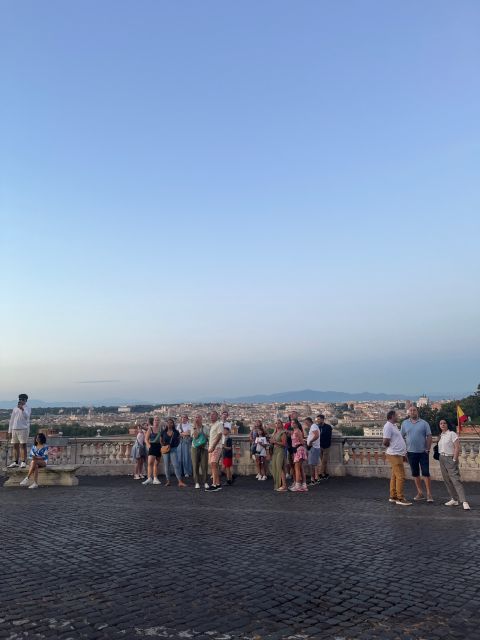
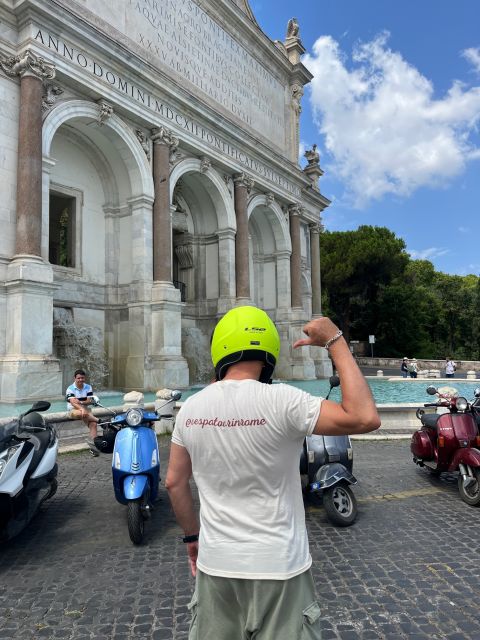
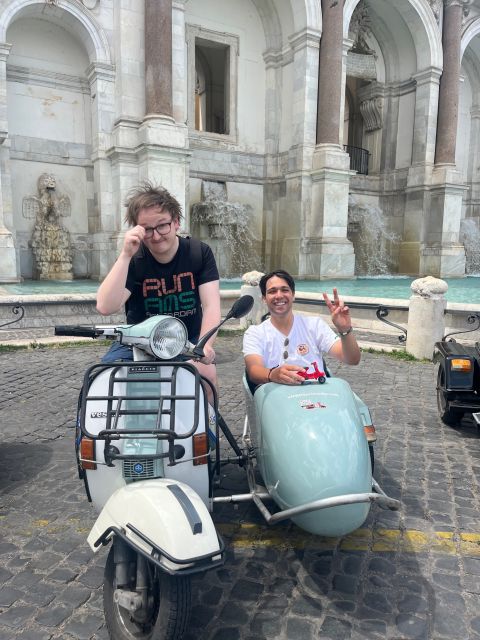
Your final “wow” is Janiculum Hill, with a guided/photo-style stop and about 15 minutes for views, plus a photo opportunity guided by the route. The highlight point here is near Fontanone, where the panoramic views of Rome come into focus.
This is a great place to end because it’s the kind of finale that helps everything you saw earlier snap into place. You’ve toured through the Colosseum area, crossed the city’s historical layers, reached the Aventine viewpoints, and then finished with an overview from another of Rome’s famous hills. That’s the mental payoff for doing Rome with a route instead of endless wandering.
If you’re a photographer, this is also where your camera time makes sense. Earlier stops have strong subjects. This one has Rome itself spread out.
How the Vespa Sidecar Setup Works (And How to Ride Comfortable)
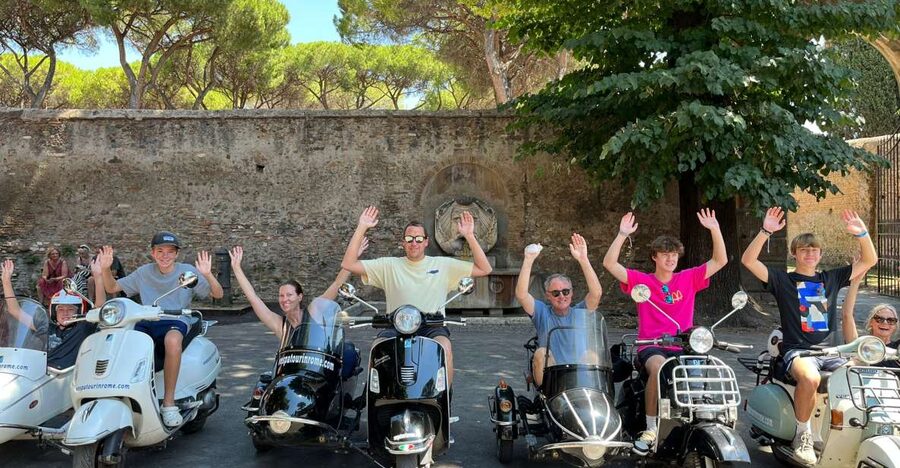
A key detail is how seating works. One Vespa with sidecar is for two guests: one person rides behind the driver on the main Vespa, and the second guest sits in the sidecar. If your group has an odd number of people, a single extra Vespa with driver is added. Solo travelers use a single Vespa with driver.
That matters because it affects comfort. If you’re riding behind the driver, you can expect a different feel than the sidecar seat. Either way, you’ll have a helmet, and the tour runs in rain or shine. Ponchos are provided in case of rain, so you’re not left improvising a wet day.
There are also some clear comfort and safety rules:
- No high-heeled shoes
- No luggage or large bags
- No walking sticks or crutches
- Max weight is 220 lbs / 100 kg per participant
So if you rely on mobility aids, or if you’re traveling with bulky items, this isn’t the right match. For most people, the restrictions are straightforward and easy to work with, especially compared with tours that turn into long walks.
From the guide and driver perspective, this format lives and dies by trust. In the feedback for this experience, people consistently praise the teamwork of the tour guide and driver, and they call out that the ride feels safe and well organized. Names that show up in that mix include Simone, Christian, Stefano, Andrea, Manuel, and others. The shared pattern is that the guide brings history plus light humor, and the driver keeps the ride smooth enough to enjoy the views.
Coffee, Gelato, and Rain Plans That Keep the Day Moving
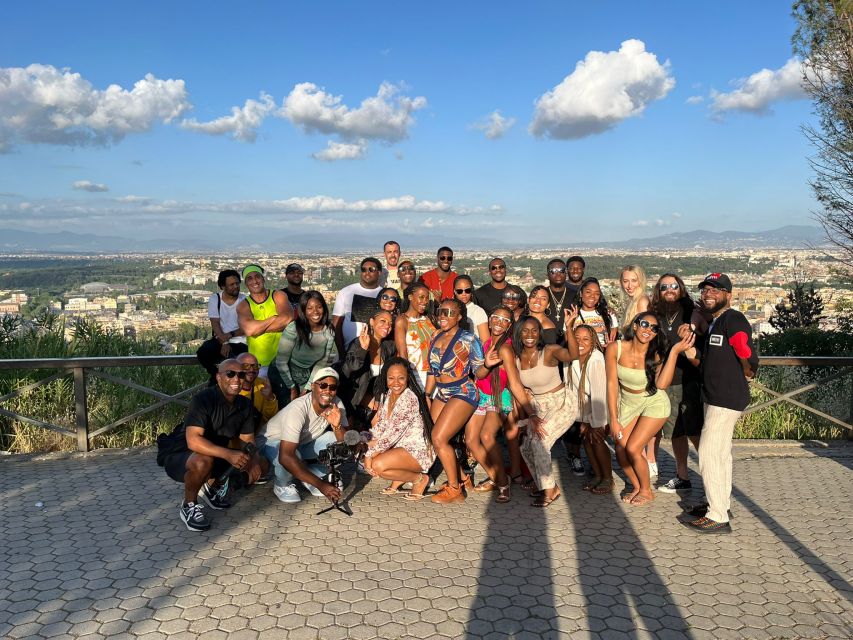
This tour includes a coffee or tea break, plus gelato. That’s not just a nice extra. It’s part of why a short, 3-hour plan works for a wide range of travelers. You get sustenance without detouring to a separate café search.
It’s also built for real weather. Rain or shine, the tour goes on. Ponchos are provided, which means you can stay focused on the day instead of scrambling for a rain solution at the last minute.
Price and Value for a 3-Hour Rome Ride
The price is $141.61 per person for a 3-hour experience, with a guide, driver, Vespa transportation, helmet, coffee or tea, and gelato included. That’s not cheap in the traditional sense. But it is good value if you judge it by what you’re buying.
You’re paying for:
- A guided route that hits major landmarks plus viewpoints
- Transportation that covers a lot of ground quickly
- A low-foot effort format
- Included food and drink (coffee or tea plus gelato)
- A setup that pairs seats so you can ride comfortably within the group model
If your Rome days are already crowded with walking tours, museum time, and dinner reservations, this is the kind of activity that adds a new experience without adding hours of commuting. It also gives you a strong overview of Rome’s geometry: hills, neighborhoods, and the relationship between famous ruins and the streets around them.
The main value tradeoff is time. Stops are intentionally short. You won’t leave with the kind of deep site visit you’d get from a long walking tour inside one monument. Instead, you leave with a clear map of what you saw and where to go back if something really grabbed you.
Who Should Book This Vespa Sidecar Highlights Tour
I’d point you toward this tour if you:
- Want a fast, fun way to see major sights without heavy walking
- Enjoy viewpoint time and panoramic photos
- Like learning with humor and quick context while you drive through neighborhoods
- Prefer a structured plan, especially if it’s your first time in Rome
It may not be the best fit if you:
- Need long, slow visits to big attractions
- Have mobility needs that conflict with the no walking sticks and no crutches rule
- Want a tour where you do lots of exploring on foot at each stop
Overall, it’s a great “Rome flavor” tour, the kind that makes the city feel three-dimensional because you’re constantly moving and looking from different heights.
Should You Book This Rome Vespa Sidecar Tour?
If you want a high-energy, low-walking way to get Colosseum-area icons, a viewpoint break at Aventine, Trastevere coffee and gelato, and a final panoramic send-off from Janiculum, book it. The included food, the helmet, the rain plan, and the strong guide and driver pairing all help this feel like a complete package, not a barebones ride.
If you’re the type who needs deep time inside major sites, or you cannot do the seating and movement involved in a sidecar tour, then skip it and choose a more slow-paced walking or museum-focused option.
FAQ
How long is the Vespa sidecar tour?
The tour duration is 3 hours.
Where do I meet the tour and where does it end?
Meet at Piazza di S. Marco, 48. The tour ends back at the same meeting point.
What is included in the price?
Included are the guide and driver, transportation by Vespa, a helmet, coffee or tea, and gelato.
What languages are the live guides?
The live tour guide is available in English and Spanish.
Does the tour run in the rain?
Yes, it takes place rain or shine. Ponchos are provided if it rains.
What items are not allowed during the tour?
High-heeled shoes, luggage or large bags, walking sticks, and crutches are not allowed.
Latest reviews around Rome
- From Rome: Hadrian’s Villa & Villa d’Este Day Trip & Lunch★ 4.5 · 157 reviews
- Rome: Painting Class with Unlimited Wine★ 4.8 · 109 reviews
- Vatican City: Sistine Chapel, Museums, Basilica Private Tour★ 4.8 · 158 reviews
- Pope Leo XIV Audience Tour with Local Guide★ 3.3 · 111 reviews
- Rome: The Three Tenors at St. Paul’s Church Concert Ticket★ 4.7 · 699 reviews
- Vatican Museums & Sistine Chapel Skip-the-Line Guided Tour★ 4.6 · 254 reviews
- Rome: St. Peter’s Basilica and Papal Tombs Guided Tour★ 4.6 · 477 reviews
- St. Peter’s Dome Climb, Basilica and Vatacombs Tour★ 4.7 · 230 reviews
Vespa & Fiat 500 Tours, compared.
Florence Vespa Tour: Tuscan Hills and Italian Cuisine
Read our review →
Rome Morning Vespa Sidecar Tour in Rome with Cappuccino
Read our review →
Chianti Vespa Tour with Lunch from Florence & E-car Option
Read our review →
Rome Vespa Scooter Tour with Professional Photographer
Read our review →
Self-Drive Vintage Fiat 500 Tour from Florence: Tuscan Hills and Italian Cuisine
Read our review →
Browse the lists this tour appears in