
Reviewed · CYCLING TOURS
Rome Highlights Bike tour
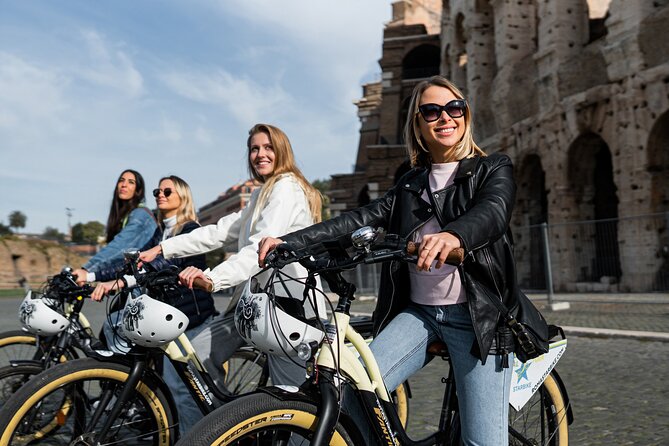
Rome moves fast, so ride smart. This Rome Highlights Bike tour turns major sights into an easy route on a high-quality e-bike, with 3D viewers that help you picture what you are seeing. You get expert guiding, a smooth flow through classic monuments, and kid-friendly gear built into the experience.
I love that the e-bike does the heavy lifting on Rome’s hills and the included safety setup keeps things practical, even with city traffic. I also love the 3D reconstruction element, because it gives context without bogging you down in long museum time. One drawback to consider: you must be a confident bike rider, and Rome traffic can feel close, so this is not the best fit if you are easily rattled.
In This Review
- Key Points at a Glance
- Why This E-Bike Route Works for Rome’s Big Icons
- Meeting Via dei SS. Quattro and Getting Rolling Smoothly
- Stop-by-Stop: Arch of Constantine to Fori Imperiali
- Piazza Venezia and Trajan’s Forum: Propaganda Meets Craft
- Pantheon and Piazza Navona: From Dome Physics to Baroque Theater
- Campo de’ Fiori to Trastevere: Markets, Alleys, and a River Crossing
- Circo Massimo and Piazza del Campidoglio Views
- The VR 3D Viewers: When They Help, When They Don’t
- Family-Friendly Without Turning It Into a Chaos Ride
- Who This Tour Fits Best (and Who Should Think Twice)
- Should You Book This Rome Highlights E-Bike Tour?
Key Points at a Glance
- High-quality e-bikes that make hills and longer distances feel manageable
- 3D viewers included, helping you visualize ancient landmarks at key stops
- Family-friendly setup, including child seats (up to 25 kg) and trailer bikes for smaller kids
- Expert guidance in English, with clear storytelling tied to what you see outside
- Small groups (max 12), which usually means you get more attention and fewer delays
- A route built to cover big Roman highlights efficiently in about 3 hours
Why This E-Bike Route Works for Rome’s Big Icons
If Rome feels like it is too much to plan, this kind of bike tour is a smart fix. You are not trying to sprint from one monument to another. Instead, you move in a logical arc through the city’s most recognizable ancient and historic areas, with short stops to look, listen, and connect the dots.
The biggest win is the e-bike. On a regular bike, Rome can turn into a workout right away. With electric assist, you get the freedom to enjoy the streets and views without arriving exhausted. That matters most because the sights are spread out across Rome’s center, and you want energy for the photo stops and quick walks.
The other key advantage is the 3D viewer time. Standing in front of ruins is cool, but it can also feel fragmentary. The 3D reconstructions help explain how spaces once looked, including how the monuments fit into daily life. For families, the 3D element is often a hit with kids, turning a stop into a moment of play as much as sightseeing.
A few more Rome options to weigh
- Rome EBike Tour: Appian Way, Catacombs & Roman Aqueducts
★ 5.0 · 1,766 reviews - Rome: Top Highlights & Hidden Gems Tour by Cannondale E-Bike
★ 4.9 · 1,760 reviews - Rome: Appian Way, Catacombs, & Roman Aqueducts E-bike Tour
★ 4.9 · 1,421 reviews
Meeting Via dei SS. Quattro and Getting Rolling Smoothly
You start at Via dei SS. Quattro, 58, 00184 Roma RM. The tour begins at 10:00 am, and it ends back at the same meeting point. That out-and-back format is helpful in Rome, because you avoid the usual “how do we get back?” problem after you finish.
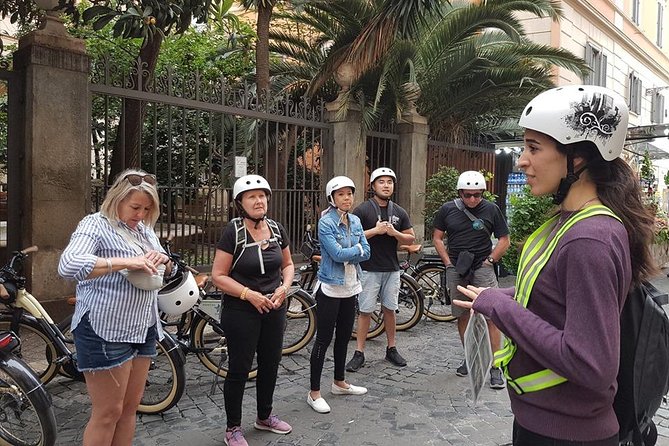
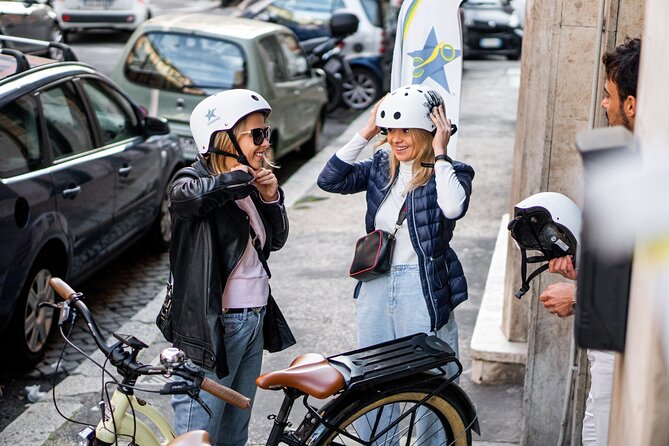
The practical part you should know: you will need to arrive ready to ride. The tour requires that you know how to ride a bike well, and the max rider weight is 120 kg (265 lb). There are helmets, and you will also get practical gear like a mobile phone holder and handlebar holder. That means you can keep your hands where they belong while still using your phone for photos or maps.
One more timing note: Rome traffic is real. Even with an early start, you may feel the city’s rhythm while moving between stops. Guides for this tour have been praised for navigating traffic safely, and your best move is to ride steadily, keep your spacing, and treat the group like a single moving unit.
Stop-by-Stop: Arch of Constantine to Fori Imperiali
You begin with the Arco di Costantino (Arch of Constantine), positioned between the Colosseum and the Palatine Hill. This is a triumphal arch built in the 4th century AD, commissioned by the Roman Senate to mark Constantine’s victory over Maxentius at the Battle of the Milvian Bridge. Even if you have seen the arch in photos before, being there in person helps you understand scale and symbolism.
From there, you ride through Fori Imperiali, one of Rome’s most historic roads. The street runs alongside monumental spaces from the Roman Forum complex, with ruins tied to major figures such as Trajan, Augustus, Nerva, and Julius Caesar. What makes this section work on a bike is that you get a moving perspective. You can glance to the sides and feel how these sites relate to one another without long walking transfers.
A small consideration here: this is a road through a dense, central area. You are stopping briefly, then moving again. If you like lingering slowly, plan to treat these stops as “look and learn” moments, not deep exploration. The tour is built for efficient coverage in about three hours.
Piazza Venezia and Trajan’s Forum: Propaganda Meets Craft
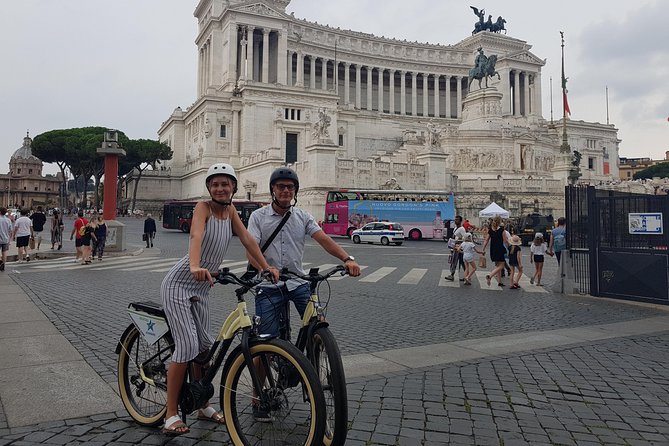
Next comes Piazza Venezia, dominated by the Vittoriano, the large monument dedicated to Vittorio Emanuele II and to Italy’s unification. This square sits at the foot of the Capitoline Hill, and it is a useful orientation point because you can see how the city’s layers overlap, ancient power and later Italian history in the same frame.
Then you reach Trajan’s Forum (Foro di Traiano), and this stop is where the stone detail grabs you. Trajan’s Forum was the last and largest forum built in Ancient Rome, designed by Apollodorus of Damascus. The big star is Trajan’s Column, which tells the story of the Dacian wars through carved figures. Standing near the column with an explanation in plain language helps you see the narrative, not just the artwork.
One practical drawback: close-up viewing can be tricky in busy areas. The tour keeps each stop brief, so you will likely do a short look, absorb the key story, then roll onward. If you want to focus on carvings or inscriptions, you may want to plan a longer return visit another day.
Nearby, and just as well reviewed:
- Vatican: Museums & Sistine Chapel Entrance Ticket
★ 4.5 · 144,003 reviews - Vatican Museums & Sistine Chapel Tour with Optional Basilica
★ 4.3 · 67,413 reviews - Colosseum, Roman Forum & Palatine Guided Tour
★ 4.7 · 63,148 reviews - Vatican Museums, Sistine Chapel & St Peter’s Basilica Guided Tour
★ 4.5 · 39,149 reviews
Pantheon and Piazza Navona: From Dome Physics to Baroque Theater
The Pantheon is the kind of sight that makes you pause even when you are moving quickly. Built by Agrippa in the 1st century BC, it is famously framed by its massive dome. The dome is described as the world’s largest unreinforced concrete dome, which gives you a technical reason to admire it, not just a visual one.
Why this stop works well on a bike tour: you are not trapped in a long line or forced to decode signage for every detail. The guide’s storytelling helps you understand what you are looking at, so the building feels legible. You get a quick but meaningful connection between architecture, religion, and power.
After the Pantheon, you ride to Piazza Navona, built on the remains of Domitian’s Stadium. This square is known for Baroque-style artistry, with major names like Bernini and Borromini tied to the era’s design language. The experience here is playful as well as historical. The setting makes it easy to imagine how a public space works, crowded, vocal, and full of life.
The consideration at this stage is simple: you may feel pulled in two directions, your bike and your eyes. Keep your attention on the guide and your route first, then give yourself time to enjoy the square’s vibe.
Campo de’ Fiori to Trastevere: Markets, Alleys, and a River Crossing
Then comes Campo dei Fiori, a lively and colorful square. The name points back to the Middle Ages when it was a meadow full of flowers. Today, it is known for a daily fresh market of fruits and flowers, plus bars and terraces later in the day. Even if your visit time is daytime, the square’s atmosphere is unmistakable.
From there, you head into Trastevere, one of Rome’s most charming neighborhoods. You cross the river and ride through small alleys and medieval houses, which is exactly the change of pace you want after the monumental scale of the central sites. Trastevere gives Rome a more intimate feel, less “big stone stage” and more everyday city fabric.
This part of the route has two advantages. First, it breaks up the “Roman highlights” sprint with a neighborhood vibe. Second, it sets you up for dinner afterward, because you will finish close to places where people actually eat and hang out.
The only caution: alley riding can be slower and more stop-and-go. If you are a cautious rider, this can feel comforting. If you are pushing your comfort limits, take it steady, because narrow streets reduce your margin for error.
Circo Massimo and Piazza del Campidoglio Views
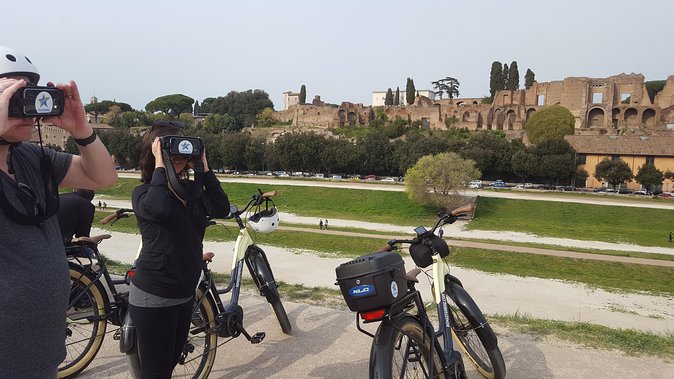
Next is Circo Massimo, built between the Aventine and Palatine Hill. Romans once used it as a massive stadium, with a capacity described as over 250,000 spectators. It began as a chariot racetrack in the 6th century BC, faced fires over the centuries, and later got reinforcement in the Roman Empire. Today it is a large public park.
On an e-bike, this stop can be one of the most relaxing sections. You get big-open space and a sense of how ancient crowds might have packed into the area. The guide’s story gives you context, but the physical feeling of space is part of the reward.
Finally, you finish at Piazza del Campidoglio on one of Rome’s seven hills, a place tied to legends. From here, you get views over the Roman Forum area. The piazza connects you back to the political heart of the city, and it is also strongly associated with Michelangelo’s influence on the design.
A good practical tip for this last stretch: have your camera ready, but do not rush the view. The best photos often happen after you take a minute to understand the lines of sight.
The VR 3D Viewers: When They Help, When They Don’t
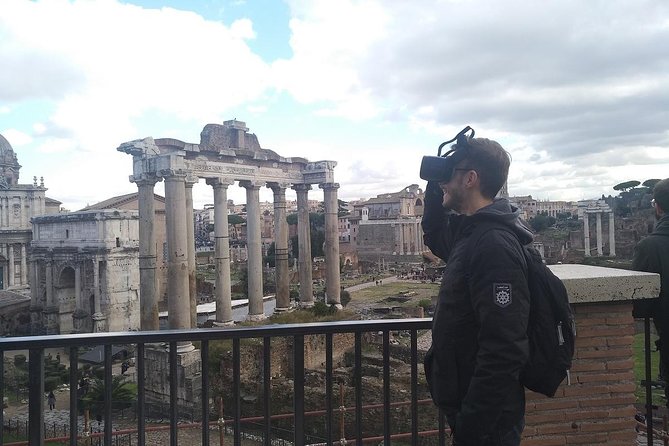
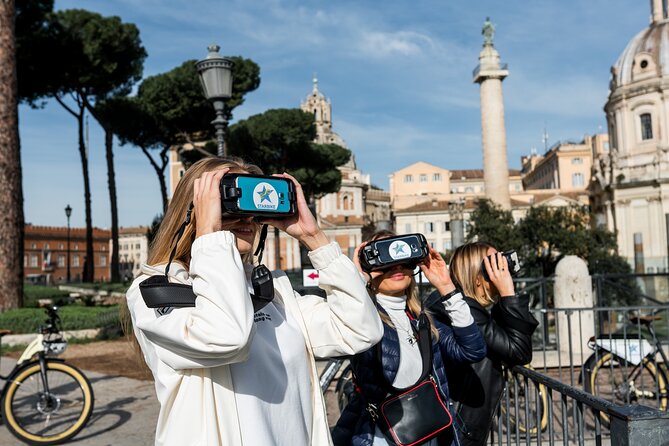
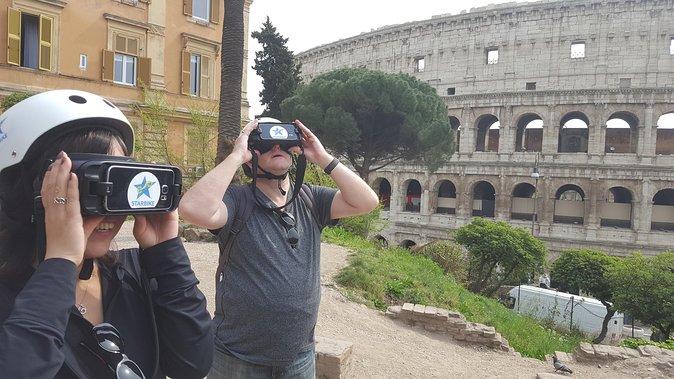
This tour includes 3D viewers (and there are references to 3D headsets and a visor-style experience). This is not just a gimmick. Done well, it is a shortcut to understanding ruins.
Here is why it matters for Rome. Many ancient sites are partial, broken, or roofless. Without reconstruction, you can easily think of monuments as isolated blocks of stone. With the 3D reconstruction element, the tour can show how the spaces likely looked, so your brain has a shape to hold onto.
It also helps kids stay with the program. Multiple guides have been praised for bringing the past to life with the VR gear, and there are specific mentions that kids loved the 3D glasses and headsets. That said, one reasonable consideration is that some children prefer biking and movement over VR. If you have kids who get impatient with sitting still, plan to use the VR segments for short attention bursts, then go right back to the ride.
Family-Friendly Without Turning It Into a Chaos Ride
This tour is built to be family-friendly, but it is not “babies in strollers” friendly. You get child seats for children up to 25 kg, and there is specific guidance for ages 6 to 10: the child option applies only if the child is less than 4/7 feet tall (143 cm), because the setup uses a trailer bike rather than a bike alone.
So if you are traveling with children, the big value is that the tour has thought through the gear and the weight/height constraints. That is what makes it feel organized instead of improvised.
There is also a practical group-size advantage. With a maximum of 12 travelers, you are less likely to feel swallowed by a huge crowd. One review mentioned the value of extra staff to keep the group together, which supports the idea that the operator tries to manage pacing and safety.
One final family tip: bring water bottles and sunscreen. Rome can be hot and humid, and the e-bike helps you move without massive effort, but it does not replace hydration.
Who This Tour Fits Best (and Who Should Think Twice)
You will probably love this tour if you want to see Rome’s core highlights fast, you like active sightseeing, and you appreciate clear explanations at each stop. It is also a strong first-day option because it helps you get your bearings quickly. After a ride like this, even returning on foot or by taxi feels easier because you understand where major areas sit relative to each other.
You should think twice if you are not a strong bike rider. The requirement is explicit: you must know how to ride a bike well. Also, because the route goes through central Rome, you should be comfortable with city traffic. Reviews include mentions of close calls with traffic, even when guides work hard to keep things safe.
If you are choosing this for a group with mixed comfort levels, your best move is to be honest about skills before you book. On an e-bike, many people feel more confident, but balance and control still matter.
Finally, the time window is tight. If something throws off the schedule for one person, it can change how many stops you fully experience. You are doing a 3-hour program, so treat it like a planned adventure, not a slow meander.
Should You Book This Rome Highlights E-Bike Tour?
Yes, if you want efficient, memorable Rome without the usual fatigue of walking everywhere. For the money, you are getting more than a bike rental. You get a high-quality e-bike, helmet and holders, 3D reconstruction gear, and an expert guide in English, all wrapped into a route that hits major icons in a short window.
I would book this sooner in your trip rather than later. The sights and neighborhoods you cover help you understand Rome’s layout, and the e-bike experience makes it feel like you are moving through the city, not just checking boxes.
I would skip it or choose a different style of tour if you cannot ride confidently or if you dislike the idea of short stops and quick transitions. Also, if VR is a major motivation for your whole family, consider that some kids may prefer the ride itself over headset time, so go in with flexible expectations.
If you are a capable rider and you want a lively, well-paced way to see central Rome, this is a very strong choice.
Latest reviews around Rome
- Guided Walking Tour of Rome: Top Sights & Baroque Treasures★ 5.0 · 155 reviews
- Rome at Night: Small Group Guided City Walking Tour★ 5.0 · 249 reviews
- Private Walking Tour of the Squares and Fountains in Rome★ 5.0 · 130 reviews
- Rome Food Tour by the Vatican★ 5.0 · 308 reviews
- Vintage Fiat 500 Cabriolet: Rome’s Highlight Semi Private Tour★ 5.0 · 283 reviews
- Welcome To Rome Experience★ 4.5 · 679 reviews
- Vespa Rental in Rome 24 hours★ 5.0 · 196 reviews
- Vatican VIP Early Entrance 8:00 AM★ 4.5 · 141 reviews
Cycling Tours, compared.
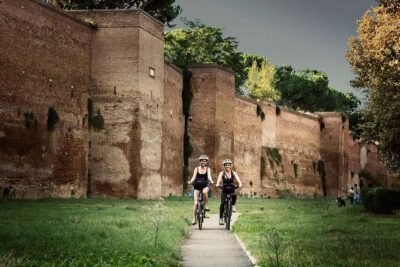
Rome EBike Tour: Appian Way, Catacombs & Roman Aqueducts
Read our review →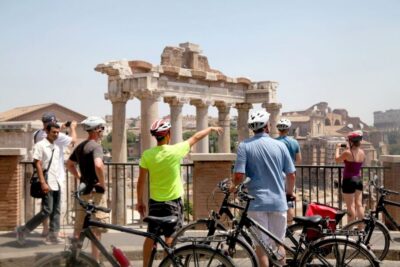
Top Highlights & Hidden Gems Tour by Cannondale E-Bike
Read our review →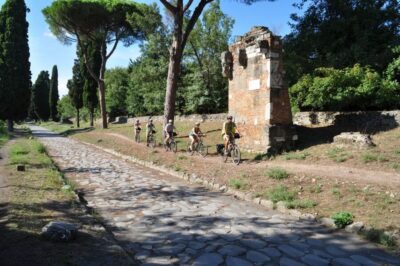
Appian Way, Catacombs, & Roman Aqueducts E-bike Tour
Read our review →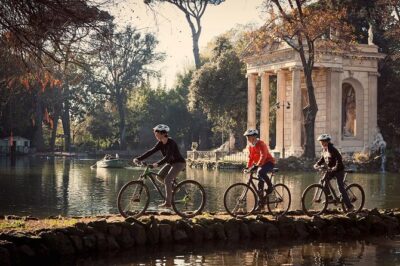
Rome City Small Group Bike Tour with quality Cannondale EBike
Read our review →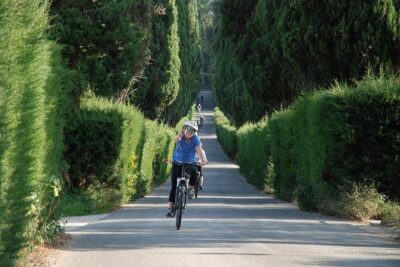
Tuscany Bike Tours Through the Chianti Hills with Wine Tasting
Read our review →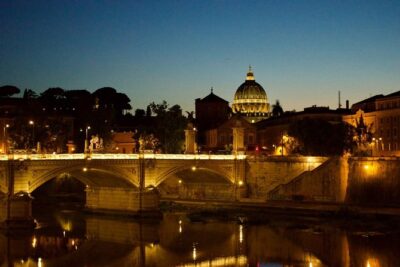
Rome by Night – Ebike Small Group Tour – Food and Wine (Option)
Read our review →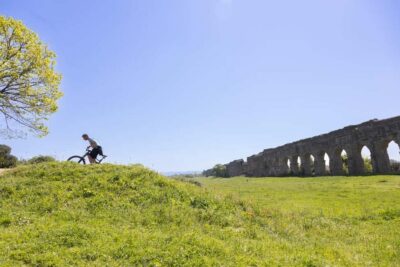
Appian Way E-bike Tour with Catacombs, Aqueducts & Food
Read our review →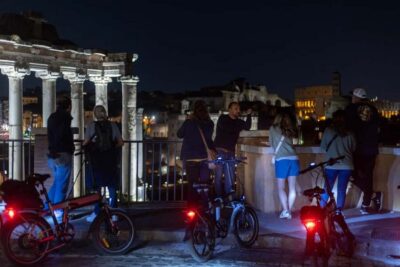
Browse the lists this tour appears in