Reviewed · GUIDED
Rome: Domus Aurea Guided Group Tour
Nero built his party pad under your feet. You get exclusive access to the excavated Domus Aurea, plus a VR reconstruction that makes the scale click fast. I love how the tour turns a mostly underground site into a clear story of power, art, and ego. One thing to consider up front: it involves steps, staircases, and uneven surfaces, so comfy shoes and a steady pace matter.
What really makes this work is the human element. The English-speaking guide is tied to the site, and the tour format keeps you moving with focused explanations, not random wandering. You’ll also use an express security flow, which helps keep your 2 hours from turning into an airport-style wait.
In This Review
- Key things I’d focus on before you go
- Getting Oriented at Oppio Caffè and Finding the Tour Fast
- Descending Into Nero’s Golden House Excavation
- The Palace Story in Plain Terms: Engineering, Luxury, and Control
- Surviving Rooms, Soaring Vaults, and What Restoration Lets You See
- VR and Multimedia: Making Nero’s World Understandable
- How This Tour Links Domus Aurea to Renaissance Thinking
- Price and Pace: Is $55 Good Value for 2 Hours?
- Who This Tour Fits Best, and Who Should Rethink It
- Should You Book This Domus Aurea Guided Group Tour?
Key things I’d focus on before you go
- Exclusive, limited access to the Domus Aurea excavation area
- VR and multimedia that show how rooms and terrain looked in Nero’s time
- Small-group feel that keeps the visit from getting crowded
- Archaeologist-led storytelling that connects art, engineering, and politics
- Underground walking with steps and uneven ground, not wheelchair friendly
- Plan for cool, damp, and time-tight conditions with warm layers and water
Getting Oriented at Oppio Caffè and Finding the Tour Fast
Your tour starts at Oppio Caffè, at the corner of Via Nicola Salvi and Via delle Terme di Tito. If you’re using Google Maps, the address to plug in is Via delle Terme di Tito 72. Look for your guide with a Through Eternity sign or flag.
This first moment matters more than you’d think. Domus Aurea is famous, but it’s also easy to miss, and you do not want to burn time figuring things out when you’re about to head underground. I suggest you arrive a few minutes early, take 30 seconds to confirm you found the right group, then get your water out.
A few more Rome options to weigh
- Vatican: Museums & Sistine Chapel Entrance Ticket
★ 4.5 · 144,003 reviews - Vatican Museums & Sistine Chapel Tour with Optional Basilica
★ 4.3 · 67,413 reviews - Colosseum, Roman Forum & Palatine Guided Tour
★ 4.7 · 63,148 reviews
Descending Into Nero’s Golden House Excavation
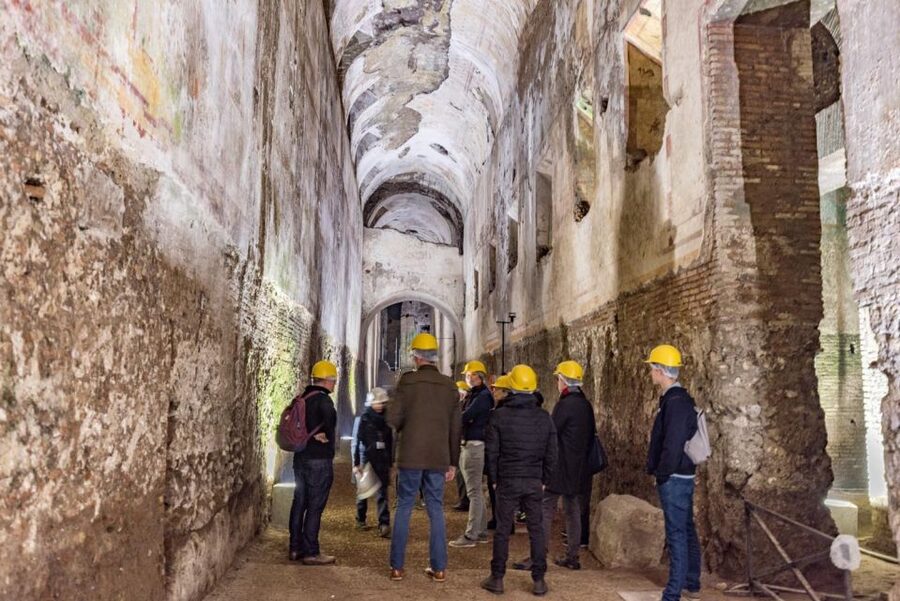
Once you’re with the group, the tour shifts from Rome-on-the-street to Rome-beneath-the-street. You make a descent into the excavated remains of Nero’s Golden House, which is exactly why this experience hits so hard. The site feels less like a museum stop and more like a live archaeological workspace, with real restoration work visible in the surviving areas.
You’ll also get a guided narrative of how the Domus Aurea came to be. After a fire devastated Rome in 64 A.D., Nero ordered architects to build an enormous dwelling over the smoldering remains of the city. The result was not just big, it was engineered to shock people who thought they knew what Roman life looked like.
Practical tip: expect a cool, underground feel and bring warm clothing. Even if it’s a hot day above ground, the descent and the time indoors can feel chilly.
The Palace Story in Plain Terms: Engineering, Luxury, and Control
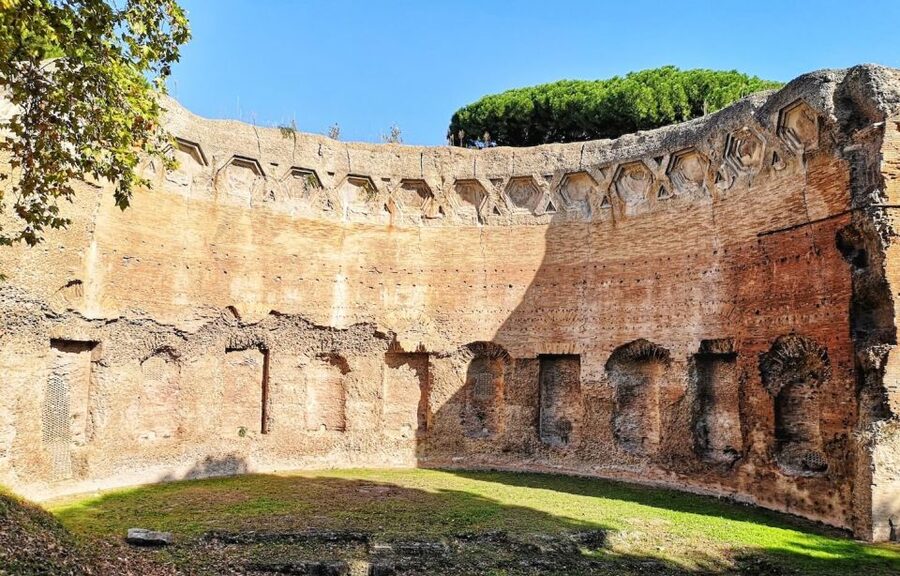
The Domus Aurea is easy to describe as Nero’s luxury palace, but the tour makes it more specific, and that’s where the value is. You learn how the complex functioned as a status machine, not just a fancy residence.
A standout example is the rotating dining concept, described as a dining space open to the starry sky. Even if you only catch the idea, it helps you understand the core theme: Nero wanted everyday routines to look like theater.
You’ll also hear about the massive artificial lake built as part of the palace’s environment. This wasn’t a small decorative pond. The scale of it, and the way it changes the entire surroundings, makes you realize the Domus Aurea was designed as a complete world, not a set of rooms.
Then the story swings sharply. Nero dies in 68 A.D. and, after his downfall, the palace is targeted for erasure. Successors bulldoze the complex, and the artificial lake is filled in. Only a few years later, the Flavian Amphitheatre is raised where the lake once was. That kind of timeline contrast is why this tour feels different from the typical ancient-sites routine.
Surviving Rooms, Soaring Vaults, and What Restoration Lets You See
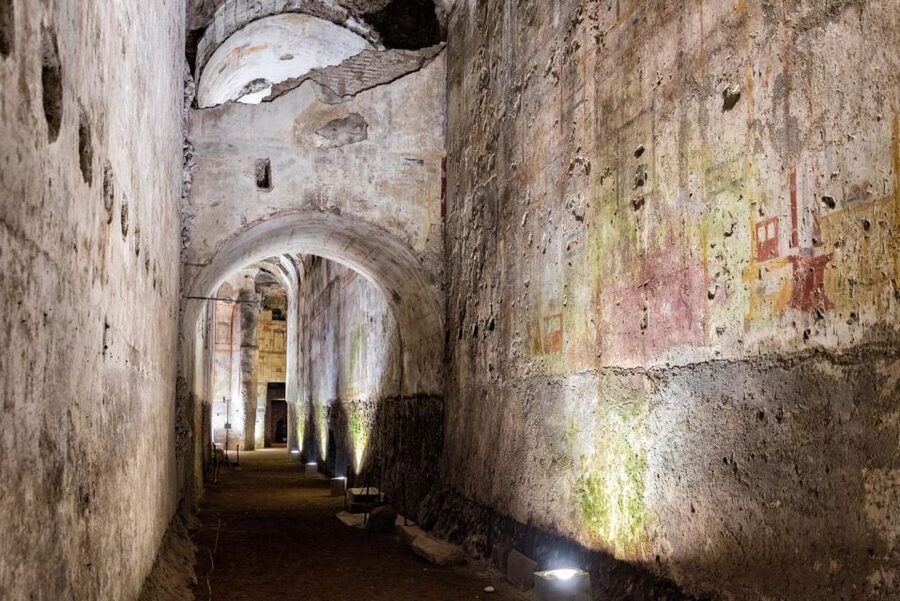
Centuries of burial meant the Domus Aurea lay forgotten under the earth, and for a long time it was not the kind of place you could simply visit. After meticulous restoration, surviving rooms are open again, which is what you get on this tour.
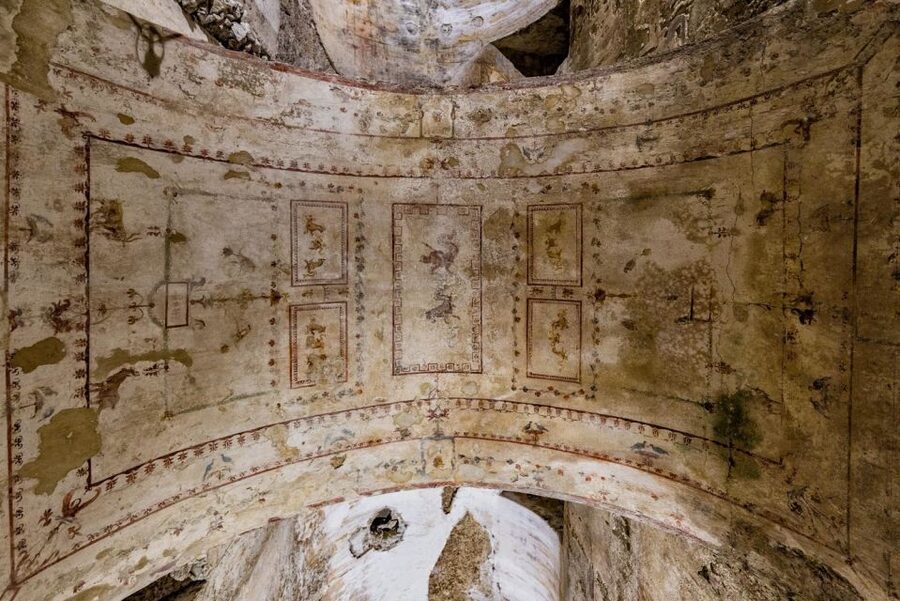
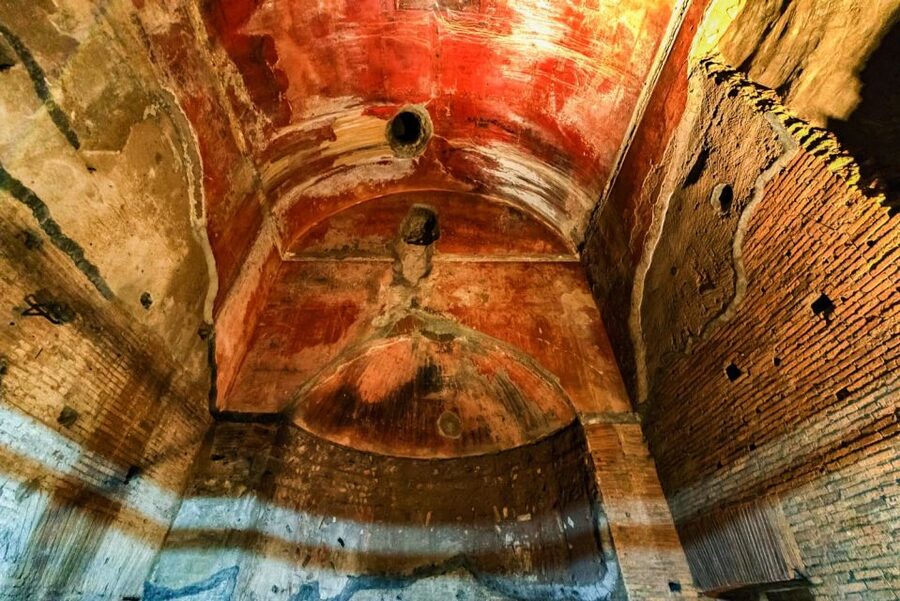
You can see architectural ambition firsthand, especially in the surviving vault shapes and painted surfaces. The tour also calls attention to jaw-dropping frescoes that still remain in parts of the site. In some areas, you’ll notice preserved wall frescoes and surviving decorative elements like a pavilion.
This is one of the best parts of the experience because it changes how you read the visuals. Instead of thinking, Wow, pretty paint, you start asking, Why here? How did they build it? What did it mean to display this inside a palace that was built after a city-wide disaster?
Nearby, and just as well reviewed:
- Vatican Museums, Sistine Chapel & St Peter’s Basilica Guided Tour
★ 4.5 · 39,149 reviews - Rome: Colosseum, Palatine Hill and Roman Forum Guided Tour
★ 4.8 · 32,814 reviews - Rome: Guided Tour of Colosseum, Roman Forum & Palatine Hill
★ 4.7 · 27,897 reviews - Rome: Colosseum & Forum with Audio Guide App -Optional Arena
★ 4.2 · 24,770 reviews
VR and Multimedia: Making Nero’s World Understandable
The virtual reality experience is included, and based on multiple tour comments, it’s not just a gimmick. It helps you see the palace and its terrain as they might have looked when new. People repeatedly describe it as fabulous, moving, and breathtaking, with the VR doing a strong job of turning imagination into something you can actually point to.
You also get other multimedia moments that reinforce scale and layout. Some descriptions compare the visual feel to a Google-style view of what the area looked like originally. That matters because Domus Aurea today can feel abstract at first, especially underground. VR gives your brain landmarks.
Here’s how to get the most out of this part: slow down mentally right before it begins. If you rush, you’ll miss the layout cues that make the rest of the tour easier to understand.
How This Tour Links Domus Aurea to Renaissance Thinking
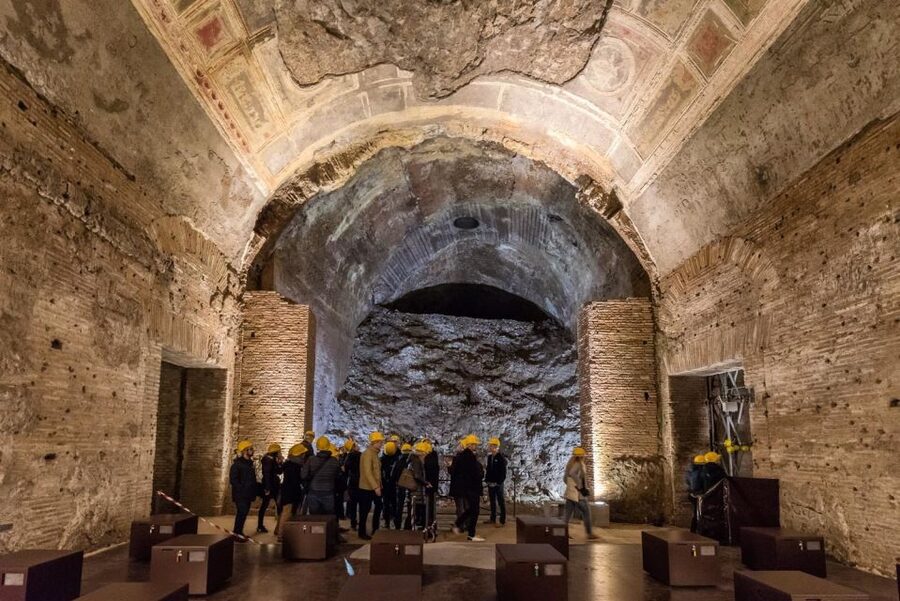
You’ll spend time learning not only about Nero and his palace, but also about how the Domus Aurea story connects to later periods, including the Renaissance. This isn’t just a random history detour.
Understanding the Renaissance connection gives you a useful lens for why art and architecture from ancient Rome remained a big reference point for later artists and thinkers. When your guide explains the sequence from Nero’s palace to its burial and later rediscovery, you start seeing why centuries later people were still fascinated by these images and spaces.
If you’re the type who enjoys how past styles echo into later movements, this is the section that turns the visit from ancient spectacle into a bigger cultural thread.
Price and Pace: Is $55 Good Value for 2 Hours?
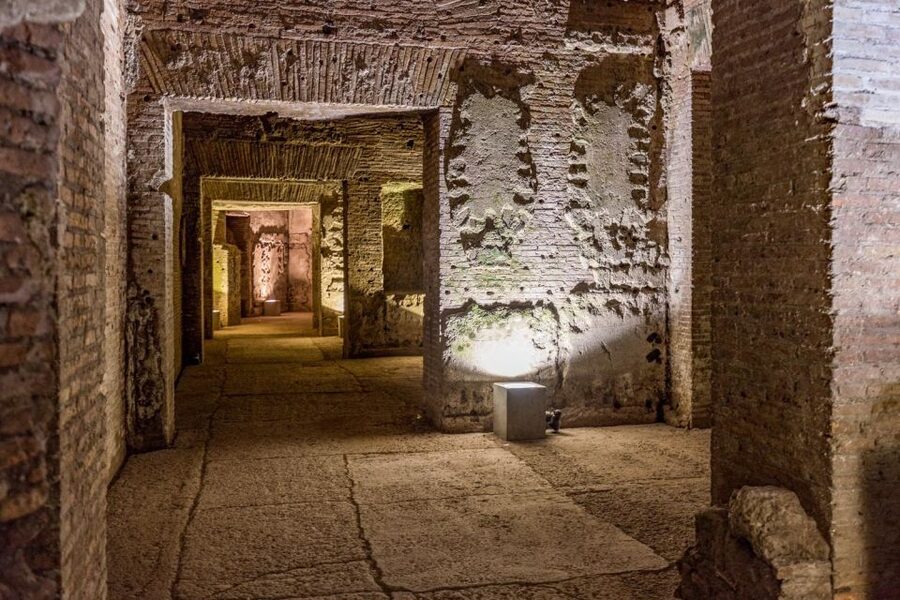
For $55 per person and around 2 hours, the value comes down to three things you’re getting together.
First, the exclusive access element. Limited entry and site access are part of why this tour exists in the first place.
Second, you get a live English-speaking guide who is connected closely to archaeology work at this kind of site. Multiple comments praise guides by name, including Elena, Monica, Renarta, Thomas, Valentina, Frank, Federico, Brandon, Renata, Patrick, and Marco, and they highlight that the guides handle questions well.
Third, the tour includes VR plus tickets and reservation fees, and you skip the line using an express security check. That last part may sound small, but in Rome it can protect your time and reduce stress.
So is it worth it? If Domus Aurea is on your must-see list, yes, it’s strong value because you’re not paying just to enter. You’re paying for interpretation, context, and the VR tool that helps you visualize what you can’t see naturally underground.
Pace note: It’s walking with steps and staircases. It’s still a short outing, but it’s not a sit-and-watch tour.
Who This Tour Fits Best, and Who Should Rethink It
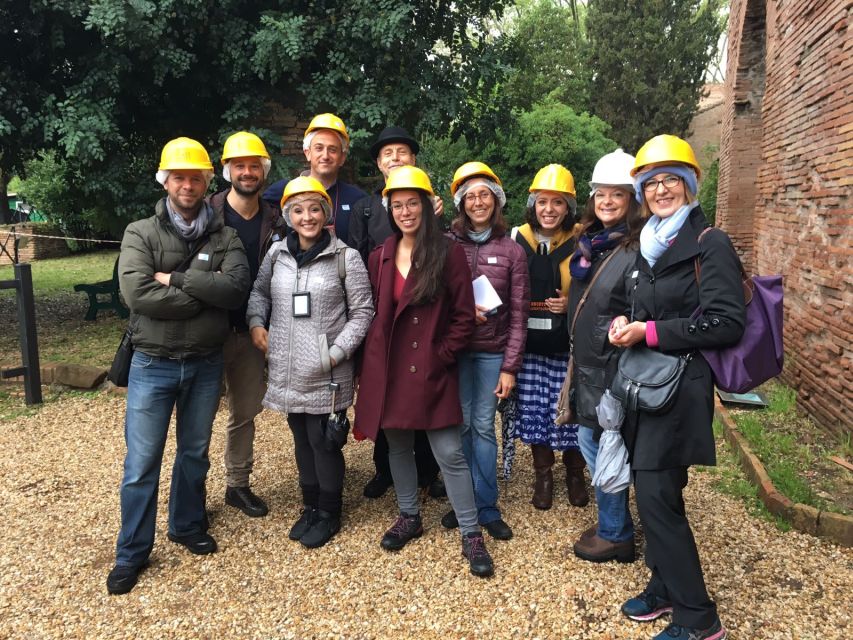
This works well for a wide range of visitors. Guides answer children’s questions, and multiple people say it’s enjoyable for all ages. If you like architecture, art, and storytelling that connects engineering to politics, you’ll likely be in your element.
You should rethink it if mobility is a major concern. It’s not suitable for wheelchair users, and the walk involves steps, staircases, and uneven surfaces.
Also, if you’re sensitive to hearing limitations, consider this: a few comments mention that a guide was hard to hear for some participants on certain parts of the experience. You can reduce that risk by positioning yourself where you’ll have a clear view of the guide during explanations, and keeping distractions low.
Should You Book This Domus Aurea Guided Group Tour?
Book it if you want a smarter, more complete Domus Aurea visit. The combination of archaeologist-style guidance, VR reconstruction, and exclusive site access is exactly what turns an underground excavation into a story you can follow. It’s also a good bet if you want something different from the usual Rome classics, because this is one of the less routine experiences near the Colosseum area.
Pass or wait if your schedule is extremely tight or you know you won’t enjoy uneven ground and steps. Also, if you’d rather do things at your own speed without a structured 2 hours, a guided format might feel limiting.
If you’re flexible and you like learning how the past was built and then destroyed and then uncovered again, this tour is one of the most practical ways to spend 2 hours in Rome.
Latest reviews around Rome
- From Rome: Hadrian’s Villa & Villa d’Este Day Trip & Lunch★ 4.5 · 157 reviews
- Rome: Painting Class with Unlimited Wine★ 4.8 · 109 reviews
- Vatican City: Sistine Chapel, Museums, Basilica Private Tour★ 4.8 · 158 reviews
- Pope Leo XIV Audience Tour with Local Guide★ 3.3 · 111 reviews
- Rome: The Three Tenors at St. Paul’s Church Concert Ticket★ 4.7 · 699 reviews
- Vatican Museums & Sistine Chapel Skip-the-Line Guided Tour★ 4.6 · 254 reviews
- Rome: St. Peter’s Basilica and Papal Tombs Guided Tour★ 4.6 · 477 reviews
- St. Peter’s Dome Climb, Basilica and Vatacombs Tour★ 4.7 · 230 reviews
Guided, compared.

Colosseum, Roman Forum & Palatine Guided Tour
Read our review →
Vatican Museums, Sistine Chapel & St Peter’s Basilica Guided Tour
Read our review →
Colosseum, Palatine Hill and Roman Forum Guided Tour
Read our review →
Guided Tour of Colosseum, Roman Forum & Palatine Hill
Read our review →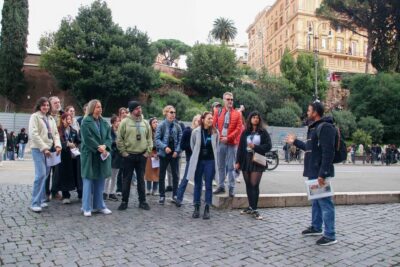
Colosseum & Forum with Audio Guide App -Optional Arena
Read our review →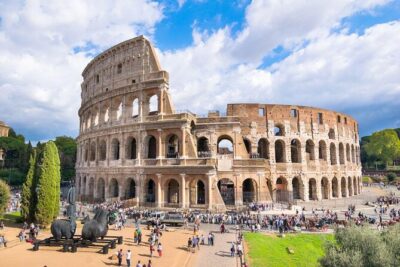
Colosseum, Roman Forum and Palatine Hill Guided Tour
Read our review →
Naples Underground Entry Ticket and Guided Tour
Read our review →