
Reviewed · CATACOMBS & CRYPTS TOURS
Rome: Catacombs of Domitilla Entry Ticket & Guided Tour
Rome gets even colder underground. The Catacombs of Domitilla are one of Rome’s largest underground cemeteries, and a guided tour takes you down about 16 km beneath the busy streets near Via delle Sette Chiese, where centuries of burial history is preserved in cold stone. I also love the small group setup, limited to 10 people, because it makes the experience feel more like a conversation than a lecture.
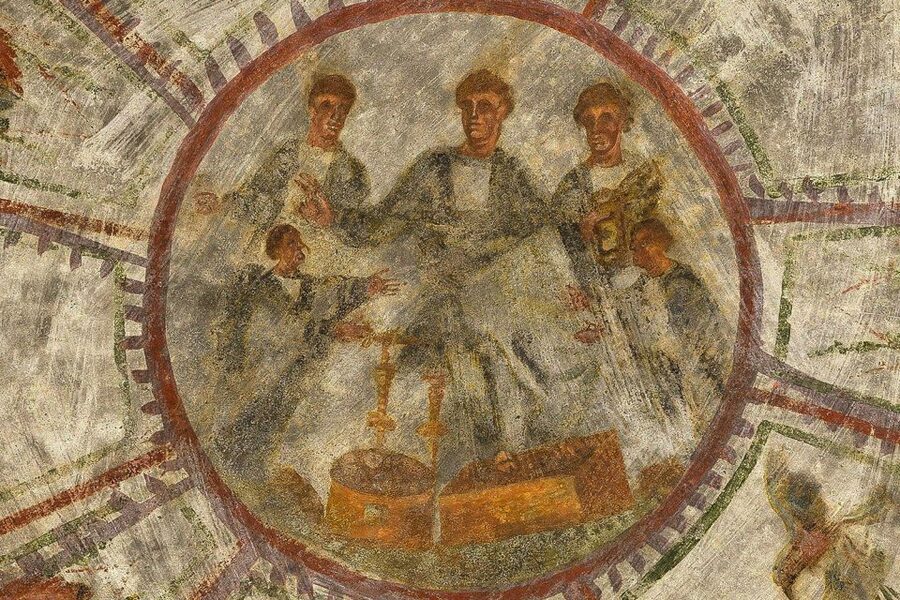
You’ll come away noticing how the artwork shifts over time, from pagan settings to Christian scenes, including frescoes tied to belief changing across generations. The guide also explains why restoration is so delicate, which makes the walls feel less like a photo-op and more like a fragile, living archive. One drawback to plan for: photography inside is not allowed, so you’ll need to rely on your eyes and memory instead.
In This Review
- Key Things You Should Know Before You Go
- Catacombs of Domitilla: What It Means to Go Underground in Rome
- Via delle Sette Chiese and the Flavians: The Story Under Your Feet
- Martyrs Nereus and Achilleus, and the Basilica Moment
- Pagan Meets Christian: Frescoes You Can Actually Read
- The 30 Minute Guided Walk: Pace, Language, and Group Size
- Entering and Meeting Point: The Ticket Office Rule That Saves Stress
- No Photography Inside: Why That Rule Can Be a Feature
- Price and Value: Is $16 Worth a 30 Minute Underground Tour?
- Who This Catacombs Tour Fits Best
- Should You Book the Catacombs of Domitilla Guided Tour?
- FAQ
- Where is the meeting point?
- How early should I arrive?
- How long is the tour?
- What languages are available for the live guide?
- How many people are in the group?
- What does the price include?
- Is photography allowed inside the catacombs?
- What should I wear or bring?
- Is the tour suitable for wheelchair users or people with mobility impairments?
- What is the cancellation and payment flexibility?
Key Things You Should Know Before You Go
- 16 km underground in one short visit, so it feels focused, not rushed
- Hypogeum of the Flavians: a key section tied to the Flavia Domitilla family
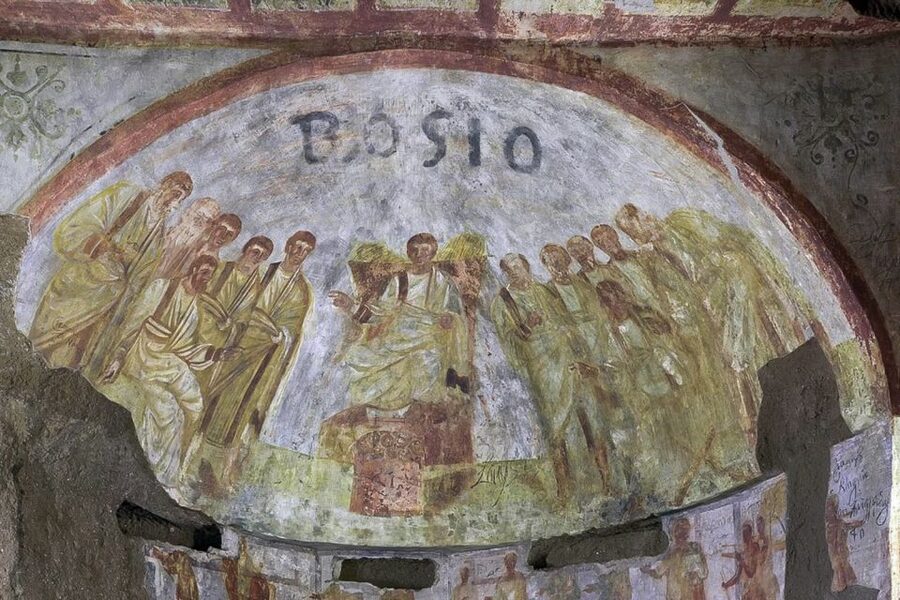
- Pagan and Christian frescoes in the same overall story of burial history
- Nereus and Achilleus: martyrs whose crypt was later connected to a basilica
- Small group with a live guide (Italian or English), so questions actually get answered
- No photography inside, which changes how you should prepare mentally
Catacombs of Domitilla: What It Means to Go Underground in Rome
The Catacombs of Domitilla are built for scale. This is one of Rome’s biggest underground cemeteries, and the whole point is distance from the modern city. You descend into a world of stone walls and burial chambers, where time feels different the moment the air turns cooler.
I like that the visit doesn’t try to do everything. It stays around 30 minutes, so you get enough time to understand the place without spending your whole morning underground. That matters because, in Rome, you can burn daylight fast, and the catacombs are best as a concentrated stop.
Also, you’re going in with a guide. The tour isn’t just about getting into a corridor and wandering. It’s set up so you understand what you’re seeing, including why the catacombs were formed on land associated with Flavia Domitilla and how the site changed through centuries.
More Underground Tours in Rome
- Colosseum: Underground and Ancient Rome Tour
★ 4.7 · 12,691 reviews - Rome: Crypts and Catacombs Underground Tour with Transfers
★ 4.6 · 5,341 reviews - Expert Guided Tour of Colosseum Arena OR Underground, and Forum
★ 4.5 · 5,041 reviews
Via delle Sette Chiese and the Flavians: The Story Under Your Feet
The catacombs sit on Via delle Sette Chiese, and the background is tied to a real person and a real family. The cemetery traces back to burial grounds linked to Flavia Domitilla, whose property was donated to her freedmen. That family connection gives you a human thread, rather than the usual faceless idea of ancient graves.
What really makes Domitilla interesting is that it is layered. The catacomb is divided into two main levels. One key area is the Hypogeum of the Flavians, which was believed to connect to Christian members of the Flavia Domitilla family. The important detail is that the space does not start as a single, fixed religion forever.
At the same time, there’s a pagan hypogeum tied to the end of the 2nd century and the beginning of the 3rd century. Later, it became Christian and was enlarged in the mid 3rd century. The guide’s explanation helps you see this as a timeline carved into stone, not just separate rooms.
You’ll also hear how Giovanni Battista de Rossi believed certain tombs belonged to the Christian family members. Even if you don’t know his name going in, that detail adds a layer of scholarship, showing that archaeologists have tried to connect places to people.
Martyrs Nereus and Achilleus, and the Basilica Moment
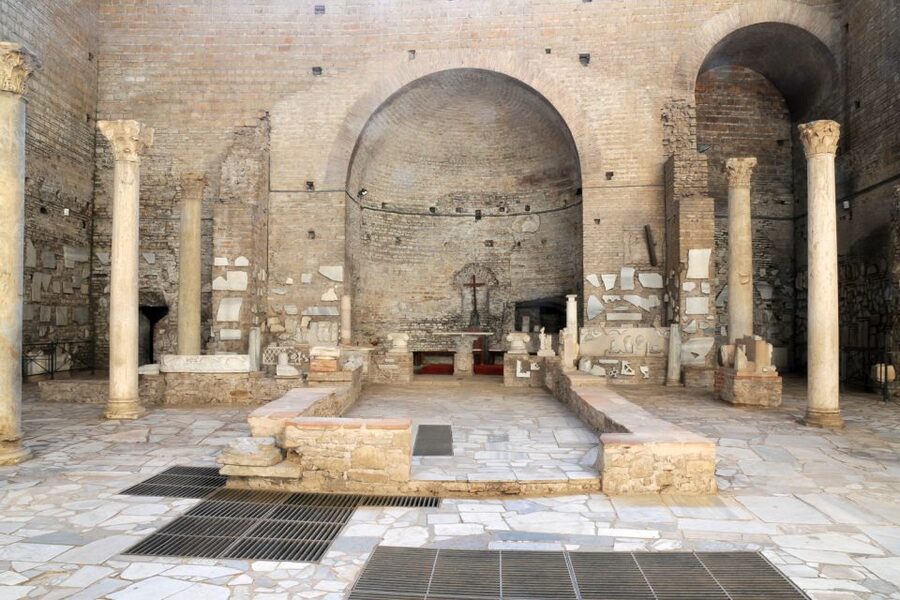
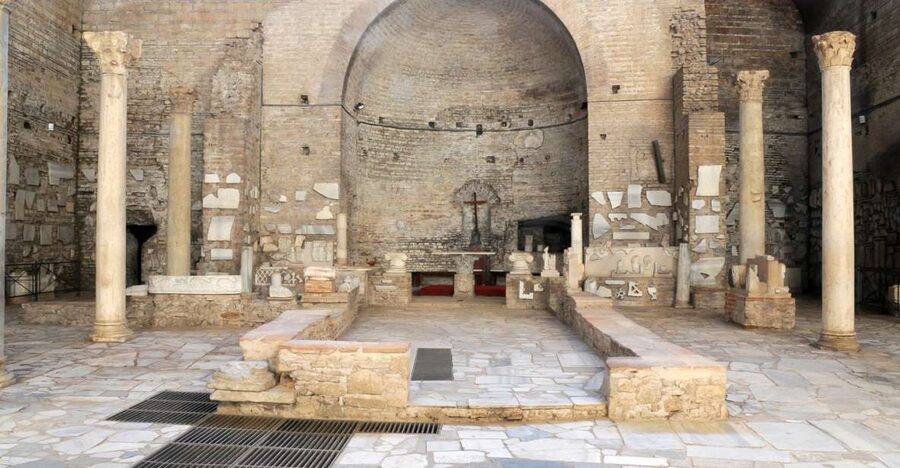
Another reason to pick Domitilla is the way it connects martyrs, burial, and architecture. Towards the end of the 3rd century, the bodies of the martyrs Nereus and Achilleus were placed in a crypt on the second floor.
Then the site changes again. Pope Damasus (366 to 384) transformed that crypt into a small basilica. Later, Pope Siricius expanded it between 390 to 395 until it reached its current size.
This matters because many catacomb experiences focus only on underground burials. Here, you get a clear sense that some spaces grew from burial use into something closer to a worship setting. It can feel like you are watching the evolution of community practices happen underground.
One thing I’d prep for mentally: you don’t necessarily see the whole network. You’ll access only part of the catacombs during the tour, but the sections you do see are the ones tied to the most meaningful historical moments, including that basilica space that stands out compared to simpler corridors.
Pagan Meets Christian: Frescoes You Can Actually Read
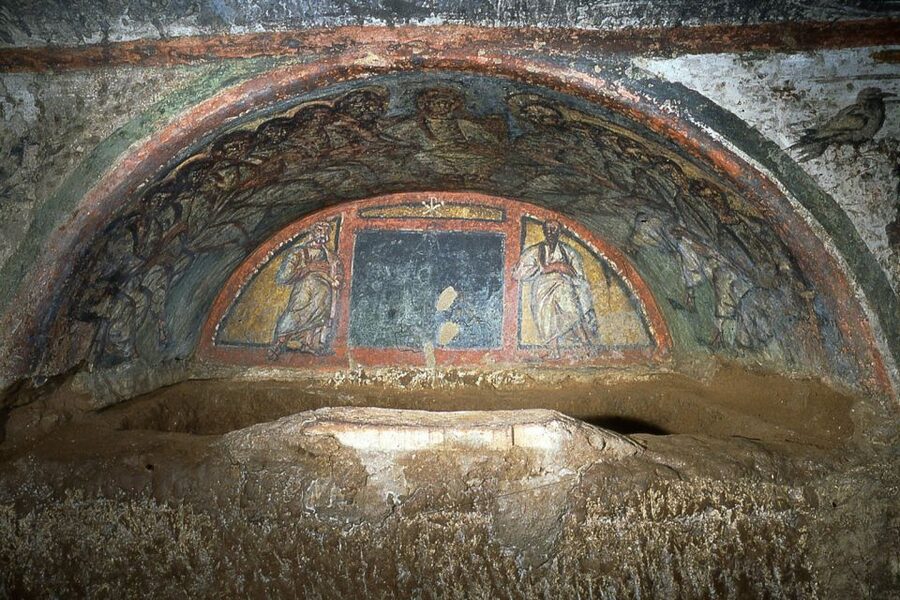
The highlights call out a unique mix of pagan and Christian frescoes. That’s not a marketing phrase, it’s the visual story of the walls. As beliefs shifted over time, the imagery and meanings attached to burial spaces shifted too.
This is where a good guide earns their spot. The guide helps you interpret what you’re looking at and why these images were painted in the first place. Even when the paintings are old and worn, the explanation gives you a framework, so you’re not just guessing at symbols.
The tour also includes talk about the sanctity of burial grounds for Christian martyrs. That theme is bigger than religion trivia. It helps you understand why people treated these underground spaces as sacred, not merely out of sight.
I like that the tour includes restoration context. The guide explains the delicate restoration process, which gives you a reason to respect the space. When you know how fragile the artwork and surfaces can be, you tend to look slower and more carefully.
More catacombs and crypts in Rome:
- The Original Roman Crypts and Catacombs Tour with Transfers
★ 4.5 · 4,896 reviews - Rome: Colosseum Underground Small Group Guided Tour
★ 4.7 · 4,844 reviews - Rome: St. Peter’s Basilica, Dome Climb, and Underground Tour
★ 4.8 · 3,404 reviews - Rome: Colosseum Underground, Arena & Forum Tour
★ 4.7 · 3,272 reviews
The 30 Minute Guided Walk: Pace, Language, and Group Size
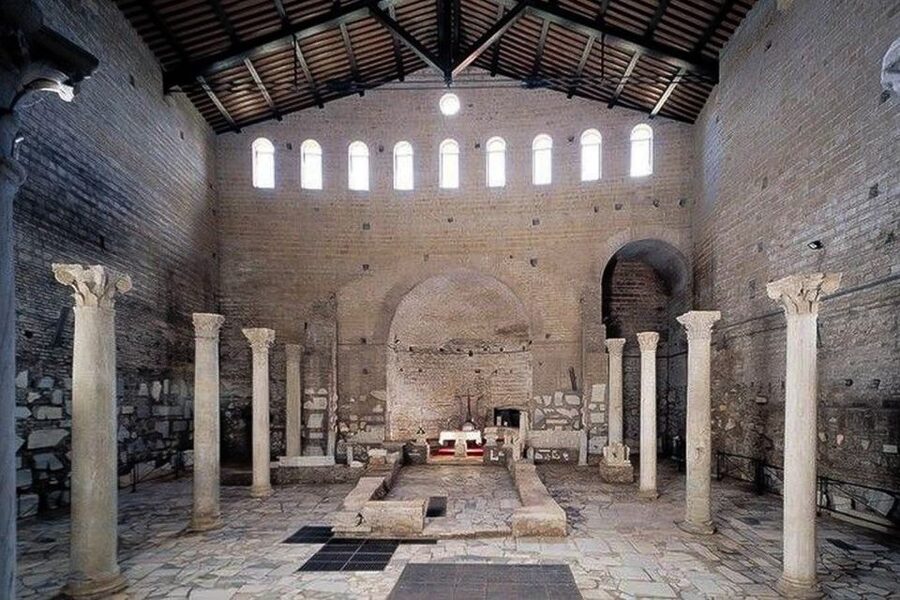
This is a 30 minute guided tour, and that time frame shapes everything. You are not expected to learn every detail of early Christian history. Instead, you get a guided arc: where the catacombs started, how they changed, and what the key areas mean.
The group is small, limited to 10 participants. That’s a big deal here because you’re walking in tight underground spaces where it’s easy for a large group to feel chaotic. With a smaller group, it’s easier to stop, look, and ask questions.
Language is available in Italian and English for the live guided portion. If you prefer to understand every nuance, choose the language you’re most comfortable with, because some of the detail is specific and historical, not general.
Also, based on real guide feedback, Andrea is one name that has been praised for being friendly and professional, with a strong focus on history and art. I can’t promise the same guide on every departure, but it’s a good sign the provider takes the guide role seriously.
One more practical note: plan your arrival time carefully. One booking experience reported trouble reaching the scheduled time by bus and train. So give yourself buffer time getting to the ticket office.
Entering and Meeting Point: The Ticket Office Rule That Saves Stress
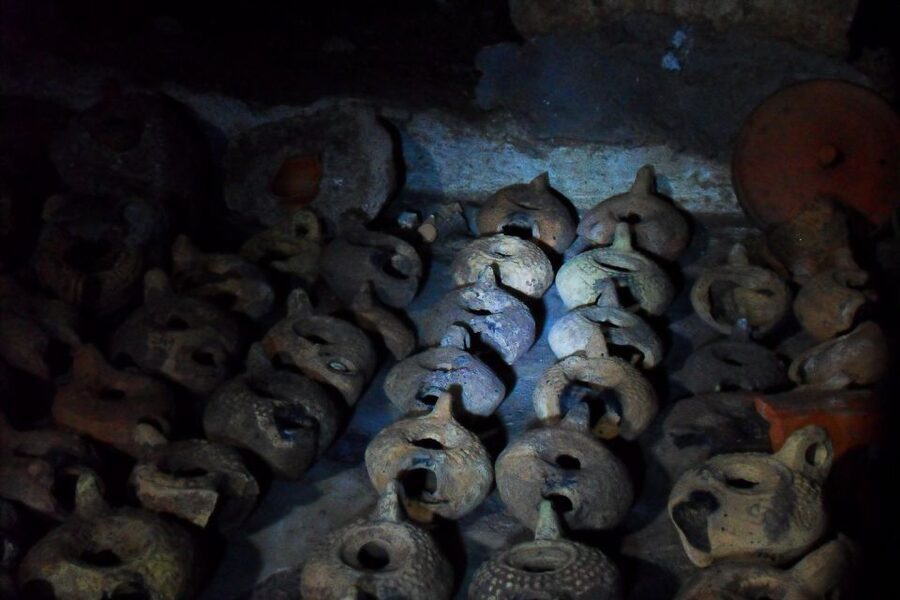
Your instruction is simple: go directly to the ticket office of the catacomb and show your reservation at least 10 minutes before the scheduled tour. This is the kind of rule that is easy to ignore when you’re excited, and then it creates unnecessary stress.
I suggest arriving early not because you’ll wander, but because it helps you settle before going underground. Once you’re in, you’ll want to focus, not rush.
Comfort counts, too. Wear comfortable clothes, because the walk is in stone corridors and you’ll be standing still at times while the guide explains points of interest.
No Photography Inside: Why That Rule Can Be a Feature
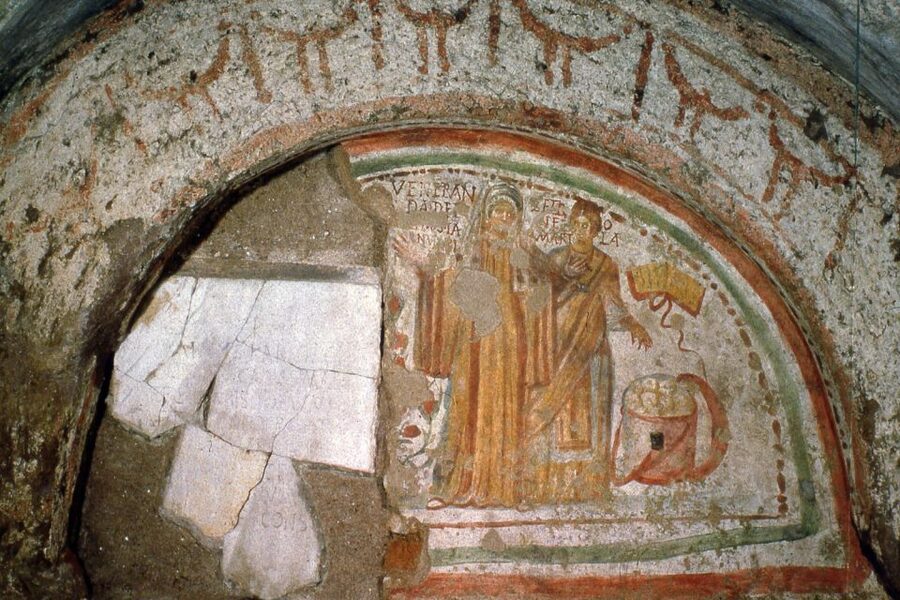
Photography inside is not allowed. That’s a clear constraint, but it also changes the experience in a helpful way. When you’re not trying to capture everything, you tend to actually look at details: fresco styles, placement, and how the spaces connect from level to level.
If you normally take lots of pictures, you’ll want a backup plan. Bring a notebook, or take a few quick mental snapshots and focus on the guide’s explanation. With a short 30 minute tour, the guide’s context is what will stick, not your camera roll.
One negative note from a recent rating: the no photo rule can make memories fade for people who rely on images. My advice: treat this as a storytelling visit. Listen closely, and remember you’re walking through a space that has to be protected, not filmed.
Price and Value: Is $16 Worth a 30 Minute Underground Tour?
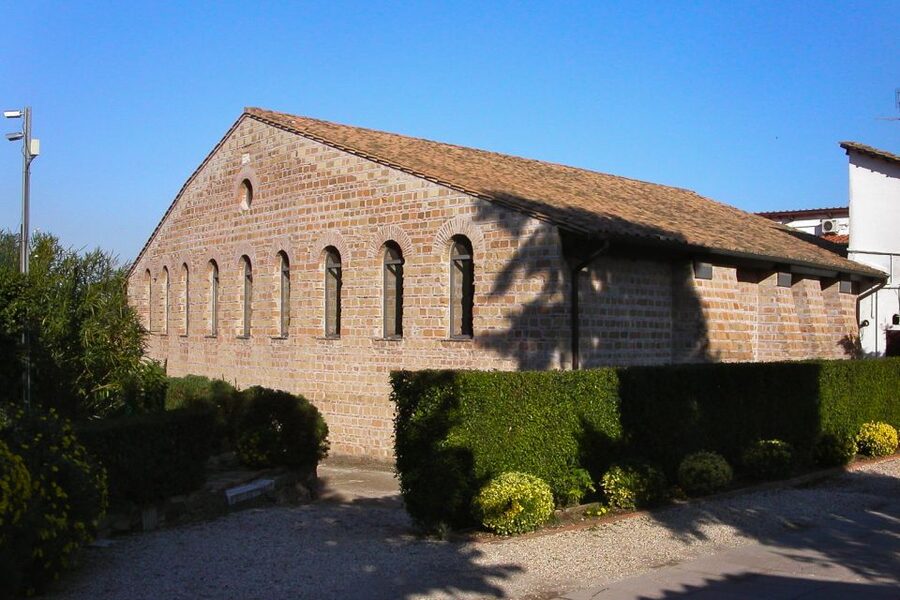
At $16 per person, the price is easy to justify if you value two things: a live guide and an entry ticket included in the cost. The tour includes a tour guide and entrance fees, so you’re not doing a separate ticket purchase and then trying to line up a guide.
Also, 30 minutes is the right length for most people here. If you tried to do this as a self-guided visit without context, you’d likely miss why specific areas matter, especially with the timeline involving the Flavians, pagan-to-Christian shifts, and the basilica connection to martyrs and popes.
The real value is understanding. The catacombs are not just “old tunnels.” They are an underground cemetery shaped by family property donation, exile and death of Flavia Domitilla, and major religious changes over centuries. The guide helps you connect those dots while you’re still there.
If you’re short on time in Rome, this is a practical stop. If you have extra time, you can pair it with other early Christian sites, but the Domitilla visit holds up on its own as a focused underground story.
Who This Catacombs Tour Fits Best
This tour suits you if you want a guided explanation of Christian martyr burial areas, including the basilica element and the fresco mix of pagan and Christian themes. If you like art history and want to understand what restoration is trying to preserve, the guide portion is a big plus.
It’s not the best fit if you have mobility impairments or use a wheelchair. The tour is not suitable for mobility impairments, and wheelchair users are not listed as able to join.
It’s also best for people who are okay with rules like no photography inside. If that one feels like a deal breaker, you might be disappointed.
Should You Book the Catacombs of Domitilla Guided Tour?
I think you should book if you want an efficient, guided underground experience with strong historical framing and a small group feel. For $16, you get entrance plus a live guide, and the visit’s highlights include the places that make Domitilla distinctive, like the Hypogeum of the Flavians and the basilica tied to Nereus and Achilleus.
Book with a little realism, though. You will only see part of the catacombs, and you cannot take photos inside. If you prepare for those points, the short 30 minute tour becomes a concentrated, memorable underground history lesson rather than a frantic attempt to document everything.
If you prefer to wander on your own with full control, you may not love the guided pacing. But if you want your questions answered while you walk through the chambers, Domitilla is exactly the kind of place where a good guide makes the difference.
FAQ
Where is the meeting point?
You should go directly to the ticket office of the Catacomb and show your reservation.
How early should I arrive?
Please arrive at least 10 minutes before the scheduled tour time.
How long is the tour?
The tour duration is 30 minutes.
What languages are available for the live guide?
The live tour guide is available in Italian and English.
How many people are in the group?
The group is limited to 10 participants.
What does the price include?
The price includes the tour guide and entrance fees.
Is photography allowed inside the catacombs?
No, photography inside is not allowed.
What should I wear or bring?
Wear comfortable clothes.
Is the tour suitable for wheelchair users or people with mobility impairments?
No. It is not suitable for people with mobility impairments, and wheelchair users are not listed as able to join.
What is the cancellation and payment flexibility?
You can cancel up to 24 hours in advance for a full refund. There is also a reserve now and pay later option.
Latest reviews around Rome
- From Rome: Hadrian’s Villa & Villa d’Este Day Trip & Lunch★ 4.5 · 157 reviews
- Rome: Painting Class with Unlimited Wine★ 4.8 · 109 reviews
- Vatican City: Sistine Chapel, Museums, Basilica Private Tour★ 4.8 · 158 reviews
- Pope Leo XIV Audience Tour with Local Guide★ 3.3 · 111 reviews
- Rome: The Three Tenors at St. Paul’s Church Concert Ticket★ 4.7 · 699 reviews
- Vatican Museums & Sistine Chapel Skip-the-Line Guided Tour★ 4.6 · 254 reviews
- Rome: St. Peter’s Basilica and Papal Tombs Guided Tour★ 4.6 · 477 reviews
- St. Peter’s Dome Climb, Basilica and Vatacombs Tour★ 4.7 · 230 reviews
Catacombs & Crypts Tours, compared.
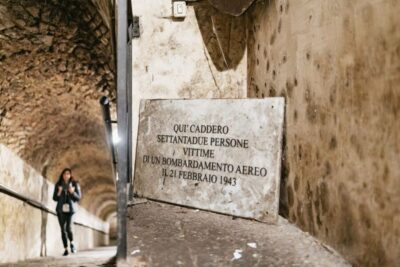
Naples Underground Entry Ticket and Guided Tour
Read our review →
Colosseum: Underground and Ancient Rome Tour
Read our review →
Catacombs of San Gennaro Entry Ticket & Guided Tour
Read our review →
Crypts and Catacombs Underground Tour with Transfers
Read our review →
Expert Guided Tour of Colosseum Arena OR Underground, and Forum
Read our review →
The Original Roman Crypts and Catacombs Tour with Transfers
Read our review →
Colosseum Underground Small Group Guided Tour
Read our review →Browse the lists this tour appears in