Reviewed · PRIVATE
Rome: Caracalla Baths & Circus Maximus — Private or Shared
Caracalla Baths feel like a Roman spa time machine. This 90-minute guided visit pairs the best-preserved thermal ruins in Rome with the story-heavy Circus Maximus games site, all in one efficient outing. I especially like how the guide uses the space to explain an actual day at the baths, including what visitors did and how the building worked.
Two things I really like: small group size (up to 10) makes the walk feel calm, and the headsets plus an on-site archaeologist guide means you get clear, detailed interpretation without straining to hear in an open ruin.
One possible drawback: Circus Maximus has very little left to see in stone, so if you want dramatic structures like the Colosseum, plan to enjoy it more through the guide’s storytelling than through big visuals.
In This Review
- Key highlights at a glance
- Caracalla Baths and Circus Maximus in one tight, guided loop
- Caracalla Baths: mosaics, underfloor heat, and a daily routine you can follow
- What “an hour at the baths” really means
- Circus Maximus: the largest games venue, mostly left for your imagination
- How much time should you plan, and what the pace feels like
- Price and value: what $77 buys you here
- Meeting point and getting there without stress
- Who this tour is best for, and who may prefer something else
- Booking call: should you get on this one?
- FAQ
- How long is the Rome Caracalla Baths and Circus Maximus tour?
- Where do I meet the guide?
- What’s included in the price?
- Is the ticket line skipped?
- What languages are available for the live guide?
- Is the tour wheelchair accessible?
- Are pets allowed, and what should I bring?
Key highlights at a glance
- Caracalla in focused detail: best-preserved bath complex ruins, with mosaics and room-by-room explanations
- How the Romans kept rooms heated: underfloor heating and temperature control come up in a practical way
- Real spa routines: you walk through what a day at the baths looked like in the 3rd century AD
- Circus Maximus, explained for the imagination: the largest public games structure, plus Ludi celebrations
- Up to 10 people: easier questions, less crowd pressure than many Rome landmarks
- Skip the ticket line with headsets: smoother start and better audio while you move
Caracalla Baths and Circus Maximus in one tight, guided loop
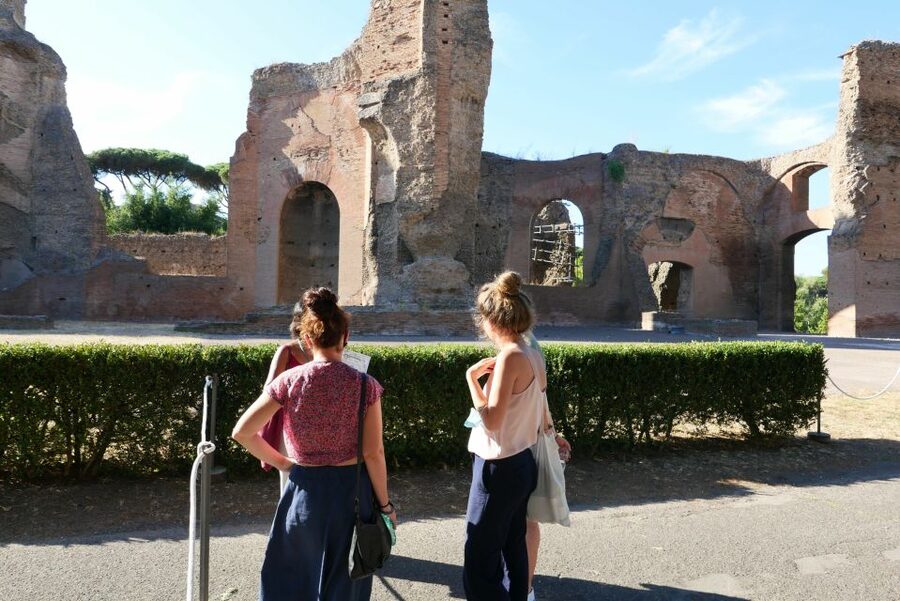
This tour is built for people who want Roman “wow” without losing hours to logistics. You get 1 hour at Caracalla Baths and 30 minutes at Circus Maximus, with a live archaeologist guide and sterilized headsets so the narration stays crisp while you’re walking and looking up.
What makes this pairing work is the contrast. Caracalla is architecture you can still read. You can walk through enormous spaces, spot decorative details, and understand how the Romans engineered comfort. Circus Maximus, on the other hand, is mostly about scale in your mind. The stones are quieter, so the guide’s context matters.
The tour lists a maximum of 10 participants, and that small size shows up in how people describe their experience. Guides such as Chiara, Lars, Anestis, Francesca, and Sam often get mentioned for pacing, humor, and answering questions.
A few more Rome options to weigh
- Vatican: Museums & Sistine Chapel Entrance Ticket
★ 4.5 · 144,003 reviews - Vatican Museums & Sistine Chapel Tour with Optional Basilica
★ 4.3 · 67,413 reviews - Colosseum, Roman Forum & Palatine Guided Tour
★ 4.7 · 63,148 reviews
Caracalla Baths: mosaics, underfloor heat, and a daily routine you can follow
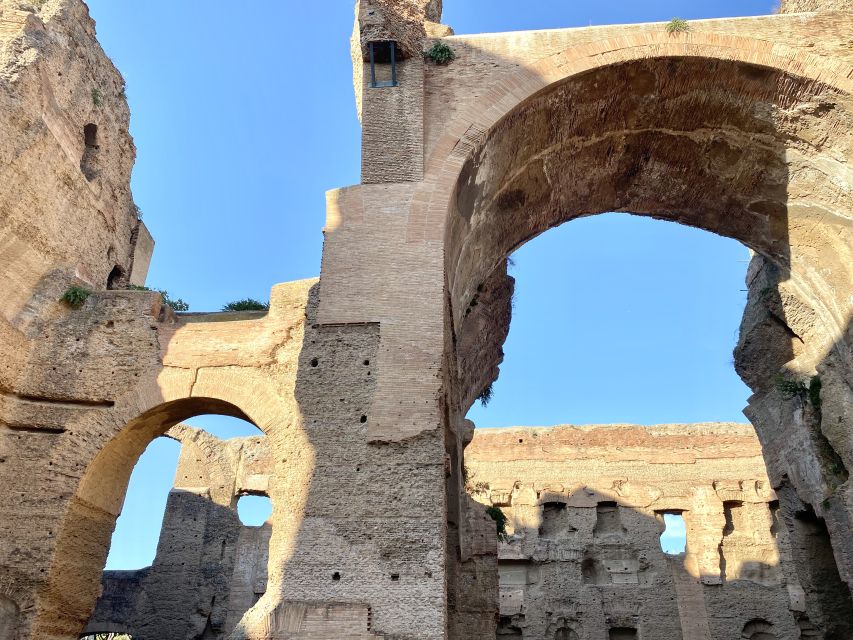
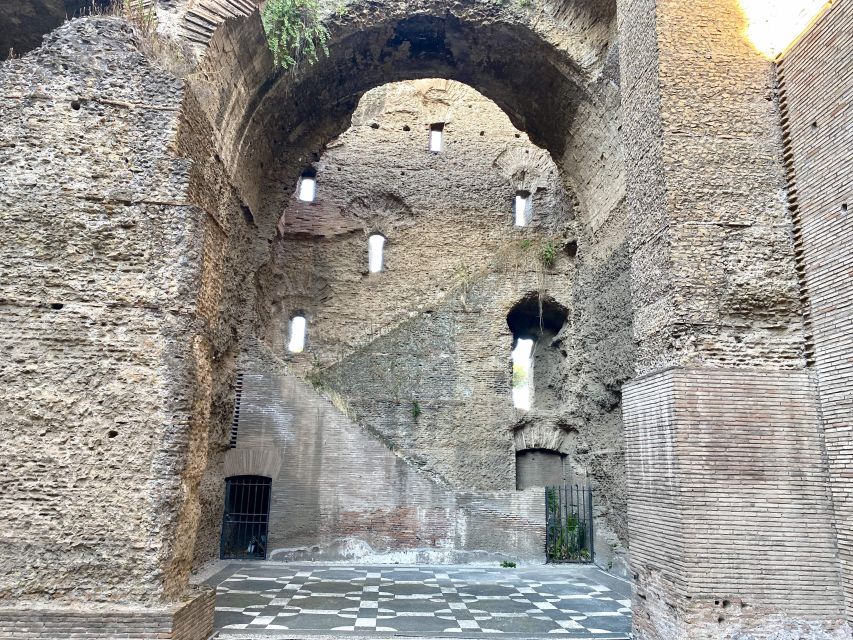
Caracalla Baths are in a green archaeological area near the Colosseum, and the ruins already feel calmer than the busiest central sites. The complex is famous for being among the best-preserved in Rome, and the height of surviving walls is part of the shock. Even when you know Rome had big buildings, it still hits you in person.
Your hour here is organized like a lesson, but it doesn’t feel like class. The guide explains the complex as a functioning system, including the labor-intensive underfloor heating. That detail matters because baths were not just hot water and marble vibes. They were engineering projects, designed to keep different rooms at different temperatures.
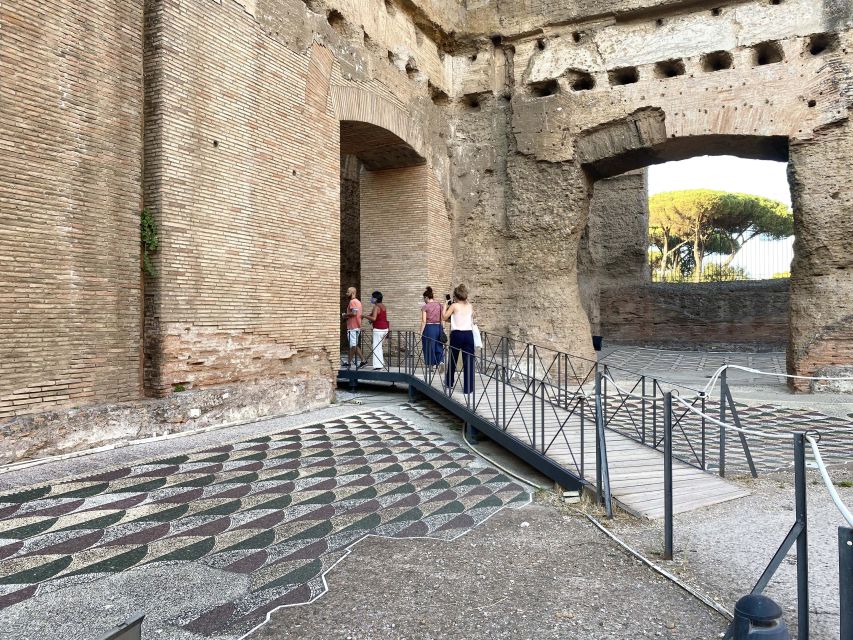
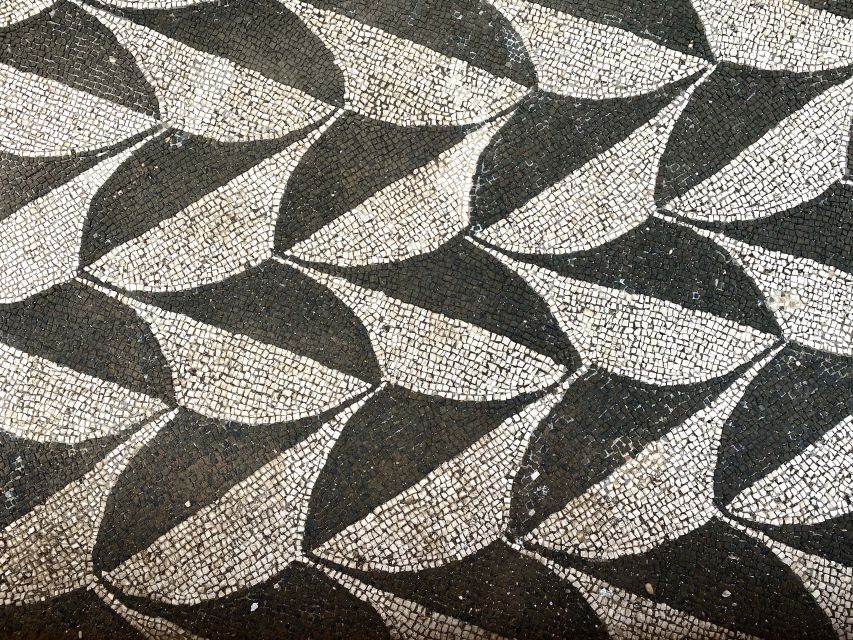
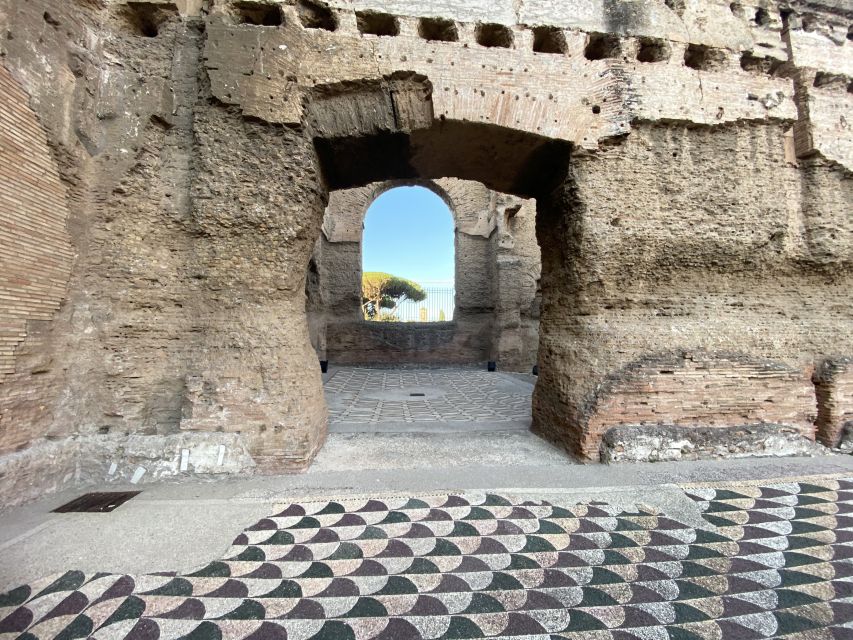
You’ll also spend time on the surfaces. The tour mentions geometric motifs on mosaics, and multiple guides referenced in feedback talk about how color and floor patterns remain striking. If you like visual clues that help your brain reconstruct what’s gone, mosaics are your friend here.
Another strong part of Caracalla is the “body and mind” angle. The tour emphasizes the wide range of services in an ancient spa for both physical and mental activities. In practice, that gives the ruins a purpose beyond sightseeing. It turns the building into a place people lived their routines in.
What “an hour at the baths” really means
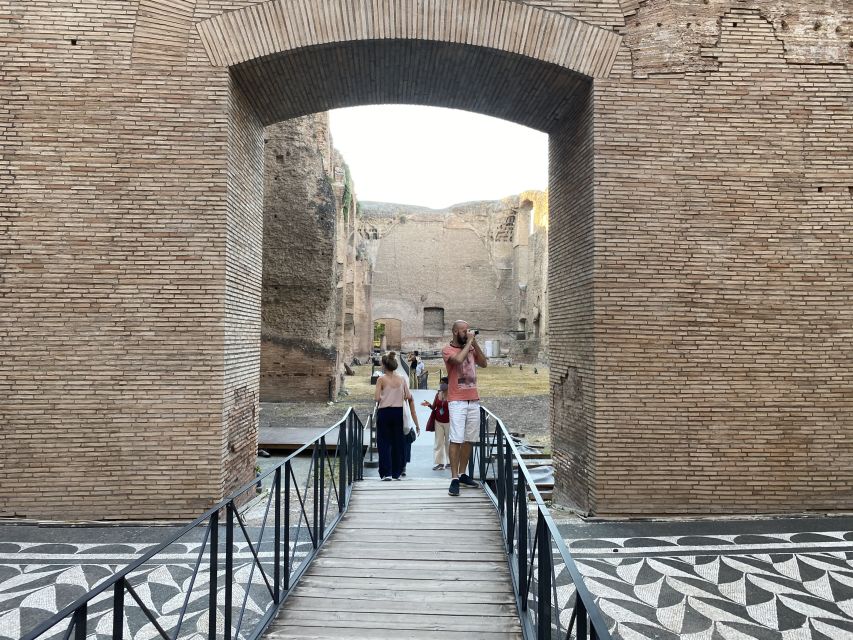
It’s easy to assume a bath tour is mostly about big rooms and cool photos. This one tends to do something smarter: it walks you through the steps of a typical day at the baths in the 3rd century AD. That framework helps you connect spaces.
A quick way to think about it: instead of memorizing terms, you start recognizing functions. Hot-cool transitions, temperature control, and how people moved through areas become the storyline. That’s why people who do it often say the ruins come alive.
You might still wish you had more time at Caracalla. Some groups report the visit running longer when the guide had the momentum to keep answering questions. If you love history that feels practical, Caracalla can stretch to keep your attention.
Circus Maximus: the largest games venue, mostly left for your imagination
Then you shift to Circus Maximus, the massive public entertainment venue people associated with the Ludi, celebrations that could last up to several days. This is the spot for the loud mental picture: chariot racing, gladiator fights, and the public clamor as the guide guides you across the line where it once ran.
Here’s the honest tradeoff. Circus Maximus is considered the largest structure for public games built by mankind, but what’s physically visible now is limited. Feedback repeatedly notes that there is not much to see in stone compared with the baths. So you’ll enjoy this stop most if you’re willing to read the ground as history.
The guide helps by adding layers. You hear about the grandeur of the multi-venue celebrations, and you also travel back to quasi-legendary early foundations tied to myths and gods. That myth framing is useful. Without it, the space can feel like a big empty stage. With it, it feels like a memory of the place.
Nearby, and just as well reviewed:
- Vatican Museums, Sistine Chapel & St Peter’s Basilica Guided Tour
★ 4.5 · 39,149 reviews - Rome: Colosseum, Palatine Hill and Roman Forum Guided Tour
★ 4.8 · 32,814 reviews - Rome: Guided Tour of Colosseum, Roman Forum & Palatine Hill
★ 4.7 · 27,897 reviews - Rome: Colosseum & Forum with Audio Guide App -Optional Arena
★ 4.2 · 24,770 reviews
How much time should you plan, and what the pace feels like
The total duration is 1.5 hours. In your schedule, treat it as a compact guided outing rather than a full deep exploration. You’re spending about two-thirds of the time at Caracalla, which makes sense because Caracalla is the site with the most surviving detail.
The Circus portion is short by design. That’s good for energy levels and makes it easier to combine with other Rome walks later in the day. The pace also helps if you’re trying to see Rome without spending your whole afternoon in lines.
Also, because you’re capped at 10 participants, you may get more back-and-forth questions than you would on a bigger group tour. Some feedback notes that guests had time to ask questions in a small group setting, which is where a guide’s personality actually becomes part of the value.
Price and value: what $77 buys you here
The listed price is $77 per person for about 90 minutes with a live guide, entrance fees to Caracalla, and headsets. Is that a bargain? Not usually in central Rome terms. But it can be good value for the right traveler.
Here’s why the math can work:
- You’re paying for two guided sites rather than one
- You’re getting skip-the-line entry and headsets, which reduce time lost to logistics and improve the quality of the narration
- You’re paying for a guide who focuses on interpretation, including heating systems and bath routines, not just basic facts
There is one caution. Some people mention feeling that the Circus Maximus portion doesn’t offer much visual material. So if you mainly want dramatic ruins to stare at, you might find Caracalla is doing most of the heavy lifting in terms of satisfaction.
If you’re the kind of traveler who likes understanding how Romans lived, you’ll likely consider the whole package worth it, because the guide ties architecture to daily routines and entertainment culture.
Meeting point and getting there without stress
Meet your guide at the exit of the Metro station Circo Massimo in the direction of Laurentina, in front of the FAO building. Look for a yellow label with the local partner’s name. The tour also asks you to arrive 5 minutes early to finish sign-up.
As for what to bring, stick to basics: comfortable walking shoes. The tour rules say no luggage or large bags inside the monuments, and no baby strollers. Also, pets are not allowed, and drones are not allowed.
Because this is a ruin walk with uneven surfaces, shoes matter more than normal. If your feet get tired easily, you’ll enjoy the tour more if you plan for it.
Who this tour is best for, and who may prefer something else
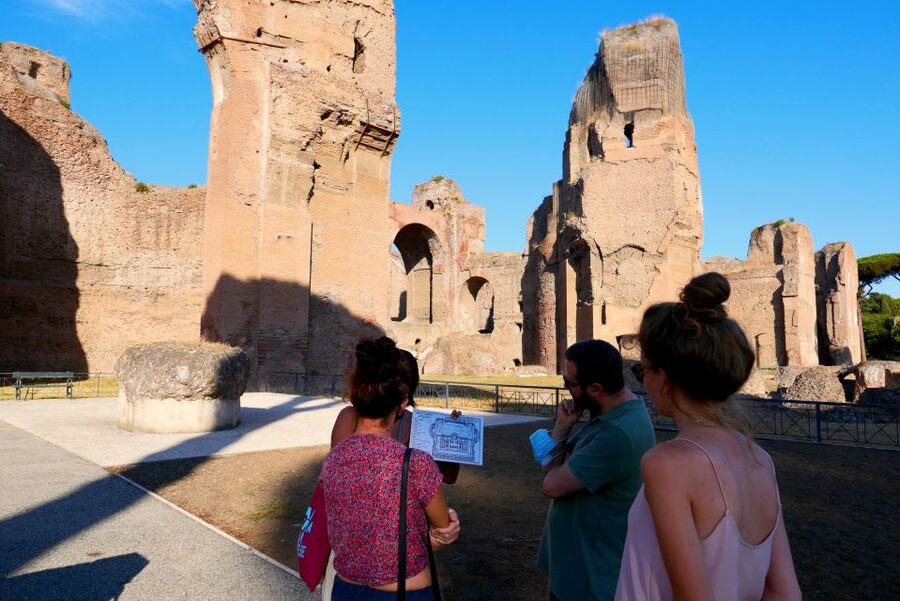
This works especially well if you want:
- a less crowded Roman site feel at Caracalla
- an explanation that connects ruins to daily life (the bath routine focus helps a lot)
- a guided approach that builds context for Circus Maximus, even if the visual leftovers are modest
It’s also a strong choice for first-time Rome visitors who already plan to do major landmarks like the Colosseum, but want something calmer and a little off the usual track.
If you only care about huge standing structures or you want a big “wow” at every stop, you may find Circus Maximus underwhelming. In that case, treat it as a story stop, not a photo stop.
Booking call: should you get on this one?
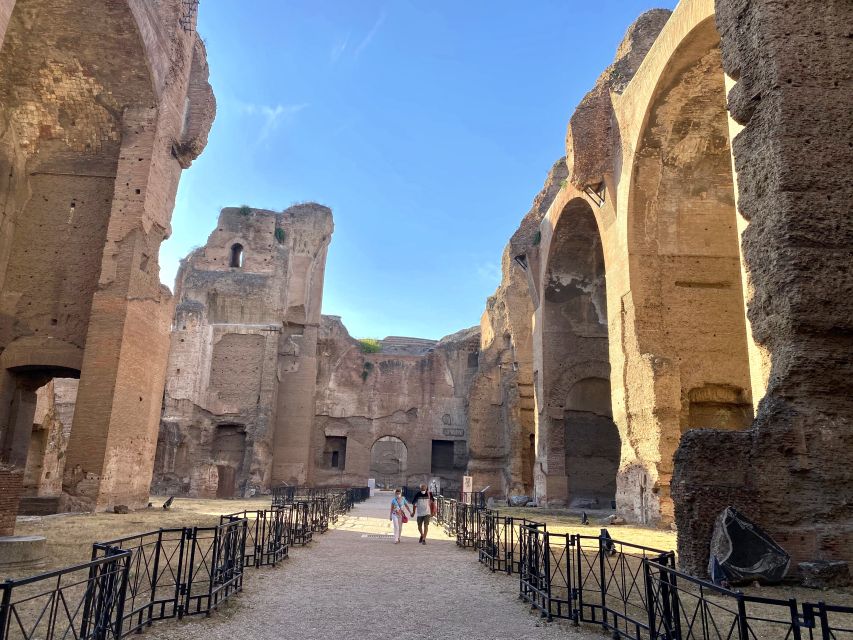
I’d book this tour if you like your Rome with an expert voice in your ear and you enjoy the engineering side of ancient life. Caracalla is the anchor, and the underfloor heating, temperature control, mosaics, and realistic bath-day storyline are exactly the kind of details that make ruins feel real.
I’d skip it or reframe it if Circus Maximus is your main goal purely for visual spectacle. The venue is historically huge, but what you can see today is limited, so you need the guide’s narration to make it land.
One final nudge: if you’ve got a flexible schedule, choose a time when the weather looks cooperative. The tour can be canceled due to unfavorable weather, and you’ll be offered an alternative date or a full refund.
FAQ
How long is the Rome Caracalla Baths and Circus Maximus tour?
The tour lasts about 1.5 hours total, with 1 hour at the Baths of Caracalla and 30 minutes at Circus Maximus.
Where do I meet the guide?
Meet at the exit of the Metro station Circo Massimo (toward Laurentina) in front of the FAO building. Look for a yellow label with the local partner’s name.
What’s included in the price?
Entrance fees to the Caracalla Baths, sterilized headsets, a live archaeologist guide, and on-site assistance are included.
Is the ticket line skipped?
Yes, the tour includes skip-the-ticket line entry.
What languages are available for the live guide?
The live tour guide is offered in French, Portuguese, Spanish, English, German, and Italian.
Is the tour wheelchair accessible?
Yes, the tour is wheelchair accessible.
Are pets allowed, and what should I bring?
Pets are not allowed. Bring comfortable shoes, and follow the site rules about not bringing large bags or luggage.
Latest reviews around Rome
- From Rome: Hadrian’s Villa & Villa d’Este Day Trip & Lunch★ 4.5 · 157 reviews
- Rome: Painting Class with Unlimited Wine★ 4.8 · 109 reviews
- Vatican City: Sistine Chapel, Museums, Basilica Private Tour★ 4.8 · 158 reviews
- Pope Leo XIV Audience Tour with Local Guide★ 3.3 · 111 reviews
- Rome: The Three Tenors at St. Paul’s Church Concert Ticket★ 4.7 · 699 reviews
- Vatican Museums & Sistine Chapel Skip-the-Line Guided Tour★ 4.6 · 254 reviews
- Rome: St. Peter’s Basilica and Papal Tombs Guided Tour★ 4.6 · 477 reviews
- St. Peter’s Dome Climb, Basilica and Vatacombs Tour★ 4.7 · 230 reviews
Private, compared.

Como & Bellagio with Private Lake Como Cruise
Read our review →
Murano & Burano Islands Guided Small-Group Tour by Private Boat
Read our review →
Rome by Golf Cart Private Tour: Beyond the Landmarks
Read our review →
Early Morning Vatican, Sistine, St. Peter’s Semi or Private Tour
Read our review →
Private 3 hrs Venice Tour: St Mark’s, Walking tour & Boat tour
Read our review →
Private Gondola Cruise for up to 5 Passengers
Read our review →