Reviewed · ROME TOURS
Pastamania in Rome
Fresh pasta lessons in Rome can be surprisingly fun.
In this small-group class at Pastamania, you get hands-on training for three pastas right in a historic palazzo a short walk from the Pantheon and Piazza Venezia. I like that it is English-led and built for real participation, not just watching someone else work. One thing to consider: the experience is not set up for limited mobility, so it may be a poor fit if you need step-free access.
You’ll start with a quick intro, then roll up your sleeves and shape the dough yourself. I love the end payoff, you sit down together and eat your own ravioli, tortelli, and fettuccine with fresh sauces, plus dessert like chocolate salami. A possible drawback is simple timing reality, this is about 3 hours, so it is not the best pick if you only want a quick snack break.
In This Review
- Key things to know before you go
- Entering Palazzo Grazioli, and why the location matters
- The 3-hour flow: from dough intro to communal feast
- Learning ravioli, tortelli, and fettuccine without feeling lost
- Ravioli: delicate shaping, big payoff
- Tortelli: a different stuffed pasta feel
- Fettuccine: rolling that becomes muscle memory
- Sauces that teach you why Italian food is so simple
- What you eat at the end, and how it changes the whole experience
- Price and value: what $49.58 buys you in Rome
- Who should book this, and who might want another option
- A simple packing mindset so nothing slows you down
- Should you book Pastamania in Rome?
- FAQ
- How long is the Pastamania pasta lesson?
- Where is the meeting point in Rome?
- Do I return to the same place after the class?
- What language is the lesson offered in?
- Is the ticket mobile?
- How many people are in the group?
- What pastas will I make?
- Is the experience accessible for people with limited mobility?
- What is the cancellation policy?
- What if the minimum number of participants is not reached?
Key things to know before you go
- Three types of pasta, hands on: ravioli, tortelli, and fettuccine from scratch with instructor guidance.
- Small group size: capped at 10 travelers, which usually means more attention while you’re shaping dough.
- Historic palazzo setting: your lesson happens inside a historic building near the Pantheon and Piazza Venezia.
- A full sit-down tasting: you end by eating what you made at a large communal table.
- Food details are specific: sauces include butter and sage, plus tomato sauce, with fillings featuring parmigiano and ricotta, often with truffle oil or nutmeg.
- Learn, then take notes (and maybe shop): you’ll get techniques you can use later at home, and some people also look for pasta tools like a chitarra.
Entering Palazzo Grazioli, and why the location matters
The meeting point is Palazzo Grazioli on Via della Gatta 14, 00186 Roma RM. The big practical win here is that you’re in a walkable, central pocket of Rome, close enough to plan this around major sights without turning your day into a metro puzzle.
Because the class happens inside a historic palazzo, the setting is part of the experience. You are not stuck in a back-of-house kitchen or a fluorescent cooking room. Instead, you get the feeling that you’re stepping into a real Roman food moment, where the lesson flows into the meal.
One more practical note: since the activity ends back at the same meeting point, you do not have to worry about coordinating a second location or finding a specific pickup spot afterward. That alone makes planning easier.
A few more Rome options to weigh
- Vatican: Museums & Sistine Chapel Entrance Ticket
★ 4.5 · 144,003 reviews - Vatican Museums & Sistine Chapel Tour with Optional Basilica
★ 4.3 · 67,413 reviews - Colosseum, Roman Forum & Palatine Guided Tour
★ 4.7 · 63,148 reviews
The 3-hour flow: from dough intro to communal feast
This is designed as a clean, paced arc. You get enough explanation at the start to understand what good pasta should feel like, then you move quickly into making it.
Phase one: the basics and what to aim for
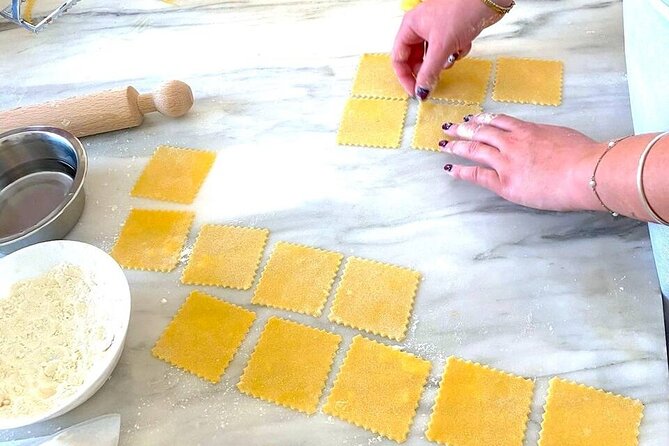
You begin with an introduction to pasta-making. Expect talk about dough texture, rolling, and how to shape filled pasta so it seals properly. The goal is not to turn you into a pasta professor. It is to help you avoid the most common mistakes: dough that’s too dry, rolling that tears, and fillings that make sealing difficult.
Phase two: hands on shaping of multiple pastas
After the intro, you tackle traditional shapes: ravioli, tortelli, and fettuccine. You’ll knead, roll, and shape with your own hands. The class format keeps momentum, so you’re not waiting around for long stretches while others catch up.
Phase three: sauce work and plating
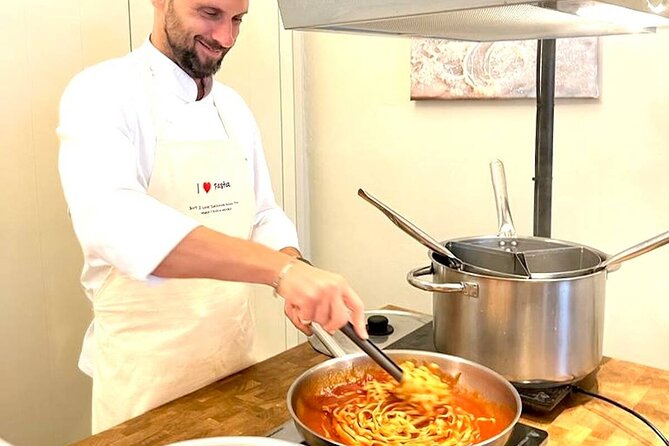
You also get guidance around sauces. The sample menu includes ravioli with parmigiano and ricotta filling with truffle oil, served with butter and sage. You’ll also make tortelli with parmigiano and ricotta plus nutmeg, paired with butter and sage sauce. For fettuccine, the tomato sauce keeps things simple and classic.
Phase four: you eat, together
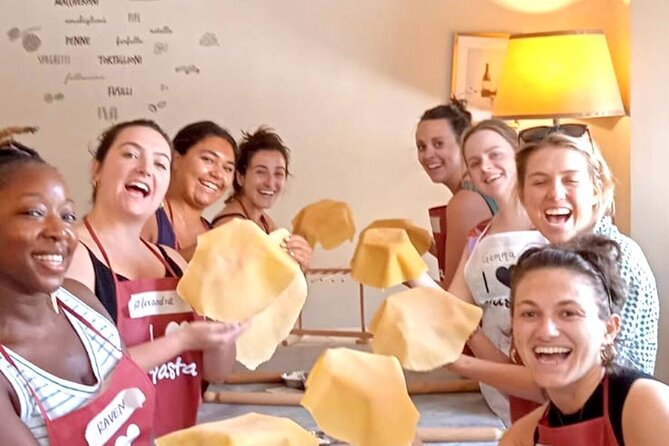
Finally, you gather around a large communal table and share the food you made. That communal moment is the secret ingredient. In a group of up to 10, people naturally chat, compare how their pasta turned out, and swap tips for what they’d do differently next time.
Learning ravioli, tortelli, and fettuccine without feeling lost
If you’ve never made fresh pasta, this format is smart. You start with a quick setup, then you repeat motions until you feel confident. It is very hands-on, but it is also paced for beginners.
Here’s what you can look forward to while you’re working:
Ravioli: delicate shaping, big payoff
Ravioli are all about getting the dough thin enough and sealing cleanly. The class includes ravioli filled with parmigiano and ricotta, with truffle oil in the filling, then finished with butter and sage. If you love the idea of something fancy that still feels learnable, this is the one.
Nearby, and just as well reviewed:
- Vatican Museums, Sistine Chapel & St Peter’s Basilica Guided Tour
★ 4.5 · 39,149 reviews - Rome: Colosseum, Palatine Hill and Roman Forum Guided Tour
★ 4.8 · 32,814 reviews - Rome: Guided Tour of Colosseum, Roman Forum & Palatine Hill
★ 4.7 · 27,897 reviews - Rome: Colosseum & Forum with Audio Guide App -Optional Arena
★ 4.2 · 24,770 reviews
Tortelli: a different stuffed pasta feel
Tortelli share the stuffed pasta concept but change the rhythm and shape. You’ll make tortelli with parmigiano and ricotta and nutmeg, again served with butter and sage sauce. Nutmeg adds a warm, slightly aromatic note that works beautifully with the richness of cheese.
Fettuccine: rolling that becomes muscle memory
Fettuccine is the confidence builder. You get to focus on rolling and cutting rather than sealing. Tomato sauce keeps it grounded, so you can tell the difference between good pasta texture and mediocre, overcooked noodles.
Also, instructors matter. Many classes on this route are led by friendly pros who balance technique with jokes and patience. Names that have shown up include Christian, Fabrizio, Giorgio, Ricardo, Sofia, and Luca. If you care about tone as much as technique, you’ll probably appreciate how the instruction is described as relaxed and encouraging.
Sauces that teach you why Italian food is so simple
It is tempting to think pasta-making is all about dough. In reality, sauces are where your lesson sticks.
Here’s why the menu choices are great for learning:
- Butter and sage is a practical skill: it shows you how to dress filled pasta without drowning it. You get the idea of timing, warmth, and how to coat without making everything greasy.
- Tomato sauce keeps things honest: if the pasta is good, tomato will shine without extra complexity. You’ll taste the difference more clearly than with heavy, creamy sauces.
- The fillings teach flavor balance: parmigiano and ricotta give familiar richness. Truffle oil and nutmeg add a premium note that feels special, but not complicated.
This is also a chance to watch the instructor explain the logic behind the steps. When you understand why something is done a certain way, you can repeat it at home with less stress.
What you eat at the end, and how it changes the whole experience
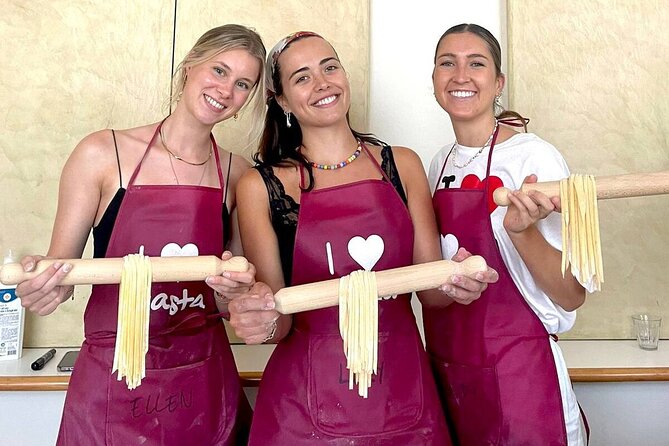
Most cooking classes end with food. This one builds the food into the structure, so you do not feel like you paid just to learn. You pay to learn, then you pay again in joy because you eat what you made.
The sample menu includes:
- Ravioli with parmigiano and ricotta plus truffle oil filling, served with butter and sage
- Tortelli with parmigiano and ricotta plus nutmeg filling, served with butter and sage sauce
- Fettuccine with tomato sauce
- Dessert: chocolate salami
On top of that, some sessions describe extras like biscuits, wine, limoncello shots, and soda for kids. The safe way to think about it is this: plan on a full meal and dessert, and be ready for the possibility of wine or limoncello depending on your group and the day.
The communal table is more than a nice setting. In a class with up to 10 people, it creates a low-pressure social rhythm. You’ll hear other people’s questions, share what went right or wrong with your shaping, and leave Rome with a story you can actually tell.
Price and value: what $49.58 buys you in Rome
At $49.58 per person for about 3 hours, you are not just paying for entertainment. You are paying for ingredients, instruction, and a meal that comes from your own work.
In value terms, here is what makes it feel fair:
- You get structured, guided time for multiple pasta types, not just one.
- You leave with a skill you can use later, and you also leave full.
- The small-group limit (up to 10) matters. More attention usually means less frustration and better results.
Could you eat pasta in Rome for less? Sure. But you would not get the same hands-on learning, the specific pasta shapes, or the communal experience that makes it feel like a Roman evening rather than a quick stop.
Who should book this, and who might want another option
This class is a strong fit if you want something interactive that still feels very Italian.
You’ll likely enjoy it if you are:
- A couple looking for a date-night activity that ends with dinner
- Families who want a structured experience (a number of instructors are described as accommodating with kids in the group)
- Friends or groups who want a shared, memorable task
- Anyone who wants a central activity that avoids complicated logistics
You might want to reconsider if:
- You have limited mobility, since the experience is listed as not accessible
- You need a very short activity, because this is designed for a full 3-hour block
- You’re not interested in cooking at all. If you only want to eat, you may be happier with a restaurant meal.
A simple packing mindset so nothing slows you down
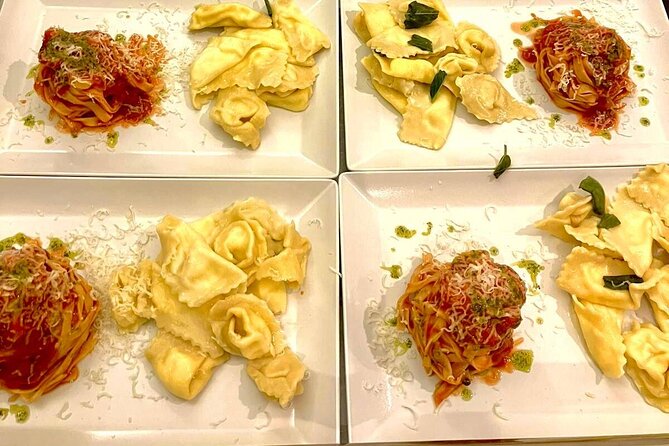
There’s no special kit required, but you should show up ready to work and then eat.
My practical advice:
- Do not arrive stuffed. Many people find the experience much better when they go in hungry enough for the meal at the end.
- Wear something comfortable for sitting and hands-on work.
- If you’re sensitive to noise or close quarters, remember it is a communal table class in a small group, so expect some lively conversation.
Should you book Pastamania in Rome?
Yes, if you want a hands-on Rome experience that includes both technique and a satisfying meal. The combination of making ravioli, tortelli, and fettuccine, then eating them together, is the key reason it keeps earning such strong scores.
Book it early, too. The experience is often booked about 25 days in advance on average, and with a cap of 10 travelers, popular dates can fill.
Only skip it if accessibility is a concern for you, or if you know you want a very quick, passive activity instead. Otherwise, this is one of the more memorable ways to spend a few hours in Rome, because you leave with pasta skills, not just photos.
FAQ
How long is the Pastamania pasta lesson?
The experience lasts about 3 hours.
Where is the meeting point in Rome?
The class starts at Palazzo Grazioli, Via della Gatta, 14, 00186 Roma RM, Italy.
Do I return to the same place after the class?
Yes, the activity ends back at the meeting point.
What language is the lesson offered in?
The experience is offered in English.
Is the ticket mobile?
Yes, the ticket is delivered as a mobile ticket.
How many people are in the group?
The class has a maximum of 10 travelers.
What pastas will I make?
You will make ravioli, tortelli, and fettuccine.
Is the experience accessible for people with limited mobility?
No, it is not accessible for people with limited mobility, such as those using crutches.
What is the cancellation policy?
Free cancellation is available up to 24 hours in advance for a full refund. If you cancel within 24 hours, the amount paid is not refunded.
What if the minimum number of participants is not reached?
If the minimum is not reached, you will be contacted to reschedule or receive a full refund.
Latest reviews around Rome
- Guided Walking Tour of Rome: Top Sights & Baroque Treasures★ 5.0 · 155 reviews
- Rome at Night: Small Group Guided City Walking Tour★ 5.0 · 249 reviews
- Private Walking Tour of the Squares and Fountains in Rome★ 5.0 · 130 reviews
- Rome Food Tour by the Vatican★ 5.0 · 308 reviews
- Vintage Fiat 500 Cabriolet: Rome’s Highlight Semi Private Tour★ 5.0 · 283 reviews
- Welcome To Rome Experience★ 4.5 · 679 reviews
- Vespa Rental in Rome 24 hours★ 5.0 · 196 reviews
- Vatican VIP Early Entrance 8:00 AM★ 4.5 · 141 reviews
Rome Tours, compared.
Vatican: Museums & Sistine Chapel Entrance Ticket
Read our review →
Vatican Museums & Sistine Chapel Tour with Optional Basilica
Read our review →
Colosseum, Roman Forum & Palatine Guided Tour
Read our review →
Vatican Museums, Sistine Chapel & St Peter’s Basilica Guided Tour
Read our review →
Colosseum, Palatine Hill and Roman Forum Guided Tour
Read our review →
Guided Tour of Colosseum, Roman Forum & Palatine Hill
Read our review →
Colosseum & Forum with Audio Guide App -Optional Arena
Read our review →