
Reviewed · CYCLING TOURS
Highlights of Rome Bike Tour (Including Jubilee Sights)
Three hours on two wheels, and Rome clicks. This small-group ride gives you a tight, first-timer path through major sights, with stops that connect the Jewish Ghetto, Baroque squares, the Pantheon area, and the ancient forums and arches, plus central landmarks that fit a Jubilee-year sightseeing plan. I also love how they keep things practical with a handy bike bag for valuables, and how the guide’s storytelling makes quick stops feel worth it. One drawback to plan for: Roman roads are real, with cobblestones and busy intersections that can feel intense if you expect a smooth, car-free cruise.
If you’re choosing between “see Rome fast” and “learn a little as you go,” this hits a good middle ground. The tour runs about 3 hours, usually in English, and keeps the group capped at 14 riders, so you are not swallowed by a huge crowd.
You’ll get a helmet and a front pouch plus a back rack for your stuff, and you’ll mix riding with short, picture-friendly breaks. Some major stops have sightseeing entrances you may need to handle on your own, including the Pantheon and certain areas around Piazza Navona.
In This Review
- Key things to know before you ride
- A bike tour is the smart way to start in Rome
- Price and value: what $54.44 gets you in real terms
- Meeting point, timing, and how the ride actually feels
- Stop 1: Antico Quartiere Ebraico and the Roman Ghetto
- Stop 2: Campo de’ Fiori, lively by day and night
- Stop 3: Piazza Navona, built on an ancient stadium
- Stop 4: The Pantheon area and why it inspired architects
- Stop 5: Chiesa di Sant’Ignazio di Loyola, outside view
- Stop 6: Tempio di Adriano and a dedication that turned personal
- Stop 7: Trevi Fountain, the ancient aqueduct meeting point
- Stop 8: Trajan’s Forum and the Imperial Forums
- Stop 9: Piazza Venezia, and the long view of ancient Rome
- Stop 10: Arch of Constantine, a triumph made into propaganda
- Stop 11: Circus Maximus, the big entertainment engine
- Jubilee-year planning: how this route helps your next days
- What to watch for: crowds, cobbles, and hearing the guide
- Who this tour is best for
- Should you book this Rome Bike Tour?
- FAQ
- How long is the Rome Bike Tour?
- What is included with the bike rental?
- Are tickets included for the Pantheon?
- Where does the tour start and where does it end?
- Is this tour suitable for kids or pregnant travelers?
- Do I need to bring my own drinks, and can I cancel for a refund?
Key things to know before you ride
- Small-group feel (max 14), so you stay together and get more attention at stops.
- Story-driven stops with guides who bring humor and detail, including Daniele, Nico, Stefano, Elena, and Sahrah in past departures.
- Gear that matters: helmet, front bike pouch, and back rack for valuables.
- Short time at big landmarks: you’ll look, listen, and move on, which is perfect for a first Rome day.
- Plan for road reality: cobblestones and traffic mean you ride defensively, not casually.
- Jubilee-year convenient routing through central “must-see” areas during your dates.
A bike tour is the smart way to start in Rome
Rome is made for layers, and bikes help you feel them fast. You do not just look at monuments. You travel between neighborhoods and eras, seeing how the city keeps reusing the same space over and over.
What I like most is the rhythm. You ride, the guide talks as you move, then you hop off for a quick stop where you can actually take in the setting. That mix makes it easier to remember what you saw, and it helps you decide what to revisit later.
Also, the route is practical for first-time planning. You get a broad overview of Jewish Rome, Baroque Rome, and the ancient Roman core all in one go. After this, you’ll know where you want to spend more time, and where you can cut corners.
A few more Rome options to weigh
- Rome EBike Tour: Appian Way, Catacombs & Roman Aqueducts
★ 5.0 · 1,766 reviews - Rome: Top Highlights & Hidden Gems Tour by Cannondale E-Bike
★ 4.9 · 1,760 reviews - Rome: Appian Way, Catacombs, & Roman Aqueducts E-bike Tour
★ 4.9 · 1,421 reviews
Price and value: what $54.44 gets you in real terms
At $54.44 per person for about 3 hours, the math works best if you value time and guidance. You are paying for logistics, bikes, and a guide who helps you connect the dots while you are already in the area.
A big part of the value is what is included: bike rental plus a helmet, and that front bike pouch plus back rack that keeps your day-trip essentials from turning into a juggling act. Drinks are not included, so you should bring your own water plan.
Is it worth it if you already know Rome well? Maybe not. But if you are starting from scratch, or you want a “get your bearings fast” day, it is one of the more efficient ways to cover central highlights without walking for hours straight.
Meeting point, timing, and how the ride actually feels
You meet at Via dei Delfini, 35, 00186 Roma RM. Plan to arrive about 15 minutes early so you have time to get fitted, settle in, and start on schedule.
This is a small group with a maximum of 14 participants, which matters in Rome. It is easier to keep the tour together, easier to hear instructions, and easier for the guide to adjust pace if someone needs a moment.
The riding is usually described as low effort because Rome is largely flat. Still, expect cobblestones and uneven surfaces. If you are sensitive to that, or if you want to minimize discomfort, ask about an e-bike option when you book. One rider said the e-bike made the pedaling more leisurely, especially with the rougher bits.
One more practical note: in crowded areas, you will spend time waiting at crossings and traffic gaps. That is normal here, and it is part of what you are paying for, since the guide helps you stay safe and organized.
Stop 1: Antico Quartiere Ebraico and the Roman Ghetto
Your tour begins in the Antico Quartiere Ebraico, the Jewish Ghetto of Rome. This neighborhood is often treated as a footnote, but on a focused visit, you can feel how much culture and religious life shaped its streets.
Here’s what makes this stop powerful. The Ghetto dates to 1555, when it was created by order of Pope Paul IV. People living there were required to reside within the ghetto and carry a distinctive sign of belonging to the Jewish community.
This is the kind of stop where you should slow down in your mind, even if the physical time is short. You’re not just looking at old walls. You’re seeing an area that tells a story about power, restrictions, survival, and community.
Nearby, and just as well reviewed:
- Vatican: Museums & Sistine Chapel Entrance Ticket
★ 4.5 · 144,003 reviews - Vatican Museums & Sistine Chapel Tour with Optional Basilica
★ 4.3 · 67,413 reviews - Colosseum, Roman Forum & Palatine Guided Tour
★ 4.7 · 63,148 reviews - Vatican Museums, Sistine Chapel & St Peter’s Basilica Guided Tour
★ 4.5 · 39,149 reviews
Stop 2: Campo de’ Fiori, lively by day and night
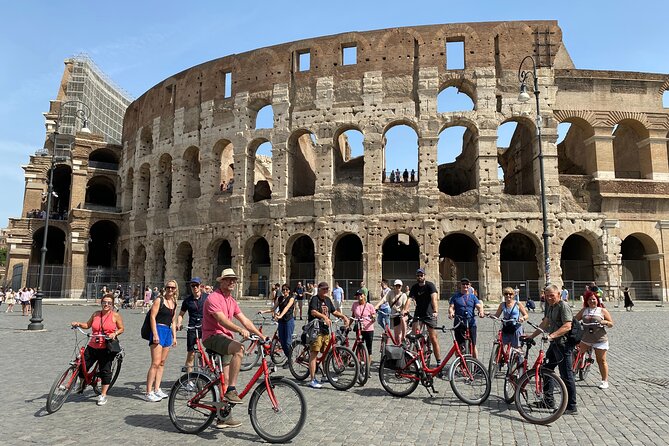
Next you pass through the Campo de’ Fiori area, one of Rome’s main squares. During the day, it is known for its market energy, with flowers, fruits, and vegetables in the mix.
At night, the atmosphere changes fast. Terraces fill up, and the square becomes a social hub where people linger. Even if you only stop briefly, this is a good place to notice how Rome “breathes” differently depending on the hour.
This is also a smart transition stop. You’re moving from the ghetto story into the public life of the city. The square gives you context for the Rome you will actually experience as a visitor.
Stop 3: Piazza Navona, built on an ancient stadium
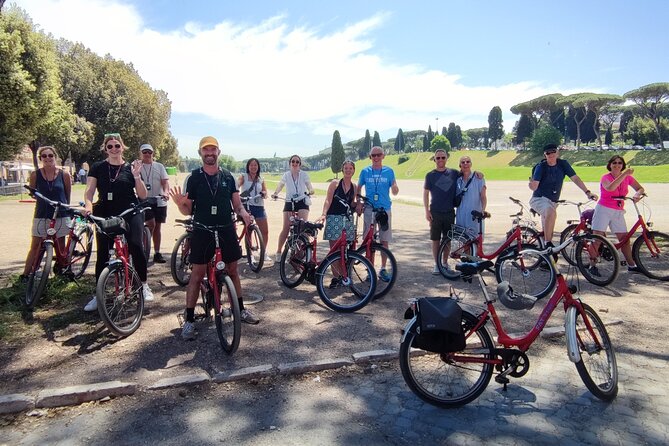
Piazza Navona is one of the most dramatic squares in Baroque Rome. You get the classic oval shape and the sense of theatre, but the key detail is what is under it.
The current perimeter matches the old Stadium of Domitian, built in 86 AD for athletics and horse racing. That means you can literally stand in a place that used to host major events, then watch the Baroque era take over the same geometry centuries later.
If you want the best photos, look up and around, not just straight ahead. The square’s layout is part of the story, and the guide’s explanation helps you read the space instead of just snapping a picture.
Admission is not included for this stop, but you are mainly sightseeing in the public square. Plan to do quick photos and a short look, then keep rolling.
Stop 4: The Pantheon area and why it inspired architects
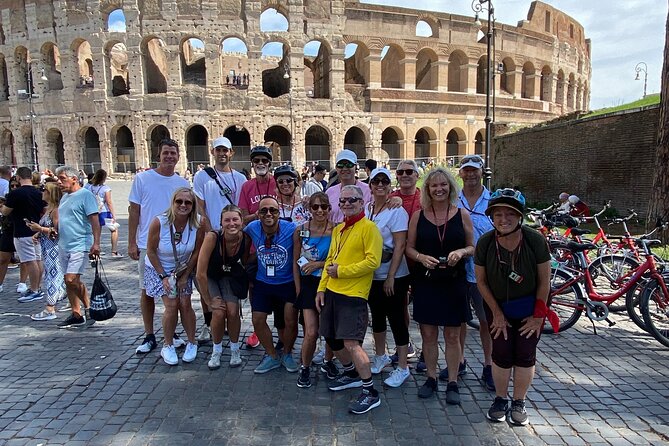
From Piazza Navona, the tour heads into the Pantheon area, one of the most influential buildings in Roman architecture. People love it for the look, but the real draw is the geometry and harmony that still affects designers today.
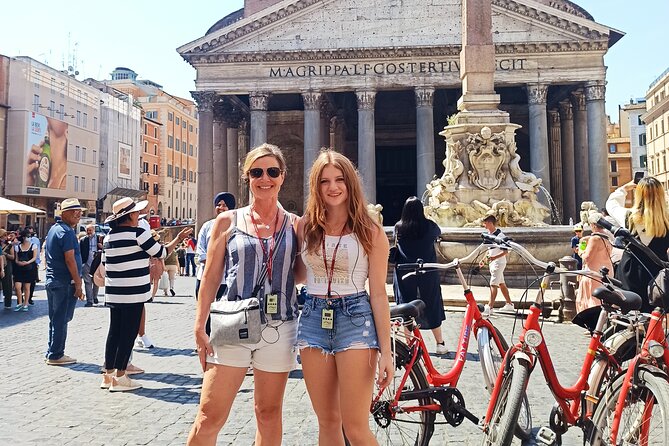
The story starts in 27 BC, when Marcus Vipsanius Agrippa commissioned a temple dedicated to all the gods. The Pantheon became one of Rome’s best-preserved monumental structures, and its design is part of why architects kept coming back to it long after the Roman era ended.
This is a stop where timing matters. You’ll likely spend about 15 minutes, and admission is not included. If you want to go inside, plan to sort your ticket separately and arrive ready to commit your attention.
Stop 5: Chiesa di Sant’Ignazio di Loyola, outside view
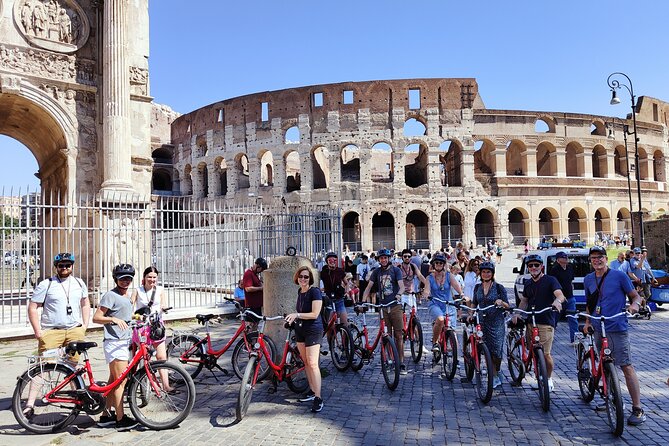
Then you shift to Chiesa di Sant’Ignazio di Loyola. This is mostly an outside look, with explanation and pictures rather than a full interior visit.
That setup is useful if you are doing a highlights loop. You get the visual cue, you learn what you are looking at, and you do not lose your whole tour time waiting in lines.
If churches are a big priority for you, consider saving one separate longer church visit later. This stop gives you context without turning the bike day into an all-day walking marathon.
Stop 6: Tempio di Adriano and a dedication that turned personal
Next is Tempio di Adriano, which is tied to Emperor Hadrian. The building is widely associated with Hadrian’s plan to honor his wife Vibia Sabina, who died and was later deified in 136.
Work was finished around 145 AD by Hadrian’s successor, Antoninus Pius, who dedicated the site to the deified Hadrian. That personal angle helps you see why emperors and architecture were so connected in Roman public life.
This stop is short, but the payoff is in the story. Even if you only get a quick look, you’ll understand the why behind the stone.
Stop 7: Trevi Fountain, the ancient aqueduct meeting point
Trevi Fountain is the best-known Roman fountain for a reason. It sits at the terminal point of the Vergine aqueduct, and it’s also famous for being continuously in use.
This is one of those stops where you cannot fully control the crowd level. Still, even with congestion, the fountain is worth seeing because it is both a monument and a working piece of Rome’s water system.
Admission is free for this stop, which makes it an easy win. Aim to spend a few minutes to look, then let the guide’s pointers help you find the angle that feels best for photos without getting trapped in the densest cluster.
Stop 8: Trajan’s Forum and the Imperial Forums
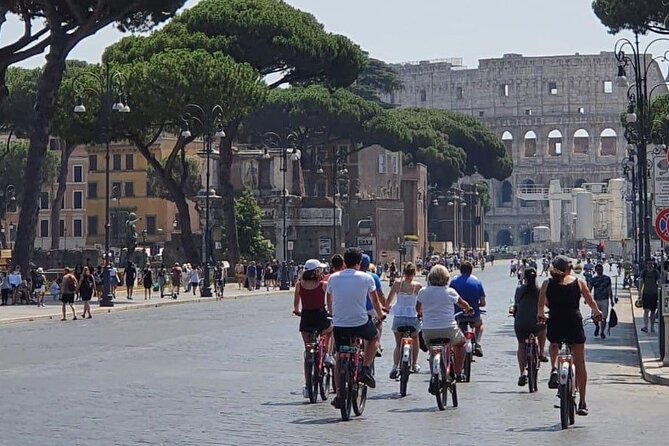
Then you shift back to imperial Rome with Trajan’s Forum and the Imperial Forum area. The guide gives you the overview, helping you understand how power used public space.
This is not just about columns and walls. It’s about city planning as a political statement. You’ll get an idea of how forums worked as stages for law, commerce, and ceremony.
Admission is free for the viewing here, so it is a solid break for your legs. You get that ancient scale without needing extra ticket steps.
Stop 9: Piazza Venezia, and the long view of ancient Rome
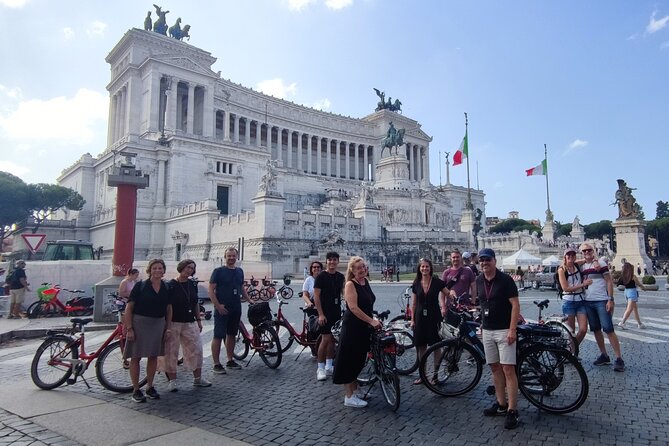
Piazza Venezia is an important hub between Via del Corso and Via dei Fori Imperiali. The current form came from major renovations in the 19th and 20th centuries, tied to construction of the Monumento a Vittorio Emanuele II.
That means this stop gives you two stories at once. You see how modern Rome shaped the space, and you feel how the ancient route still dominates the surrounding area.
This is also a good moment to take stock. After Trajan’s Forum, your brain has started “scaling up” into imperial territory. Piazza Venezia helps you keep the map in your head.
Stop 10: Arch of Constantine, a triumph made into propaganda
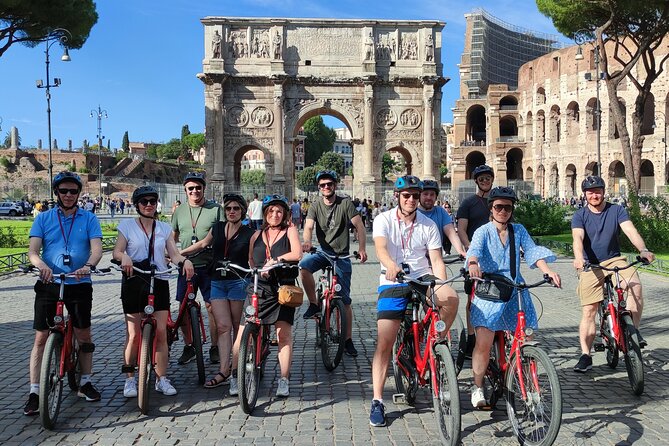
The Arch of Constantine is huge, and it served as a statement about power. It sits on the route used by Roman triumphs, between Circus Maximus and the Arch of Titus.
The guide connects the arch to the triumph of Emperor Constantine over Maxentius on October 28, 312 AD. Like many imperial monuments, it is about ideology as much as it is about stonework.
This is a quick stop, but it is a great one. It teaches you to look for messages in architecture, not just beauty.
Admission is free for this view, so you simply step in, look, listen, then move on.
Stop 11: Circus Maximus, the big entertainment engine
The final major stop is Circus Maximus, the largest public entertainment venue in antiquity. It’s massive by even today’s standards, and the numbers help you picture the scale: roughly 600 meters long and 140 meters wide.
A legend links Circus Maximus to the city’s origins, with the Rape of the Sabine Women placed here in the story tradition. Even if you treat legends as legends, the building still matters because it shows how Rome organized entertainment at national scale.
You get a clear sense of why Rome worked the way it did. People gathered, performed, competed, watched, repeated. And the spaces for it still shape your route through the city.
Jubilee-year planning: how this route helps your next days
The tour title includes Jubilee sights, and the itinerary focuses on central landmarks that visitors naturally chase during Jubilee year. The practical win is simple: you will be in the right neighborhoods afterward.
After you finish, you can choose your next move with less guessing. If you want to linger, you’ll know whether to return to the Pantheon area, revisit Piazza Navona longer, or do a deeper pass at the forums zone.
Also, bike day makes the city feel smaller. You stop relying on random taxis and you start using your own sense of geography. That makes later ticketed visits easier.
What to watch for: crowds, cobbles, and hearing the guide
Rome bike tours can feel safe and well-run, but you should go in with a clear mental checklist.
First: pick the right time of day if you can. One rider advised avoiding a Friday evening tour due to crowd density and a near-stressful moment on slick cobblestones. That doesn’t mean every Friday will be a problem. It means crowds plus rough surfaces can stack up.
Second: bring your water plan seriously. Drinks are not included. One rider said water would have been helpful. Another rider praised the guide for stopping enough to fill water bottles, but you should still carry your own bottle or plan to buy water.
Third: sound can be tricky while riding. A couple of people noted headset audio could be harder to catch in motion or noise. The fix is simple, stay alert at stops, and if you miss a detail, ask a question when you park.
Who this tour is best for
This is a strong choice if you want an overview that still feels personal. It works well for first-time Rome visitors because it covers Jewish Rome, Baroque squares, and ancient monuments in one compact route.
It’s also a good fit for families, with conditions. Kids are welcome as long as they’ve been riding a while, are comfortable in a group, and can navigate various surfaces. You should share the child’s height when reserving so the right bike size can be prepared.
If you are pregnant, this tour strongly discourages joining due to cobbled streets. That is not a judgment of your abilities. It’s just a safety and comfort reality.
Should you book this Rome Bike Tour?
Book it if you want a high-value first-day plan that combines big sights with quick context. At $54.44, the included helmet plus bike bag and pouch, the small-group cap, and the ability to cover multiple neighborhoods in a short span make it a practical purchase.
Skip it or reconsider if you know you hate crowds, uneven pavement, or traffic-style riding. Also skip the idea of a slow, in-depth lecture day. This is a highlights loop with meaningful stories, not a museum marathon.
My honest take: for most people arriving in Rome for the first time, this is one of the easiest ways to start smart, so you can spend your remaining time exactly where you want.
FAQ
How long is the Rome Bike Tour?
The tour lasts about 3 hours.
What is included with the bike rental?
You get a local tour guide, bike rental, a helmet, and a front bike pouch plus a back rack.
Are tickets included for the Pantheon?
No. The Pantheon admission ticket is not included.
Where does the tour start and where does it end?
It starts at Via dei Delfini, 35, 00186 Roma RM, Italy, and it ends back at the meeting point.
Is this tour suitable for kids or pregnant travelers?
Kids are welcome if they have been riding for a while, are comfortable riding in a group, and can handle various surfaces. Pregnant women are strongly discouraged because of cobbled streets.
Do I need to bring my own drinks, and can I cancel for a refund?
Drinks are not included, so it’s smart to bring water. You can cancel for a full refund if you cancel at least 24 hours before the experience starts.
Latest reviews around Rome
- Guided Walking Tour of Rome: Top Sights & Baroque Treasures★ 5.0 · 155 reviews
- Rome at Night: Small Group Guided City Walking Tour★ 5.0 · 249 reviews
- Private Walking Tour of the Squares and Fountains in Rome★ 5.0 · 130 reviews
- Rome Food Tour by the Vatican★ 5.0 · 308 reviews
- Vintage Fiat 500 Cabriolet: Rome’s Highlight Semi Private Tour★ 5.0 · 283 reviews
- Welcome To Rome Experience★ 4.5 · 679 reviews
- Vespa Rental in Rome 24 hours★ 5.0 · 196 reviews
- Vatican VIP Early Entrance 8:00 AM★ 4.5 · 141 reviews
Cycling Tours, compared.
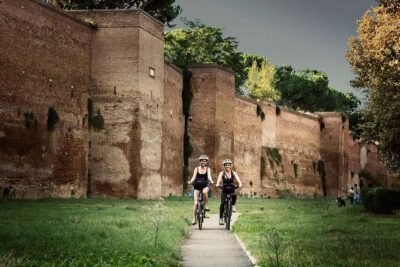
Rome EBike Tour: Appian Way, Catacombs & Roman Aqueducts
Read our review →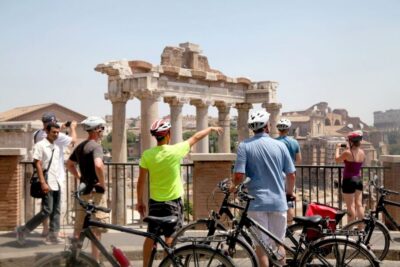
Top Highlights & Hidden Gems Tour by Cannondale E-Bike
Read our review →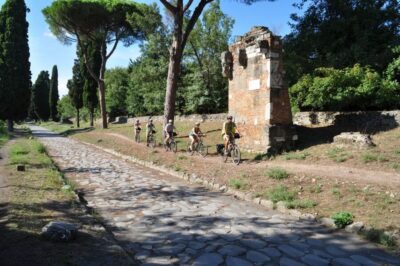
Appian Way, Catacombs, & Roman Aqueducts E-bike Tour
Read our review →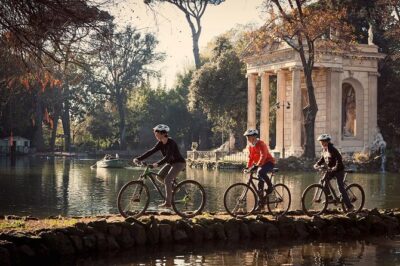
Rome City Small Group Bike Tour with quality Cannondale EBike
Read our review →
Tuscany Bike Tours Through the Chianti Hills with Wine Tasting
Read our review →
Rome by Night – Ebike Small Group Tour – Food and Wine (Option)
Read our review →
Appian Way E-bike Tour with Catacombs, Aqueducts & Food
Read our review →
Browse the lists this tour appears in