
Reviewed · WALKING TOURS
Genoa Must-See Attractions Walking Tour
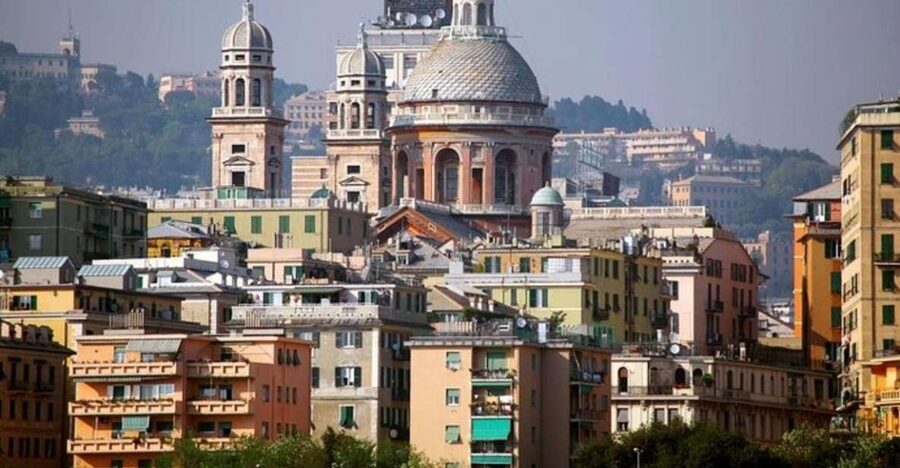
Genoa packs a lot into two hours. This guided walk strings together the city’s most important sights, from Christopher Columbus’ House to the Cattedrale di San Lorenzo, with stop-and-go storytelling that helps you understand what you’re seeing. You also get practical advice for where to wander next, once you finish.
I especially like the local guide angle. In real reviews, guides such as Giulio and Fulvio stand out for clear explanations, strong English and French, and art and history context, plus handy suggestions for where to eat and what’s worth your attention. I also like that the tour is structured with photo stops and short guided visits at each landmark, so the time feels efficient rather than rushed.
One thing to consider is that this is a true walking tour. It’s only 2 hours, but you’ll want comfortable shoes and weather-appropriate clothing, since you’ll be moving between the stops.
In This Review
- Key things to know before you go
- Why this Genoa walk works so well in 2 hours
- From Piazza Giacomo Matteotti to Columbus’ House: starting with the right energy
- Doge’s Palace: the power center behind the stone
- Piazza San Giorgio and Piazza Banchi: what to notice beyond the obvious views
- Porta Soprana and Genoa’s 12th-century walls: seeing the city’s edge
- A quick detour to the Castello area: staying curious on the way to the Cathedral
- Cattedrale di San Lorenzo: where the tour earns its main highlight status
- Piazza Raffaele de Ferrari: a satisfying finish, not an anticlimax
- Price and value: is $41 a smart use of time?
- Who should book this Genoa walking tour
- Should you book it?
- FAQ
- How long is the Genoa Must-See Attractions Walking Tour?
- Where does the tour start?
- What are the main attractions you’ll see?
- Where does the tour end?
- How much does the tour cost?
- Is food or drinks included?
- What languages are available for the live guide?
- Is the tour wheelchair accessible?
- Can I book this tour as a private group?
- What should I bring?
Key things to know before you go
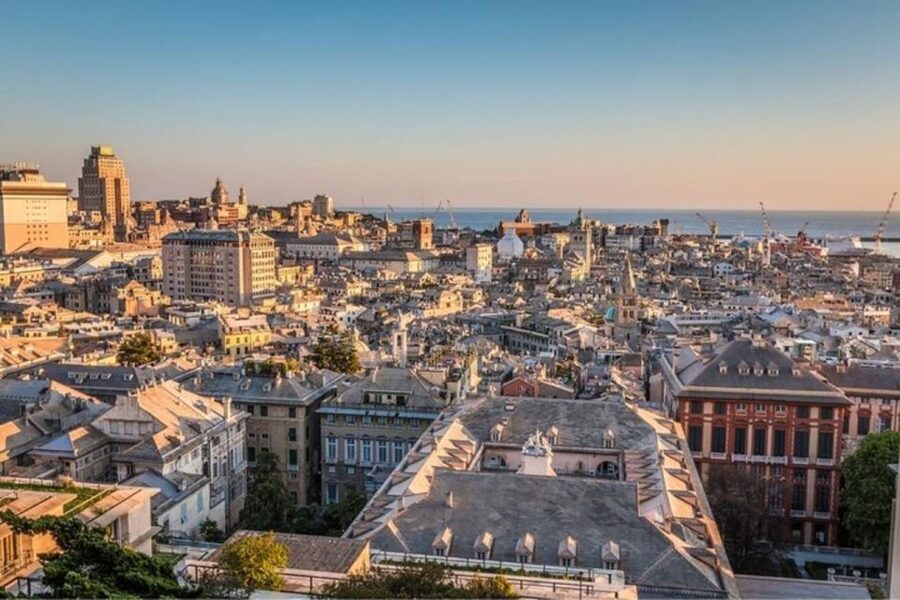
- Focused route: Columbus’ House, Doge’s Palace, Piazza San Giorgio, Piazza Banchi, Porta Soprana, and the Cathedral of San Lorenzo
- Guide-led context: explanations of architecture and art so the buildings make sense fast
- Good pacing: short stops timed to keep you walking, not waiting
- You end in the main square: Piazza Raffaele de Ferrari is a great jump-off point for the rest of your day
- Multiple languages: English, Spanish, Italian, and French, with private group options available
- Value for time: $41 for a 2-hour highlights circuit with a live guide
Why this Genoa walk works so well in 2 hours
If you only have a short window in Genoa, this tour is built for exactly that problem. Instead of trying to “see everything,” you follow a tight route that hits the big symbols of the city: Genoa as a maritime power, Genoa as a political hub, and Genoa as a place where art and architecture matter.
The best part is how you’re guided between landmarks. Each stop is a chance to connect the dots, so you don’t just take photos of pretty facades. You learn what each site represented, how the city formed around them, and what to notice when you look up at the stonework and layouts.
And because it ends in a central square, you’re not left stranded at some out-of-the-way corner. You finish in Piazza Raffaele de Ferrari, which is perfect for continuing on your own.
A few more Genoa options to weigh
- Genoa: 2-Hour Guided Walking Tour of the Historical Center
★ 4.2 · 605 reviews - Genoa: Food and Wine Tasting Walking Tour
★ 4.9 · 215 reviews - Milan: Guided Walking Tour & Last Supper Visit with Ticket
★ 4.7 · 5,409 reviews
From Piazza Giacomo Matteotti to Columbus’ House: starting with the right energy
You meet at Piazza Giacomo Matteotti, 60, a central spot surrounded by everyday life, cafes, and shops. That matters more than you might think, because it helps you settle into the city rhythm immediately. You’re not starting at a museum gate with everything feeling too formal.
From there, the first landmark is Christopher Columbus’ House. Expect a photo stop plus a guided visit and sightseeing time (about 15 minutes). This is the moment where the tour sets the theme: Genoa’s relationship to exploration and the people who shaped it. Even if you already know the headline story, the guide framing tends to make it feel more grounded in place.
Practical tip: use this first stop to orient yourself mentally. Genoa is full of tight streets and dramatic buildings, so you’ll enjoy the rest of the walk more if you start with a clear sense of where the major civic sites are clustered.
Doge’s Palace: the power center behind the stone
Next up is Doge’s Palace (Palazzo Ducale, Genoa). Again, you get a photo stop and a guided visit, with about 15 minutes dedicated to this site. This is where Genoa’s political and economic muscle becomes visible.
The palace matters because it connects architecture to authority. You’re looking at a former home of the Doges, and today it functions as a museum and a center for cultural events. That link is useful for you, because it shows how historic governance spaces in Genoa have been repurposed for modern cultural life.
What I like about this part of the tour is the art and history emphasis that guides are known for. Giulio and Fulvio, for example, are praised for strong explanations of monuments and local art, which makes a building like this less abstract. You’ll know what you’re looking at when you see the palace’s features and overall presence.
Piazza San Giorgio and Piazza Banchi: what to notice beyond the obvious views
After the palace, the tour shifts to open spaces. You’ll pass through Piazza San Giorgio and then Piazza Banchi, each with about 15 minutes for photo stops, guided sightseeing, and a bit of time to look around.
These piazzas are where you can catch Genoa’s “in-between” feeling. The city isn’t all grand interiors. It’s also streets, facades, and public squares that shape daily movement. The guide usually helps you see the logic of how these spaces work, not just how they look.
Why this section is valuable: if you’re trying to understand Genoa quickly, piazzas are your cheat codes. They show you where people gather, where buildings line up, and how the city’s layout directs you. By the time you reach the gate area later, you’ll have a better sense of why Genoa’s walls and entrances make sense in the bigger map.
Nearby, and just as well reviewed:
- Genoa: Aquarium of Genoa Entry Ticket
★ 4.5 · 10,075 reviews - Genoa: Hop-on Hop-off Tour Ticket
★ 4.0 · 1,524 reviews - Genoa: Half-Day Tour to Portofino
★ 4.2 · 1,123 reviews - Genoa: Pelagos Sanctuary Whale Watching Cruise
★ 4.2 · 806 reviews
Porta Soprana and Genoa’s 12th-century walls: seeing the city’s edge
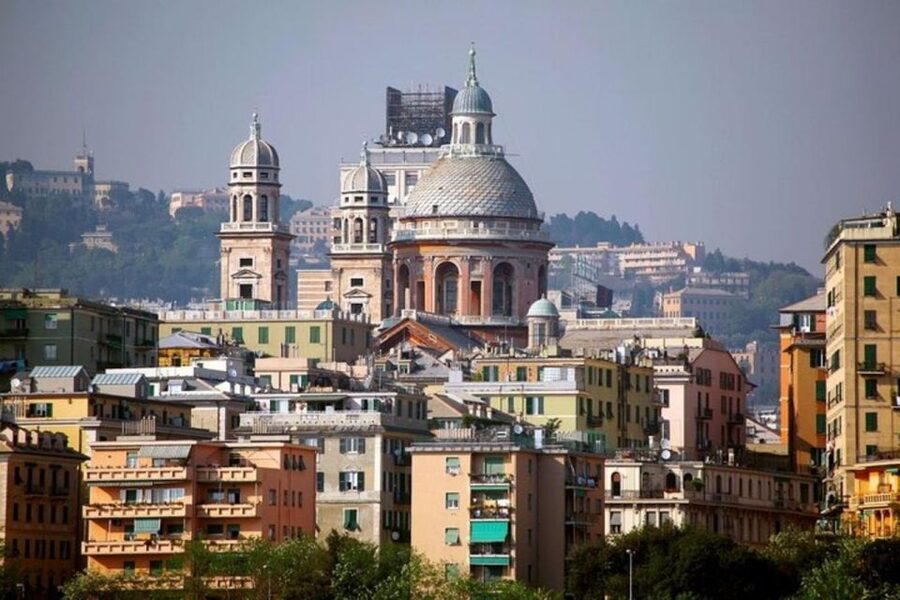
Then comes a stop that feels like stepping into Genoa’s timeline: Porta Soprana, the towered gate of the city walls dating to the 12th century. You’ll have time for a photo stop and guided sightseeing here, again around 15 minutes.
This is a great contrast after the civic palaces and open squares. Walls and gates are practical, and that practicality makes them easier to read. You can imagine how people entered and moved through the city, and you can start to connect Genoa’s past security and trade needs to its present-day streets.
One consideration: gates and fortifications can be visually intense but less “Instagram obvious” than some landmarks. That’s where the guide helps. With the right explanation, you’ll notice details you’d otherwise skip, like how the structure frames movement and the sense of threshold it creates.
A quick detour to the Castello area: staying curious on the way to the Cathedral
The route includes a stop labeled Castello (the itinerary text lists it as Castello, Venice, which might be a naming quirk). What matters for you is that it’s another short, guided walking break before the Cathedral.
Use this segment to reset your eyes. The tour has already moved through political power and urban squares, so this is a chance to pay attention to how neighborhoods and street feel change as you head toward the religious heart of Genoa.
If your guide calls out local details here, listen closely. Small changes in architecture, street angle, and building style often explain why the Cathedral section later feels so dramatic.
Cattedrale di San Lorenzo: where the tour earns its main highlight status
Now you reach Genoa Cathedral, the Cattedrale di San Lorenzo. This is the must-see stop when you’re in Genoa, and the tour gives it dedicated attention with a photo stop and guided visit, about 15 minutes.
Cathedrals can feel like they blur together if you’re seeing a bunch back-to-back. This one works because you’re arriving with context. After seeing political power at Doge’s Palace and city structure through the walls and gates, the Cathedral reads differently. It’s not just a building, it’s a statement of identity and ambition.
What to do during your stop: don’t rush straight to the obvious focal points. If the guide talks about architecture and art, pause and look where they point, even if it means spending an extra ten seconds that you might normally skip. This is exactly the kind of teaching Giulio and Fulvio are praised for in reviews: tying details to meaning.
Piazza Raffaele de Ferrari: a satisfying finish, not an anticlimax
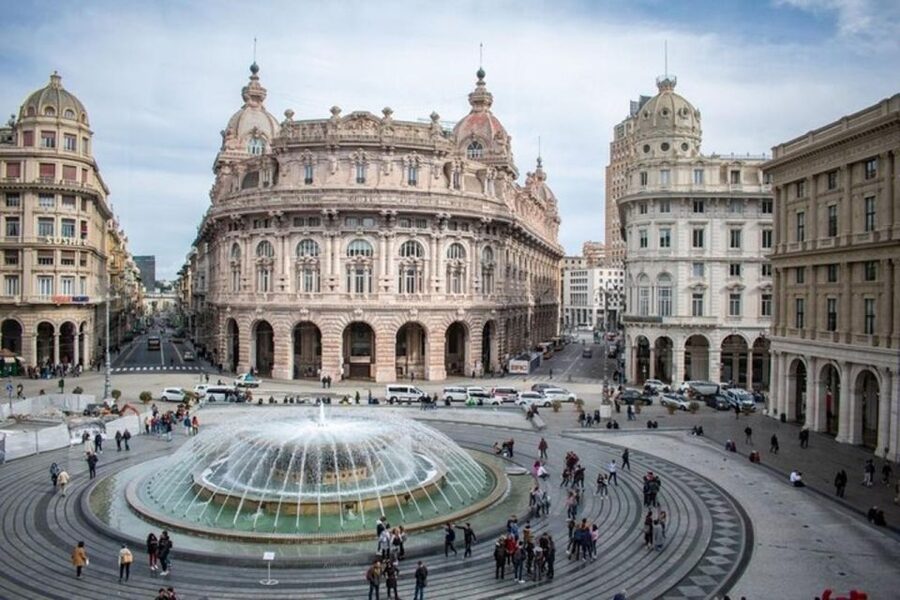
Your tour ends at Piazza Raffaele de Ferrari, the city’s main square. You’ll get a photo stop plus guided wrap-up sightseeing time (about 15 minutes).
I love ending here because it’s practical. You’ve got open space, lots of onward walking options, and a natural place to take a break before you continue on your own. If you want the best value from the tour, plan your next step immediately after, while the guide tips are still fresh.
A good move: grab something light nearby if you want, then keep exploring the smaller streets. Since the guide often shares insider pointers for what comes next, treat the square as your launching pad, not a final destination.
Price and value: is $41 a smart use of time?
At $41 per person for a 2-hour walking tour, this sits in the “high value if you care about context” category. You’re paying for a live local guide and a route that compresses the key Genoa highlights into a tight circuit.
Here’s how I judge the value:
- You’re not just paying for photos. Each stop includes guided sightseeing, so you get explanations you can use immediately.
- The pacing is built around short visits, which helps if you have limited time or want to stay flexible.
- The ending point is central, so you keep momentum after the tour instead of starting over.
If you prefer free-form wandering and you already know Genoa’s story, you might skip a paid guide. But if you want to understand what you’re seeing quickly, and you like getting practical advice for afterward, $41 for a structured highlights walk is a reasonable trade.
Who should book this Genoa walking tour
This tour fits best if you want:
- A high-signal highlights route without planning a full itinerary yourself
- A guide who can explain architecture and art, not just point at buildings
- A comfortable way to see major sites while still getting time to continue independently
- Multiple language options, since the tour is offered in English, Spanish, Italian, and French
- The option for a private group, if you want a more tailored experience
It’s also a solid pick if you like guides who add real-life touches. Reviews highlight that Giulio and Fulvio often share suggestions for typical culinary spots, and that they can show you quieter side streets as you move around the city. That kind of guidance helps you get more from your limited time.
Should you book it?
I’d book this tour if you have a short stay and you want Genoa to make sense fast. The route is efficient, the stops are meaningful, and the guide experience stands out in the feedback, especially for clarity and art and history context. Add that to a central finish in Piazza Raffaele de Ferrari, and it’s a low-stress way to get your bearings.
I’d hesitate only if you hate walking, even short distances, or if you’re the type who prefers skipping guided interpretation entirely. For most people doing Genoa for the first time, this is one of the smartest ways to spend two hours.
FAQ
How long is the Genoa Must-See Attractions Walking Tour?
The tour lasts 2 hours.
Where does the tour start?
The starting location is Piazza Giacomo Matteotti, 60.
What are the main attractions you’ll see?
You’ll visit or stop for sightseeing at Christopher Columbus’ House, Doge’s Palace, Piazza San Giorgio, Piazza Banchi, Porta Soprana, Genoa Cathedral (Cattedrale di San Lorenzo), and finish at Piazza Raffaele de Ferrari.
Where does the tour end?
The tour ends at Piazza Raffaele de Ferrari.
How much does the tour cost?
The price is $41 per person.
Is food or drinks included?
No. Food and drinks are not included.
What languages are available for the live guide?
The live guide is available in English, Spanish, Italian, and French.
Is the tour wheelchair accessible?
Yes, the tour is wheelchair accessible.
Can I book this tour as a private group?
Yes, private group options are available.
What should I bring?
Bring comfortable shoes and weather-appropriate clothing.
Latest reviews around Genoa
- Genoa: Impossible Museum Entry Ticket★ 4.2 · 226 reviews
- Guided Tour of Rolli Palaces UNESCO Site, Genoa★ 4.4 · 539 reviews
- Genova: Segway Tour★ 4.9 · 275 reviews
- Genoa: The City of Children and Young Museum Entry Ticket★ 4.1 · 303 reviews
- Genoa: Aquarium, Galata Museum and Submarine Entry Tickets★ 4.6 · 190 reviews
- Genoa: Private City Tour with a Local Guide★ 4.7 · 167 reviews
- Genoa: Historic Guided Tour of Christopher Columbus’ House★ 4.4 · 186 reviews
- Genoa: Food and Wine Tasting Walking Tour★ 4.9 · 215 reviews
Walking Tours, compared.
Guided Walking Tour & Last Supper Visit with Ticket
Read our review →
Rialto Bridge & Offbeat Unusual Venice Walking Tour
Read our review →
Private 3 hrs Venice Tour: St Mark’s, Walking tour & Boat tour
Read our review →
Skip the line: Uffizi and Accademia Small Group Walking Tour
Read our review →Browse the lists this tour appears in