
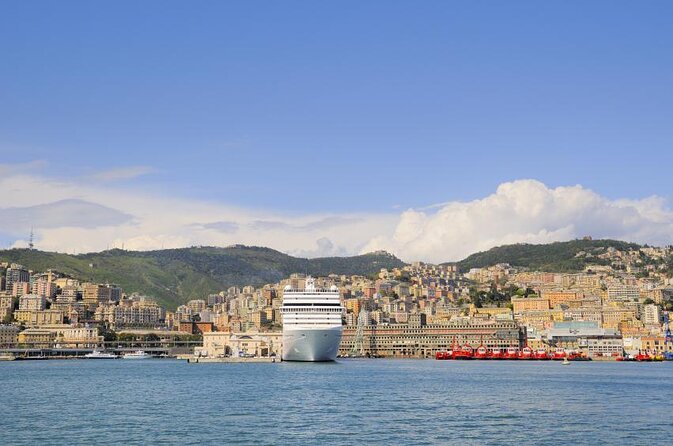
Reviewed · HISTORICAL TOURS
2 Hours Private Historical Tour in Genoa
Genoa is easier from a rickshaw. This 2-hour private tour threads through central Genoa with skip-the-traffic convenience and time for photos built into the pacing. I like that it mixes medieval corners, big-name architecture, and harbor views without making you do navigation.
The only thing to plan for is that a small vehicle tour means machinery can occasionally fail. In that case, you may lose some time or need a short walk, so I’d aim to schedule this earlier in your day.
You’ll get a local driver-guide, pickup where offered, and an English experience in a private group (up to 2). Expect a focused, practical overview that helps you decide what to revisit later on your own.
In This Review
- Key things that make this Genoa tour work
- Starting at Galata Museo del Mare, the smart way to enter Genoa
- Why a small vehicle tour beats walking in Genoa
- Piazza Sarzano: the quick stop that gives you Genoa’s origin vibe
- Santi Cosma e Damiano: a medieval church stop with a surprise feel
- Via Garibaldi: palaces, gardens, and the street that used to be called the Golden Street
- La Casa di Colombo near Porta Soprana: the Columbus house context you actually need
- Piazza Banchi: the old grain market and the money-changers under porticoes
- The San Lorenzo area and Il Cittadino: why parvis mattered in medieval Genoa
- Giardini Luzzati to Piazza De Ferrari: gardens, art nouveau, and a bronze fountain moment
- Palazzo San Giorgio and the Old Port: where the story turns to views
- Guides, pacing, and the little details that make the difference
- Price and value: what $114.93 per group gets you
- Who should book this Genoa historical tour
- FAQ
- FAQ
- How long is the private historical tour?
- How many people are in a group?
- Where does the tour start?
- Where will the driver meet us?
- Is the tour available in English?
- Is admission required for the sights on the route?
- Do I need a printed ticket?
- What if the weather is bad?
- Is free cancellation available?
- Can I bring a service animal?
- Should you book this Genoa tour?
Key things that make this Genoa tour work
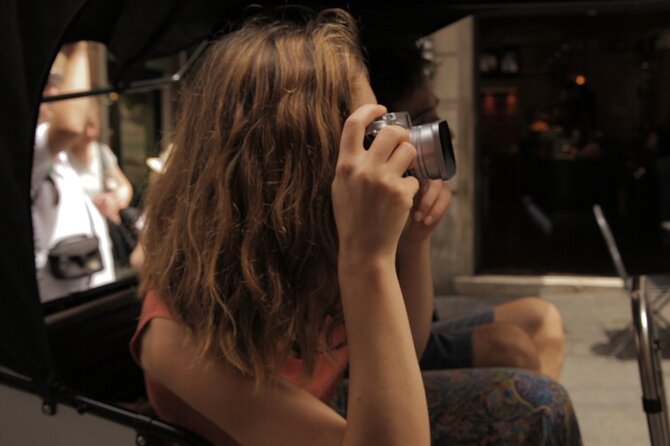
- Central meeting point at Galata Museo del Mare, easy to find
- Private, small-group format (up to 2) so the guide can set the pace
- Stops in “do-not-miss” zones from medieval lanes to Piazza De Ferrari and the Old Port
- Free admission at listed sights during the tour
- Driver-guide handles navigation and driving, great for tight streets
- Good-weather requirement, so bring a backup mindset for wind and rain
Starting at Galata Museo del Mare, the smart way to enter Genoa
The tour begins at Galata Museo del Mare (Calata Ansaldo De Mari, 1). It’s a very logical place to start if you’re arriving by ship or rail, because it gives you a clear landmark instead of a vague “meet near the old town” situation.
Pickup is offered, and when you arrive, you find the driver in the square in front of the terminal exit. This matters more than it sounds. Genoa can feel like a maze even when you’re holding a map, so starting with an easy rendezvous reduces the stress right away.
You’ll also use a mobile ticket, which is handy if you’re trying to keep your day light. And since it’s private, you’re not doing that awkward thing where you wait for a crowd to assemble before moving.
A few more Genoa options to weigh
- Genoa: 2-Hour Guided Walking Tour of the Historical Center
★ 4.2 · 605 reviews - Genoa Food, Wine Tasting & History Walking Tour
★ 5.0 · 212 reviews - Genoa: Historic Guided Tour of Christopher Columbus’ House
★ 4.4 · 186 reviews
Why a small vehicle tour beats walking in Genoa
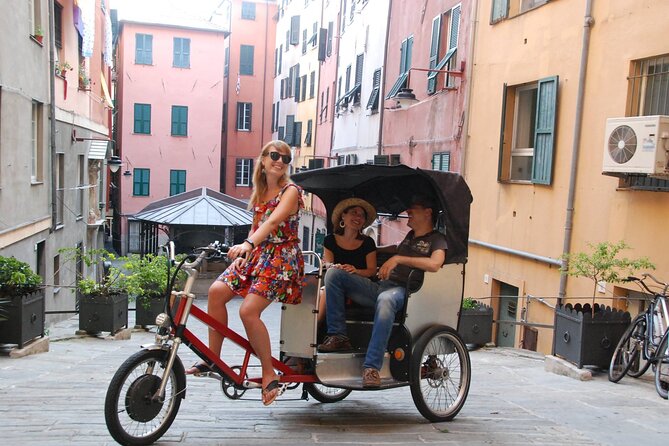
Genoa’s old center has narrow streets, sudden turns, and hills that can turn a “quick walk” into a mini workout. The big payoff of this tour is that you get the sights without paying the full walking price.
You’re not driving. You’re not navigating. The guide does that, which means you can focus on what you came for: noticing details, listening to the story, and stopping for photos when it makes sense. Several stops are short, but that’s actually a plus here. Two hours is a tight timeline, so the route is built to hit multiple areas rather than dragging you through one long sequence.
One more practical point: the tour is offered in English. If you’re traveling with limited time and want the context fast, that’s a real value add. You don’t have to piece the meaning together from signs.
Piazza Sarzano: the quick stop that gives you Genoa’s origin vibe
The first stop is Piazza Sarzano. This square sits in what’s described as the area of Genoa’s original nucleus, linked with the old name Ianua. That’s your first hint that the city isn’t just pretty architecture. It has layers, and the layers are still readable if someone points them out.
You’ll take in the bell tower of Sant’ Agostino and also see a small temple nearby. Then there’s the visual pop of Ravecca street in the background. Even if you don’t memorize every date, these are the kind of anchor images that help you reorient later, when you’re wandering.
This is a short, friendly “get your bearings” stop. If you’re the type who likes to arrive at a city with a map in your head, this helps you do it quickly.
Santi Cosma e Damiano: a medieval church stop with a surprise feel
Next comes Chiesa Santi Cosma e Damiano. The tour keeps this one brief, but the intent is clear: it’s a medieval historic-center stop that gives you atmosphere without turning the day into a checklist.
The church is presented as one of those places you might walk past on your own, unless you already know where to look. When a guide gives you even five minutes here, it’s usually enough time to register the feel of the space, then move on before you start losing energy.
If you love churches for architecture and light, you’ll like this. If you’re burned out by indoor stops, you also won’t feel trapped, because the time window is short.
Nearby, and just as well reviewed:
- Genoa: Aquarium of Genoa Entry Ticket
★ 4.5 · 10,075 reviews - Genoa: Hop-on Hop-off Tour Ticket
★ 4.0 · 1,524 reviews - Genoa: Half-Day Tour to Portofino
★ 4.2 · 1,123 reviews - Genoa: Pelagos Sanctuary Whale Watching Cruise
★ 4.2 · 806 reviews
Via Garibaldi: palaces, gardens, and the street that used to be called the Golden Street
Via Garibaldi is one of Genoa’s headline streets. The tour frames it as a place where time seems to stand still, and you can understand why once you’re surrounded by palaces and the impression of grand private gardens.
This stop also gives you a story through names. You’ll hear how it was originally called Strada Maggiore, then Strada Nuova, and later known until the nineteenth century as Via Aurea, the Golden Street. In 1882, it was renamed in honor of Giuseppe Garibaldi.
That kind of naming history matters. It’s not just trivia. It helps you understand why the street feels layered, why it looks like it belongs to wealth, and why Genoa’s power shows up in stone. You’re not just seeing buildings. You’re learning what kind of city this was.
This is also one of the best places for photos, because the architecture gives you multiple angles in a small area. The tour pacing is designed so you don’t feel rushed while you try to frame the right view.
La Casa di Colombo near Porta Soprana: the Columbus house context you actually need
Then you head to La Casa di Colombo, often called Columbus’ House. It’s located just outside the medieval walls, near the gate of Porta Soprana. That positioning is part of the story, because it ties the building to the city’s edge at the time it’s associated with.
You’ll learn that the current structure is likely an eighteenth-century reconstruction of an original medieval building. The building may have been destroyed during the 1684 bombing by the French fleet under King Louis XIV.
The house layout is two floors: the ground floor is described as a workshop space where Domenico Columbus, his father, worked in wool weaving and trade, while the family home sits upstairs. Written sources are mentioned that suggest the navigator lived here between 1455 and 1470.
Even if you’re not a Columbus superfan, this stop works because it gives you context in the right order. You understand why the building exists, why it looks the way it does, and how the history of Genoa intersects with world history.
Piazza Banchi: the old grain market and the money-changers under porticoes
Piazza Banchi is a stop that connects Genoa’s everyday commerce to the city’s harbor world. It’s located just off one of Genoa’s important docks.
Historically, it was tied to an old grain market, and it was known as piazza dei banchi in the 12th century because money-changers had stalls under the porticoes of the surrounding buildings.
This is a great pause if you want your Genoa experience to feel grounded in how the city functioned, not just how it looked. Palaces are impressive, but trade is the engine. This square helps you remember that Genoa was built on shipping, banking, and movement.
It’s also an ideal stop in a two-hour tour because it gives you a sense of place near the water without pulling you too far from the main route.
The San Lorenzo area and Il Cittadino: why parvis mattered in medieval Genoa
One of the most meaningful stops is around Il Cittadino – Arcidiocesi di Genova, where you’ll hear about Cattedrale di San Lorenzo and legends tied to the cathedral and its artistic representations.
The tour also explains a key urban idea: Genoa historically had few squares, so the parvis of San Lorenzo became a major stage for social and political life during the Middle Ages. When a city lacks open public space, you can bet the places that do exist turn into daily gathering points.
That context changes how you see the area. Even if you only spend around 15 minutes here, you’ll understand the role the cathedral grounds played in community life.
If you’re into city planning or how people actually moved through medieval neighborhoods, this is the stop that clicks hardest.
Giardini Luzzati to Piazza De Ferrari: gardens, art nouveau, and a bronze fountain moment
You’ll then visit Giardini Luzzati. This one is described as a beautiful place in the medieval historic center, and it’s purposely framed as a surprise rather than an encyclopedia stop. In practice, this is the type of brief break that resets your eyes and gives you a softer, more relaxed moment in the middle of architecture and history.
After that, you hit Piazza Raffaele De Ferrari, Genoa’s main square. The tour highlights it as a gathering place for important city events, and it’s dedicated to Raffaele De Ferrari, a benefactor who donated money in 1875 for projects that expanded the port.
In the center is a monumental bronze fountain crafted in 1936 by architect Cesare Crosa of Vergagni. You’ll also see the Teatro Carlo Felice and the façade of the Accademia Ligustica di Belle Arti designed by Carlo Barabino.
For a real change of pace, the square is framed by major buildings including Palazzo Ducale (main entrance on Piazza Matteotti), Palazzo della Regione Liguria, and Palazzo della Nuova Borsa, a standout Genoese Art Nouveau building built in 1912.
This stop is where Genoa starts to feel grand and modern compared with the medieval lanes. It’s also a great place to gauge what you want to explore on your own after the tour ends, because you’ll have a central reference point.
Palazzo San Giorgio and the Old Port: where the story turns to views
Next is Palazzo Di San Giorgio. The tour positions it as one of the palace highlights in the medieval historic center, so it acts like a bridge from square to waterfront. Even with limited time, it helps you connect Genoa’s wealth and civic power to the physical spaces that still dominate the city.
Then you finish at the Old Port. The waterfront plaza is described as the work of famous Genoese architect Renzo Piano. This matters for your last stretch because it’s a different kind of beauty. It’s about how the city meets the water, how modern design shapes the experience, and how easy it is to keep the day going.
The tour frames the Old Port as a place for events and recreation, with panoramic views and access to some of Genoa’s best-known attractions. In other words, it’s a strong finish because it sets you up to do a relaxed walk, grab a drink, or head back without feeling like you’ve just been dumped in the middle of nowhere.
Guides, pacing, and the little details that make the difference
The tour is built around the driver-guide model, and the strongest pattern in the tour experience is how much the guide’s personality affects the flow. You’ll hear from local guides who make quick stops feel meaningful rather than rushed.
Some guide names that come up include Eleonora, Sophie, Soufi, Gavino, Youssef, Yusuf, Julia, Lulu, Beatrice, Lucia, and Giulia. The common thread is a friendly, conversational approach, plus frequent pauses for photos and time to ask questions.
There’s also a practical note from real-world experience: dress for breezes and plan for sun. Even in a short tour, you’ll be outside long enough to want a hat and sunscreen. If the weather shifts, you’ll still have a vehicle option that keeps you from doing constant stop-and-go walking.
One more balanced point: vehicle issues can happen. You might see reports of mechanical problems like rickshaw trouble or a flat tire that shortened the trip or added delays. This is rare, but it’s worth knowing so you don’t panic. If you’re on a tight ship schedule, I’d book this earlier, not right before your return deadline.
Price and value: what $114.93 per group gets you
The price is $114.93 per group, for up to 2 people, for about 2 hours. On paper, that sounds like a premium. In practice, it’s often good value because you’re buying three things at once:
- Private time with a guide who can shape the pace for your questions
- Transport through tight streets without you doing navigation or route planning
- A curated overview that helps you decide what to revisit
If you only have a short window in Genoa, this can be cheaper than paying for separate taxi rides between areas plus guide time. It’s also a smart “first day in town” move, because you’ll leave with mental landmarks.
If you can, book ahead. This experience is typically reserved around 43 days in advance on average, which is a hint that the good slots disappear.
Who should book this Genoa historical tour
This tour fits best if you want:
- A first-time orientation to Genoa’s old center and waterfront
- Fewer logistics and more actual sightseeing time
- A private experience with a local driver-guide in English
It’s also a good choice if walking feels tough due to hills, tight streets, or limited time. The tour is described as suitable for most travelers, and service animals are allowed.
If you hate any chance of delays from small-vehicle logistics, or you’re extremely schedule-tight, you might prefer a more walking-based tour where there’s less chance of vehicle failure.
FAQ
FAQ
How long is the private historical tour?
It runs for about 2 hours.
How many people are in a group?
It’s a private experience with only your group, up to 2 people per group.
Where does the tour start?
The meeting point is Galata Museo del Mare, Calata Ansaldo De Mari 1, 16126 Genova, Italy.
Where will the driver meet us?
Guests find the driver in the square in front of the terminal exit, and pickup is offered.
Is the tour available in English?
Yes, the tour is offered in English.
Is admission required for the sights on the route?
The listed stops show admission ticket free.
Do I need a printed ticket?
No. The tour uses a mobile ticket.
What if the weather is bad?
The experience requires good weather. If it’s canceled due to poor weather, you will be offered a different date or a full refund.
Is free cancellation available?
Yes, you can cancel for a full refund up to 24 hours in advance.
Can I bring a service animal?
Yes, service animals are allowed.
Should you book this Genoa tour?
If you want Genoa to make sense fast, book it. Two hours is the sweet spot for hitting the big storylines: medieval lanes near Sant’ Agostino and Santi Cosma e Damiano, the high-power architecture of Via Garibaldi, the Columbus house context, the civic square energy around Piazza De Ferrari, and a clean finish at the Old Port.
I’d especially choose it if your time is limited, you want to avoid navigation stress, and you like learning as you go. Just schedule with a little buffer, because small-vehicle tours can occasionally have mechanical problems.
Latest reviews around Genoa
- Genoese cooking lesson in the with lunch in the terrace★ 5.0 · 189 reviews
- Genoa Walking Tour: Explore Top Sights & Hidden Gems★ 4.0 · 138 reviews
- Homemade Pasta and Pesto Class with a Local Chef in Genoa★ 5.0 · 305 reviews
- Taste Genoa: A Full Meal Walking Food Tour by Do Eat Better★ 5.0 · 509 reviews
- City Sightseeing Genoa Hop-On Hop-Off Bus Tour★ 3.0 · 259 reviews
- Genoa Food, Wine Tasting & History Walking Tour★ 5.0 · 212 reviews
- Ligurian Sea Day Sailing Trip by Set Sail Tours/ Lavagna, Italy★ 5.0 · 115 reviews
- Genoa: Impossible Museum Entry Ticket★ 4.2 · 226 reviews
Historical Tours, compared.
St. Mark Basilica Ticket, Audioguide+History Gallery
Read our review →
Venice’s Best: Basilica, Doge’s Palace, Gondola & History Gallery
Read our review →
Historic Milan Tour with Skip-the-Line Last Supper Ticket
Read our review →
Rome in a Day Tour with Vatican, Colosseum and Historic Center
Read our review →
Rome Food Tour in the Historic Centre with 8+ Food Tastings
Read our review →Browse the lists this tour appears in