
Reviewed · FLORENCE TOURS
Florence: Museo Galileo Entry Ticket
Science in Florence, minus the crowds. The Museo Galileo entry ticket turns Galileo Galilei into something you can actually see, with Galileo’s original instruments and hands-on style displays that make the ideas feel real.
I especially like the way the museum mixes big-name astronomy with everyday measuring tools, like thermometers and navigation instruments, so it connects to modern life. One drawback to plan around is that it is self-guided, and the phone audio setup works best if you have the right ear buds, plus hours are shorter on Tuesdays (closing at 1:00 PM).
In This Review
- Key Things You Should Know Before You Go
- Museo Galileo Entry Ticket, What You Actually Get
- Floor One: Jumping Into the Medici Collections
- Galileo’s Original Instruments, the Part Most People Come For
- Try the Ideas: Copies, Motion, and Learning Without a Lab
- Second Floor: Lorraine Tools, Clocks, Physics, and Precision Work
- The “18 Thematic Rooms” Experience, How to Pace It
- Audio, Labels, and What to Do If You Want More Explanation
- Tuesday Hour Warning
- Where This Ticket Fits in Your Florence Day
- Who Should Book This Entry Ticket
- Should You Book This Ticket Before You Arrive?
- FAQ
- How long is the Museo Galileo entry ticket valid?
- Do I need a guided tour with this ticket?
- What is included in the price?
- What is the price per person?
- Is the museum wheelchair accessible?
- Are there special hours on Tuesdays?
- Will I see Galileo’s original instruments?
- How many rooms are in the museum?
- Can I use the audio guide during my visit?
- What is the cancellation policy?
Key Things You Should Know Before You Go
- 18 thematic rooms across two floors, organized around major instrument collections
- Medici-focused rooms on the first floor, featuring quadrants, astrolabes, meridians, dials, compasses, armillary spheres, and more
- Lorraine-focused rooms on the second floor, with instruments for mechanical, electrostatic, and pneumatic work
- Galileo’s original instruments, including thermometers, microscopes, and meteorological tools
- A calmer experience than the headline museums, with plenty of room to take your time
- Audio on a phone app, so bring ear buds and download before you get tired and want instant answers
Museo Galileo Entry Ticket, What You Actually Get
This is a straightforward museum ticket, not a guided tour. You pre-book, then you show your confirmation voucher at the museum and walk in. For me, the best part of buying in advance is avoiding the stress of trying to line up with other major sights in Florence, then realizing you still have to wait.
At about $20 per person (plus a booking fee), you are paying for access to one of the best places in the city to see science tools up close. It’s not just about Galileo the person. It’s about how measurement, invention, and practical engineering marched forward long before computers.
One reason it feels like good value is the museum’s structure. You move through thematic rooms, so you are not stuck wandering without a thread. You also get both the story and the objects, including original instruments attributed to Galileo’s world, plus major collections tied to powerful Florentine patrons.
A few more Florence options to weigh
- Florence: Skip-The-Line Uffizi Gallery Timed Entry Ticket
★ 4.5 · 27,832 reviews - Tuscany Day Trip from Florence: Siena, San Gimignano, Pisa and Lunch at a Winery
★ 5.0 · 21,634 reviews - Florence: Timed Entrance Ticket to Michelangelo’s David
★ 4.6 · 16,983 reviews
Floor One: Jumping Into the Medici Collections
Your visit usually starts by getting a grounding in why science mattered to Florence’s elite. The Medici and Lorraine family connections show up through the collections, including tools that were first displayed in the Mathematics Room at the Uffizi. That matters because it explains the mindset behind the objects: these were not just toys, they were instruments for thinking, teaching, and making decisions.
Expect 11 rooms on the first floor dedicated to the Medici collections. These displays focus heavily on astronomical measurement and navigation-style thinking. You will see instruments like:
- quadrants and dials
- astrolabes and meridians
- compasses and armillary spheres
What I like about this section is that it makes the “how” visible. When you stand in front of a well-built quadrant or astrolabe, it becomes easier to imagine how astronomers and navigators worked with positions, angles, and time. It’s science as a craft.
The rooms are laid out to support self-guided wandering, but you still feel guided by theme. If you are the type who likes to look first and read second, this works well. If you need a narrative, you will still find one, because the floor is organized by tool families and purposes.
Galileo’s Original Instruments, the Part Most People Come For
This museum lives and dies by its instrument collection, and this is where it feels most special. You can see Galileo Galilei’s original instruments, not just reproductions or a few famous drawings.
The specific examples called out include:
- thermometers
- microscopes
- meteorological instruments
This is where the museum shifts from “history of astronomy” to “history of real experiments.” A thermometer, for instance, is simple to understand in principle, but seeing early versions helps you appreciate how hard it was to standardize measurements. A microscope does the same for biology and materials, even if you just stand there thinking about what those lenses could reveal.
There’s also a small human touch that makes Galileo feel less untouchable. One detail people find memorable is a depiction of Galileo with a missing finger, a reminder that history has bodies, flaws, and personalities. It’s the kind of quirky detail that makes the museum feel alive instead of dusty.
Try the Ideas: Copies, Motion, and Learning Without a Lab
One of the best surprises in a hands-on style science museum is how it helps you connect cause and effect. Some displays include copies of Galileo instruments that help you understand the relationship between motion and mass. Even if you are not a STEM specialist, those ideas click faster when you can compare object types and concepts in the same space.
You might not expect to use a full set of lab tools like a university. This is still a museum. But the learning feels more active than you’d get from a plain gallery of framed diagrams.
A practical note: if you plan to use audio support, bring ear buds. The audio experience is often delivered through an app on your phone, and having ear buds ready saves you from stopping mid-visit. Some people also report that ear buds can be purchased at the front desk, but I’d still rather you walk in prepared.
Nearby, and just as well reviewed:
- Florence: Michelangelo’s David Skip-the-Line Entry Ticket
★ 4.5 · 12,764 reviews - The Best tour in Florence: Renaissance & Medici Tales – guided by a STORYTELLER
★ 5.0 · 12,316 reviews - Florence: Leonardo Interactive Museum Entry Ticket
★ 4.5 · 11,763 reviews - The Best Tour in Florence: Renaissance and Medici Tales
★ 5.0 · 10,810 reviews
Second Floor: Lorraine Tools, Clocks, Physics, and Precision Work
Once you move to the second floor, the vibe changes from astronomy measurement to a broader view of technology. Here you will find about 10 rooms tied to instruments associated with the Lorraine family.
The displays focus on tools used for mechanical, electrostatic, and pneumatic applications. That wording might sound technical, but you will usually recognize the goal right away: measuring, generating controlled forces, and shaping how systems behave.
This floor also includes sections for:
- mechanical clocks
- sextants and octants
- pharmaceutical and chemical apparatus
- weights and measures
I love sections like the weights and measures displays because they highlight a basic truth about science. Before you can discover something, you need a way to compare and verify. Tools for standards are quietly powerful. They show that scientific progress depends on both imagination and boring discipline.
The clocks and navigation devices add another layer. You can connect timing to observation, and observation to travel, mapping, and communication. It turns science into infrastructure, not just a series of breakthroughs.
The “18 Thematic Rooms” Experience, How to Pace It
The ticket covers the museum’s 18 thematic rooms. With that many rooms, the main decision you make is pacing. You can absolutely rush, but you won’t get the value most visitors are after.
A realistic plan:
- Give yourself at least 2 hours if you want a solid pass.
- If you really like instruments, plan closer to 3 hours.
This is one of those museums where your brain benefits from slowing down. Instruments can look similar at first glance, then suddenly make sense once you connect the theme, the measurement method, and the tool’s purpose.
Also, there is a reason many people recommend coming earlier. The museum often feels calmer than Florence’s top-ticket sights, so you get more space to focus. Early timing also helps if you want time buffer for audio, reading labels, and extra stops when something catches your eye.
Audio, Labels, and What to Do If You Want More Explanation
This museum is self-guided. That’s good because you can move at your own pace, but it does put more responsibility on the visitor to decide what to read and what to skim.
Here’s what helps:
- Use the audio guide if you enjoy spoken explanations. Some people find it useful but not always perfectly intuitive to follow, so give yourself a moment at the start to figure it out.
- If you prefer more context from the labels, expect some objects to have fewer descriptive details than you might want. You may end up doing your own connecting in your head, which can be fun if you like learning by pattern.
Comfort matters too. Even when a museum is well organized, you can feel the long standing. Some visitors also note limited seating in parts of the museum. So if you need frequent breaks, build them in before you feel stuck.
Tuesday Hour Warning
If you are visiting on a Tuesday, plan carefully. Museo Galileo is only open until 1:00 PM on Tuesdays. If your trip schedule is flexible, pick another day and enjoy the full time. If Tuesday is your only option, you’ll want to arrive early and focus on the biggest sections rather than trying to read everything.
Where This Ticket Fits in Your Florence Day
This museum is a great counterweight to the classic Florence itinerary. It works especially well if you are already doing a day around major museums, like the Uffizi area. The location makes it a smart stop between bigger landmarks, letting you switch from art intensity to science curiosity.
It’s also a strong choice if you need variety. Florence can feel heavy on church art and grand palaces. Museo Galileo gives you something different, and that difference is not shallow. It is still Florence, just with a different set of “great minds.”
If you like hands-on learning, engineering history, navigation tools, or old instruments that actually worked, you’ll probably enjoy it more than a typical museum detour.
Who Should Book This Entry Ticket
I’d point you to Museo Galileo if any of these sound like you:
- You like science history, astronomy, and the tools behind the breakthroughs
- You enjoy seeing how ideas were measured before modern tech
- You want a museum that tends to feel calmer than the biggest Florence names
- You travel with kids or teens who like STEM, because the objects and themes can hold attention even when it is self-guided
It’s also ideal if you dislike long guided group tours. This is your pace, your route, your pause button.
Where it might disappoint you is if you expected a deep focus on Galileo’s personal life only. The museum places major emphasis on collections from the Medici and Lorraine families. Galileo is central, but the big story is how instruments and knowledge evolved through multiple eras and priorities.
Should You Book This Ticket Before You Arrive?
Yes, I think it’s worth booking in advance if you are visiting during a busy stretch or you want a low-stress entry. For $20 a person, you are paying for certainty and time savings, and the museum experience rewards careful pacing.
Skip the booking only if your schedule is fully flexible and you are comfortable with the possibility of longer waits or limited availability. Otherwise, pre-booking is a simple win.
If your goal is a high-quality Florence break that feels different from the art circuit, Museo Galileo is one of the best ways to do it. Go early, bring ear buds, and plan for 2 to 3 hours. You will come out thinking about measurement, not just history.
FAQ
How long is the Museo Galileo entry ticket valid?
The ticket is valid for 1 day. You can check availability for starting times.
Do I need a guided tour with this ticket?
No. A guided tour is not included.
What is included in the price?
It includes the entry ticket for Museo Galileo and a booking fee.
What is the price per person?
The price shown is about $20 per person.
Is the museum wheelchair accessible?
Yes, the experience is wheelchair accessible.
Are there special hours on Tuesdays?
Yes. On Tuesdays, Museo Galileo is only open until 1:00 PM.
Will I see Galileo’s original instruments?
Yes. The museum includes Galileo’s original instruments, including thermometers, microscopes, and meteorological instruments.
How many rooms are in the museum?
You can explore 18 thematic rooms.
Can I use the audio guide during my visit?
Yes, an audio guide is available via a phone app, and it helps to have ear buds. Ear buds may also be available to purchase at the front desk.
What is the cancellation policy?
Free cancellation is available up to 24 hours in advance for a full refund.
Latest reviews around Florence
- Florence: Dark Mysteries and Legends Guided Walking Tour★ 4.6 · 1,081 reviews
- Florence Duomo, Baptistery & Opera Museum Audioguided Tour★ 4.2 · 607 reviews
- From Florence: Siena and Chianti Day Trip with Dinner★ 4.2 · 126 reviews
- Hard Rock Cafe Florence with Set Menu for Lunch or Dinner★ 4.5 · 193 reviews
- Florence: Walking Tour with Skip-the-Line Accademia Gallery★ 4.6 · 148 reviews
- Skip-the-Line Accademia Tour – See Michelangelo’s David!★ 4.5 · 268 reviews
- Florence: David’s Accademia Gallery Guided Tour★ 4.2 · 207 reviews
- Florence: Pizza and Gelato Class at a Tuscan Farmhouse★ 5.0 · 822 reviews
Florence Tours, compared.

Skip-The-Line Uffizi Gallery Timed Entry Ticket
Read our review →
Tuscany Day Trip from Florence: Siena, San Gimignano, Pisa and Lunch at a Winery
Read our review →
Timed Entrance Ticket to Michelangelo’s David
Read our review →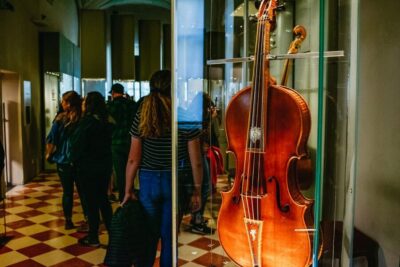
Michelangelo’s David Skip-the-Line Entry Ticket
Read our review →
The Best tour in Florence: Renaissance & Medici Tales – guided by a STORYTELLER
Read our review →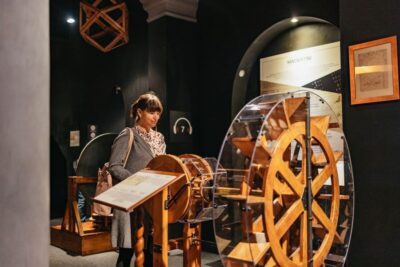

The Best Tour in Florence: Renaissance and Medici Tales
Read our review →
Browse the lists this tour appears in