
Reviewed · FLORENCE TOURS
The Best Tour in Florence: Renaissance and Medici Tales
Florence feels like a museum you can walk through. This tour gives you a clear thread from the Medici to the Renaissance, starting right in the San Lorenzo market heart. You’ll get a licensed guide in English, plus stories you can carry with you as you look at churches, palaces, and famous squares.
I especially like the way the route mixes major landmarks with stops that many people rush past. I also love that the guide’s job is storytelling, not just reading facts, which is why visitors highlight guides like Aurora, Deborah, Camilla, Manuel, and Alberto for making the city make sense fast.
One possible drawback: it’s a short, on-foot intro, so you’ll get quick looks rather than long museum time, and not every stop’s admission is included. That means you may want to plan ahead if you’re the type who needs to go inside more places.
In This Review
- Quick hits before you lace up
- Where the Medici story starts in Florence
- San Lorenzo, Cosimo to Cosimo III: church as a power map
- Palazzo Medici Riccardi: banking wealth turned into architecture
- Baptistery of San Giovanni: one of Florence’s oldest statements
- The Duomo complex, Giotto’s campanile, and Brunelleschi’s dome
- Giotto’s Campanile
- Cupola del Brunelleschi
- Museo Casa di Dante: the writer Florence won’t stop quoting
- Piazza della Signoria and Palazzo Vecchio: politics, sculpture, and public life
- Finishing near the Uffizi Gallery: your next step is easy
- What you’ll actually learn, not just what you’ll see
- Short stops are a feature, not a failure
- Tickets and entrances: plan for extras
- Price, value, and how to think about the donation model
- Who should book this Florence Renaissance walk
- Should you book this tour?
- FAQ
- How long is the Florence walking tour?
- Where does the tour start and where does it end?
- Is the tour offered in English?
- How much does the tour cost?
- Are tickets included for the sights you stop at?
- How big are the groups?
- Is the tour donation-based?
- What happens if the weather is bad?
- Can I cancel and get a full refund?
Quick hits before you lace up
- Meeting by Giovanni de’ Medici sets the Medici story in motion right away, before you ever hit the Duomo area.
- A tight 2-hour format works well for a first day in town, when you want context more than deep museum hours.
- Real Renaissance details in plain language help you read Florence’s buildings instead of just photographing them.
- More than the Duomo is the payoff, with stops like San Lorenzo, Palazzo Medici Riccardi, and Dante’s house.
- Uffizi neighborhood finish gives you an easy next step if you want to keep exploring art after the tour.
- Small groups (up to 30) make it easier to ask questions and stay engaged with the guide.
Where the Medici story starts in Florence
The tour starts at Piazza di San Lorenzo (35R, 50123 Firenze) right by San Lorenzo Church. Your guide meets you next to the statue of Giovanni de’ Medici, seated on a throne. That detail matters, because it frames Florence like a power story, not just a sightseeing checklist.
From the start, you’re not walking aimlessly. You’re moving through a sequence of places tied to who had money, who had influence, and how ideas spread during the Renaissance. It’s the kind of route that helps you later when you’re standing in front of something famous, thinking, Okay, I know what I’m seeing and why it matters.
The pace is designed for short stops, with brief time windows to look around and absorb the guide’s commentary. Expect a walking tour of about two hours and a group size capped at 30 travelers, which keeps the experience from feeling like a conga line.
A few more Florence options to weigh
- Florence: Skip-The-Line Uffizi Gallery Timed Entry Ticket
★ 4.5 · 27,832 reviews - Tuscany Day Trip from Florence: Siena, San Gimignano, Pisa and Lunch at a Winery
★ 5.0 · 21,634 reviews - Florence: Timed Entrance Ticket to Michelangelo’s David
★ 4.6 · 16,983 reviews
San Lorenzo, Cosimo to Cosimo III: church as a power map
Your first stop is Basilica di San Lorenzo, one of Florence’s largest churches, in the main market district. The big reason this church is on your route is what it represents: it’s the burial place of principal Medici family members, from Cosimo il Vecchio to Cosimo III.
If you only know the Medici as art patrons, this stop adds a crucial layer. In Florence, influence wasn’t just about commissioning paintings. It was also about shaping how a dynasty was remembered, physically and symbolically, in the city’s most important public spaces.
Practical note: admission is not included at this stop, so treat it like a stop where you may be looking at the building and learning the story, then deciding later whether you want to pay to go inside.
Palazzo Medici Riccardi: banking wealth turned into architecture
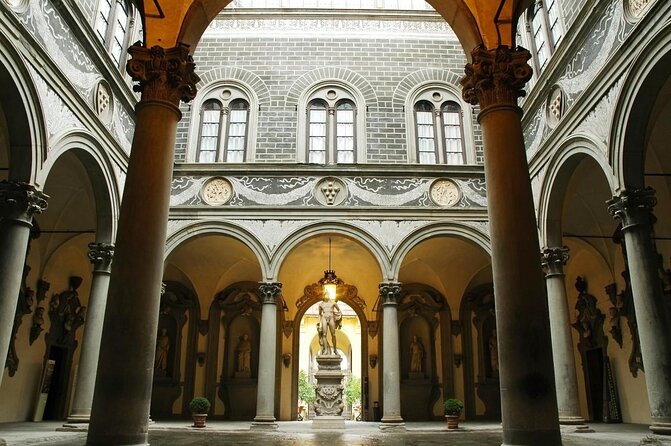
Next up is Palazzo Medici Riccardi, designed for Cosimo de’ Medici, leader of the Medici banking family. The building was constructed between 1444 and 1484, and that date range alone gives you a feel for how long-term Medici power really was. This wasn’t a quick flex. It was an investment in stone, space, and status.
What I like about this stop is that it helps you connect the dots between money and visual impact. When you see a palazzo tied to a banking dynasty, you start noticing things in Florence that you might otherwise miss, like how architecture was used to project authority.
Admission is not included here either, so plan on using the time for exterior and nearby perspective unless your comfort level is to add entrances on your own schedule.
Baptistery of San Giovanni: one of Florence’s oldest statements
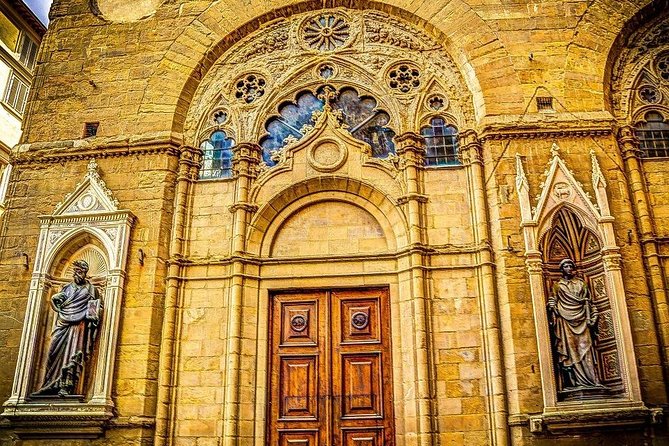
Then you head to the Florence Baptistery, also known as the Battistero di San Giovanni. It sits in the Piazza del Duomo and Piazza San Giovanni area, facing the cathedral zone and the Campanile di Giotto. This is one of the city’s oldest buildings, constructed between 1059 and 1128, in a Florentine Romanesque style.
Why it matters for your Renaissance understanding: Florence’s Renaissance brilliance did not start from nothing. The city’s older bones were already there. This baptistery helps you see the long timeline, from medieval forms into later Renaissance ambition.
Again, admission is not included at this stop. But even if you do not go in, the guide’s context can change how you interpret what you’re looking at.
Nearby, and just as well reviewed:
- Florence: Michelangelo’s David Skip-the-Line Entry Ticket
★ 4.5 · 12,764 reviews - The Best tour in Florence: Renaissance & Medici Tales – guided by a STORYTELLER
★ 5.0 · 12,316 reviews - Florence: Leonardo Interactive Museum Entry Ticket
★ 4.5 · 11,763 reviews - Florence: Pasta Cooking Class with Unlimited Wine
★ 4.9 · 10,285 reviews
The Duomo complex, Giotto’s campanile, and Brunelleschi’s dome
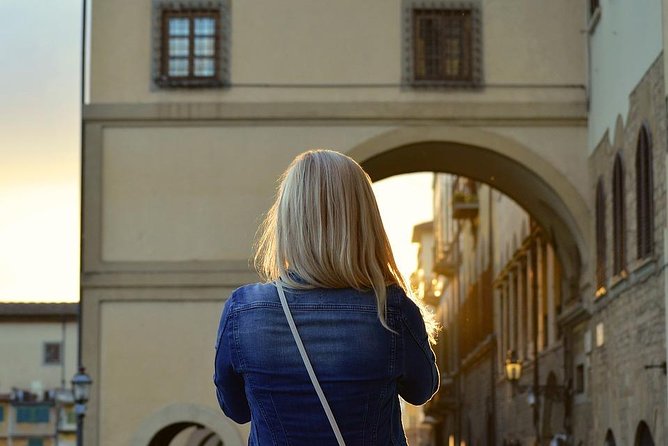
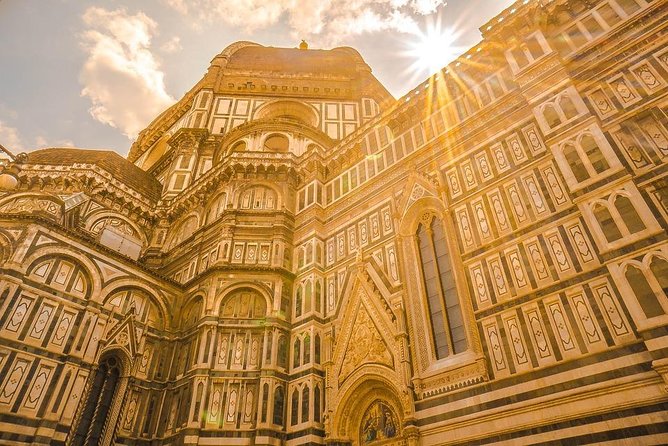
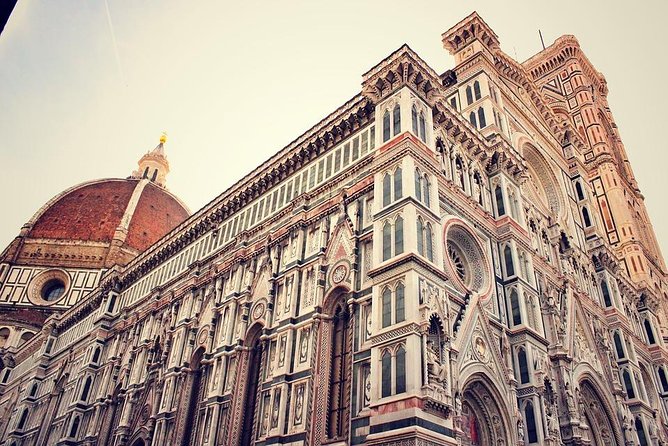
You’ll then move into the iconic Duomo area. The tour includes Florence Cathedral, the Cattedrale di Santa Maria del Fiore, begun in 1296 in the Gothic style. The stop description notes that this complex includes the Baptistery and Giotto’s Campanile, all part of Florence’s UNESCO historic center.
This is a key moment in the tour because the guide can explain why Florence’s Renaissance leadership didn’t erase its earlier religious grandeur. It built on it. Even if the cathedral is famous in your photos, you’ll start seeing it as part of a bigger architectural conversation.
Giotto’s Campanile
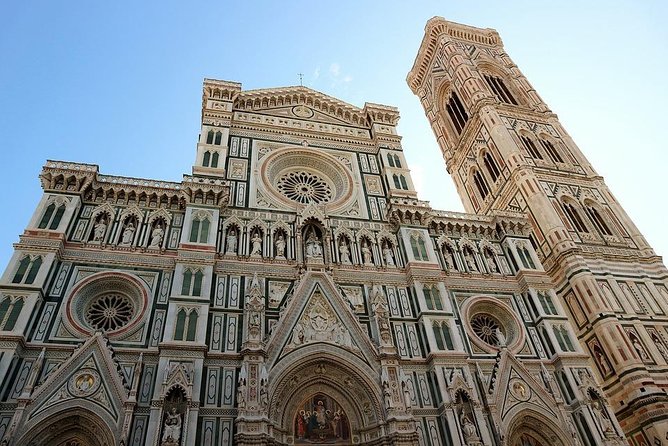
You also stop at Campanile di Giotto. It’s adjacent to the cathedral and the baptistery and is a showpiece of Florentine Gothic architecture, with sculptural decoration and polychrome marble encrustations. The guide’s commentary is where this stop stops being just pretty and becomes readable.
Admission is not included here. So, if you want to go up, you’ll be making that decision separately.
Cupola del Brunelleschi
Finally, you get to the Cupola del Brunelleschi, the famous dome. The stop notes that it remains one of the biggest mysteries in art and architecture, and that it was the largest in the world at the time. It’s also described as the largest brick dome ever constructed.
Even if you’re not an architecture nut, this is the kind of stop that helps you understand why people came to Florence not just to shop and stroll, but to witness what humans could engineer.
Admission is listed as not included for this stop too, which keeps the walking tour fast and focused.
Museo Casa di Dante: the writer Florence won’t stop quoting
After the Duomo zone, you’ll pass the House of Dante and stop at Museo Casa di Dante. You’ll hear how Dante Alighieri wrote the Divine Comedy, often described as one of the most important poems of the Middle Ages and a landmark of the Italian language.
This stop is valuable because it widens your Renaissance lens. Yes, Florence is famous for painting and architecture. But it’s also famous for words that shaped how people thought and spoke. When you connect Dante to the places you’re walking past, Florence turns from scenery into a living map of ideas.
The museum stop is listed as free, so if you’re curious and want a short literary moment, this is one of the most straightforward places to do it during the tour window.
Piazza della Signoria and Palazzo Vecchio: politics, sculpture, and public life
Then you arrive at Piazza della Signoria, an L-shaped square in front of Palazzo Vecchio. This is one of Florence’s meeting points, where locals and tourists overlap, and it’s also a gateway area toward the Uffizi.
Your guide then brings you to Palazzo Vecchio, the city’s town hall. It’s described as a massive fortress-palace and one of Tuscany’s most impressive town halls. The square’s big visual hook for this tour is the copy of Michelangelo’s David near the complex.
This part is where I think the tour earns repeat value. A lot of Florence sightseeing can turn into a parade of monuments. Here, you start thinking about public space as a stage: government, symbolism, and art placed where people could see it every day.
Admission is not included at Palazzo Vecchio within this tour. But even without paying, you’ll understand why this area is so important for Florence’s identity.
Finishing near the Uffizi Gallery: your next step is easy
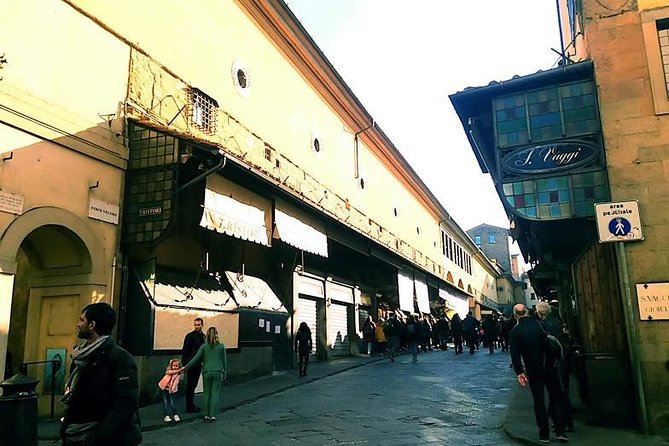
The tour ends near Piazza della Signoria, close to the Uffizi Gallery. The Uffizi is described as one of Italy’s most important art museums and the world’s most visited, especially strong in the Italian Renaissance.
The stop also notes why the Uffizi complex exists in the first place. It was begun by Giorgio Vasari in 1560 for Cosimo I de’ Medici to accommodate offices of Florentine magistrates, which explains the name uffizi, meaning offices. That’s a great detail, because it means you’re not just approaching an art palace, you’re approaching a building that grew out of administration and power.
If you’re hungry for more art after the tour, this ending location helps you avoid the common problem of finishing far from where you actually want to go next.
What you’ll actually learn, not just what you’ll see
The biggest praise for this tour is consistent: guides are strong storytellers who give you context and less obvious details. People call out guides like Aurora for Medici insight, Manuel and Marco for turning Florence into a narrative, and Deborah for mixing humor with real history. You’ll also hear about guides such as Simona and Camilla being especially animated and easy to follow, which is exactly what you want on a walking tour where you can’t pause and look things up every ten minutes.
For you, the practical payoff is this: you’ll walk away with a map in your head. Not just streets and squares, but why they look the way they do and how the Medici shaped the Renaissance in Florence.
Short stops are a feature, not a failure
The tour is built around quick introductions at each major site. Many stops are described as around 10 minutes, with a shorter 5-minute stop at Dante’s museum. That’s intentional. It’s enough time to connect the stories, take a few photos, and decide what deserves your own deeper visit later.
If you prefer slow travel and long museum hours, you might feel rushed. But if you want to return to Florence with better questions, this format works.
Tickets and entrances: plan for extras
Admission is not included for several stops, including San Lorenzo, Palazzo Medici Riccardi, the Baptistery, Campanile di Giotto, Brunelleschi’s dome area, and Palazzo Vecchio. Some listed stops are free, including the Duomo complex stop in the description, Museo Casa di Dante, and Piazza della Signoria as an area.
So treat this as a guided route through the city’s key zones, with optional or separate entrance decisions depending on what you want to do next.
Price, value, and how to think about the donation model
On the surface, the price is $3.62 per person, which is shockingly low for a licensed, guided walking experience. But there’s an important twist: the tour is made possible thanks to donations, and you choose the compensation level for the guide at the end.
So here’s how I’d think about value in a balanced way. The low listed price likely lowers your barrier to booking, which makes it easier to do early in your trip. The real value is what you gain from a strong guide. When guides are praised for storytelling, clarity, and pacing, that’s where you’ll feel the impact.
Also, a practical note from review patterns: some people specifically mention tipping well, even to the tune of around €20 per person. Your donation is how you reward that effort, especially when the tour is focused on human storytelling rather than just handing you an audio device.
Who should book this Florence Renaissance walk
This tour is a great match if you:
- Want a first-day orientation so Florence makes more sense on your next stops
- Prefer explanations and stories over reading plaques on your own
- Like the Medici theme as a way to organize the city
- Are okay with seeing highlights quickly, then choosing later what to enter deeply
It may not be the best match if you:
- Want extended time inside multiple buildings during one short window
- Need long museum sessions rather than fast context stops
- Are traveling with expectations of a fully ticketed, all-entrances-included itinerary
Should you book this tour?
Yes, I’d book it if you want your Florence to connect. The route gives you Medici-to-Renaissance context while you stand in front of the places people talk about constantly. The consistently high ratings and repeated praise for guide storytelling are a big sign that the tour’s real strength is interpretation, not just proximity to famous sights.
I’d also book it early, because once you understand why San Lorenzo, Palazzo Medici Riccardi, and the Duomo zone matter together, your later self-guided exploring gets easier. Start with this, then circle back to whatever truly grabs you.
FAQ
How long is the Florence walking tour?
It lasts about 2 hours.
Where does the tour start and where does it end?
You start at Piazza di San Lorenzo, 35R, 50123 Firenze FI, Italy. The tour ends near Piazza della Signoria, in the Piazza della Signoria area (the exact end point can vary slightly).
Is the tour offered in English?
Yes, the tour is offered in English.
How much does the tour cost?
The price listed is $3.62 per person.
Are tickets included for the sights you stop at?
Admission ticket details vary by stop. Some stops are listed as free, while others are listed as admission not included, so you may need to pay separately if you want to enter.
How big are the groups?
The tour has a maximum of 30 travelers.
Is the tour donation-based?
Yes. It is made possible thanks to your donations, and after the tour you decide the appropriate amount to compensate the guide.
What happens if the weather is bad?
The tour requires good weather. If it is canceled due to poor weather, you will be offered a different date or a full refund.
Can I cancel and get a full refund?
Yes. Free cancellation is available if you cancel at least 24 hours in advance for a full refund. If you cancel within 24 hours, you do not receive a refund.
Latest reviews around Florence
- Florence: Dark Mysteries and Legends Guided Walking Tour★ 4.6 · 1,081 reviews
- Florence Duomo, Baptistery & Opera Museum Audioguided Tour★ 4.2 · 607 reviews
- From Florence: Siena and Chianti Day Trip with Dinner★ 4.2 · 126 reviews
- Hard Rock Cafe Florence with Set Menu for Lunch or Dinner★ 4.5 · 193 reviews
- Florence: Walking Tour with Skip-the-Line Accademia Gallery★ 4.6 · 148 reviews
- Skip-the-Line Accademia Tour – See Michelangelo’s David!★ 4.5 · 268 reviews
- Florence: David’s Accademia Gallery Guided Tour★ 4.2 · 207 reviews
- Florence: Pizza and Gelato Class at a Tuscan Farmhouse★ 5.0 · 822 reviews
Florence Tours, compared.
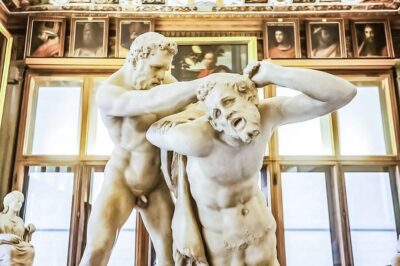
Skip-The-Line Uffizi Gallery Timed Entry Ticket
Read our review →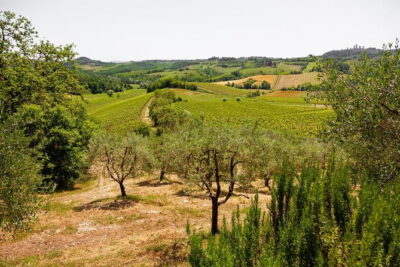
Tuscany Day Trip from Florence: Siena, San Gimignano, Pisa and Lunch at a Winery
Read our review →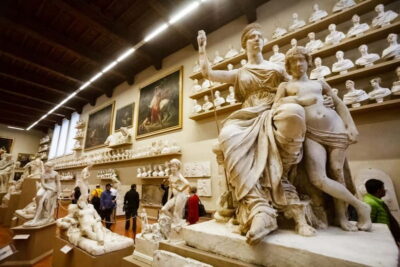
Timed Entrance Ticket to Michelangelo’s David
Read our review →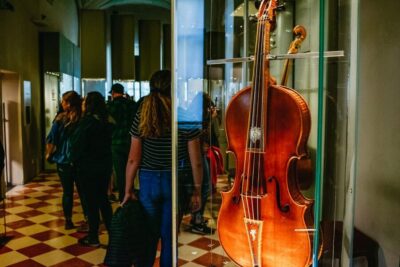
Michelangelo’s David Skip-the-Line Entry Ticket
Read our review →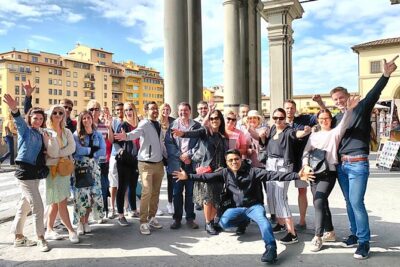
The Best tour in Florence: Renaissance & Medici Tales – guided by a STORYTELLER
Read our review →
Pisa, Siena and San Gimignano Day Trip with Lunch
Read our review →Browse the lists this tour appears in