
Reviewed · COLOSSEUM, ROMAN FORUM & PALATINE TOURS
Colosseum and Roman Forum – Private tour
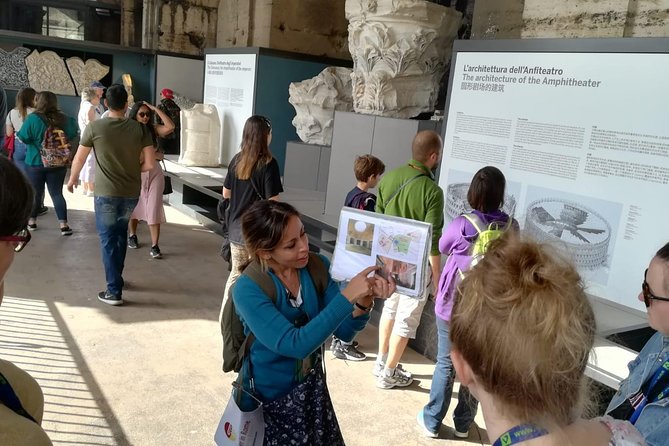
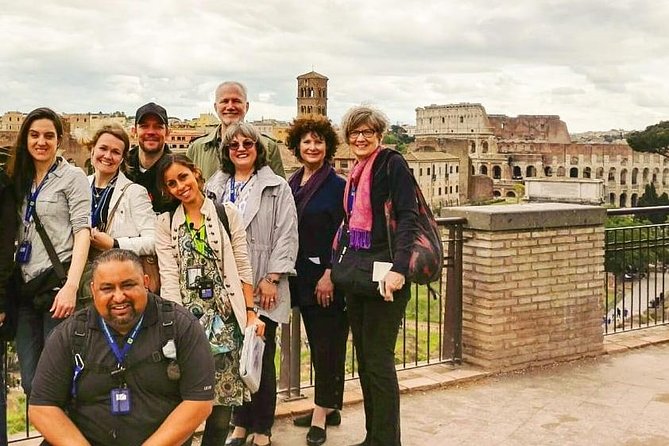
The Forum hits different with a guide. On this private tour, guides like Denis and Rachella lead you from Via dei Fori Imperiali straight into the Roman Forum and then the Colosseum, using clear explanations and visual reconstructions so the ruins stop feeling random. I love that the experience is built around real walking, real landmarks, and a guide who keeps the story moving.
I also like the private pacing. You get a focused route with timed Forum entry and a Colosseum visit long enough to actually make connections, not just check boxes. Guides such as Paolo and Raquel are especially good at adjusting on the fly, steering you toward better viewpoints and calmer spots.
One drawback to plan for: entry can be strict. You’ll need a valid photo ID, and the name on the ticket has to match your passport exactly, since tickets are personal and swaps are not allowed.
In This Review
- Key takeaways before you go
- Via dei Fori Imperiali: the walk that frames everything
- Roman Forum stop: how the center of power worked
- Curia Julia and the Forum’s political core, in plain terms
- Temple sites that explain Rome’s shift to Empire
- Arch of Titus and Arch of Constantine: Rome’s propaganda, walking edition
- Entering the Colosseum with reserved entry and a storyteller guide
- Private tour perks that actually help in crowds
- Tickets, IDs, and what to bring for smooth entry
- Pickup, meeting points, and where the day ends
- Price and value: what $338.76 buys you in a 3-hour plan
- Who this Colosseum and Roman Forum tour fits best
- Should you book this private Colosseum and Forum tour?
- FAQ
- How long is the Colosseum and Roman Forum private tour?
- What is included in the ticket portion of the tour?
- Is the tour guided in English?
- Does the tour offer hotel pickup?
- Where do I meet the tour and where does it end?
- Is arena access included?
- What should I bring for the visit?
- What identification do I need for entry?
- Is food included?
Key takeaways before you go
- Via dei Fori Imperiali sets the scene between Piazza Venezia and the Colosseum, with major Imperial Fora ruins along the way.
- Roman Forum entry is timed (about 1 hour), so you spend your time inside the sites rather than waiting.
- Short stops that lock in the big ideas like Curia Julia, Tempio di Vesta, and Tempio del Divo Giulio.
- Two triumphal arches along the route connect you to Rome’s messaging of power, from Titus to Constantine.
- Colosseum visit includes a guide storyteller approach, with reconstructions and plenty of time for questions.
- Optional perks can matter on a hot day, including hotel pickup and arena access if you select that option.
Via dei Fori Imperiali: the walk that frames everything
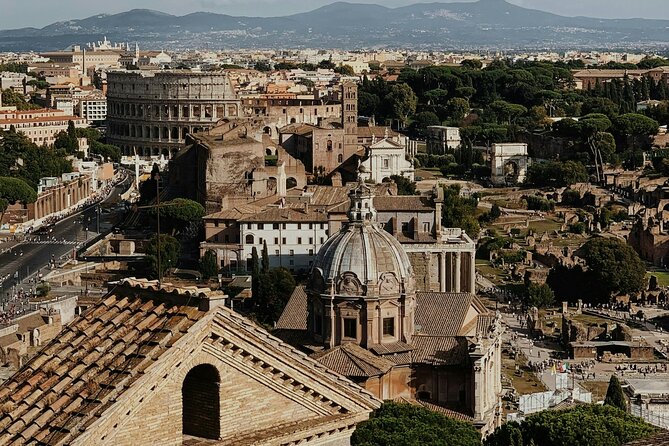
Before you even reach the Colosseum, you get a reality check on where you are. Via dei Fori Imperiali is a wide, dramatic avenue running between Piazza Venezia and the Colosseum, cutting through key archaeological zones like the Imperial Fora of Caesar, Augustus, Nerva, and Trajan. It is the kind of street where you can look left and right and see how the city layers on top of itself.
This matters because the Roman Forum is not a single ruin. It is a political and ceremonial landscape spread across multiple buildings and eras. A good guide turns this long approach into orientation, helping you understand what you are about to see and why it is in that exact spot.
You also get a fascinating reminder that modern Rome shaped what you see. The road was built under Mussolini between 1924 and 1932, and it bisects archaeological areas. That detail is more than trivia. It explains why the ruins look the way they do today, and why the walk feels both historic and oddly contemporary.
More Colosseum and Forum tours:
- Colosseum, Roman Forum & Palatine Guided Tour
★ 4.7 · 63,148 reviews - Rome: Colosseum, Palatine Hill and Roman Forum Guided Tour
★ 4.8 · 32,814 reviews - Rome: Guided Tour of Colosseum, Roman Forum & Palatine Hill
★ 4.7 · 27,897 reviews
Roman Forum stop: how the center of power worked
The Roman Forum, or Forum Romanum, is the beating heart of the ancient city’s politics and business. You stand in a rectangular space surrounded by the ruins of major government buildings, and it is easy to feel how public life was staged here. The Forum was where citizens came to listen to speeches, meet senators, and watch important figures, in the orbit of leaders like Julius Caesar and Cicero.
On a guided private route, you get the Forum in context. Instead of wandering and guessing, you learn what each surviving structure meant in the day-to-day machinery of Rome. For example, the tour focuses on the political center and highlights the ancient Curia (the Senate) area, along with impressive columns and temple remains tied to earlier centuries.
You also get time. The Forum portion is about 1 hour with your admission included, so it is not rushed. That hour is also long enough for a guide to point out how the Forum changed over time, and to connect it to the story of the shift from Republic to Empire.
Practical tip: this part involves a lot of walking and some uneven ground. Bring solid shoes, and plan water breaks. Guides like Denis and Rachella are known for pacing and for finding shade when temperatures spike.
Curia Julia and the Forum’s political core, in plain terms
The tour then zooms in on the Forum’s power nucleus. Curia Julia is one of the most important stops because it was the meeting place of the Roman Senate. It was commissioned by Julius Caesar and completed under Augustus in 29 BC, and it remains a sturdy reminder of how Rome represented authority through architecture.
This is where the guide storytelling format earns its keep. Curia Julia is not just a building you glance at. With the right explanation, you understand it as a symbol of governance, not just stonework. A private guide can also adjust the depth based on your interests, whether you want the political story or just the visual clues.
The stop is short, around 5 minutes, but it is the kind of short that pays off. You get the big idea, the key dates, and a sense of what the room likely meant in the real decision-making of Rome.
Temple sites that explain Rome’s shift to Empire
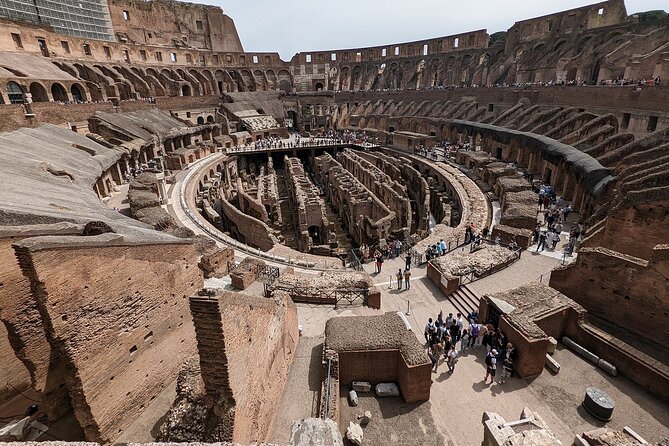
After the Senate, the route moves to temples that connect religion with politics, especially during the transition from Republic to Empire.
Tempio del Divo Giulio (the Temple of Divus Julius) was erected by Augustus in 29 BC to honor the deified Julius Caesar after his assassination. The site is tied to Caesar’s cremation, which helps explain why the temple was not only a religious location but also a political message wrapped in worship. Even though only ruins remain, the place gives you a clear sense of how Augustus used cult and symbolism to reframe power.
Next comes Tempio di Vesta, one of the most sacred spots in the Forum complex. It was dedicated to the goddess of the hearth, and its circular design symbolized eternity and continuity of the Roman state. Inside, the eternal flame was tended by the Vestal Virgins. Today you see fragments, but a good guide connects those fragments to the idea of Rome’s spiritual continuity.
These two stops are brief, about 5 minutes each, but they are not filler. They help you understand Rome’s strategy: rule the state, then reinforce it through sacred ritual and imperial symbolism.
A few more Rome options to weigh
- Vatican: Museums & Sistine Chapel Entrance Ticket
★ 4.5 · 144,003 reviews - Vatican Museums & Sistine Chapel Tour with Optional Basilica
★ 4.3 · 67,413 reviews - Vatican Museums, Sistine Chapel & St Peter’s Basilica Guided Tour
★ 4.5 · 39,149 reviews - Rome: Colosseum & Forum with Audio Guide App -Optional Arena
★ 4.2 · 24,770 reviews
Arch of Titus and Arch of Constantine: Rome’s propaganda, walking edition
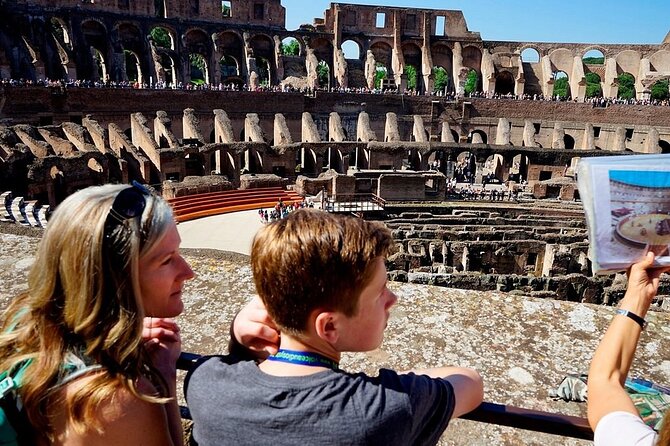
Between the Forum and the Colosseum area, the tour includes two famous triumphal arches. They look like photo spots, but with the guide’s explanations, you learn they are also political theater.
Arch of Titus was built in 81 AD by Emperor Domitian to commemorate victories associated with Titus, including the conquest of Jerusalem. The relief decoration shows spoils of war and the triumphal procession. This is Rome announcing power in a very public way.
Then you reach Arch of Constantine, erected in 315 AD near the Colosseum after Constantine’s victory over Maxentius at the Battle of the Milvian Bridge. It celebrates a new era, and the decorations reuse reliefs from earlier monuments. That reuse is a clue about how new rulers borrowed legitimacy from the past, rather than creating everything from scratch.
Both stops are short, about 5 minutes each, but they give you a bigger picture. You start to see that Rome’s architecture often served two jobs at once: impress people and tell them who was in charge.
Entering the Colosseum with reserved entry and a storyteller guide
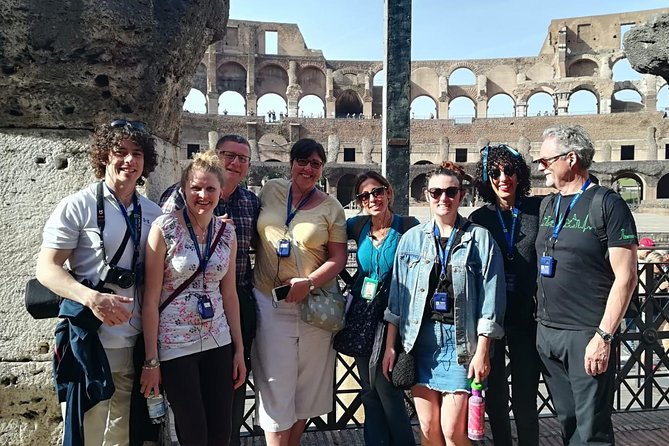
The main event is the Colosseum, and the difference with a private guide is how the time feels. You get about 1 hour 30 minutes inside, plus entrance tickets are included. With reserved access and a personal guide, you avoid the most common first-time problem, standing around with no clear sense of what you are looking at.
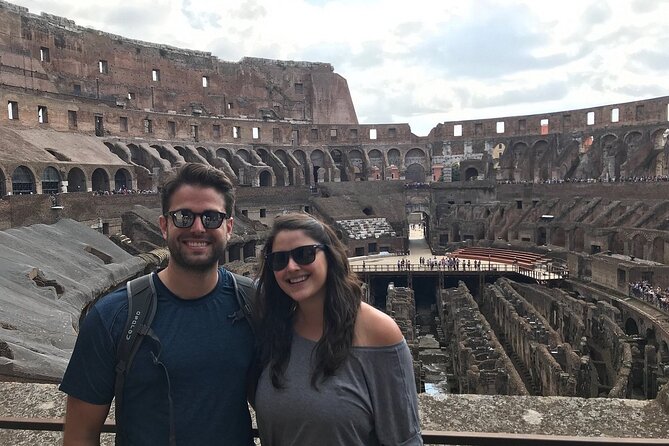
The Colosseum, also called the Flavian Amphitheatre, is an oval arena built of travertine limestone, tuff, and brick-faced concrete. It held about 60,000 spectators at its peak, which is mind-boggling until you understand the building’s shape and the way crowds would have moved.
The tour style leans into imagination and reconstructions. Your guide uses visual aids and rebuilds what the Colosseum looked like in use, so you can picture events rather than only interpret ruins. This is also where guides like Louisa and Barbara often shine, turning the space into a story you can follow with your own eyes.
If you select the option for it, you may also get arena access. That is a major value add because it changes your perspective, putting you closer to the level where performers and games took place. If you do not choose arena access, you still get a guided look that makes the architecture coherent.
Practical tip: the Colosseum can be hot and the routes include stairs. Bring water, wear a hat if the sun is strong, and keep moving at your guide’s pace.
Private tour perks that actually help in crowds
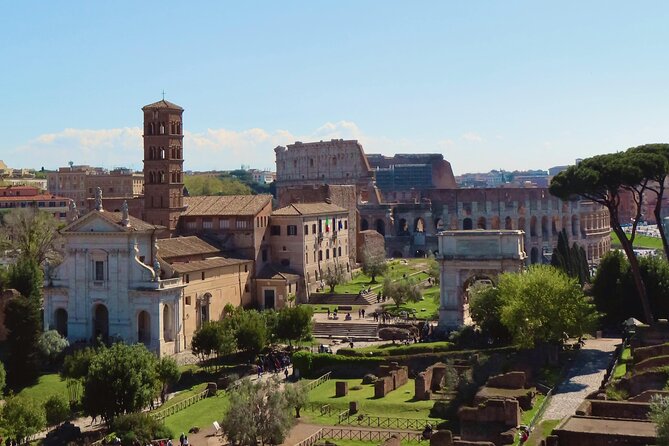
Private tours are not just a luxury word. Here, they matter because Rome’s biggest sites can overwhelm you. In the Forum and around the Colosseum, crowd flow and heat can shape your whole visit.
The guides on this format are used to solving those problems. Denis is known for helping people through crowds with smart routing. Paolo is praised for keeping kids engaged and finding the best areas for views. Raquel is specifically called out for switching to shade while still hitting the most interesting points. Alex has been helpful even during rain.
You also get room to ask questions. When you have an expert right there, you can stop and clarify details about the Senate, the temples, the arches, or how the games worked. That is hard to replicate on your own.
One small but important note: private does not mean no walking. It means the walking is directed. You will still want comfortable shoes and a water bottle handy.
Tickets, IDs, and what to bring for smooth entry
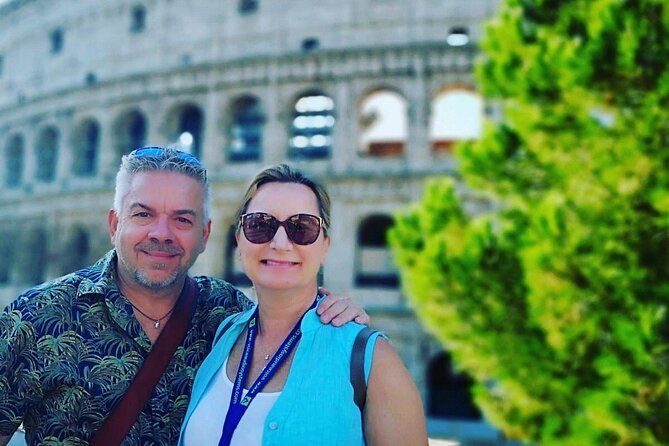
Entry here is structured, so you should be prepared.
You’ll need valid government-issued photo ID. A photo of your passport is acceptable, but the key rule is that the ticket name must match your ID exactly. Tickets are strictly personal, and last-minute substitutions are not allowed.
The tour uses a mobile ticket, so you’ll have that ready on your phone. Just remember that your name format matters. The Colosseum Archaeological Park requires the full official name and surname to match the ticket information.
What to bring:
- A photo ID (ideally the one matching your ticket name)
- Comfortable walking shoes
- Water, since heat and stairs are part of the experience
- A hat can help in summer
- Casual clothing, since there is no formal dress code requirement listed
Pickup, meeting points, and where the day ends
The tour has clear start and end points, which helps your brain stay calm.
You start at Caffè Valorani, Largo Corrado Ricci 29/30, 00184 Roma RM. From there, you meet your private guide and head into the route.
Your ending point is the Colosseum area, Piazza del Colosseo 1, 00184 Roma RM. If you select the pickup option, you meet a private driver speaking English in your hotel lobby or in front of your Airbnb, then you go to meet the guide.
This structure is helpful if you want a clean start and an easy finish without figuring out public transport mid-visit.
Price and value: what $338.76 buys you in a 3-hour plan
At $338.76 per person for roughly 3 hours, this is not a bargain-basement outing. The question is what you get that you cannot easily replicate.
First, the ticket and reservation fees for the Colosseum are included, including a value listed at €18 per person plus a Colosseum reservation fee valued at €2 per person. So you are not paying full price for entry twice.
Second, the main cost covers the services around that entry. You get a professional blue badge guide, a private format, and a guided route that combines orientation on Via dei Fori Imperiali with the Forum highlights and the Colosseum visit.
Third, your time is used well. Short Forum stops for Curia Julia, Tempio del Divo Giulio, Tempio di Vesta, and both arches mean you hit the landmarks that explain the story, rather than drifting.
This is best value if:
- It is your first time at the Forum and Colosseum
- You care about context, not just photos
- You are traveling with kids, where engagement and pacing really matter, as seen with families and strollers
- You want someone to handle crowd navigation and shade choices on hot days
If you are a very confident independent traveler who loves reading on your own, you might feel it is pricey. But if you want Rome to click quickly, this format is built for that.
Who this Colosseum and Roman Forum tour fits best
This tour works especially well for:
- Families with children, since guides are practiced at keeping kids moving and interested
- Travelers who want a clear storyline, from Senate power to imperial symbolism to arena spectacle
- People visiting in summer, where heat control and shade stops can make or break the day
- Anyone who prefers not to deal with the technical side of site entry and wants a guide managing the flow
It is also a solid choice if you have mobility concerns in the sense that you want an experienced guide helping you find practical routes and access points, like what was highlighted by families using strollers.
If your priority is maximum flexibility with no structure, consider that this is a timed, curated 3-hour plan with admission tied to specific sites. Private does not mean fully freeform, it means guided.
Should you book this private Colosseum and Forum tour?
I would book it if you want your Colosseum and Forum visit to feel organized and understandable. The guide-led storytelling approach, the short but meaningful Forum stops, and the time inside the Colosseum are the exact pieces that help most people leave with more than a pile of pictures.
Skip this one and look for a different style if you already know a lot about Roman politics and imperial symbolism, and you are comfortable mapping it on your own. You might not feel the private guide adds enough for the cost.
My advice: if the weather is hot, bring water and plan to lean on your guide for shade and pacing. And double-check your ticket and ID names before you go, since the entry rules are strict.
FAQ
How long is the Colosseum and Roman Forum private tour?
The tour is about 3 hours total.
What is included in the ticket portion of the tour?
The tour includes entrance to the Colosseum and the Roman Forum, with Colosseum reservation fees included as well.
Is the tour guided in English?
Yes, the tour is offered in English.
Does the tour offer hotel pickup?
Pickup from your hotel is offered if you select the pickup option. Without pickup, you meet the guide at the listed meeting point.
Where do I meet the tour and where does it end?
You start at Caffè Valorani in Largo Corrado Ricci 29/30, and you end at the Colosseum area, Piazza del Colosseo 1.
Is arena access included?
Arena access is available if you select the option. If you do not select it, you still tour the Colosseum with entrance included.
What should I bring for the visit?
Comfortable walking shoes and water are strongly recommended, especially since the route can include stairs and hot conditions.
What identification do I need for entry?
You need a valid government-issued photo ID. The ticket is personal, and the name must match exactly what is on your passport or ID.
Is food included?
No. Food and drinks are not included.
Latest reviews around Rome
- Guided Walking Tour of Rome: Top Sights & Baroque Treasures★ 5.0 · 155 reviews
- Rome at Night: Small Group Guided City Walking Tour★ 5.0 · 249 reviews
- Private Walking Tour of the Squares and Fountains in Rome★ 5.0 · 130 reviews
- Rome Food Tour by the Vatican★ 5.0 · 308 reviews
- Vintage Fiat 500 Cabriolet: Rome’s Highlight Semi Private Tour★ 5.0 · 283 reviews
- Welcome To Rome Experience★ 4.5 · 679 reviews
- Vespa Rental in Rome 24 hours★ 5.0 · 196 reviews
- Vatican VIP Early Entrance 8:00 AM★ 4.5 · 141 reviews
Colosseum, Roman Forum & Palatine Tours, compared.
Colosseum, Roman Forum & Palatine Guided Tour
Read our review →
Colosseum, Palatine Hill and Roman Forum Guided Tour
Read our review →
Guided Tour of Colosseum, Roman Forum & Palatine Hill
Read our review →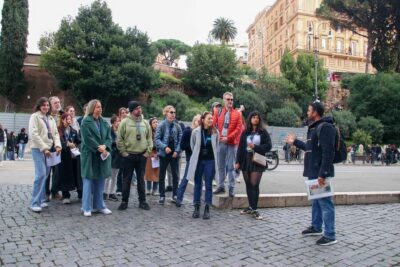
Colosseum & Forum with Audio Guide App -Optional Arena
Read our review →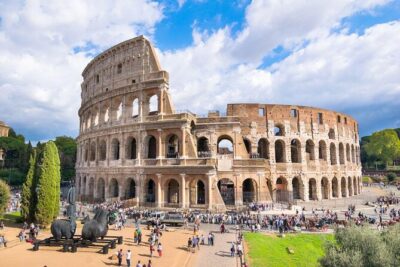
Colosseum, Roman Forum and Palatine Hill Guided Tour
Read our review →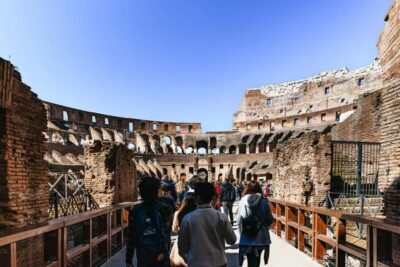
Colosseum, Forum & Palatine Hill Tour & Optional Arena
Read our review →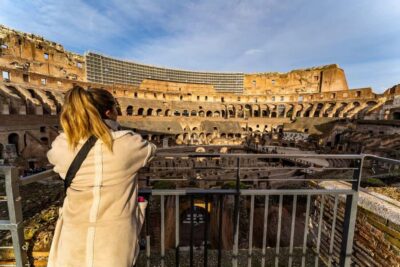
Colosseum, Roman Forum, Palatine with Multimedia Video
Read our review →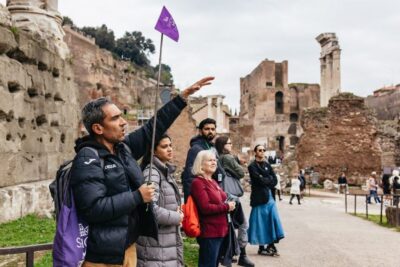
Colosseum, Palatine Hill & Roman Forum Guided Tour
Read our review →Browse the lists this tour appears in