

Reviewed · WALKING TOURS
Verona Highlights Walking Tour in Small-group
Verona is compact, but history hits fast. This small-group highlights walk strings together the city’s Roman bones, medieval power, and Shakespeare leftovers with a local guide and a relaxed pace. I loved how it gives you quick bearings across the historic center plus the chance to ask questions as you go, not just pass monuments like photos on a screen. The main catch is simple: you will do a fair amount of walking, and a few areas may be tricky if you have mobility limits.
What makes this tour especially useful is the order of sights. You start around Piazza Bra, move through medieval Verona’s landmarks and Roman traces, then land at the Arena di Verona, where opera and ancient engineering are both very much alive. Guides I’ve seen leading this route include Isabella, Frank, Priscilla, Maria, Deb, and Francesco, and the common thread is good English and story-telling that stays human.
In This Review
- Key Highlights Worth Your Time
- Verona’s Perfect Starter Plan: Two Hours, One Clear Story
- Piazza Bra Start, Easy First Wins, and What You’ll Be Looking For
- Scaligero Bridge and Castelvecchio: Medieval Verona, With WWII Reality
- The Arch of Gavi and Roman Precision That Still Reads in the Street
- Arena di Verona: Where AD 30 Meets Opera Night
- Casa di Giulietta Courtyard and the Balcony Rules for Winter 2025-2026
- Romeo’s House: A Legend Stop, Mostly Seen From the Outside
- Piazza Bra, Cafés, and the Size of Verona’s Daily Stage
- Arche Scaligere: Scaliger Tomb Arches and Medieval Power in Stone
- Piazza delle Erbe and Piazza dei Signori: Roman Forum Roots to Dante’s Shadow
- How Much Walking Is Actually in This “Highlights” Walk?
- Getting Value From It: Why $42.33 Can Beat Doing This Alone
- Who Should Book This Verona Highlights Walk, and Who Might Skip
- Should You Book This Verona Highlights Walking Tour?
- FAQ
- How long is the Verona Highlights walking tour?
- Where do we meet for the walking tour?
- Does the tour run in bad weather?
- What is included, and what isn’t?
- Is Juliet’s Balcony included during December 2025 and early January 2026?
- What is the cancellation policy?
Key Highlights Worth Your Time
- Small-group size capped at 16 means more Q and easier regrouping in crowds.
- Two hours that actually cover the classics without feeling like a sprint.
- Arena di Verona built in AD 30 and still used for major performances.
- Juliet’s House courtyard stop plus a key note about balcony access during winter 2025-2026.
- Roman and medieval power points back-to-back (arches, tombs, forums, and plazas).
- Guides like Frank, Isabella, Priscilla, and Maria tend to mix history, practical tips, and humor.
Verona’s Perfect Starter Plan: Two Hours, One Clear Story
This is the kind of walk that helps you enjoy Verona on the rest of your trip, because you leave with a mental map and an understanding of why each site matters. The route is designed for a relaxed tempo, so even if you are not rushing between checkmarks, you can still feel like you covered the essentials in about two hours.
The tour is also built around Verona’s historic center, recognized as part of the UNESCO World Heritage area. That matters, because you are not just seeing random pretty buildings, you are seeing the layers of the city as it grew from Roman times into medieval rule and later legend.
One more practical plus: it runs rain or shine. Verona weather can be moody, and having a planned route keeps your day from turning into guesswork.
More Walking Tours in Verona
- Verona: History and Hidden Gems Guided Walking Tour
★ 5.0 · 1,379 reviews - Verona: Small Group Guided Walking Tour with Arena Tickets
★ 4.9 · 848 reviews - Verona walking tour:food, wine, legends, lunch/dinner & cable car
★ 5.0 · 386 reviews
Piazza Bra Start, Easy First Wins, and What You’ll Be Looking For
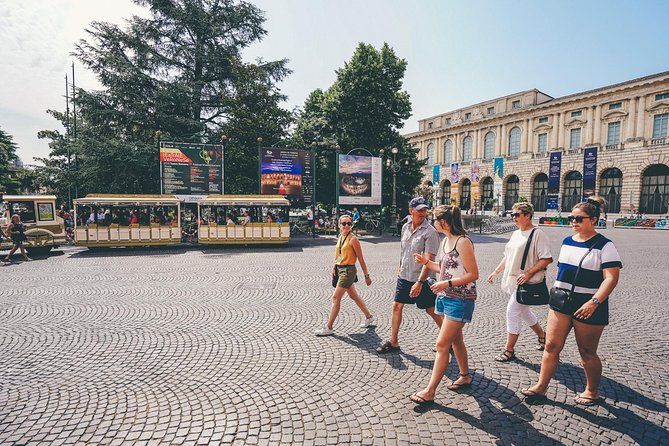
You meet at Piazza Bra, one of the biggest squares in Verona. If you arrive early, it’s a nice place to get your bearings because there are cafés and restaurants around the edges. The big square also makes it easy for your group to gather without getting immediately swallowed by narrow streets.
From the start, your guide frames what you are about to see. Instead of listing monuments like a checklist, the tour connects each stop to the larger question of how Verona changed over time. That approach helps you notice details you might otherwise miss, like how Roman infrastructure lines up with later city development, or how medieval rulers left their mark in stone and architecture.
If you are visiting for the first time, this is especially useful. You can treat this walk like your orientation session, then spend the rest of your days choosing what to revisit at a slower pace.
Scaligero Bridge and Castelvecchio: Medieval Verona, With WWII Reality
One of the first stops is Scaligero Bridge. It connects the late-medieval castle to the Adige River’s left bank. The most interesting part here is not just the structure, it’s the story behind its survival and reconstruction.
The bridge was almost destroyed in a bombing, then fully rebuilt to match the original look. That detail adds weight to what can otherwise feel like just another scenic crossing. When you understand that the look you see today is the result of restoration after devastation, the bridge stops being background scenery and becomes a piece of living history.
Next up is Castelvecchio itself, located in that medieval castle. Even if you do not go deep inside on this walk, simply seeing the castle as part of the route helps you understand why this area mattered. It’s a reminder that power in Verona was physical, and it controlled key connections over the river.
A small tip: if the group slows down for photos, use that moment to ask your guide one question. I’ve found that guides answer better when you show you’re paying attention to the same things they are pointing out.
The Arch of Gavi and Roman Precision That Still Reads in the Street
You also pass the Arch of Gavi, an elegant 1st century AD construction. It’s tied to the Roman architect Vitruvio, and it celebrates the gens Gavia, a major Roman family in Verona. This is one of those stops where the age of a structure hits you, because you can still read the purpose of the arch in how it frames the street and signals importance.
There’s extra context you may hear from your guide based on what they highlight. In a detailed route description I saw, the arch originally stood outside the city near the Via Postumia road, Napoleon demolished it in 1805, and it was later moved and reconstructed in 1931. Whether your guide shares every one of those specifics, the core value is the same: you get a lesson in how Roman artifacts traveled, got damaged, and were reassembled into modern Verona.
If you are the kind of person who likes meaning behind details, this stop is a good fit. If you just want to keep moving and save museums for later, it still works, because the arch is easy to spot and visually satisfying.
A few more Verona options to weigh
- Milan: Guided Walking Tour & Last Supper Visit with Ticket
★ 4.7 · 5,409 reviews - Naples: Street Food Walking Tour with Local Guide
★ 4.8 · 4,256 reviews - Venice Walking Tour and Gondola Ride
★ 3.5 · 3,630 reviews - Venice: Rialto Bridge & Offbeat Unusual Venice Walking Tour
★ 4.2 · 3,538 reviews
Arena di Verona: Where AD 30 Meets Opera Night
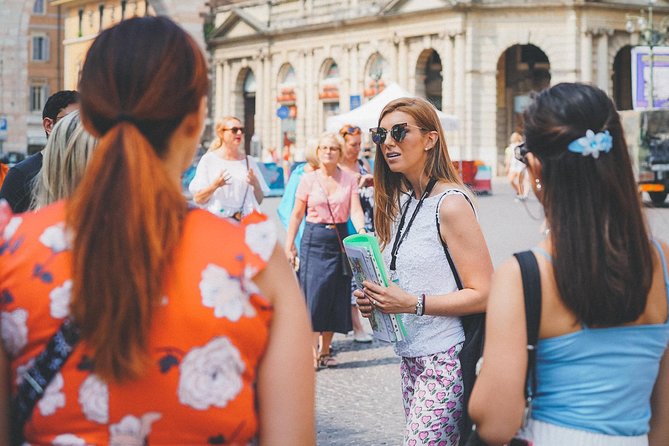
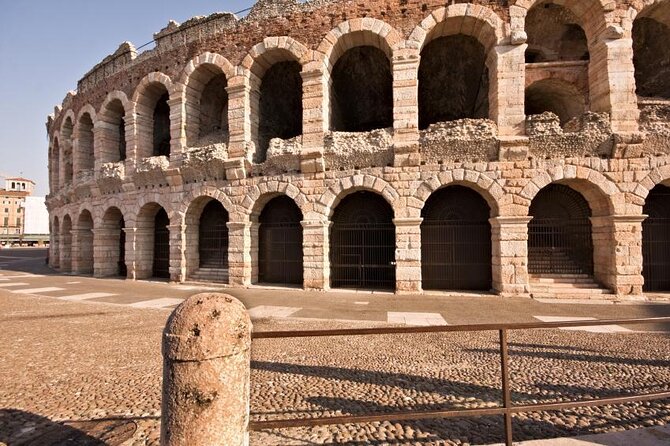
Then you arrive at the Arena di Verona, the big finale moment of the tour. This Roman amphitheater was built in the 1st century AD, in the Augustan period, and it dates back to AD 30. It’s one of those sights where you can actually feel how durable Roman design was.
Your guide will explain that the Arena once could hold up to 30,000 people, and it’s remarkably well preserved for its age. Even if you have seen other Roman arenas, this one is still special because it’s not abandoned ruins. It continues to function as a major cultural venue.
You’ll also hear about how it hosts international concerts and, most importantly for many visitors, the Verona Arena Festival, a summertime opera tradition drawing classical music lovers from around the world. That connection between the ancient space and modern performance is exactly why this stop works for first-timers. You are not looking at history behind glass. You are looking at history doing its job today.
Important practical note: there is time here, and admission to go inside is not included in the tour package. Plan to decide on-site whether you want to add the Arena entry. If you want the full inside experience, you’ll need to purchase that ticket separately.
Casa di Giulietta Courtyard and the Balcony Rules for Winter 2025-2026
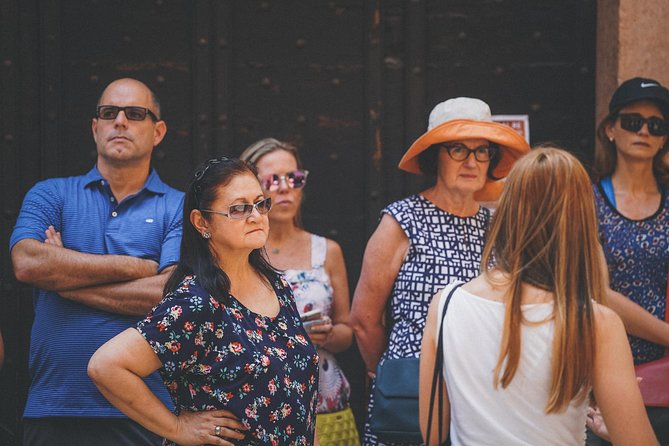
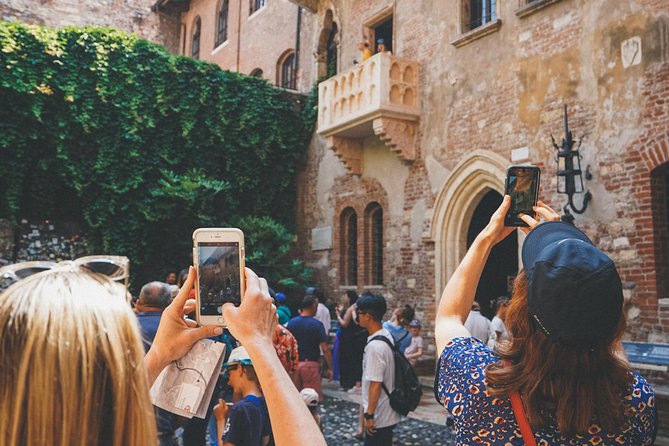
Next is Juliet’s House, La Casa di Giulietta. On this walk, you typically see the courtyard of the Capuleti house, where the famous heroine of Romeo and Juliet is said to have lived. Even outside the most famous photo spots, the courtyard setting gives you the atmosphere that made Shakespeare’s story stick to Verona in the first place.
But there’s one date-based wrinkle you should know ahead of time. From December 6th 2025 to January 6th 2026, the tour does not include access to Juliet’s Balcony as usual. During that window, the city administration requires a ticket for balcony access. Your guide can explain how to purchase the ticket, but your group will not have it handled for you.
This matters because people often assume the balcony is always part of the experience. If you are traveling in winter 2025-2026, do not build your day around that photo unless you plan for the extra ticket step.
Romeo’s House: A Legend Stop, Mostly Seen From the Outside
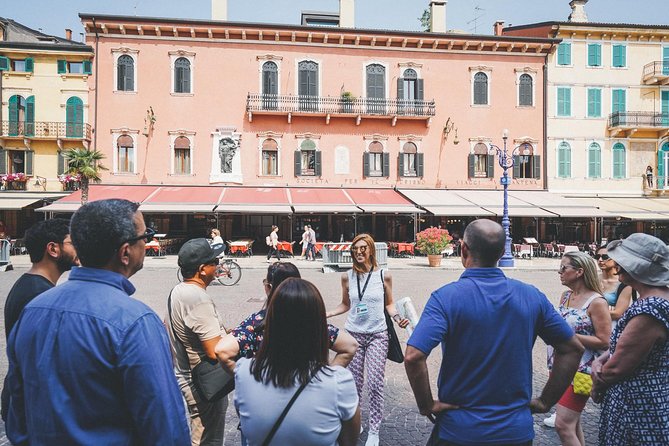
You also pass Romeo’s house, described as a medieval palace in the center of Verona. It was home to the Montecchi family until the early 14th century, according to legends and literary traditions. The practical detail: the building is private and inhabited, so you can only see it from the outside.
That might sound like a letdown, but it actually fits the tone of this tour. The walk is about Verona’s big story and its most famous associations, not about buying every ticket on every corner. Seeing Romeo’s house from outside still gives you the sense of place, and it keeps the walking flow smooth.
If you are a Shakespeare fan, take a moment here to read the mood of the neighborhood. The street scene around the house helps you understand why these stories became tourist magnets in the first place.
Piazza Bra, Cafés, and the Size of Verona’s Daily Stage
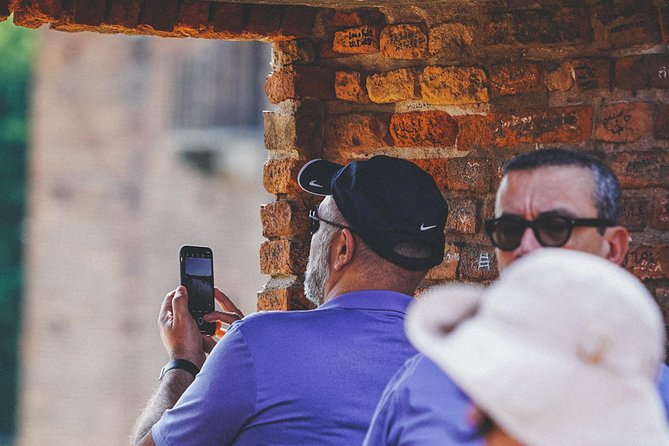
You return to the broader Piazza Bra area during the tour. Since it’s lined with cafés and restaurants, it’s a natural break point in your day. The fact that it’s the largest piazza in Verona is more than trivia. It tells you how people moved, gathered, and lived in a city where many of the streets are tight and winding.
This part of the walk is especially good if you like to stop, reset, and notice rhythm. You get the chance to look around and pick out what feels worth revisiting later, like a café terrace view you might want to claim when you’re not on a schedule.
Arche Scaligere: Scaliger Tomb Arches and Medieval Power in Stone
Arche Scaligere is the Scaliger cemetery, and it’s one of the stops where Verona’s medieval rule turns into something you can literally see. You’ll find sarcophagi and, most famously, three arches built for Cangrande I, Mastino II, and Cansignorio.
This is the kind of site where a guide’s explanations make a difference. The arches are impressive on sight, but the context about who these rulers were adds meaning and stops the area from feeling like just another pretty cemetery viewpoint.
Admission may not be included here depending on how your stop is handled, so if you care about going further in, ask your guide what’s accessible during your time.
Piazza delle Erbe and Piazza dei Signori: Roman Forum Roots to Dante’s Shadow
The tour then moves into two of the most important public squares: Piazza delle Erbe and Piazza dei Signori.
Piazza delle Erbe has roots as a Roman forum, the center of city life during Roman times. The square’s layout and monuments reflect different rulers across eras, and it includes the fountain built during Scaligeri rule, which is usually the focal point for photos.
Piazza dei Signori was the former center of power in Verona. It’s dominated by a large statue of Dante Alighieri, which has been there since 1865 and gives the square its nickname, Piazza Dante. You do not need to be a Dante scholar to appreciate the point. This is how Verona kept prestige in public space, even as the centuries changed.
Both squares are free to enjoy from the outside. That’s a good thing for your budget because you can spend time looking without needing extra tickets.
How Much Walking Is Actually in This “Highlights” Walk?
This is a 2-hour, center-city walking tour. Most parts are straightforward, but it is still walking. You should expect cobblestones, changing street surfaces, and some stretches where you are following the group through tight streets.
Also, the tour notes that some sections may not be easily accessible for reduced mobility. So if you have any doubt, it’s worth contacting the operator before you book. It’s better to plan for reality than to hope a route will be kinder once you arrive.
As for weather, it runs rain or shine, so bring layers and shoes you trust on slick pavement.
Getting Value From It: Why $42.33 Can Beat Doing This Alone
At $42.33 per person, this is priced for an efficient, guided orientation rather than a museum day. You pay for something most self-guided walks miss: an organized narrative plus a guide who can point out what to notice, explain why it matters, and keep the route moving at a human speed.
You also get a local guide, a mobile ticket, and a small-group cap of 16. That matters. In a group that small, it’s easier to hear your guide, easier to ask questions, and easier to stay together when crowds get thick near major sights.
One more value angle: the Arena and Juliet’s area are the two places where ticket decisions tend to matter most. The tour keeps things flexible by not bundling every admission into the base experience. That way you can decide how much you want inside, instead of paying for everything upfront.
If you care about reducing line time at Juliet’s House or inside the Arena, it’s smart to ask your guide on the day what your entry will look like, since the tour is set up to meet your group at the main sights and some operations can vary by season.
Who Should Book This Verona Highlights Walk, and Who Might Skip
I’d book this if you are:
- In Verona for a short time and want the main sights with context
- The type who likes stories behind buildings, not just facts
- Traveling with others and want a pace that feels relaxed but structured
- Planning to come back later to one or two sites for deeper time
I might skip it if you:
- Want a full ticketed day inside major attractions, museums, and detailed interior stops
- Have limited ability to walk for about two hours
- Prefer purely independent exploration with zero guide interaction
Should You Book This Verona Highlights Walking Tour?
Yes, with a few conditions that make it a smart purchase. If you want a first-time, Roman-to-Shakespeare overview that stays manageable in time, this walk gives you a strong starting frame. The small-group format and repeated praise for guides like Isabella, Frank, Priscilla, and Maria point to the biggest payoff: you likely won’t feel like you are just tagging along.
Before you book, check two things. First, plan your footwear for cobblestones and steady walking. Second, if you travel between December 6th 2025 and January 6th 2026, be ready for the Juliet’s Balcony access rule, since you may need an extra ticket for that specific viewpoint.
If those points fit your trip, this is a great way to get your Verona bearings fast, then enjoy the rest of your days at your own pace.
FAQ
How long is the Verona Highlights walking tour?
The tour lasts about 2 hours.
Where do we meet for the walking tour?
You meet in Piazza Bra, Verona VR, Italy, and the tour ends back at Piazza Bra.
Does the tour run in bad weather?
Yes, it runs rain or shine.
What is included, and what isn’t?
A local tour guide is included. Admission tickets are not included for stops like the Arena di Verona and Juliet’s House, and some other featured sights may also require separate tickets. Some squares are free to view.
Is Juliet’s Balcony included during December 2025 and early January 2026?
No. From December 6th 2025 to January 6th 2026, the tour does not include access to Juliet’s Balcony as usual. Access requires purchasing a ticket.
What is the cancellation policy?
You can cancel for a full refund up to 24 hours in advance. If you cancel less than 24 hours before the start time, the amount paid is not refunded.
Latest reviews around Verona
- Opera Concert in Verona Palace with Prosecco★ 4.7 · 149 reviews
- Lazise: Historical Center Wine Tasting Tour★ 4.9 · 110 reviews
- Guided Food Tour with Wine Tasting in Verona★ 4.3 · 229 reviews
- From Verona: Sirmione and Lake Garda Day Tour with Cruise★ 4.6 · 520 reviews
- From Verona: Day tour to Lake Garda, Sirmione and Borghetto★ 4.9 · 117 reviews
- From Verona: Amarone Half-Day Wine Tasting Tour★ 4.8 · 124 reviews
- From Verona: Amarone Wine E-Bike Tour with Tasting★ 4.8 · 130 reviews
- Verona: Hands-on Fresh Pasta and Tiramisù Cooking Class★ 4.9 · 295 reviews
Walking Tours, compared.
Guided Walking Tour & Last Supper Visit with Ticket
Read our review →
Rialto Bridge & Offbeat Unusual Venice Walking Tour
Read our review →
Private 3 hrs Venice Tour: St Mark’s, Walking tour & Boat tour
Read our review →
Skip the line: Uffizi and Accademia Small Group Walking Tour
Read our review →Browse the lists this tour appears in