
Reviewed · AUDIO TOURS
Venice: Explore San Giorgio Island with Ticket & Audio Guide
San Giorgio Maggiore changes the Venice mood fast. In just 1 hour, you get priority entry and a structured route through some of the island’s most striking art and architecture, without fighting the usual crowds. I especially like the Giorgio Cini Foundation stops, because you move through real, photo-worthy spaces like Palladio’s cloister and the library that feels quietly grand. My other favorite part is how the experience is built around an audio guide, so you can actually follow what you’re seeing and not just stroll.
One thing to plan for: the visit covers the monument entry, not your getting-to-the-island transport. If your route uses water buses or similar connections, it can add to the total.
In This Review
- Key highlights you should care about
- Why San Giorgio Maggiore feels calmer than St Mark’s
- Choosing Cini Foundation or the Vatican Chapels: what changes in your hour
- Entering the Giorgio Cini Foundation complex, one courtyard at a time
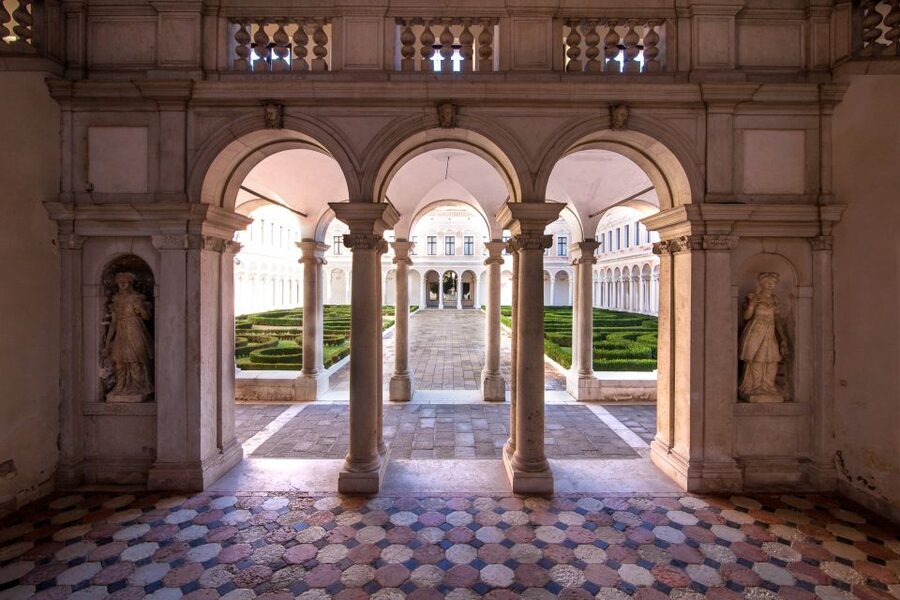
- Cloister of Palladio
- Cloister of the Buora family
- Courtyards and the human scale
- The Palladian cenacle, and why one painting matters
- Longhena’s grand staircase and the library wing
- Nuova Manica Lunga: a library that feels like a spotlight
- Vatican Chapels: walking the wood and learning 10 design stories
- What the audio guide does well (and what it cannot fix)
- Priority access in an hour: where it’s worth paying
- Price and value: what $17 really buys
- Practical logistics that affect your experience
- Who this 1-hour visit suits best, and who might regret it
- Should you book this tour?
- FAQ
- How long is the tour?
- What’s the difference between the Giorgio Cini Foundation and the Vatican Chapels options?
- Where is the meeting point?
- What’s included with the ticket?
- Are audio guides available in multiple languages?
- Do I need an ID to collect the guide?
- Is this tour suitable for people with mobility impairments?
Key highlights you should care about
- Pick your theme: Giorgio Cini Foundation (Palladio and other architects) or the Vatican Chapels (10 chapels, 10 architects)
- Audio guide does the heavy lifting: narrated context in multiple languages as you walk
- Architecture hits close up: Palladio’s cloister, Buora family cloister, Longhena’s grand staircase, and the library wing
- Vatican Chapels focus on design: you learn about the chapel in the wood and see related drawings and models
- Small group pace: escorted group size capped at 25, which helps the route stay calm
Why San Giorgio Maggiore feels calmer than St Mark’s
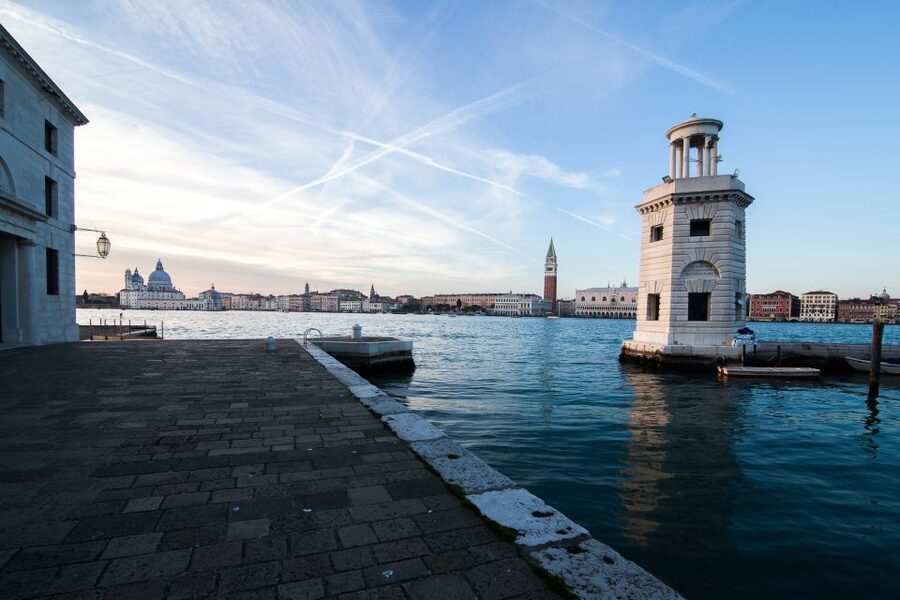
San Giorgio Maggiore sits just outside the busiest Venice circuits, so your brain relaxes the moment you land on the island. You’re still in Venice, with the same lagoon light and stone-and-water atmosphere, but the vibe is slower and more local. That matters, because architecture like this needs time to register. A lot of Venice sights pass by too quickly, especially if you’re trying to do a dozen things in a day.
This tour is timed for that reality. You’re not committing to a half-day plan. Instead, you get a tight, hour-long walk through either the Giorgio Cini Foundation monumental complex or the Vatican Chapels area. It’s a smart fit for travel days when you want impact but not chaos.
A few more Italy options to weigh
- Vatican: Museums & Sistine Chapel Entrance Ticket
★ 4.5 · 144,003 reviews - Milan: Cathedral and Duomo’s Terraces Entrance Ticket
★ 4.6 · 61,054 reviews - Venice: Doge’s Palace Reserved Entry Ticket
★ 4.6 · 42,716 reviews
Choosing Cini Foundation or the Vatican Chapels: what changes in your hour
The experience works in two versions, and your choice changes what you’ll remember most.
If you choose the Giorgio Cini Foundation option, your route centers on the island’s monumental complex and the big architectural names tied to it. You’ll move through cloisters and courtyards, then toward the interior spaces where the collection and design show up in a very physical way.
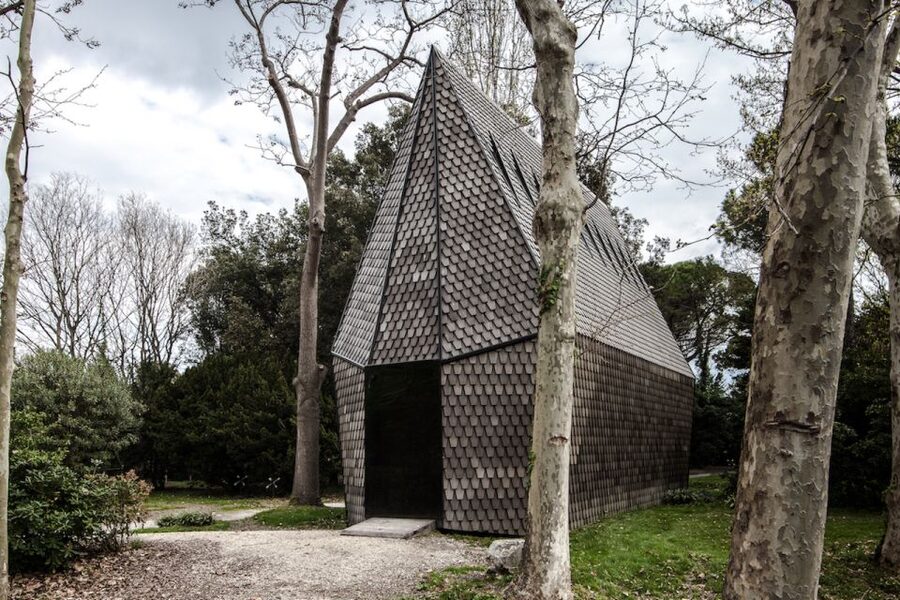
If you choose the Vatican Chapels option, your route follows the island’s “wood” concept and focuses on the 10 Vatican Chapels, each created by an internationally recognized architect. This option is more about design ideas and how they get translated into chapels that feel intentionally placed within the landscape.
Either way, the tour is guided by an included multimedia audio guide, and a multilingual staff member escorts your small group through the main spaces. The difference is what you’ll be looking at while the narration plays.
Entering the Giorgio Cini Foundation complex, one courtyard at a time
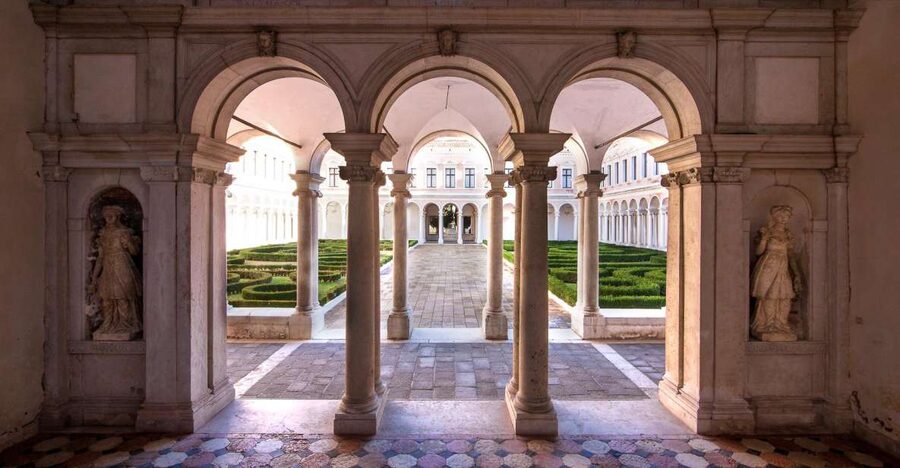
The Giorgio Cini Foundation visit has a built-in rhythm. You start outdoors in the cloisters, then the tour naturally pulls you toward the grand interior spaces. That pacing is exactly what you want in an hour, because it prevents the visit from feeling like a rushed checklist.
Cloister of Palladio
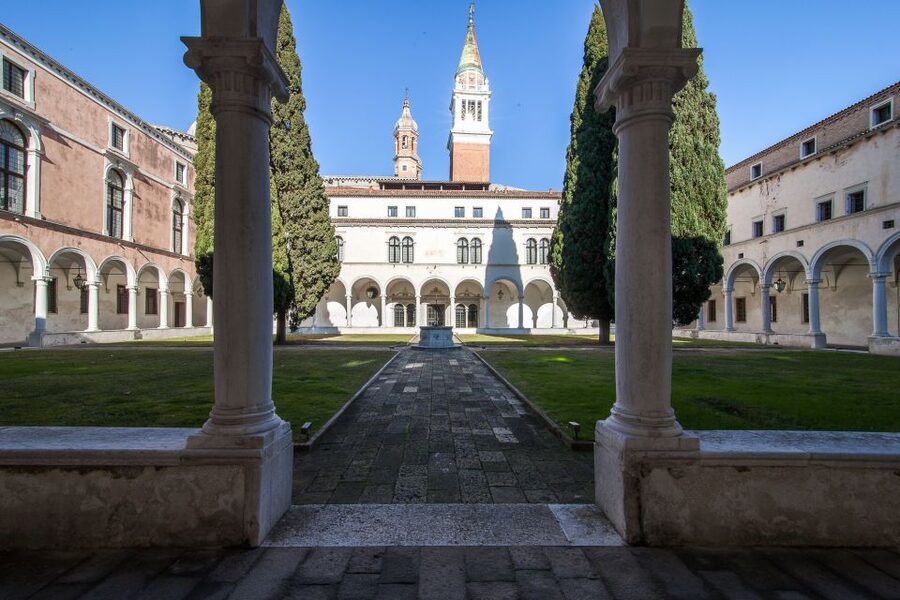
You’ll see the Cloister of Palladio, completed after Andrea Palladio’s death in the 17th century. Even if you have only a passing interest in Renaissance and Palladian architecture, this cloister is the kind of place that makes you slow down. The structure sets a clear visual logic, and the courtyard layout gives you natural sightlines to take in details without needing to hunt.
Nearby, and just as well reviewed:
- Vatican Museums & Sistine Chapel Tour with Optional Basilica
★ 4.3 · 67,413 reviews - Colosseum, Roman Forum & Palatine Guided Tour
★ 4.7 · 63,148 reviews - Vatican Museums, Sistine Chapel & St Peter’s Basilica Guided Tour
★ 4.5 · 39,149 reviews - Rome: Colosseum, Palatine Hill and Roman Forum Guided Tour
★ 4.8 · 32,814 reviews
Cloister of the Buora family
Next is the Cloister of the Buora family, an early Renaissance example designed by Giovanni and Andrea Buora. This is a helpful contrast to what you saw in Palladio’s work. The result is that you notice how styles and design priorities shift even inside one complex.
Courtyards and the human scale
What I like most about the cloister sequence is the human scale. You’re not stuck in a single room looking at one wall. Instead, you get repeated “reset points,” and the audio guide helps you connect each space to what you’re learning. If you’re the type who usually walks through buildings without retaining details, this format helps.
The Palladian cenacle, and why one painting matters
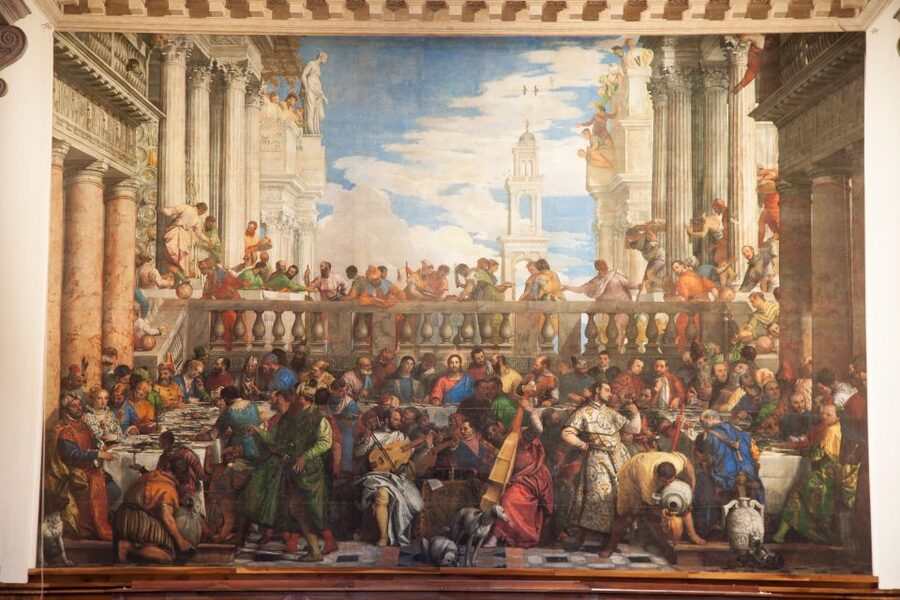
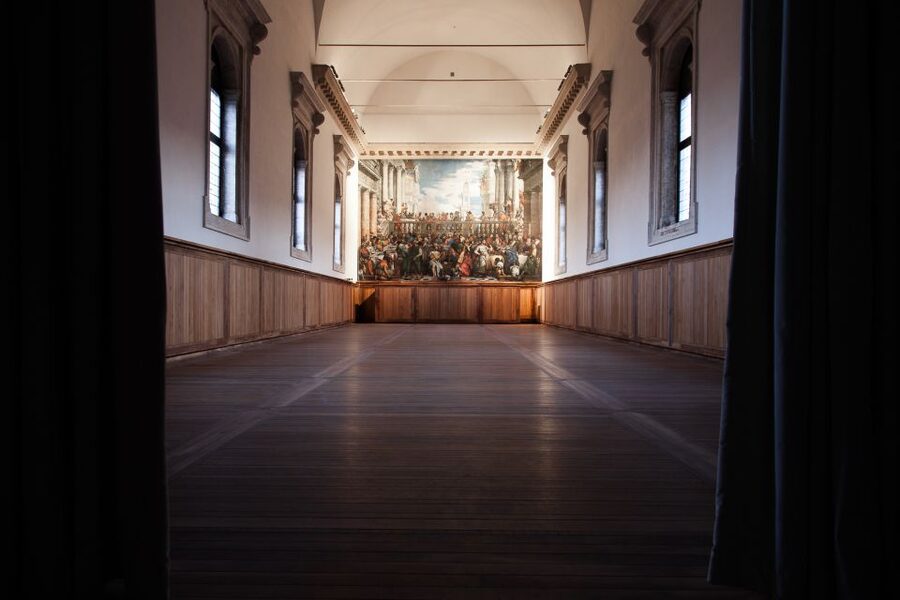
One of the most memorable moments on the Cini Foundation route is the Palladian cenacle, an ancient Benedictine refectory. This is where the narration becomes more than background, because you’re not just hearing architectural facts. You’re learning why the room connects to art.
You’ll hear about Paolo Veronese’s Wedding in Cana and how it ties to the refectory tradition, with the note that the original artwork is now on display in the Louvre. That’s a useful context point for your trip because it gives you a bridge between what you see here and the wider European art circuit.
This stop is also a great time to look at how the room holds space. Refectories are meant for gatherings and communal rituals, so the proportions and layout feel intentional. Even in a short tour, that communal design shows.
Longhena’s grand staircase and the library wing
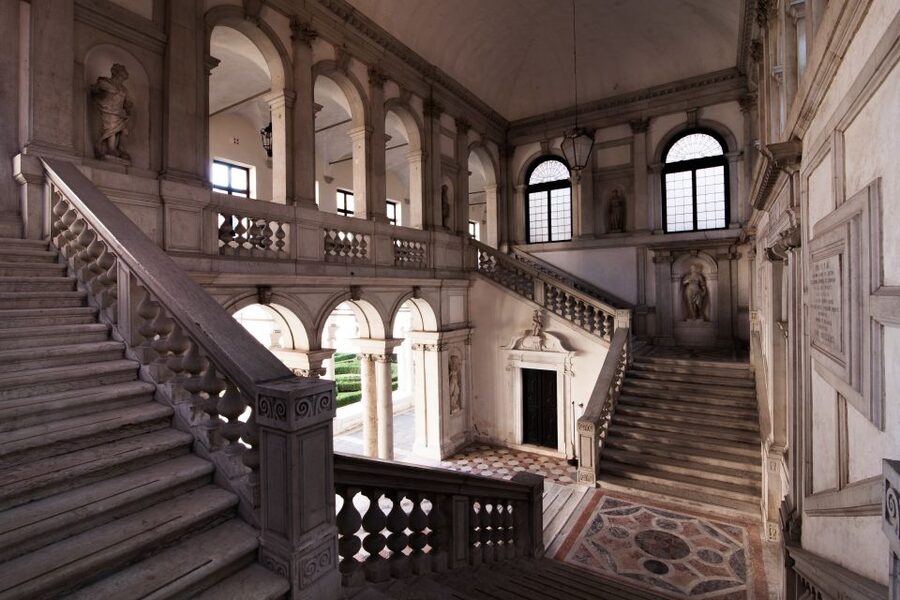
After the refectory area, your path leads to one of the most dramatic transitions in the complex: Longhena’s Grand Staircase, completed in 1671. The staircase is positioned between two cloisters, which means you get that “in between spaces” feeling, like the building is guiding you through levels of importance.
You’ll also hear about the wooden bookcases by Franz Pauc. Even if you don’t know who Pauc was before your visit, the effect is clear once you’re there. The details aren’t just decorative. They reinforce how the staircase functions as a move between public-facing monumental areas and more scholarly, quieter ones.
Nuova Manica Lunga: a library that feels like a spotlight
Then comes Nuova Manica Lunga, the transformed old dormitory of the Benedictine fathers into a bright library. This is often the stop that sells the whole hour. Libraries are tricky in museums because sometimes the space is too quiet or too restricted. Here, the narration and the building’s light-filled design work together, so you experience the library as a space, not only an object.
If you love architecture photos, this is where you’ll get the most “wait, stop, look” moments. If you’re more into learning, the audio guide also helps you connect why the dormitory-to-library transformation matters.
Vatican Chapels: walking the wood and learning 10 design stories
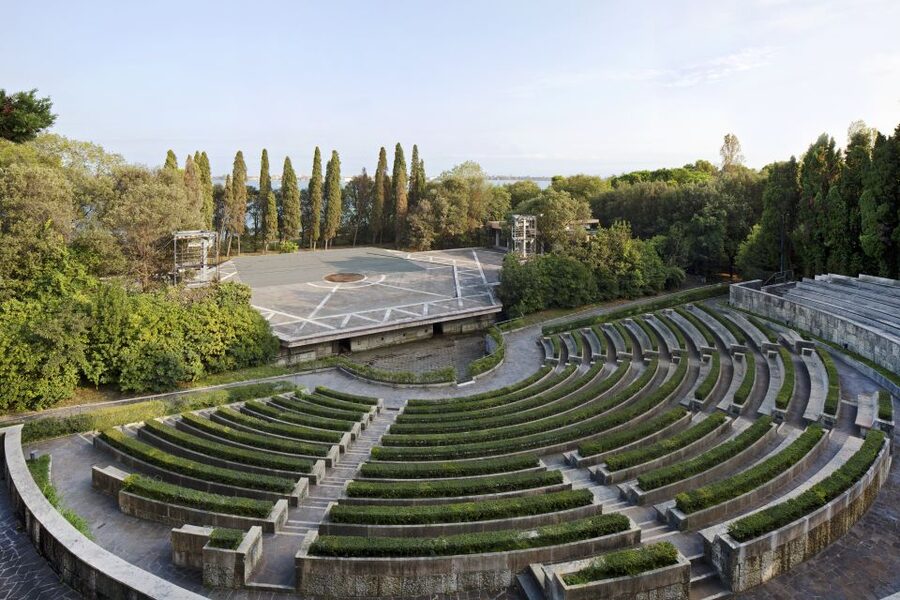
If you choose the Vatican Chapels option, the hour has a different flavor. Instead of cloisters and grand staircases, you follow the “wood” theme of the island. You’ll see the 10 Vatican Chapels, and the narration explains how each one was designed by an internationally renowned architect.
You’ll also hear an introduction linked to H. Em. Gianfranco Ravasi. That’s a specific name to remember, because it signals that the chapels are not just aesthetic projects. They come with a layer of spiritual and cultural framing, even if you’re mostly focused on design.
A particularly interesting part of the storytelling includes drawings and models for the “chapel in the wood” by Asplund. The mention of drawings and scale models matters for two reasons. First, it shows you that the chapels weren’t “random buildings placed somewhere.” Second, it encourages you to look at what you’re standing in front of with the mindset of someone learning a design process.
In practice, this option works well if you like concept-driven travel. You’re not only seeing a set of buildings. You’re collecting explanations for how the architecture was imagined and why it sits where it does.
What the audio guide does well (and what it cannot fix)
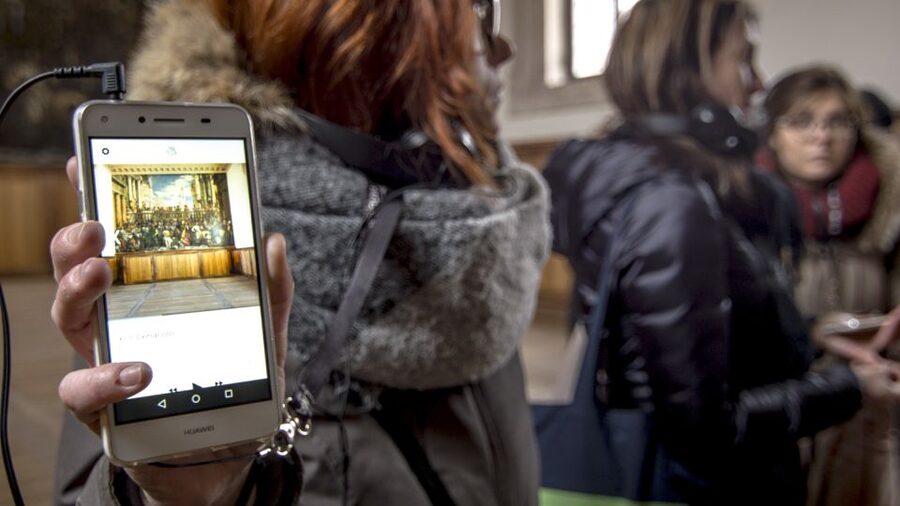
This tour is designed around the multimedia audio guide included in your admission cost. The languages cover a wide range, including Italian, English, French, German, and Spanish plus Russian (as listed for the audio guide options). That’s important because the island is quiet enough that you can actually hear the guide. There’s less crowd noise to fight.
Because you’re in a small group with an escort, the audio guide experience works better than a solo free-for-all. You’re not trying to guess which door to enter next. You also get a clearer narrative arc, which helps you remember what each space is meant to represent.
One limitation you should know about: this is still a short visit. The experience prioritizes the main monumental complex or the main chapel sequence. That means you should not expect an all-day exploration of every area on the island.
Priority access in an hour: where it’s worth paying
Priority access can feel like marketing until you try it on a timed visit. Here, priority entry plus a guided route is what makes the one-hour plan actually usable.
If you’re squeezing Venice into a busy day, this is a big deal. You’re not losing time at ticket counters or wandering until you find the right entry point. Instead, you start with the planned access, then you get escorted through what the hour is designed to cover.
The tour also uses time slots, so your schedule is controlled, which is good if you like structure. It is less ideal if you hate appointments, but you can usually build the rest of your day around an hour comfortably.
Price and value: what $17 really buys
The listed price is about $17 per person, and the value comes from the mix of things included.
You get:
- Entrance to the selected monumental complex or Vatican Chapels area
- An included audio guide (multilingual)
- A tour leader or staff escort to keep the route moving
That’s what makes it more than a basic ticket. In Venice, paying for an admission-only visit can still mean you spend your time figuring things out on your own. Here, you’re paying for interpretation built into the experience.
The one budget adjustment: you’ll likely pay extra to actually reach San Giorgio Maggiore. The meeting point is at the ticket office on the left side of the Basilica on the island, which means you need to get yourself over there. If your travel plan uses water transport, factor that into your total cost before you compare against other Venice options.
So the real value test is simple: do you want a guided hour of key spaces with audio interpretation? If yes, this price makes sense. If you only want a casual look from the outside, you could spend less time and money elsewhere.
Practical logistics that affect your experience
This tour uses a specific meeting point: the ticket office on the left side of the Basilica on San Giorgio Maggiore Island. The meeting point detail matters, because you will arrive ready to start, not hunting around for the right check-in desk.
Some areas of the complex may close during concerts or other events, so your hour could shift slightly. If you’re planning a trip around a specific day and time, it helps to pick a slot that gives you flexibility.
You’ll also be asked to collect the video guide with a valid ID document. Bring a passport or ID that matches what you used for booking, so you do not get stuck at the last step.
And one more practical point: the tour is not suitable for people with mobility impairments. If accessibility is a concern, you should plan a different way to enjoy the island.
Who this 1-hour visit suits best, and who might regret it
This is a strong choice if:
- You want a structured architectural visit without committing to a long tour
- You enjoy using audio guides to understand what you’re seeing
- You like a quiet Venice moment away from the busiest streets
- You want either a Cini Foundation architecture-focused hour or a Vatican Chapels design-focused hour
It may be less ideal if:
- You expect the tour to cover every possible island attraction in a full-day itinerary
- You want a more talk-heavy guided tour, since this experience emphasizes the audio guide rather than a live tour guide
- You rely on mobility-friendly routes, since the tour is not suitable for mobility impairments
From a planning standpoint, I’d also treat it as a “connect-the-dots” visit. It works best when you’re okay with seeing the key spaces and learning why they matter, rather than exhausting every corner of the island.
Should you book this tour?
If your Venice plan includes limited time and you want a meaningful architectural experience, I’d book it. The combination of priority entry, a multimedia audio guide, and the compact one-hour format is exactly the kind of value that fits real travel days. It’s also a good way to get off the main Venice track and see San Giorgio Maggiore as more than a distant postcard.
Choose the Giorgio Cini Foundation option if you love cloisters, staircases, and libraries as physical spaces. Choose the Vatican Chapels option if you want design storytelling tied to multiple architects, plus the “chapel in the wood” concept and the related drawings and models.
One last check before you book: confirm you’re comfortable with the idea that this is an hour of the main sites, not an all-day island wander. If that matches your style, this is a very solid use of your time.
FAQ
How long is the tour?
The tour lasts 1 hour. You’ll need to check availability for starting times.
What’s the difference between the Giorgio Cini Foundation and the Vatican Chapels options?
You either enter the Giorgio Cini Foundation monumental complex with an audio guide through key architectural spaces, or you visit the Vatican Chapels area, where the audio guide explains the 10 chapels and their architects.
Where is the meeting point?
Meet at the ticket office on the left side of the Basilica on San Giorgio Maggiore Island.
What’s included with the ticket?
In addition to admission, the ticket includes an audio guide and a tour leader who escorts your small group.
Are audio guides available in multiple languages?
Yes. The audio guide is available in English, French, German, Italian, Russian, and Spanish.
Do I need an ID to collect the guide?
Yes. A valid ID document is required to collect the video guide.
Is this tour suitable for people with mobility impairments?
No. It is listed as not suitable for people with mobility impairments.
Latest reviews around Italy
- Total Immersion Wine Tour in Chianti★ 4.9 · 430 reviews
- From Rome: Villa D’Este & Villa Adriana Day Trip with Lunch★ 4.4 · 289 reviews
- Tivoli: Villa Gregoriana Entrance Ticket★ 4.7 · 150 reviews
- From Rome: Hadrian’s Villa & Villa d’Este Day Trip & Lunch★ 4.5 · 157 reviews
- Rome: Painting Class with Unlimited Wine★ 4.8 · 109 reviews
- Tivoli: Villa D’Este Entry Ticket and App Audio Guide★ 4.3 · 191 reviews
- Ravenna: UNESCO Mosaics Entry Tickets★ 4.7 · 255 reviews
- Timed Entrance to Leaning Tower Pisa & Cathedral with Audio★ 4.1 · 385 reviews
Audio Tours, compared.
Colosseum & Forum with Audio Guide App -Optional Arena
Read our review →
Pantheon Fast-Track Ticket and Official Audio Guide
Read our review →
Pompeii: Entry Ticket with Optional Audio Guide
Read our review →
La Fenice Opera House Entry Ticket with Audio Guide
Read our review →
St. Peter’s Basilica & Dome Entry Ticket & Audio Tour
Read our review →
Cathedral & Brunelleschi’s Dome Ticket & Audio App
Read our review →
Michelangelo’s David Priority Ticket & Audio App
Read our review →
Uffizi Priority Ticket & Masterpieces Audio App
Read our review →Browse the lists this tour appears in