
Reviewed · MILAN TOURS
Milan: Sforza Castle and Michelangelo’s Pietà Rondanini Tour
Michelangelo’s last marble lesson happens fast. This Milan tour threads Michelangelo’s Pietà Rondanini with the political muscle of Sforza Castle, so art and power walk side by side. You get the feeling of Milan changing gears, from medieval fortress to Renaissance capital.
I especially like the practical setup, with guided access that gets you into the castle and museum areas without fumbling around. And I like the way the story stays grounded, moving from dukes and symbols to real space you can stand in, like the ducal courtyards and the Filarete Tower area.
One thing to consider, it is only 1.5 hours. If you love lingering in museums, this tour gives you the highlights and the meaning, but you will still keep things moving.
In This Review
- Key things to know before you go
- Meeting at Piazza Castello under the Filarete clock tower
- Sforza Castle basics: what makes this fortress worth your time
- Michelangelo’s Pietà Rondanini: why the unfinished work hits harder
- Ducal courtyards and Renaissance architecture, where the story gets physical
- Leonardo da Vinci at Sforza Castle, beyond The Last Supper
- Visconti and Sforza stories: Biscione and the symbols of power
- Small-group pacing, headphones, and how to get the best listening
- Price and value: is $47 fair for what you get?
- Who should book this tour
- Should you book the Sforza Castle and Pietà Rondanini tour?
- FAQ
- Where do I meet the guide for this tour?
- How long is the tour?
- Is the entrance fee included?
- Is it a small-group tour?
- What is included in the tour price?
- What is not included?
- Is the tour wheelchair accessible?
- What languages are offered?
- Is there free cancellation?
Key things to know before you go
- Pietà Rondanini gets careful, emotional context, including why Michelangelo left it unfinished.
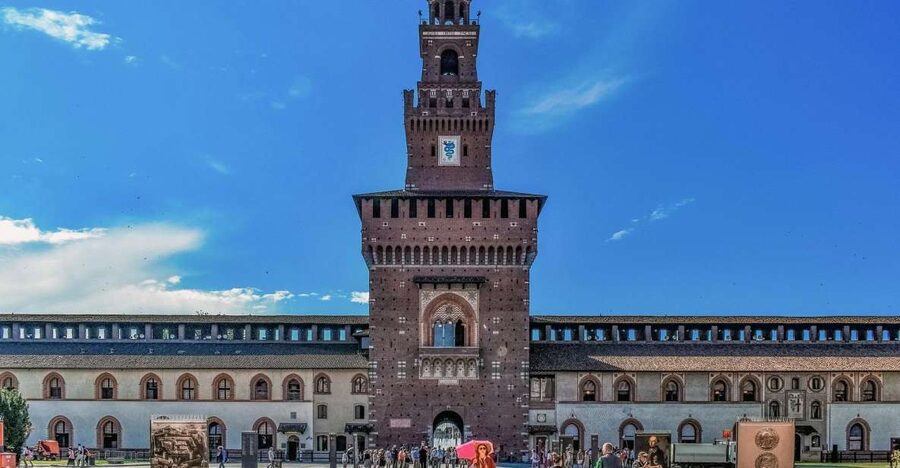
- Fast, focused route inside Castello Sforzesco, built for a 1.5-hour visit.
- Courtyard architecture is part of the explanation, not just a backdrop for photos.
- Leonardo da Vinci is placed in the right setting, as a working court engineer, not only a distant genius.
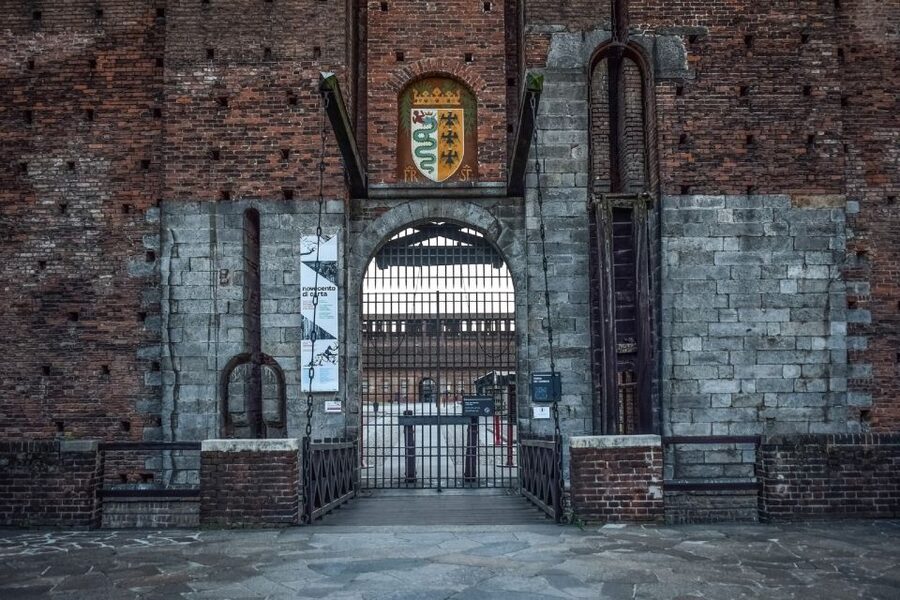
- Ducal symbols and family stories matter, especially the Biscione serpent crest.
- Headphones for larger groups help you follow the guide clearly across rooms and floors.
Meeting at Piazza Castello under the Filarete clock tower
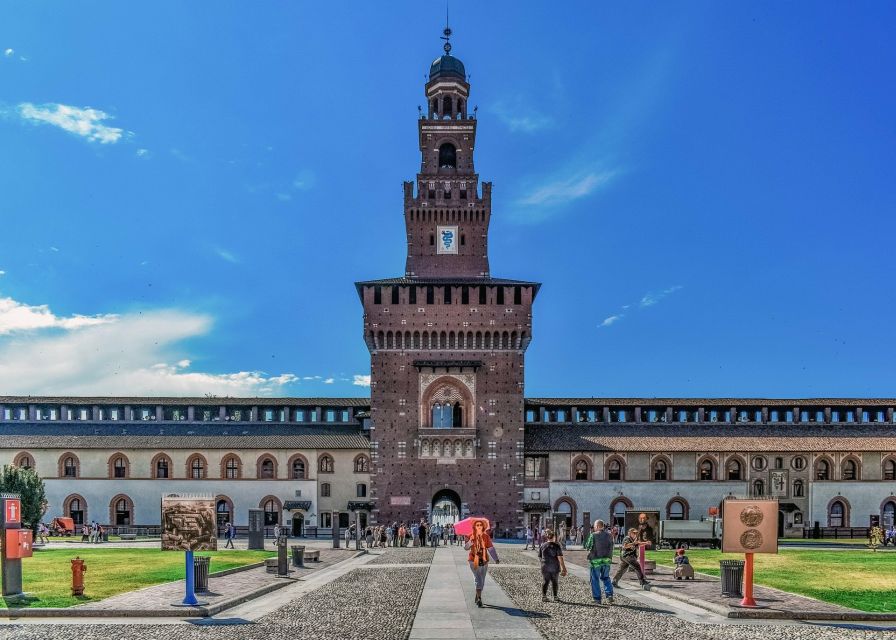
Your day starts at Piazza Castello, outside the castle. Meet your guide under the Filarete clock tower (not inside the courtyards). If you are standing near the entrance you are close, but the key is the landmark clock tower area, and then finding your guide with the Hidden Experiences purple flag or board.
This matters more than you might think. Sforza Castle is huge, and the meeting point keeps you from losing 20 minutes at the wrong gate. If you are early, use that time to orient yourself, then wait where the group will naturally gather.
Also, plan for this to be a walking tour with indoor museum time. Comfortable shoes are smart, because you are moving between the castle spaces where your guide stops to explain. And since Milan can be warm (or annoyingly bright), a hat helps even if you are mostly inside.
A few more Milan options to weigh
- Milan: Cathedral and Duomo’s Terraces Entrance Ticket
★ 4.6 · 61,054 reviews - Milan: City Sightseeing Hop-On Hop-Off Bus with Audio Guide
★ 4.0 · 6,256 reviews - Milan: Milan Cathedral Direct Entrance – Terrace Excluded
★ 4.5 · 5,782 reviews
Sforza Castle basics: what makes this fortress worth your time
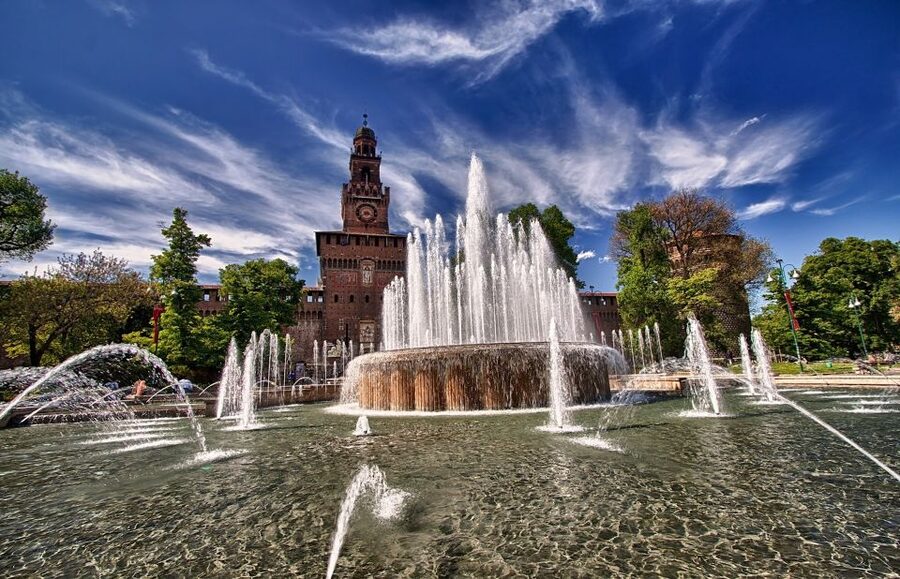
Castello Sforzesco is one of Europe’s imposing defensive structures, and the tour frames it that way on purpose. You are not just looking at “pretty old buildings.” You are stepping into a place built to protect power, and then gradually repurposed as a Renaissance seat.
The best part of a guided format here is clarity. Your guide links architecture to politics, so you understand why certain areas feel ceremonial even inside a fortress. You also get an overall sense of the castle’s transformation, from a medieval citadel to a Renaissance treasure house, right next to the Duomo area.
In 1.5 hours, you will not see every museum room in the complex. But you will see the parts that help the whole place click. Expect the route to focus on the court spaces, the museum stop for the Pietà Rondanini, and the story beats tied to the Visconti and Sforza dynasties.
If you want a museum marathon, you will need a longer independent visit. If you want the meaning of the site in a tight, well-led window, this fits well.
Michelangelo’s Pietà Rondanini: why the unfinished work hits harder
The heart of the experience is the museum encounter with Michelangelo’s Pietà Rondanini. This is Michelangelo’s final, unfinished marble work, and the tour explains why it feels different from the polished perfection people expect from his early pieces.
Here is what makes this stop so powerful: the figures are elongated, and the surface has that raw “non-finito” quality. Instead of finishing every detail, Michelangelo leaves the work with an urgency you can feel. He worked on this marble block until just a few days before his death at age 89, and your guide connects that timing to the emotional intensity of what you see.
I like how the guide slows your thinking down without turning it into a lecture. You are guided to notice how the composition carries spiritual urgency, not just anatomy. You also get help placing it within Michelangelo’s late-life mindset, so the unfinished state becomes part of the message rather than a flaw.
Practical tip: if you tend to rush at artwork, switch gears here. Take a moment to look from a couple angles, then let the guide’s explanation guide your next look. This is one of those artworks where the second viewing feels different.
Ducal courtyards and Renaissance architecture, where the story gets physical
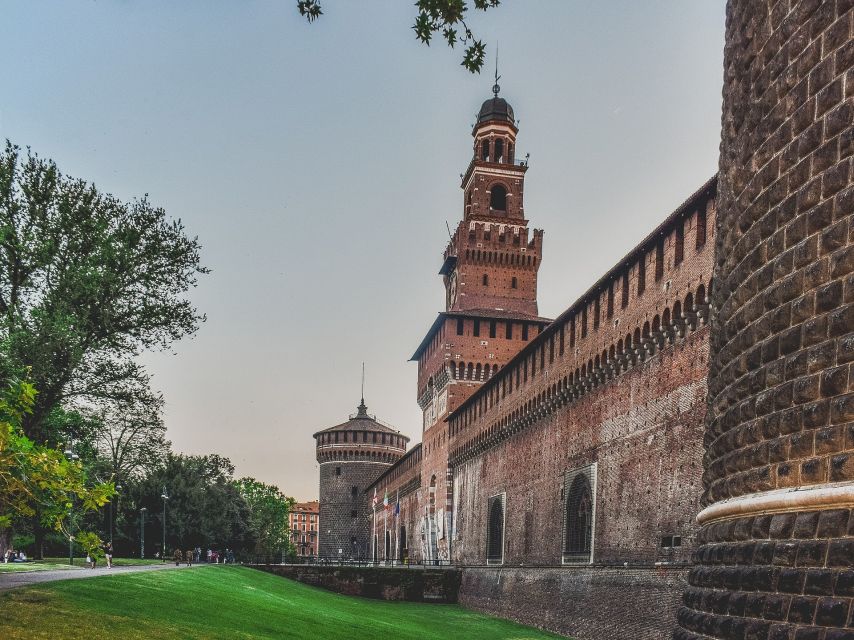
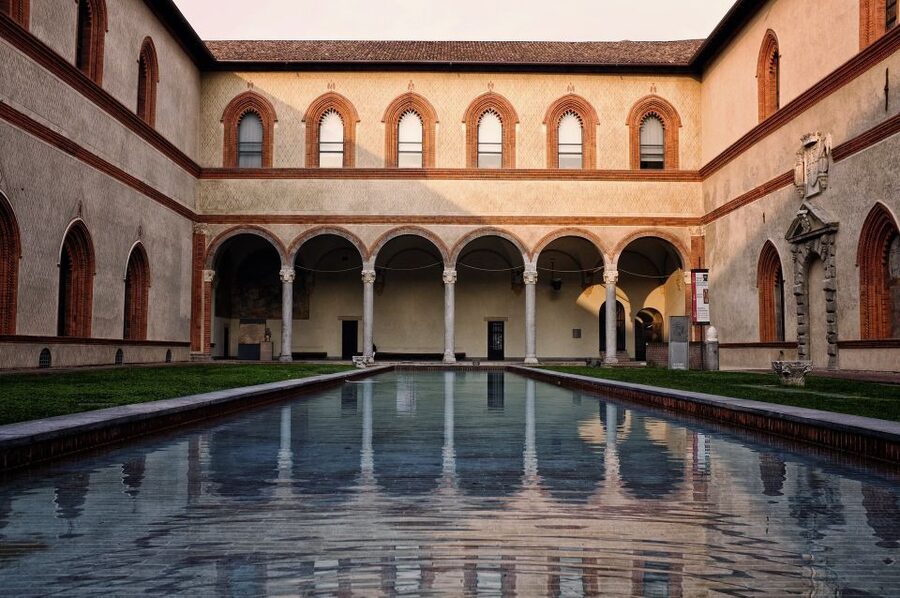
After the museum moment, the tour shifts to the Ducal Courtyards and the castle’s Renaissance architecture. This is where the pace starts to feel cinematic, because you move from quiet contemplation in the Pietà to a public-facing space tied to court life.
You will walk through areas such as the Corte Ducale and the Cortile della Rocchetta. Your guide uses these spaces to tell the story of Ludovico il Moro and the court culture that surrounded him. Even if you love art, this part gives you the political context that helps the art and the personalities make sense.
A courtyard also changes how you experience a guide’s explanation. When you can stand in the open space, claims about status, power, and design stop being abstract. You can better picture how people moved, met, and displayed authority.
Drawback to keep in mind: because the tour is short, you will not linger long in any one corner. You get the main sightlines and key stops, but you might want to return later on your own if a particular architectural detail grabs you.
Nearby, and just as well reviewed:
- Milan: Guided Walking Tour & Last Supper Visit with Ticket
★ 4.7 · 5,409 reviews - Milan: Fast-Track Milan Cathedral and Terraces Guided Tour
★ 4.7 · 5,240 reviews - Milan: Navigli Canal Boat Cruise
★ 3.3 · 4,502 reviews - Milan: Serravalle Designer Outlet Roundtrip Bus Transfer
★ 4.4 · 4,374 reviews
Leonardo da Vinci at Sforza Castle, beyond The Last Supper
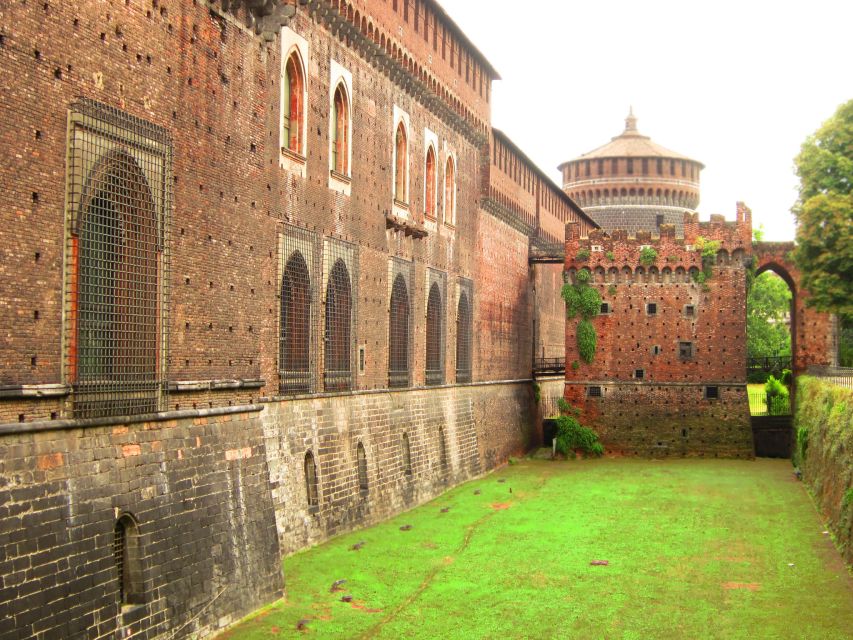
Leonardo is the name most people bring to Milan, but this tour places him in the right local context. Your guide explains that Leonardo lived and worked inside this castle for nearly twenty years.
Sure, everyone knows The Last Supper, but this experience reminds you that Leonardo was also a court engineer and architect. The castle becomes more than a setting, it becomes part of how you understand his role in the ducal world.
As you walk, your guide points to details that connect the space to Leonardo’s working life and his complex relationship with the Sforza family. The point is not to turn every stop into a scavenger hunt. It is to show how Renaissance genius lived inside political institutions, shaped by patrons and expectations.
You may leave thinking differently about Leonardo. Instead of a lone artist working in a vacuum, you see a system, the court environment that commissioned, supported, and constrained. That shift is the value of the tour: it gives you a fuller picture in just 1.5 hours.
Visconti and Sforza stories: Biscione and the symbols of power
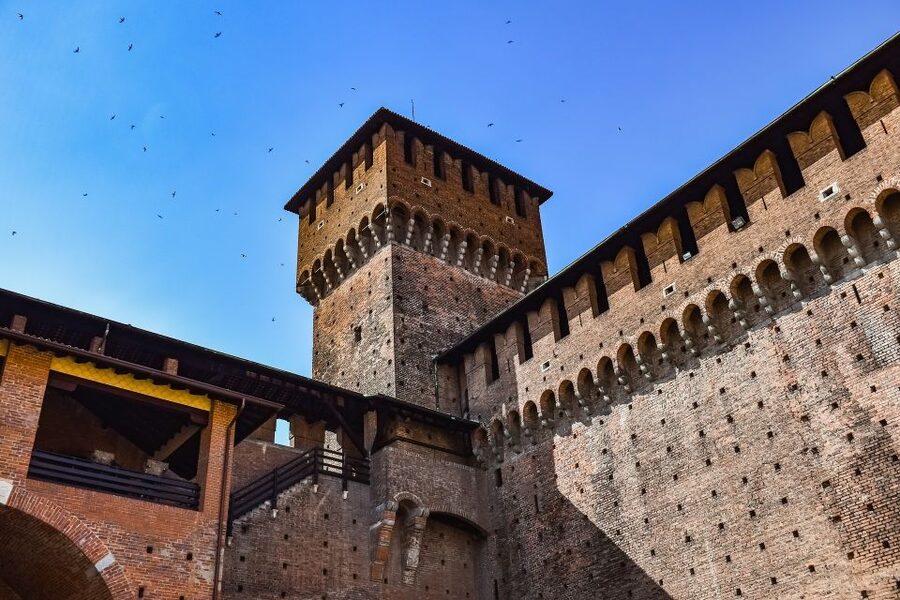
One of the most effective parts of the tour is how it brings the Visconti and Sforza families to life as real people with real influence. You get stories tied to daily life, political intrigue, and the way noblewomen and ambitious men shaped Milan’s culture.
A standout example is the Biscione. Your guide explains the meaning behind the iconic serpent coat of arms. That symbol matters because it helps you connect what you are seeing to what Milan was trying to project, authority, continuity, and identity.
You will also hear about how the castle survived centuries and became a symbol of Milanese identity, rather than just a relic. Standing under the shadow of the Filarete Tower area, the story feels more grounded. You can see how the castle’s scale reinforces the message that power had walls, and lots of them.
If you like history as story, this section will work. If you prefer dates and chronology only, you may still find the narrative style helpful, because it keeps the facts tied to a place you can point to.
Small-group pacing, headphones, and how to get the best listening
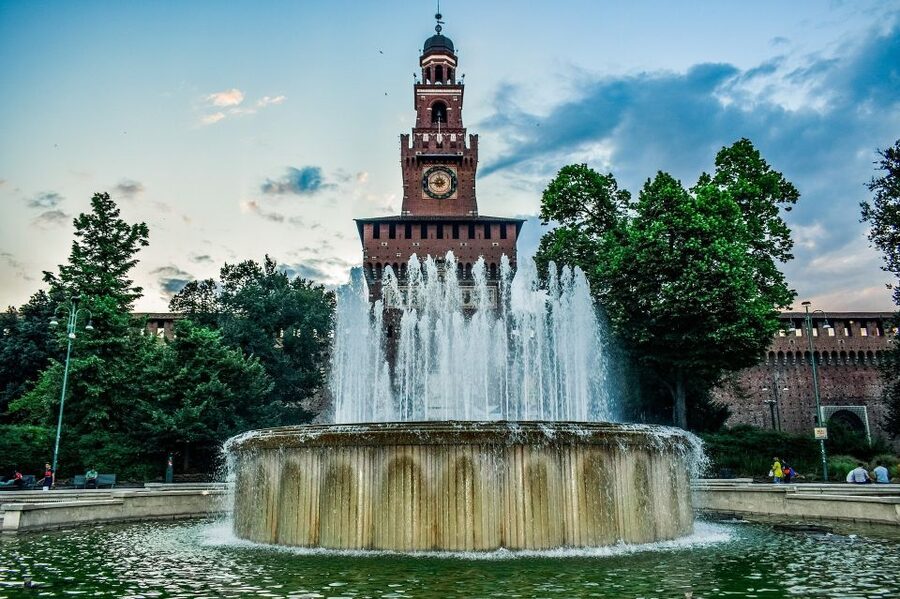
This is a small group guided tour, and it includes headphones for groups of 11 participants (so you can hear the guide clearly even when sound carries in stone corridors). In practice, that means you are less likely to miss key lines when the group shifts between rooms.
I also like the short duration, 1.5 hours. It forces focus. You do not get lost in decision fatigue, you get taken to the most meaningful spots. You also avoid the trap of spending half your day on one complex when there are other Milan highlights nearby.
That said, you should still manage your expectations. Short tours often feel “just enough.” Some people love that. Others want more time in the museum rooms. If you are the linger-type, plan to return independently later, or pair this tour with another smaller museum-focused visit on a different time slot.
Price and value: is $47 fair for what you get?
At $47 per person for about 1.5 hours, this tour is not cheap, but it can be a good value when you factor in access and guidance.
You are paying for:
- entrance fees to the castle and museum spaces
- a certified guide
- headphones for larger groups
- a small group experience, which usually keeps questions and attention more real
For many first-time visitors, a castle complex like this can be overwhelming. Without a guide, you can wander the wrong directions, miss the emotional punch of the Pietà Rondanini, and fail to connect courtyards and symbols to the people who built them. This tour does those connections quickly.
Is it worth it if you already know everything about Michelangelo and the Sforza court? Maybe. But even then, you are still paying for the time savings and the way the work is explained. If you want the highlight story in a single short sitting, $47 can make sense.
If you love reading labels and self-guided exploration, you might prefer an independent visit. In that case, this might feel like you are paying for interpretation you could do yourself. For most people, though, the guide adds enough context to justify the price.
Who should book this tour
This tour fits best if you want:
- art history with emotion, especially for Michelangelo’s last unfinished work
- a guided “map in your head,” so the castle makes sense as a fortress turned Renaissance seat
- a short, high-impact experience near central Milan
It is also described as wheelchair accessible, and a private group option is available if you prefer a quieter pace or have a specific need.
If you are traveling with family, the 1.5-hour format can be a sweet spot. The story-driven stops keep it from becoming a dry museum slog. If you are a serious museum walker, you may want to add extra time before or after for independent wandering.
Should you book the Sforza Castle and Pietà Rondanini tour?
I would book it if you want the fastest path to understanding why Sforza Castle matters, and why the Pietà Rondanini is more than a famous name. The tour gives you the emotional power of Michelangelo’s unfinished marble, then connects it to the world that held court there for centuries.
Skip it only if you are mainly interested in spending long hours inside multiple museums, with no interest in guided interpretation. In that case, you will likely feel the time limit.
If your schedule is tight, this is a smart choice. You leave with a clearer sense of Milan, and with a Pietà that feels personal, not just historical.
FAQ
Where do I meet the guide for this tour?
Meet the guide in Piazza Castello, under the Filarete clock tower, in front of Sforza Castle. The meeting spot is not inside the courtyards.
How long is the tour?
The duration is 1.5 hours.
Is the entrance fee included?
Yes. Entrance fees to the castle and the museum are included.
Is it a small-group tour?
Yes, it is a small group guided tour. Headphones are provided for groups of 11 participants.
What is included in the tour price?
Included items are the castle and museum entrance fees, a certified tour guide, headphones (for 11 participants), and the small group guided tour.
What is not included?
Food and drink are not included. Hotel pick up and drop-off are also not included, though pickup may be available for an extra charge.
Is the tour wheelchair accessible?
Yes, the tour is wheelchair accessible.
What languages are offered?
The tour is offered in Italian, English, German, French, and Spanish.
Is there free cancellation?
Yes. You can cancel up to 24 hours in advance for a full refund.
Latest reviews around Milan
- Milan: The Milan Pass City Card★ 4.0 · 655 reviews
- Milan: Duomo & Rooftop Tour with Optional Hop-On Hop-Off Bus★ 4.5 · 262 reviews
- Milan: Leonardo’s Last Supper and Michelangelo’s Pietà Tour★ 4.6 · 559 reviews
- Milan: San Sepolcro Crypt Skip-the-Line Entry Ticket★ 4.2 · 512 reviews
- Milan: QC Termemilano Spa Admission Ticket★ 4.6 · 685 reviews
- Museum of Senses Milan admission ticket★ 3.9 · 188 reviews
- Milan: Villa Necchi Campiglio Entry Ticket★ 4.7 · 230 reviews
- Milan: Wine Tasting Experience in the City Centre★ 4.5 · 113 reviews
Milan Tours, compared.
Cathedral and Duomo’s Terraces Entrance Ticket
Read our review →
City Sightseeing Hop-On Hop-Off Bus with Audio Guide
Read our review →
Milan Cathedral Direct Entrance – Terrace Excluded
Read our review →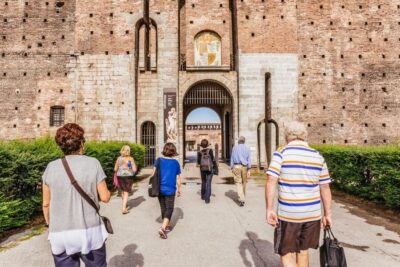
Guided Walking Tour & Last Supper Visit with Ticket
Read our review →
Fast-Track Milan Cathedral and Terraces Guided Tour
Read our review →
Serravalle Designer Outlet Roundtrip Bus Transfer
Read our review →
Milan’s Must See: Half-Day Tour of Last Supper, Duomo & La Scala
Read our review →Browse the lists this tour appears in